

Heritage Paradox : The Conflict of Progress and Preservation in the Modern Metropolis.
Addressing the conservation standards in an era of perpetual change in demands and physical environment, as in the case of Shaniwar Wada and its precinct.

The dissertation here aims to identify, examine and restore the neglected structures or the fabric that cries for help to be able to sustain in this modern world, ones which are under threat of losing their identity and occupy a large part of the landscape, that become static in time and form, yet have a potential to add value. There are many reasons for negligence, one being the material-based conservation policies that freeze the precinct and the monument. India is the fastest-growing economy and a developing country that demands basic survival facilities and modern infrastructure to remain in pace with the changing world; therefore, how the standards of heritage conservation become a barrier to developmental needs also sets a basis for the study.
Taking the case of Pune, a soon-to-be megacity, the cultural capital of Maharashtra witnesses a growing population subjected to the IT, educational, industrial and tourism sectors. The study focuses on the precinct of Shaniwar Wada. This historical monument has become the image identity of the city, yet the existing conditions and management don’t do justice to it. The ASI tag on the monument brings a very controlled or restricted development in the precinct through the Ancient Monuments and Archaeological Sites and Remains Act (or AMASR Act). Further, it also fails to provide basic amenities for the visitors. The monument that was once the reason for Pune’s growth and revival is now the reason for the dilapidated structures and a static fabric. Architectural heritage becomes a part of collective memory and public inclusivity, which evolves with time, people, culture and the city. An individual or a community strongly associates with a heritage because of their memories, the culture attached to it, and the value it adds. In the case of the Wada, the associations have faded as the monument stands as a barrier to the local community.
The study, therefore, addresses the “prohibited” and “regulated” zones regulation as per the Ancient Monuments and Archaeological Sites and Remains Act (or AMASR Act), its relevance, where the same is applied to every historic site, be it Taj Mahal along the banks of Yamuna or the Shaniwar Wada right in the centre of the city. The research aims to put up strategies for the urban renewal of the fabric around the monument, to create a precinct that helps to curate and glorify the monument, provide basic amenities and address issues of current heritage management.

Popular Articles
Popular articles from the community

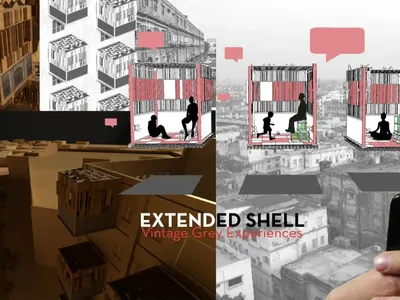
Extended Shell: Retrofitting Kolkata's Balconies as Living Urban Thresholds
A modular retrofit system recovers the social and environmental intelligence of Kolkata's historic verandas for contemporary Park Street residents.

Singing Woman: Contemporary Architecture Inspired by Estonia’s Voice and the Sea
Singing Woman turns Estonia’s song culture into flowing opera house architecture, blending public life, landscape, sea, and national memory.

Opera on the Sea: Driftwood Logic Shapes a Timber Opera House on Estonia's Coast
Trevor Orgill's opera house translates the entangled drift of floating timber into a civic building where wood, water, and music converge.
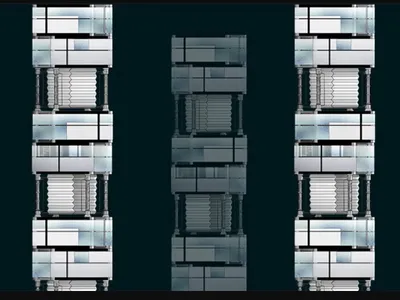
Tsunami Convergenics: Turning Catastrophic Ocean Forces into Underwater Housing Infrastructure
A speculative underwater settlement off the coast of Onagawa, Japan, treats tsunamis and typhoons as energy sources rather than threats.

Similar Reads
You might also enjoy these articles

Day and Night Park: A Time-Based Urban Newsstand in Beijing
A temporary urban newsstand in Beijing blending travel, light, and reading through poetic colors, compact form, and community-focused design.

Modernist Patio Renovation in El Masnou, Barcelona by Oliver Segura Arquitectura + Cebrià Arquitectura
Modernist patio renovation blending tradition and innovation with a movable pool, leveled floors, and Catalan materials in El Masnou.
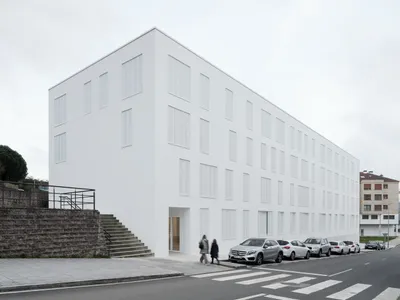
Alto Residencial Coop: Cooperative Housing Development in Santiago de Compostela by Carbajo Barrios Arquitectos
A linear cooperative housing complex blending white volumes and perforated metal façades, enhancing community living, natural light, privacy, and urban integration.
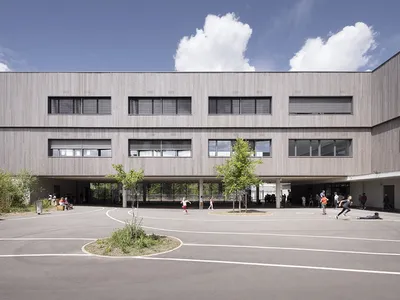
Vil Genis School by BPA ARCHITECTURE – Massy, France
Vil Genis School in Massy, France, features sustainable design, south-facing classrooms, community integration, accessible spaces, and modern educational architecture.

Explore Conservation Architecture Competitions
Discover active competitions in this discipline


Challenge to reimagine the Iron Throne

Photograph architecture without architects

Illustrate the lost glory of Angkor Wat - Render Challenge

Design challenge to reuse E-waste
Comments (0)
Please login or sign up to add comments
No comments yet. Be the first to comment!