
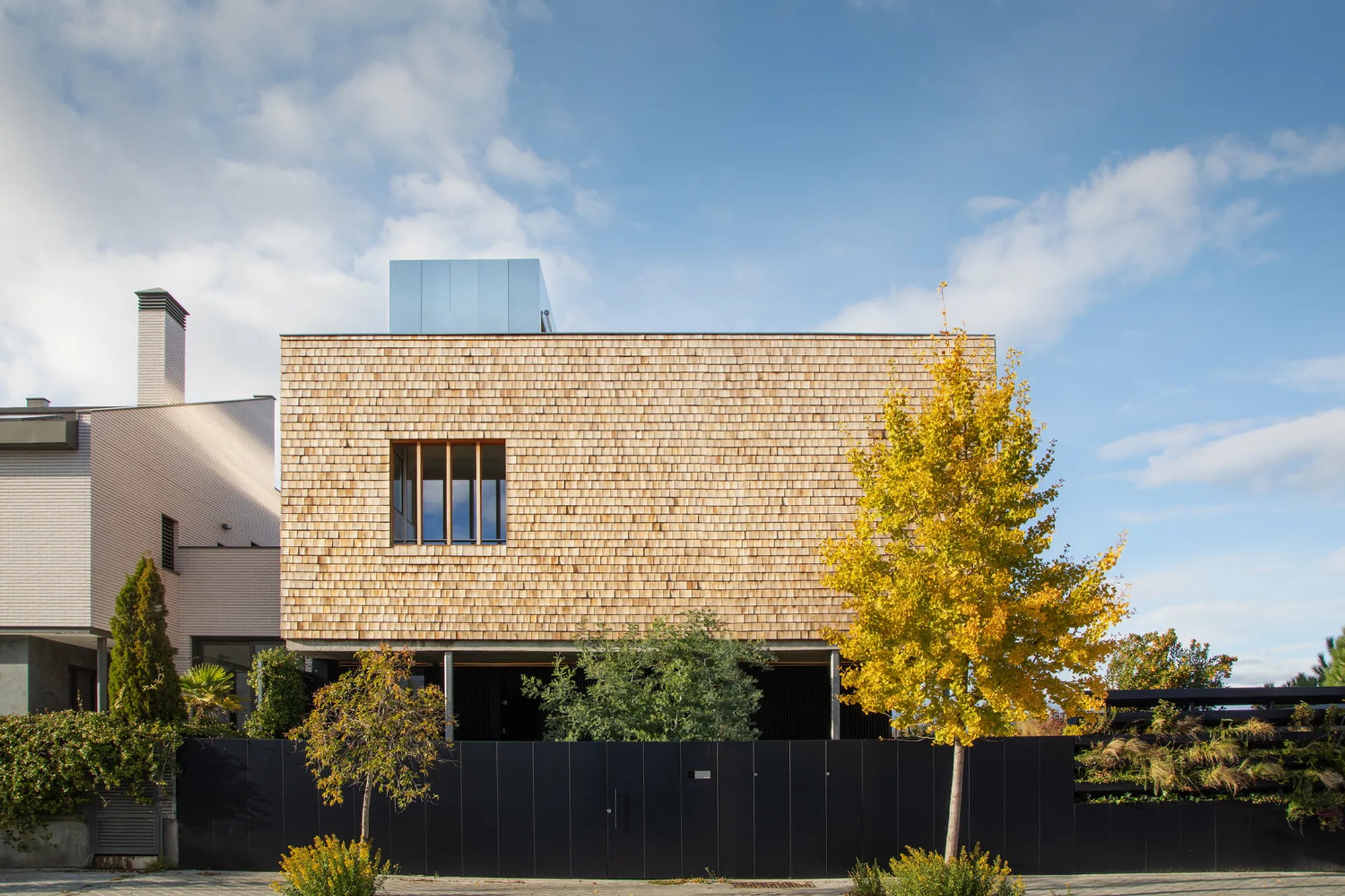
Hernández House by Langarita Navarro Arquitectos: A Modern Residential Masterpiece Blending Architecture with Landscape in Madrid
Hernández House merges modern architecture with nature, featuring sunken gardens, timber façades, and sustainable design in suburban Madrid.


Nestled on the outskirts of Madrid, Hernández House by Langarita Navarro Arquitectos redefines the relationship between built environments and natural surroundings. Designed for a cosmopolitan couple with a deep connection to the arts and Northern European landscapes, this residential project is a powerful architectural response to rigid urban planning. Located at the end of a semi-detached row and adjacent to a park, the house challenges the conventional template of suburban housing through innovation, sustainability, and spatial fluidity.
Embracing Nature and Challenging Urban Constraints
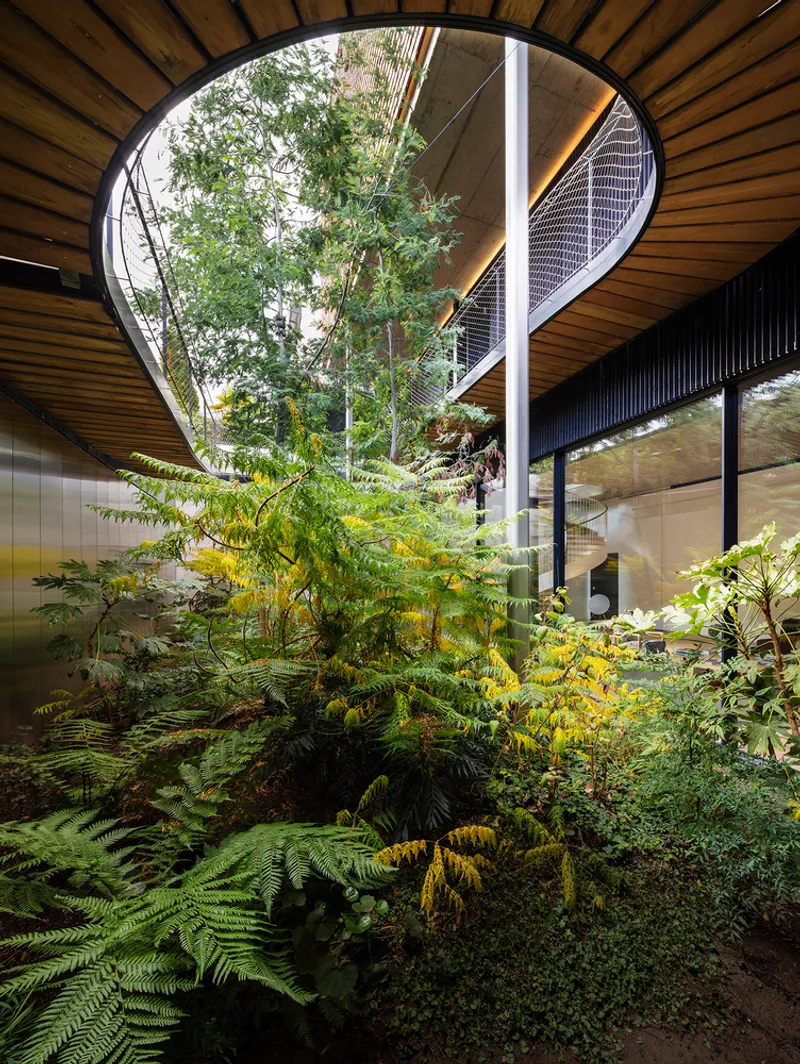
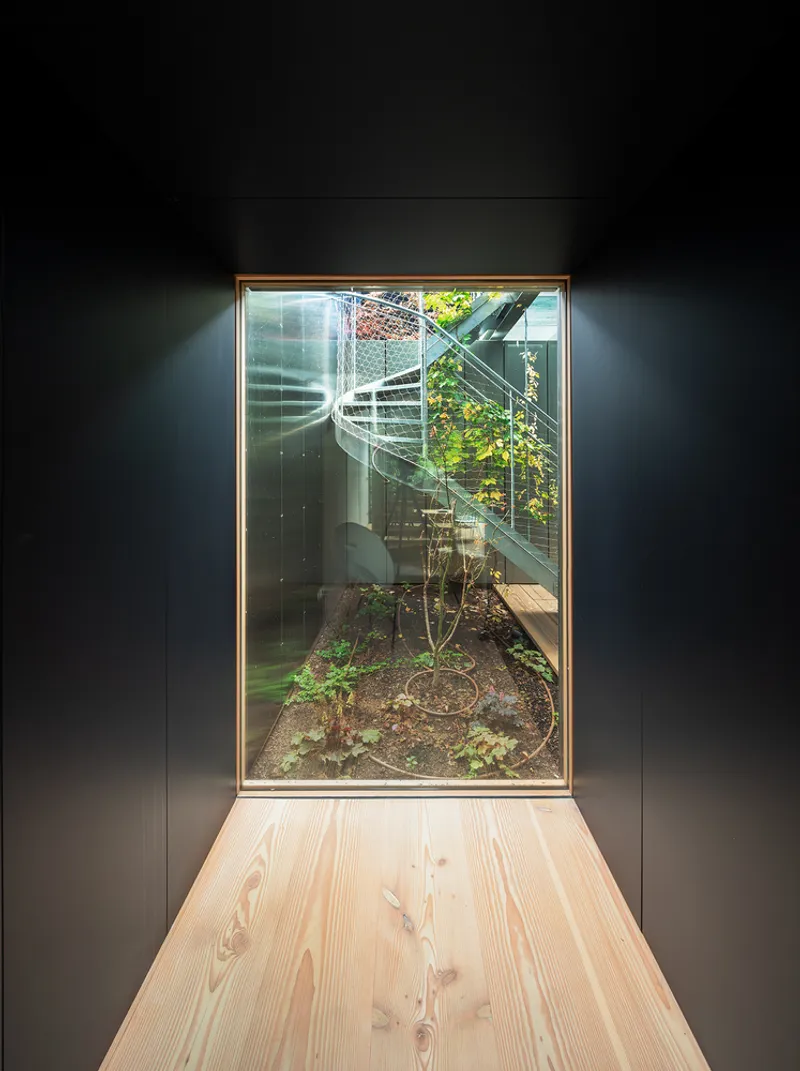
In a suburban neighborhood defined by its rigid building regulations and disconnected plots, Hernández House introduces a fresh architectural narrative. Instead of maximizing volume above ground like surrounding homes, the design team excavated the plot to establish a new “ground zero,” effectively lowering the home into the earth. This not only enabled the creation of high ceilings and bright, open spaces (typically restricted by zoning laws) but also brought the structure closer to the water table. The result is a naturally temperate microclimate and lush gardens that thrive with minimal irrigation—an eco-conscious move deeply embedded in the project’s ethos.
Inverting the Conventional Layout
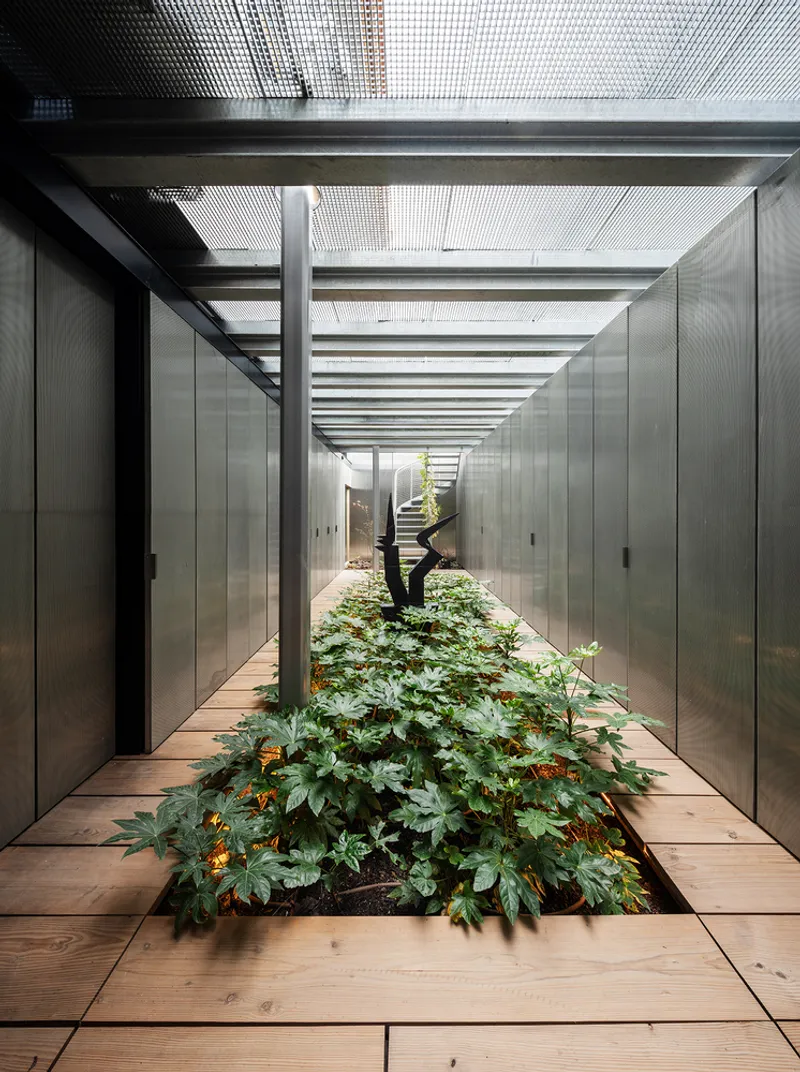
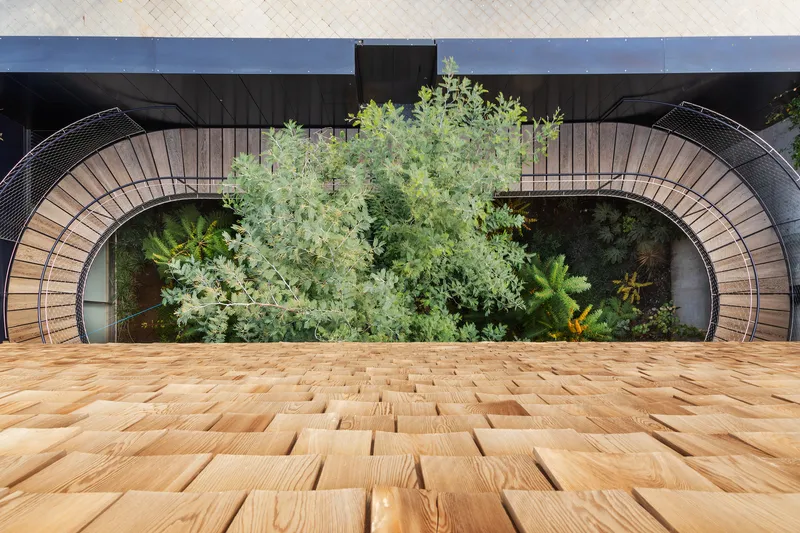
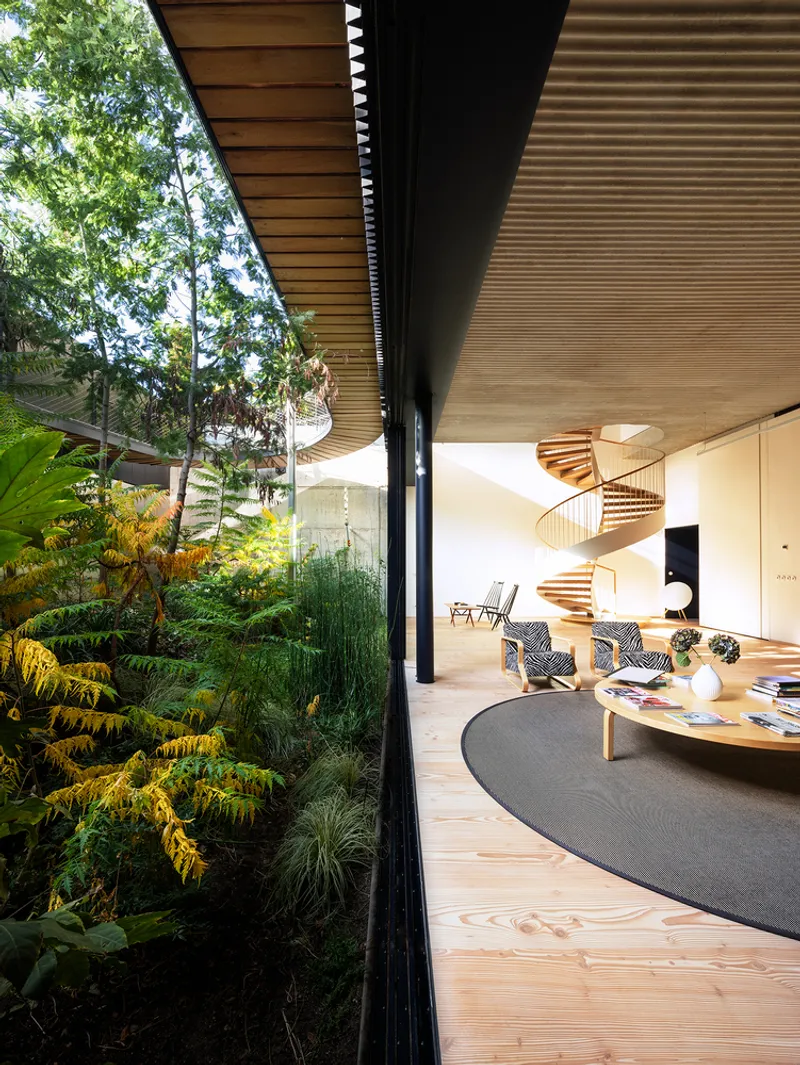
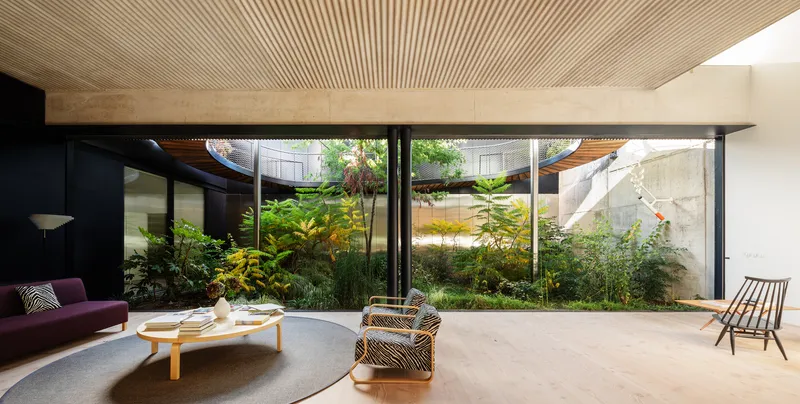
Departing from the traditional hierarchical layout, the architects inverted the spatial organization. The basement is transformed into the central living space, flooded with natural light and surrounded by two distinct outdoor patios—one vibrant and sunny to the south, and one calm and shaded to the north. These contrasting garden landscapes not only create a diverse atmosphere but also reinforce a strong connection between indoor and outdoor living, blurring the lines between architecture and landscape design.
Sustainable and Passive Design Strategies
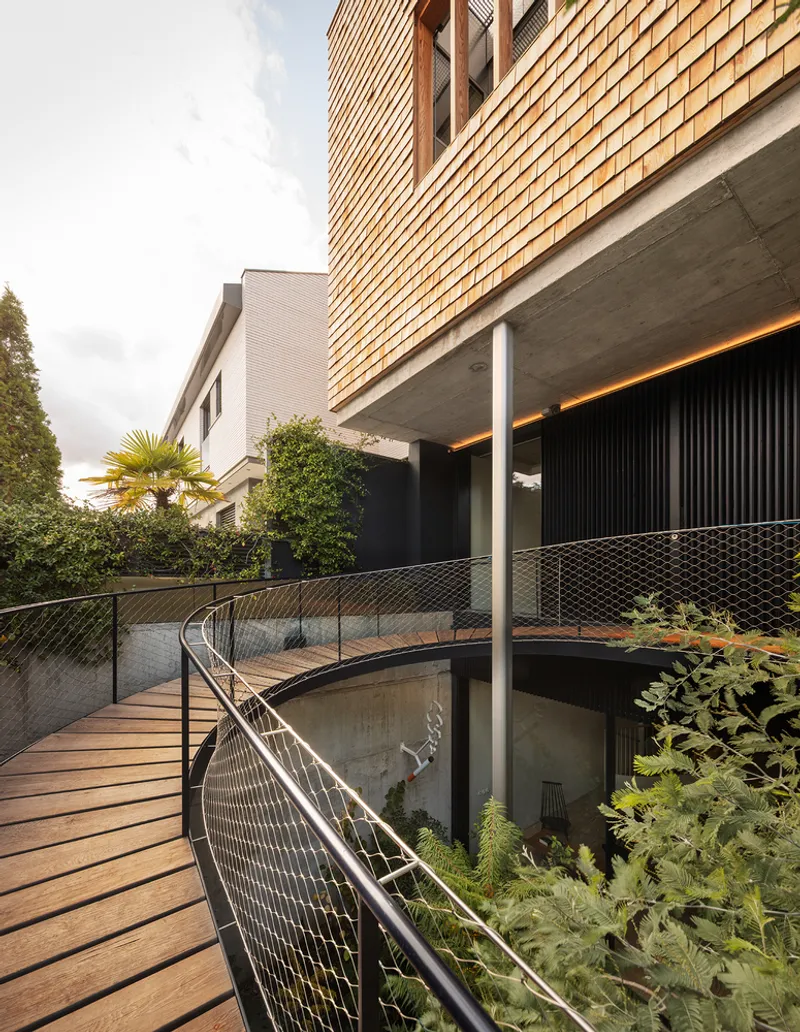
To manage the elevation between street level and the lowered structure, Langarita Navarro introduced a series of connective elements: a wooden walkway, a permeable tramex driveway, and a garden slab with an integrated pool. These components promote air circulation and evapotranspiration, which cool the home naturally during hot summer months and enhance overall energy efficiency. This sustainable strategy ensures that light, airflow, and water work in harmony with the built form.
Elevated Privacy and Warm Materiality
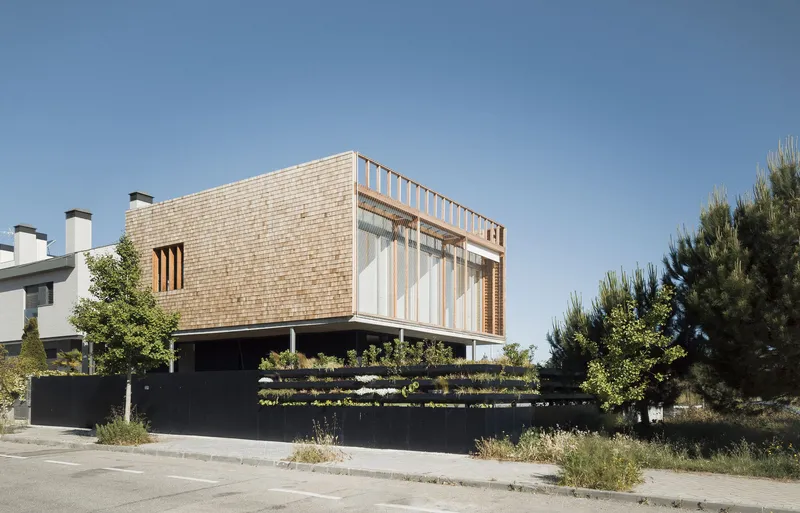
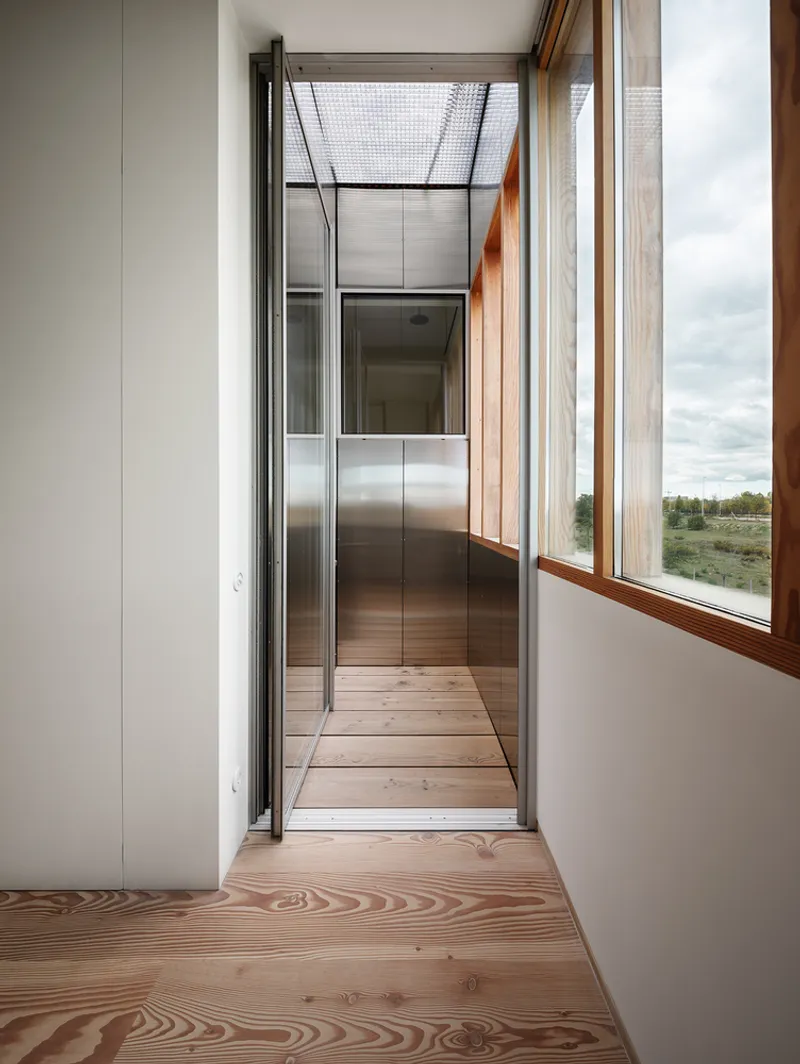
Rising above the sunken base, a lightweight timber-clad upper volume rests on slender supports, housing the private areas of the residence. This level aligns with the neighboring rooftops, maintaining urban continuity while offering elevated views of the adjacent park. The façade is constructed with ventilated wooden shingles, diverging from the area’s typical brickwork. This not only improves thermal performance but also gives the home a warm, tactile quality and a distinctive identity.

A Dynamic Spatial Journey
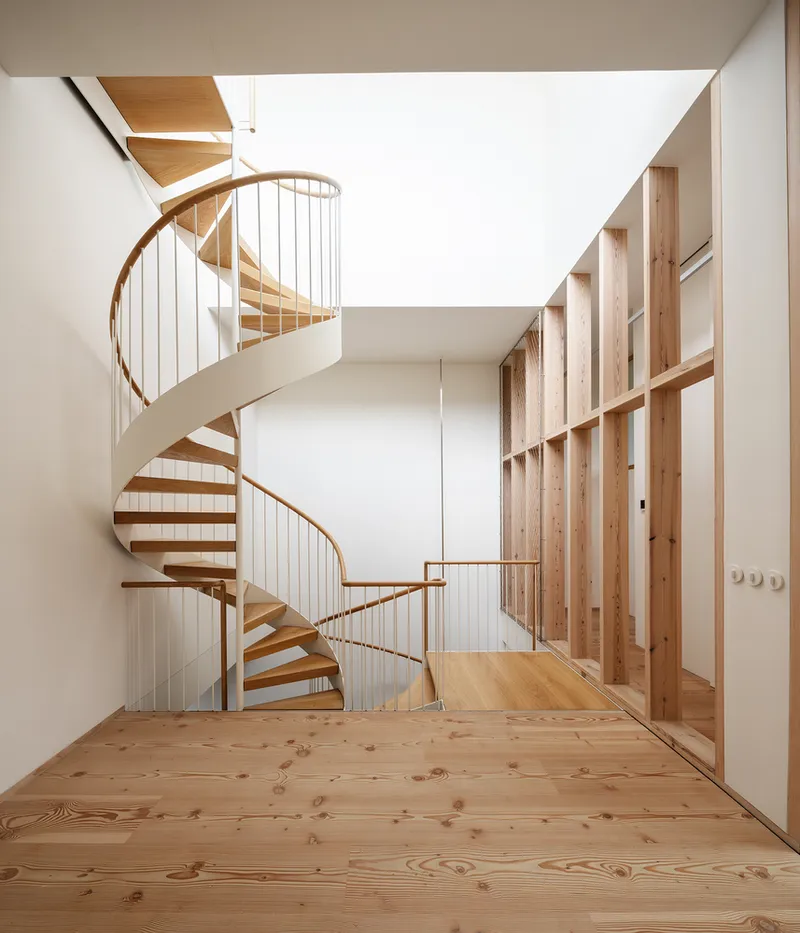
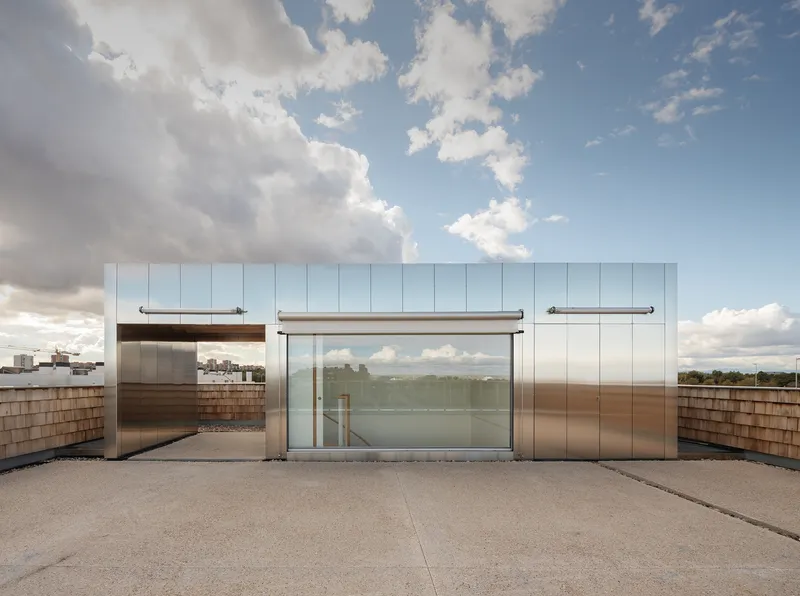
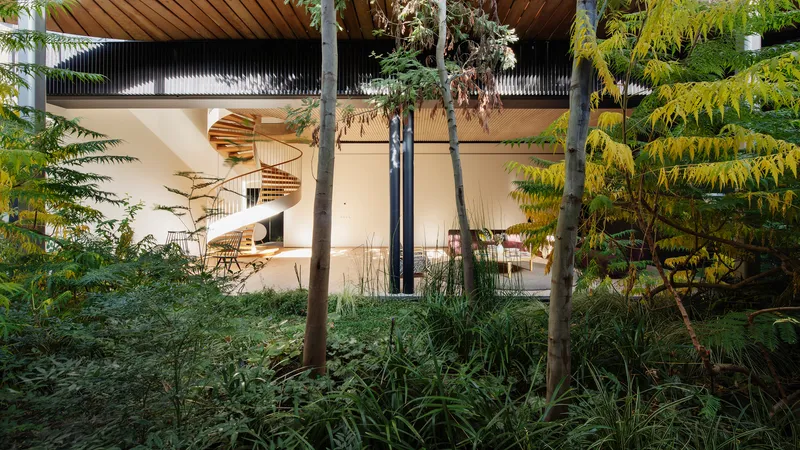
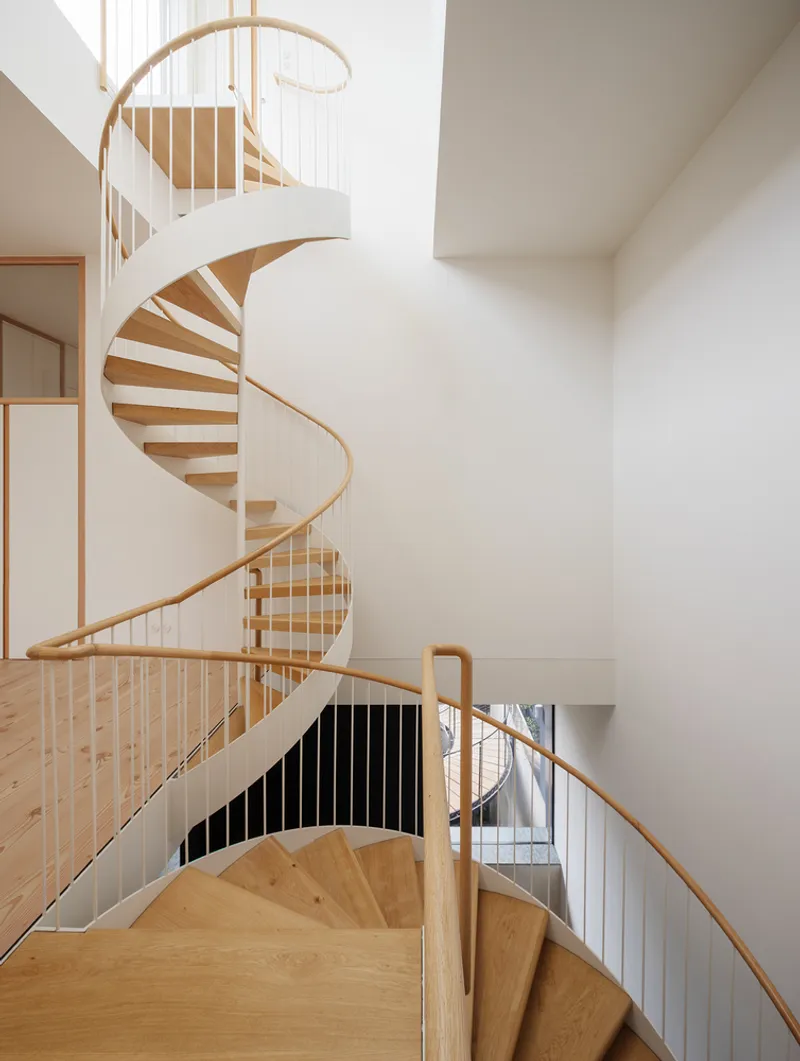
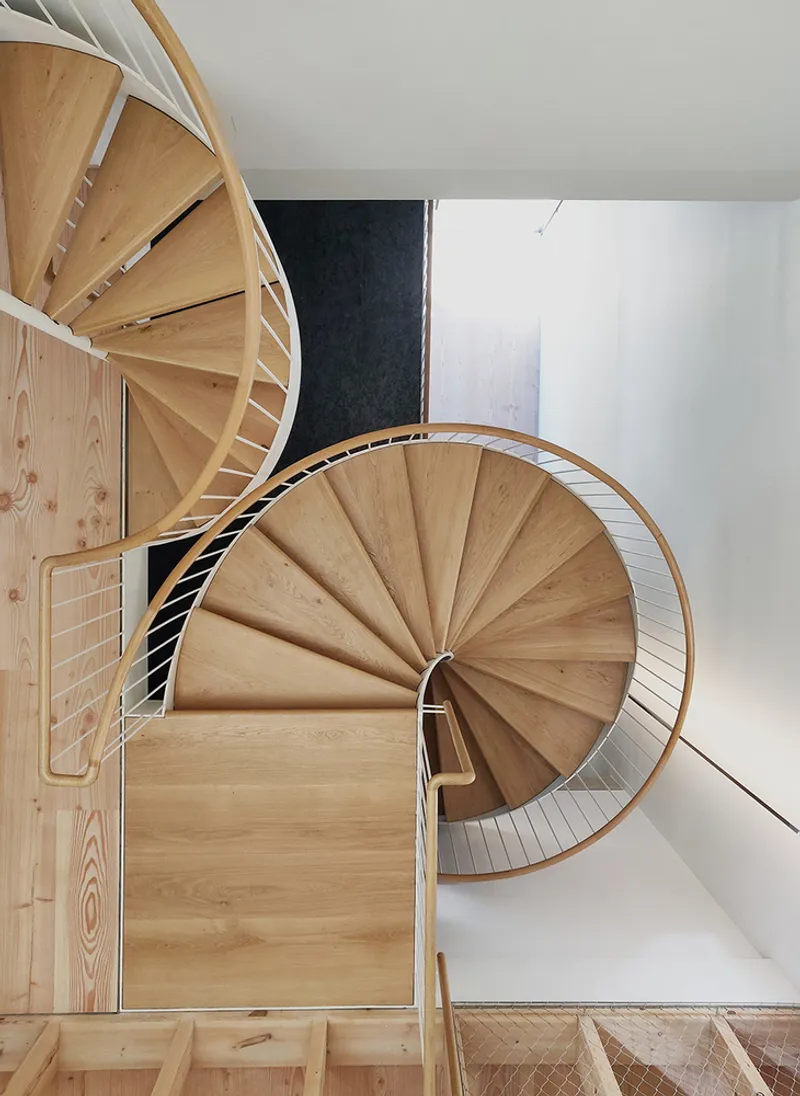
A custom helix staircase crafted from steel and timber provides vertical circulation, acting as a sculptural centerpiece that connects all levels. This elegant spiral element adds movement and flow, encouraging a journey through the different spatial layers of the house. From the green sunken courtyard to the cactus rooftop garden overlooking Madrid’s Sierra mountains, the home is a continuous, multi-sensory experience.
Artistic Vision Meets Environmental Intelligence
Designed by architects María Langarita and Víctor Navarro, the Hernández House is more than just a residential dwelling—it’s a bold architectural manifesto. It embodies a sensitive integration with nature, artistic ambition, and climate-resilient design. Through inventive planning and layered spatial design, it demonstrates how architecture can challenge norms while enhancing well-being, sustainability, and aesthetic richness.
All the photographs are works of Rafael Trapiello, Luis Díaz Díaz


Popular Articles
Popular articles from the community


Co-Life: Senior Housing Design That Reconnects Older Adults With the City
Co-Life reimagines senior housing design through healing gardens, shared streets, workshops, and a sustainable community across generations.

Riyadh For All: Intergenerational Urban Design for Active Aging in Rabat
Riyadh For All reimagines urban design in Rabat with intergenerational co-living, adaptive courtyards, and Moroccan cultural exchange today.

Lunar Spiral: Space Architecture Shaped by the Mathematics of the Universe
Lunar Spiral reimagines space architecture through Fibonacci geometry, lunar regolith, levitating habitats, and self-sustaining Moon living.

The Earth Pod: 3D Printed Homes for Resilient Refugee Communities
The Earth Pod reimagines refugee housing through 3D printed homes made from clay, combining resilience, self-sufficiency, and rapid shelter.

Similar Reads
You might also enjoy these articles


Hodi-Mandai Geram
Project Function: Preservation and revitalization of the Intangible heritage and socio-spatial identity of the Hodi by Housing, Cultural Memory Center, Sacred Grove, landscape, local tourism economy


Olio Towers: A Mid-Rise for Performers That Fuses Housing, Rehearsal, and Stage
Located blocks from Houston's Theater District, this modular tower stacks living units around a central performance atrium.

Oasis: Modular Green Housing Carved into Dhaka's Urban Fabric
A shortlisted Plugin Housing entry reclaims unauthorized settlements in Dhaka with stepped concrete volumes, green roofs, and ventilation-driven design.

Black Hole: A Floating Megastructure for the Post-Physical Era
Emiliano Mazzarotto envisions a spherical, self-scaling arena where e-sports, digital hotels, and holographic stadiums replace traditional public space.


Explore Architecture Competitions
Discover active competitions in this discipline



Challenge to reimagine the Iron Throne


Photograph architecture without architects


Illustrate the lost glory of Angkor Wat - Render Challenge


Design challenge to reuse E-waste
Comments (0)
Please login or sign up to add comments
No comments yet. Be the first to comment!