
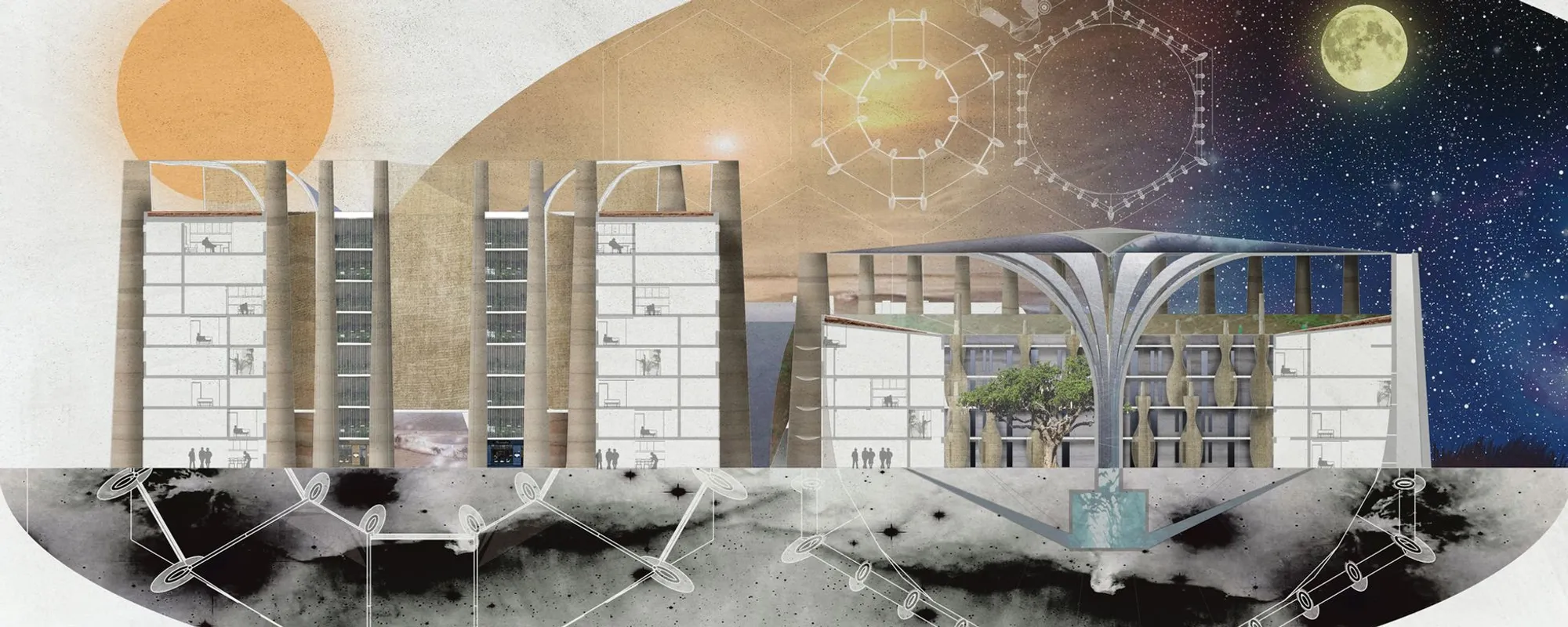
Hexagon City: Pioneering Sustainable Urban Architecture
Revolutionizing urban living with sustainable, low-tech design for energy, water, and shade in extreme environments like the Sahara.


Hexagon City redefines sustainable urban architecture by leveraging locally available resources, optimizing land use, and adopting low-tech solutions to create durable and environmentally friendly energy, water, shade, and cooling systems. This groundbreaking project, envisioned by Piet Scholten, was a People's Choice Award entry in the Extreme Habitat Challenge (EHC) - Sahara.
The global overpopulation crisis demands solutions that extend beyond traditional cityscapes. Hexagon City rises to this challenge by envisioning a future-ready urban hub in the harsh Sahara Desert, Mauritania. The city is planned as a transit hub for the proposed Hyperloop connecting New York to Mumbai. Designed to support a nomadic yet rooted lifestyle, Hexagon City accommodates up to 100,000 inhabitants in an eco-conscious environment.
Key Features of Hexagon City
1. Low-Tech Sustainability
The city relies on low-tech solutions to minimize carbon emissions while maximizing durability and accessibility. These innovations include:
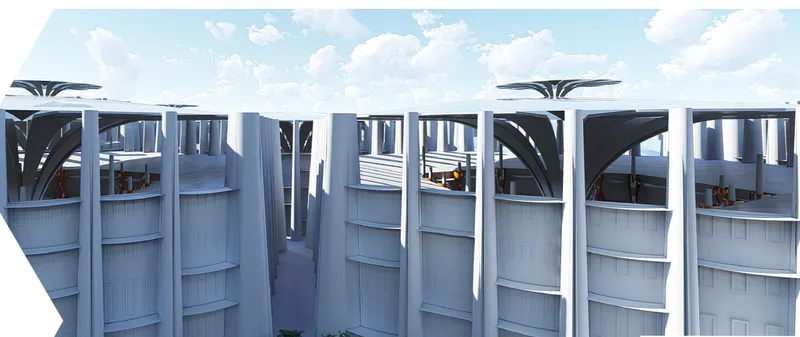
- Providing Shade: Inspired by urban grids from cities like Paris and Barcelona, Hexagon City uses geometric urban planning to optimize shade and reduce heat exposure.
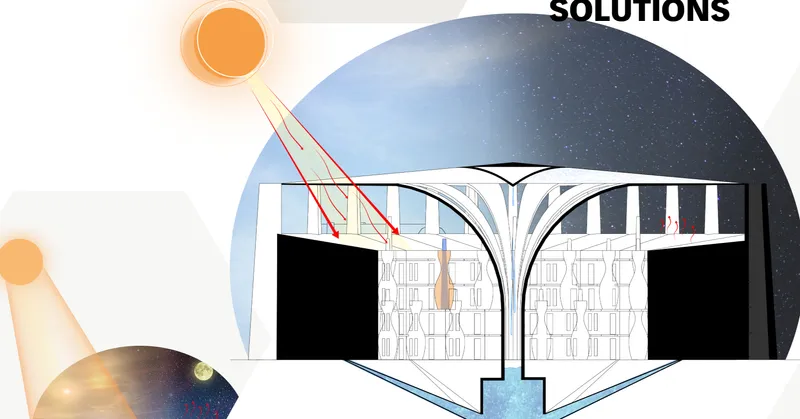
- Ventilation for Cooling: Solar chimneys and natural airflow systems provide sustainable cooling solutions.
- Water Resources: Water scarcity in the Sahara is tackled through condensation systems that generate water from the air.
- Material Usage: Rammed earth, a locally available resource, keeps construction eco-friendly and thermally efficient.
2. Morphology and Design
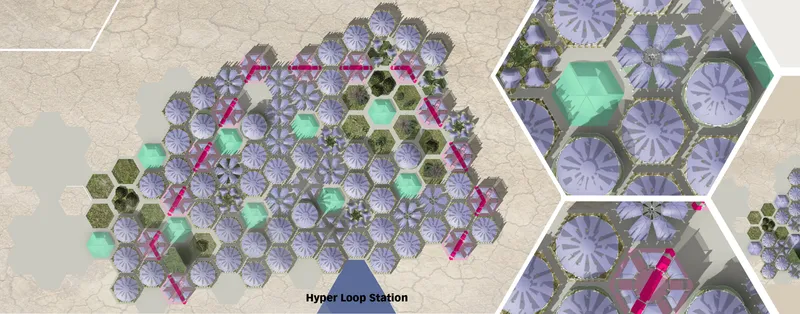
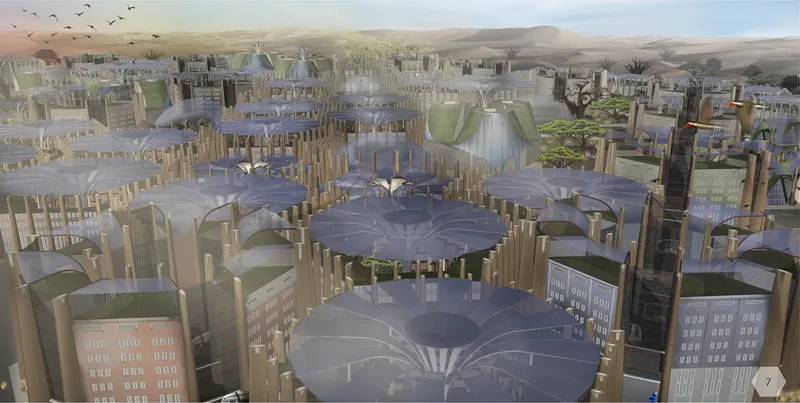
Hexagon City’s unique hexagonal structure is a marvel of sustainable urban design. The hexagons provide optimal shade and flexibility for expansion. Inspired by nature and existing metropolises, the city combines efficiency with aesthetic appeal. Blocks are strategically aligned to ensure minimal land waste while promoting diverse functionality within each hexagon.
3. Urban Design and Expansion
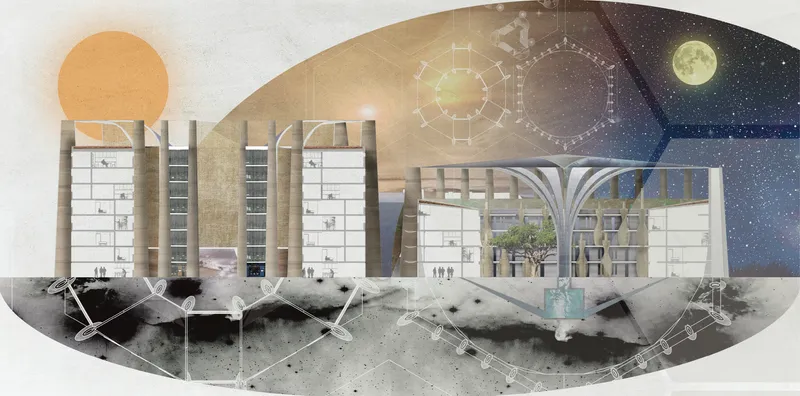
The modular design of Hexagon City allows for seamless horizontal and vertical expansion. Public transport systems are integrated into the city’s fabric, with Hyperloop stations serving as key transit hubs. Dedicated blocks for agriculture, or "food domes," create a self-sustaining ecosystem, reducing reliance on external food sources and minimizing transportation emissions.
4. Low-Tech Solutions
Innovations like solar chimneys and water-generating towers highlight the core ethos of Hexagon City: sustainability through simplicity. These towers provide ventilation and water collection, making life comfortable even in the extreme desert climate.
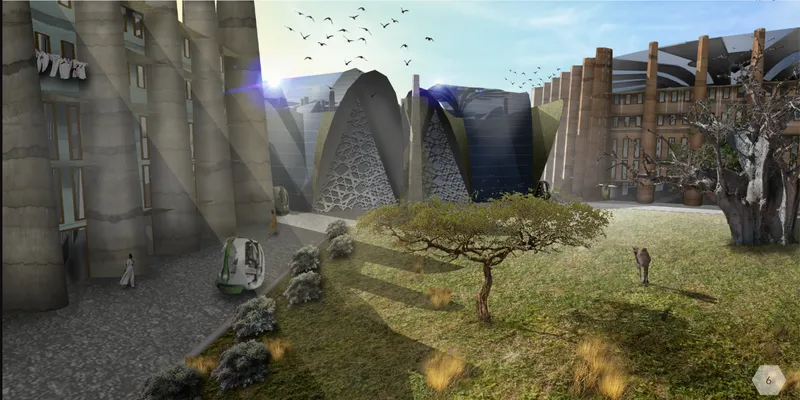
Living in Hexagon City
Hexagon City offers a new way of living where nature’s resources are harnessed to meet everyday needs. Every apartment, villa, and public space is equipped with natural cooling, shade, and water systems. This innovative approach creates a harmonious balance between comfort and ecological responsibility.
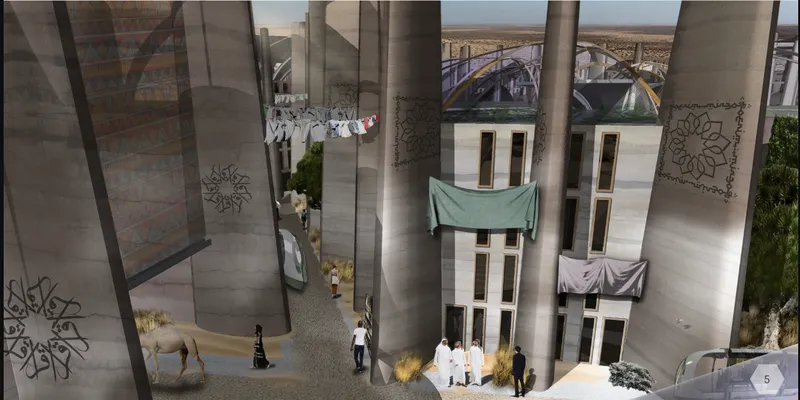
Saharan Street Life
The cityscape blends Eastern and Western architectural styles with low-tech systems to create peaceful and practical urban environments. Semi-slow traffic lanes ensure a serene atmosphere, while green spaces and agricultural zones enrich urban life.
Hexagon City is a blueprint for sustainable urban architecture in extreme environments. By integrating low-tech solutions and leveraging natural resources, the city sets a benchmark for future urban planning. Piet Scholten’s visionary project not only addresses the challenges of overpopulation and climate change but also reimagines how cities can function as self-sustaining ecosystems.
Discover how Hexagon City is shaping the future of sustainable architecture and creating a legacy of resilience and innovation in urban design.




Popular Articles
Popular articles from the community


The Musturak Paradise: Senior Living Architecture for a Connected Future in Temara, Morocco
The Musturak Paradise reimagines senior living architecture in Temara via private homes, social spaces, culture, community, and shared care.

Play: Fragments of Their World
Familiar architecture becomes modular playground design, creating safe spaces where displaced children can learn, connect, imagine and play.

Conexión: Biophilic Design Reimagines High-Rise Living in Hong Kong
Conexión reimagines high-rise living in Hong Kong through biophilic design, green facades, shared spaces, daylight, water and nature within.

The Earth Pod: 3D Printed Homes for Resilient Refugee Communities
The Earth Pod reimagines refugee housing through 3D printed homes made from clay, combining resilience, self-sufficiency, and rapid shelter.


Similar Reads
You might also enjoy these articles

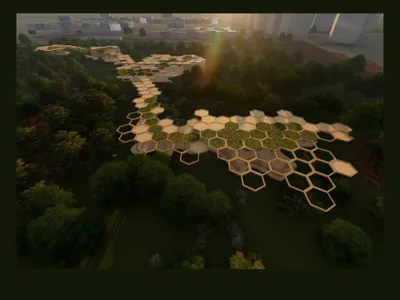
Eco Chapel: A Green Architecture Pavilion Designed in Symbiosis with the Forest
Eco Chapel uses green architecture to weave prayer, learning and reuse into a forest pavilion shaped by modular hexagonal canopies for life.
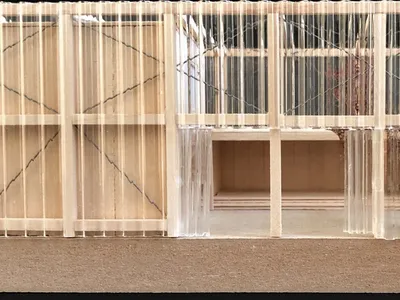
Kaffeebühnen: Coffee Shop Architecture Designed as a Civic Stage Between Vienna’s City and Park
Kaffeebühnen turns coffee shop architecture into a civic stage, linking Vienna’s park edge, urban life, warm timber yards, and coffee craft.
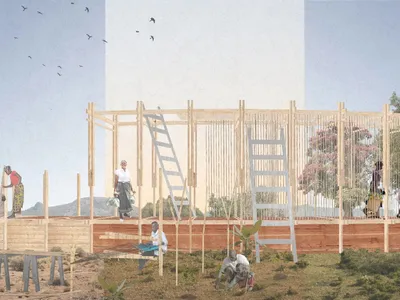
Healing Façade: Sustainable Architecture for Reforestation, Community, and Sacred Ecology in Ethiopia
Healing Façade reimagines sustainable architecture as a living wall that restores soil, catches water and renews Ethiopia's forest churches.


Urban Forest: A Vertical Ecosystem for 5,000 Workers in Singapore's Changi Business Park
Radially stacked pods and layered green decks turn a 7-acre plot into 47 acres of ecological workspace projected for 2040.



Comments (0)
Please login or sign up to add comments
No comments yet. Be the first to comment!