
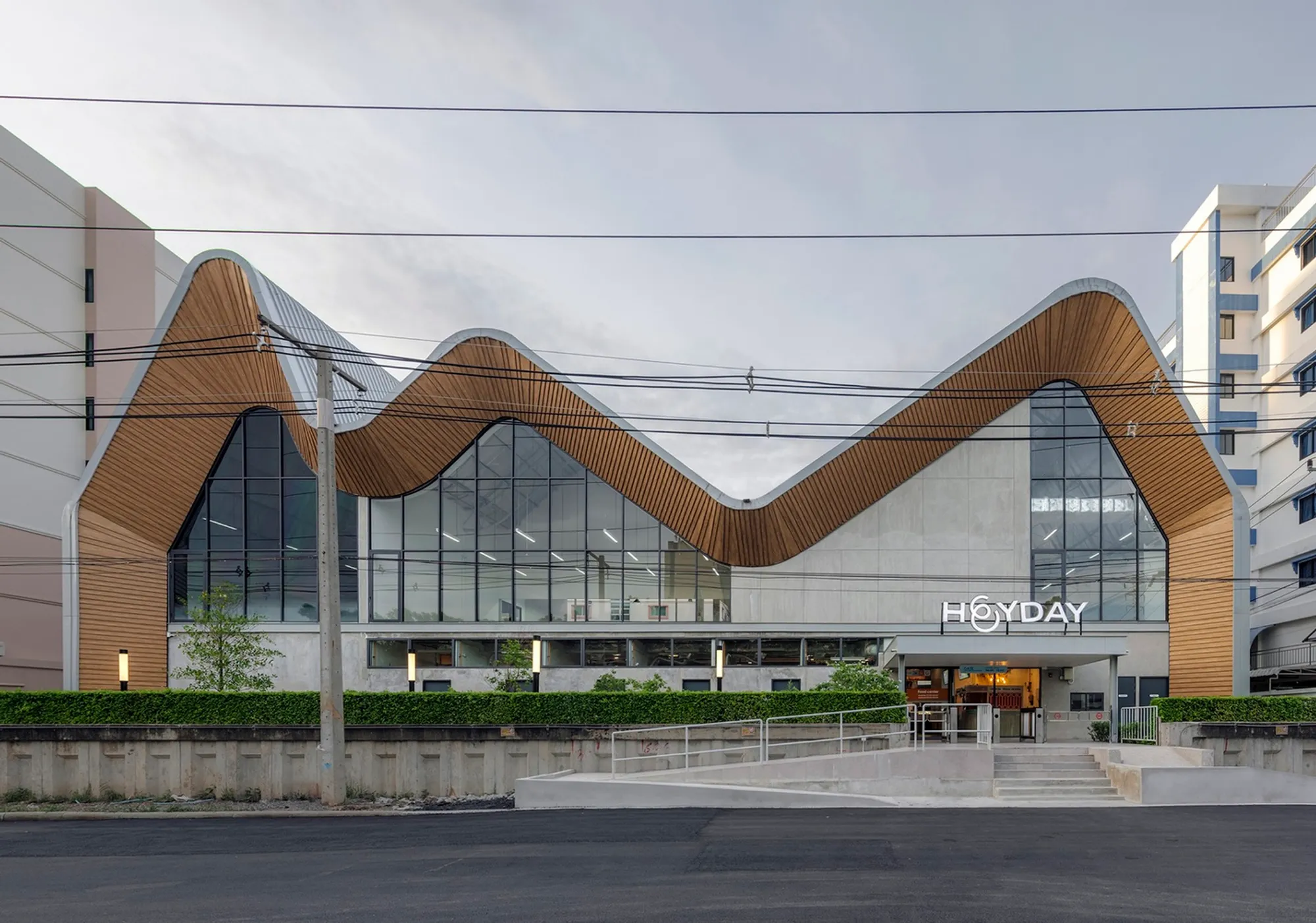
HEYDAY Community Hub by ASWA: A Vibrant Architectural Landmark for Bangkok University
HEYDAY Community Hub by ASWA is a vibrant, curved-roof student space combining co-working, dining, and community interaction near Bangkok University.


Located adjacent to Bangkok University, the HEYDAY Community Hub byASWA (Architectural Studio of Work and Aesthetics) redefines the idea of a student-centered public space. Completed in 2025, this 1200-square-meter mixed-use hub seamlessly integrates a co-working space, food court, and future dining venues, offering a vibrant architectural destination that strengthens the social and academic fabric of the university community.
A Playful and Socially Engaging Community Space in Thailand
A Contemporary Response to Urban Context
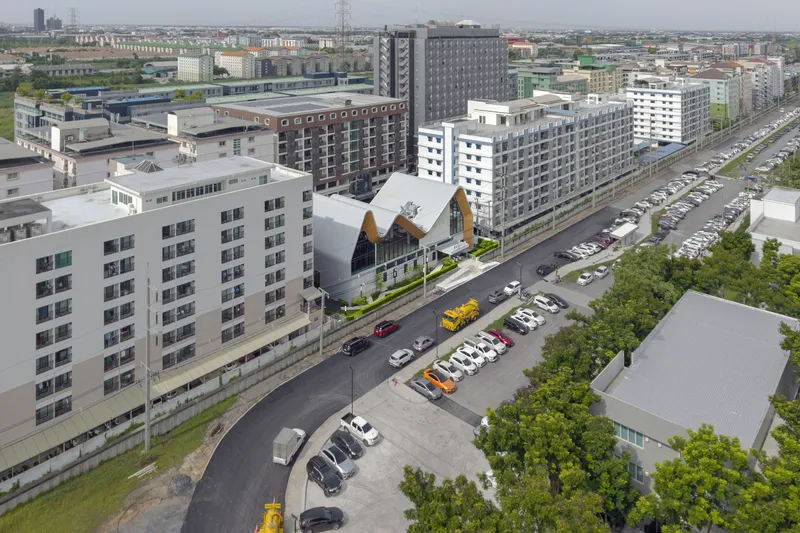
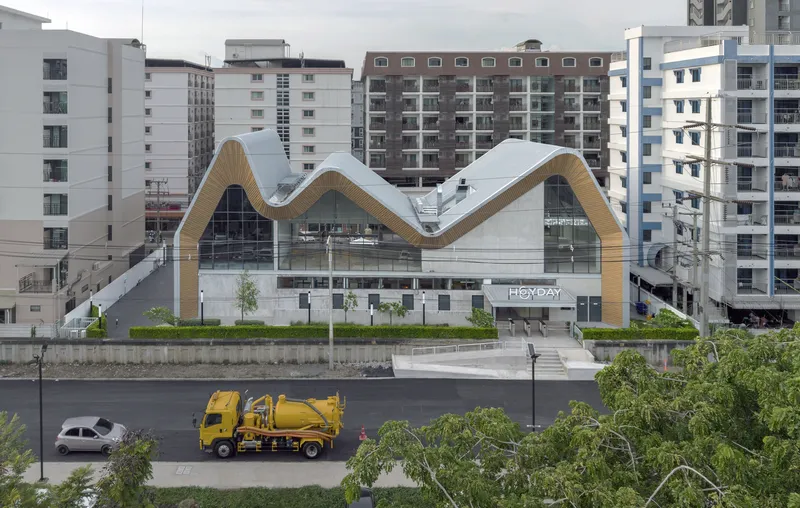
Positioned between two parallel rows of rectilinear apartment blocks, the HEYDAY site presented a unique challenge: how to inject visual dynamism and spatial diversity into a monotonous urban corridor. ASWA’s solution was to compose the building from three asymmetrical volumes, each crowned with curved gable roofs. These organic rooflines create a striking silhouette, establishing HEYDAY as a distinctive architectural landmark that contrasts with the rigid geometry of its surroundings.
The rhythmic flow of the roof forms reflects movement and interaction, mirroring the lively spirit of student life. By doing so, the project doesn’t just fill a physical void, it revitalizes a once-static streetscape into an engaging public axis.
Architecture Designed for Connection and Flexibility
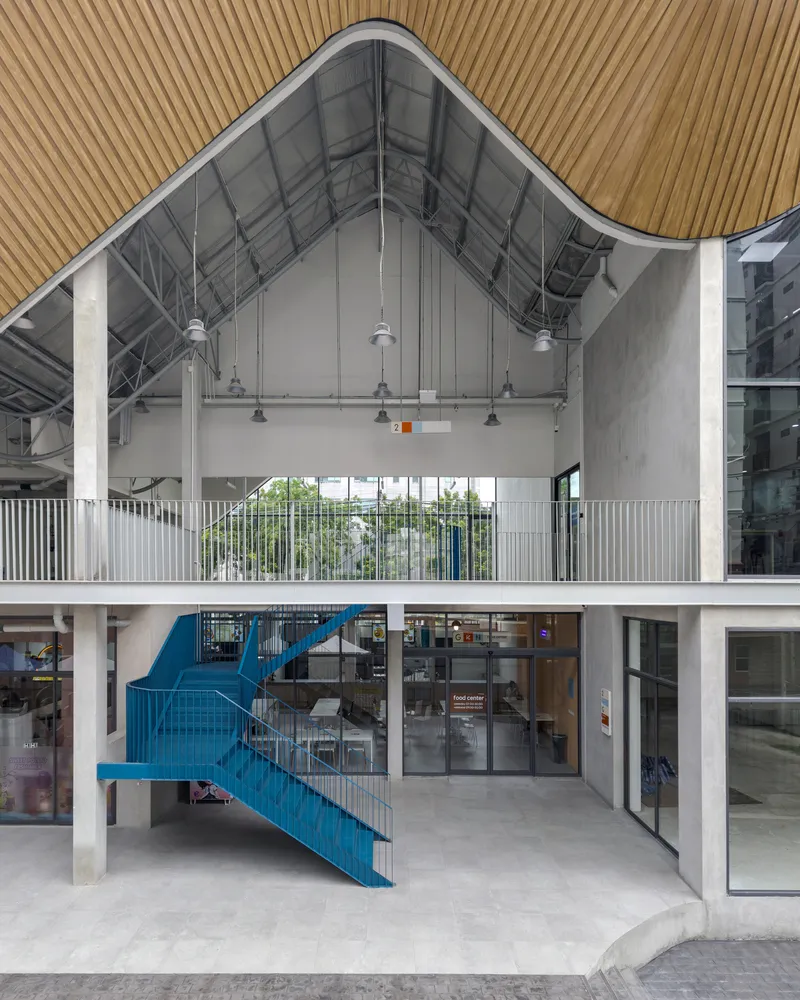
ASWA envisioned HEYDAY as a bridge between the university campus and nearby residential areas, promoting accessibility and inclusivity. The two-story structure is organized for maximum adaptability, with spaces designed to evolve alongside the community’s changing needs.
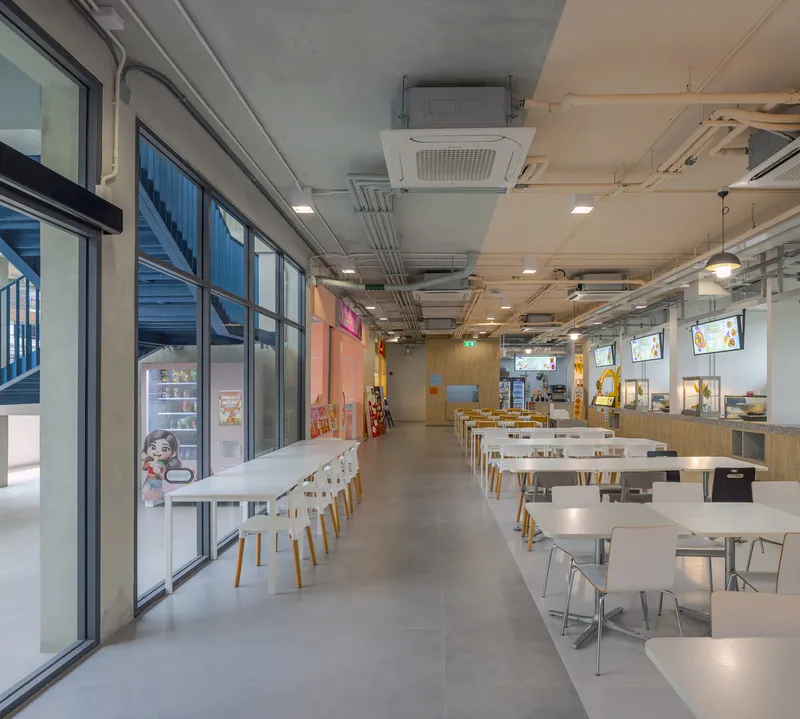
- Ground Floor: A food court anchors the building’s base, surrounded by rental spaces that accommodate pop-up shops and student initiatives.
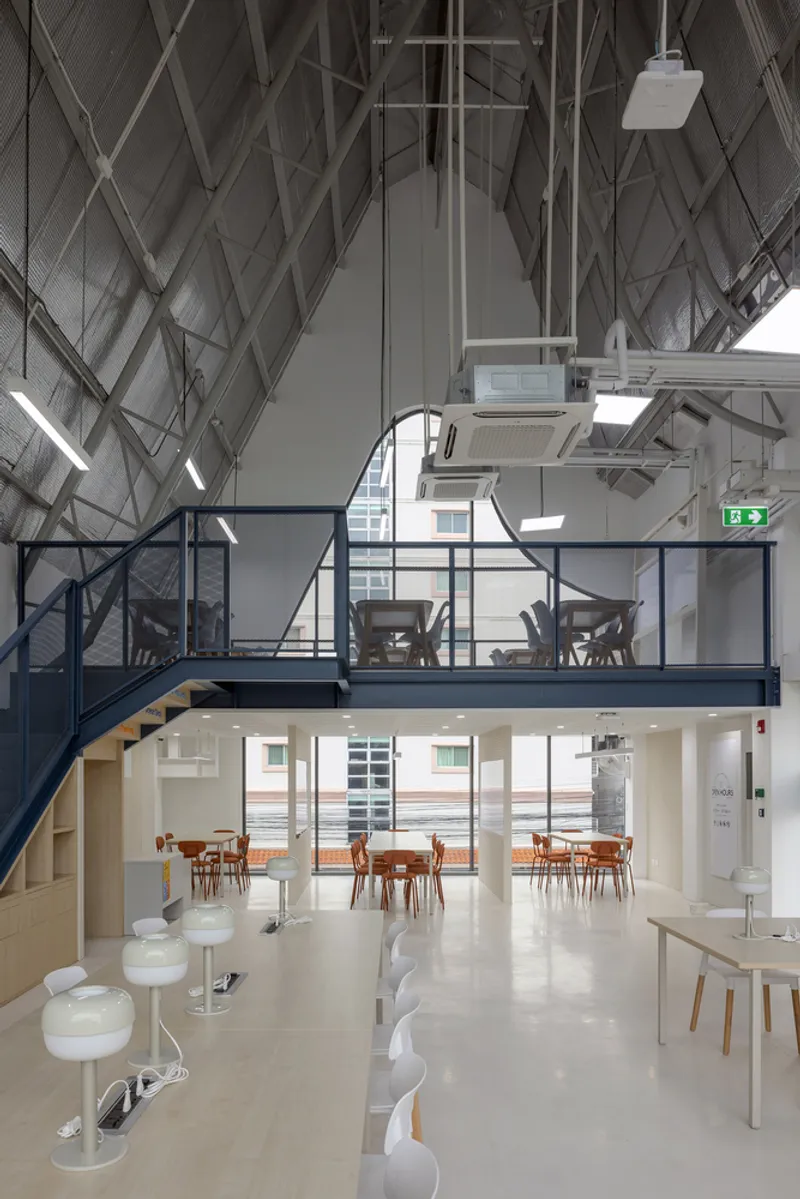
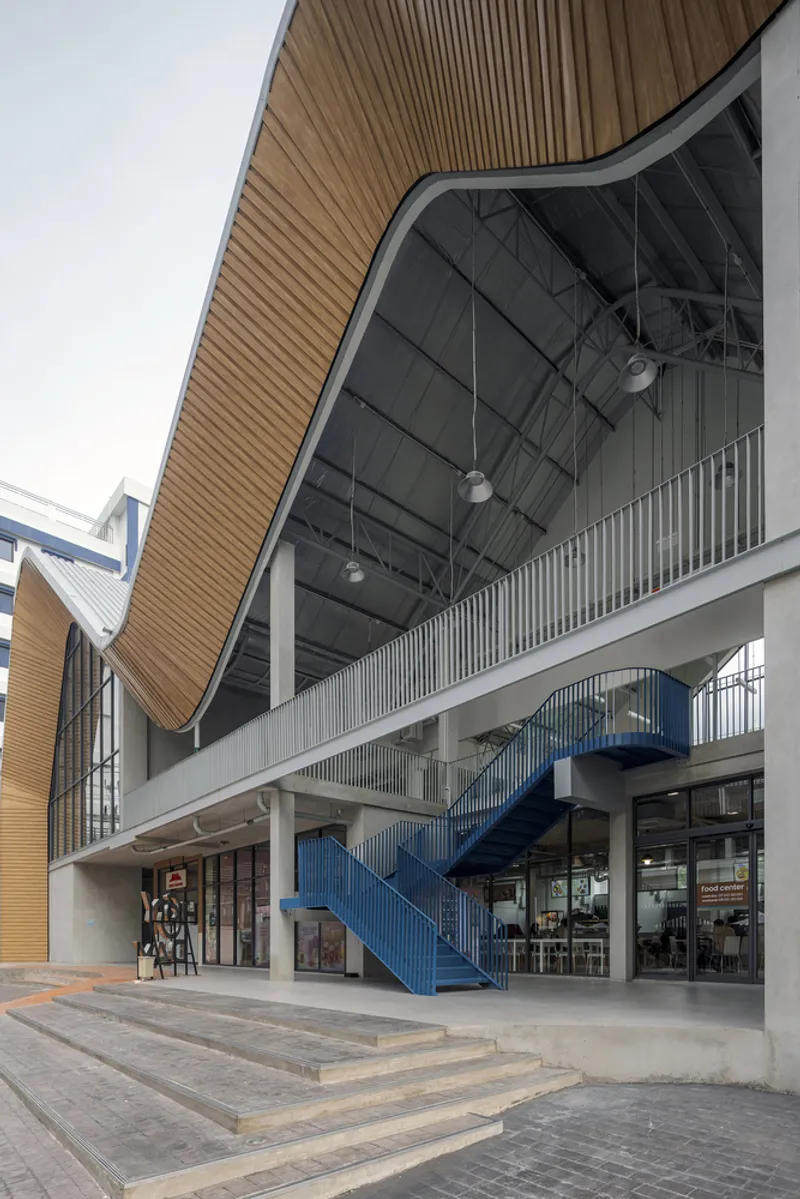
- Second Floor: The upper level hosts a co-working space designed to encourage collaboration and creativity, accessible via a bold blue staircase that acts as a visual focal point.
- Mezzanine Level: A partial mezzanine adds vertical variety while offering quieter zones for study and group work.
The second floor also includes two large rental units designated for future restaurants or cafés, ensuring long-term adaptability and diverse usage.
Interior Aesthetics: Curves, Light, and Material Harmony
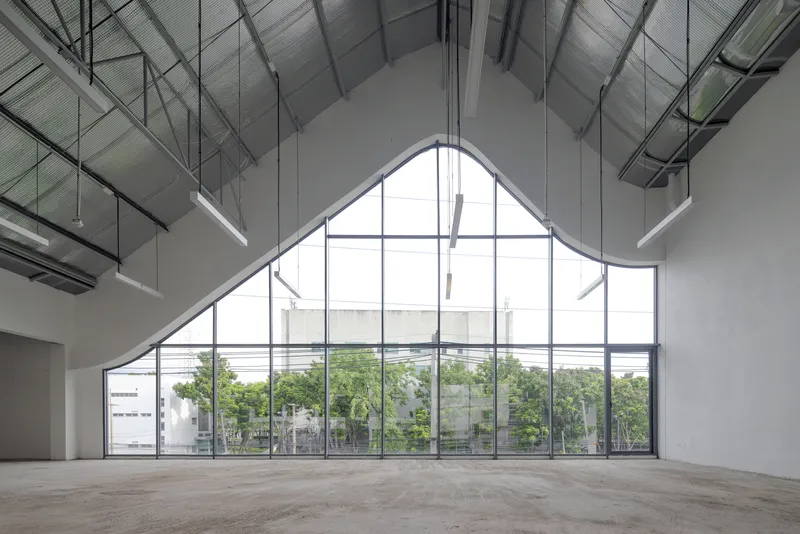
Inside, ASWA extends the expressive exterior language through fluid, wavy interior geometries. The curved ceilings and walls echo the roofline, creating a cohesive architectural narrative from outside to in. Natural light filters through expansive glass façades, enhancing transparency and visual connectivity between the interior spaces and the surrounding neighborhood.
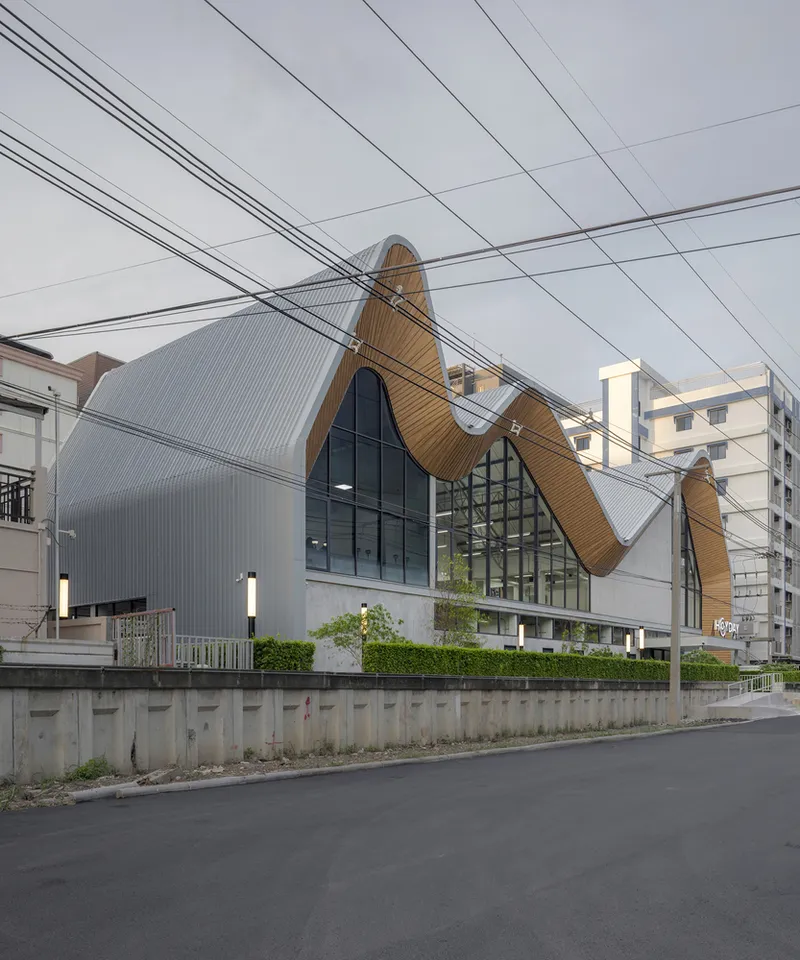
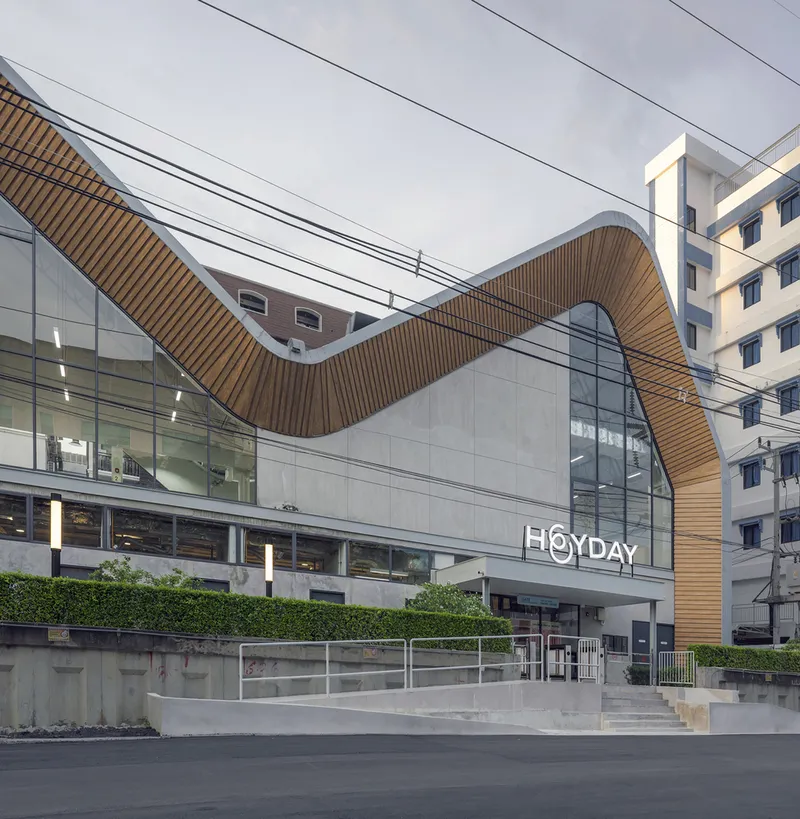
All photographs are works ofSoopakorn Sris



Popular Articles
Popular articles from the community


The Musturak Paradise: Senior Living Architecture for a Connected Future in Temara, Morocco
The Musturak Paradise reimagines senior living architecture in Temara via private homes, social spaces, culture, community, and shared care.

Lunar Spiral: Space Architecture Shaped by the Mathematics of the Universe
Lunar Spiral reimagines space architecture through Fibonacci geometry, lunar regolith, levitating habitats, and self-sustaining Moon living.

Riyadh For All: Intergenerational Urban Design for Active Aging in Rabat
Riyadh For All reimagines urban design in Rabat with intergenerational co-living, adaptive courtyards, and Moroccan cultural exchange today.

The Earth Pod: 3D Printed Homes for Resilient Refugee Communities
The Earth Pod reimagines refugee housing through 3D printed homes made from clay, combining resilience, self-sufficiency, and rapid shelter.

Similar Reads
You might also enjoy these articles


Hodi-Mandai Geram
Project Function: Preservation and revitalization of the Intangible heritage and socio-spatial identity of the Hodi by Housing, Cultural Memory Center, Sacred Grove, landscape, local tourism economy


Olio Towers: A Mid-Rise for Performers That Fuses Housing, Rehearsal, and Stage
Located blocks from Houston's Theater District, this modular tower stacks living units around a central performance atrium.

Oasis: Modular Green Housing Carved into Dhaka's Urban Fabric
A shortlisted Plugin Housing entry reclaims unauthorized settlements in Dhaka with stepped concrete volumes, green roofs, and ventilation-driven design.

Black Hole: A Floating Megastructure for the Post-Physical Era
Emiliano Mazzarotto envisions a spherical, self-scaling arena where e-sports, digital hotels, and holographic stadiums replace traditional public space.


Explore Architecture Competitions
Discover active competitions in this discipline



Challenge to reimagine the Iron Throne


Photograph architecture without architects


Illustrate the lost glory of Angkor Wat - Render Challenge


Design challenge to reuse E-waste
Comments (0)
Please login or sign up to add comments
No comments yet. Be the first to comment!