

Heyuan Museum of Popular Science Education for K-12s
Heyuan Museum blends STEAM education, flexible learning spaces, and sustainable design, creating an interactive, low-carbon hub for K-12 science education.


A New Model for Science Education Architecture
The Heyuan Museum of Popular Science Education for K-12s redefines how architecture can serve as both a cultural landmark and an educational hub. Designed by the Architectural Design and Research Institute, South China University of Technology, this innovative museum provides an experimental platform for STEAM-based education—a teaching model that emphasizes interdisciplinary learning, collaboration, and hands-on experiences.
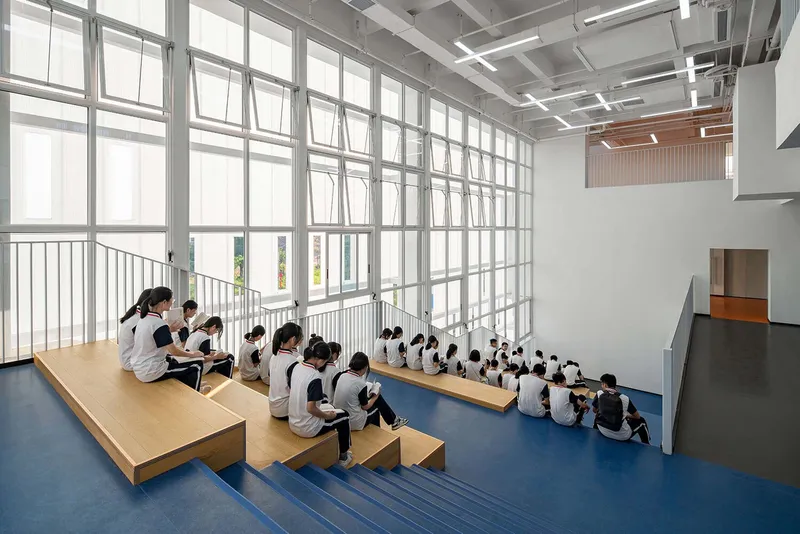
Unlike traditional museums, this project functions as an “informal classroom”, allowing learning to extend beyond conventional spaces. The design encourages interactive engagement, fostering curiosity and experimentation among primary and secondary school students.
Project Positioning and Educational Vision
Although modest in scale, the museum carries significant ambition. Supported by the provincial government, it was envisioned as a benchmark in science education for K-12 students across Guangdong province. Its thematic exhibitions and flexible spaces allow schools to tailor content to their own teaching goals and curricula, ensuring that no two experiences are alike.
This demonstration project sets a precedent for future small-scale science education facilities across China, prioritizing adaptability, efficiency, and experiential learning.

Spatial Organization and Flexibility
To maximize usability within its compact footprint, the museum integrates two primary functional zones:
- Science Viewing Area – A closed exhibition space designed for focused displays and immersive experiences.
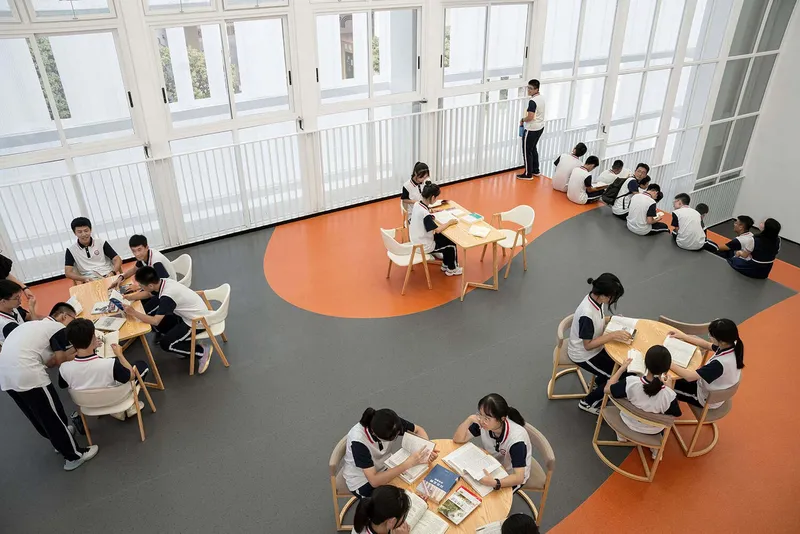
- Open Teaching Area – A flexible, adaptable zone that supports workshops, discussions, and group activities.
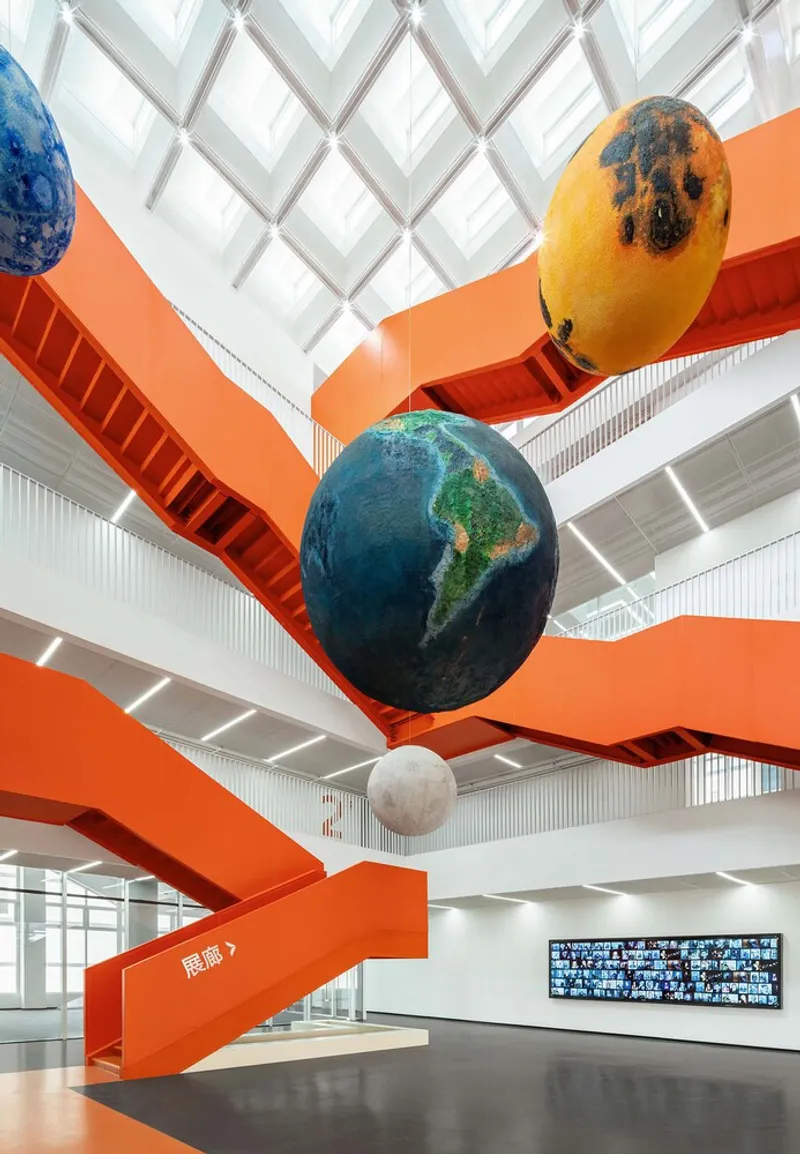
The circulation design introduces a double-track path inspired by a spatial double helix, ensuring visitors can explore exhibitions efficiently without overlap or congestion. This three-dimensional flow enhances visitor engagement while maintaining spatial continuity.


Architectural Expression and Materiality
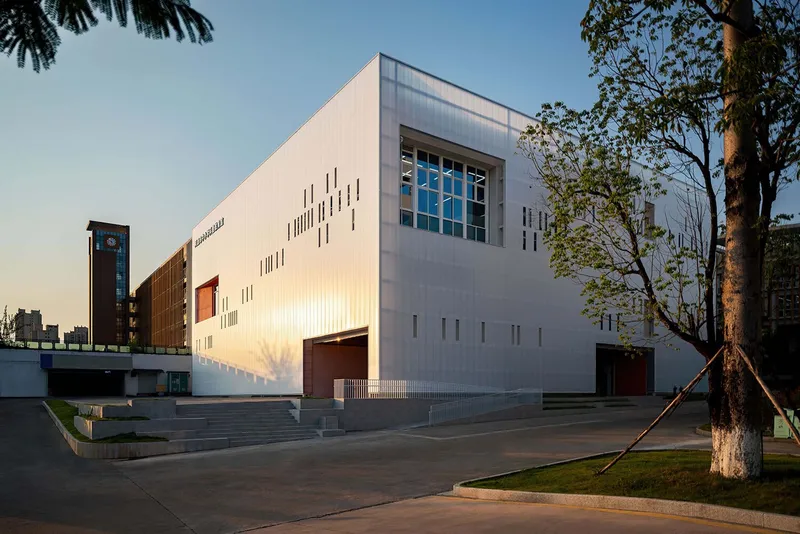
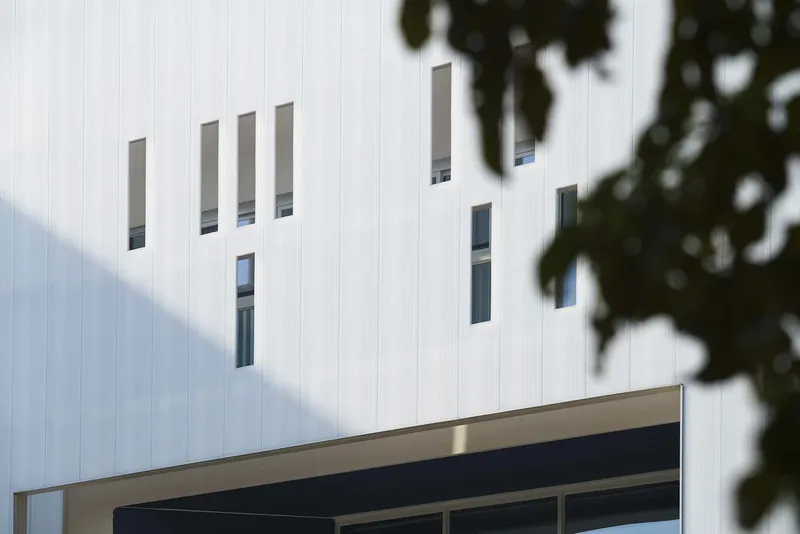
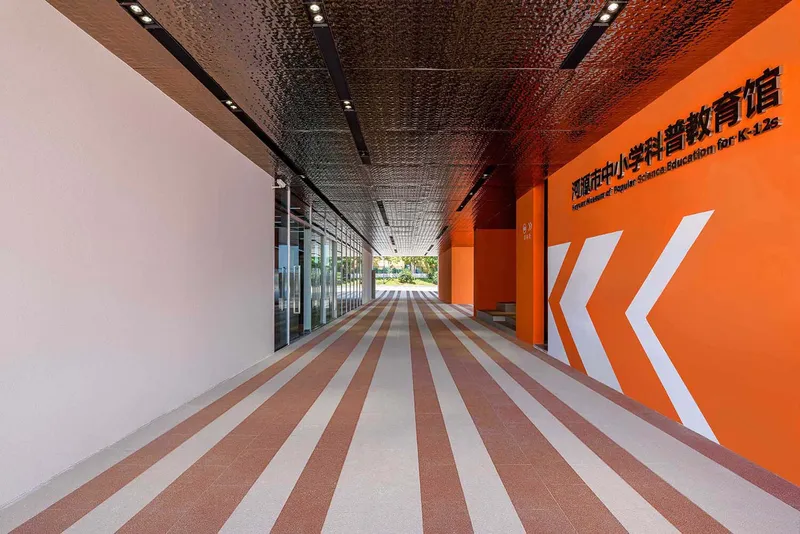
Externally, the building appears as a geometric cube, wrapped in semi-transparent polycarbonate panels that diffuse daylight and create a luminous, soft atmosphere inside. Strategic openings highlight major programmatic spaces, while the streamlined design reflects the interior circulation.
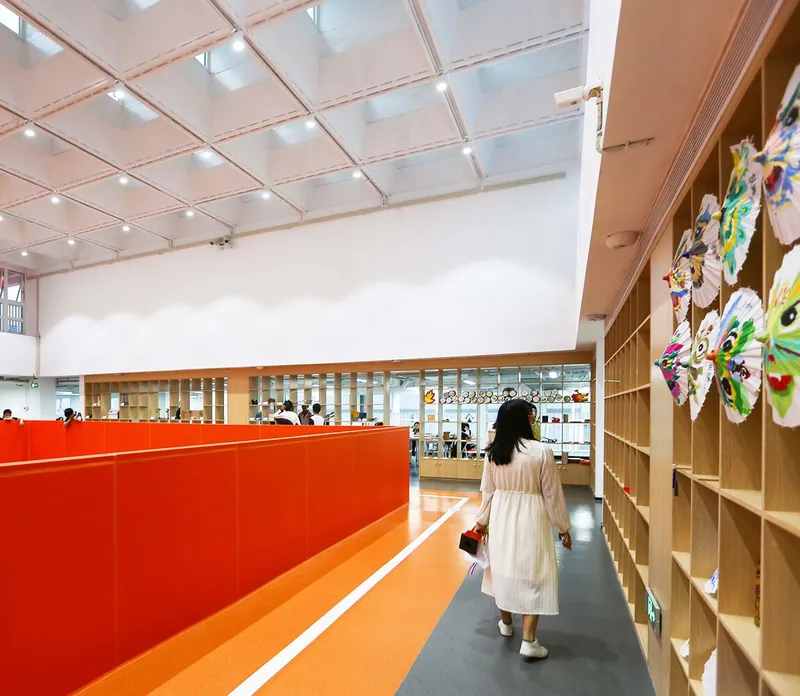
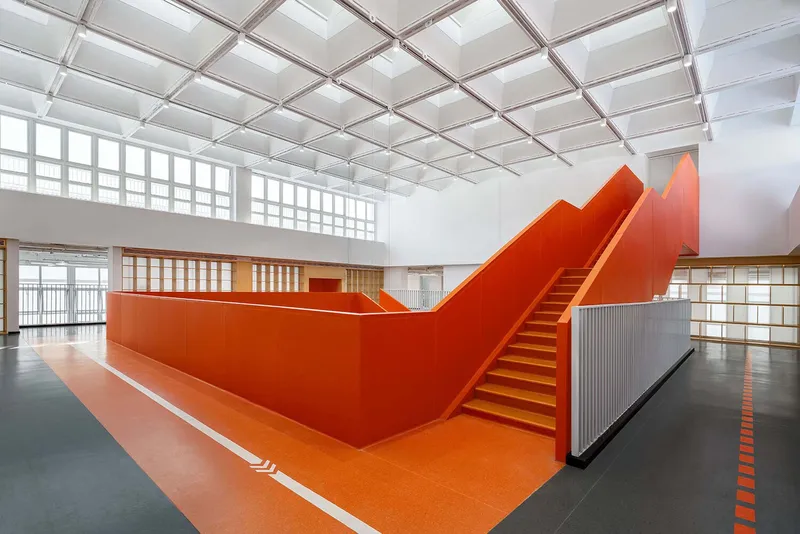
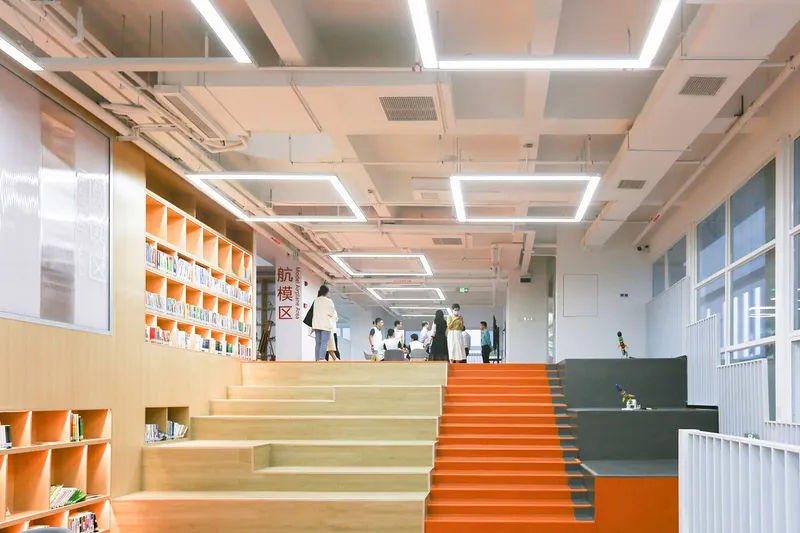
The interior encourages multi-scale teaching activities, from small group discussions to larger gatherings, through layered and staggered volumes. This versatility transforms the museum into a dynamic learning environment adaptable to evolving educational needs.
Sustainability and Low-Carbon Innovation
The Heyuan Museum is also a pioneer in sustainable design. Awarded the “Near-zero Energy Consumption Building” certification by the China Building Energy Efficiency Association, the project integrates multiple green technologies:
- Skylights for natural ventilation and lighting
- Polycarbonate façades with shading and ventilation holes to reduce energy demand
- Photovoltaic panels and small-scale wind power systems
- Thermal glass installations for energy efficiency
By combining renewable energy and passive design strategies, the museum serves as both a teaching tool and a living example of environmental responsibility.

Learning Beyond Walls: Roof Garden and Exposed Systems
The architects embraced the philosophy that “the building itself is an exhibit.” Exposed equipment pipelines and structural elements invite students to engage directly with the building systems, transforming infrastructure into hands-on teaching material.
The rooftop garden further extends learning outdoors, featuring:
- A botanical garden for biology education
- A construction equipment zone for technical demonstrations
- Public pathways and gathering areas that serve as outdoor classrooms
This indoor-outdoor learning continuum breaks down boundaries between formal and informal education.
A Living Educational Experiment
The Heyuan Museum of Popular Science Education is not a static institution but a constantly evolving learning environment. As both a museum and a pedagogical experiment, it tests new teaching strategies and provides a space where education, architecture, and sustainability converge.

By bridging architecture and pedagogy, the project represents a forward-looking model for science education in China—one that may inspire similar institutions worldwide.



Popular Articles
Popular articles from the community


Riyadh For All: Intergenerational Urban Design for Active Aging in Rabat
Riyadh For All reimagines urban design in Rabat with intergenerational co-living, adaptive courtyards, and Moroccan cultural exchange today.

The Ocean Hive: Sustainable Architecture for a Self-Sufficient Civilization at Sea
The Ocean Hive imagines sustainable architecture at sea, where modular habitats, algae, wave power and ocean waste sustain a growing colony.

AL-JANNAH: Sustainable Architecture and Permaculture for Afghan Widows
AL-JANNAH uses sustainable architecture and permaculture to create resilient oasis of housing, learning, work and renewal for Afghan widows.

The Musturak Paradise: Senior Living Architecture for a Connected Future in Temara, Morocco
The Musturak Paradise reimagines senior living architecture in Temara via private homes, social spaces, culture, community, and shared care.

Similar Reads
You might also enjoy these articles


Hodi-Mandai Geram
Project Function: Preservation and revitalization of the Intangible heritage and socio-spatial identity of the Hodi by Housing, Cultural Memory Center, Sacred Grove, landscape, local tourism economy


Olio Towers: A Mid-Rise for Performers That Fuses Housing, Rehearsal, and Stage
Located blocks from Houston's Theater District, this modular tower stacks living units around a central performance atrium.

Oasis: Modular Green Housing Carved into Dhaka's Urban Fabric
A shortlisted Plugin Housing entry reclaims unauthorized settlements in Dhaka with stepped concrete volumes, green roofs, and ventilation-driven design.

Black Hole: A Floating Megastructure for the Post-Physical Era
Emiliano Mazzarotto envisions a spherical, self-scaling arena where e-sports, digital hotels, and holographic stadiums replace traditional public space.


Explore Educational Building Competitions
Discover active competitions in this discipline



Challenge to design public laboratory


Challenge to reimagine the Iron Throne


Photograph architecture without architects


Illustrate the lost glory of Angkor Wat - Render Challenge
Comments (0)
Please login or sign up to add comments
No comments yet. Be the first to comment!