
Hill House, Thailand: A Landscape-Inspired Concrete Residence by HAA Studio
A sculptural concrete residence in Thailand, contrasting dark rocky forms with a floating white volume, seamlessly integrated with landscape and climate.


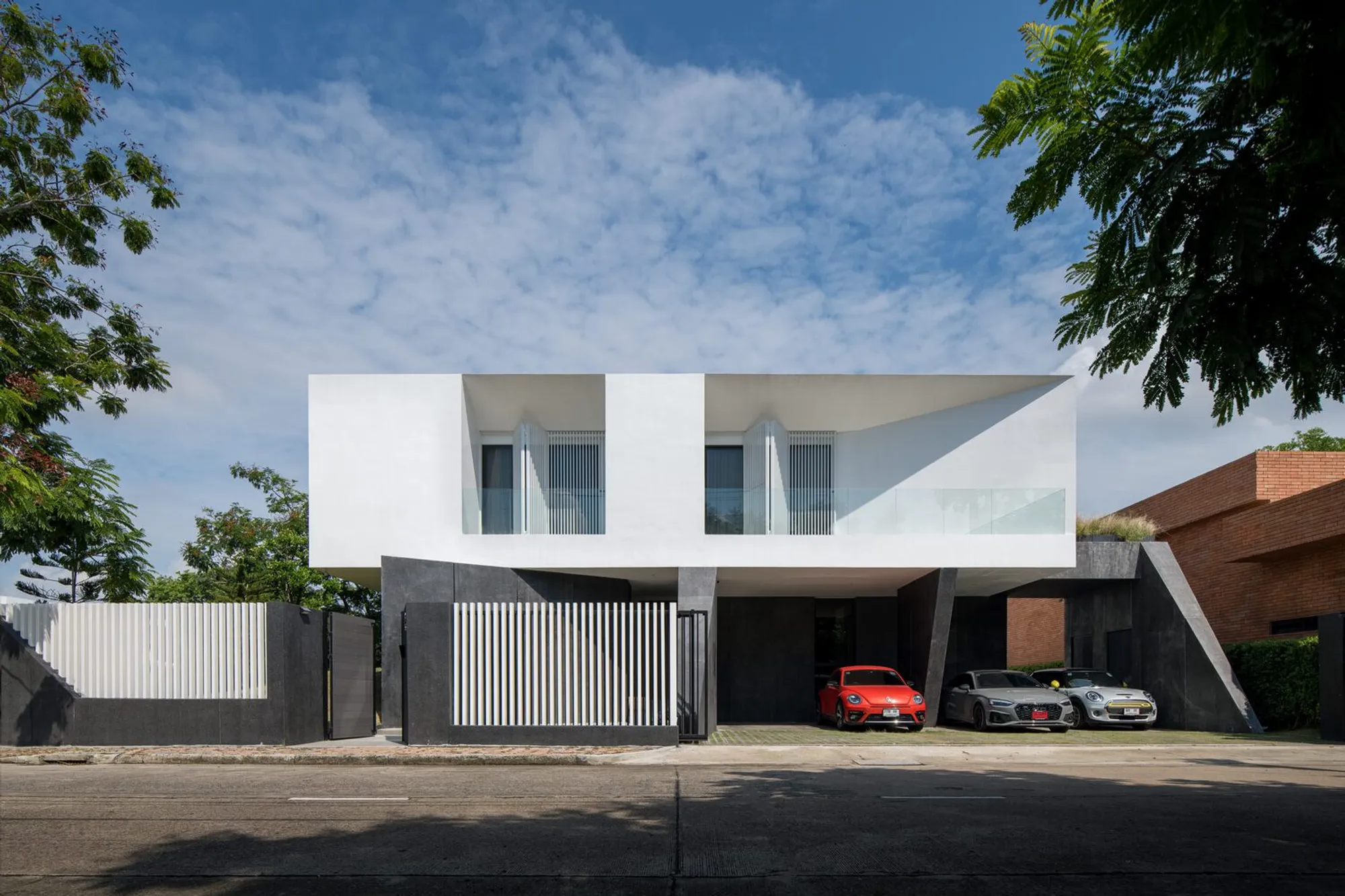
Hill House, designed by HAA Studio, is a contemporary residential project located in Khet Prawet, Thailand, where architecture is conceived as an extension of the surrounding landscape. Set within a site defined by an existing lake and mature trees, the house responds directly to its natural context while fulfilling the client’s desire for a residence that is both distinctive and expressive.
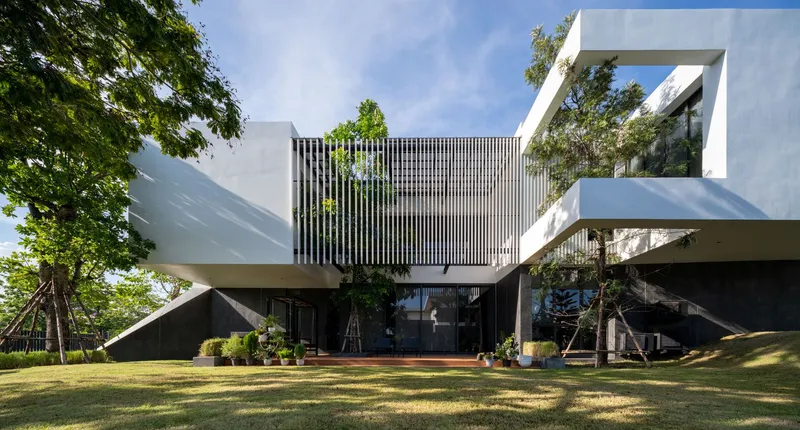
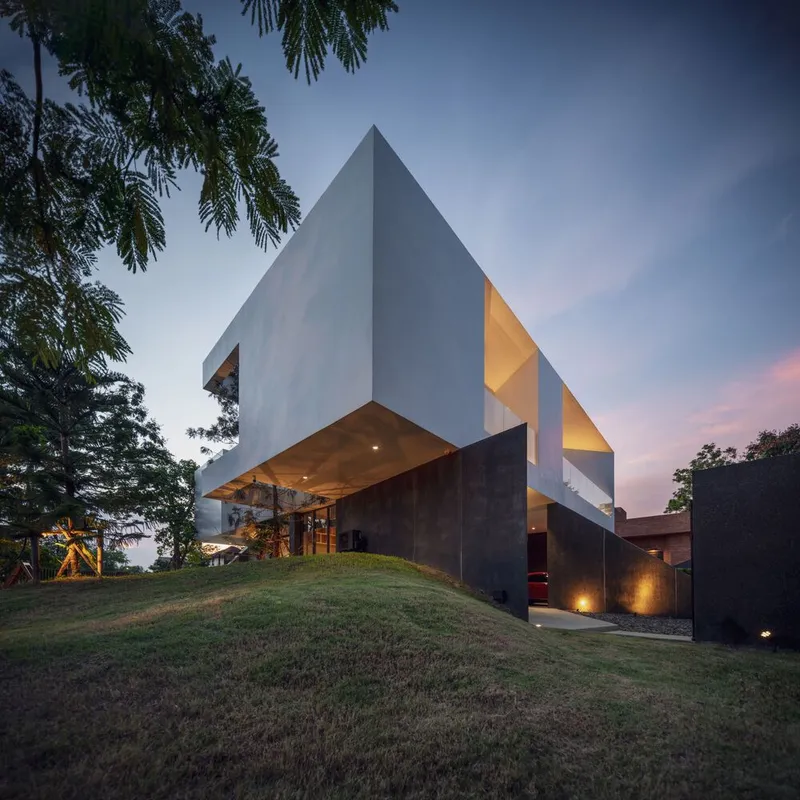
From the earliest design stages, the architects approached the project by reading the site as a layered terrain rather than a neutral plot. The result is a powerful architectural metaphor: a white house emerging from a dark rocky hill. This conceptual duality forms the foundation of the project’s spatial organization, material strategy, and formal expression.

Architecture Inspired by Landscape
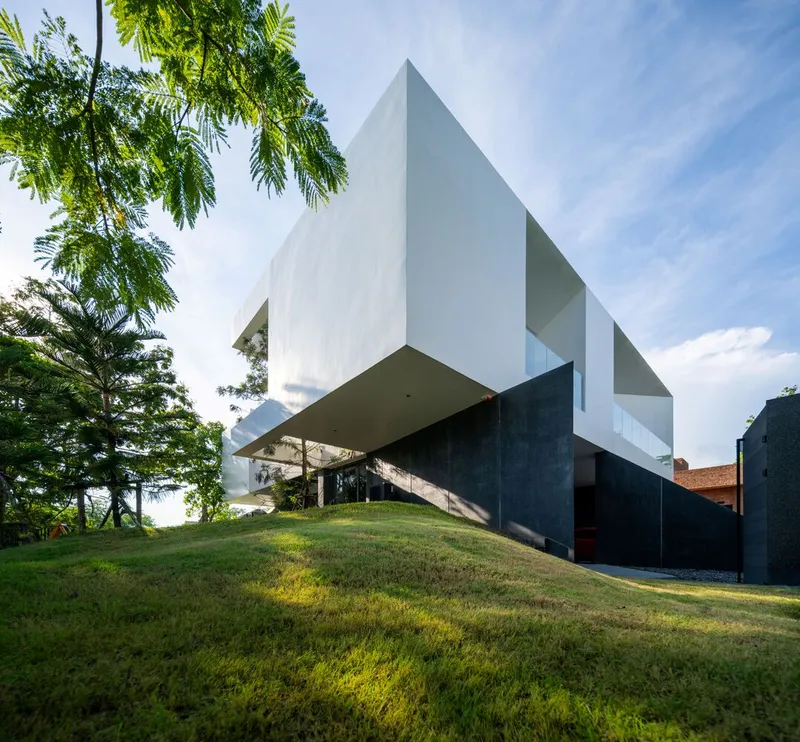
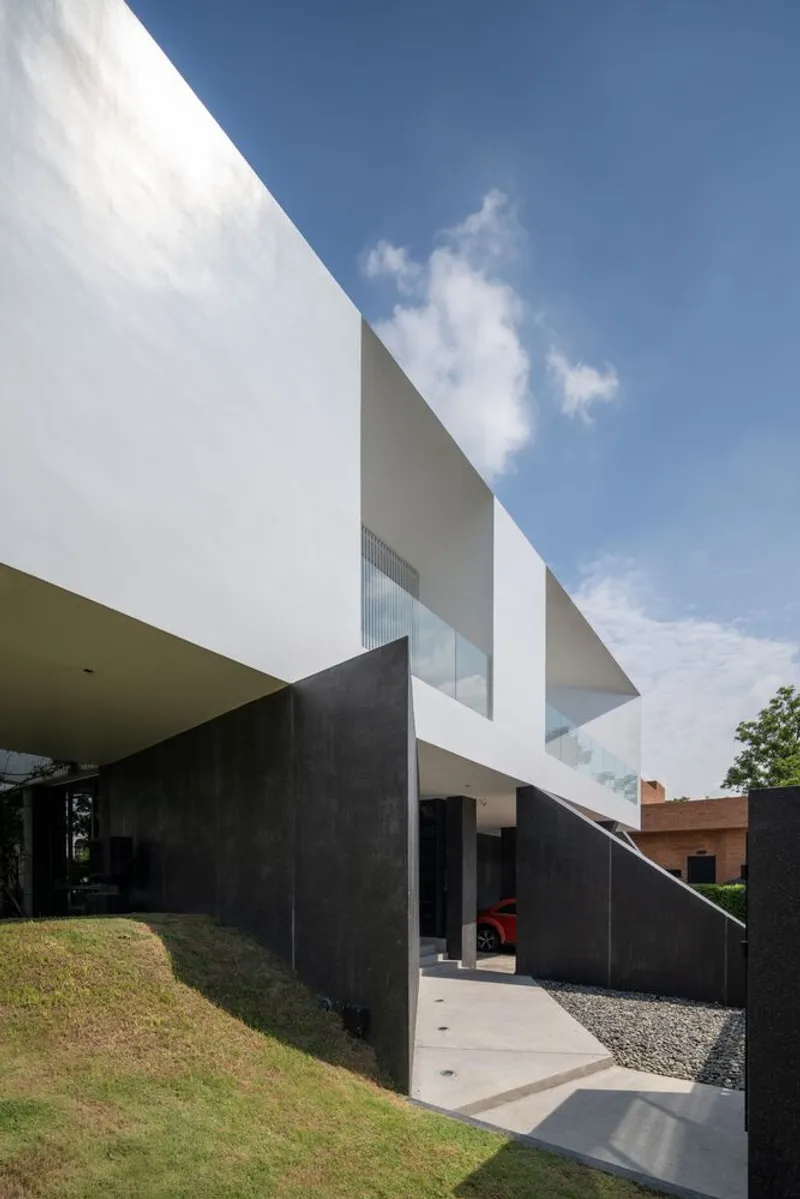
The most striking element of Hill House is its sculptural base. A dark, gravel-finished wall bends and folds irregularly, mimicking the fractured geometry of natural rock formations. This undulating surface deliberately resists conventional architectural symmetry, instead evoking the image of a rocky mountain embedded in the landscape. The textured, nearly black surface anchors the house visually and physically to the ground.
Above this rugged base floats a pristine white box, sharply contrasted against the darker lower level. The upper volume is conceived as a clean, minimal form, representing a modern domestic retreat elevated above the terrain. Through the use of cantilevered reinforced concrete construction, the architects achieved a thin, sharp-edged profile while concealing structural elements such as columns, reinforcing the illusion of a light volume hovering above the hill-like base.

Materiality and Visual Identity
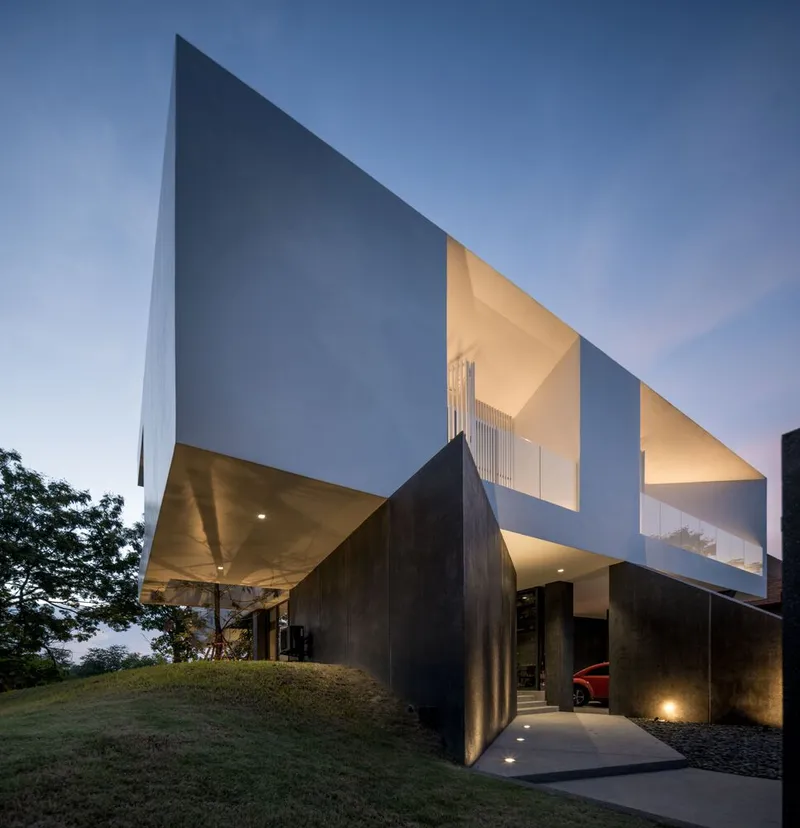
Material selection plays a critical role in establishing Hill House’s identity. Washed gravel concrete in dark gray tones defines the lower level, immediately grounding the building and giving it a tactile, geological presence. This base houses communal and activity-oriented spaces, reinforcing the idea of the “hill” as a foundation for daily life.
In contrast, the upper level is finished in smooth white surfaces, forming a stark visual counterpoint. To maintain privacy while preserving the purity of the form, white aluminum louvers wrap portions of the façade. These elements not only shield private areas such as bedrooms but also contribute to the building’s climatic performance.

Spatial Organization and Living Experience
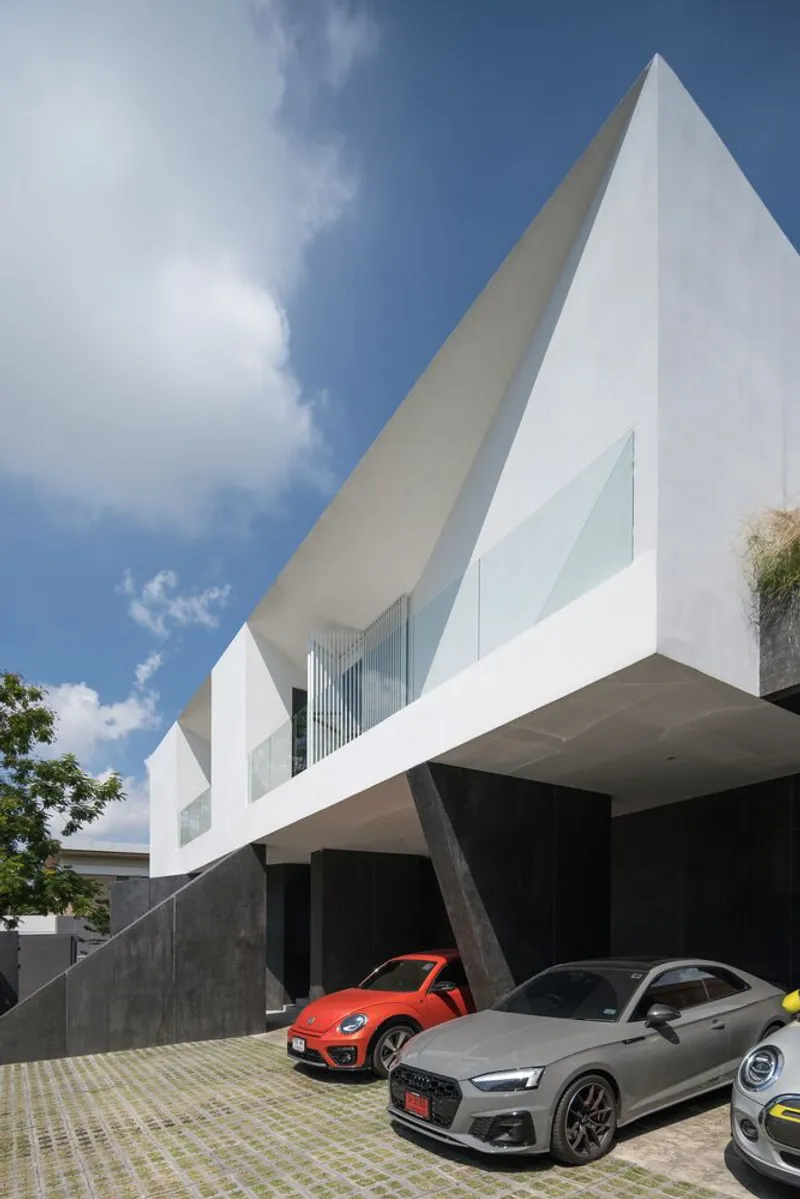
The internal layout reflects the project’s central metaphor. Highly private functions, including bedrooms, are placed on the upper floor within the white volume, offering elevated views and a sense of retreat. Public and semi-public spaces: living, dining, and activity areas, are located on the lower level, partially embedded within the landscape.
All interior spaces are visually and physically connected to a courtyard adjacent to the house and the lake at the rear of the site, ensuring constant engagement with nature. This fluid relationship between inside and outside enhances natural ventilation, daylight penetration, and spatial continuity.

Climate-Responsive Design in a Tropical Context
Designed for Thailand’s tropical climate, Hill House carefully responds to solar orientation, particularly exposure to strong southwest sunlight. The building’s massing, overhangs, and louvers are strategically positioned to provide shading throughout the day, reducing heat gain and improving thermal comfort. The interplay between solid forms and filtered openings allows the house to remain cool while maintaining openness and visual transparency.
A Dialogue Between Form and Environment
Hill House successfully balances bold architectural expression with contextual sensitivity. Through its sculptural form, contrasting material palette, and climate-responsive strategies, the project transforms a residential program into a landscape-driven architectural narrative. More than a standalone object, the house exists in constant dialogue with its surroundings: where rock, water, vegetation, and architecture converge to create a refined yet powerful living environment.
Project Details
- Project Name: Hill House
- Architects: HAA Studio
- Location: Khet Prawet, Thailand
- Area: 578 m²
- Year: 2020
- Lead Architect: Thongchai Munpainkit
- Interior Design: Trend Decor Studio
- Structural Consultant: Dreamcatcher Engineering
- General Contractor: HAA Construction & Development
- Manufacturers: Phatuchai
- Photography: Weerapon Singnoi

All photographs are works of Weerapon Singnoi




Popular Articles
Popular articles from the community


Hill & Cross Opera: Sculptural Opera House Architecture Shaped by Tallinn’s Landscape and Identity
Hill & Cross Opera reimagines opera house architecture in Tallinn through its sculptural hill, civic plaza, glass wave and a luminous cross.

The Earth Pod: 3D Printed Homes for Resilient Refugee Communities
The Earth Pod reimagines refugee housing through 3D printed homes made from clay, combining resilience, self-sufficiency, and rapid shelter.

Co-Life: Senior Housing Design That Reconnects Older Adults With the City
Co-Life reimagines senior housing design through healing gardens, shared streets, workshops, and a sustainable community across generations.
AL-JANNAH: Sustainable Architecture and Permaculture for Afghan Widows
AL-JANNAH uses sustainable architecture and permaculture to create resilient oasis of housing, learning, work and renewal for Afghan widows.


Similar Reads
You might also enjoy these articles


Hodi-Mandai Geram
Project Function: Preservation and revitalization of the Intangible heritage and socio-spatial identity of the Hodi by Housing, Cultural Memory Center, Sacred Grove, landscape, local tourism economy


Olio Towers: A Mid-Rise for Performers That Fuses Housing, Rehearsal, and Stage
Located blocks from Houston's Theater District, this modular tower stacks living units around a central performance atrium.

Oasis: Modular Green Housing Carved into Dhaka's Urban Fabric
A shortlisted Plugin Housing entry reclaims unauthorized settlements in Dhaka with stepped concrete volumes, green roofs, and ventilation-driven design.

Black Hole: A Floating Megastructure for the Post-Physical Era
Emiliano Mazzarotto envisions a spherical, self-scaling arena where e-sports, digital hotels, and holographic stadiums replace traditional public space.


Explore Architecture Competitions
Discover active competitions in this discipline



Challenge to reimagine the Iron Throne


Photograph architecture without architects


Illustrate the lost glory of Angkor Wat - Render Challenge


Design challenge to reuse E-waste
Comments (0)
Please login or sign up to add comments
No comments yet. Be the first to comment!