
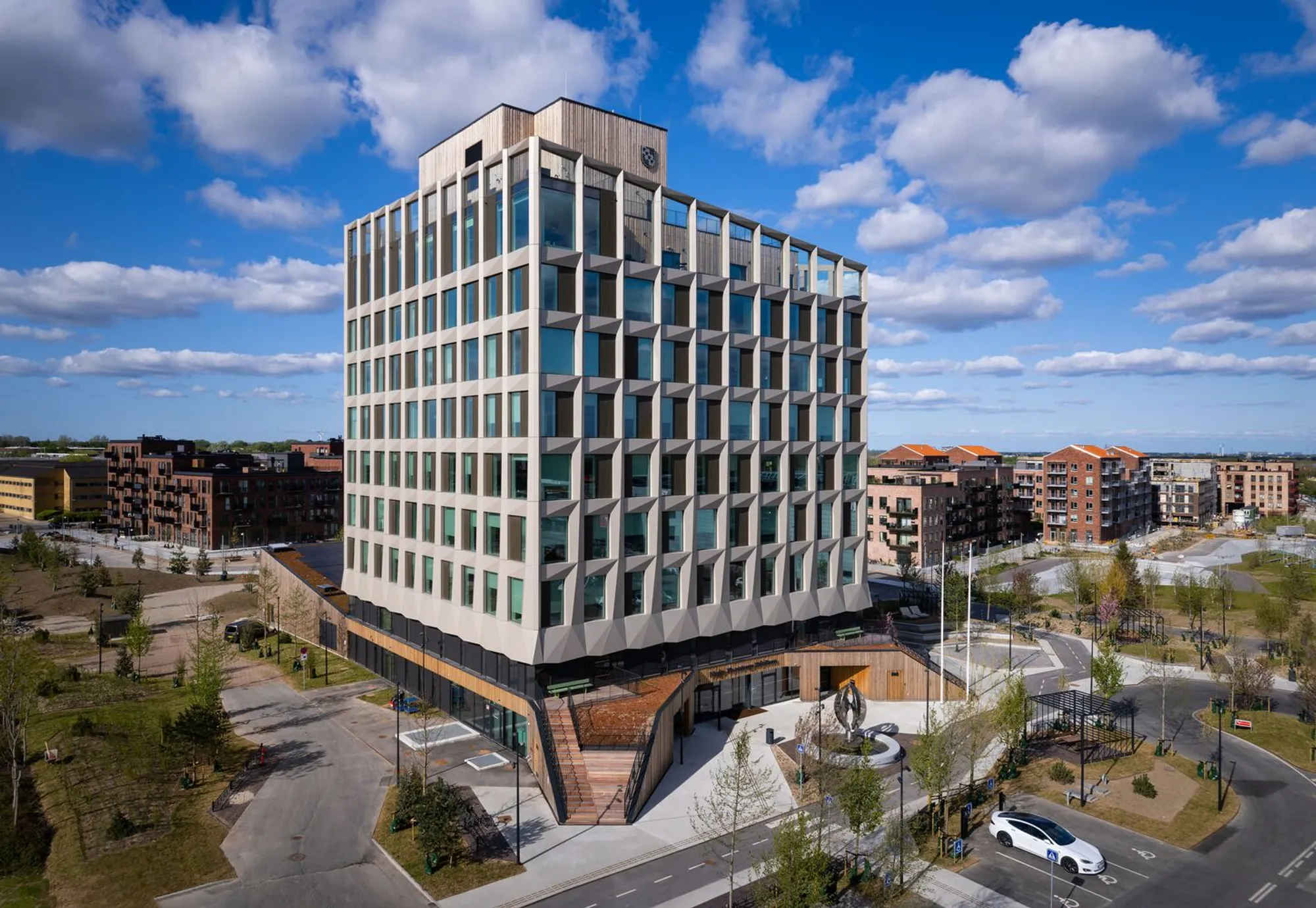
Høje-Taastrup City Hall by PLH Arkitekter: A Transparent and Sustainable Civic Landmark in Denmark
Høje-Taastrup City Hall by PLH Arkitekter blends transparency, sustainability, and community-focused design, creating Denmark’s innovative civic landmark with flexible workplaces.


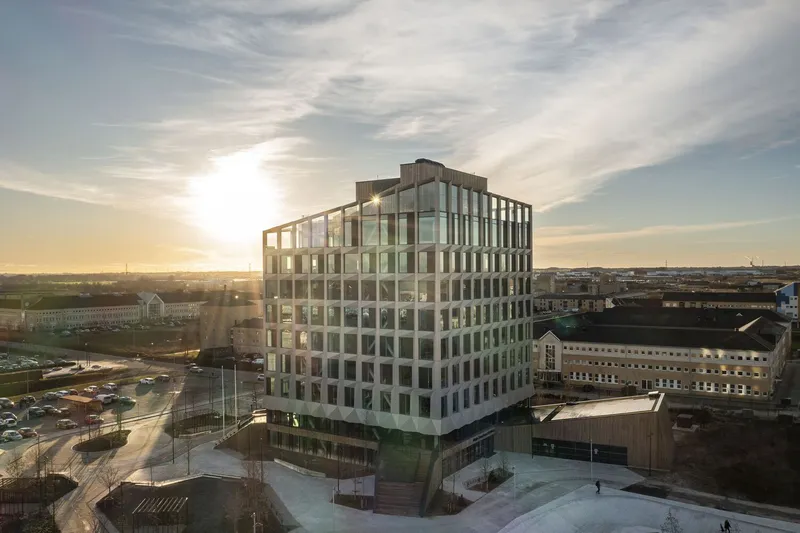
Located in Taastrup, Denmark, Høje-Taastrup City Hall stands as one of the country’s most innovative civic buildings. Designed by PLH Arkitekter in collaboration with ALL and COWI, the project—nicknamed the Citizens’ House—redefines the role of a city hall by merging sustainable design, community engagement, and modern workplace innovation.
A Landmark of Transparency and Community
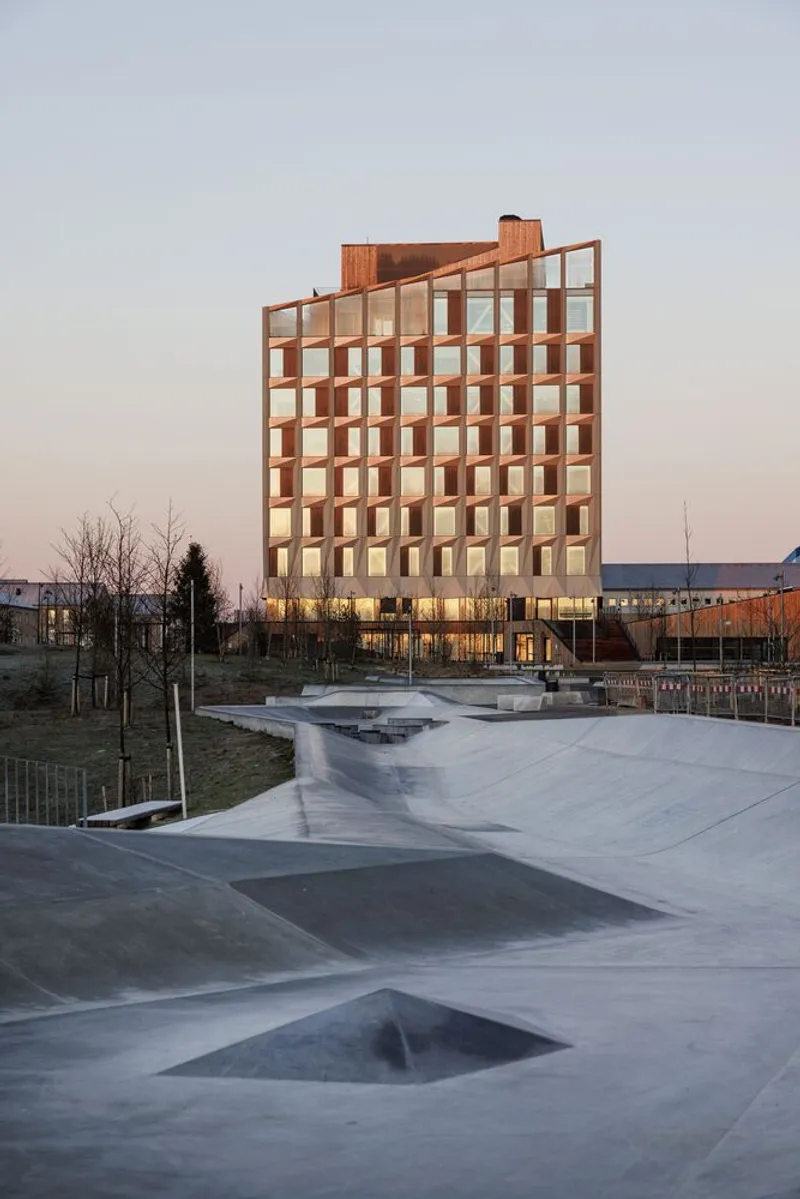
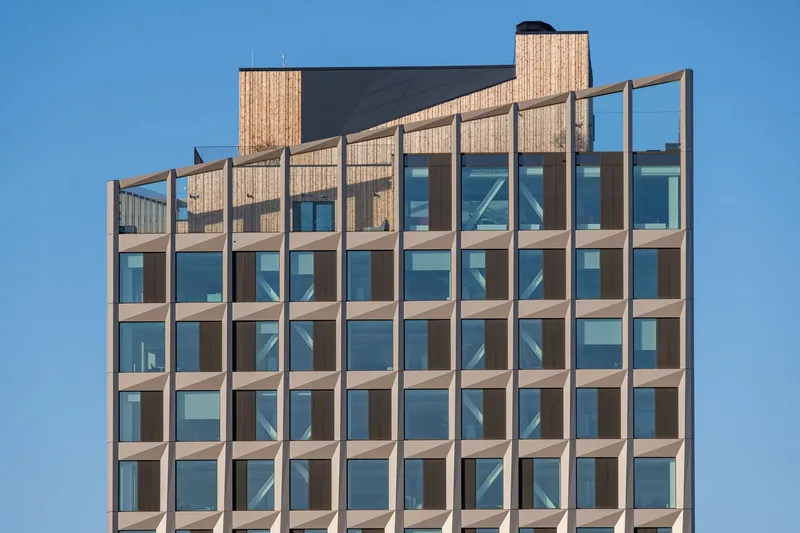
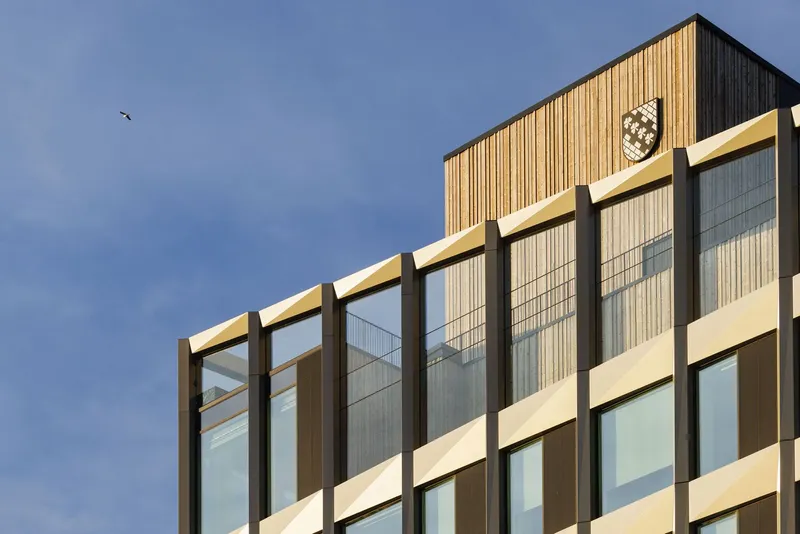
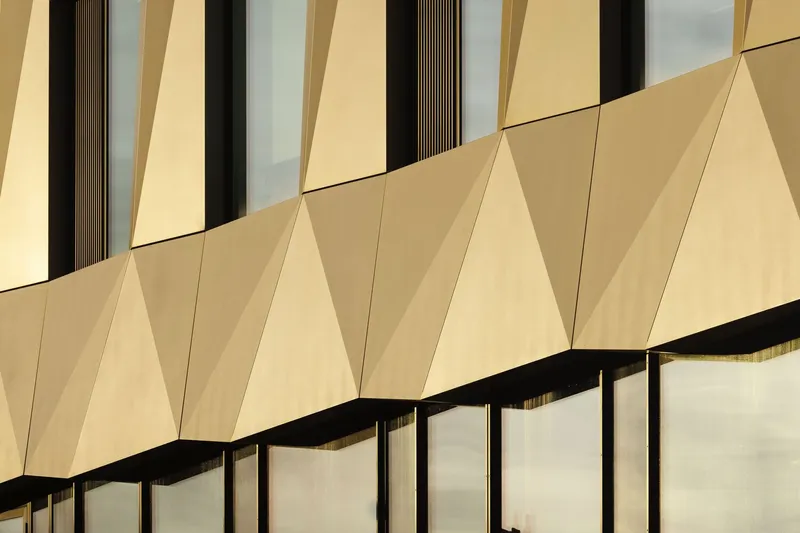
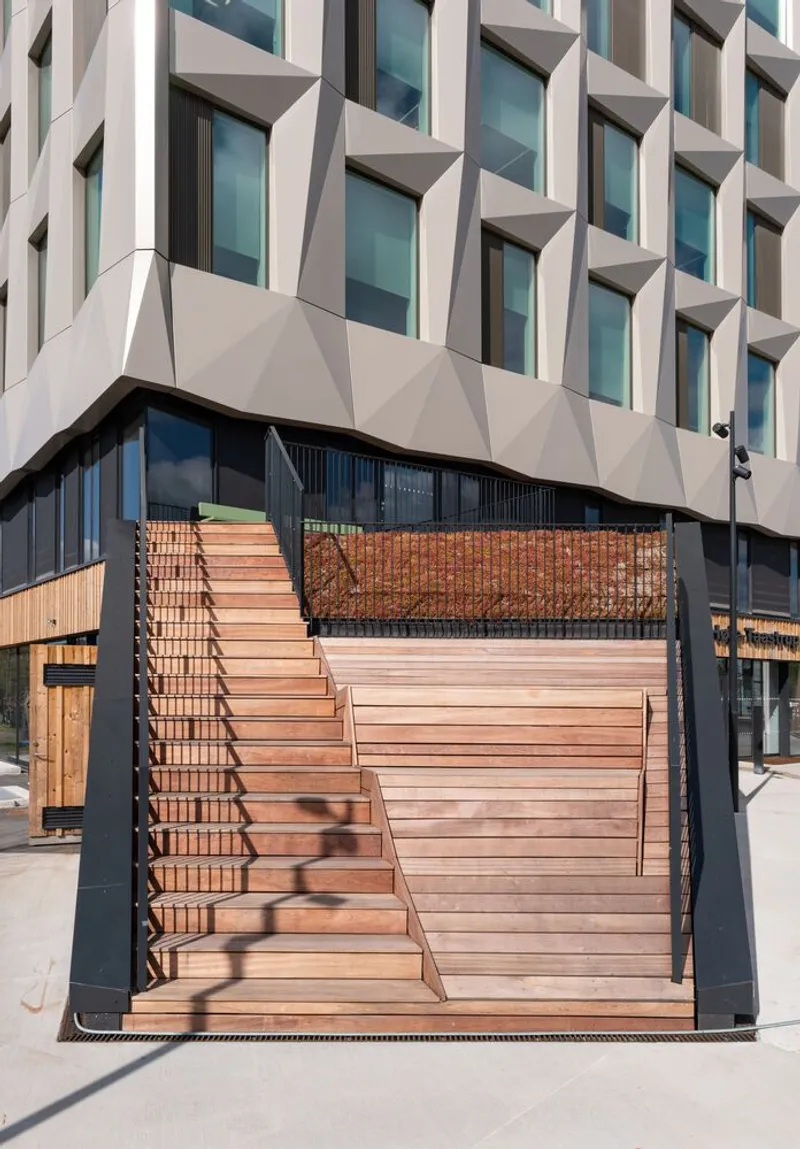
Completed in 2022, the nine-story building features a striking transparent glass façade with playful angles and champagne-colored elements. The design creates a dynamic and welcoming expression, while ensuring strong visual connections between the building, the city park, and the community.
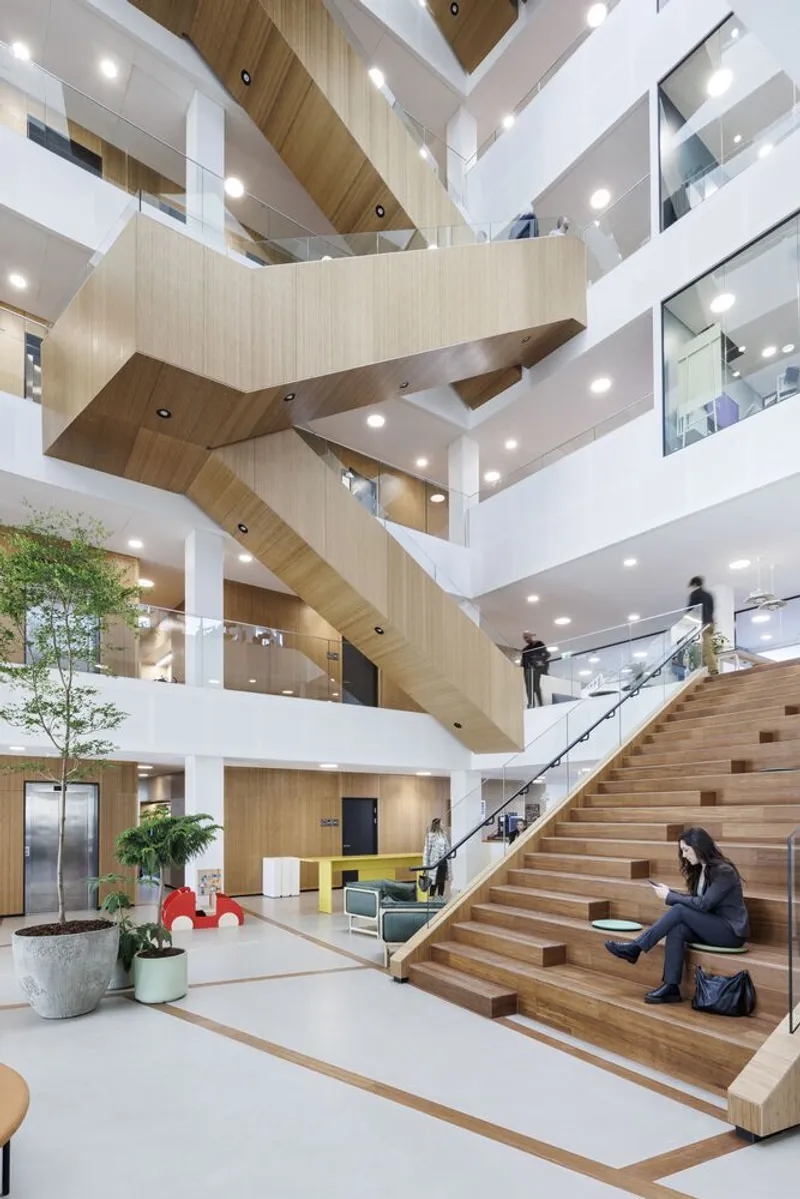
The centerpiece of the building is a 37-meter-high atrium, housing public functions such as the reception, job center, citizen services, and council chamber. The chamber itself opens directly to the city park, enabling outdoor ceremonies like weddings and cultural events.
Civic Integration and Outdoor Spaces
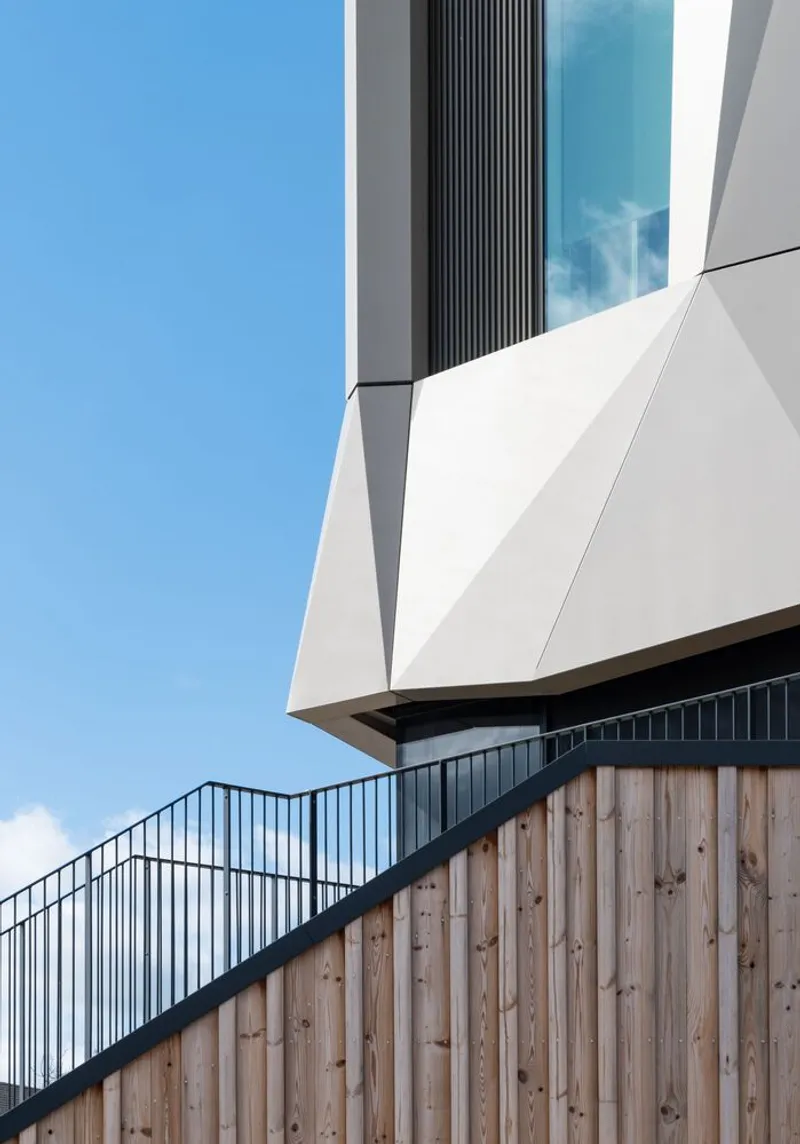
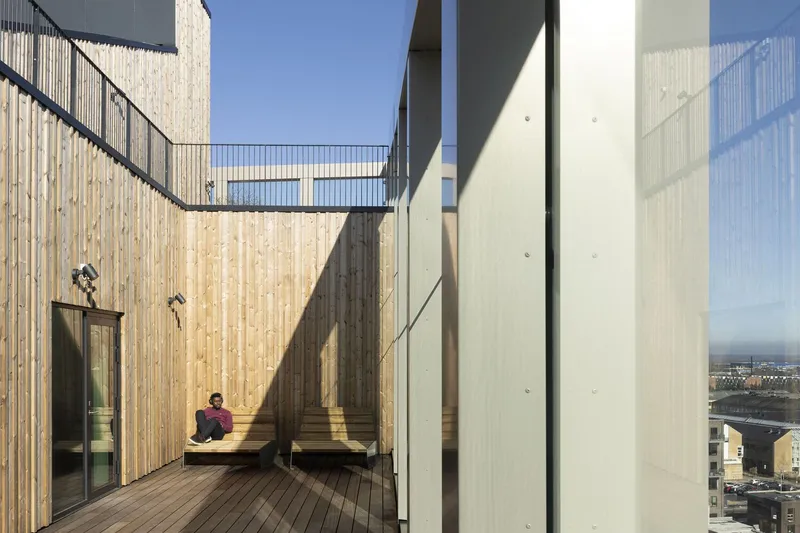
The city hall is surrounded by terraces, sun decks, and landscaped seating areas, seamlessly blending with the adjacent city park. Three large staircases and plant-lined pathways create natural flows for both employees and visitors, reinforcing the building’s identity as a civic gathering place.
At the top, a public rooftop terrace unfolds as a multi-level architectural landscape. Designed for events and social interaction, it symbolizes the city hall’s openness and accessibility to all citizens.
Flexible Work Environments
Inside, the building is designed to future-proof workplace needs. Open-plan office areas are arranged around the central atrium, fostering visibility, collaboration, and knowledge sharing. Workstations are positioned by expansive windows to maximize natural light, while layouts can be easily reconfigured to accommodate changing work styles and new technologies.
The central staircase doubles as a social hub and performance space, functioning as an informal auditorium for gatherings and cultural activities.
Commitment to Sustainability
Sustainability lies at the core of the project. The city hall integrates green roofs and landscaped surroundings that enhance biodiversity. Its foundation incorporates recycled concrete from demolished apartment buildings, significantly reducing CO2 emissions during construction.
Through these measures, the building sets a benchmark for eco-conscious civic architecture, reflecting Denmark’s progressive approach to urban development and environmental responsibility.
All Photographs are works of Emil Lund Pedersen, Kontraframe




Popular Articles
Popular articles from the community


The Musturak Paradise: Senior Living Architecture for a Connected Future in Temara, Morocco
The Musturak Paradise reimagines senior living architecture in Temara via private homes, social spaces, culture, community, and shared care.

Lunar Spiral: Space Architecture Shaped by the Mathematics of the Universe
Lunar Spiral reimagines space architecture through Fibonacci geometry, lunar regolith, levitating habitats, and self-sustaining Moon living.

Riyadh For All: Intergenerational Urban Design for Active Aging in Rabat
Riyadh For All reimagines urban design in Rabat with intergenerational co-living, adaptive courtyards, and Moroccan cultural exchange today.

Co-Life: Senior Housing Design That Reconnects Older Adults With the City
Co-Life reimagines senior housing design through healing gardens, shared streets, workshops, and a sustainable community across generations.

Similar Reads
You might also enjoy these articles


Hodi-Mandai Geram
Project Function: Preservation and revitalization of the Intangible heritage and socio-spatial identity of the Hodi by Housing, Cultural Memory Center, Sacred Grove, landscape, local tourism economy


Olio Towers: A Mid-Rise for Performers That Fuses Housing, Rehearsal, and Stage
Located blocks from Houston's Theater District, this modular tower stacks living units around a central performance atrium.

Oasis: Modular Green Housing Carved into Dhaka's Urban Fabric
A shortlisted Plugin Housing entry reclaims unauthorized settlements in Dhaka with stepped concrete volumes, green roofs, and ventilation-driven design.

Black Hole: A Floating Megastructure for the Post-Physical Era
Emiliano Mazzarotto envisions a spherical, self-scaling arena where e-sports, digital hotels, and holographic stadiums replace traditional public space.

Explore Copenhagen Competitions
Discover active competitions in this discipline



Challenge to reimagine the Iron Throne


Photograph architecture without architects


Illustrate the lost glory of Angkor Wat - Render Challenge


Design challenge to reuse E-waste
Comments (0)
Please login or sign up to add comments
No comments yet. Be the first to comment!