
HOFFICE Wraps a Seoul Fashion Store in Four Walls That Refuse to Stay Still
Nomanual's first flagship in Mapo-gu uses curved black steel, raw concrete, and mirrors to turn 125 square meters into an optical illusion.


A wall is the most elemental move an architect can make: stand something upright and the world splits in two. HOFFICE took that premise literally for Nomanual's first brick-and-mortar store in Sangsu-dong, Seoul, designing a 125-square-meter retail space organized entirely around four walls, each made from a different material, each doing something slightly different to your perception of where the room begins and ends.
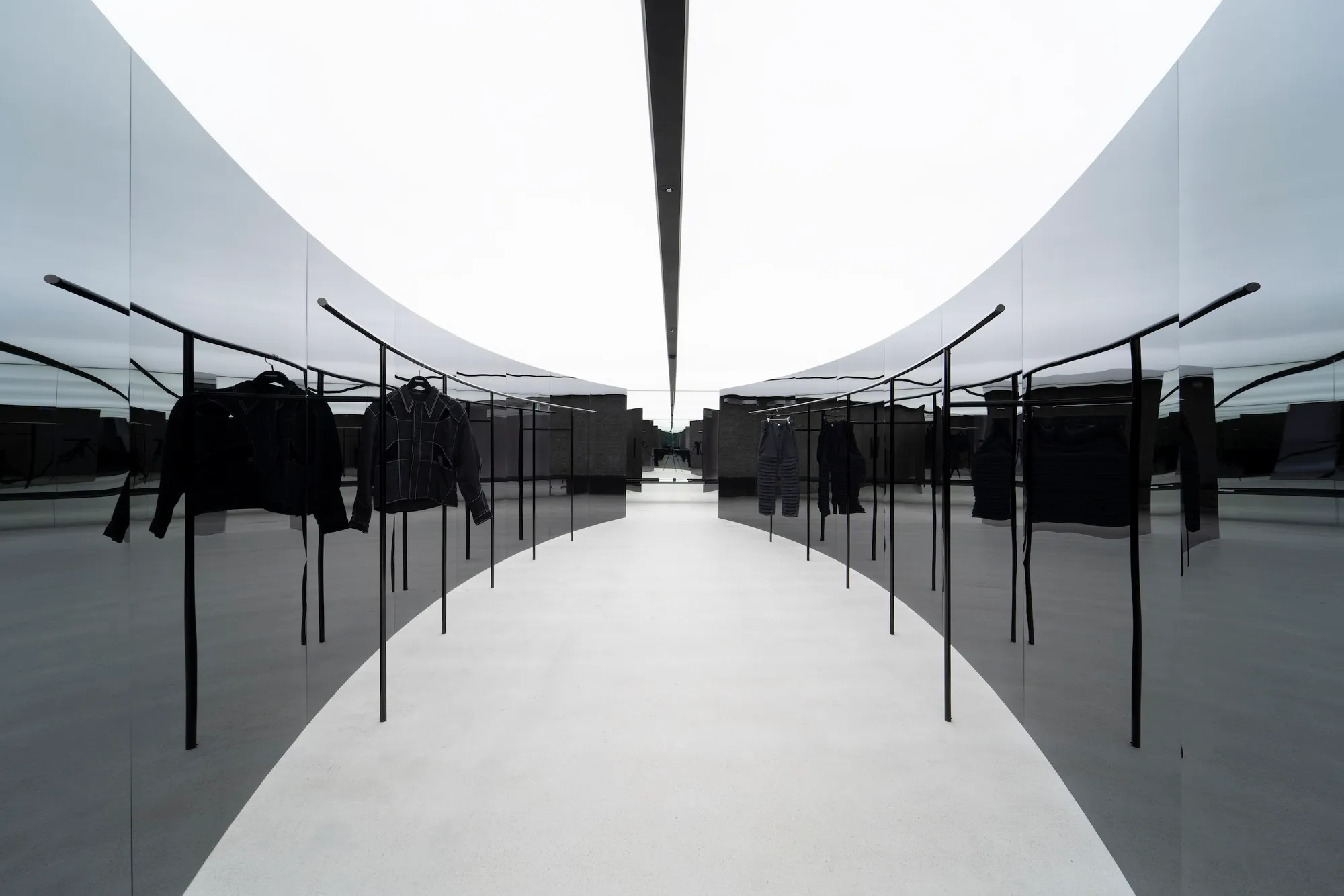
The result is a store that barely looks like one. Garment racks recede into reflections. Concrete surfaces absorb light while polished black stainless steel throws it back. Mirrors at either end stretch the space toward infinity. The clothes are present, but the architecture is the real product on display, and that tension between commerce and spatial experience is precisely what makes the project worth examining.
The Translucent Threshold
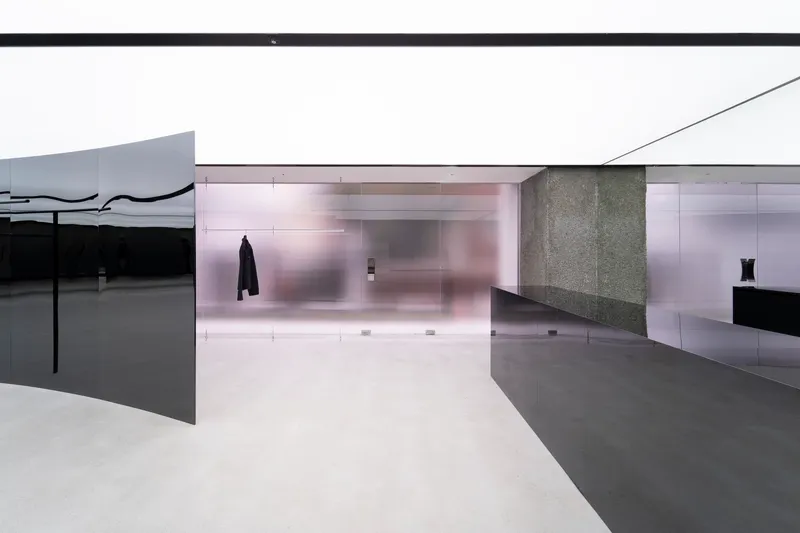
The first wall is the one you encounter before entering: a satin-treated white glass facade that filters the street into a milky glow. It is not transparent enough to reveal the merchandise clearly, nor opaque enough to shut the city out. The effect positions the store somewhere between gallery and shrine, a deliberate ambiguity that signals to passersby that whatever happens inside operates on its own terms.
From within, this glass plane softens Seoul's daylight into an even wash, eliminating harsh contrasts and letting the interior materials hold their own tonal range. The angular white ceiling plane above plays along, bouncing diffused light deeper into the space where it would otherwise never reach.
Concrete as Anchor
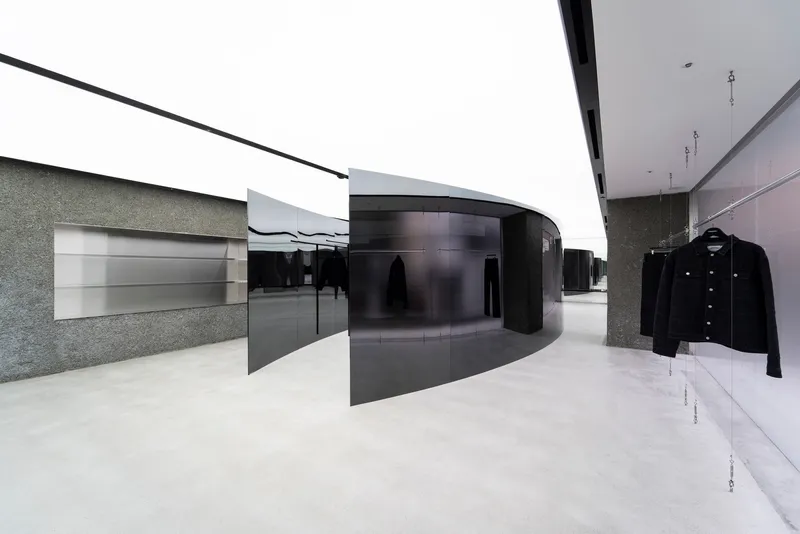
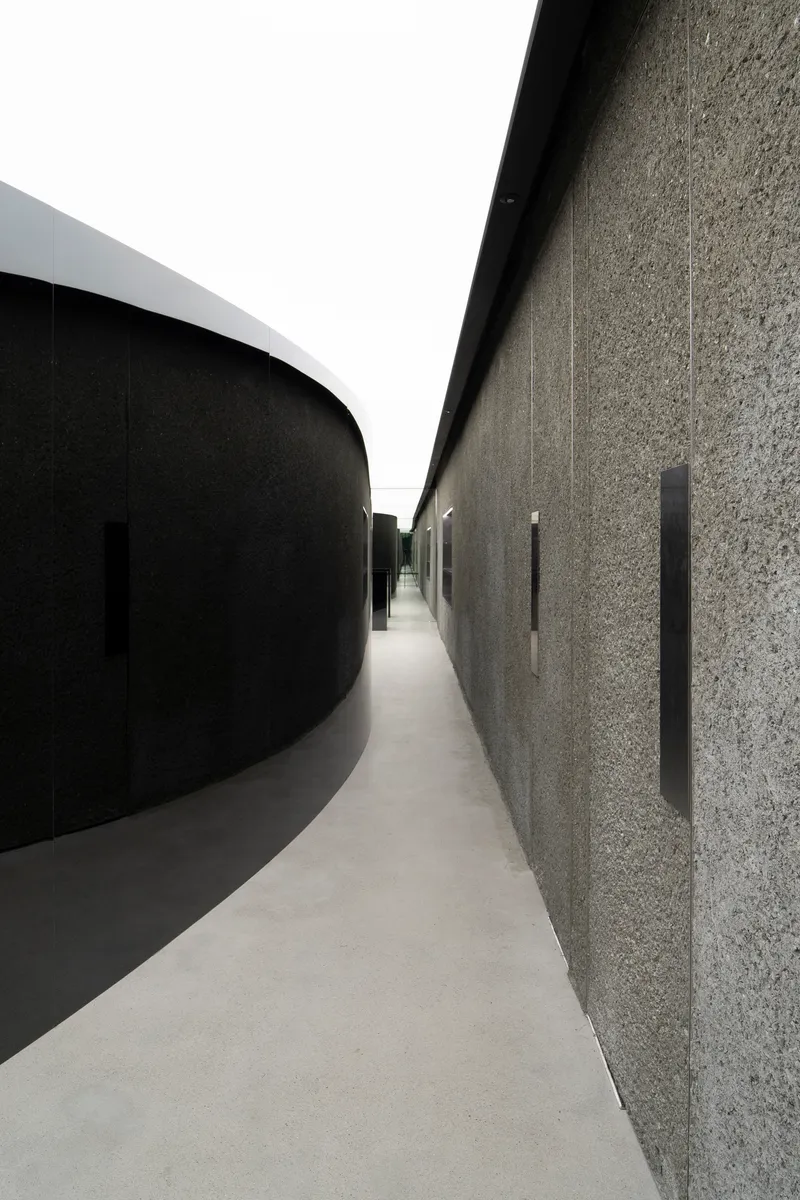
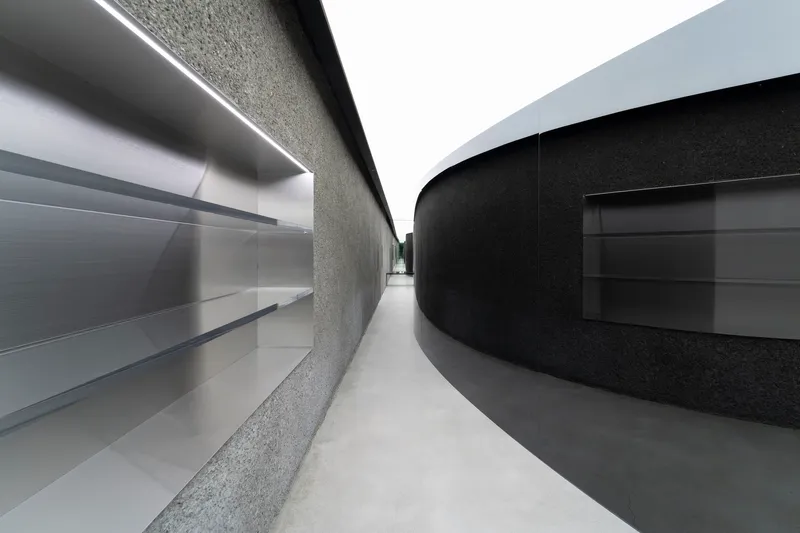
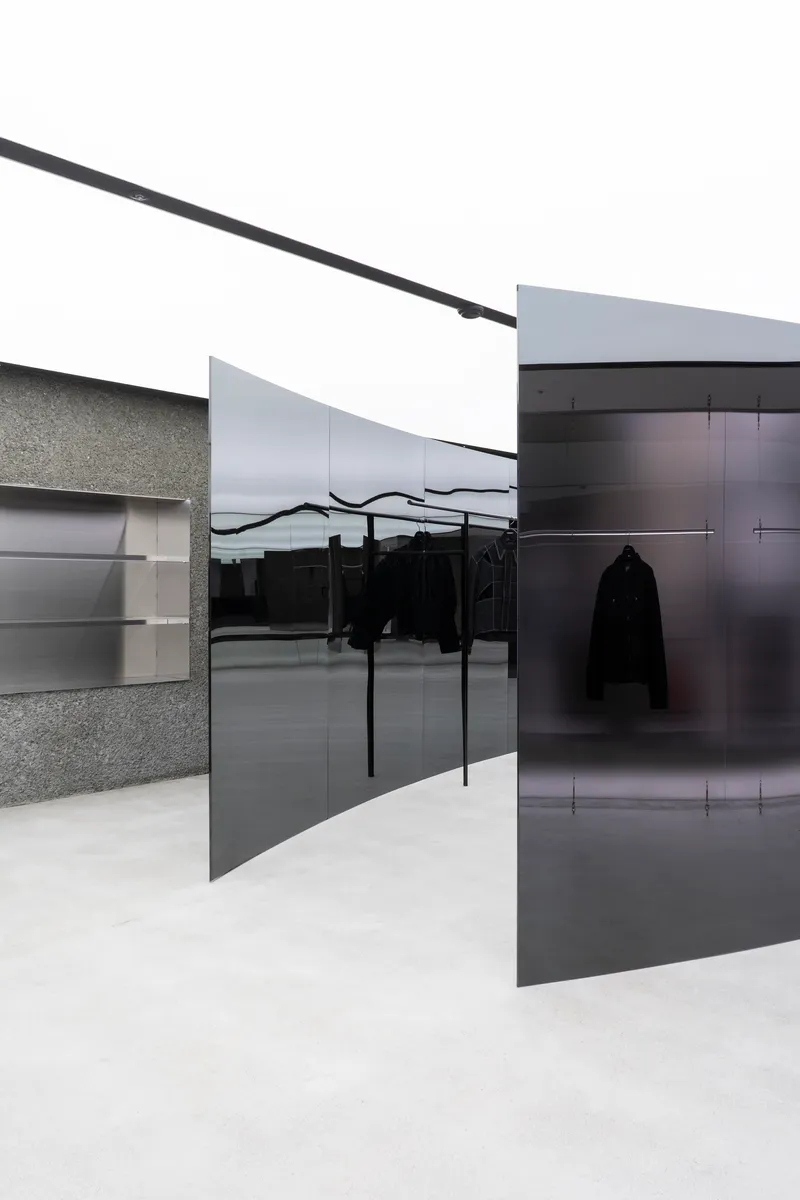
Against the translucency of the facade, HOFFICE set a rough-textured concrete wall that runs the length of the store. It is load-bearing, which means it earns its keep structurally, but its visual role is just as significant. The raw, mineral surface acts as a tonal anchor, grounding the interior against the shimmering reflections that dominate the opposite side.
Vertical slot openings are cut into this wall, creating narrow reveals that let light leak through in controlled strips. The slots also generate a rhythm of solid and void that breaks the wall's mass into something more legible at the human scale. You read it as both monolithic and perforated, which keeps it from feeling oppressive in a space this compact.
Black Steel Curves
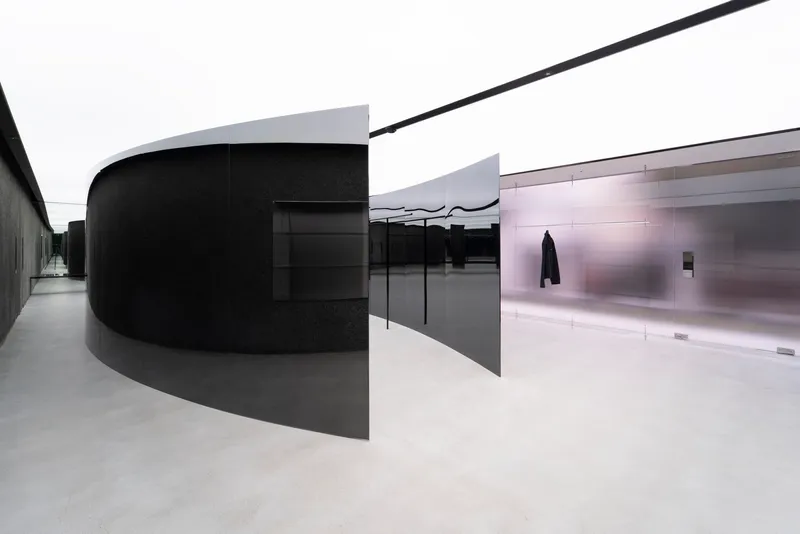
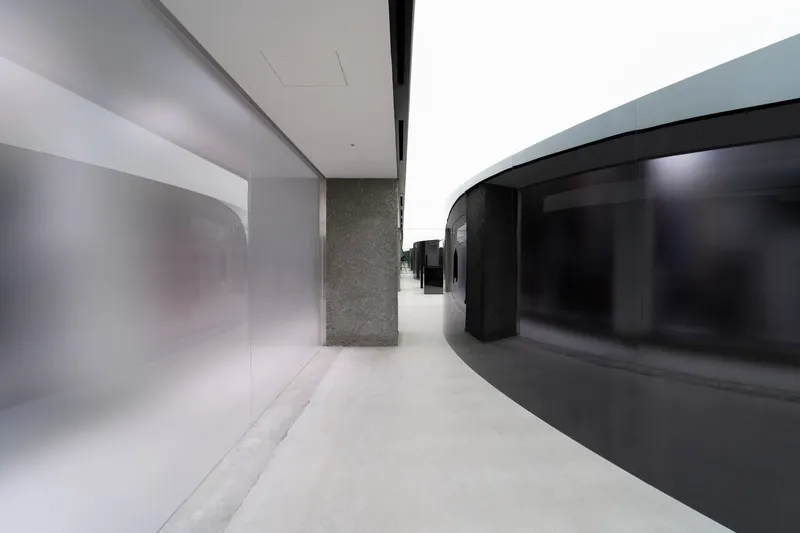
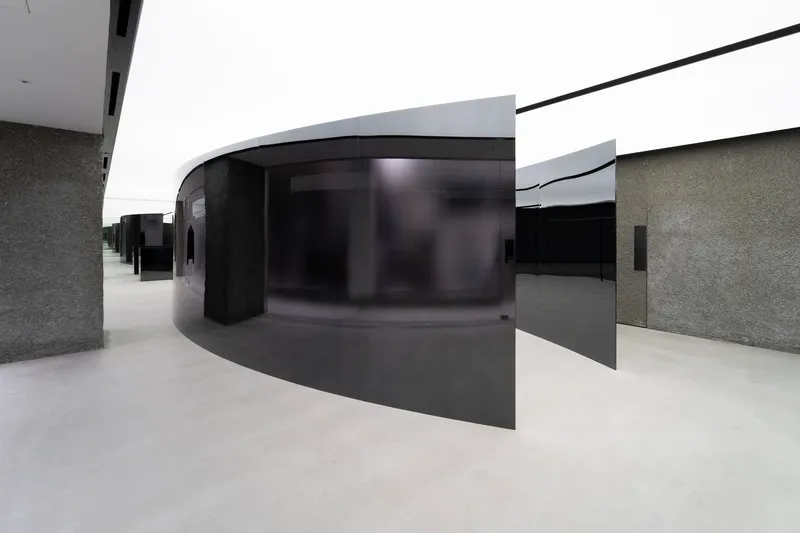
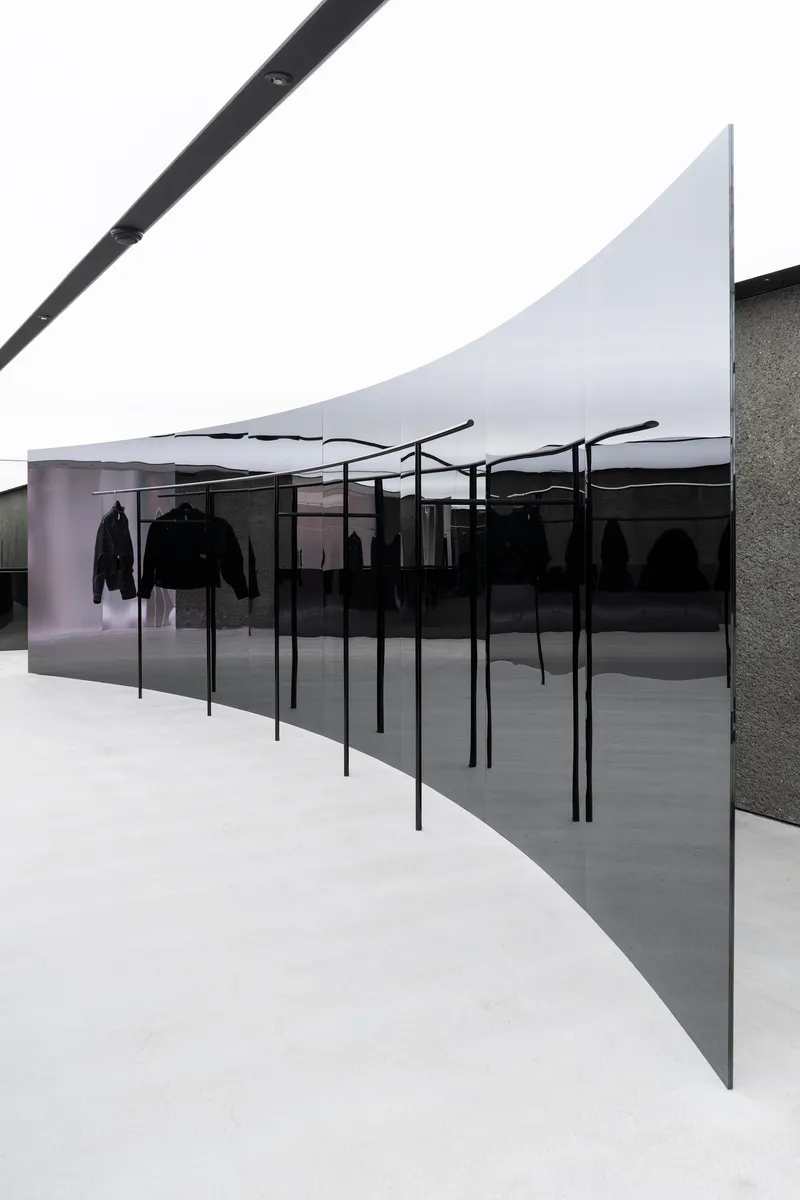
The two interior walls are the project's most theatrical elements. Made from reflective black stainless steel and curved in plan, they divide the 125 square meters into distinct zones without ever creating a hard boundary. You move around them rather than through doorways, and as you do, the curved surfaces warp your reflection and the reflections of the garments, generating a constantly shifting visual field.
The curvature is doing real spatial work here. A flat partition at this scale would chop the store into rooms too small to be useful. By bending the dividers, HOFFICE maintains sightlines that extend diagonally across the entire plan, making the space feel larger than its footprint suggests. The black finish absorbs some wavelengths and mirrors others, so the walls oscillate between solid presence and near-dematerialization depending on where you stand.
Mirrors and the Infinite Corridor
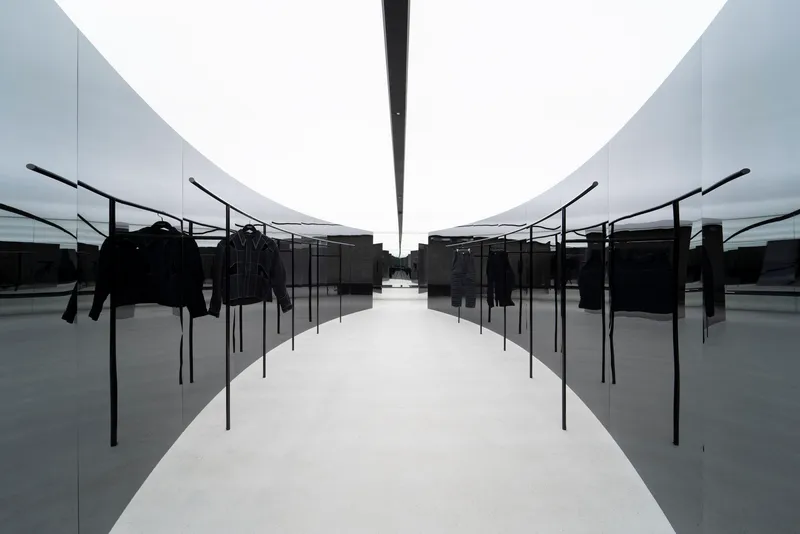
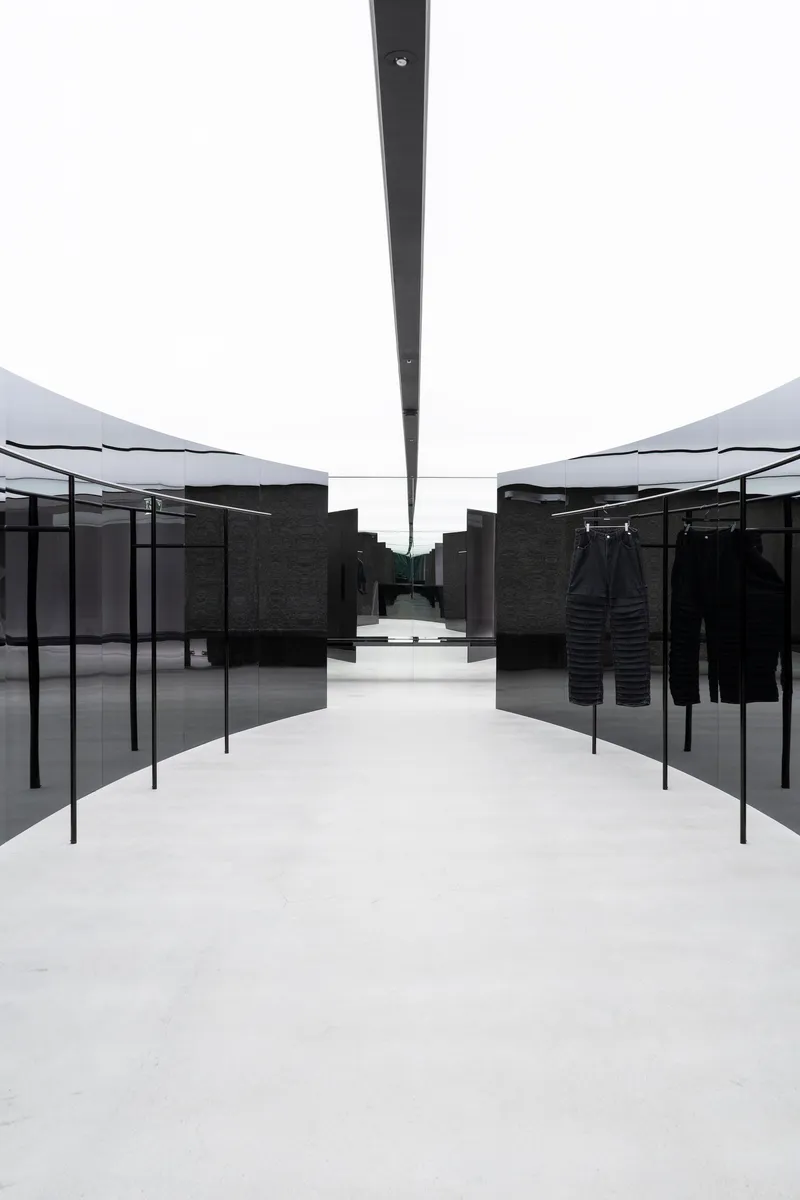
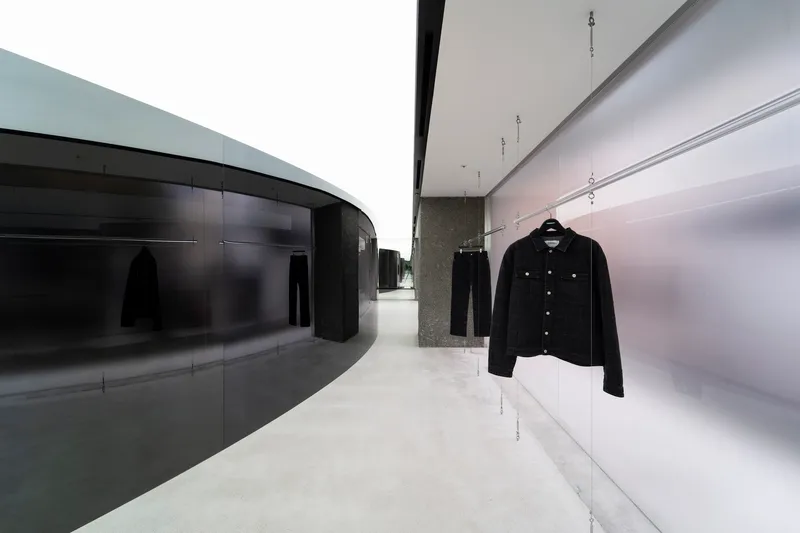
At the short ends of the store, full-height mirrors close the space while simultaneously exploding it. The symmetrical corridor views that result, with black metal garment racks receding into what appears to be an endlessly repeating sequence, are the project's signature image. It is an old trick, but HOFFICE deploys it with enough discipline to avoid the funhouse effect. The ceiling's twin curved vaults and the linear skylight slot reinforce the perspective lines, so the illusion reads as architecture rather than spectacle.
The mirrors also serve a practical retail function. Shoppers see themselves reflected alongside the clothing from a distance, which changes the way they evaluate a garment. The architecture, in other words, is doing the job of a fitting room before anyone has tried anything on.
Display as Furniture, Not Fixture
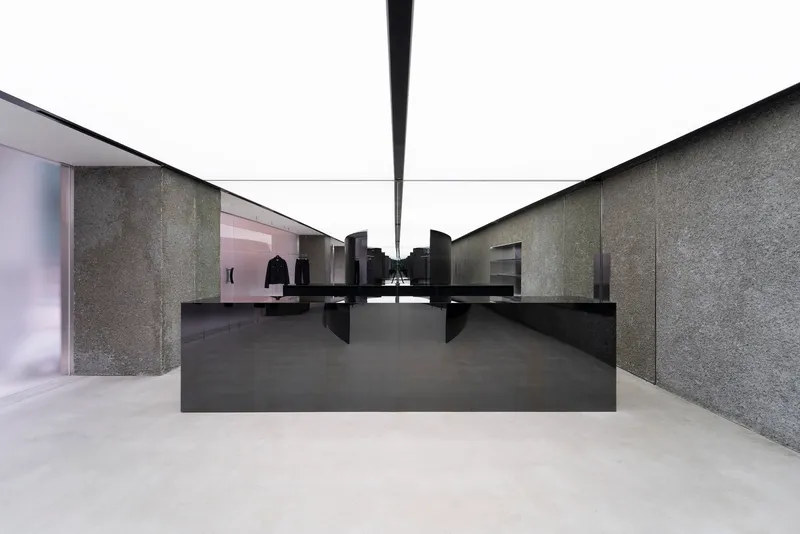
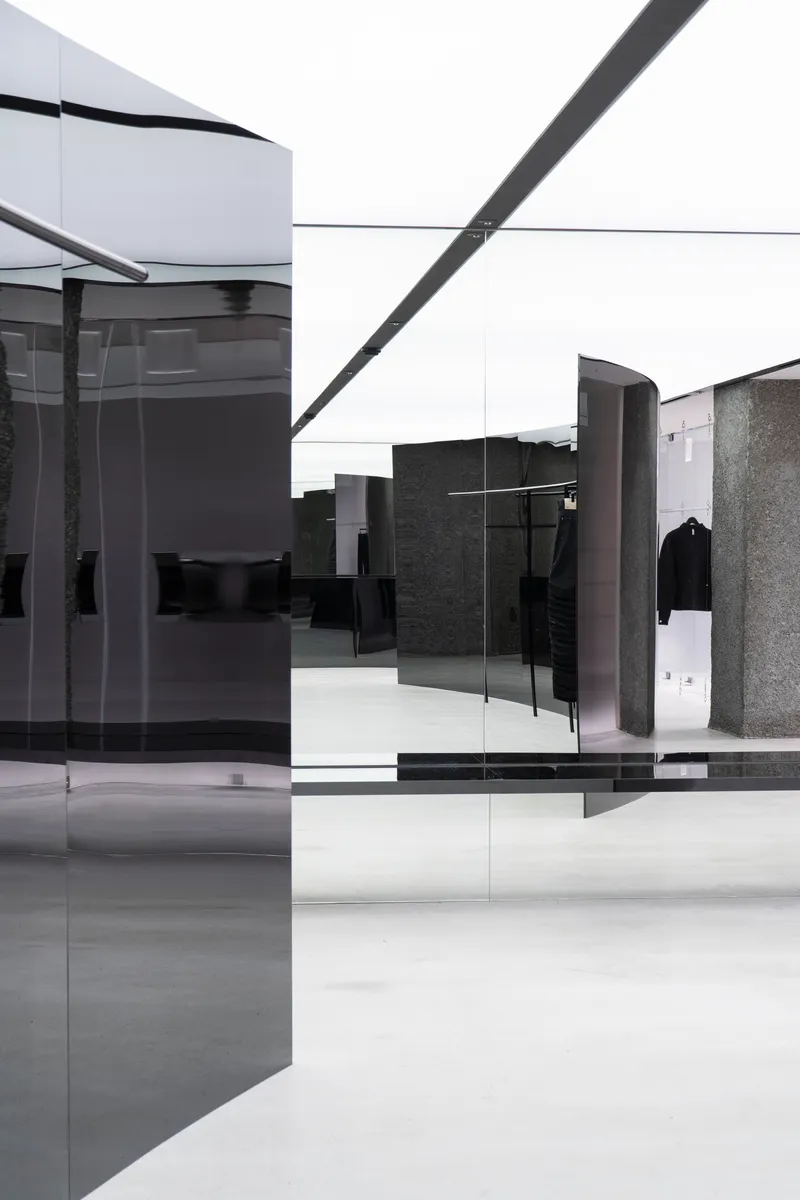
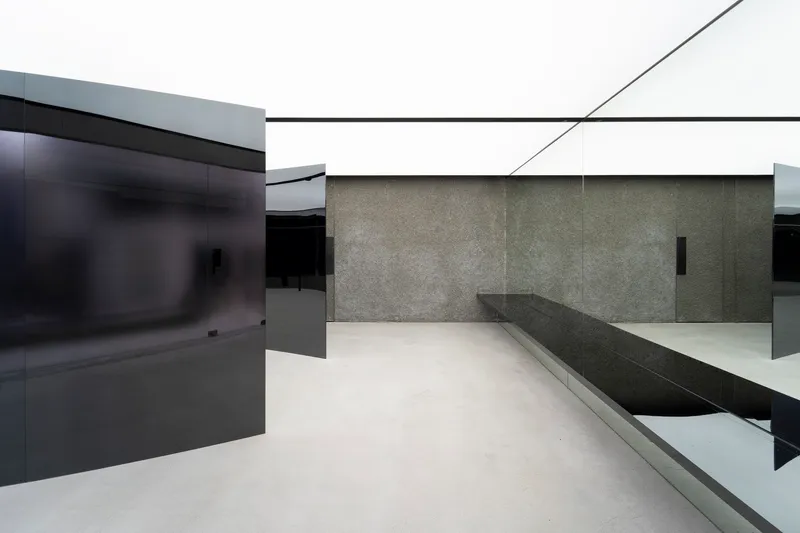
The display elements, counters, racks, and shelving, are conceived as extensions of the wall surfaces rather than standalone furniture. A black steel counter sits between textured stone walls and translucent glass partitions as though it grew from the same material logic. Built-in seating along one angular glass partition suggests the store anticipates lingering, not just browsing.
What HOFFICE avoids is equally telling. There are no freestanding mannequins, no branded graphics, no warm wood or domestic textures meant to make you feel at home. The palette is limited to three or four materials, all of them hard, all of them either reflective or absorptive. The clothing itself provides the only softness in the room, which isolates the garments with a precision that most fashion stores never achieve.
Light and Ceiling Geometry
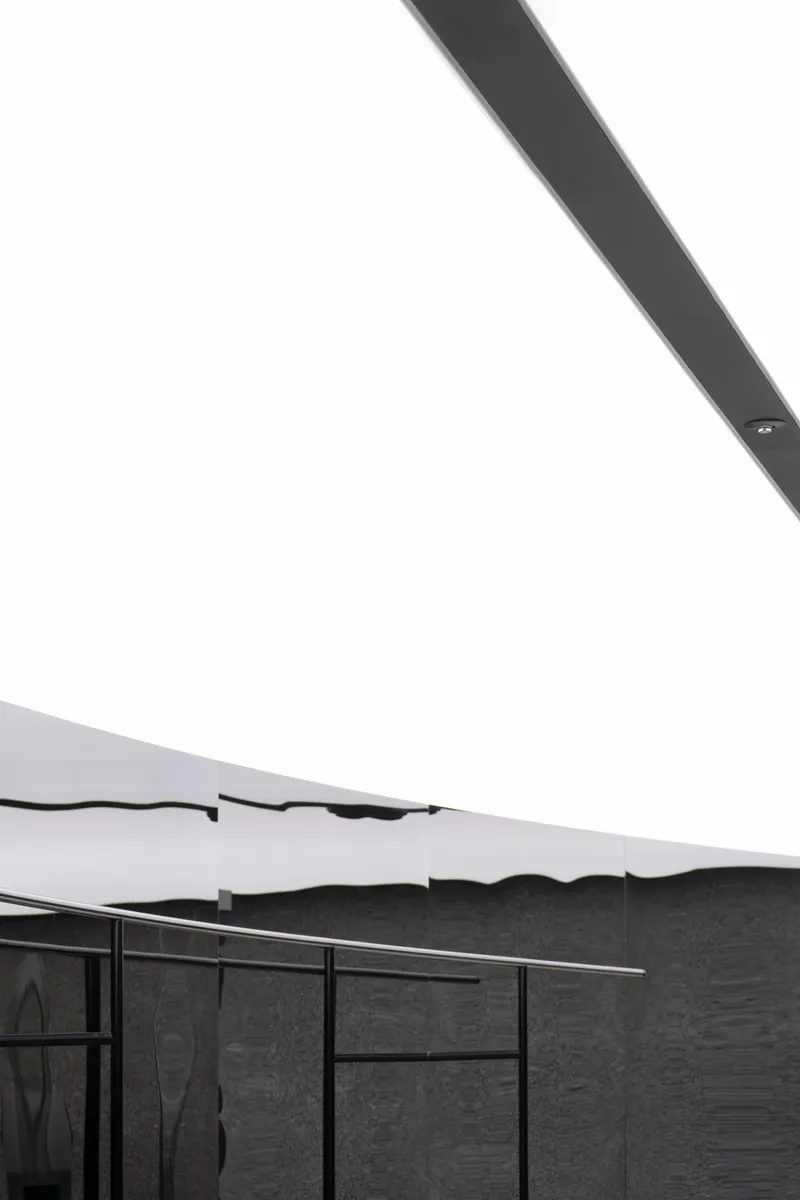
The white-painted ceiling is more than a surface to bounce light. Its angular and vaulted geometry channels illumination from the skylight slots into specific zones, creating pockets of brightness and shadow that give the otherwise monochromatic interior a sense of depth. The undulating ceiling edge where it meets the concrete wall is a detail that quietly reminds you someone cared about the transition between horizontal and vertical planes.
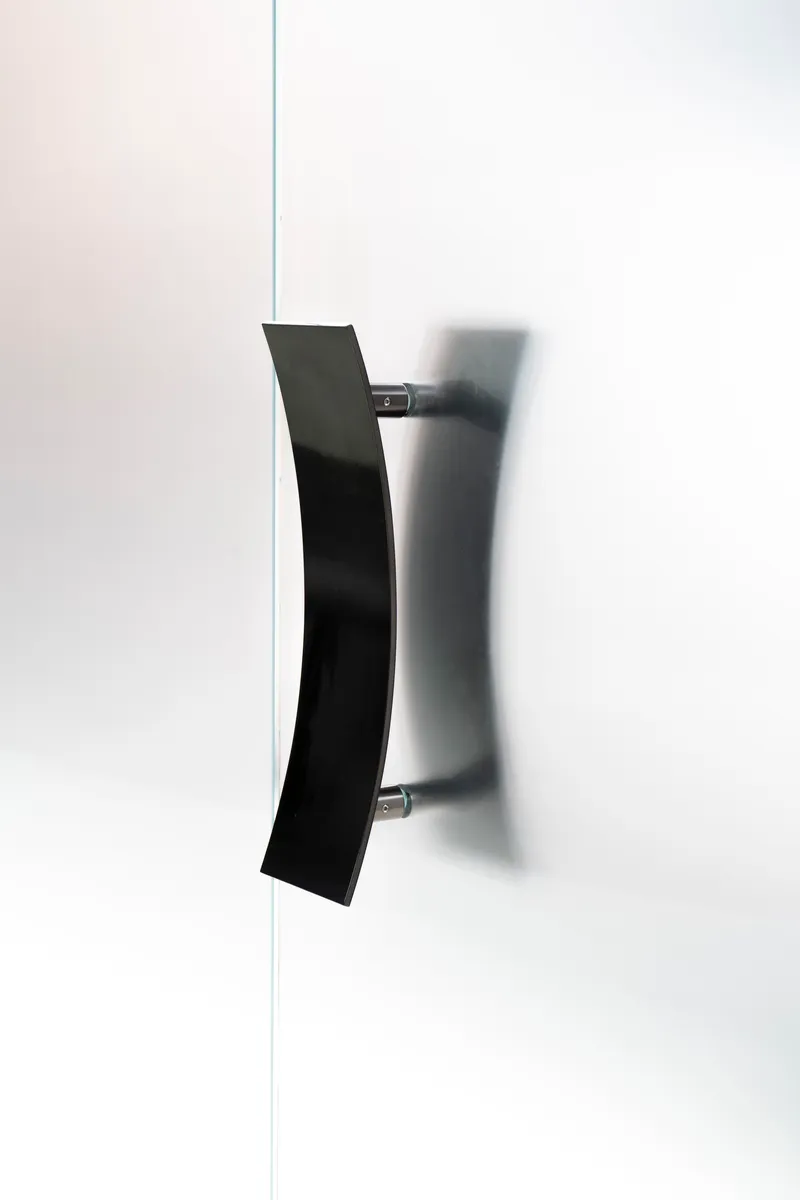
Even the door hardware signals the project's obsessive attention to material finish. An angled black metal handle mounted on a white wall casts a diagonal shadow that, in the right light, looks as deliberately composed as any of the larger spatial moves. It is a small moment, but it confirms that the design intent carries through to every scale.
Why This Project Matters
Retail architecture faces a paradox: the space must serve the brand, but if it becomes too subservient to the merchandise, it turns into scenography, disposable and forgettable. HOFFICE sidesteps this by making the architecture itself the primary experience. The four walls, each with its own material personality and spatial behavior, create an environment that would be compelling even if you emptied the racks. That is a high bar for 125 square meters and a modest budget.
More broadly, the project demonstrates that a coherent conceptual framework, in this case the wall as narrative device, can organize a small retail interior with the same rigor usually reserved for cultural buildings. The mirrors, the curves, the material contrasts: none of these elements are novel on their own. Assembled together with this level of precision, they produce something genuinely disorienting in the best possible sense. You walk in expecting a clothing store. You leave thinking about architecture.
Nomanual Flagship Store by HOFFICE. Located in Sangsu-dong, Mapo-gu, Seoul, South Korea. 125 m². Completed in 2022. Photography by Ho Han.
About the Studio
Share Your Own Work on uni.xyz
If projects like this are the kind of work you want to make, uni.xyz is a place to publish your own, find collaborators, and enter design competitions.




Popular Articles
Popular articles from the community


The Musturak Paradise: Senior Living Architecture for a Connected Future in Temara, Morocco
The Musturak Paradise reimagines senior living architecture in Temara via private homes, social spaces, culture, community, and shared care.

The Ocean Hive: Sustainable Architecture for a Self-Sufficient Civilization at Sea
The Ocean Hive imagines sustainable architecture at sea, where modular habitats, algae, wave power and ocean waste sustain a growing colony.

Co-Life: Senior Housing Design That Reconnects Older Adults With the City
Co-Life reimagines senior housing design through healing gardens, shared streets, workshops, and a sustainable community across generations.

Co-life: Sustainable Architecture for Age-Friendly Community Living
Co-life reimagines sustainable architecture for seniors through courtyards, rammed earth, shared gardens, and spaces designed for belonging.


Similar Reads
You might also enjoy these articles

Bao Huynh Watercolor Atelier: A Serene Art Retreat in Hội An
Bao Huynh Watercolor Atelier in Hội An blends multifunctional art spaces, sustainable design, local materials, and family-friendly living in a serene environment.

Atelier Macri Concept Store Interior Design by CASE-REAL
Atelier Macri store features a "ko" counter, walnut wood details, cork displays, blending retail, gallery, and seamless customer experiences.

Manuel Vargas Izquierdo Stadium and High-Performance Sports Center: Architectural Excellence in Jalpa de Méndez
The Manuel Vargas Izquierdo Stadium blends sustainable design, inclusive sports facilities, and cultural-inspired architecture, revitalizing Jalpa de Méndez’s public spaces.

KAKR Buluh Awar Hall: Revitalizing Community and Ecology Through Bamboo Architecture
Community built bamboo hall revitalizes Buluh Awar village, empowering youth, restoring ecology, celebrating vernacular craftsmanship through sustainable architecture and culture.





Comments (0)
Please login or sign up to add comments
No comments yet. Be the first to comment!