
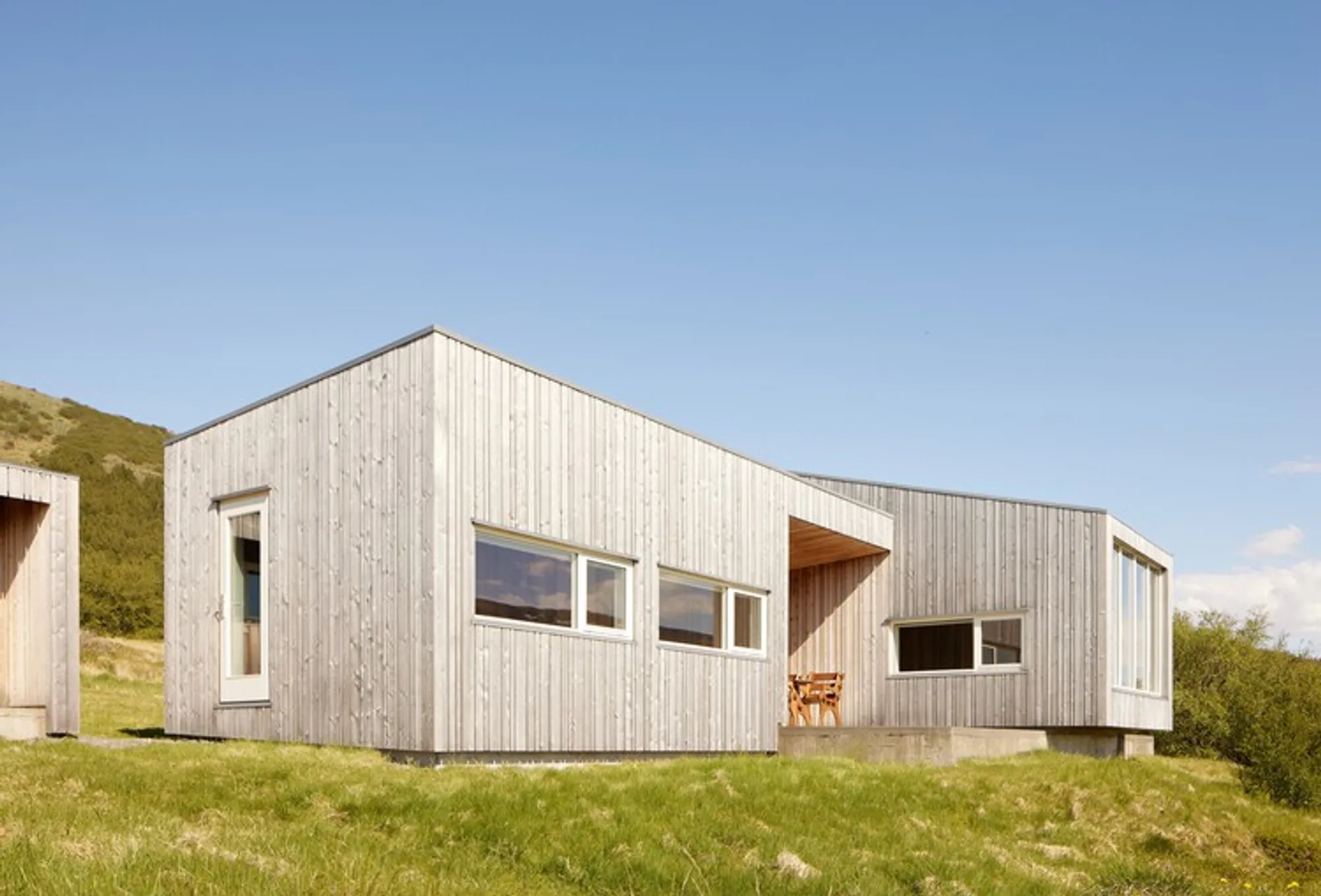
Holiday Home in Iceland: Teiknistofan Tröð's Landscape-Embedded Retreat in Borgarnes
Teiknistofan Tröð's 99-square-meter retreat features moss roof, weathered larch cladding, and contour-following design integrating seamlessly into Iceland's dramatic landscape.


Architecture Dissolving Into Landscape
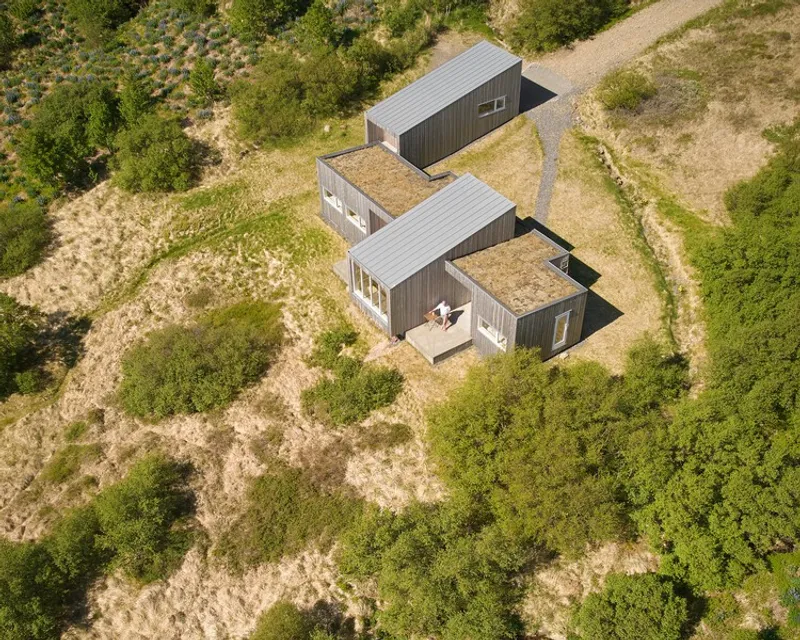
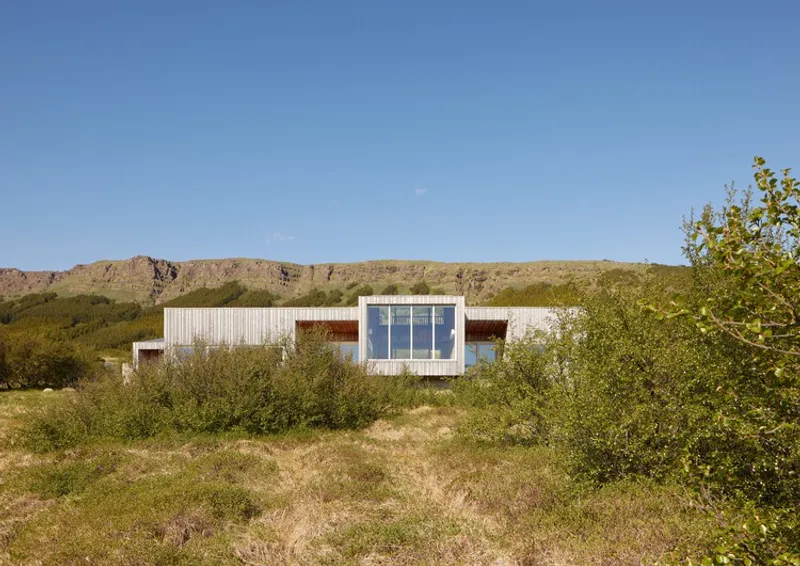
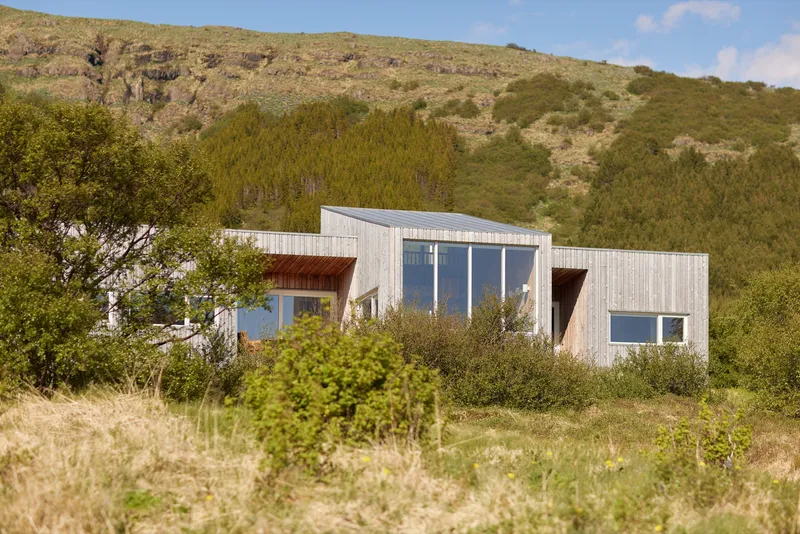
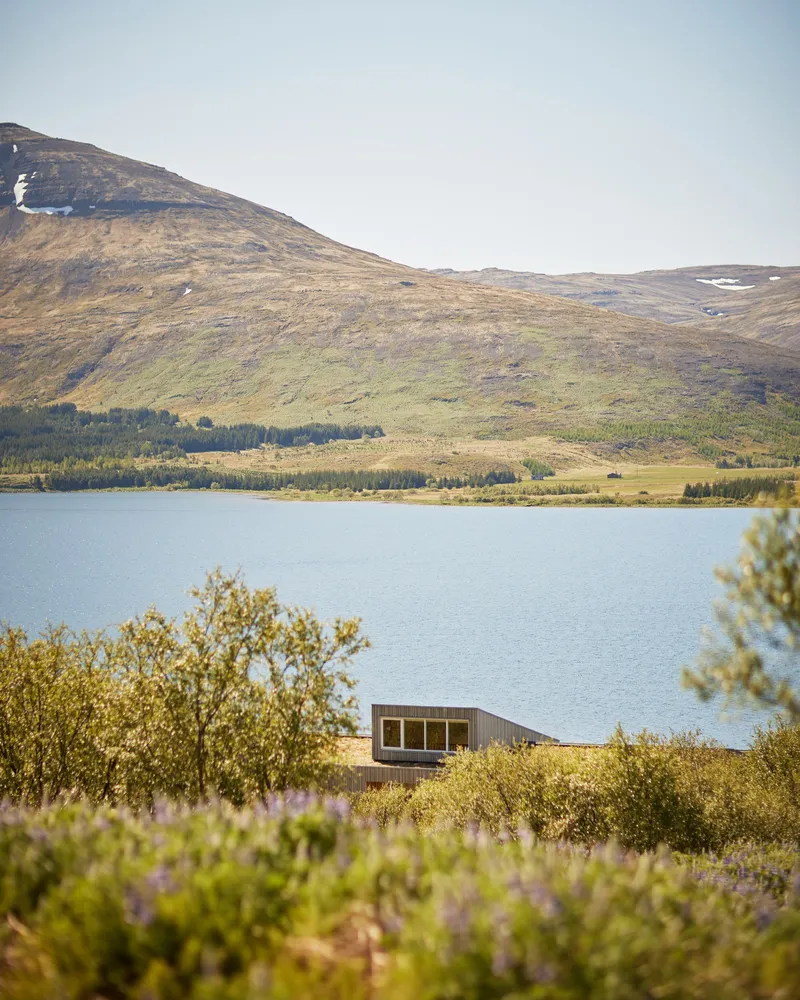
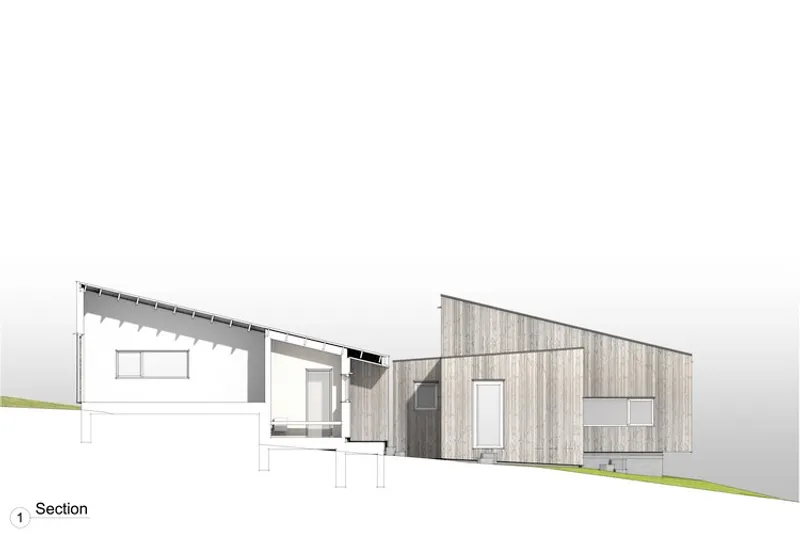
In a secluded valley in southwest Iceland near Borgarnes, architecture firm Teiknistofan Tröð has completed a 99-square-meter holiday home that demonstrates exceptional sensitivity to one of the world's most dramatic and fragile landscapes. Rather than asserting itself as an object placed upon the terrain, this modest dwelling seems to emerge from the land itself, its horizontal form following natural contour lines while a moss-covered roof literally continues the landscape over the building. The project represents a masterclass in restraint, proving that architectural significance can emerge from quietness and integration rather than formal drama or material extravagance.
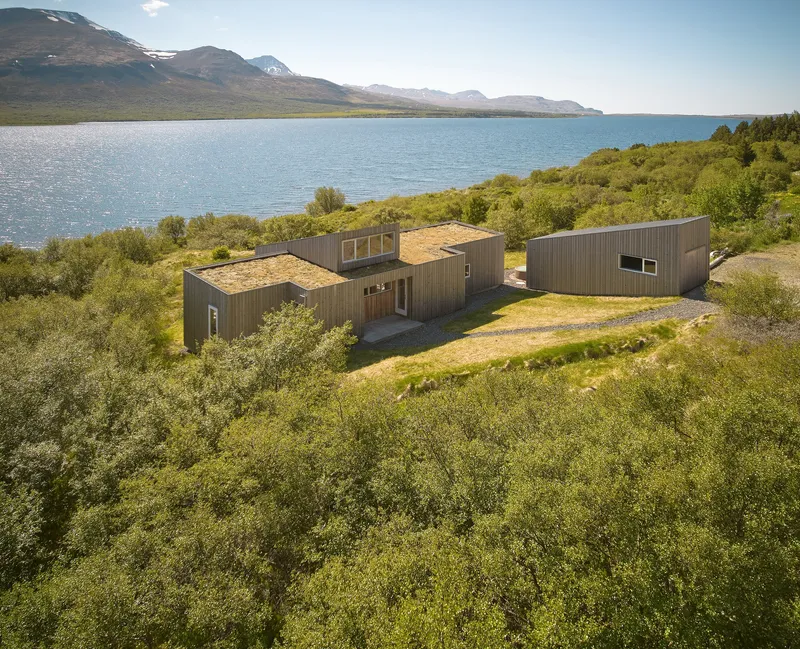
The site itself is extraordinary—a gently sloping terrain defined by untouched natural vegetation including mountain birch, heather, and native grasses, bordered by a large lake with dramatic views toward distant mountains. This is landscape that demands humility from architects, where the wrong intervention could diminish rather than enhance the inherent power of place. Teiknistofan Tröð's response honors this responsibility, creating architecture that enhances human experience of landscape while minimizing visual and ecological impact.
The Icelandic Context: Building in an Extreme Environment
To appreciate the Holiday Home in Iceland, one must understand the extraordinary environmental challenges that shape Icelandic architecture. This subarctic island nation experiences some of the world's most extreme and variable weather conditions: powerful winds that can exceed 100 kilometers per hour, dramatic temperature swings, limited daylight in winter months, intense summer sun that barely sets, frequent precipitation, and volcanic geology that shapes both landscape and culture.
Traditional Icelandic architecture evolved highly specific responses to these conditions—turf-covered roofs for insulation, thick walls for thermal mass, small windows to minimize heat loss, and low profiles to reduce wind exposure. When modernization arrived in the twentieth century, much of this climate-responsive wisdom was abandoned in favor of imported building technologies. Contemporary Icelandic architects like Teiknistofan Tröð are now reinterpreting traditional principles through modern materials and techniques, creating buildings that honor vernacular wisdom while meeting contemporary expectations for comfort and openness to landscape.
The holiday home typology presents particular challenges in Iceland. These are seasonal dwellings that must withstand months of vacancy during harsh winter conditions, requiring robust construction and materials that need minimal maintenance. They must provide comfortable refuge during brief summer visits while also being secure when unoccupied. And increasingly, they must minimize ecological impact on fragile environments where vegetation grows slowly and ecosystems recover from disturbance only gradually.
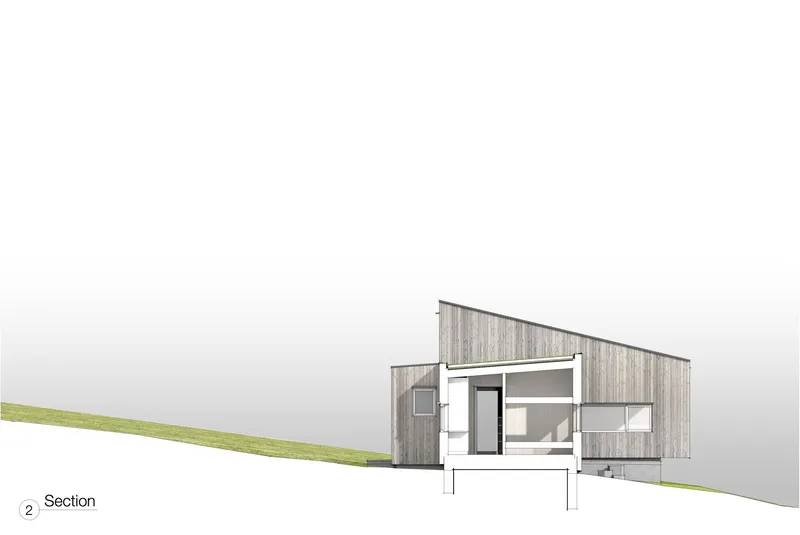
The Contrasting Zinc Volume
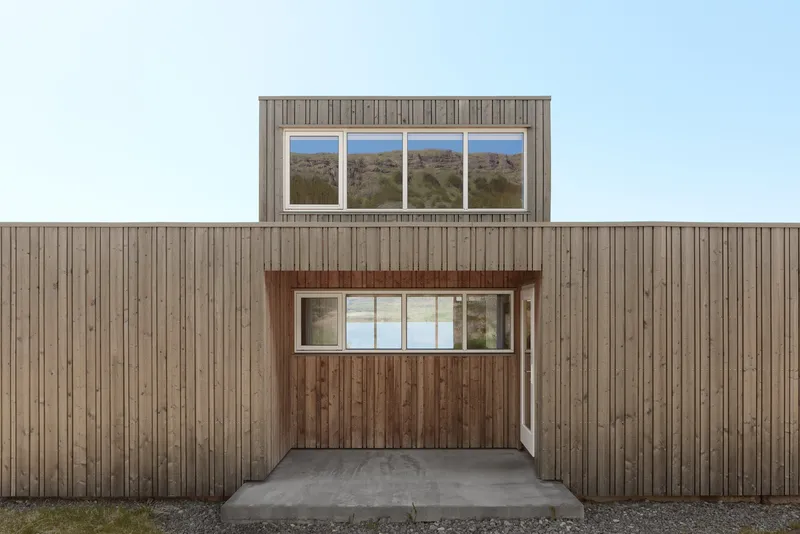
Perpendicular to the low horizontal volume, a taller element with a pitched zinc roof rises as a deliberate counterpoint. This vertical component breaks the strict horizontality, creating spatial variety and functional differentiation while also serving as a visual marker that helps locate the otherwise camouflaged dwelling in the landscape.
The choice of zinc for this prominent roof surface is pragmatic and aesthetic simultaneously. Zinc is highly durable in marine environments, requiring virtually no maintenance while weathering to a distinctive blue-grey patina that harmonizes with Icelandic light and landscape colors. The material's longevity is essential for a holiday home that may sit unoccupied for extended periods. And unlike brightly colored roofing that would visually fragment the landscape, weathered zinc recedes, its muted tones blending with rock, water, and sky.
The pitched form of this zinc roof also responds to climate—steeper slopes shed snow and rain more effectively than flat roofs, reducing loading and potential leakage. In a region with significant precipitation and occasional heavy snowfall, this pitch provides practical weather protection while creating interior ceiling height variation that adds spatial drama.
Larch Cladding: Weathering With Dignity
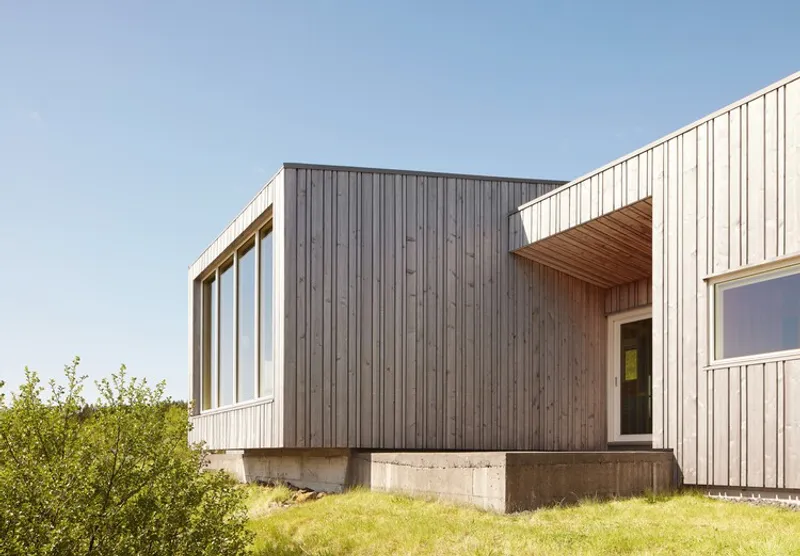
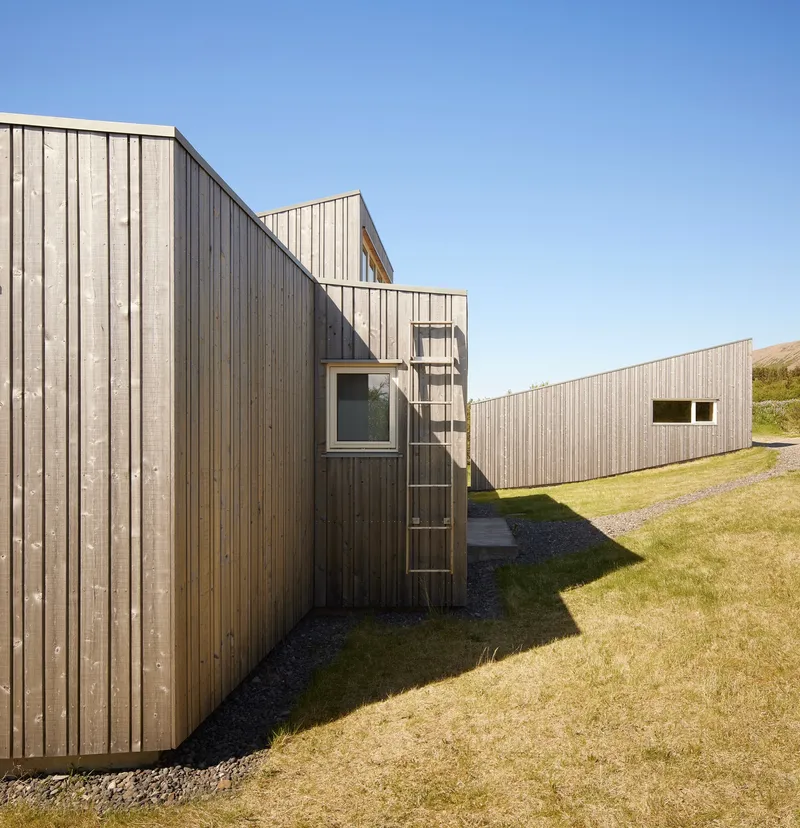
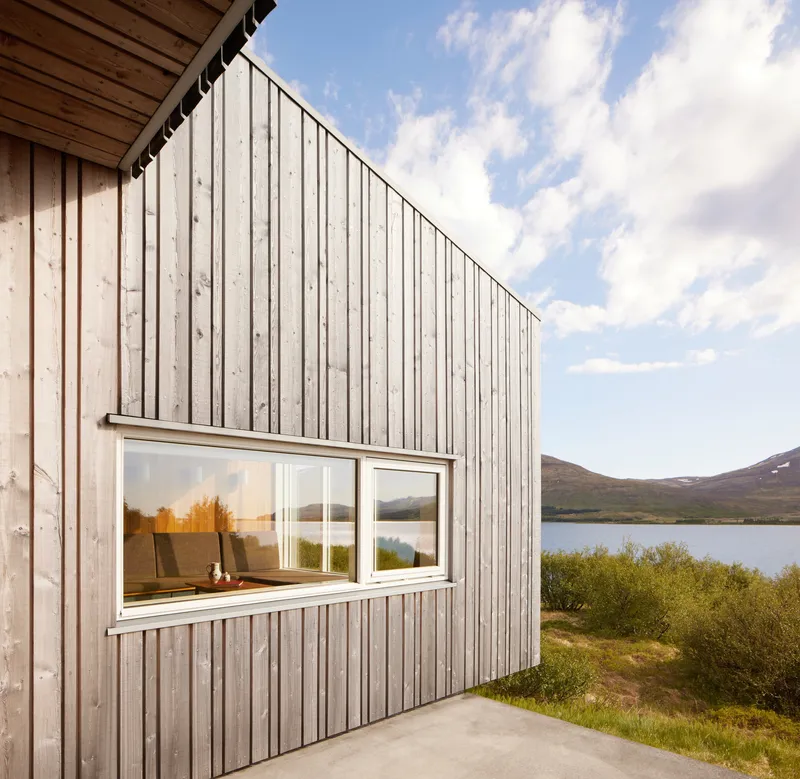
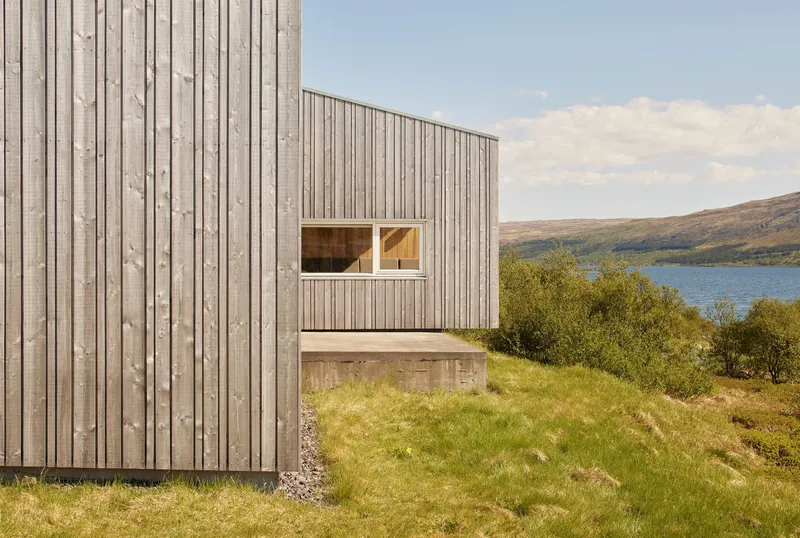
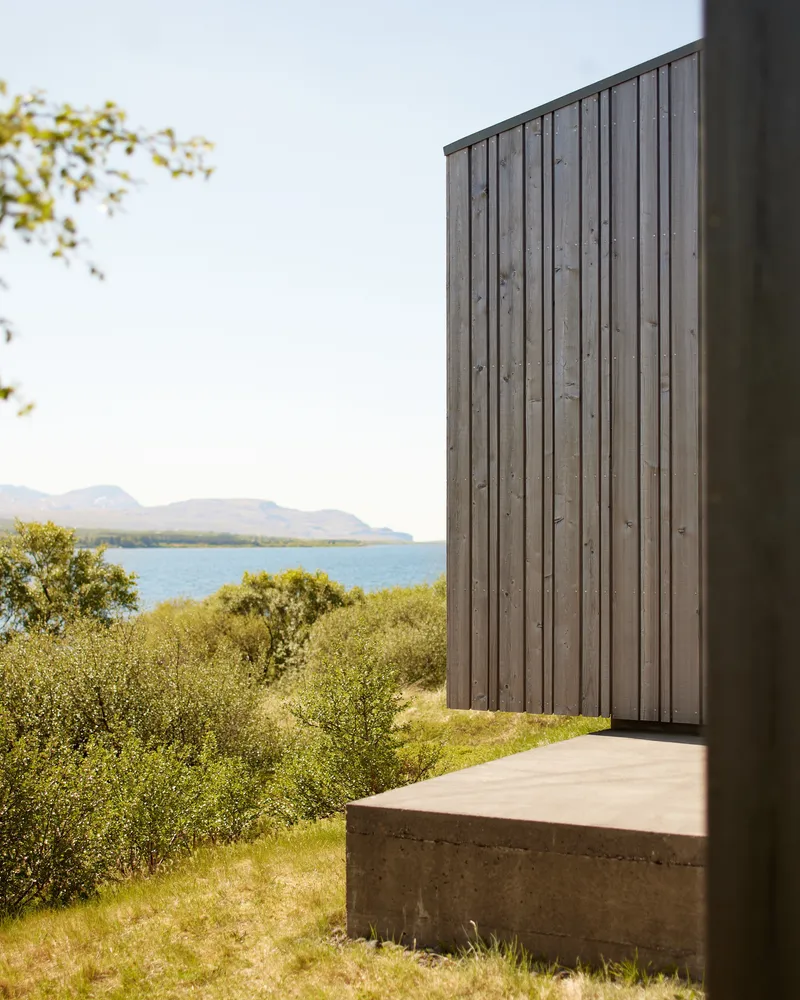
All facades are clad in untreated vertical larch paneling, a material choice that carries both practical and philosophical significance. Larch is a durable softwood species resistant to decay even without chemical treatment, making it ideal for harsh climates. Its natural oils provide some weather resistance while the vertical orientation ensures water sheds efficiently down the facade rather than penetrating joints.
The decision to leave the larch untreated means the wood will weather naturally over time, gradually silvering to a grey tone that blends increasingly with the surrounding landscape. This acceptance of patina represents a fundamental philosophical position—allowing materials to age gracefully rather than fighting natural processes through maintenance-intensive finishes. In the Icelandic context, where weather is relentless and maintenance access may be seasonal, this approach is both pragmatic and aesthetically coherent.
The vertical orientation of the larch boards creates strong linear shadows that emphasize the building's horizontal extension across the site. This interplay of horizontal form with vertical surface articulation creates visual interest while maintaining overall simplicity. The uniform material treatment across all facades provides coherence, avoiding the visual fragmentation that can result from using different materials on different elevations.
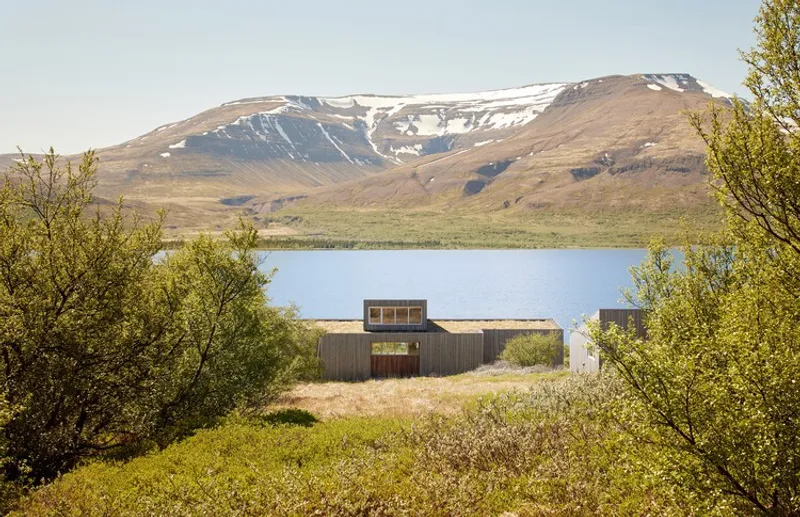
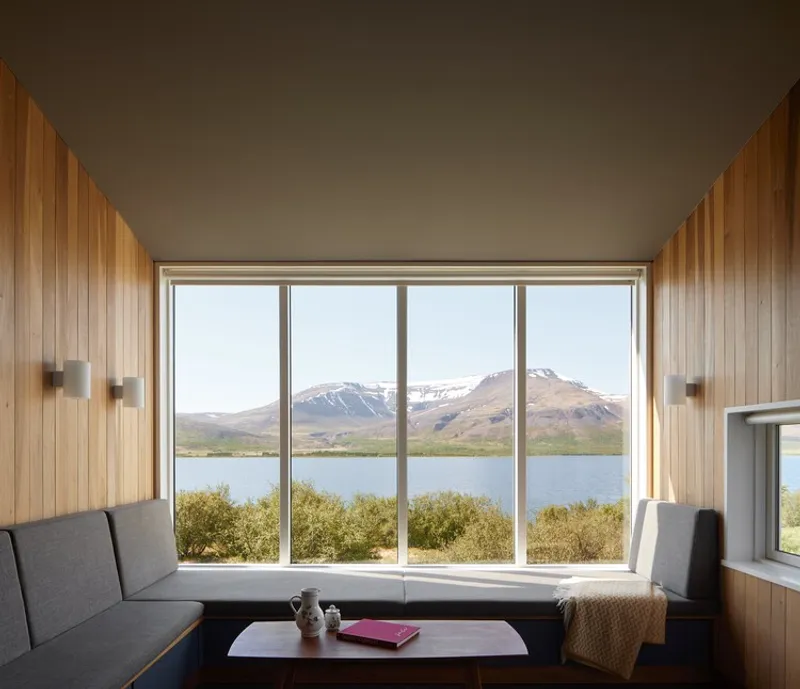
Orientation and Views: Living With the Landscape
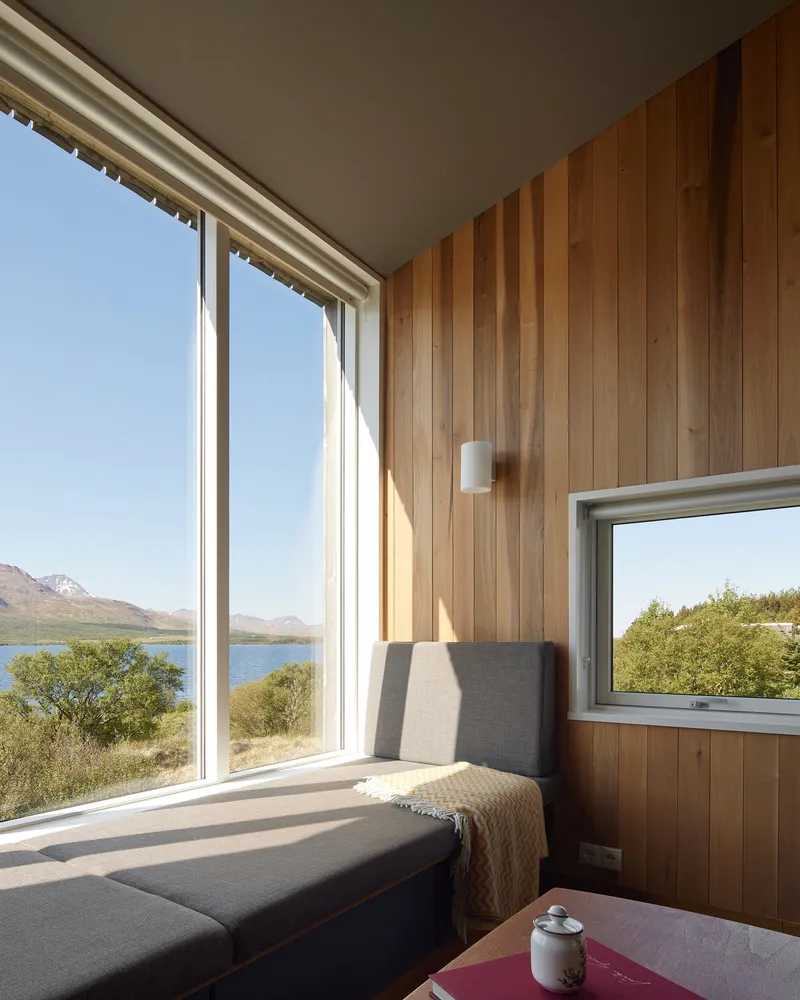
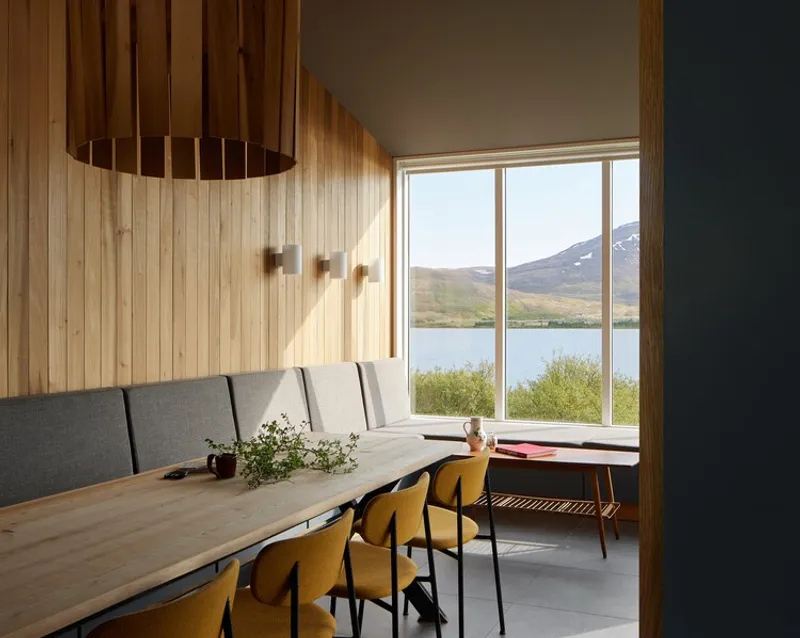
The planning of the Holiday Home demonstrates sophisticated understanding of orientation, view, and interior organization. Southern-facing living spaces and bedrooms are oriented toward sweeping views of the lake and distant mountains, maximizing both daylight and visual connection to the dramatic landscape. This southern orientation also captures optimal solar gain during Iceland's brief but intense summer, when the sun arcs high across the sky for extended hours.
A long internal corridor runs through the building, tying all functions together while creating a clear organizational spine. Along the northern side of this corridor lie the entrance, bathrooms, and storage areas—service functions that don't require prime views or direct sunlight. This zoning strategy is climate-smart, placing buffer spaces on the north where they provide thermal protection for living areas.
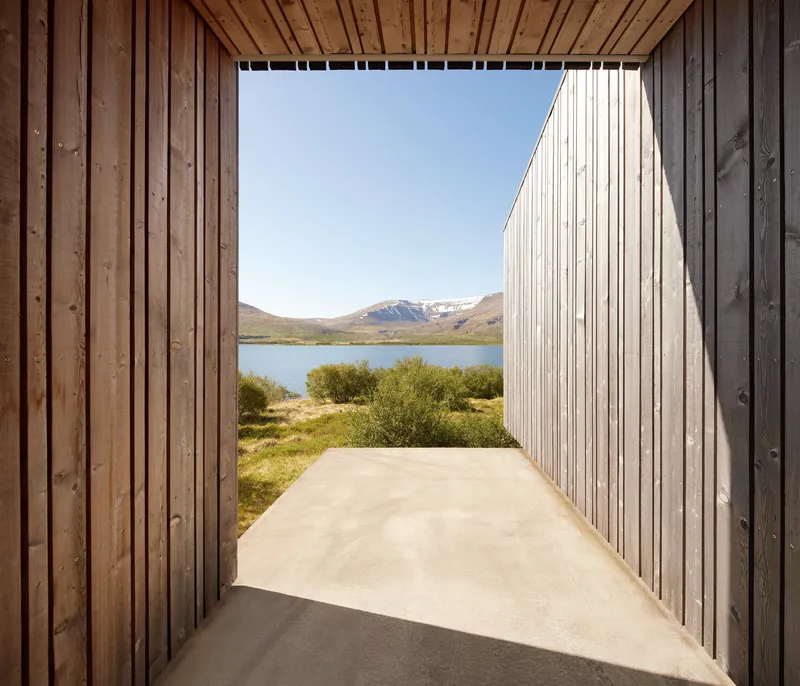
The corridor itself serves as more than mere circulation. In a compact 99-square-meter dwelling, this linear space creates a sense of procession and spatial sequence that makes the house feel larger than its footprint suggests. The act of moving through the corridor builds anticipation before arriving in the primary living spaces with their dramatic lake views.
Interior Materiality: Aspen's Quiet Presence
Interior surfaces are clad in untreated aspen paneling, continuing the philosophy of natural materials allowed to express their inherent character. Aspen is a pale, fine-grained hardwood that imparts a calm, almost luminous quality to spaces. Its light color is particularly valuable in Iceland, where winter daylight is scarce and maximizing interior brightness becomes important for psychological well-being.
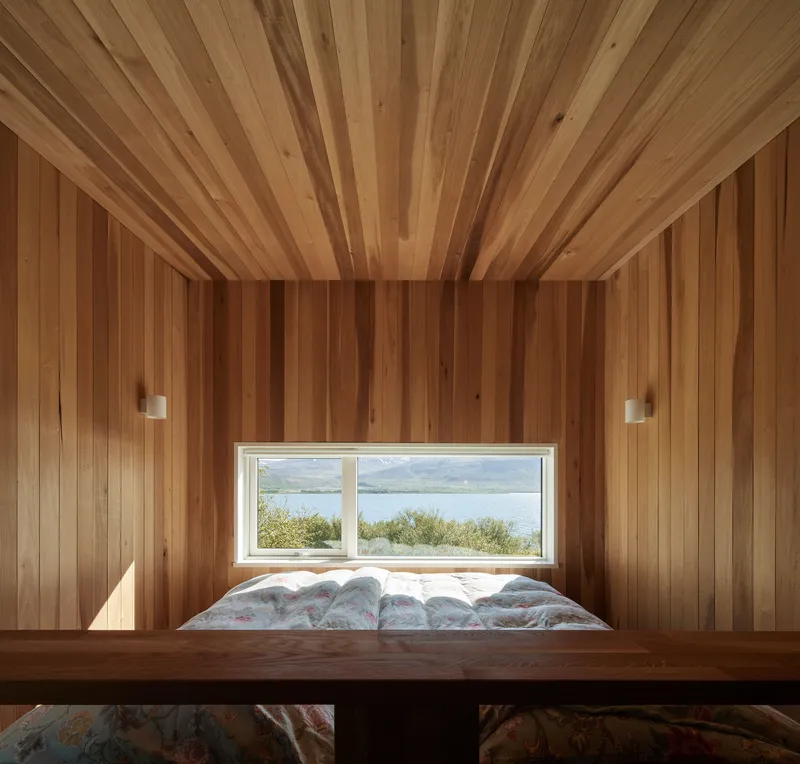
The choice to leave the aspen untreated maintains material honesty—the wood's natural color and grain remain fully visible rather than being obscured by stains or finishes. This creates interiors of quiet simplicity where materiality itself provides aesthetic interest without requiring decorative embellishment. The consistent use of aspen throughout creates spatial continuity, allowing the eye to move easily between surfaces rather than being caught by contrasting materials.
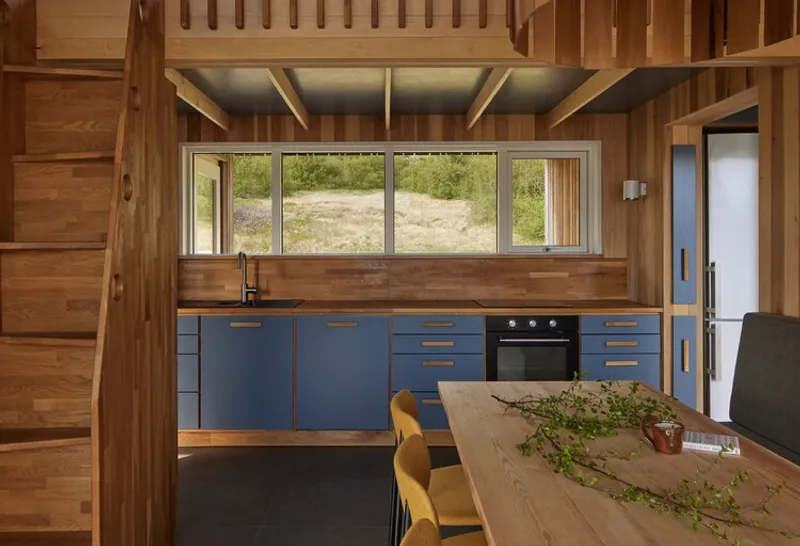
Aspen also has practical advantages for interior use. Its stable dimensional characteristics mean it's less prone to warping or cupping with humidity changes than some wood species. Its relatively soft texture is pleasant to touch, important in a home where people interact directly with wall surfaces. And its pale color provides an excellent backdrop for the shifting quality of Icelandic light throughout the day and seasons.
Acoustic Strategy: Balancing Warmth and Performance
Ceilings alternate between timber paneling and acoustic stretch fabric, a thoughtful approach that balances the warmth and visual coherence of wood surfaces with the acoustic performance needed in open-plan spaces. All-wood interiors can create acoustic problems in contemporary open-plan homes—hard surfaces reflect sound, creating reverberation that makes conversation difficult and amplifies ambient noise.
Acoustic stretch fabric provides sound absorption that dampens reverberation, creating more comfortable acoustic environments without resorting to visually intrusive acoustic panels. The fabric can be printed or textured to complement the aesthetic of the space, and when well-detailed, it integrates nearly invisibly into ceiling planes. This allows the architects to maintain the visual continuity of the wooden interior while addressing acoustic performance requirements.
The alternation between timber and fabric also creates subtle visual variety in the ceiling plane, preventing the monotony that can result from identical material treatment throughout. This variation adds depth and interest to interior spaces while serving functional purposes—acoustic fabric can be concentrated in areas where sound control matters most, such as living and dining areas, while timber paneling can dominate in bedrooms where acoustic absorption is less critical.
Scale and Modesty
At 99 square meters, the Holiday Home is deliberately modest in scale. This compactness serves multiple purposes: it reduces construction and environmental impact, it minimizes maintenance requirements, it keeps operational costs reasonable, and it encourages a simpler, more focused way of inhabiting the space. The size forces prioritization—only essential spaces are included, and each must work efficiently.
This modesty of scale aligns with growing awareness that sustainability requires not just green technologies but fundamental reconsideration of how much space we actually need. Holiday homes are particularly prone to excess—properties that sit vacant most of the year, heated and maintained at considerable environmental cost. A 99-square-meter dwelling resists this tendency toward excess, providing comfortable accommodation without waste.
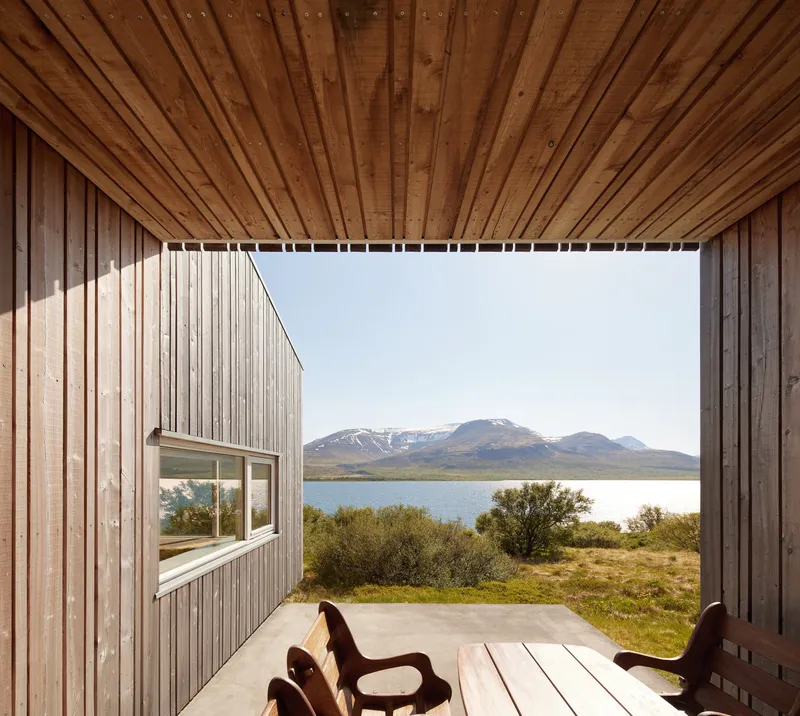
The compact footprint also reduces the building's presence on the site. A smaller building disturbs less terrain, requires fewer foundation interventions, and maintains more natural landscape. In the dramatic Icelandic setting, this restraint allows the landscape to remain the primary experience, with the dwelling serving as modest base camp for engaging with the spectacular surroundings.
Nordic Design Traditions
The Holiday Home participates in broader Nordic design traditions emphasizing simplicity, connection to nature, quality materials, and attention to light. These traditions reflect both cultural values and practical responses to challenging climates and relatively limited material resources. Nordic design typically avoids unnecessary ornament, trusting that good proportions, honest materials, and careful detailing provide sufficient aesthetic interest.
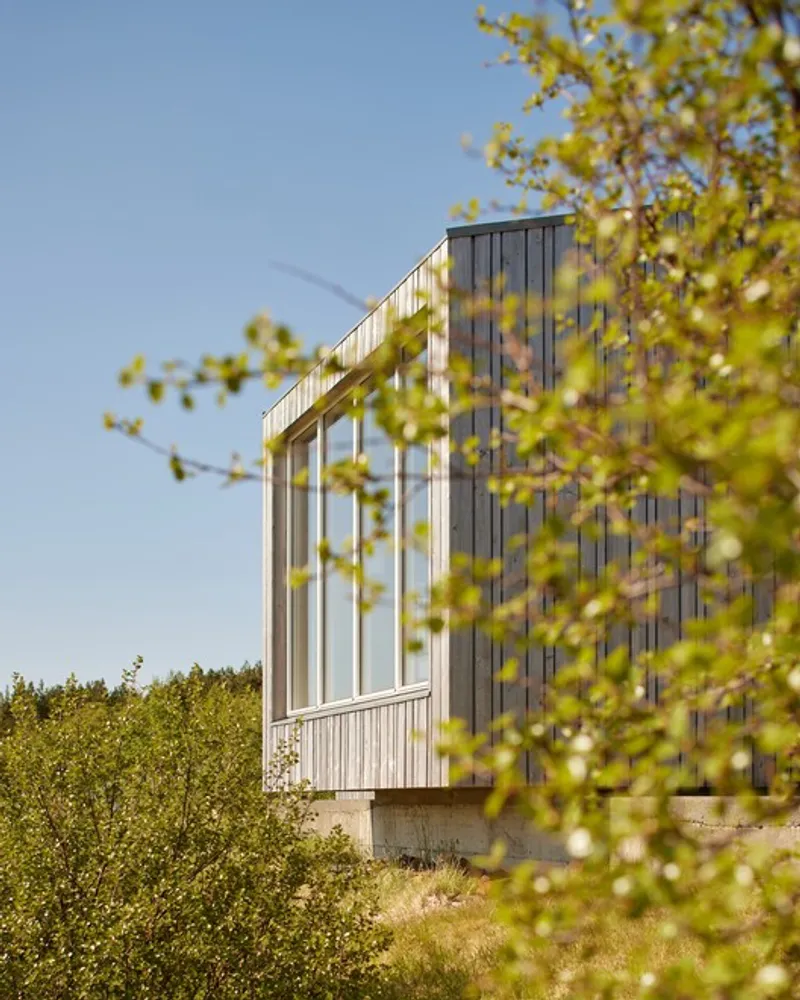
The project's restrained palette—wood, concrete, zinc, moss—exemplifies this approach. Rather than employing numerous materials to create variety, the design achieves richness through the careful orchestration of a few high-quality elements. The wood's grain provides pattern, the zinc's patina creates subtle color variation, the moss adds texture and seasonal change. This discipline creates coherence and allows each material's inherent qualities to register clearly.
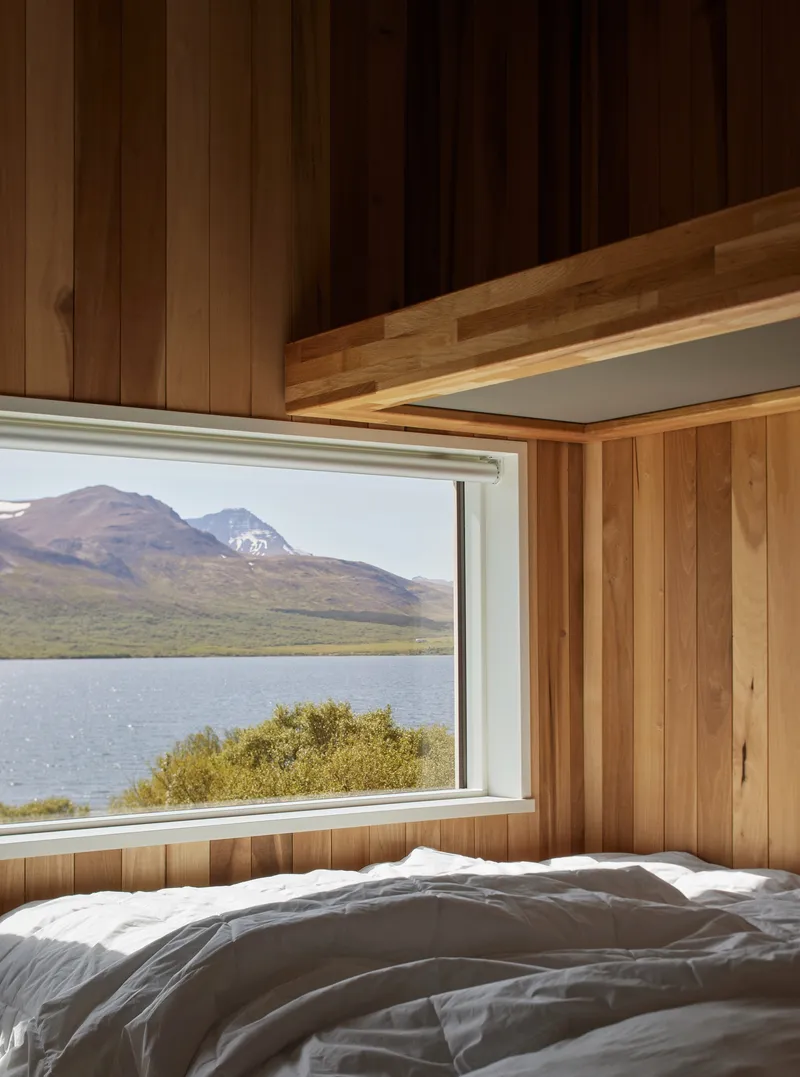
The emphasis on natural light—both in the southern orientation of living spaces and in the use of pale interior materials that reflect available light—also reflects Nordic design priorities. In regions where winter darkness is profound, maximizing and celebrating daylight becomes culturally significant, shaping architecture in fundamental ways.
All the Photographs are works of Nanne Springer



Popular Articles
Popular articles from the community


The Ocean Hive: Sustainable Architecture for a Self-Sufficient Civilization at Sea
The Ocean Hive imagines sustainable architecture at sea, where modular habitats, algae, wave power and ocean waste sustain a growing colony.

Co-life: Sustainable Architecture for Age-Friendly Community Living
Co-life reimagines sustainable architecture for seniors through courtyards, rammed earth, shared gardens, and spaces designed for belonging.

Hill & Cross Opera: Sculptural Opera House Architecture Shaped by Tallinn’s Landscape and Identity
Hill & Cross Opera reimagines opera house architecture in Tallinn through its sculptural hill, civic plaza, glass wave and a luminous cross.

Riyadh For All: Intergenerational Urban Design for Active Aging in Rabat
Riyadh For All reimagines urban design in Rabat with intergenerational co-living, adaptive courtyards, and Moroccan cultural exchange today.


Similar Reads
You might also enjoy these articles


Hodi-Mandai Geram
Project Function: Preservation and revitalization of the Intangible heritage and socio-spatial identity of the Hodi by Housing, Cultural Memory Center, Sacred Grove, landscape, local tourism economy


Olio Towers: A Mid-Rise for Performers That Fuses Housing, Rehearsal, and Stage
Located blocks from Houston's Theater District, this modular tower stacks living units around a central performance atrium.

Oasis: Modular Green Housing Carved into Dhaka's Urban Fabric
A shortlisted Plugin Housing entry reclaims unauthorized settlements in Dhaka with stepped concrete volumes, green roofs, and ventilation-driven design.

Black Hole: A Floating Megastructure for the Post-Physical Era
Emiliano Mazzarotto envisions a spherical, self-scaling arena where e-sports, digital hotels, and holographic stadiums replace traditional public space.

Explore Housing Competitions
Discover active competitions in this discipline



Challenge to reimagine the Iron Throne


Photograph architecture without architects


Illustrate the lost glory of Angkor Wat - Render Challenge


Design challenge to reuse E-waste
Comments (0)
Please login or sign up to add comments
No comments yet. Be the first to comment!