

Holmøy Production Facility by Snøhetta: A Transparent and Sustainable Industrial Landmark in Northern Norway
A transparent, sustainable fish-processing facility by Snøhetta, blending seawater-powered systems, daylight-filled workspaces, and vibrant interiors to enhance productivity and community identity.


The Holmøy Production Facility by Snøhetta redefines what modern industrial architecture can be, setting a new benchmark for transparency, sustainable innovation, and worker well-being. Located in Liland outside Sortland in Northern Norway, this 16,000 m² facility expands on the long-standing collaboration between Holmøy Maritime and Snøhetta, continuing a design partnership that has shaped several administrative and industrial buildings from 2014 to 2021. Completed in 2024, the new production plant embodies a forward-thinking architectural approach where environmental performance, operational efficiency, and human-centered design converge.

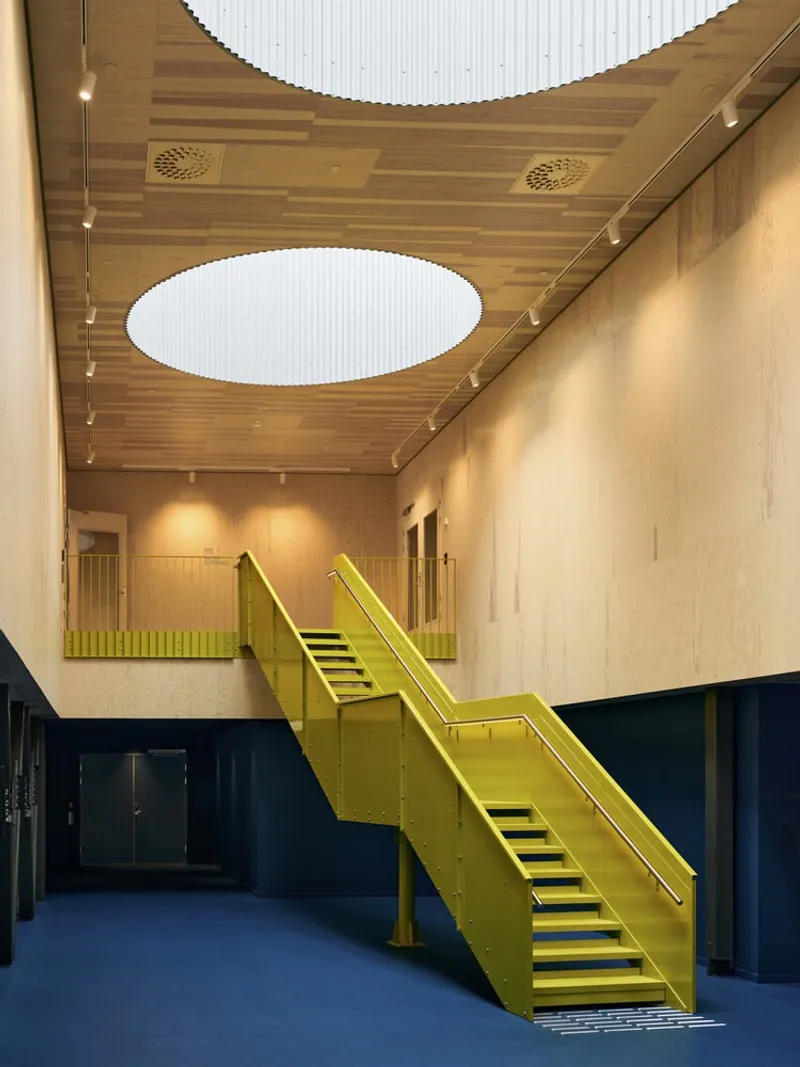
Designed as an advanced fish-processing facility with an emphasis on openness, the building integrates large glass surfaces, natural light, and visual permeability, making the production process visible both to employees and visitors. This architectural transparency allows the industrial workflow to become an educational and engaging experience, turning a traditionally closed-off typology into an accessible and contemporary expression of seafood production. Snøhetta’s design strategy focuses on creating sustainable workplaces that support local economic growth while elevating the identity of Holmøy Maritime within the regional landscape.


A key feature of the facility is its innovative energy system, which uses seawater from the adjacent fjord for both heating and cooling. This system works in combination with a heat pump and heat exchanger, drastically reducing energy consumption and stabilizing indoor climate conditions. Filtered seawater is also utilized directly in the production process, supported by kilometers of pipelines laid along the fjordbed. The integration of marine resources not only enhances operational performance but also establishes a strong connection between the building and its coastal environment.
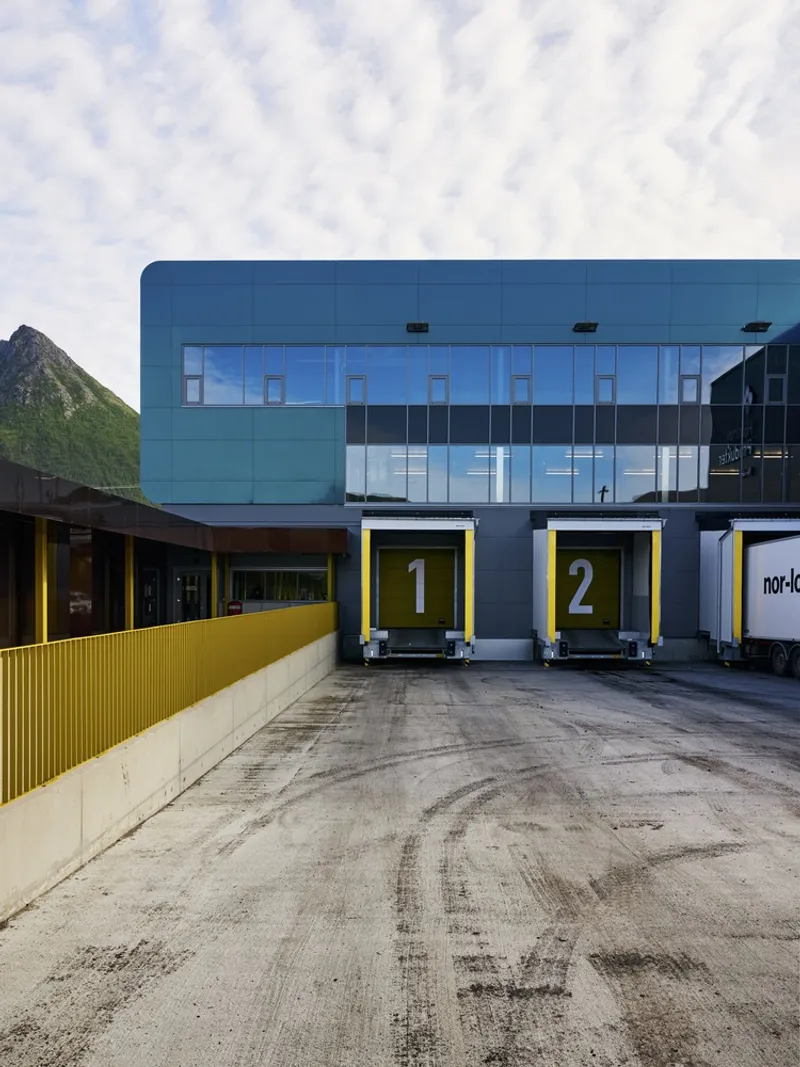
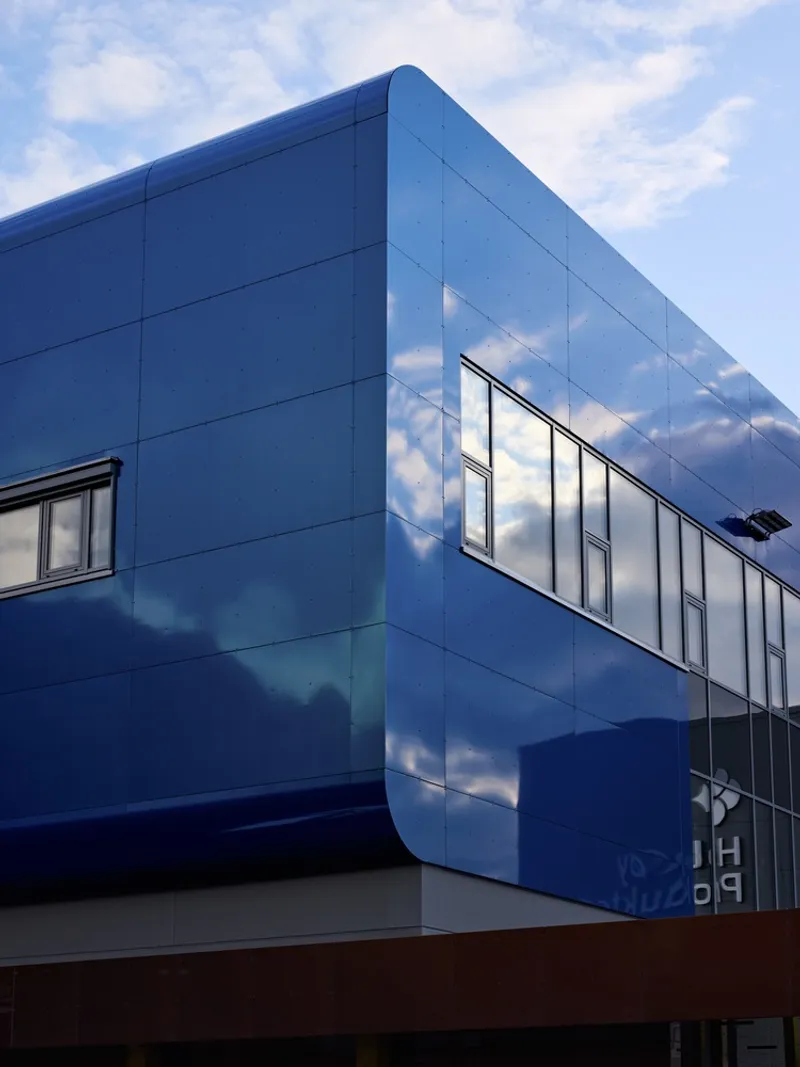
The architecture prioritizes a holistic design language, ensuring a cohesive identity across exterior and interior spaces. With production halls occupying the largest spatial volume, the design was developed from the inside out. Strict environmental and technical requirements guided the placement of equipment, material flow, and circulation paths. Only after the production core was fully optimized did Snøhetta shape the surrounding functional volumes, resulting in seamless movement, clear wayfinding, and enhanced spatial logic.

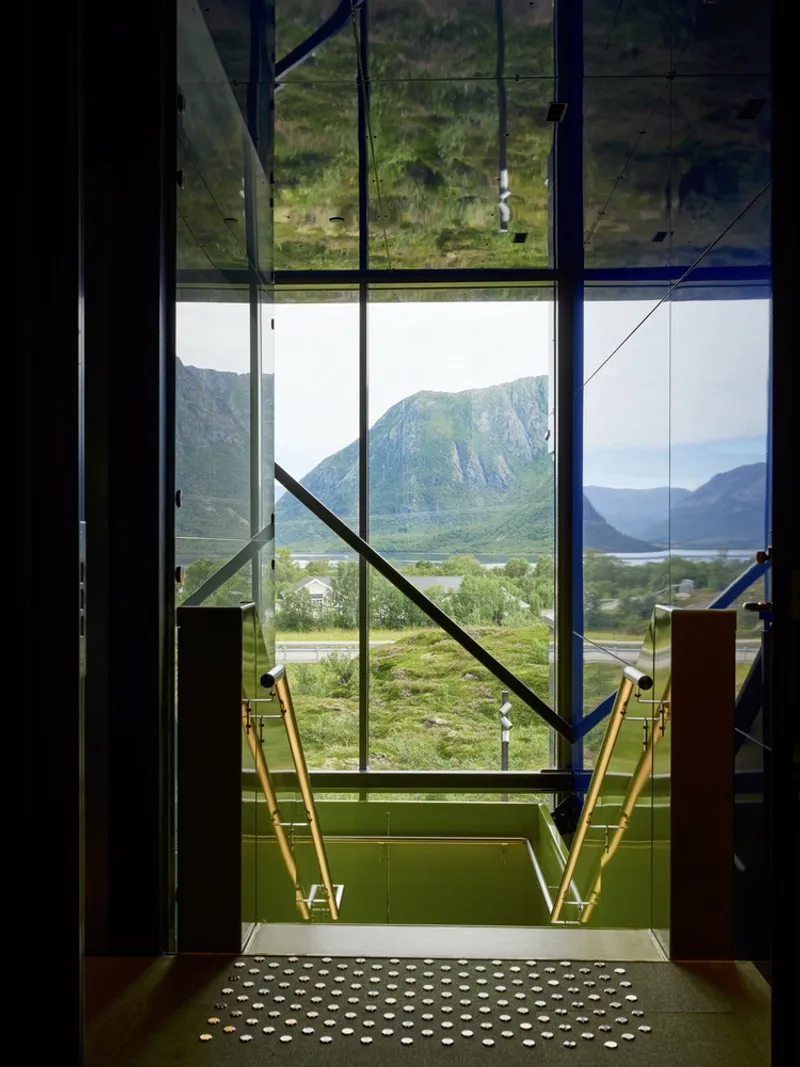
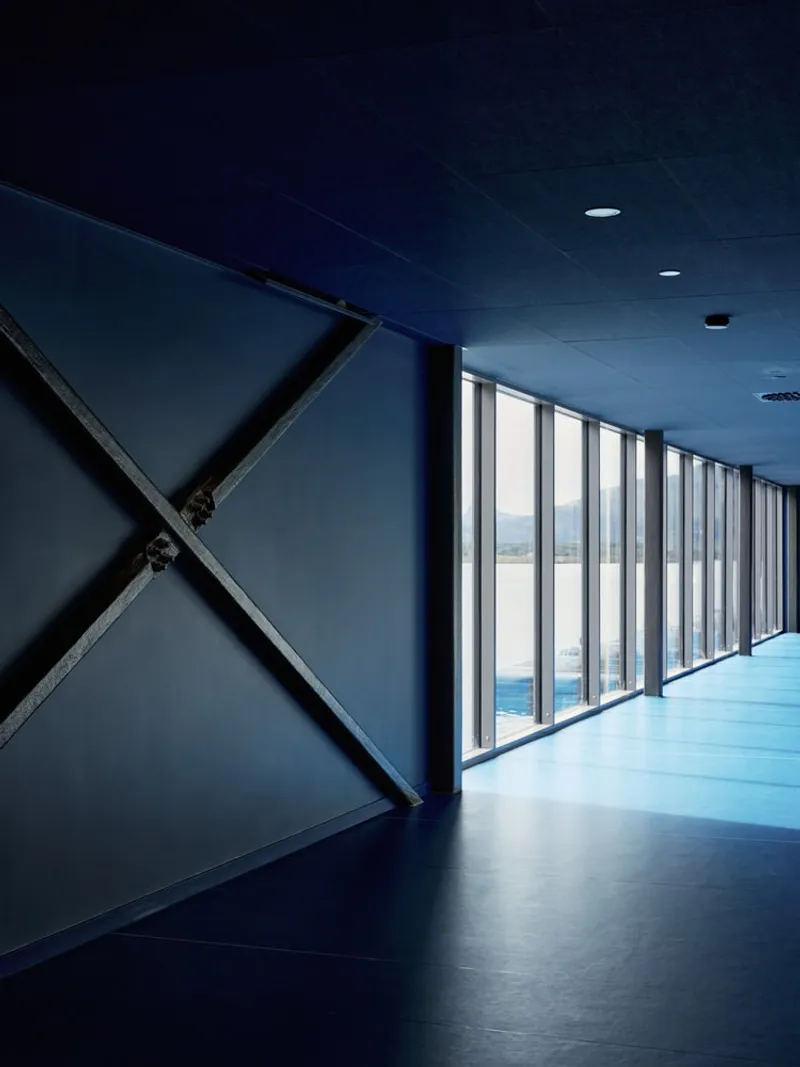
Above the production halls, a glass-enclosed walkway weaves through the facility, offering visitors elevated views into the processing areas. This zig-zag circulation route transforms the building into an educational corridor, enabling full visibility of the fish-processing journey from sea to packaging. The transparency extends outward, where windows frame the surrounding seascape, reinforcing the relationship between the building’s purpose and its natural context. Snøhetta ensured that worker well-being remained central to the project, incorporating open administrative zones, generous glazing, and dedicated relaxation areas. Three large skylights supply natural daylight deep into the interior, significantly improving the work environment in an otherwise technically controlled setting.

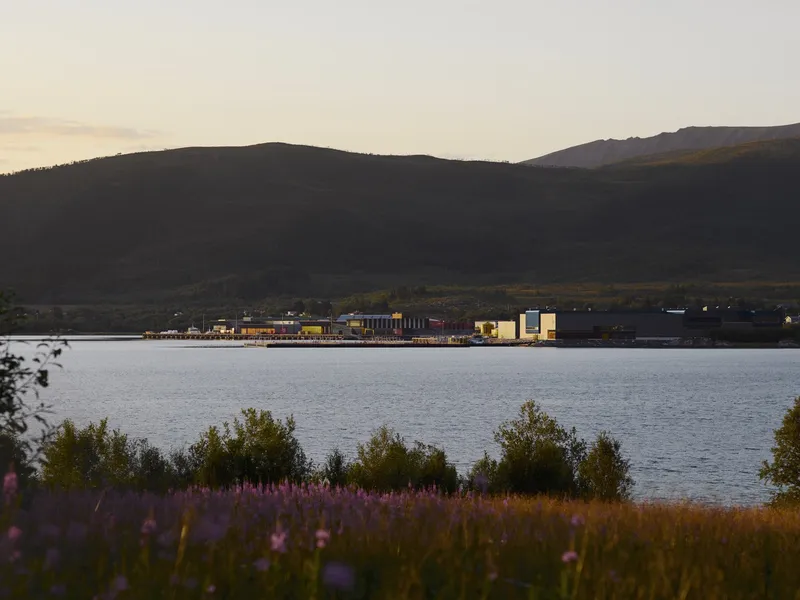
The building’s color strategy adds another layer of depth to the architectural narrative. Externally, the deep blue façade shifts with changing weather, reflecting clouds and the surrounding sea to create a dynamic visual presence. Contrasting tones of ochre and brown-orange draw from the shoreline and coastal geology, grounding the building in its Northern Norwegian context. Inside, color zoning enhances wayfinding while supporting the building’s functional hierarchy. Blue hygiene flooring defines the production areas, dark blue and turquoise hues distinguish viewing corridors, and warm natural greens and pine wood mark the administrative spaces. Red and wood accents enrich the canteen and employee break rooms, providing a warm, tactile contrast to the bright, industrial lighting of the production zones. This deliberate contrast helps employees experience a meaningful shift during breaks, supported by carefully curated lighting that creates a sense of comfort and retreat.

Snøhetta Design further refined the user experience by developing a subtle yet effective signage and wayfinding system. Inspired by marine symbolism, the design incorporates shells and fish bone motifs into markers and iconography. Typography draws from maritime and industrial aesthetics, merging dense fonts with stenciled lettering reminiscent of ship markings, reinforcing the facility’s cultural and functional identity.


All photographs are works of Sebastian S. Bjerkvik/Snøhetta


Popular Articles
Popular articles from the community


Jaramillo Van Sluys Arquitectura and Urbanismo Turn a Demolished Registry Lot in Quito into an Orchard Plaza
In Quito's Centro Histórico, a 2,800 m² plaza exposes the San Agustín convent wall and redraws its lost Augustinian orchard in volcanic stone.

U.GA Architects Wraps an Oval Rooftop Pool in Curved Board-Formed Concrete on Busan's Jeollidan-gil
In Busan's Jeonpo-dong, a 454 m² mixed-use block stacks a neighborhood facility, guest rooms and an oval rooftop pool inside spiraling concrete walls.

Architekt Andreas Gruber Scatters 23 Dark Timber Chalets Across a South Tyrolean Forest Edge
In Molini di Tures, Amonti Chalets breaks a resort into a hamlet of gabled timber houses, with parking, storage and services pushed into the slope.

LT2A and OPEN Architectes Thread a Brick and Glass High School Through a Wooded Belgian Campus
In Braine-l'Alleud, a 3,000 m² wing for Collège Cardinal Mercier pairs pale brick with a glazed colonnade, deferring to a small chapel and a dense wood.

Similar Reads
You might also enjoy these articles


Hodi-Mandai Geram
Project Function: Preservation and revitalization of the Intangible heritage and socio-spatial identity of the Hodi by Housing, Cultural Memory Center, Sacred Grove, landscape, local tourism economy


Olio Towers: A Mid-Rise for Performers That Fuses Housing, Rehearsal, and Stage
Located blocks from Houston's Theater District, this modular tower stacks living units around a central performance atrium.

Oasis: Modular Green Housing Carved into Dhaka's Urban Fabric
A shortlisted Plugin Housing entry reclaims unauthorized settlements in Dhaka with stepped concrete volumes, green roofs, and ventilation-driven design.

Black Hole: A Floating Megastructure for the Post-Physical Era
Emiliano Mazzarotto envisions a spherical, self-scaling arena where e-sports, digital hotels, and holographic stadiums replace traditional public space.

Explore Office Building Competitions
Discover active competitions in this discipline

Challenge to reimagine the Iron Throne

Photograph architecture without architects

Illustrate the lost glory of Angkor Wat - Render Challenge

Design challenge to reuse E-waste
Comments (0)
Please login or sign up to add comments
No comments yet. Be the first to comment!