
Home for Family by Koki Sugawara Architects: A Thoughtful Renovation for Multigenerational Living in Japan
Thoughtful renovation of a family home in Japan, blending natural light, tactile materials, and multigenerational living within a compact layout.


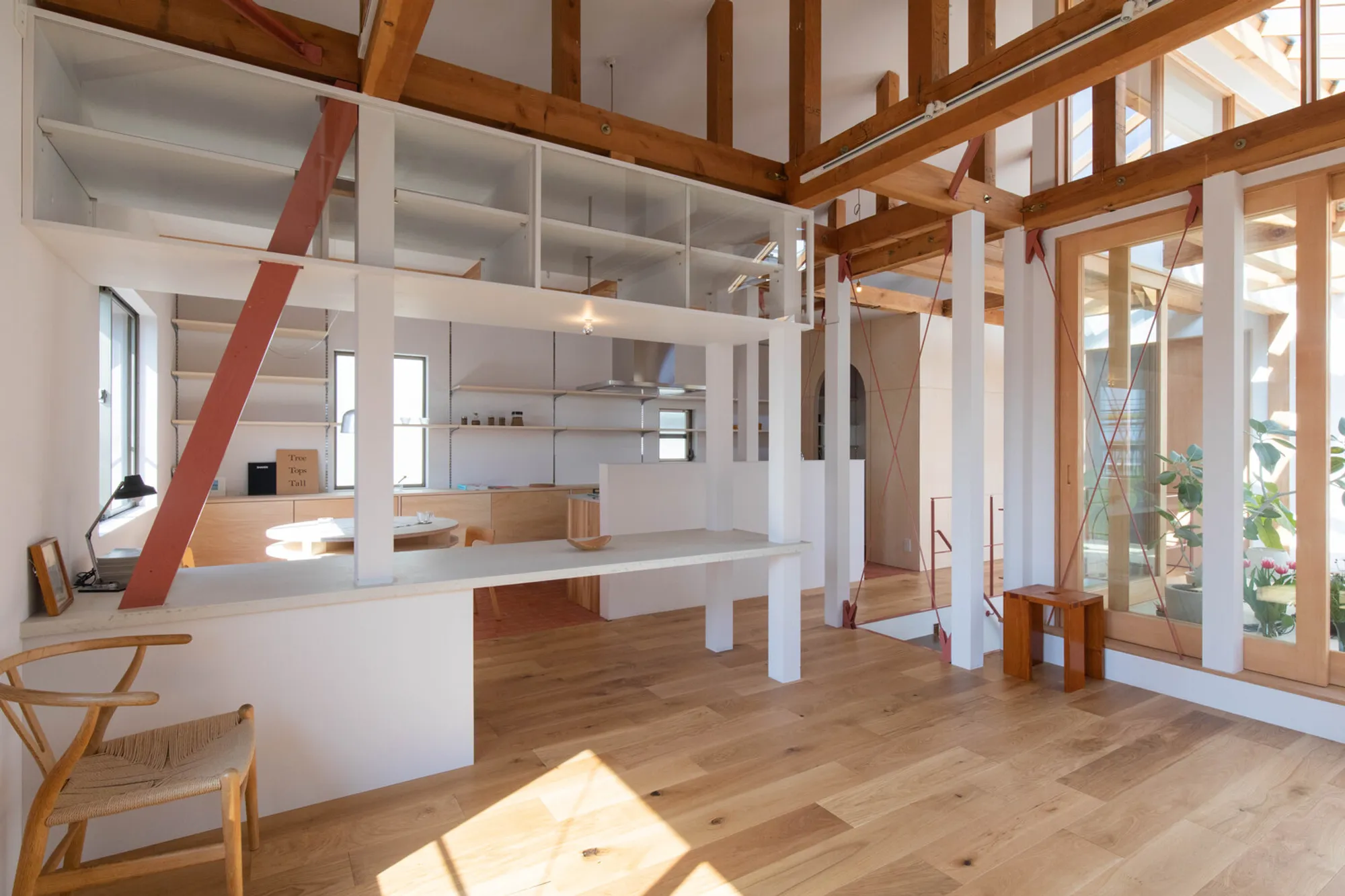
Located in Japan's Kanto region, Home for Family by Koki Sugawara Architects is a deeply personal renovation project that breathes new life into a two-story residence passed down through generations. Originally owned by the client’s parents, the house is reimagined as a warm, flexible home for a new nuclear family—one that honors its past while adapting to contemporary family life.
Renovation with Purpose: Balancing Volume and Function
The existing home spans approximately 178 square meters, a size considered excessive for the family's current needs. While a full-scale renovation was initially desired, budgetary constraints due to the home’s volume led to a more nuanced approach. The architects proposed a selective renovation strategy: retaining the first floor with minimal updates for potential use by the grandparents in the future, and focusing the transformation on the second floor, where the family's day-to-day life now unfolds.
This approach reflects a sustainable design philosophy, utilizing existing infrastructure efficiently while reducing material waste and construction costs—principles increasingly important in both urban Japanese housing and global architectural discourse.
Maximizing Light, Space, and Vertical Experience
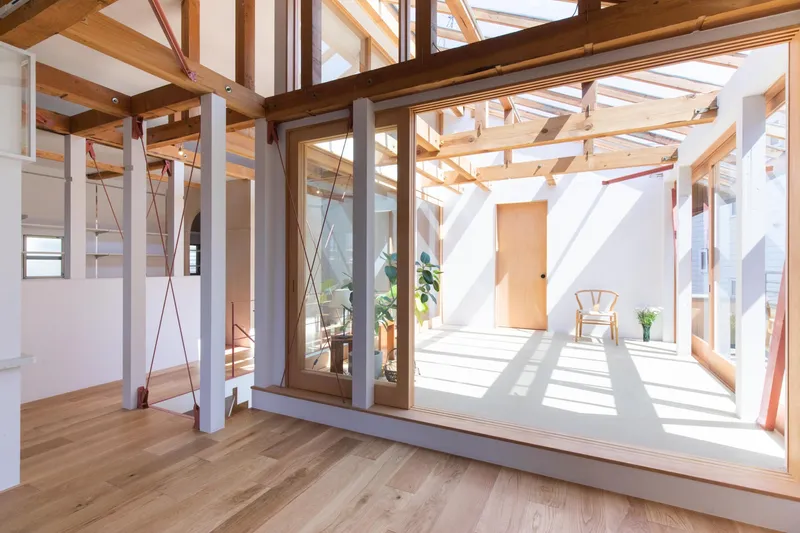
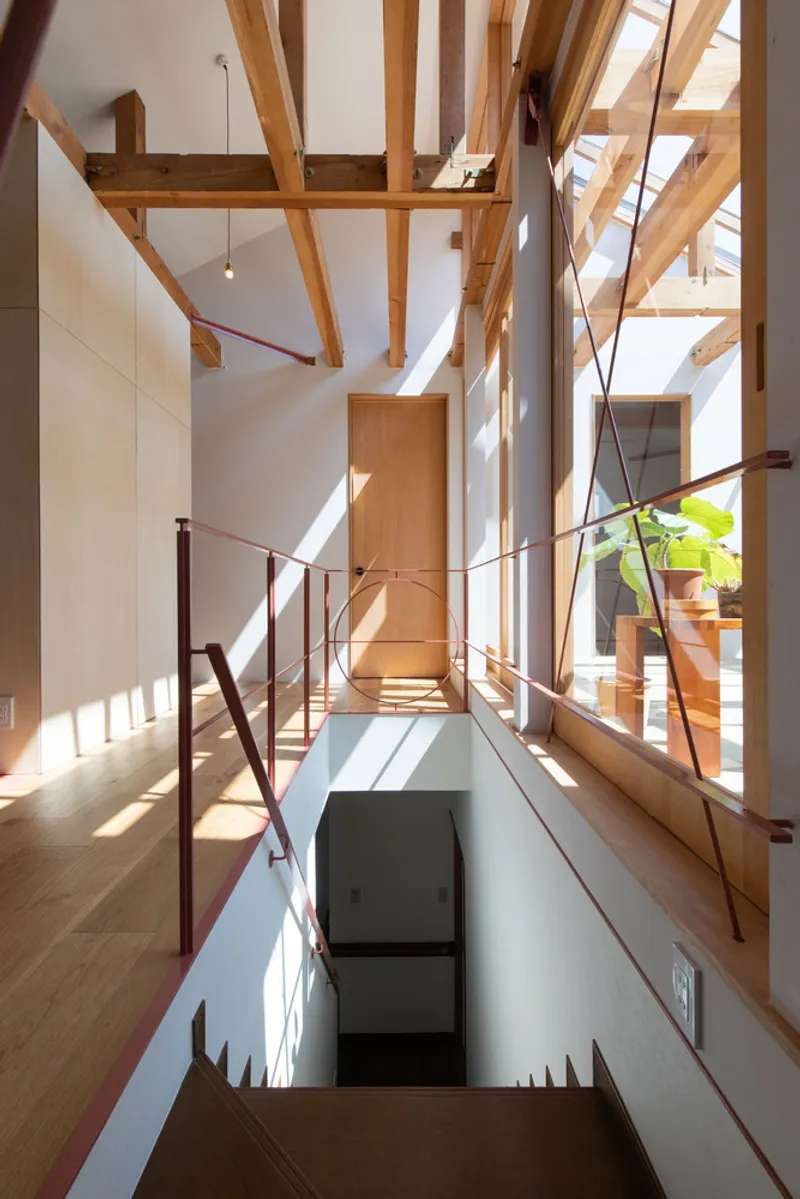
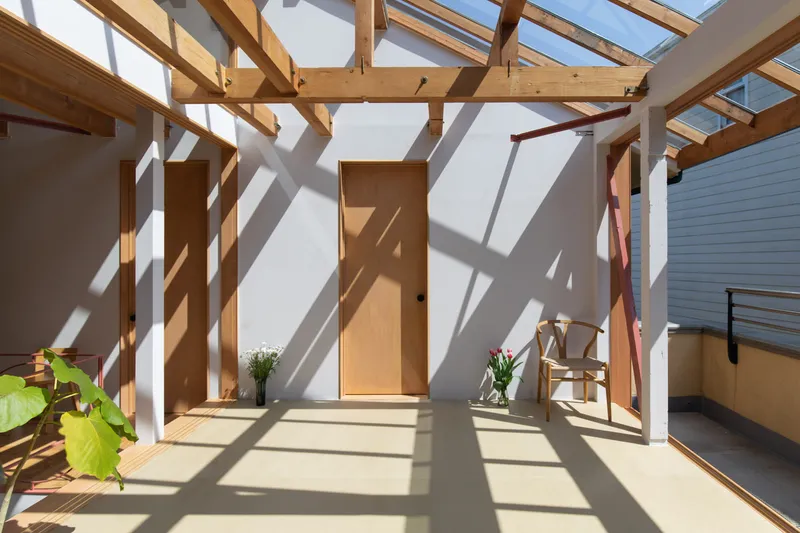
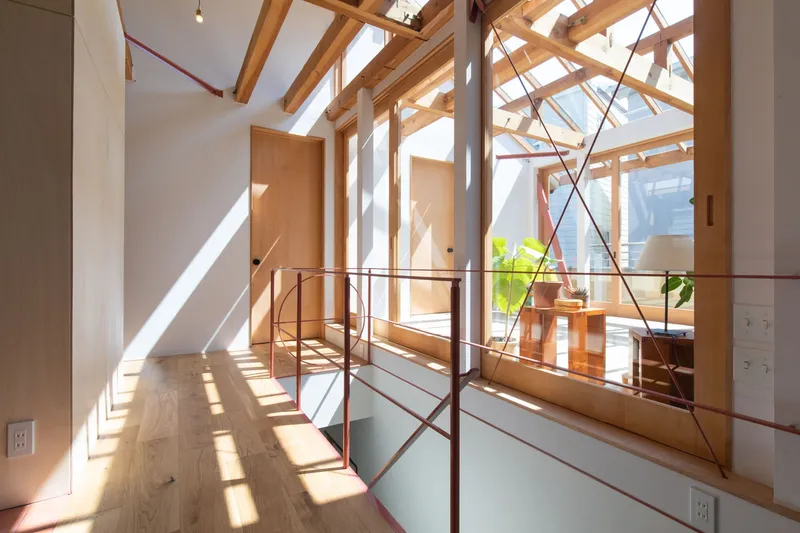
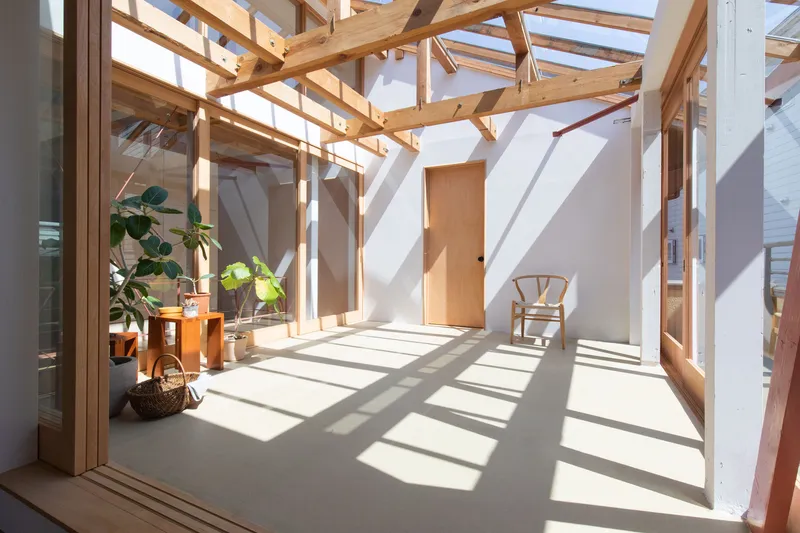
In Japan's densely populated residential neighborhoods, natural light and ventilation are often limited by proximity to neighboring buildings. To overcome this, the architects devised an inventive solution: replacing a portion of the roof with glass panels to bring sunlight into the upper level. Sliding doors further open the interior to the outdoors, creating a semi-outdoor courtyard-like space that functions as a veranda—a rare luxury in tight urban settings.
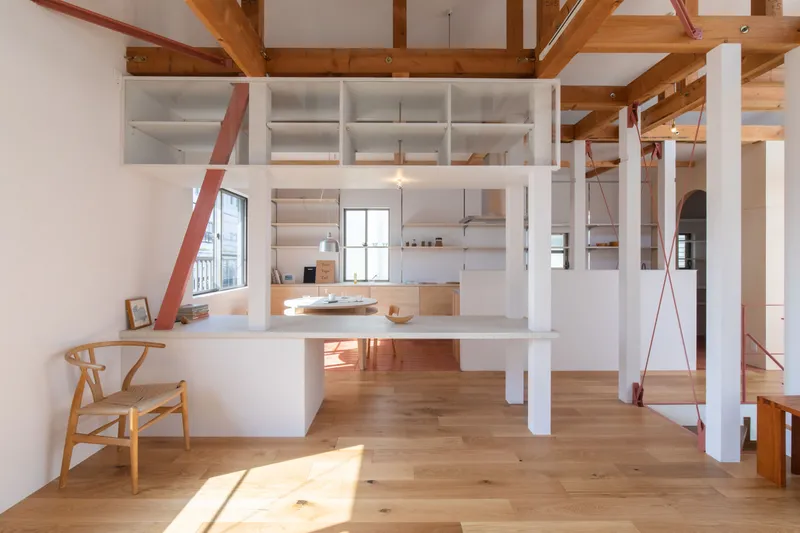
This vertical layering of space adds a sense of depth and spatial richness. The design carefully considers not only floor plans but also sectional relationships, producing a heterogeneous spatial experience that adapts to the rhythms of family life.
Materiality as Spatial Narrative
Interior finishes play a crucial role in shaping the home's character. Textural diversity in flooring materials—ranging from tiles and hardwood to sisal and FRP—offers a tactile journey through the home. Each transition marks a shift in function or atmosphere, allowing inhabitants to feel spatial change underfoot. Exposed wooden beams and precise detailing further ground the renovation in craftsmanship and warmth, key hallmarks of Japanese residential architecture.
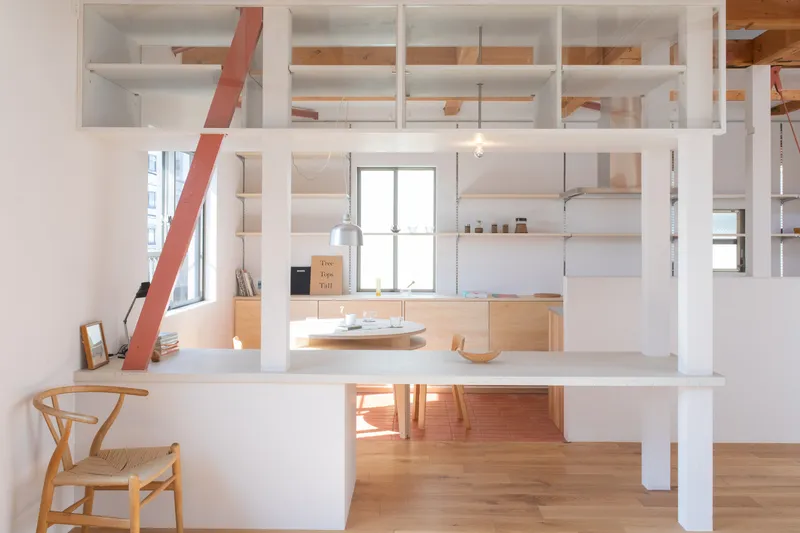
A Flexible Family-Centered Home
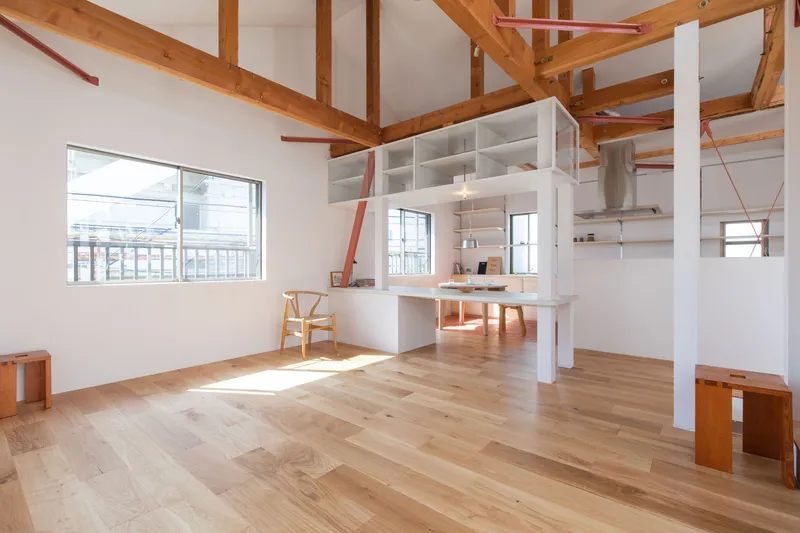
The redesigned upper level prioritizes connectivity, comfort, and adaptability. Open yet delineated living areas support modern lifestyles while maintaining privacy and intimacy. The home now serves as a dynamic environment where parents and children can grow together, while the lower level remains accessible for intergenerational use, underscoring the home’s long-term usability.
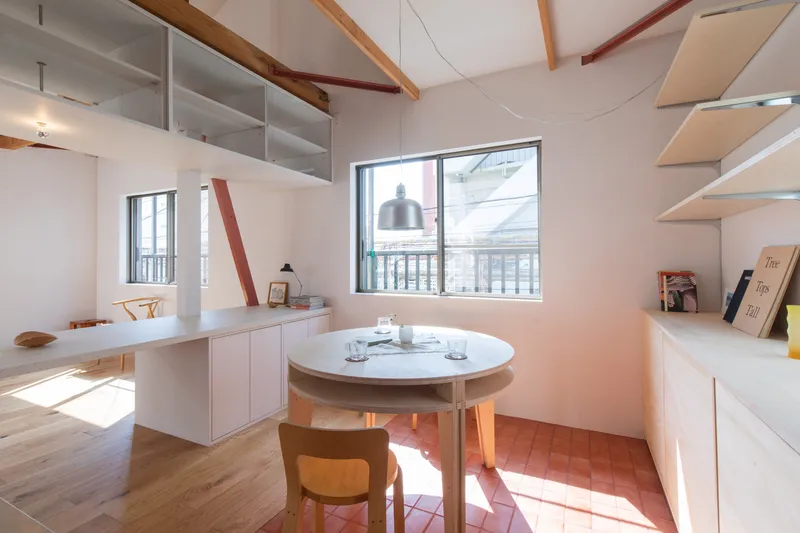
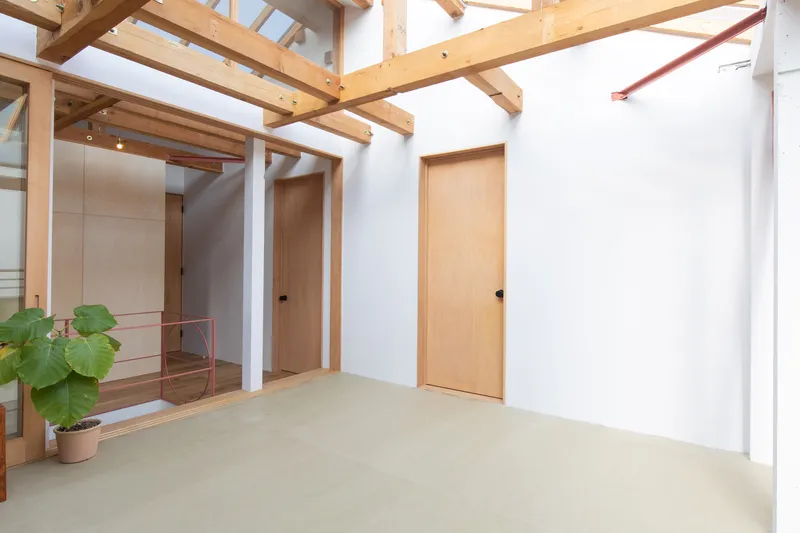
All Photographs are works of Hirota Tatsuya




Popular Articles
Popular articles from the community


Co-Life: Senior Housing Design That Reconnects Older Adults With the City
Co-Life reimagines senior housing design through healing gardens, shared streets, workshops, and a sustainable community across generations.

The Ocean Hive: Sustainable Architecture for a Self-Sufficient Civilization at Sea
The Ocean Hive imagines sustainable architecture at sea, where modular habitats, algae, wave power and ocean waste sustain a growing colony.

Conexión: Biophilic Design Reimagines High-Rise Living in Hong Kong
Conexión reimagines high-rise living in Hong Kong through biophilic design, green facades, shared spaces, daylight, water and nature within.

The Earth Pod: 3D Printed Homes for Resilient Refugee Communities
The Earth Pod reimagines refugee housing through 3D printed homes made from clay, combining resilience, self-sufficiency, and rapid shelter.

Similar Reads
You might also enjoy these articles


Hodi-Mandai Geram
Project Function: Preservation and revitalization of the Intangible heritage and socio-spatial identity of the Hodi by Housing, Cultural Memory Center, Sacred Grove, landscape, local tourism economy


Olio Towers: A Mid-Rise for Performers That Fuses Housing, Rehearsal, and Stage
Located blocks from Houston's Theater District, this modular tower stacks living units around a central performance atrium.

Oasis: Modular Green Housing Carved into Dhaka's Urban Fabric
A shortlisted Plugin Housing entry reclaims unauthorized settlements in Dhaka with stepped concrete volumes, green roofs, and ventilation-driven design.

Black Hole: A Floating Megastructure for the Post-Physical Era
Emiliano Mazzarotto envisions a spherical, self-scaling arena where e-sports, digital hotels, and holographic stadiums replace traditional public space.
Explore Housing Competitions
Discover active competitions in this discipline



Challenge to reimagine the Iron Throne


Photograph architecture without architects


Illustrate the lost glory of Angkor Wat - Render Challenge


Design challenge to reuse E-waste
Comments (0)
Please login or sign up to add comments
No comments yet. Be the first to comment!