
Horse House Stable by Wiercinski Studio: A Fusion of Raw Aesthetics and Practical Functionality
The Horse House Stable by Wiercinski Studio in Jaroszewo, Poland, exemplifies raw aesthetics and functional design within a rural landscape.


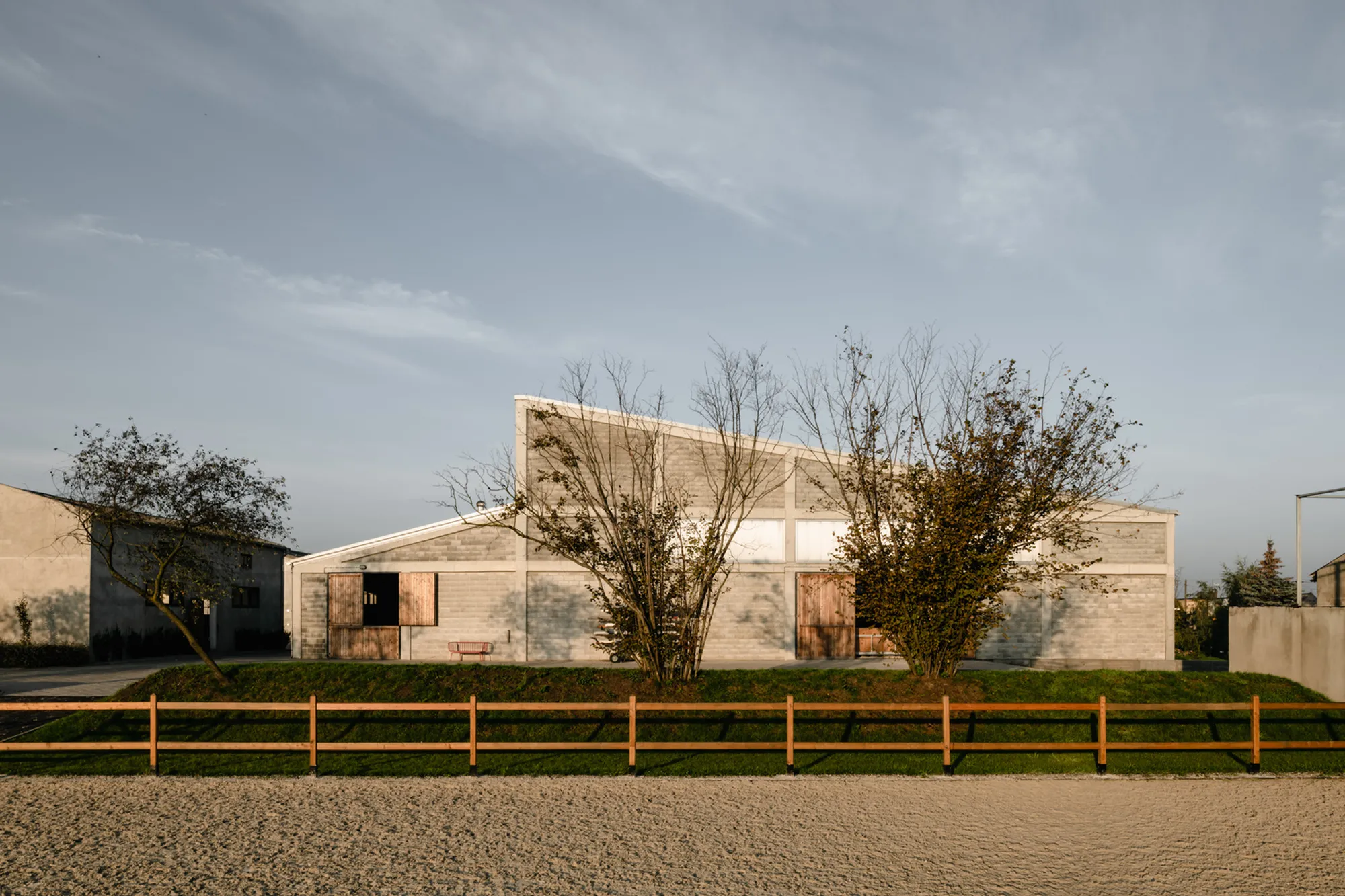
The Horse House Stable, designed by Wiercinski Studio and located in Jaroszewo, Poland, is a distinctive blend of raw aesthetics and practical functionality. Completed in 2022, this 2200 m² facility serves as a breeding and training infrastructure for the Ludwiczak Stables. The design seamlessly integrates with the rural landscape, surrounded by dense buildings and picturesque fields, showcasing the studio's expertise in creating structures that are both visually striking and functionally efficient.

Context and Site Integration
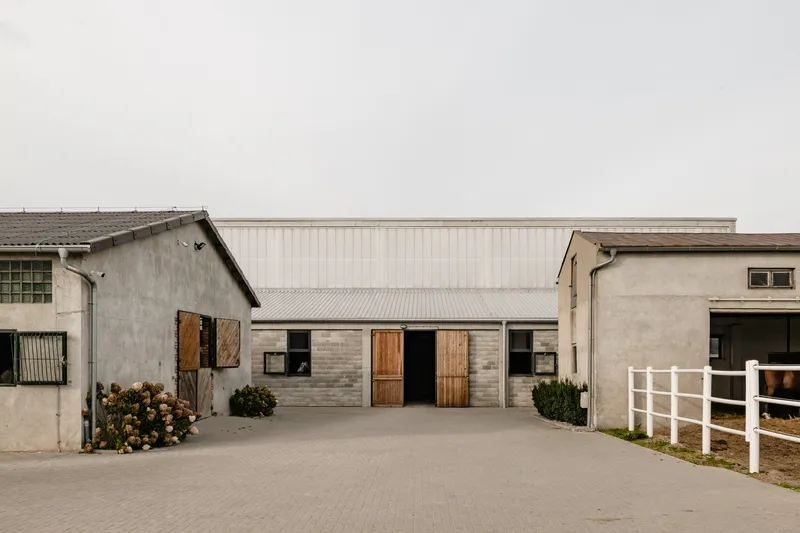
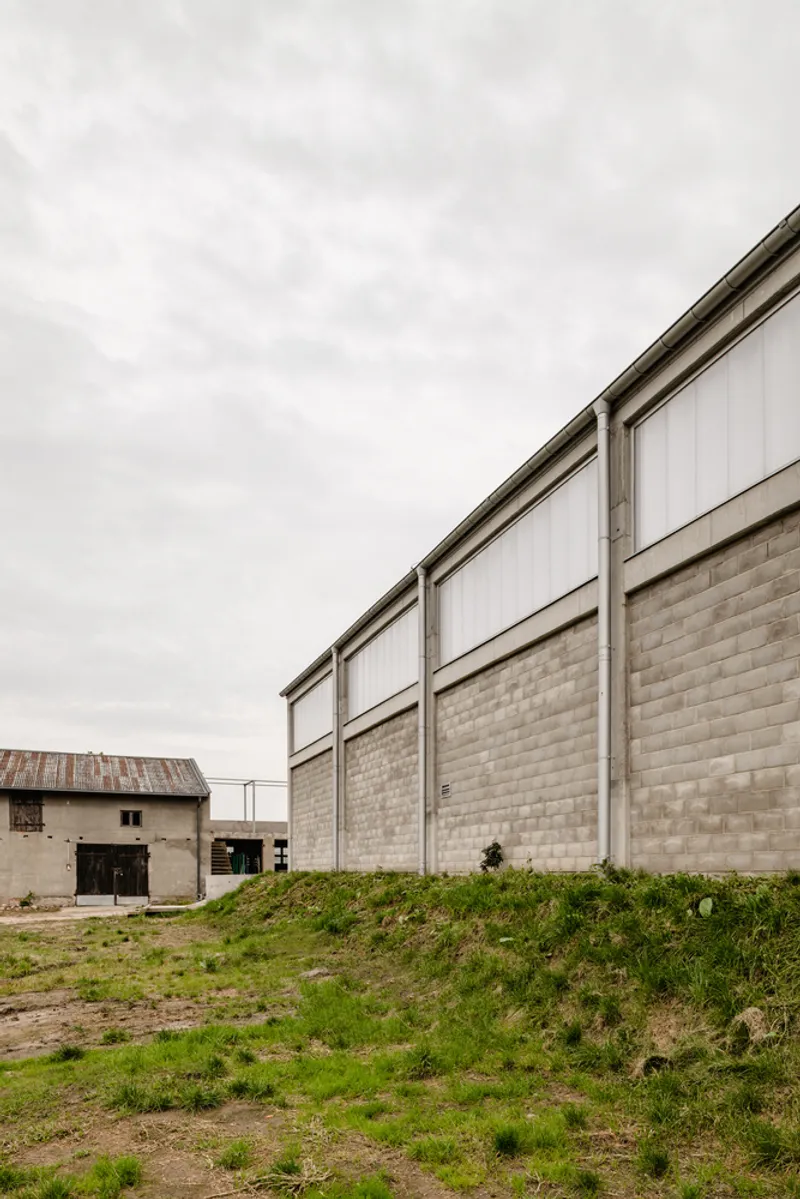
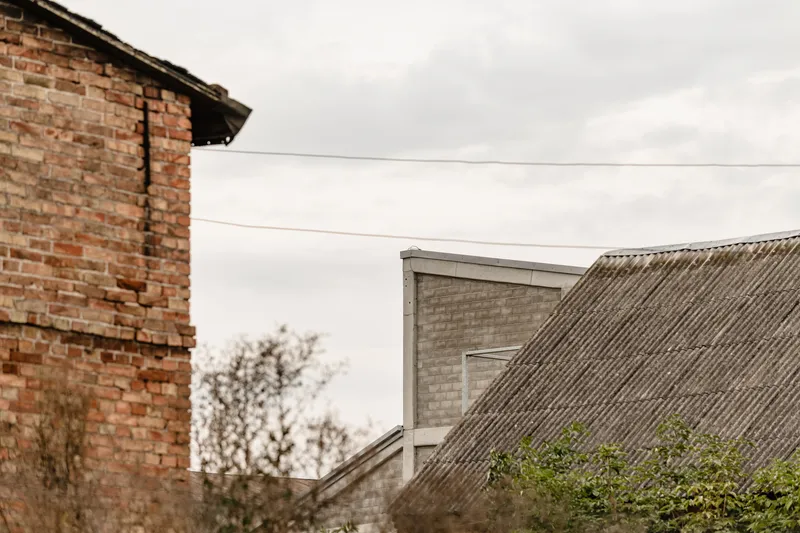
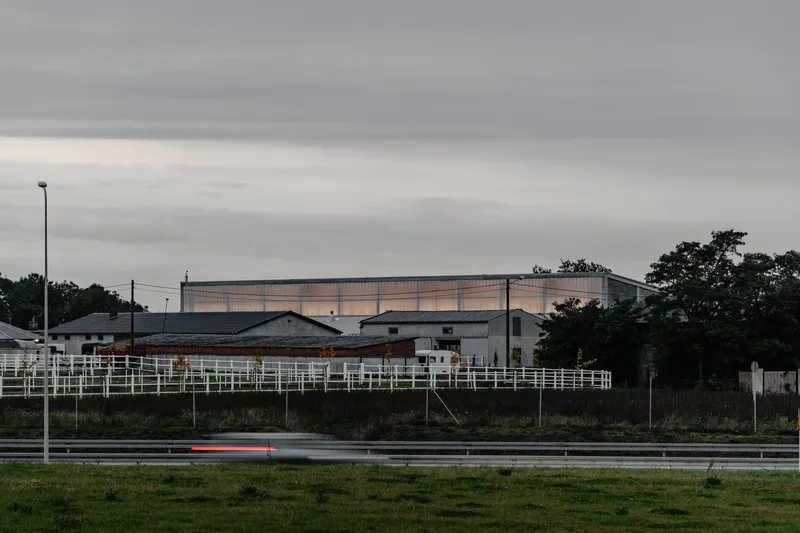
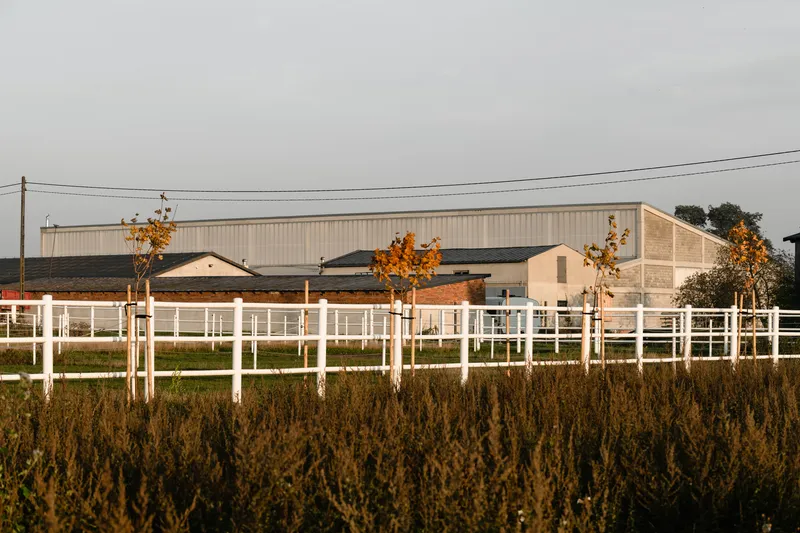
Situated in the village of Jaroszewo, the stable is nestled among houses and farm buildings of varied materials, shapes, scales, and roof geometries. The nearby expressway cuts through the picturesque fields, adding a modern touch to the rural setting. The Horse House Stable is strategically positioned on a densely built-up plot, adjacent to a house, existing stables, and other farm buildings. This thoughtful placement allows the new stable to harmonize with its surroundings, creating a cohesive visual and functional ensemble.


Architectural Design and Functionality
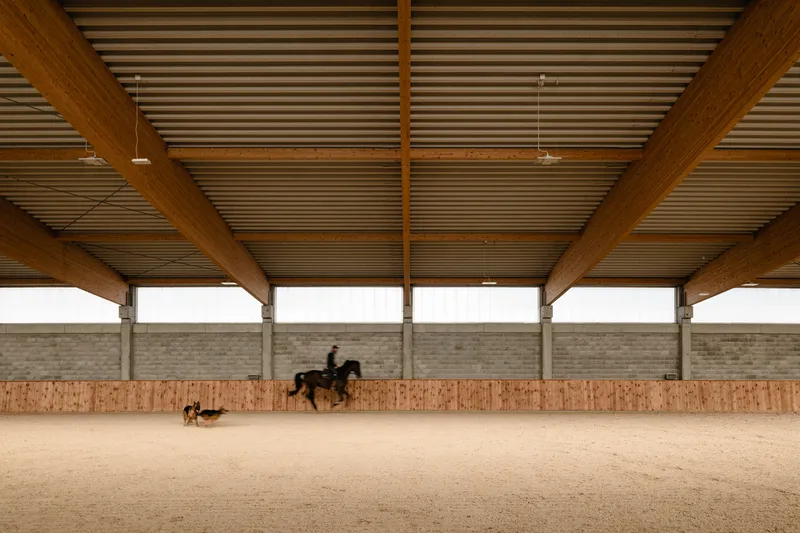
The stable comprises several key components: a full-size hall for training with obstacles, eighteen stalls for horses, a warehouse, and a social area with a kitchen, study, tack room, and a mezzanine viewing area. The design ensures that the new stable section is directly opposite the old stables, allowing horses to interact visually. This spatial arrangement fosters a sense of community and continuity within the equine environment.
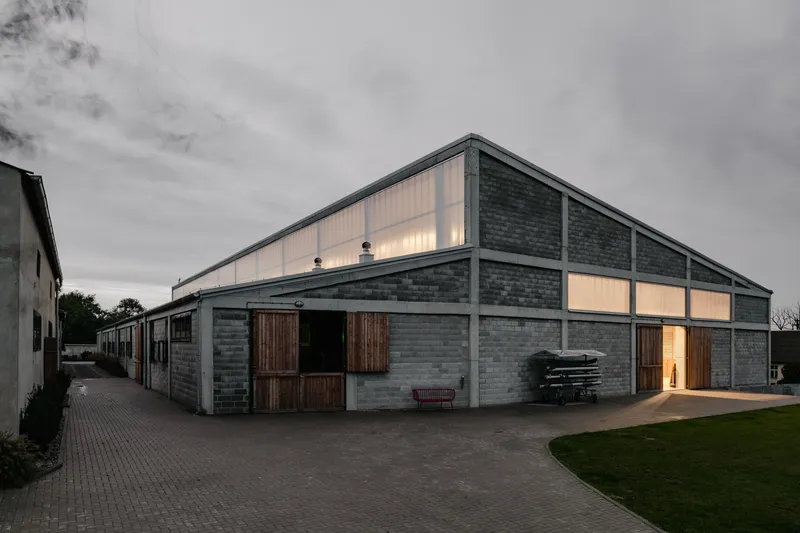
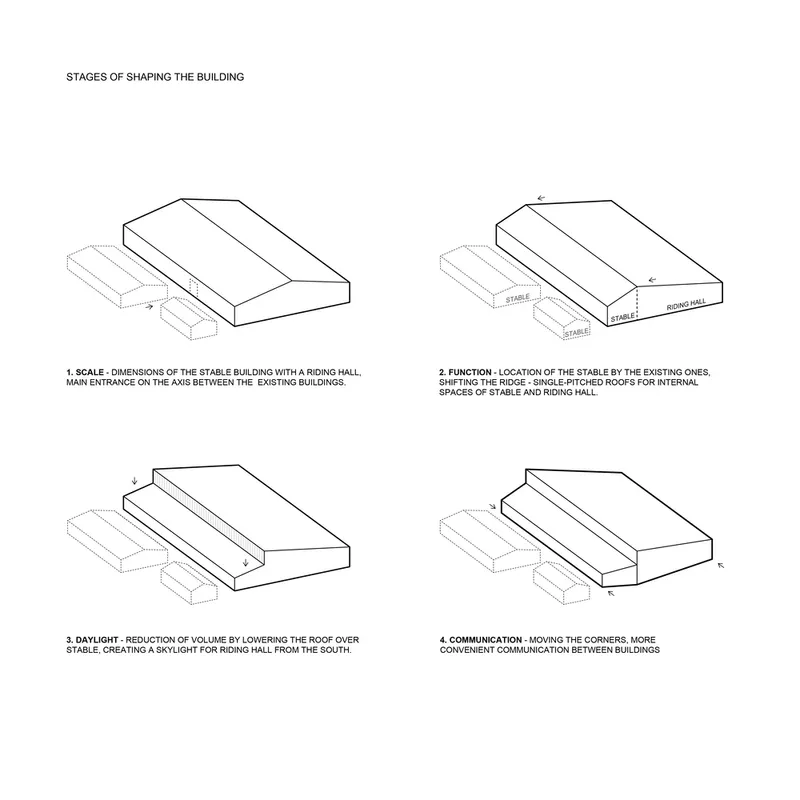
The building's layout is carefully adapted to the existing structures and the site's communication system. The roof's design features mono-pitched sections over internal spaces of varying heights, with a vertical fault serving as a skylight for the running hall. This innovative approach not only enhances natural lighting but also maintains a human scale within the walkway between the stables.



Shape and Structural Elements
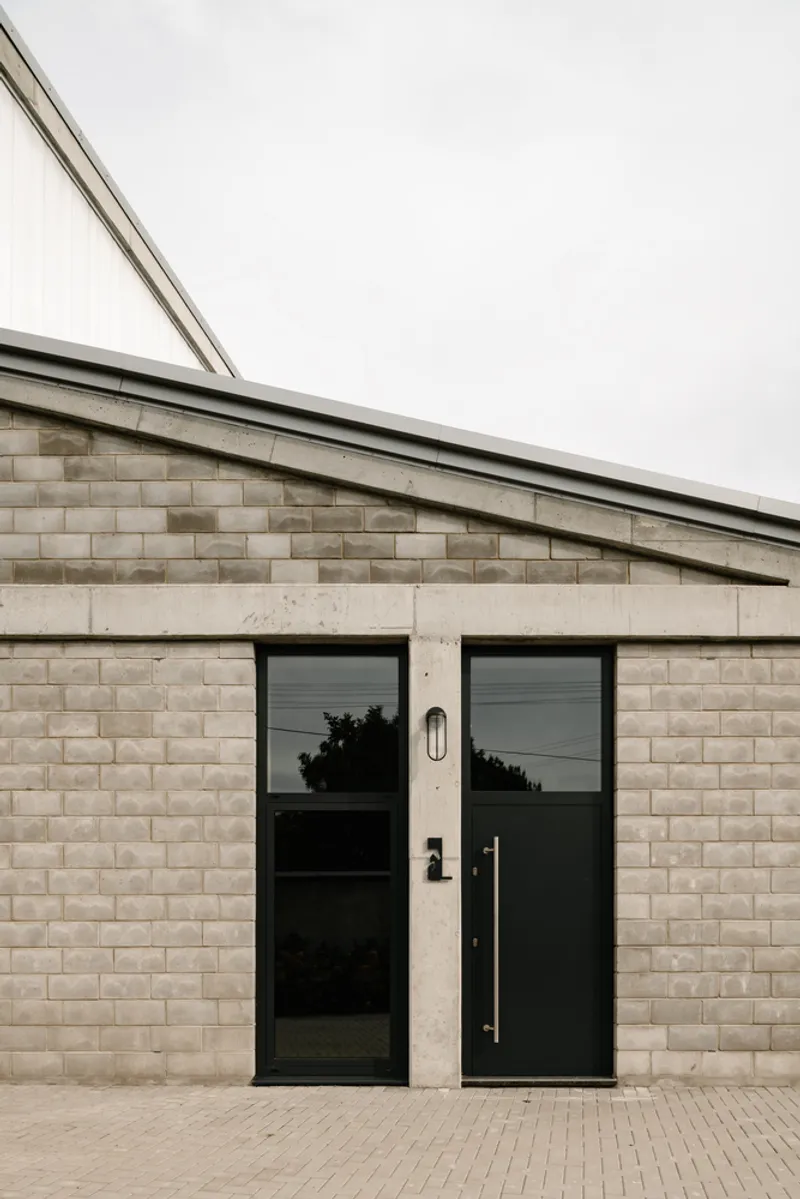
The Horse House Stable's unique shape is influenced by the need for efficient communication among the surrounding buildings. The structure's corners are intentionally moved to the center, creating a distinctive three-dimensional facade that plays with light and shadow. This design echoes the industrial sawtooth roof structures in the vicinity, providing a contemporary interpretation of the local architectural language.


Materiality and Construction
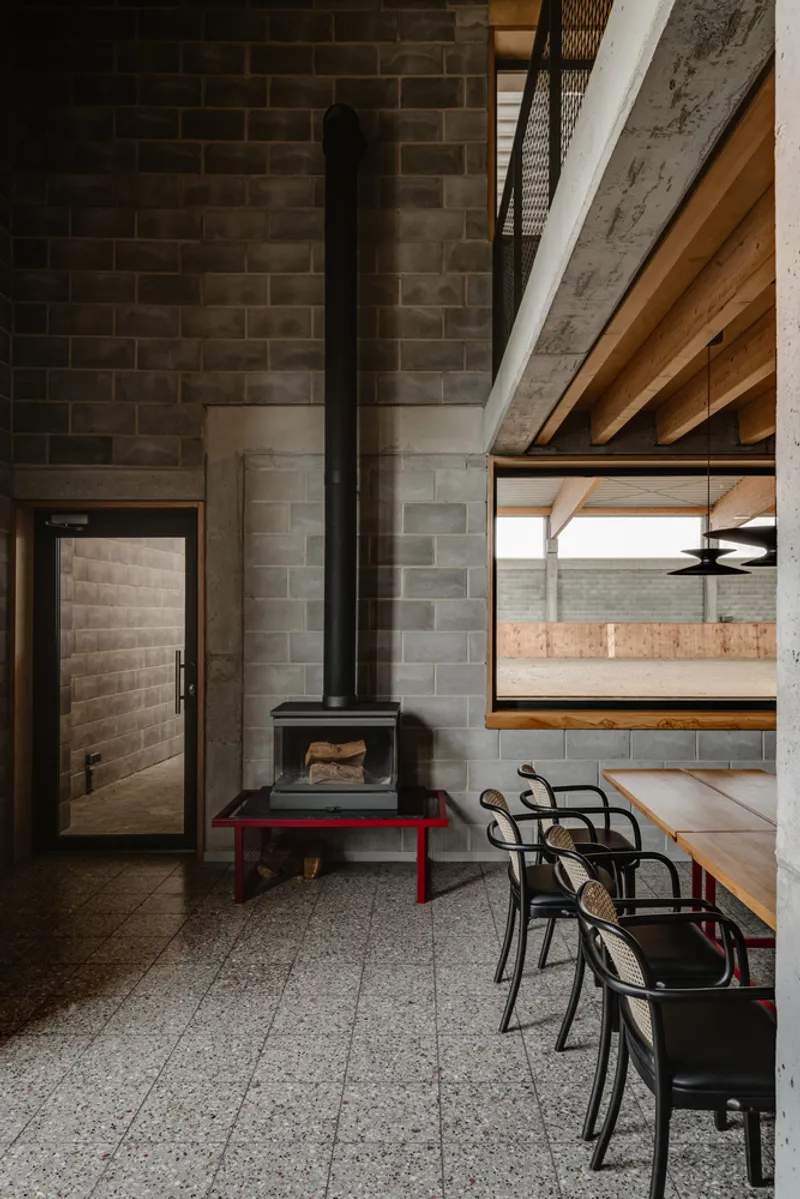
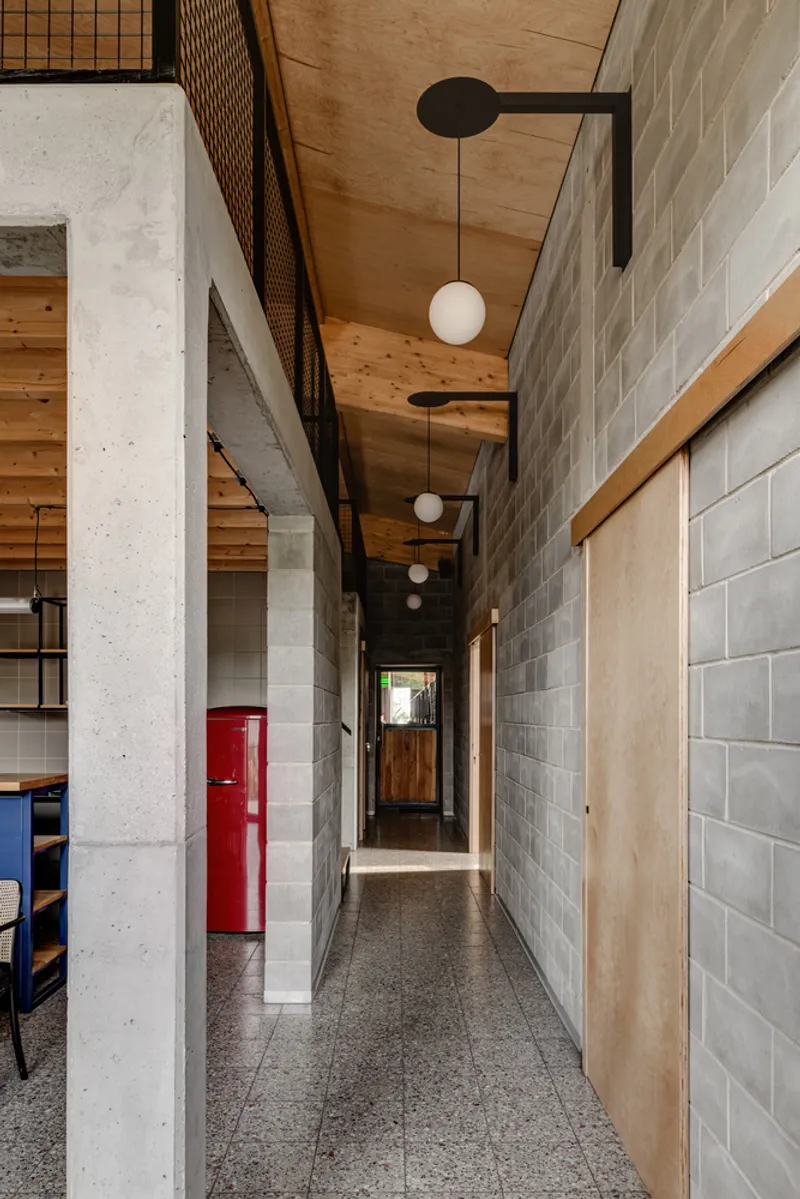
The building's expressive yet modest design is achieved through the use of natural and raw materials. Concrete blocks, used for single-layer walls and reinforced concrete structures, provide a robust and durable framework. The lack of additional finishing on both the exterior and interior surfaces reduces material usage and construction time, emphasizing the project's commitment to sustainability.
Wooden gates and beams add warmth to the otherwise rough and tectonic concrete walls, creating a balanced aesthetic. The use of polycarbonate panels as an economical alternative to glass windows allows soft, diffused light to enter the hall, ensuring a calm environment for the horses and reducing the risk of bird collisions. The lower roof, covered with a silver trapezoidal sheet, responds dynamically to weather conditions, changing colors with the surroundings.


Interior Design
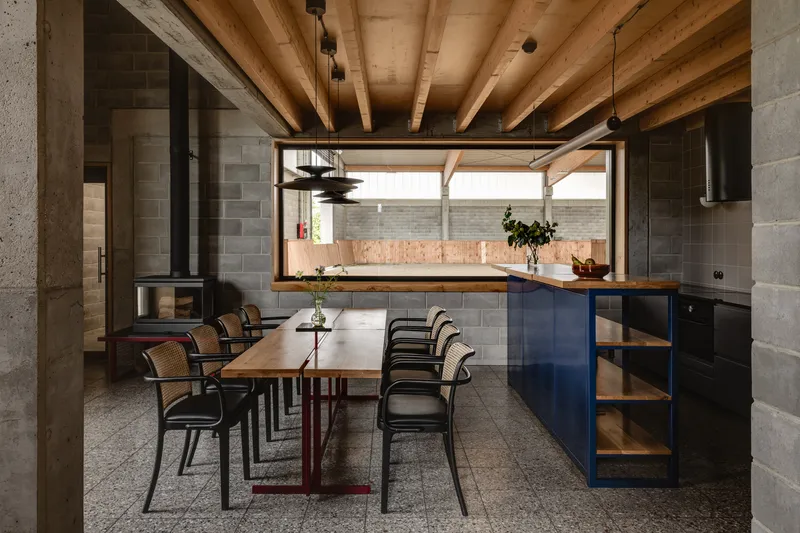
The interior of the Horse House Stable mirrors the exterior's raw and honest approach. Uncovered installations and visible structural elements maintain the building's austere aesthetic, while custom furniture, lighting, and details crafted from steel and wood by local artisans add a unique character. This coherence between the interior and exterior design elements creates a seamless and harmonious environment.



The Horse House Stable by Wiercinski Studio is a testament to the studio's ability to blend raw aesthetics with functional design. Its thoughtful integration into the rural landscape, innovative use of materials, and coherent interior design make it a standout project in contemporary architectural practice. This stable not only serves its practical purpose but also enhances the visual and cultural fabric of Jaroszewo, Poland.
All the photographs are work of ONI studio



Popular Articles
Popular articles from the community


Co-Life: Senior Housing Design That Reconnects Older Adults With the City
Co-Life reimagines senior housing design through healing gardens, shared streets, workshops, and a sustainable community across generations.

Lunar Spiral: Space Architecture Shaped by the Mathematics of the Universe
Lunar Spiral reimagines space architecture through Fibonacci geometry, lunar regolith, levitating habitats, and self-sustaining Moon living.

Play: Fragments of Their World
Familiar architecture becomes modular playground design, creating safe spaces where displaced children can learn, connect, imagine and play.

Conexión: Biophilic Design Reimagines High-Rise Living in Hong Kong
Conexión reimagines high-rise living in Hong Kong through biophilic design, green facades, shared spaces, daylight, water and nature within.

Similar Reads
You might also enjoy these articles
Sustainable Architecture Design: Embracing Nature and Modernity at Villa Solsidan
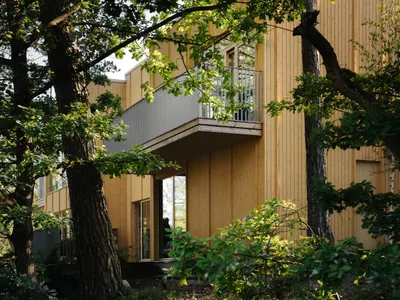
The article explores Villa Solsidan by AndrénFogelström, showcasing its sustainable architecture design and integration with the natural surroundings in Saltsjöbaden, Sweden.
Scientific and Educational Monitoring Center of the Yenisei, Krasnoyarsk
Architecture as an instrument for ecological research, education, and environmental awareness along Russia’s largest river.
Development of Andretta Artist’s Village, Palampur, Himachal Pradesh, India
Reimagining Andretta as a living cultural landscape where art, architecture, and community converge to shape a global creative village.
Street Children Rehabilitation Center: A Model of Social Architecture for Community Rehabilitation
An inclusive social architecture project that transforms streets into nurturing environments, restoring dignity, identity, and opportunity for vulnerable children.

Explore Sustainable Design Competitions
Discover active competitions in this discipline



Challenge to reimagine the Iron Throne


Photograph architecture without architects


Illustrate the lost glory of Angkor Wat - Render Challenge


Design challenge to reuse E-waste
Comments (0)
Please login or sign up to add comments
No comments yet. Be the first to comment!