
ERRE Arquitectura Threads a Contemporary Art Museum Through a Baroque Palace in Valencia
The Hortensia Herrero Art Center layers Roman ruins, a 17th-century palace, and a new gallery volume across 3,500 square meters on Calle del Mar.


Beneath a Baroque palace in Valencia's old city, archaeologists uncovered a section of the Roman circus, remnants of a medieval oven, an Islamic fountain, and an alley from the former Jewish quarter. Above those strata, the Valeriola Palace had served as a noble residence, a newspaper headquarters, and, improbably, a nightclub that once kept two live lions in cages. By the time ERRE arquitectura began work, the building was in advanced deterioration. The five-year renovation that followed did not simply preserve the palace. It absorbed it into a new cultural institution, the Hortensia Herrero Art Center, which now distributes seventeen exhibition rooms across four levels in two connected volumes totaling over 3,500 square meters.
What makes the project genuinely compelling is its refusal to treat heritage as a frozen artifact. ERRE arquitectura added a new volume on Calle San Cristóbal, linked the two buildings through a bridge spanning a garden courtyard, and inserted contemporary materials, glass, aluminium louvres, steel stairs, alongside painstakingly restored bricked vaults, original oak cobblestone paving, and a floor bearing a mythological scene of Perseus and Andromeda. The result is not a contrast project in the tired old-versus-new sense. It reads as an accumulation, the latest episode in a building that has never stopped changing.
Two Facades, Two Centuries
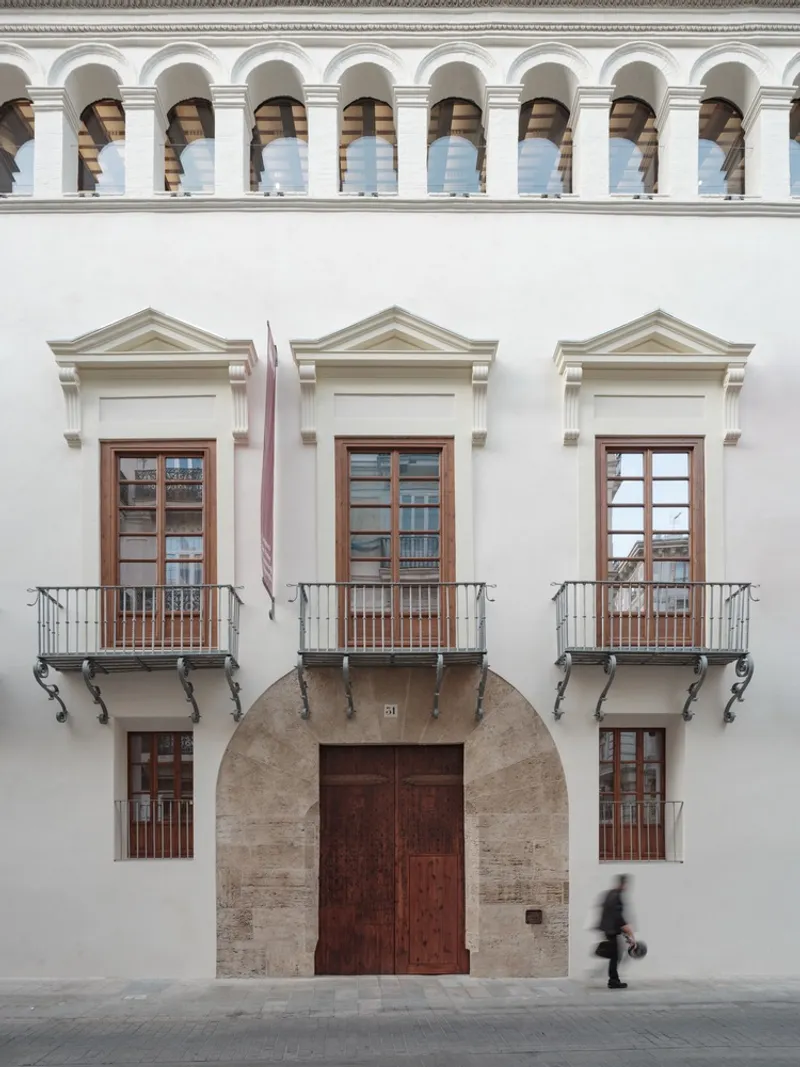
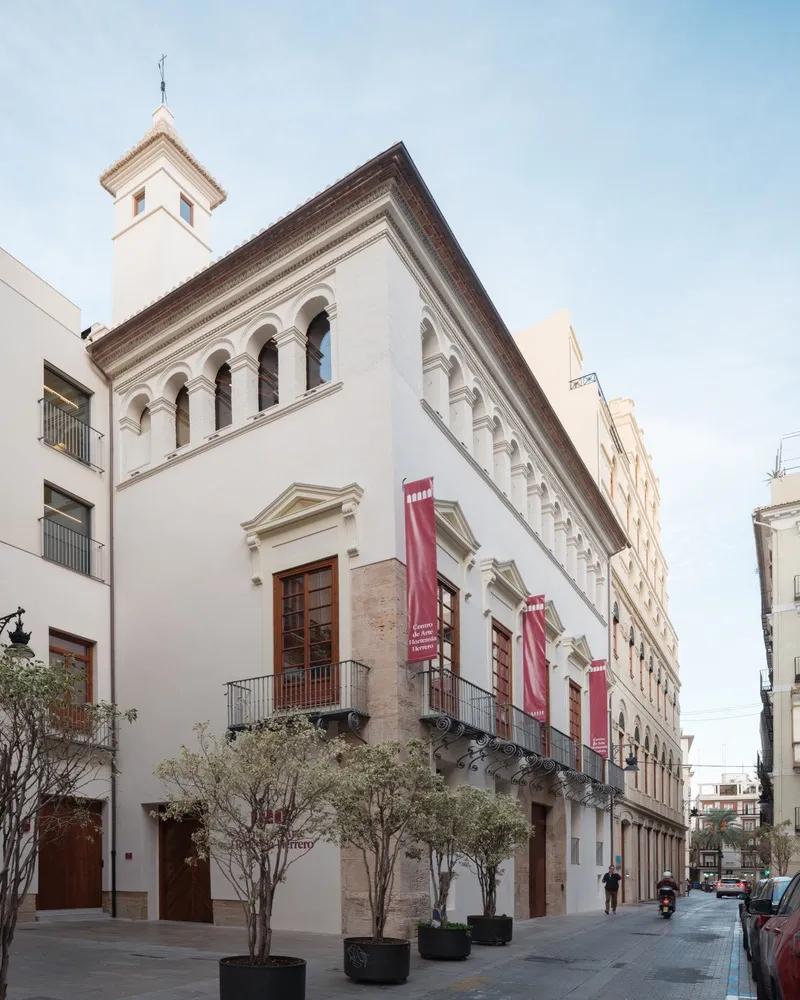
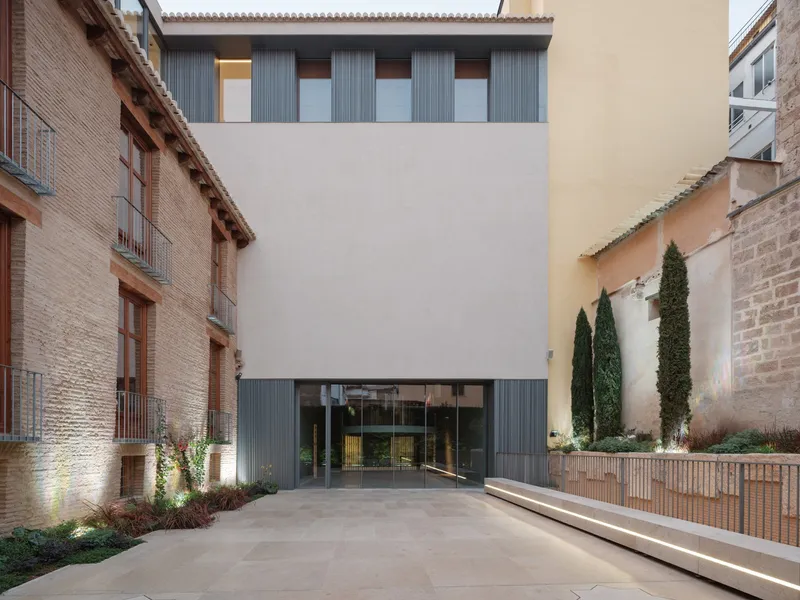
The palace's principal facade on Calle del Mar was restored to its early 19th-century state, a process that required a specialist restorer to survey for original decoration, a goldsmith to recover the main entrance gate, and a smith to restore balustrades and lattice ironwork. The symmetrical elevation with its three balconied doorways and arched entrance reads as dignified civic architecture, neither museumified nor over-polished.
Around the corner, the new San Cristóbal volume announces itself differently. Vertical fluted metal panels and full-height glass doors signal a contemporary program without competing for historical authority. The decision to maintain a sloping roof typology on the addition keeps its profile sympathetic to the surrounding roofscape, but the material language is deliberately modern. One facade invites you into the past; the other into the present. The building's argument is that these are the same invitation.
The Courtyard as Hinge
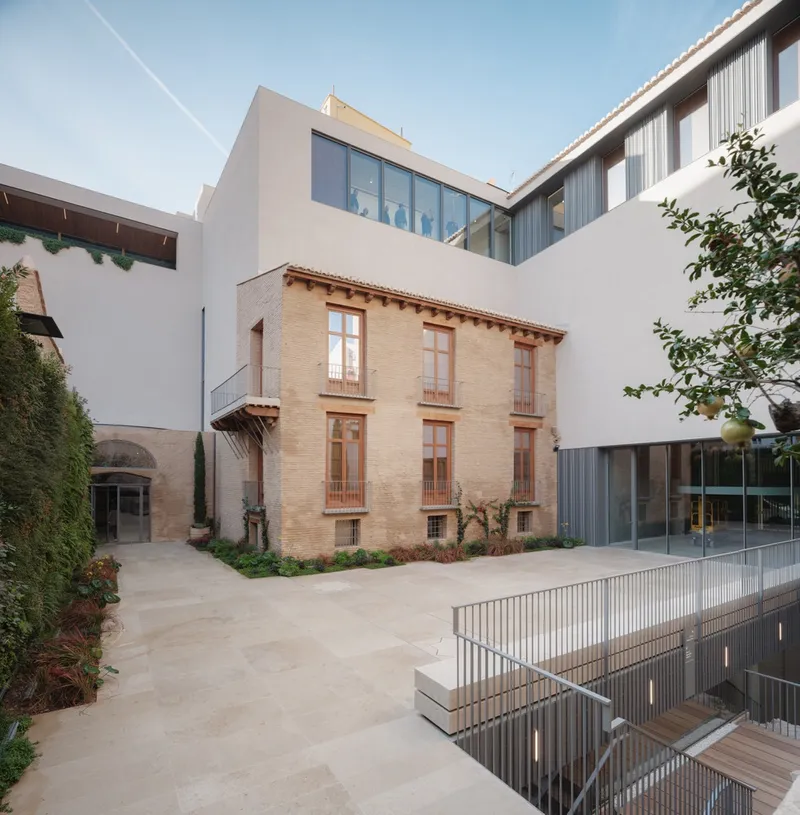
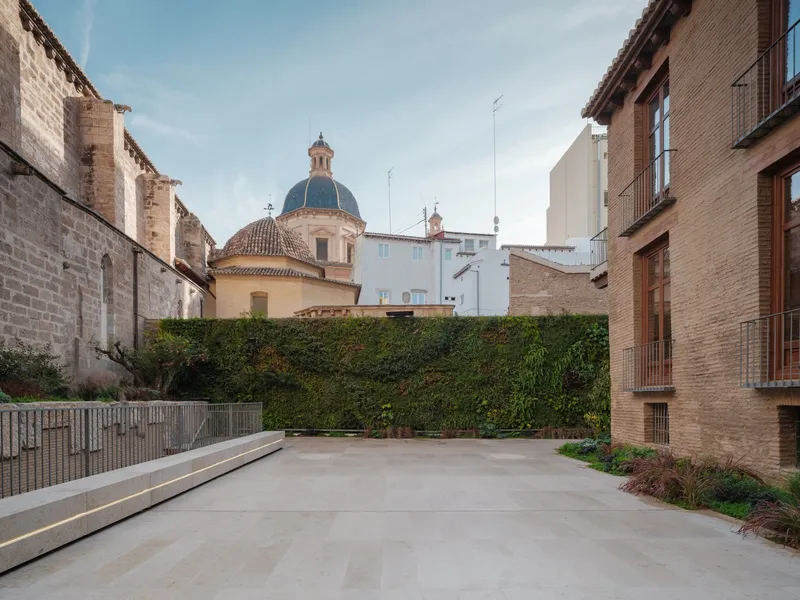
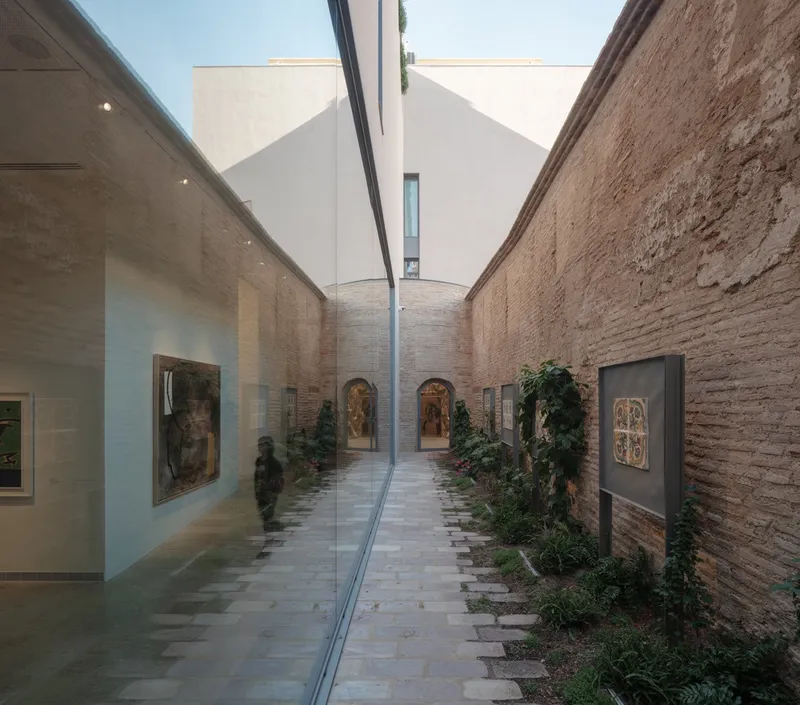
The garden courtyard is not leftover space. It is the organizational heart of the project, conceived as a tribute to the Arab courtyard that once occupied the site and functioning today as an outdoor museum room. Green hedges, water features, and planted beds line exposed brick walls, and a narrow glass partition along one edge turns a walkway into a gallery where paintings hang just centimeters from living plants. The tiled dome of an adjacent church rises above the hedgeline, a reminder that the center is embedded in a dense urban fabric rather than isolated from it.
A bridge-like structure crosses the courtyard to connect the palace with the San Cristóbal volume. Visitors ascend through the heritage building and descend through the new one, a choreography that prevents the experience from feeling like a linear corridor. The garden provides a decompression point between the two, a pause where architecture gives way to sky and foliage before the next sequence of rooms.
Brick, Timber, and the Logic of Accumulation
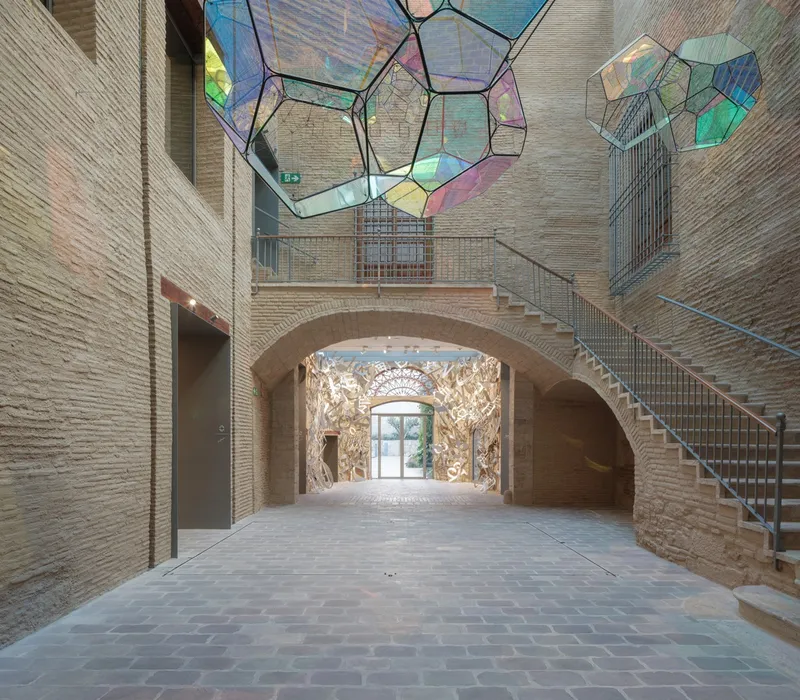
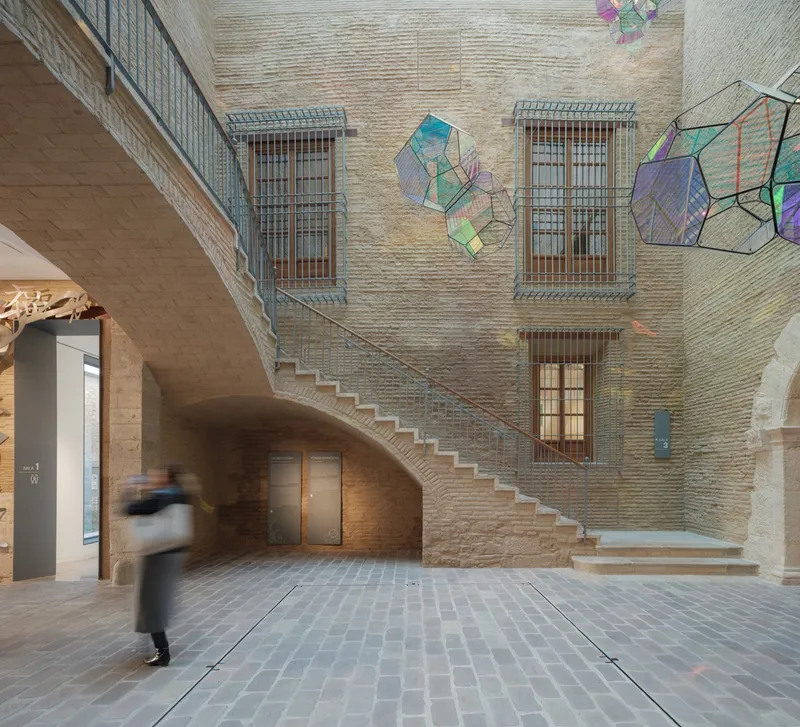
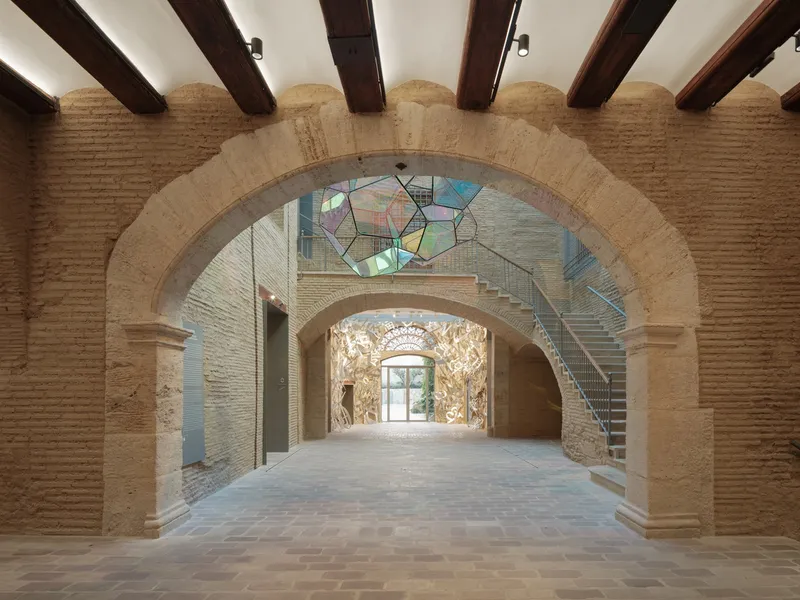
The interior palette is defined by materials that were already there. Original wooden beams, damaged by damp and woodworm, were restored with innovative techniques rather than replaced wholesale. Ceramic tiles covering the main hall ceiling were refurbished by Salvador Gomis, a specialist in the traditional bóveda tabicada, the bricked vault construction technique native to the region. The result is an atmosphere that feels earned rather than designed, each surface carrying evidence of labor and time.
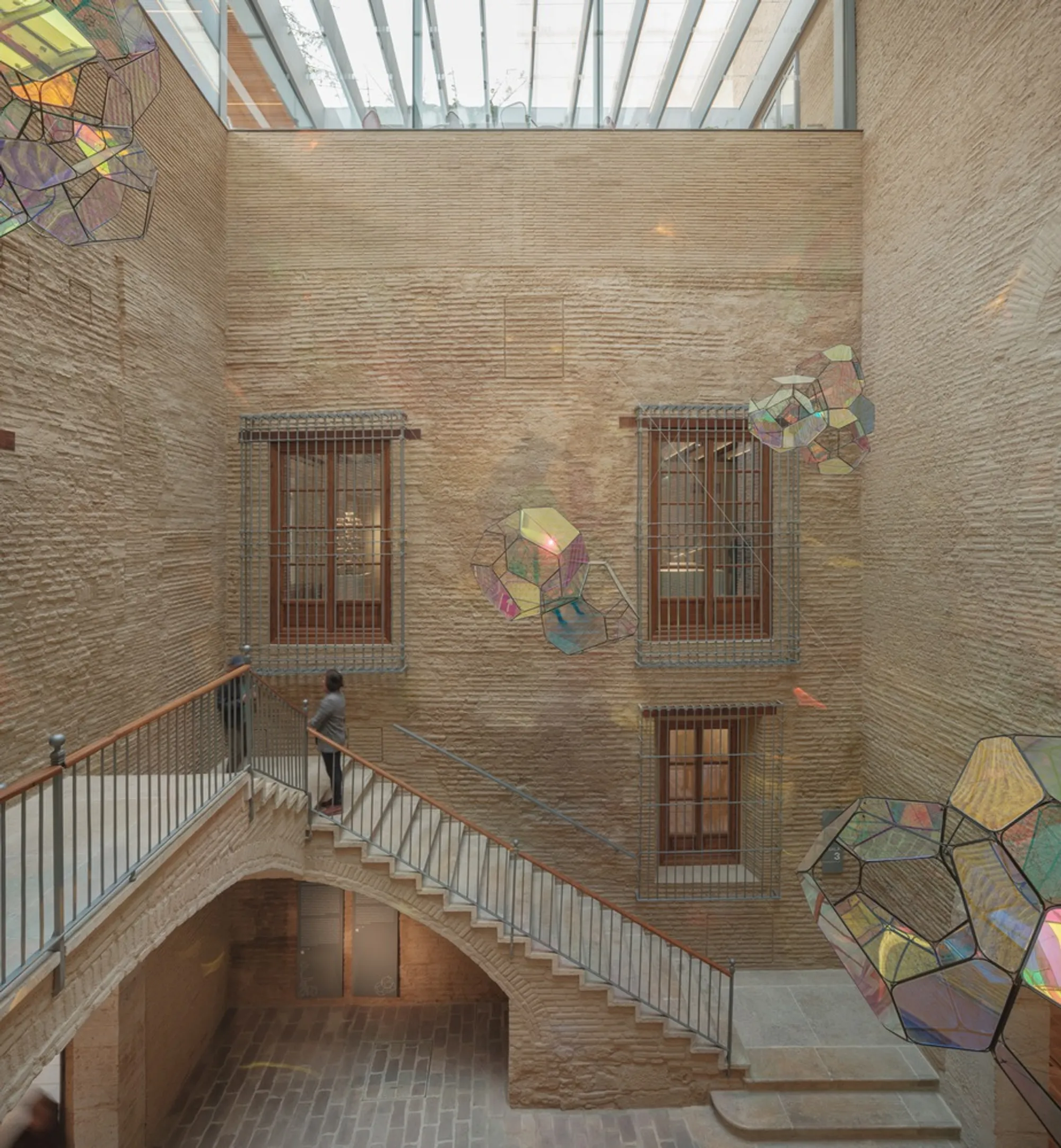
One detail stands out: materials salvaged from the Gothic-era palace were recycled into the underside of new stairs. It is a small gesture, but it captures the project's philosophy precisely. Nothing is discarded; everything is folded back into the building's ongoing story. Polyhedral dichroic glass elements by visiting artists hover above brick courtyards, and site-specific sculptural installations wrap the walls of vaulted entry halls, but they land in a context so materially rich that the art and architecture feel genuinely equal.
Gallery Rooms That Remember Their Former Lives
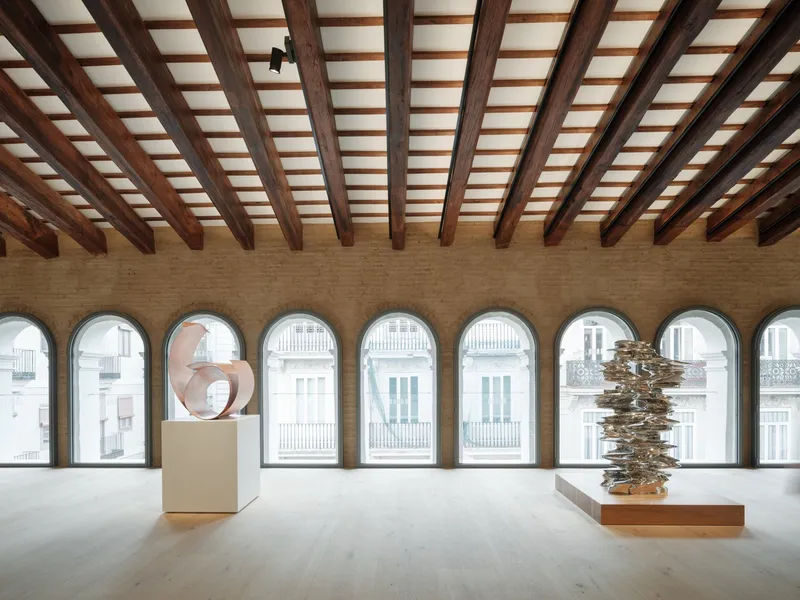
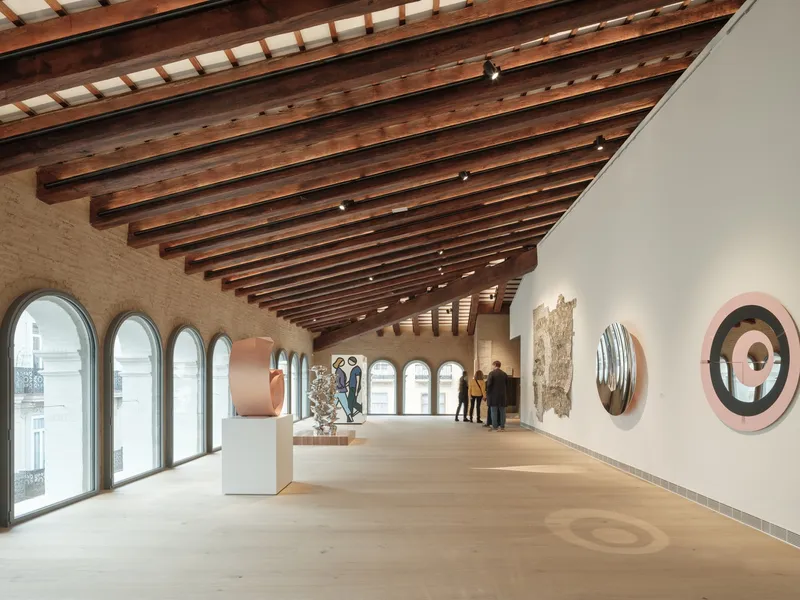
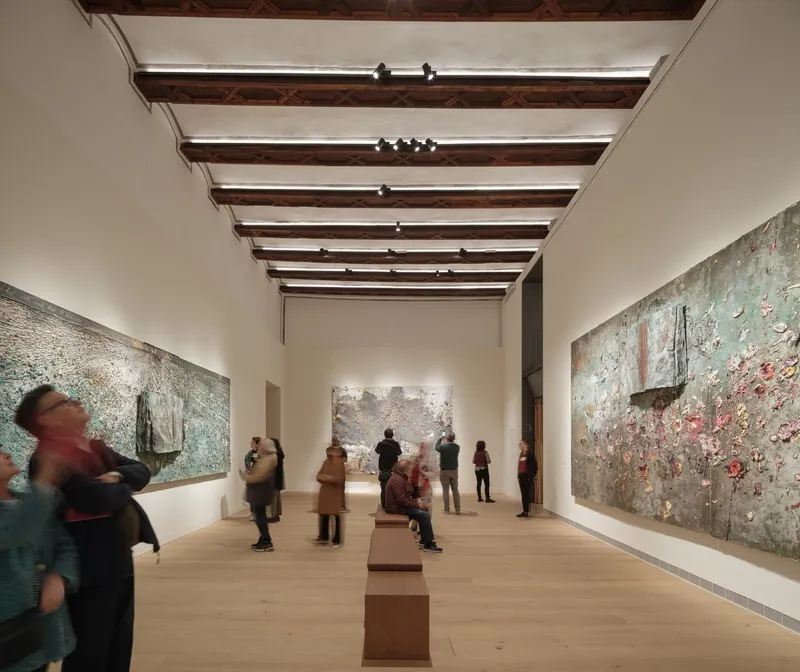
The upper-level galleries are among the most characterful museum spaces completed in recent years. The andana, historically a wheat storage and drying space, now functions as a gallery lit through arched windows that run along its length. Exposed timber beams span overhead, and skylights supplement the natural daylight. The proportions are generous but not cavernous, scaled to a domestic grain that keeps contemporary artworks in a conversational register rather than a monumental one.
A chapel within the complex was also restored and adapted as an exhibition room. The patterned tile floor in one room, the rammed-earth walls exposed in another: each of the seventeen rooms has a distinct identity rooted in what the building already offered. Track lighting and white walls appear where needed, but the architecture never defaults to the blank box. The building's memory is the curatorial framework.
Vertical Circulation as Spectacle
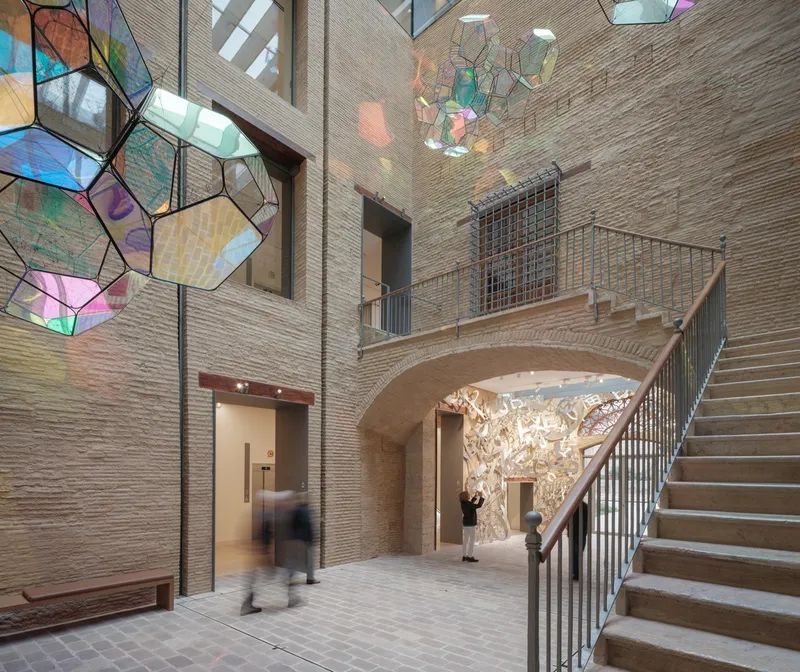
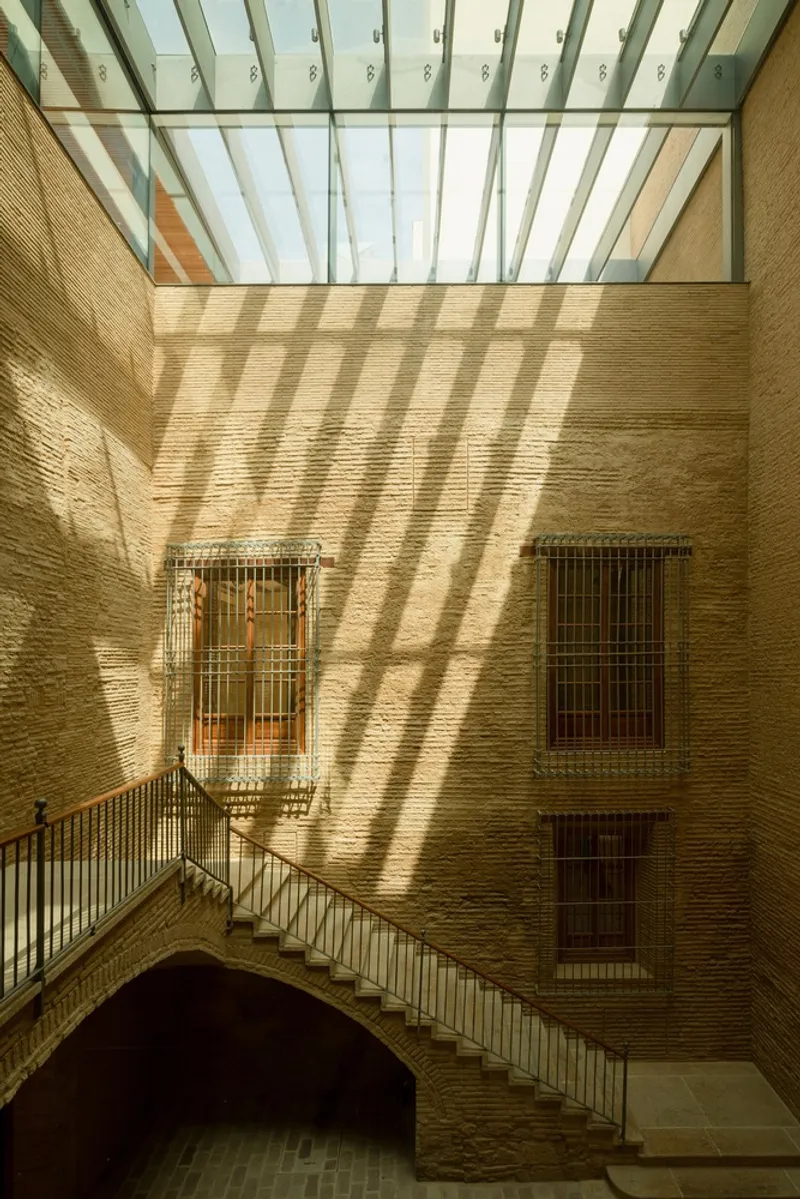
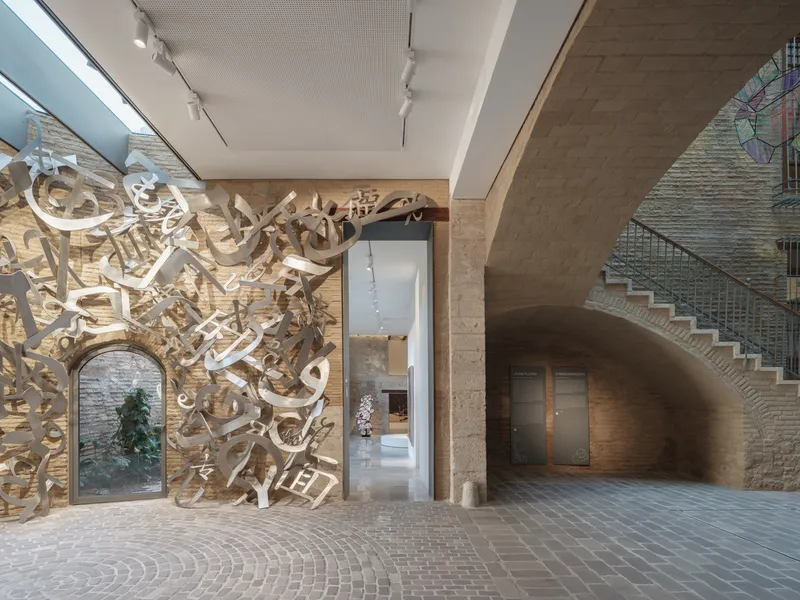
Stairs do serious work here. The original stone staircase in the courtyard was preserved, and new metal stairs were inserted alongside it, their open-tread construction allowing light from glazed skylights to cast striped shadows across brick walls. The circulation is legible but not clinical. Visitors move through arched passageways, beneath stained-glass skylight elements, and past sculptural installations mounted against arched stone walls. Blurred figures in the photographs suggest a constant flow, which is the point: the building is designed to be experienced in motion.
A Rooftop and a Roman Circus
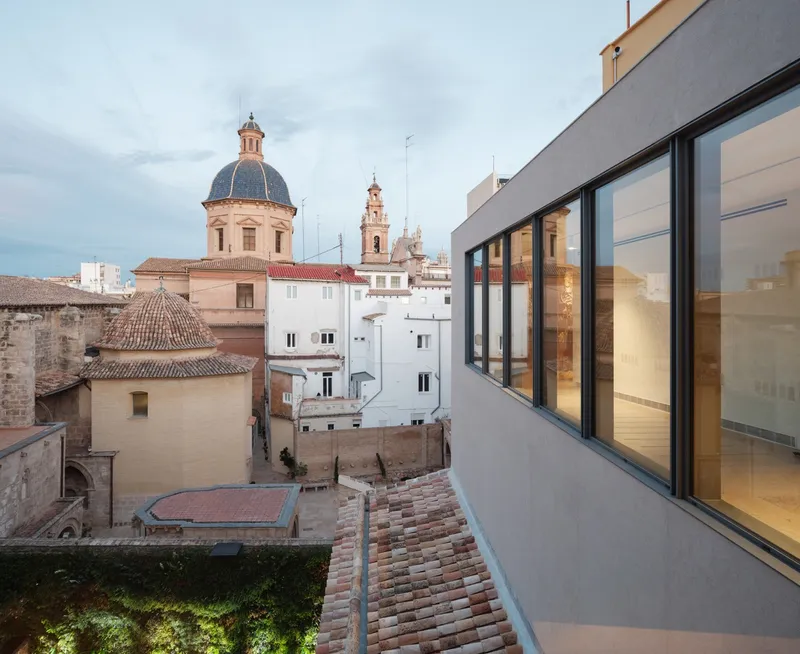
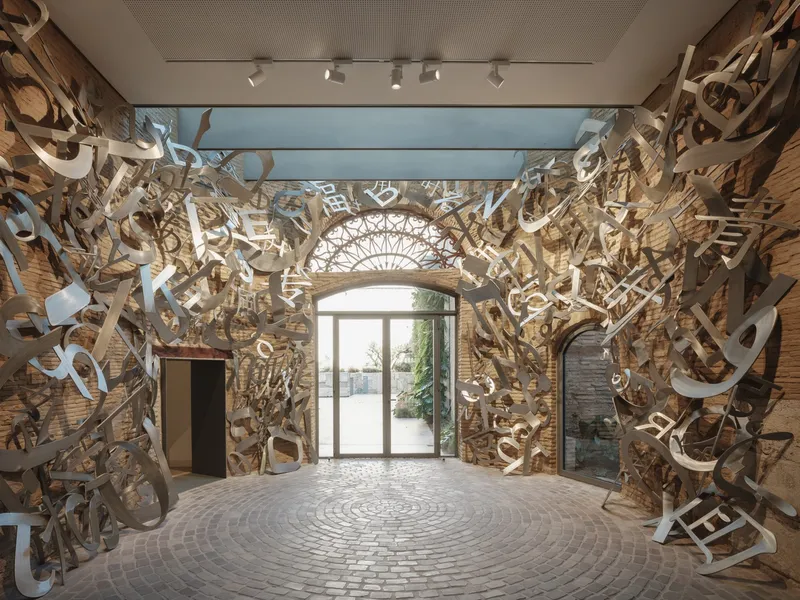
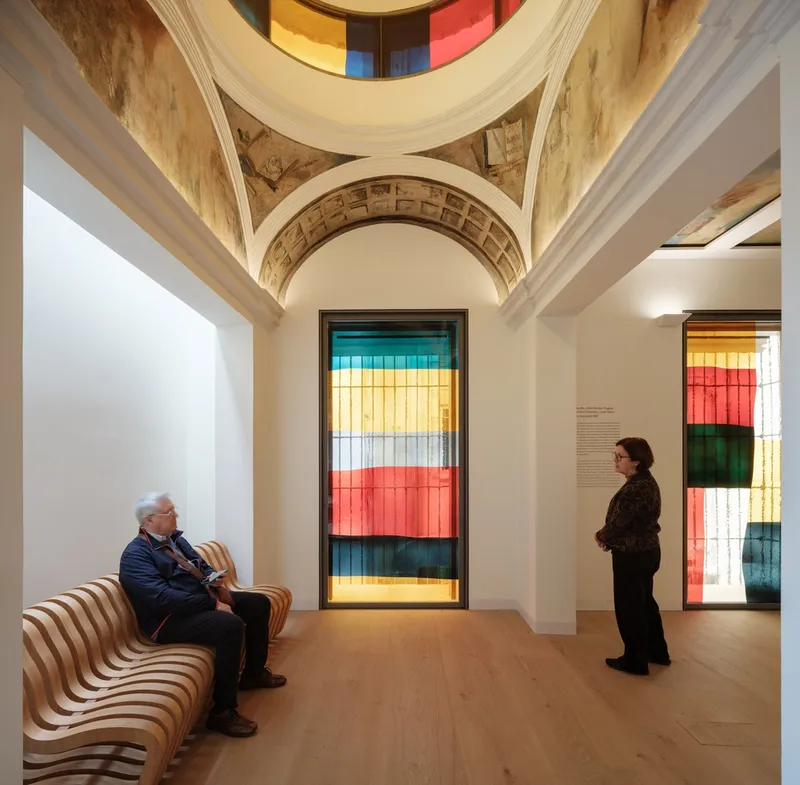
The fourth floor culminates in a rooftop terrace with views across Valencia's terra-cotta roofscape and church domes. ERRE arquitectura conceived this viewpoint as a deliberate stop on the museum tour, a moment to contemplate the city that produced the building. It is a smart move: after seventeen rooms of focused interiority, the terrace releases the visitor back into urban context.
At the opposite end of the vertical section, the basement preserves Roman circus remains in situ. The distance between these two extremes, ancient ruin and open sky, defines the building's ambition. Few renovation projects can claim a material timeline spanning two millennia. Fewer still manage to make that timeline legible without turning the architecture into a didactic diagram.
Plans and Drawings
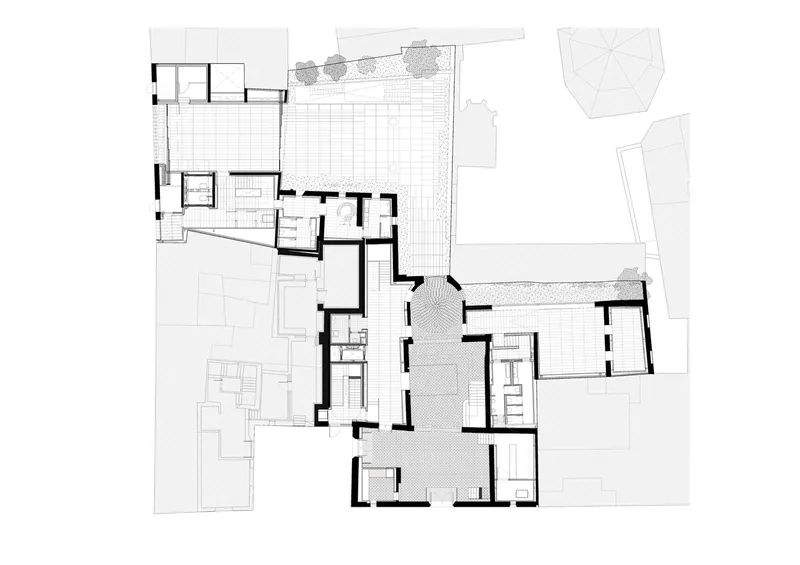
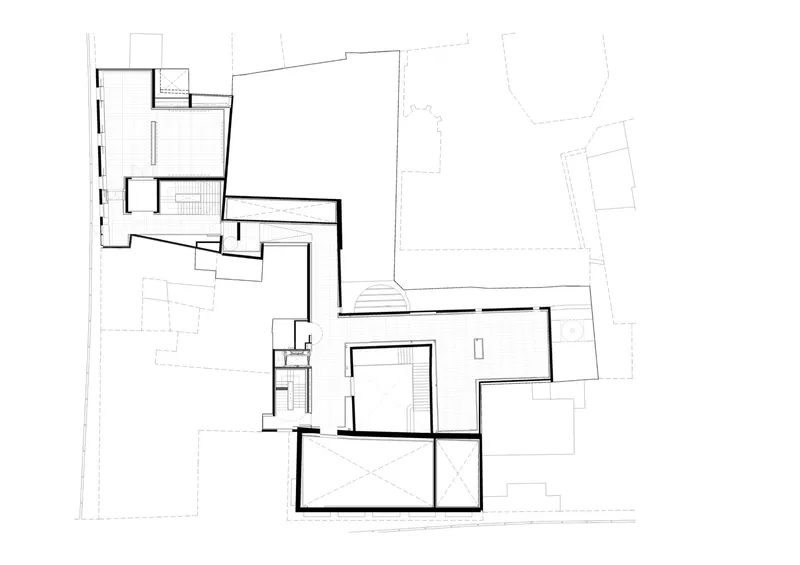
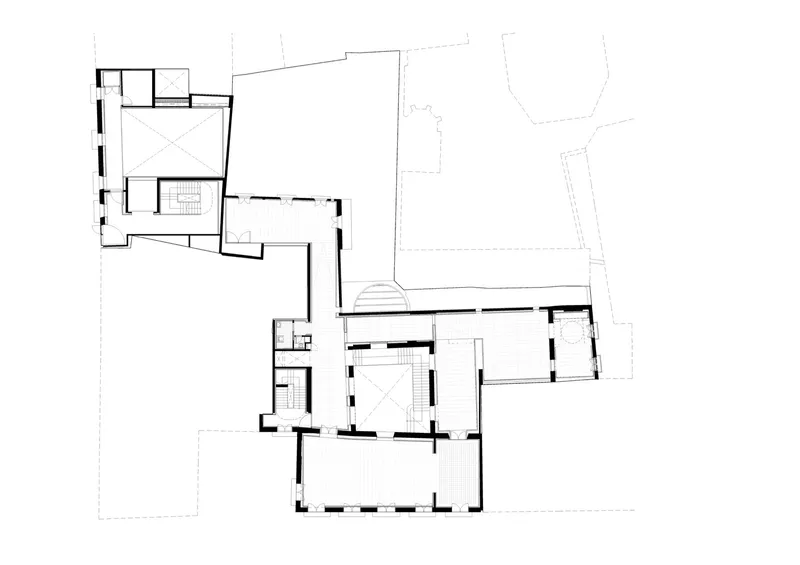
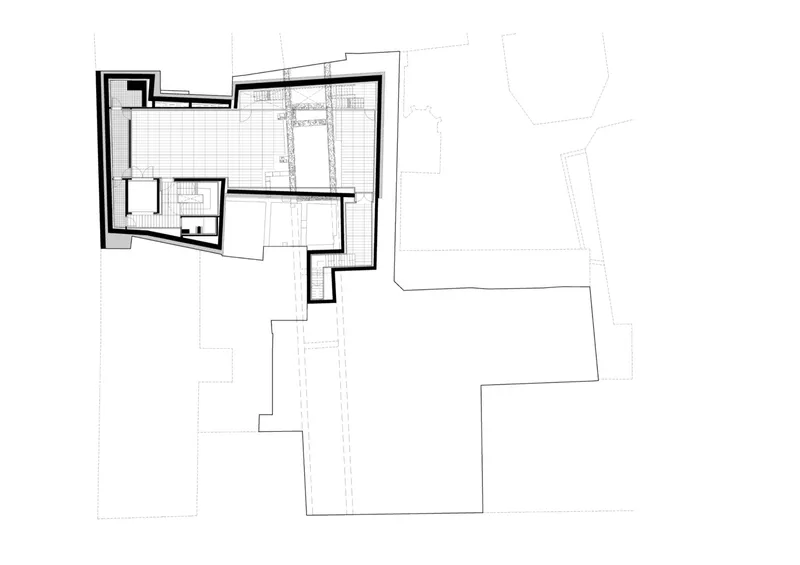
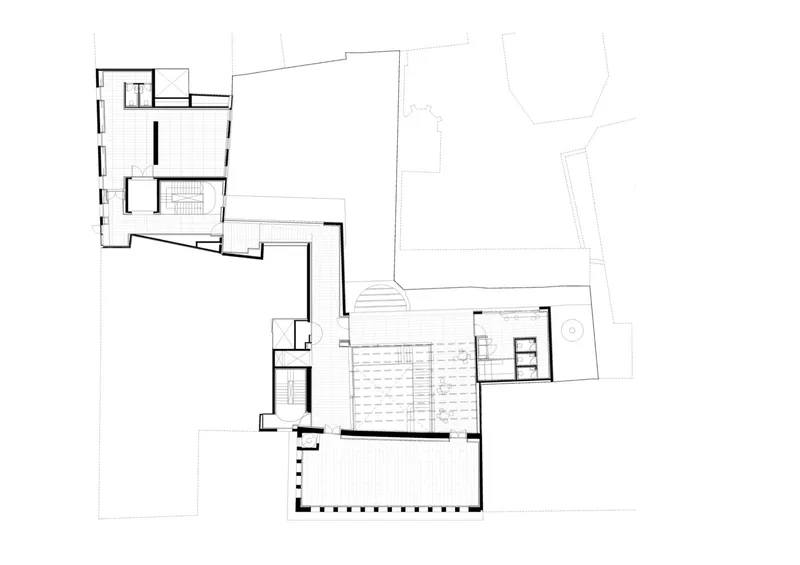
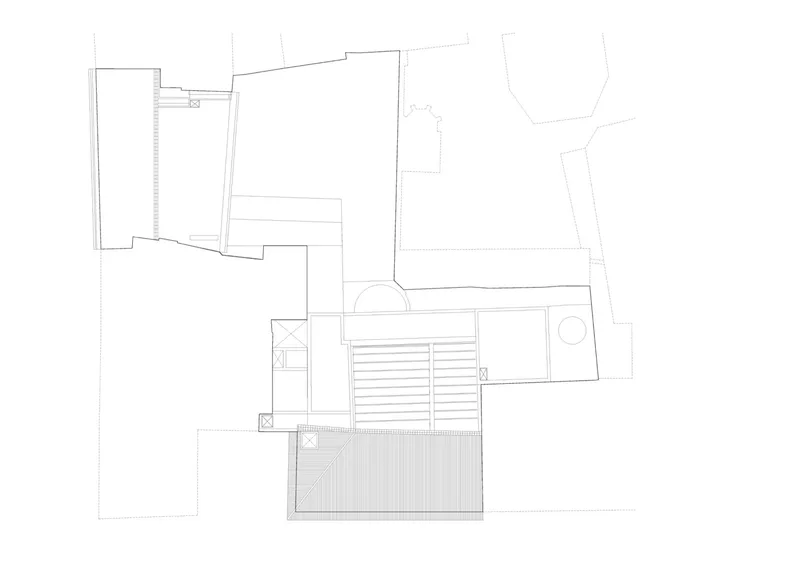
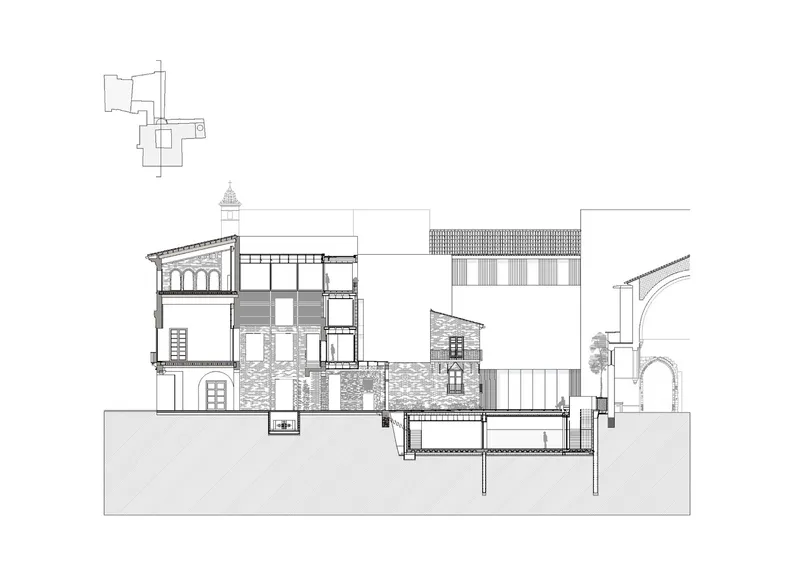
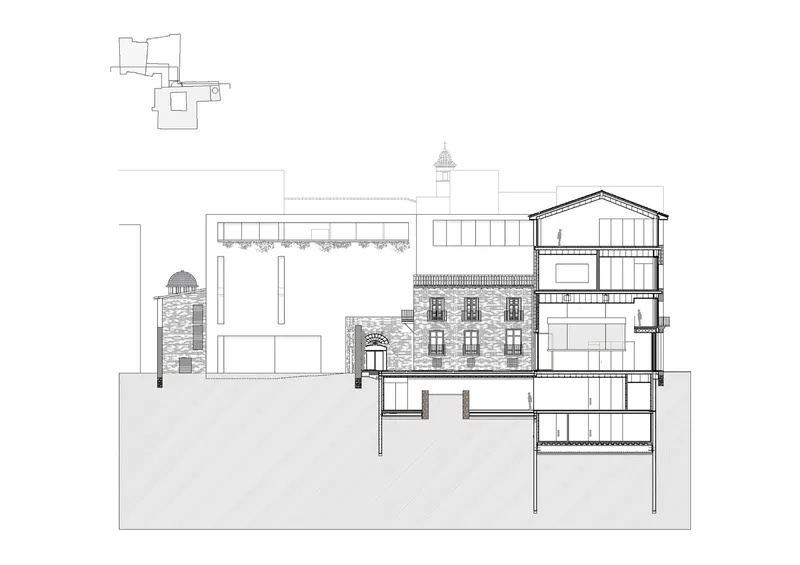
The floor plans reveal the full complexity of the operation. An L-shaped layout wraps around the central courtyard, with the new San Cristóbal volume connected by a glazed link that houses the bridge circulation. Upper levels angle outward to capture terrace space, and the section drawings show the dramatic interplay of old and new construction: historic masonry towers sit alongside timber-framed pitched-roof volumes, while exposed timber trusses span gallery ceilings of varied heights. The drawings make clear that this is not two buildings bolted together but a single organism with two lungs.
Why This Project Matters
Heritage renovation projects often land in one of two traps: either the old building is embalmed and the new insertion tiptoes around it, or the contemporary architect treats the existing fabric as a scenic backdrop for their own formal ambitions. ERRE arquitectura avoided both. The Hortensia Herrero Art Center treats the Valeriola Palace as a living structure whose identity is defined precisely by its history of transformation. Adding a new volume, inserting modern materials, and commissioning site-specific artworks are not departures from the building's character. They are consistent with it.
The project also offers Valencia something it did not have: a privately funded contemporary art institution housed in a historically significant building at the center of the old city. That the building simultaneously preserves Roman remains, restores traditional Valencian construction techniques like the bóveda tabicada, and provides world-class gallery conditions for artists like Anish Kapoor and Andreas Gursky suggests that heritage conservation and cultural ambition are not competing agendas. They are, when handled with this level of craft and conviction, the same thing.
Hortensia Herrero Art Center, designed by ERRE arquitectura. Valencia, Spain. Over 3,500 square meters. Photography by Pedro Pegenaute and David Zarzoso.
About the Studio
Share Your Own Work on uni.xyz
If projects like this are the kind of work you want to make, uni.xyz is a place to publish your own, find collaborators, and enter design competitions.




Popular Articles
Popular articles from the community


Co-Life: Senior Housing Design That Reconnects Older Adults With the City
Co-Life reimagines senior housing design through healing gardens, shared streets, workshops, and a sustainable community across generations.

The Ocean Hive: Sustainable Architecture for a Self-Sufficient Civilization at Sea
The Ocean Hive imagines sustainable architecture at sea, where modular habitats, algae, wave power and ocean waste sustain a growing colony.

Conexión: Biophilic Design Reimagines High-Rise Living in Hong Kong
Conexión reimagines high-rise living in Hong Kong through biophilic design, green facades, shared spaces, daylight, water and nature within.

Co-life: Sustainable Architecture for Age-Friendly Community Living
Co-life reimagines sustainable architecture for seniors through courtyards, rammed earth, shared gardens, and spaces designed for belonging.

Similar Reads
You might also enjoy these articles

FAMM Arquitectura Organizes Ten Villas Around Courtyards and Jungle in Nosara, Costa Rica
El Molino pairs two elongated volumes with deep overhangs and timber louvers to build a compact coastal community five minutes from the beach.
Oscar Niemeyer's Ibirapuera Park Pavilions Define São Paulo's Cultural Identity in Concrete and Curve
A constellation of modernist volumes set within São Paulo's most important urban park, conceived for the city's 400th anniversary in 1954.
How Henri Picq's 1889 Paris Pavilion Traveled 11,000 Kilometers to Become Santiago's Artequín Museum
A prefabricated iron and glass pavilion built for the Paris Universal Exposition found a second life as a children's art museum in Chile.
Sanjay Puri Architects Wraps a Jaipur Office Tower in Capsule-Shaped Green Buffers
A nine-level climate-responsive workplace near Jaipur Airport uses stacked planter terraces and aluminium screens to fight 40°C heat.


Explore Architecture Competitions
Discover active competitions in this discipline



Challenge to reimagine the Iron Throne


Photograph architecture without architects


Illustrate the lost glory of Angkor Wat - Render Challenge


Design challenge to reuse E-waste
Comments (0)
Please login or sign up to add comments
No comments yet. Be the first to comment!