
Hortus Conclusus Center by C&P Architetti: Revitalizing Educational Spaces Through Nature and Design
Hortus Conclusus Center transforms an overlooked Venezia garden into a student-centered outdoor classroom with pavilion, paths, greenery, and sustainable, interactive design.


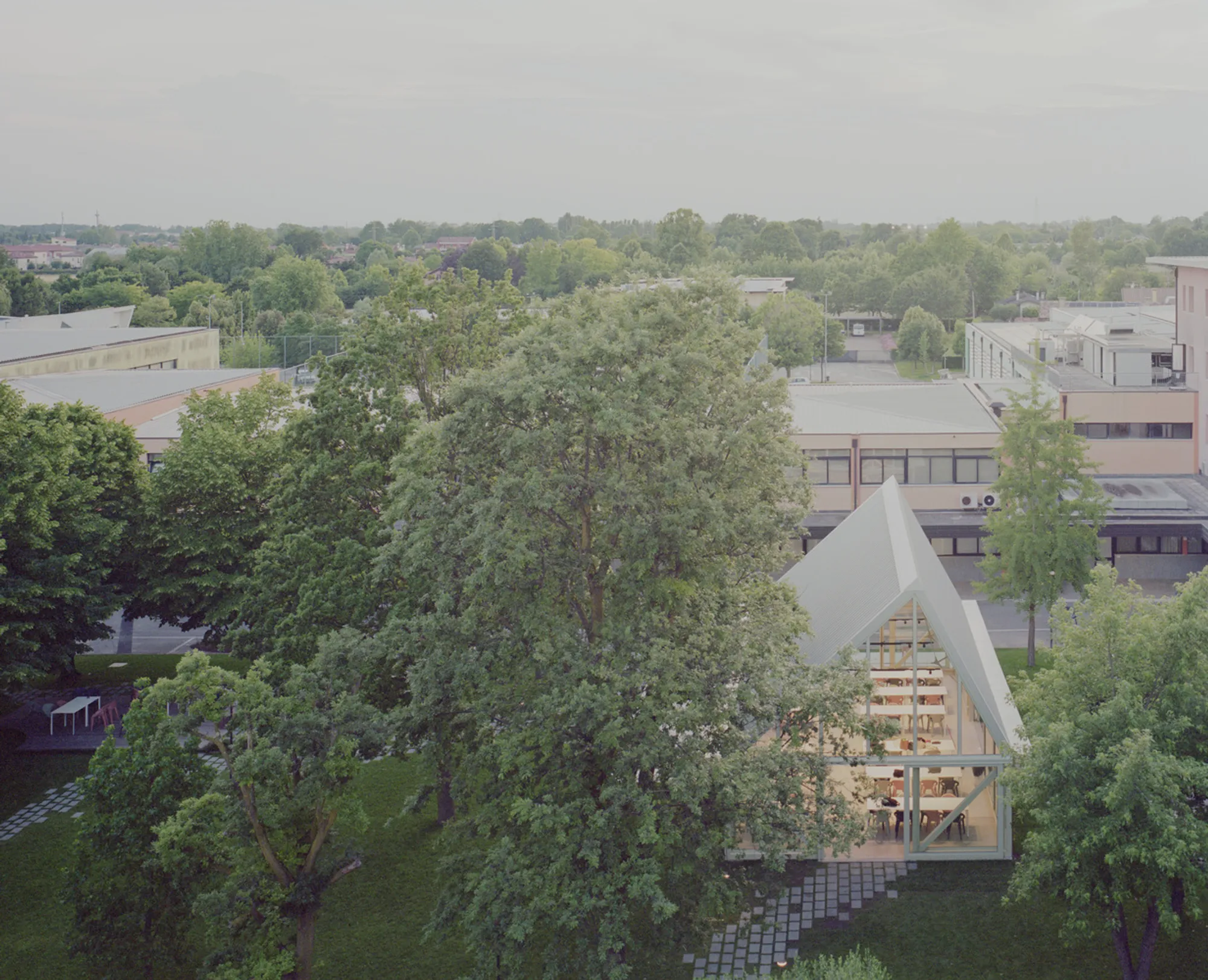
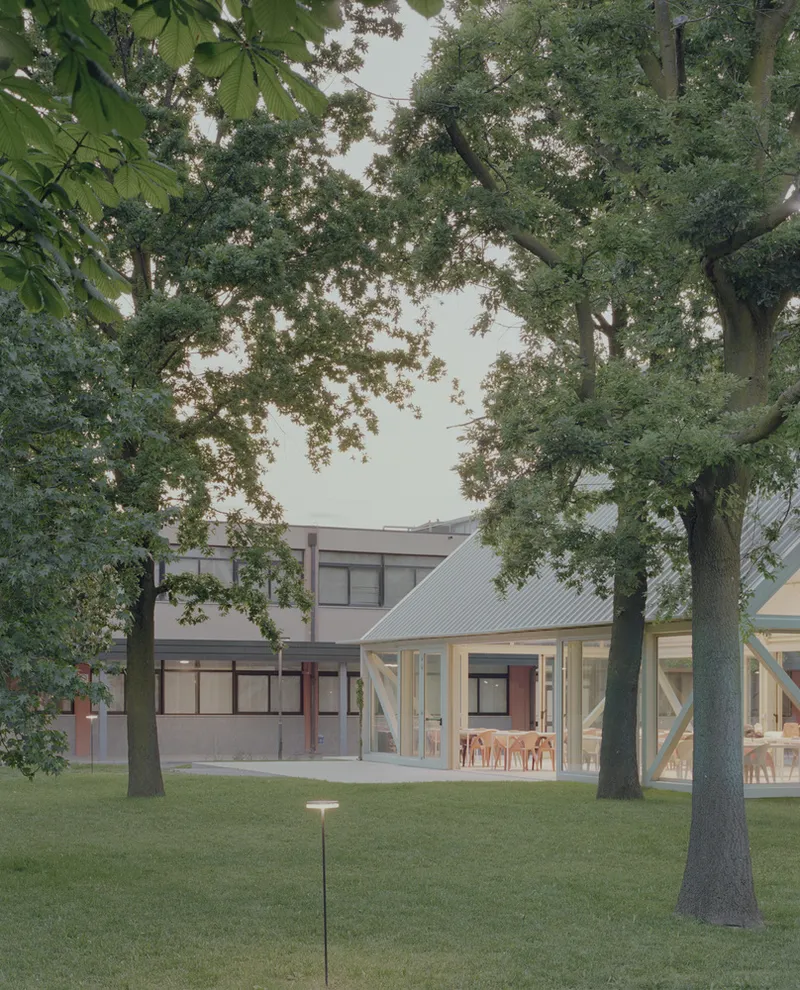
The Hortus Conclusus Center by C&P Architetti is a striking example of educational architecture in Venezia, Italy, blending nature, community, and innovative design. Nestled within the Salesian Don Bosco center in Mestre, the project transforms an overlooked green space into an interactive outdoor classroom and communal hub.
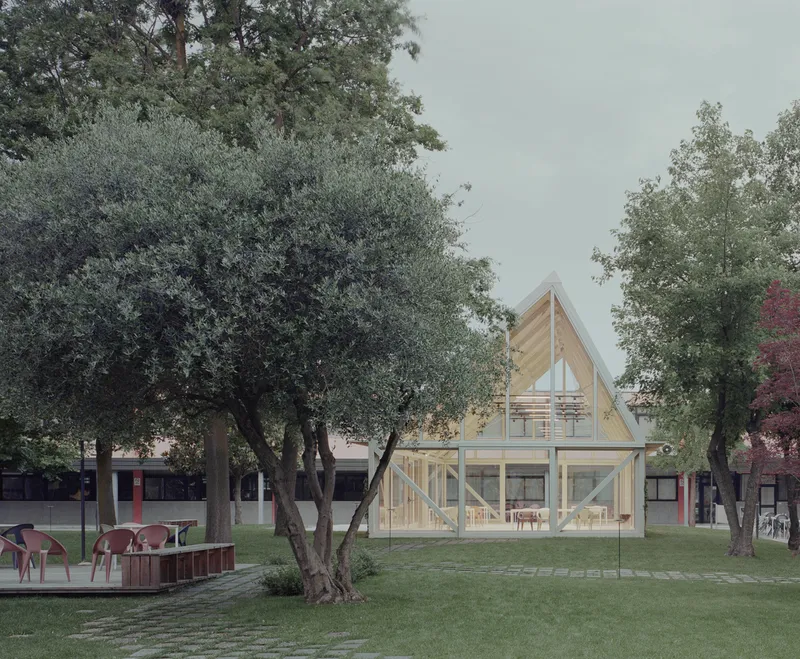
Originally, the area consisted of a void between the buildings, a garden with randomly planted trees of various species and sizes, bordered by an asphalt strip that doubled as a parking area. This once-isolated green space, constrained by surrounding buildings and vehicular activity, was largely unused and disconnected from the school’s daily life.
Pandemic as a Catalyst for Change
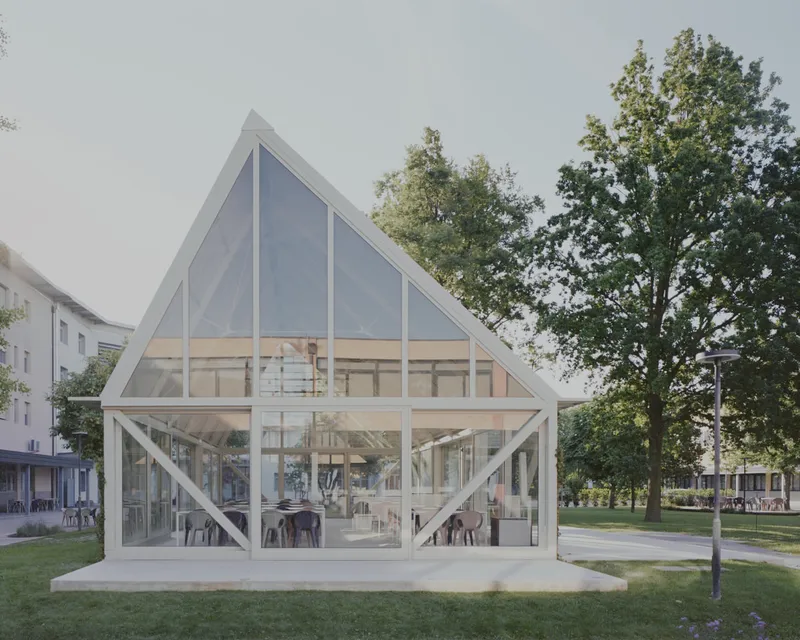
In 2020, the arrival of COVID-19 highlighted the potential of outdoor spaces for learning and social interaction. With indoor gatherings restricted, the garden emerged as a vital outdoor classroom. A temporary pavilion was installed, quickly embraced by students who began arranging chairs, tables, and walking paths organically throughout the space.
The students’ daily practices shaped the garden’s new identity, inspiring C&P Architetti to formalize these spontaneous interactions into a structured redevelopment plan launched in 2022.
Design Concept: Structure Meets Nature
The project’s design approach focused on enhancing the natural and social dynamics of the garden. Key interventions included:
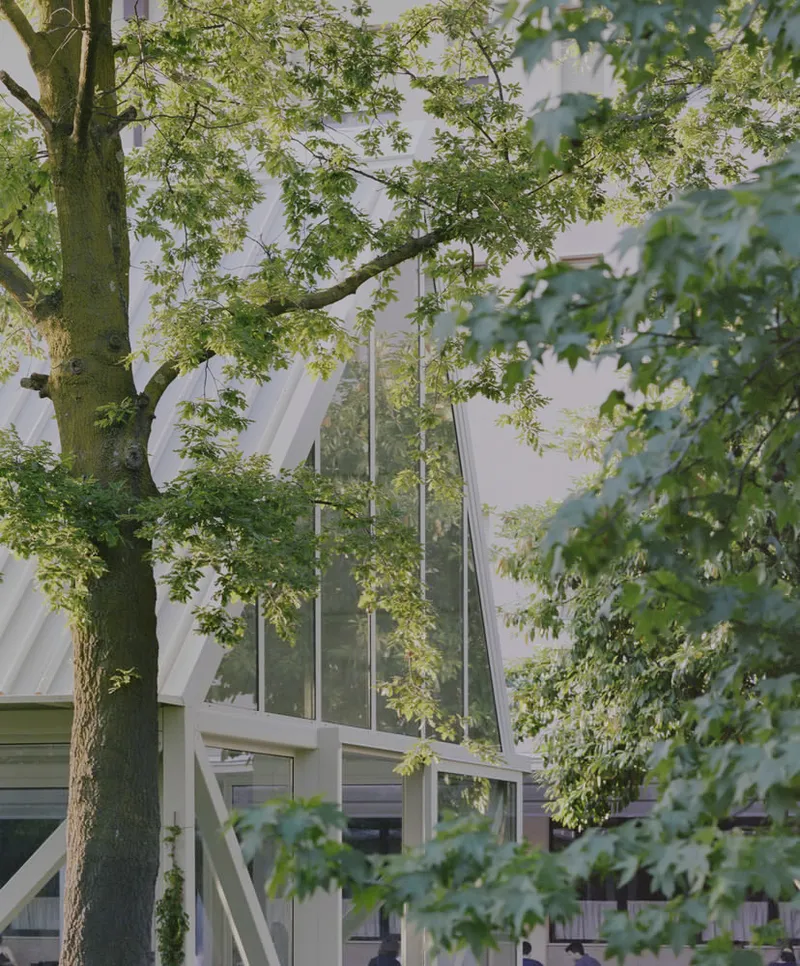
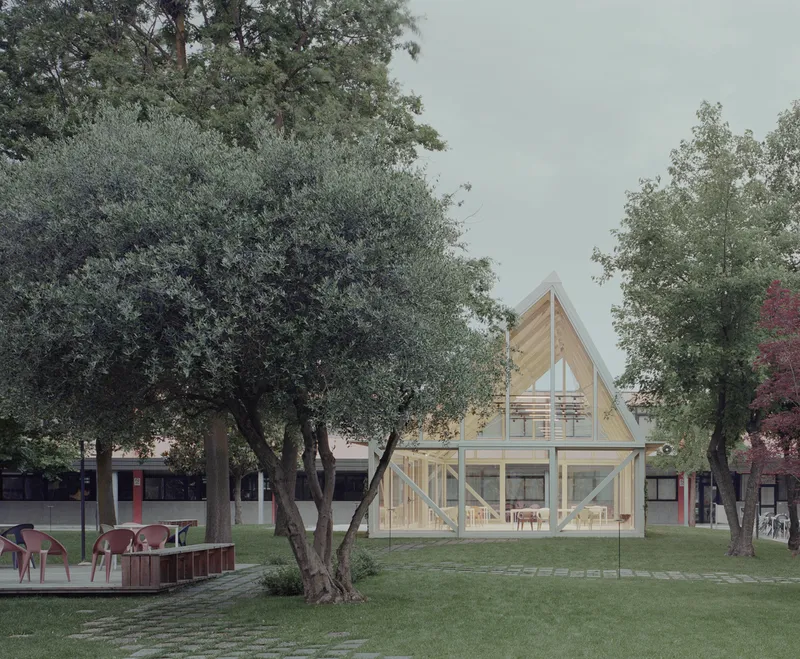
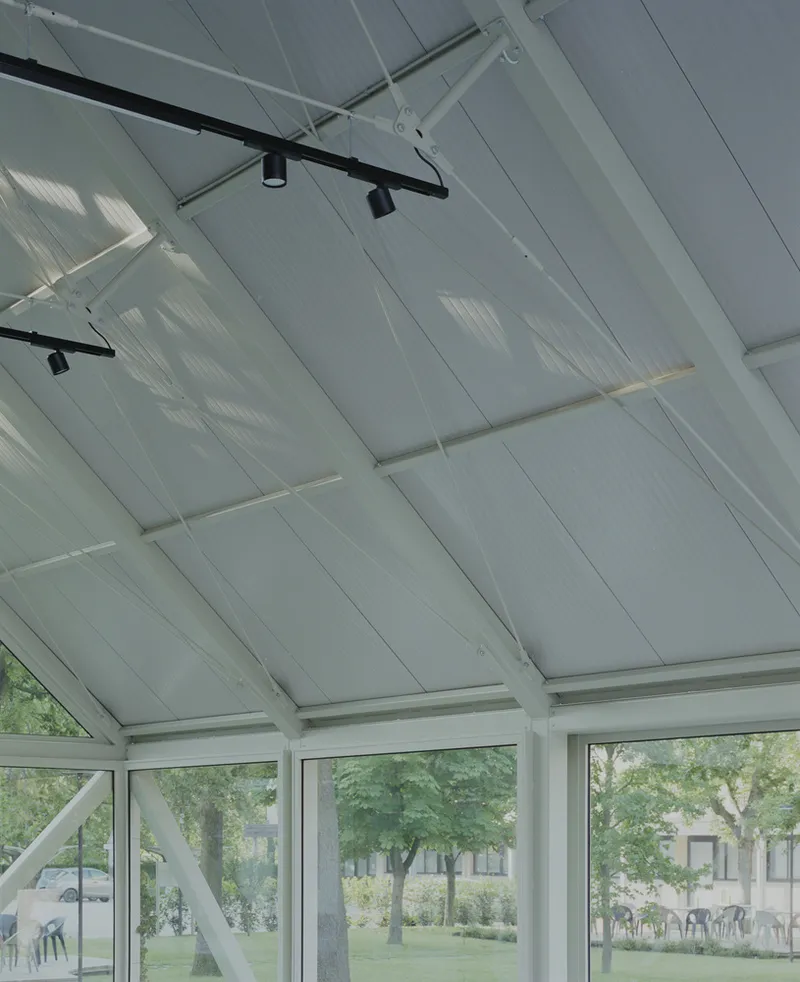
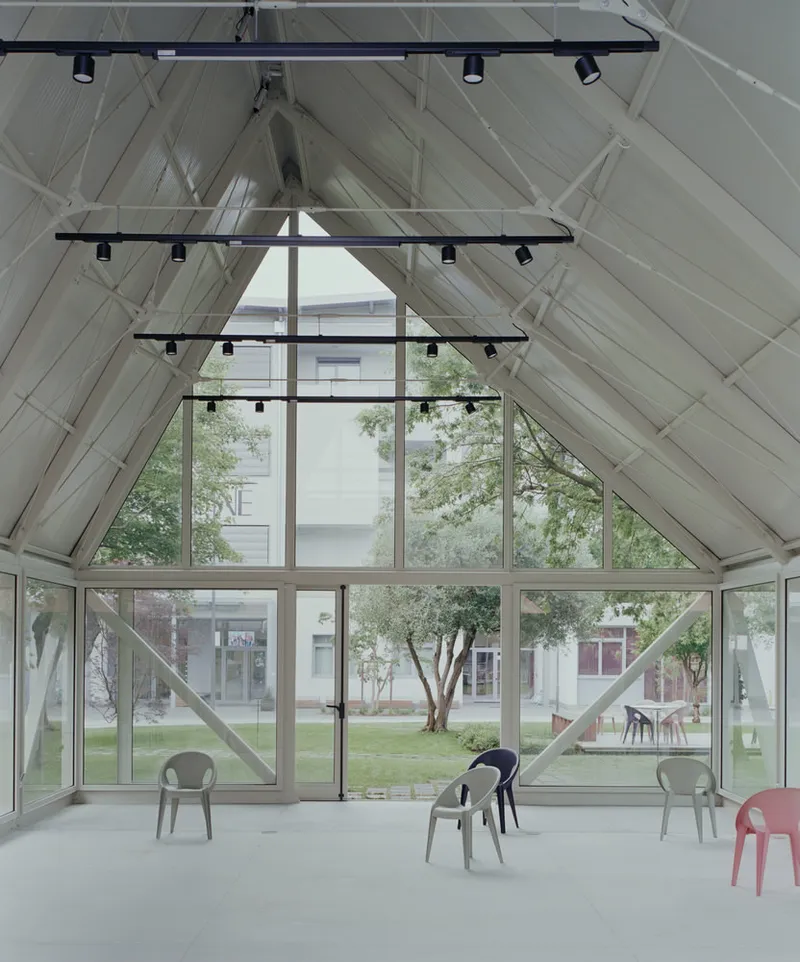
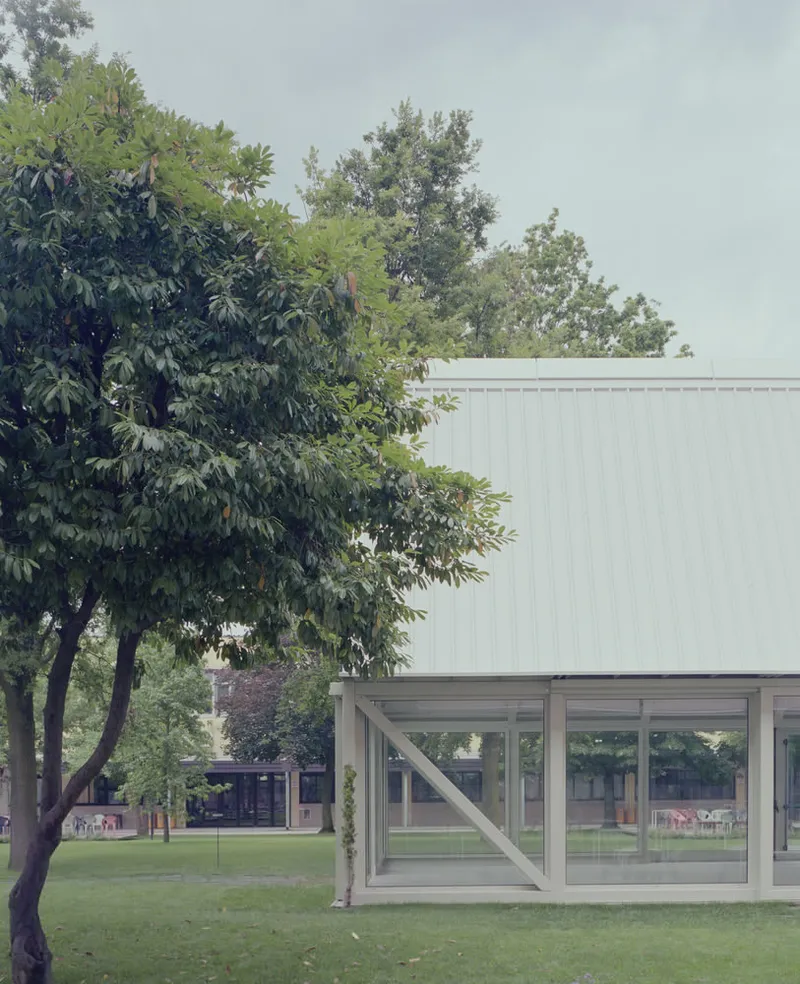
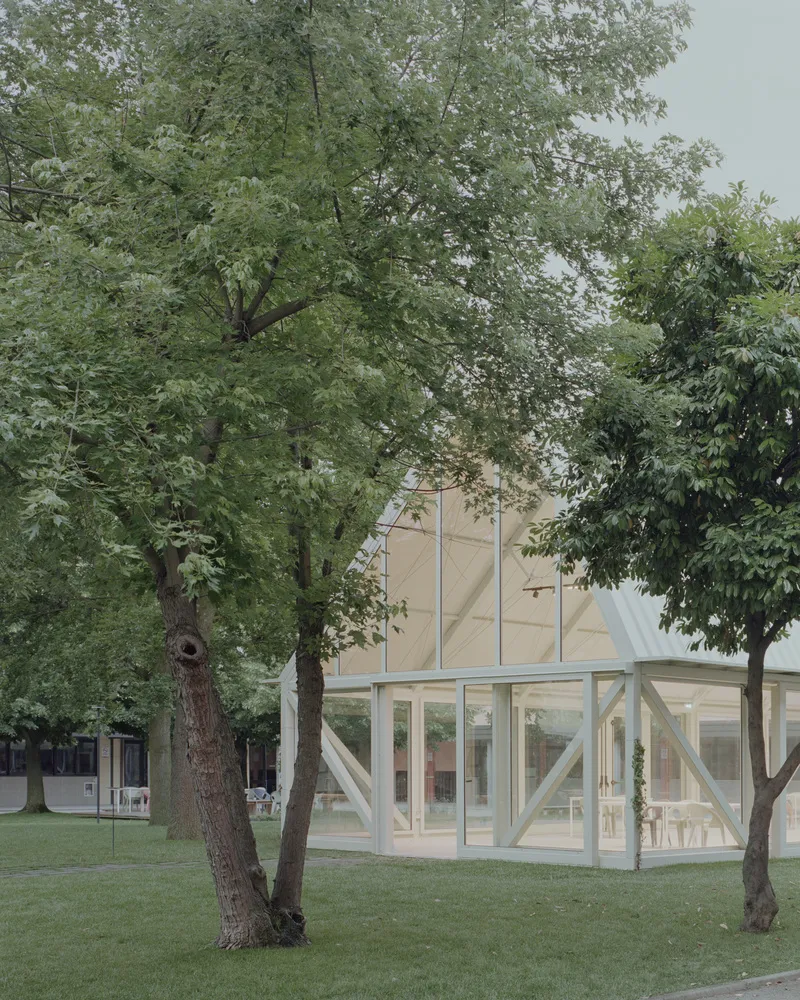
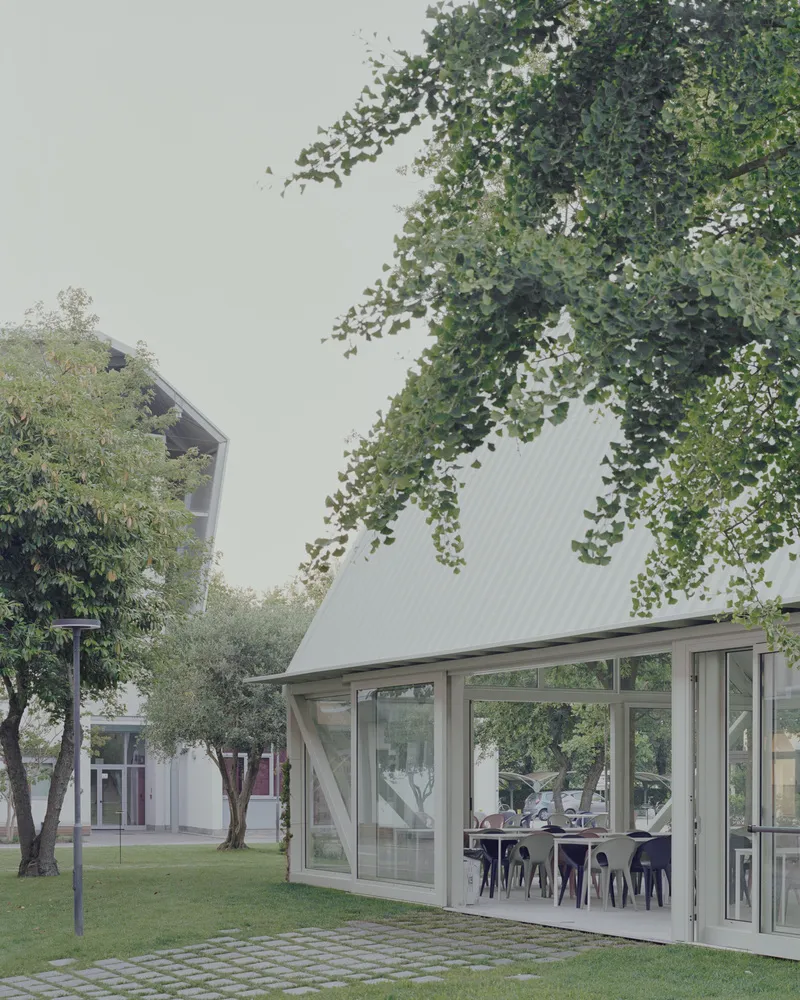
- Metal and Glass Pavilion: A permanent replacement for the temporary structure, positioned in the same central location as the original pavilion.
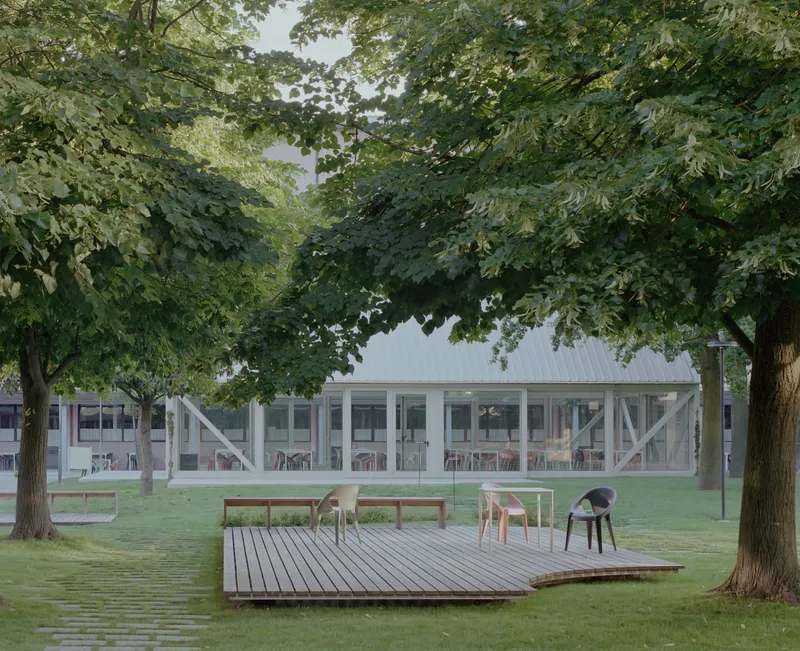
- Wooden Platforms: Bases for chairs and tables, placed in shaded areas identified by students, supporting flexible outdoor activities.
- Pathways: Student-defined movement traces solidified with recycled and permeable materials, integrating circulation with sustainable construction.
- Vegetation Management: Selective tree replacement and pruning to accommodate site conditions, combined with the addition of flowerbeds to enhance biodiversity and visual interest.
- Lighting: Strategically placed light fixtures to extend usability of the garden into the evening hours.
The design transforms the garden into a multi-functional, immersive educational environment, where architecture and landscape merge seamlessly.
Connectivity and Urban Integration
One of the most innovative aspects of the Hortus Conclusus Center is the erosion of its asphalt boundary, transforming what was once a barrier into a connective element linking the garden to the school’s porticos. This design strategy not only increases accessibility but also sets the stage for future street art and community engagement projects, turning a previously isolated space into a vibrant part of the campus.
The project exemplifies adaptive outdoor learning environments, demonstrating how educational architecture can respond to changing social contexts while promoting sustainability, interactivity, and student-centered design.
Lessons in Adaptive Architecture
The Hortus Conclusus Center highlights how architecture can redefine underused spaces, encouraging students to actively engage with their environment. By combining thoughtful landscape architecture, modular structures, and community-driven design, C&P Architetti created a garden that is functional, beautiful, and socially meaningful.
This project sets a benchmark for educational institutions worldwide, emphasizing that thoughtful design can transform even the smallest green spaces into dynamic learning and social hubs.
All photographs are works of Marcello Mariana




Popular Articles
Popular articles from the community


AL-JANNAH: Sustainable Architecture and Permaculture for Afghan Widows
AL-JANNAH uses sustainable architecture and permaculture to create resilient oasis of housing, learning, work and renewal for Afghan widows.

Co-life: Sustainable Architecture for Age-Friendly Community Living
Co-life reimagines sustainable architecture for seniors through courtyards, rammed earth, shared gardens, and spaces designed for belonging.

Hill & Cross Opera: Sculptural Opera House Architecture Shaped by Tallinn’s Landscape and Identity
Hill & Cross Opera reimagines opera house architecture in Tallinn through its sculptural hill, civic plaza, glass wave and a luminous cross.

Riyadh For All: Intergenerational Urban Design for Active Aging in Rabat
Riyadh For All reimagines urban design in Rabat with intergenerational co-living, adaptive courtyards, and Moroccan cultural exchange today.


Similar Reads
You might also enjoy these articles


Hodi-Mandai Geram
Project Function: Preservation and revitalization of the Intangible heritage and socio-spatial identity of the Hodi by Housing, Cultural Memory Center, Sacred Grove, landscape, local tourism economy


Olio Towers: A Mid-Rise for Performers That Fuses Housing, Rehearsal, and Stage
Located blocks from Houston's Theater District, this modular tower stacks living units around a central performance atrium.

Oasis: Modular Green Housing Carved into Dhaka's Urban Fabric
A shortlisted Plugin Housing entry reclaims unauthorized settlements in Dhaka with stepped concrete volumes, green roofs, and ventilation-driven design.

Black Hole: A Floating Megastructure for the Post-Physical Era
Emiliano Mazzarotto envisions a spherical, self-scaling arena where e-sports, digital hotels, and holographic stadiums replace traditional public space.


Explore Educational Building Competitions
Discover active competitions in this discipline



Challenge to design public laboratory


Challenge to reimagine the Iron Throne


Photograph architecture without architects


Illustrate the lost glory of Angkor Wat - Render Challenge
Comments (0)
Please login or sign up to add comments
No comments yet. Be the first to comment!