
Hosono House by Ryan Leidner Architecture – San Francisco’s Contemporary Retreat
Hosono House by Ryan Leidner Architecture is a secluded San Francisco retreat blending historic charm, modern design, natural materials, and global-inspired interiors.


A Private Sanctuary in San Francisco’s Hills
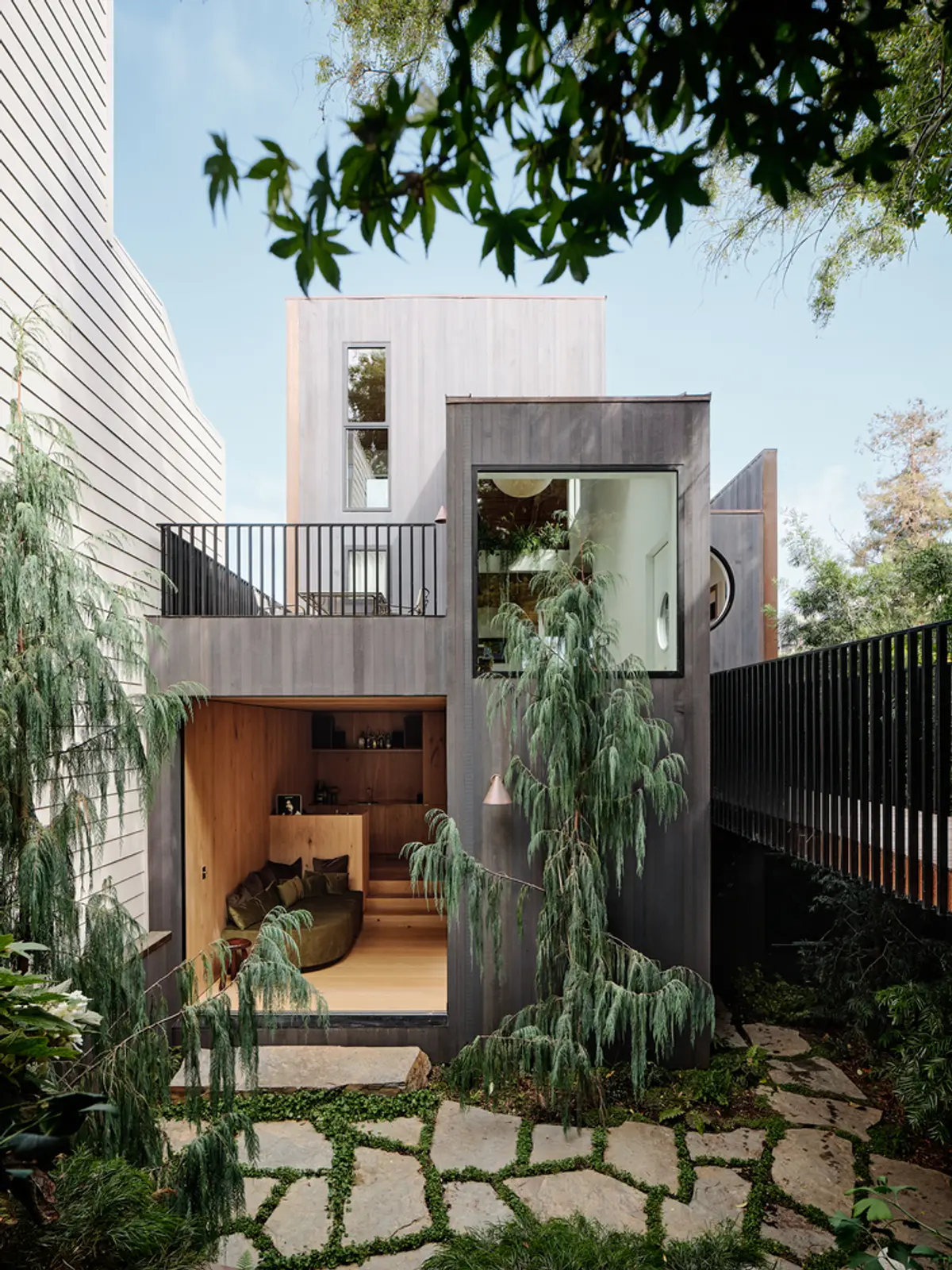
Nestled in the hilly Bernal Heights neighborhood, Hosono House is a remarkable example of a modern San Francisco residence that harmoniously blends historic character with contemporary design. The original structure, located at the rear of the property and set back from the street, creates a unique sense of privacy and retreat. This separation from the street not only ensures seclusion but also posed a design challenge for access and circulation, which the architects resolved with an innovative entry sequence.
A bridge spanning the landscaped lower courtyard leads to the new front entrance, creating an elegant transition from the garden to the home. This new approach transforms circulation while maintaining the serene and secluded atmosphere.
Reimagining Spatial Flow and Layout
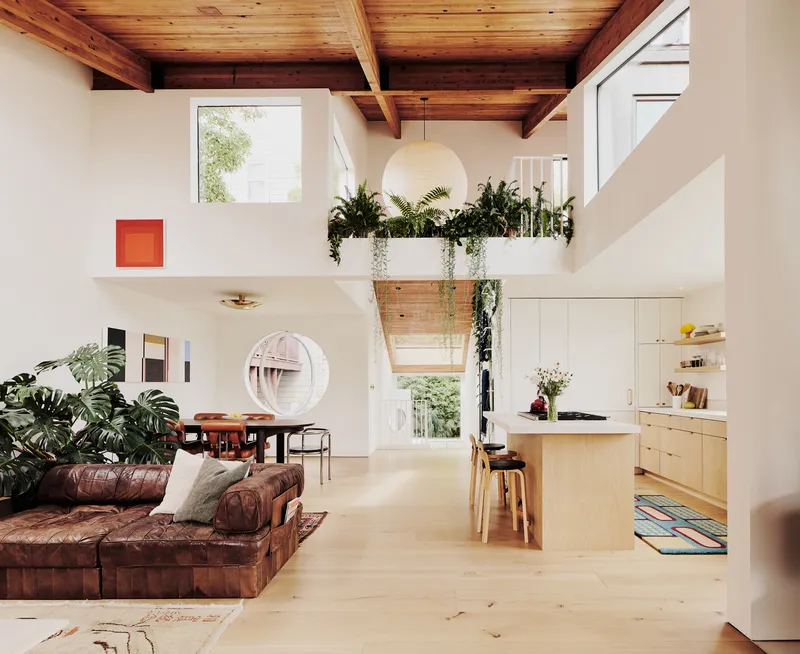
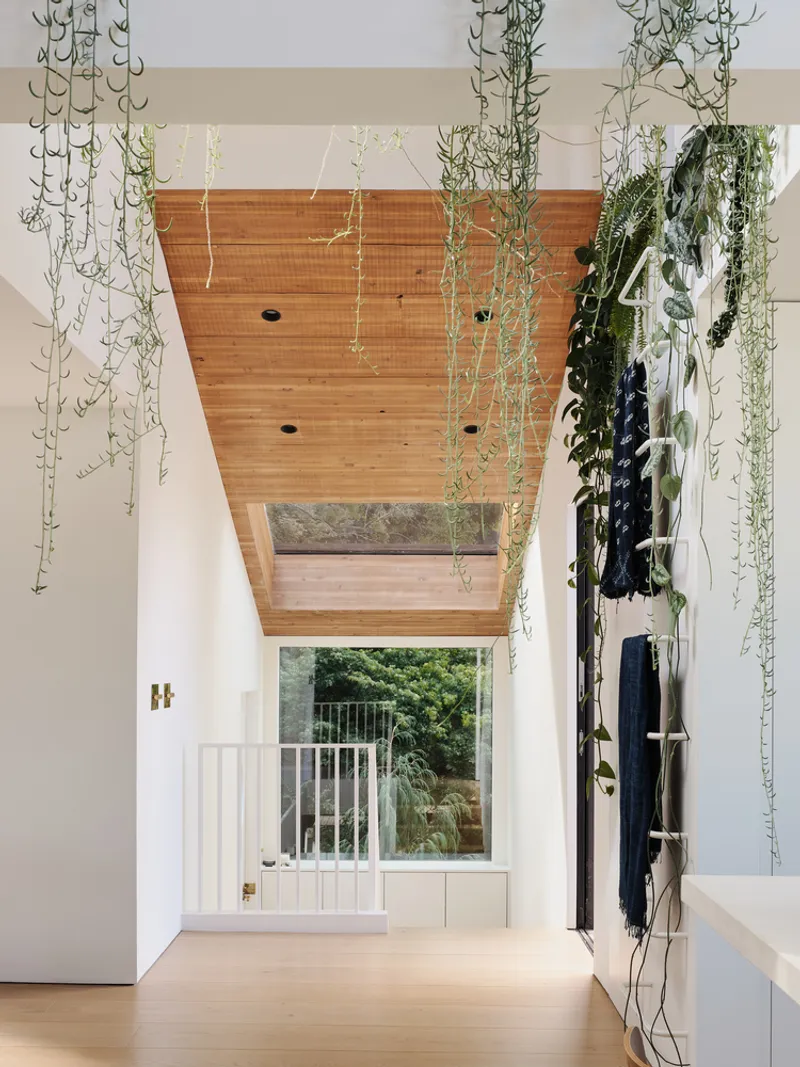
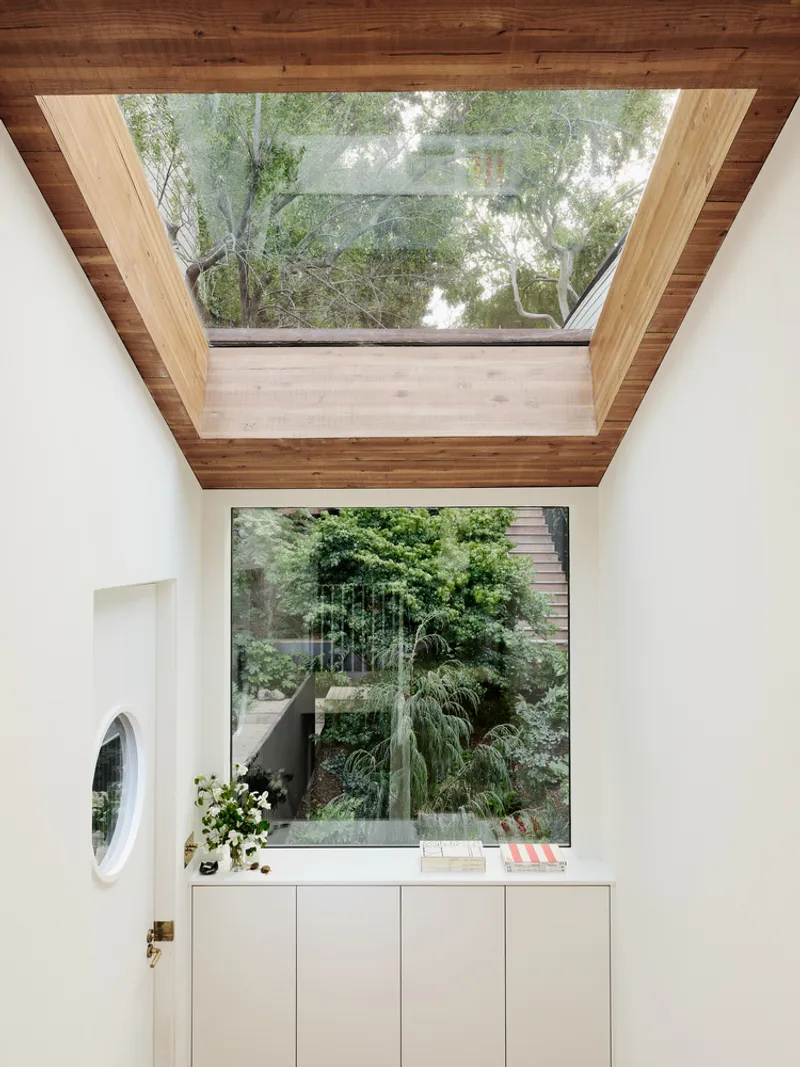
The project tackled the original awkward layout by reorganizing the interior spaces. The new entry stair and front façade feature expansive openings that provide natural light and views of the garden. The entrance lands on a half-level, with the main living areas and kitchen positioned one flight above, while the bedrooms occupy the lower level, creating a functional and intuitive spatial hierarchy.
Preserving Historic Charm with Modern Upgrades
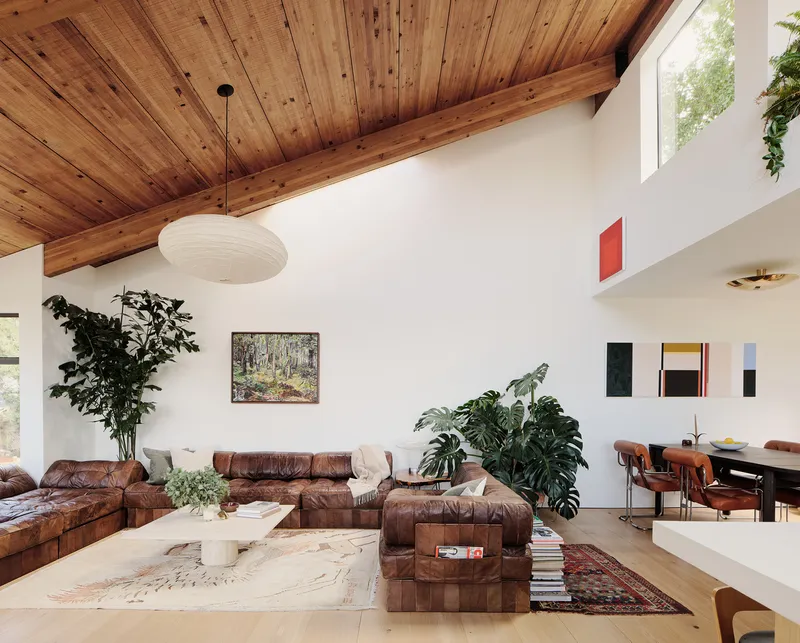
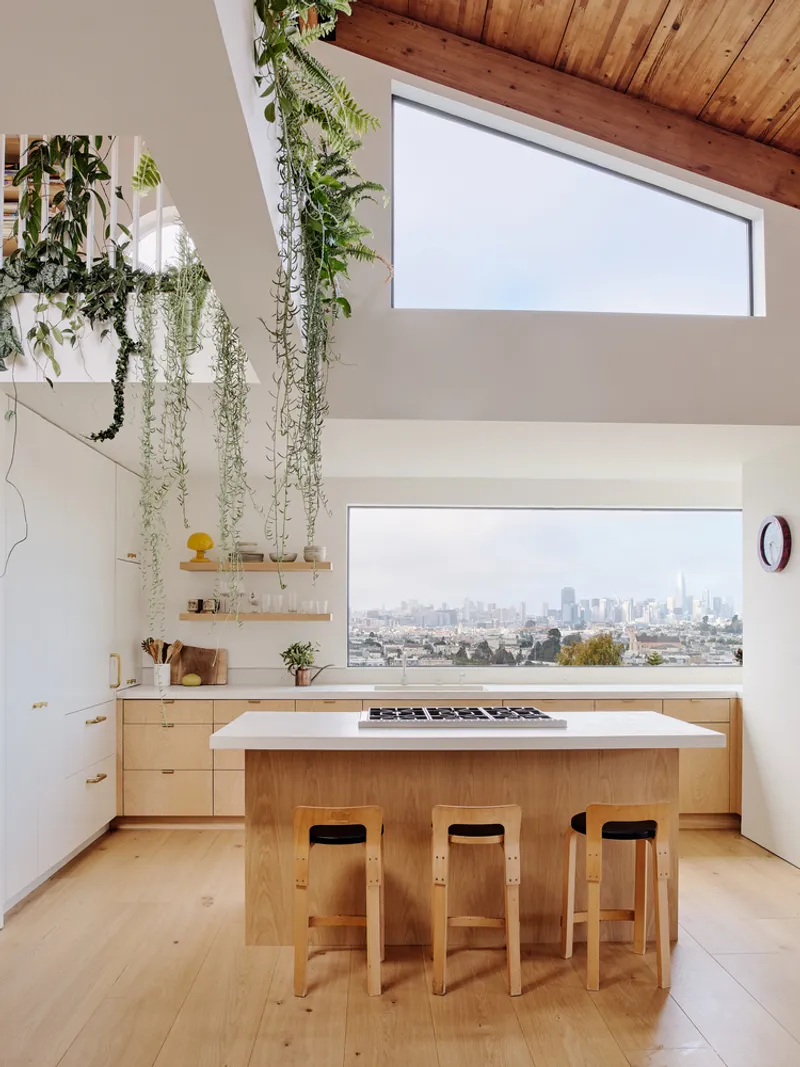
To honor the home's history, the architects retained and refinished original wood beams, leaving them exposed as a celebration of the property’s craftsmanship. All windows, floors, and finishes were replaced to ensure material continuity throughout the house. The interior palette, dominated by natural wood tones and crisp whites, emphasizes warmth and simplicity, making it a perfect setting for family gatherings, playtime, and entertaining.
Interiors Inspired by Global Design
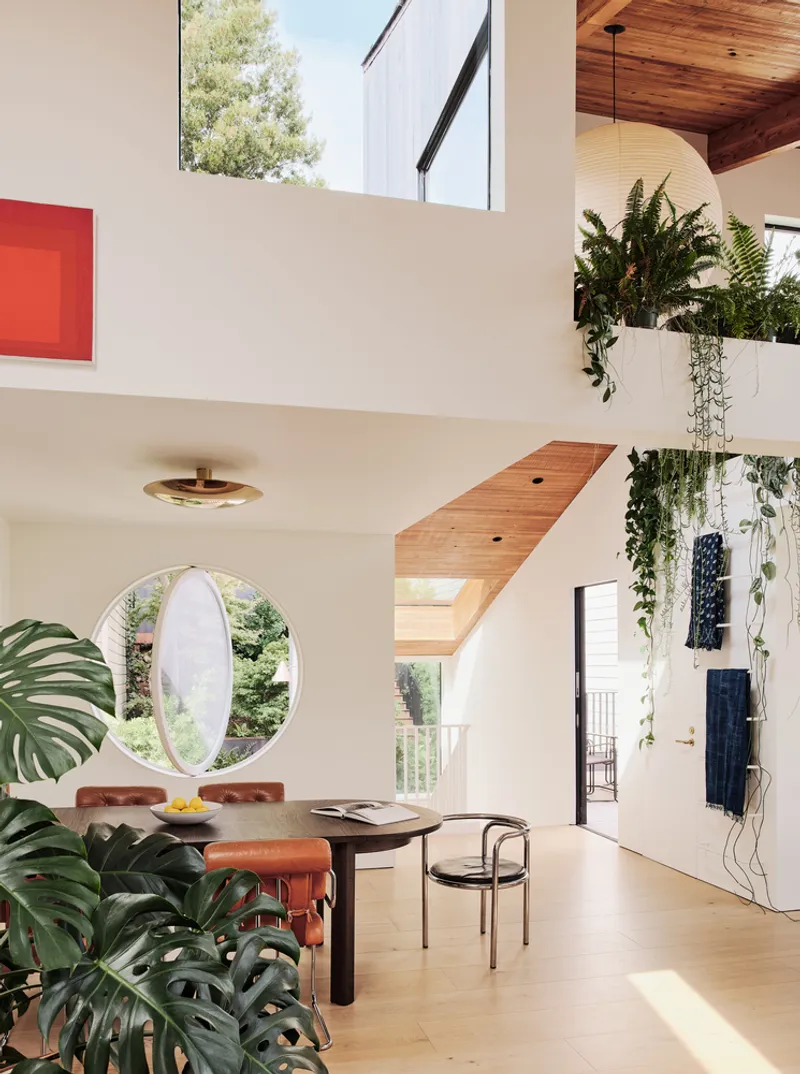
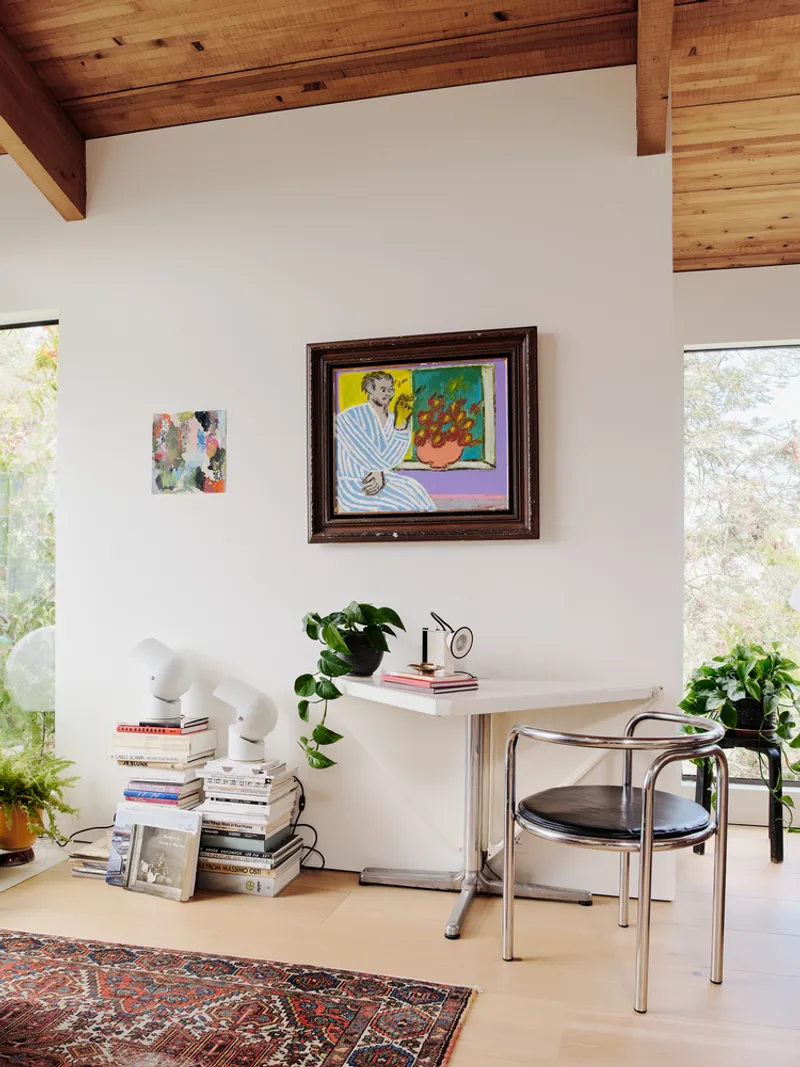
The interior design reflects international influences, blending vintage Italian furnishings, Japanese design principles, and Californian hippie modernism. A custom dining table by local artisan Nobuto Suga pairs with vintage Tucroma chairs by Guido Faleschini and a Locus Solus Tubular Armchair by Gae Aulenti.
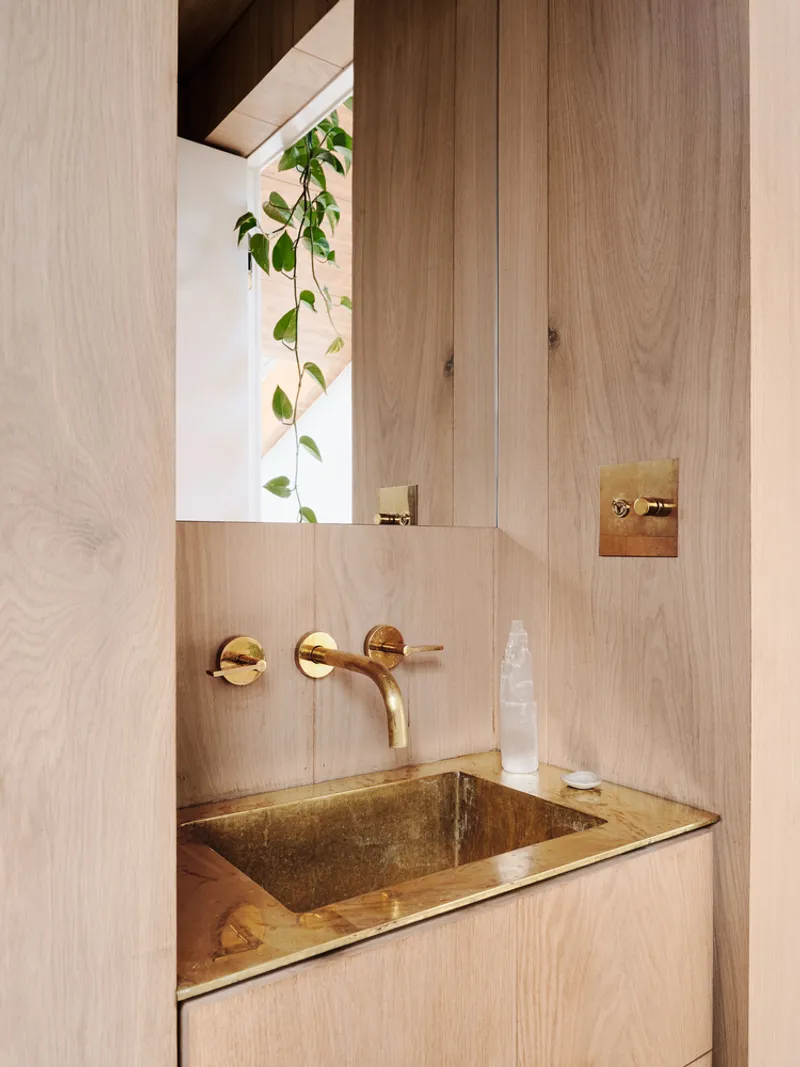
A circular pivot window introduces playful natural light into the living areas. The top-floor kitchen and living room offer sweeping city views, featuring custom White Oak cabinetry, concrete countertops, and polished brass accents, echoing the house’s natural material palette.
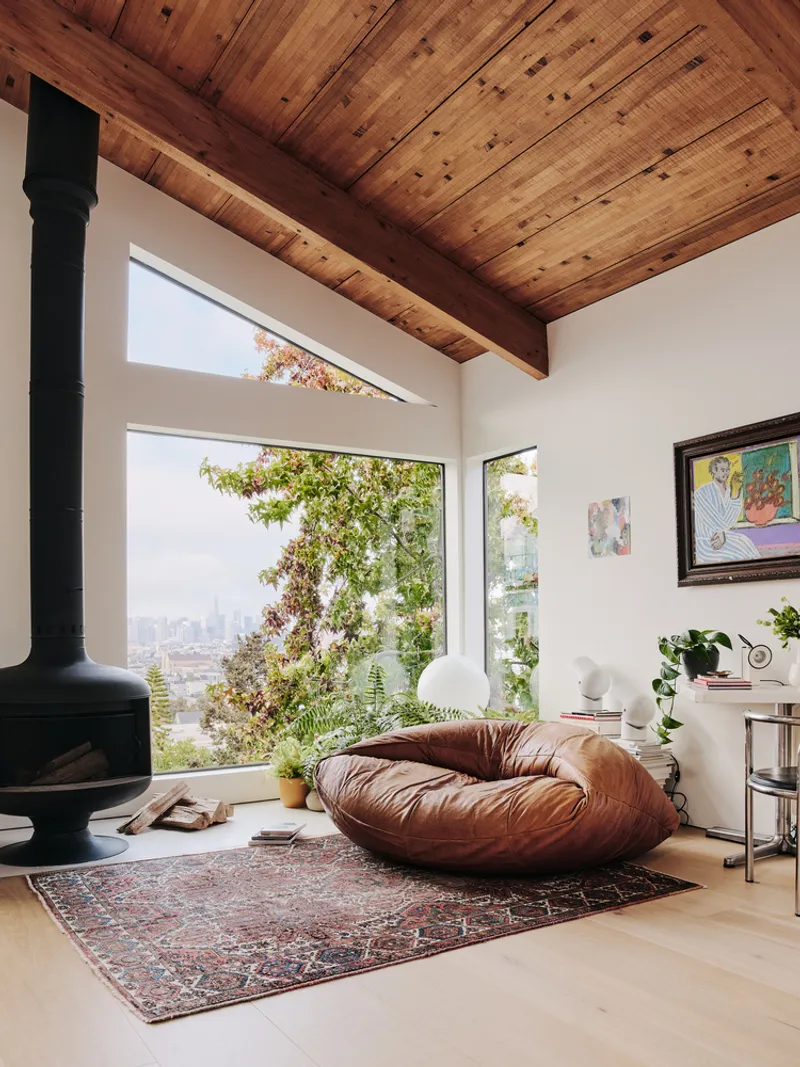
Lower Courtyard Lounge – A Tokyo-Inspired Retreat
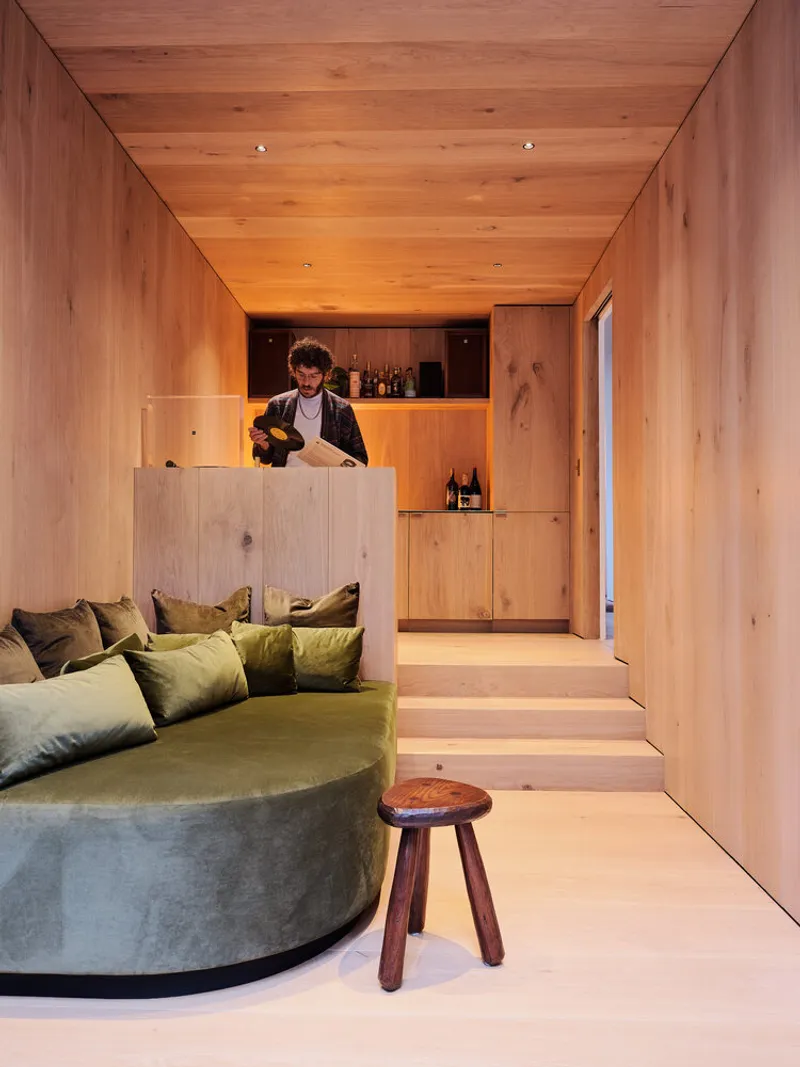
The lower-level lounge opens onto the ground-level courtyard and channels the ambiance of a Tokyo whiskey bar. Wide-plank White Oak clads the floors, walls, and ceilings, complemented by a record-playing station and a custom velvet daybed, creating a cozy space for relaxation and garden viewing.
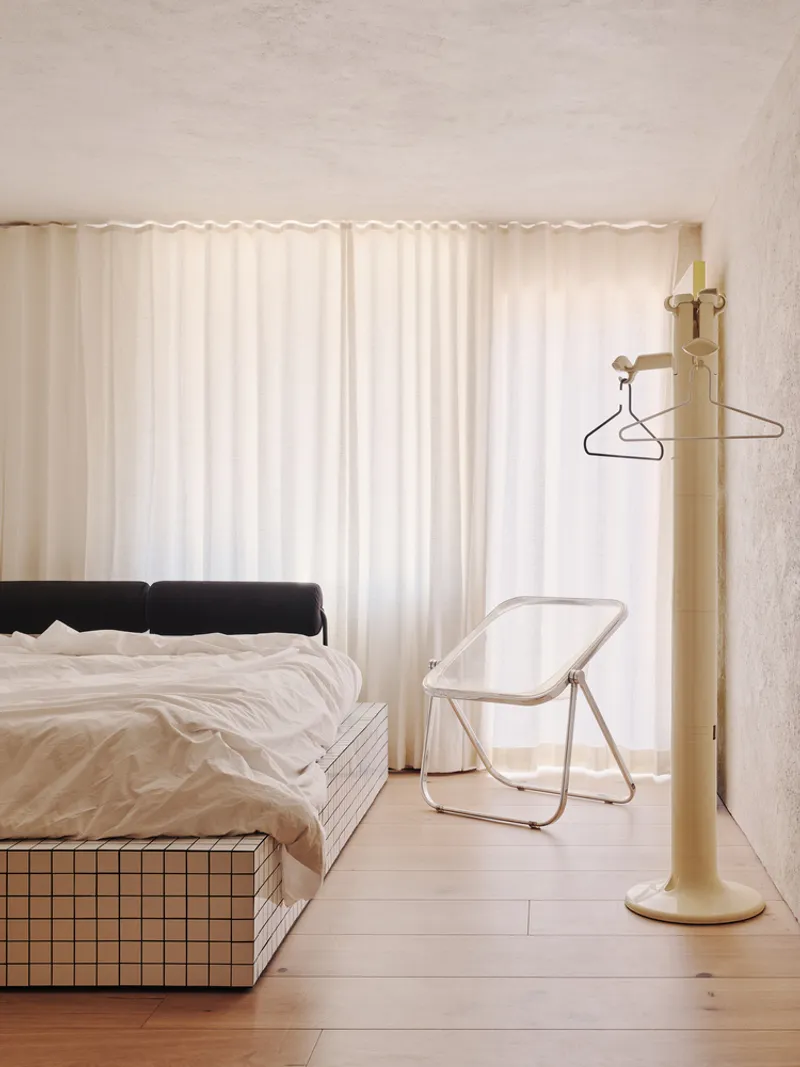
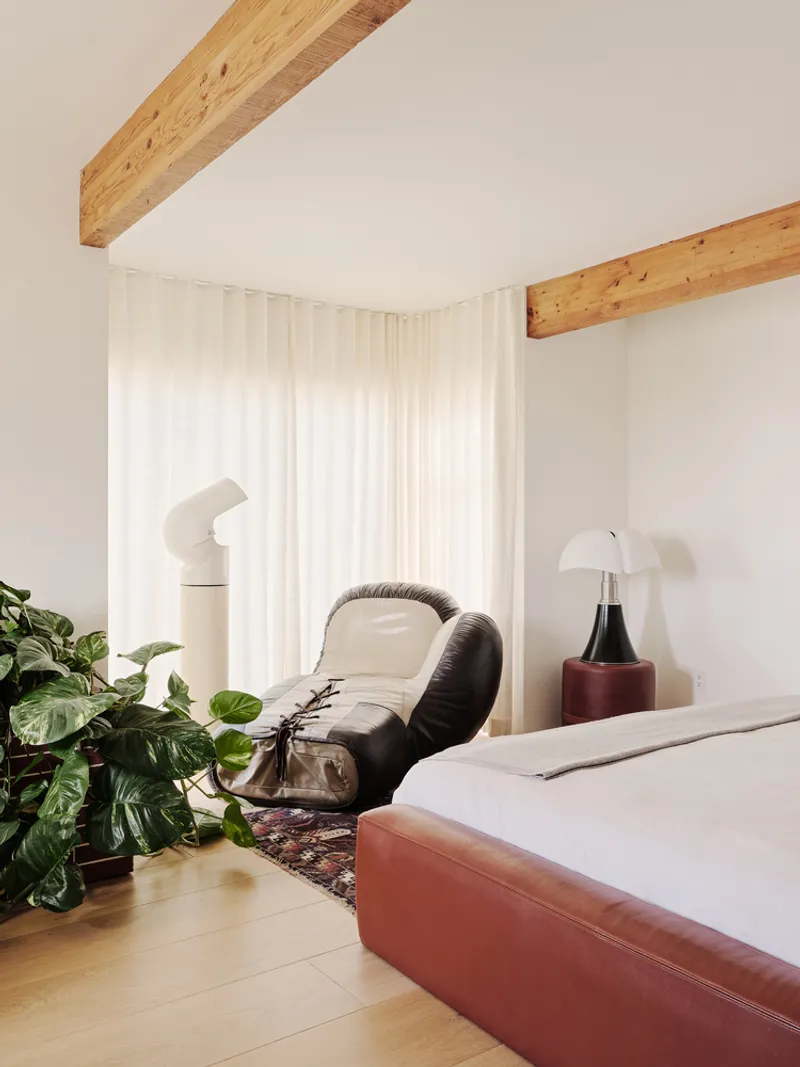
Unique Bedrooms and Bathrooms
The guest bedroom features textured hemp plaster walls and ceilings, paired with custom tiled furniture, reflecting Italian modernism. The primary bathroom incorporates Venetian plaster on walls, ceilings, and floors, providing a serene, spa-like atmosphere.
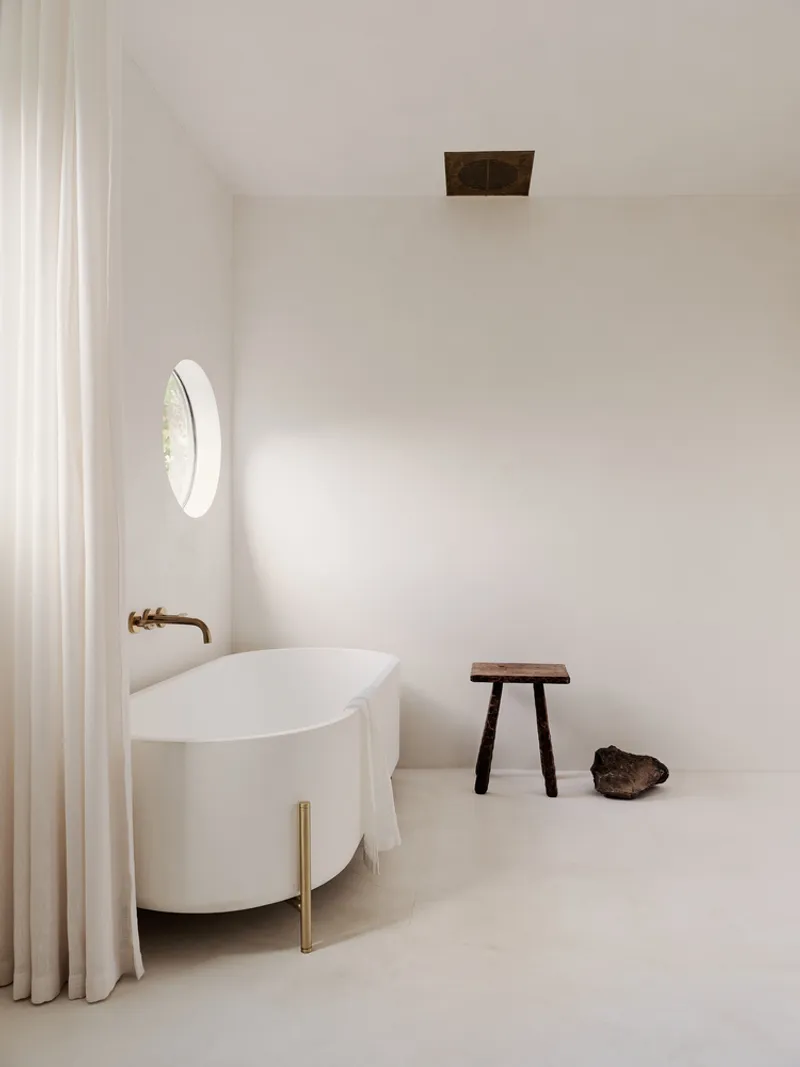
Exterior Design – Contemporary Materials Meet Historic Charm
On the exterior, the house was updated with charcoal-stained cedar siding and a copper standing-seam roof, accentuating the new volume that houses the main stair and entrance. These materials create a timeless yet modern aesthetic that complements the home’s natural and serene landscape setting.
All Photographs are works of Joe Fletcher Photography


Popular Articles
Popular articles from the community


David Macias Steps a Doorless Stone and Plaster House Down a Tropical Colombian Hillside
In the humid hills of Colombia, Threshold House replaces the front door with an open void and terraces its 850 m² down the slope instead of fighting it.

longwave studio Reorganizes a 112 m² Tainan Apartment Around the Daily Routines of a Family and Two Cats
In Tainan, Taiwan, birch plywood, rust-red furniture and a freestanding plaster wall link arrival, storage, work and family life in one apartment.

Jaramillo Van Sluys Arquitectura and Urbanismo Turn a Demolished Registry Lot in Quito into an Orchard Plaza
In Quito's Centro Histórico, a 2,800 m² plaza exposes the San Agustín convent wall and redraws its lost Augustinian orchard in volcanic stone.

U.GA Architects Wraps an Oval Rooftop Pool in Curved Board-Formed Concrete on Busan's Jeollidan-gil
In Busan's Jeonpo-dong, a 454 m² mixed-use block stacks a neighborhood facility, guest rooms and an oval rooftop pool inside spiraling concrete walls.

Similar Reads
You might also enjoy these articles


Hodi-Mandai Geram
Project Function: Preservation and revitalization of the Intangible heritage and socio-spatial identity of the Hodi by Housing, Cultural Memory Center, Sacred Grove, landscape, local tourism economy


Olio Towers: A Mid-Rise for Performers That Fuses Housing, Rehearsal, and Stage
Located blocks from Houston's Theater District, this modular tower stacks living units around a central performance atrium.

Oasis: Modular Green Housing Carved into Dhaka's Urban Fabric
A shortlisted Plugin Housing entry reclaims unauthorized settlements in Dhaka with stepped concrete volumes, green roofs, and ventilation-driven design.

Black Hole: A Floating Megastructure for the Post-Physical Era
Emiliano Mazzarotto envisions a spherical, self-scaling arena where e-sports, digital hotels, and holographic stadiums replace traditional public space.

Explore Housing Competitions
Discover active competitions in this discipline

Challenge to reimagine the Iron Throne

Photograph architecture without architects

Illustrate the lost glory of Angkor Wat - Render Challenge

Design challenge to reuse E-waste
Comments (0)
Please login or sign up to add comments
No comments yet. Be the first to comment!