
Zaha Hadid Architects Layers a Second Skin Inside a Roman Palazzo to Create Hotel Romeo Roma
A 16th-century palazzo on Via di Ripetta becomes a 74-room hotel where fluid vaults conceal modern infrastructure within centimeters.


Palazzo Capponi sits on Via di Ripetta, one of the three streets of Rome's Sistine Trident radiating from Piazza del Popolo. Acquired in 1615 by the Florentine Capponi family, the building accumulated layers of Renaissance, Baroque, and 18th-century architecture before Italy's INAIL occupied it as an administrative headquarters from 1951, adding two utilitarian wings and burying 17th-century frescoes under bureaucratic renovations. When the Romeo hotel group purchased the palazzo in 2012, the question was not simply how to restore a historic building but how to inhabit one that could not, by law, be structurally altered. Zaha Hadid Architects answered with an idea as simple as it is technically extreme: a second skin, a few centimeters thick, inserted between the protected walls and the new interiors, creating a cavity that hides every cable, duct, and pipe a modern luxury hotel requires.
What makes Hotel Romeo Roma genuinely compelling is the way that constraint became a design generator. Because ZHA could not touch the original masonry, every interior surface is essentially freestanding. The vaulted ceilings that define the guest rooms and public spaces are non-load-bearing membranes, reinterpretations of the groin vaults found across Roman architecture from antiquity through the Baroque. Where columns don't square or walls meet at irregular angles, those vaults distort, producing the kind of fluid, unexpected geometries that read as pure Hadid but originate in the imperfect reality of a 500-year-old building. The result is a hotel where the architecture is not applied on top of history but grown from its literal dimensions.
The Palazzo on Via di Ripetta
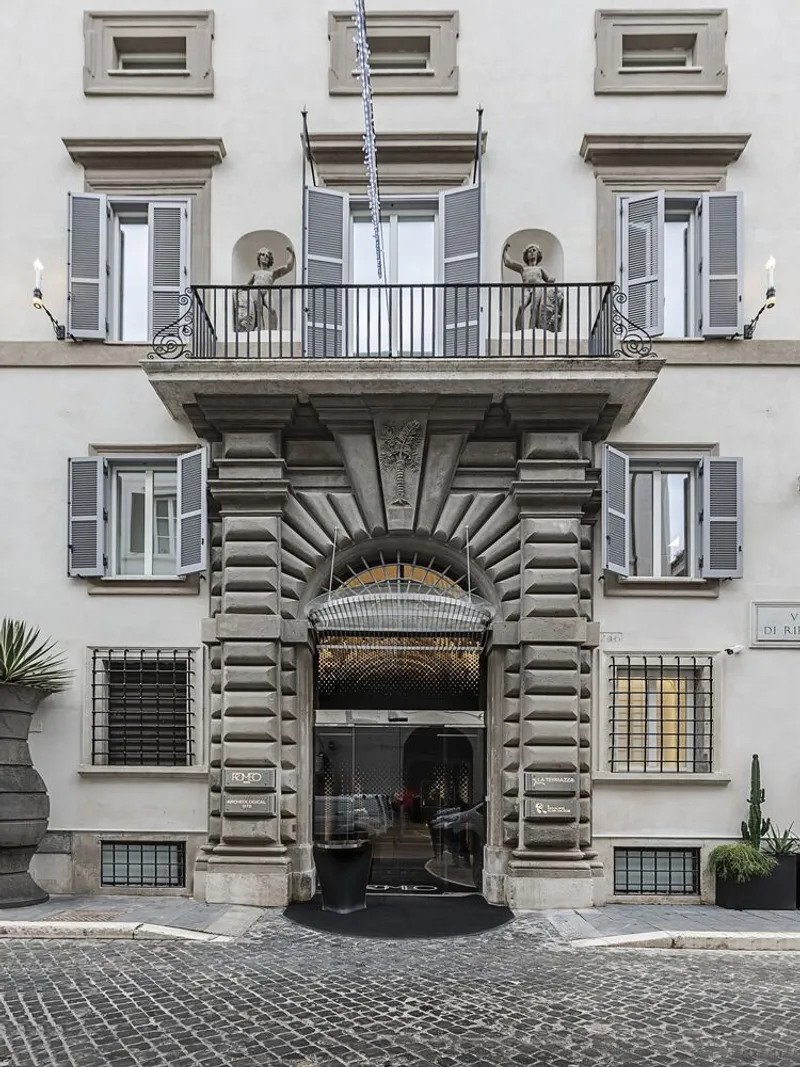
From the street, Hotel Romeo Roma barely announces itself. The rusticated stone portal and symmetrical shuttered windows of the original facade remain intact, offering no hint of the transformation within. The building is actually three structures merged over time: the core 16th-century palazzo and the two wings INAIL added in the 1950s, each with different proportions and floor heights. ZHA's design had to reconcile these mismatches, and much of the project's ingenuity lies in how it smooths those seams.
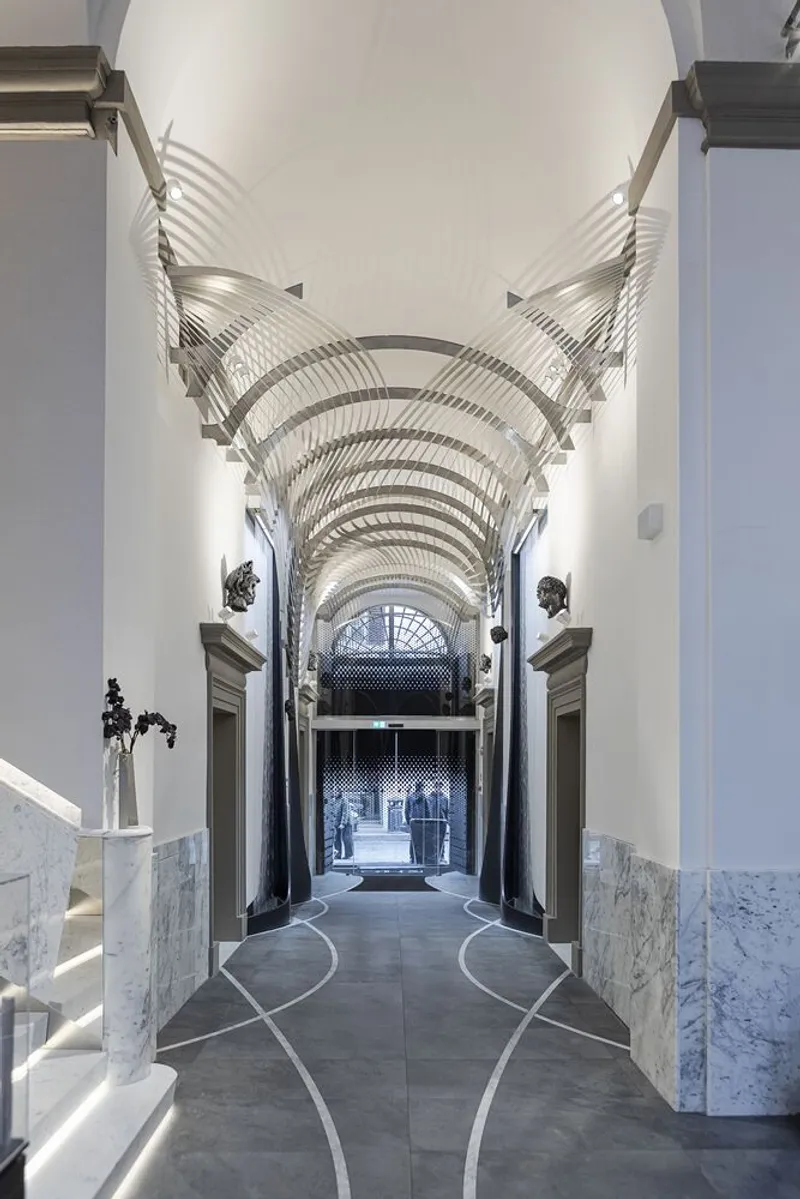
Step past the entrance and the vaulted corridor signals the shift. Layered metal ribs line the ceiling, their rhythmic spacing reminiscent of barrel vaults but rendered in a contemporary metallic finish. Grey lava stone flooring anchors the procession from reception toward the former courtyard, now enclosed by a retractable glass roof. ZHA re-established a processional sequence from entry to guest room that recalls the spatial choreography of Rome's historic palaces, turning circulation itself into a design event.
Dining Under Sculptural Vaults
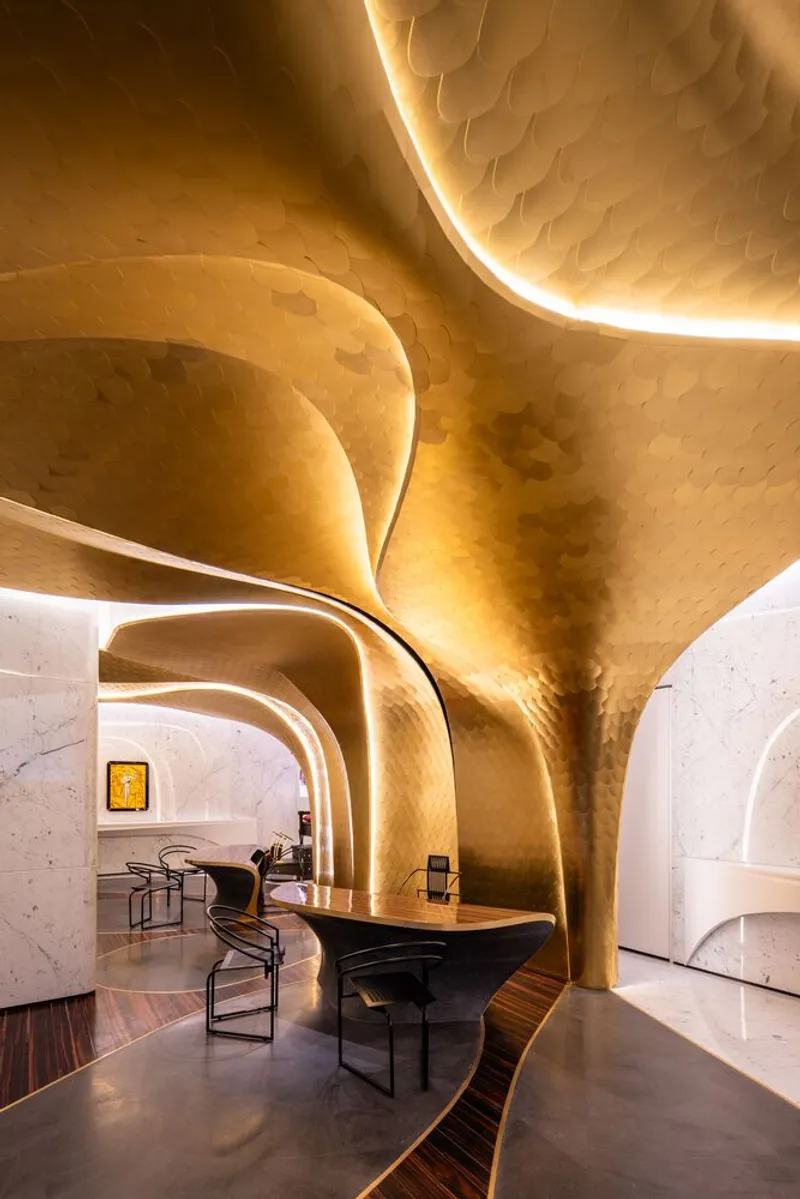
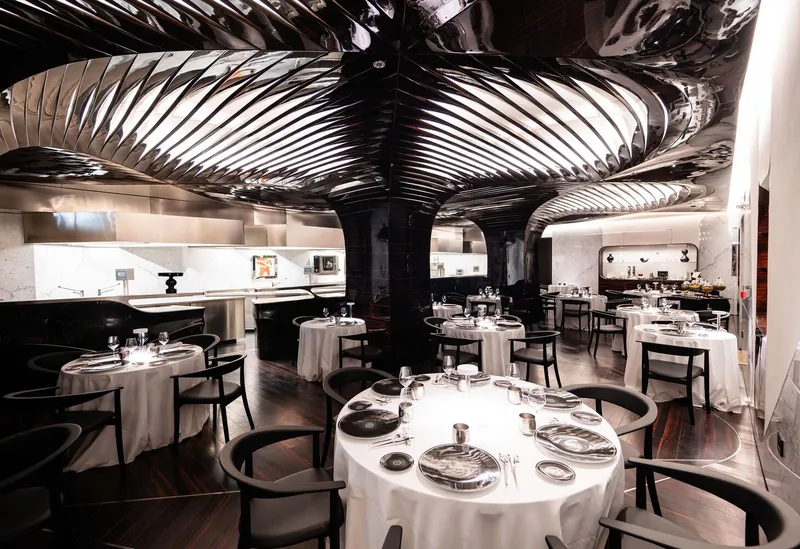
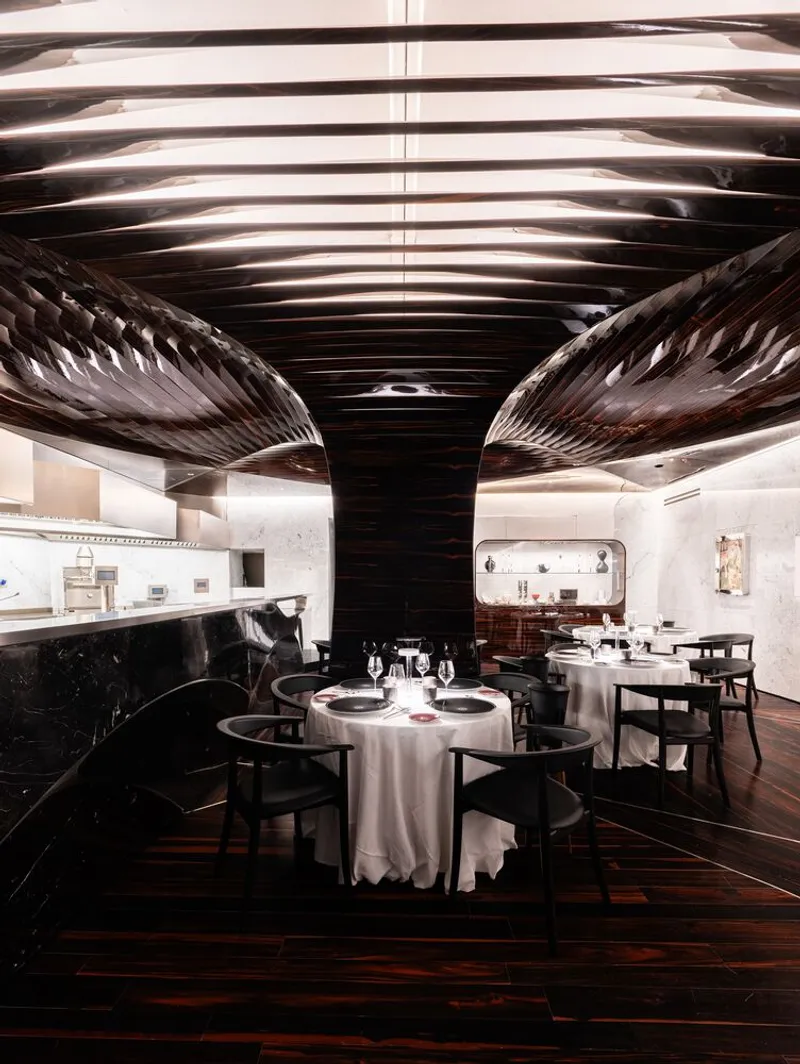
The hotel's dining spaces are where ZHA's vault reinterpretations reach their most expressive pitch. In one room, a sculpted gold ceiling branches overhead like the ribs of a living organism, its forms integrated with concealed lighting that washes the tables below. In another, ribbed metallic panels arc from wall to wall, their curves tightening around a central column wrapped in dark material. The effect is cathedral-like in scale but intimate in atmosphere.
These ceilings are not structural. They are free-form membranes suspended within the shell of the palazzo, their geometry generated by the intersection of barrel vaults at irregular angles. ZHA took inspiration from two millennia of Roman masonry vaulting and deliberately pushed those intersections into unexpected territory: one vault meeting another at an angle that no Baroque architect would have attempted, producing moments of spatial wonder precisely because they feel both familiar and impossible.
The Fresco Suites and Historic Layers
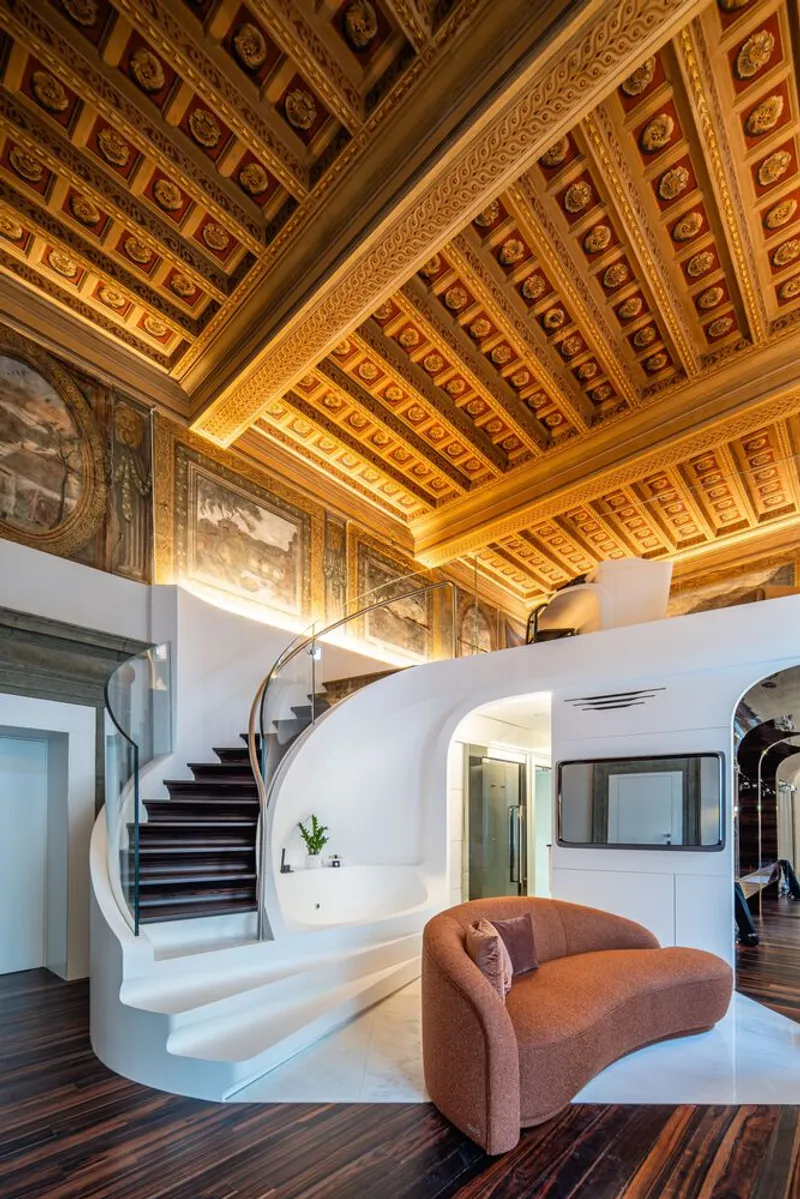
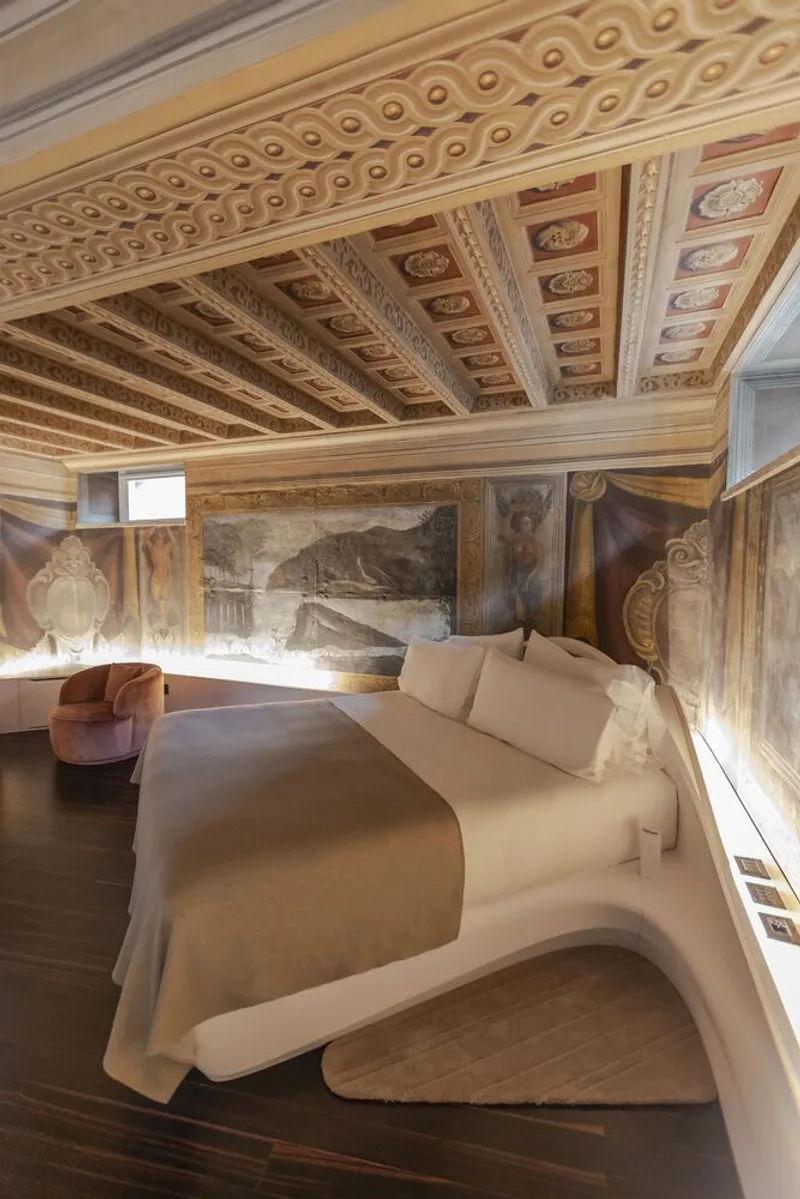
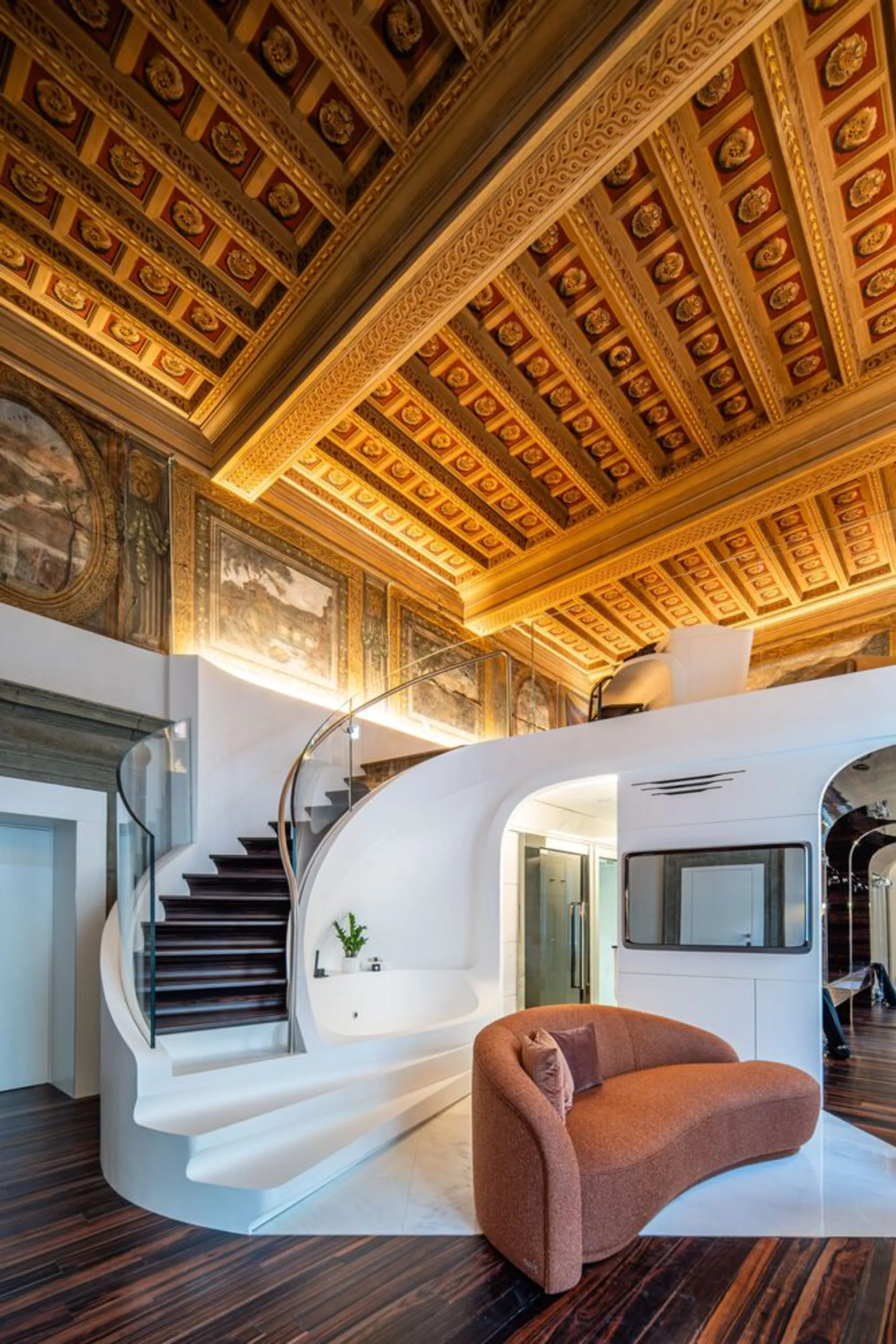
The two-level Fresco Suites are the project's most emotionally charged spaces. During the INAIL occupation, 17th-century frescoes were removed from their original positions, placed in wall frames, and overpainted, effectively hiding them in plain sight. ZHA's restoration team, working under the supervision of Italy's Soprintendenza, painstakingly stripped back those later layers to reveal the original painted canvases. Now, ornate coffered ceilings with gilded details preside over guest rooms that sit somewhere between a Baroque salon and a contemporary sculpture gallery.
The juxtaposition is deliberate and potent. A sculpted bed platform in smooth white Krion rises beneath a ceiling dense with 400-year-old craftsmanship. A curved white staircase ascends through the suite, its fluid geometry playing counterpoint to the rectilinear framing of the frescoes above. The living areas include bespoke fireplaces and balconies overlooking Piazza del Popolo. Bathrooms feature freestanding tubs and integrated steam rooms. Nothing about this is subtle, but the restraint lies in how the new elements refuse to compete with the historic surfaces, choosing instead to orbit them.
The Guest Room Language: Wood, Curve, No Right Angles
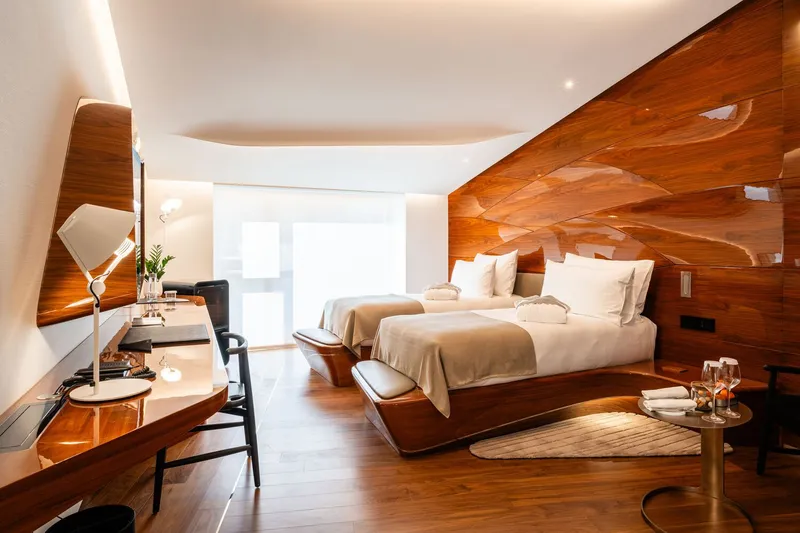
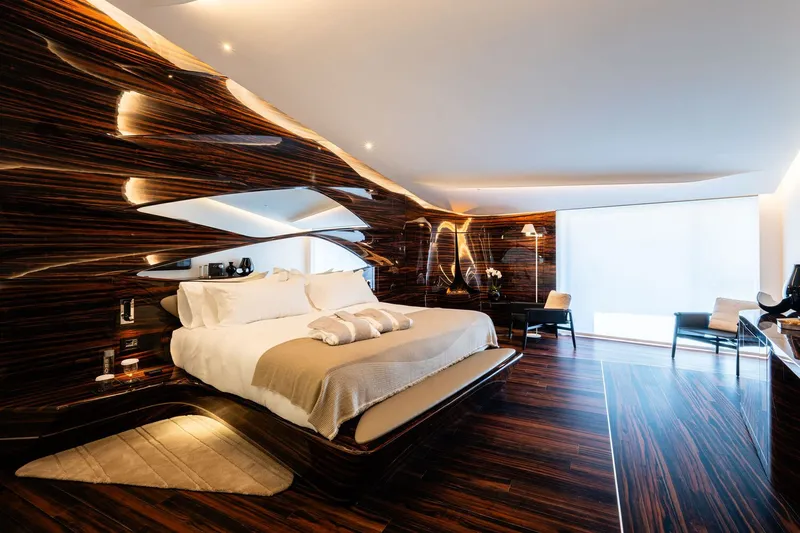
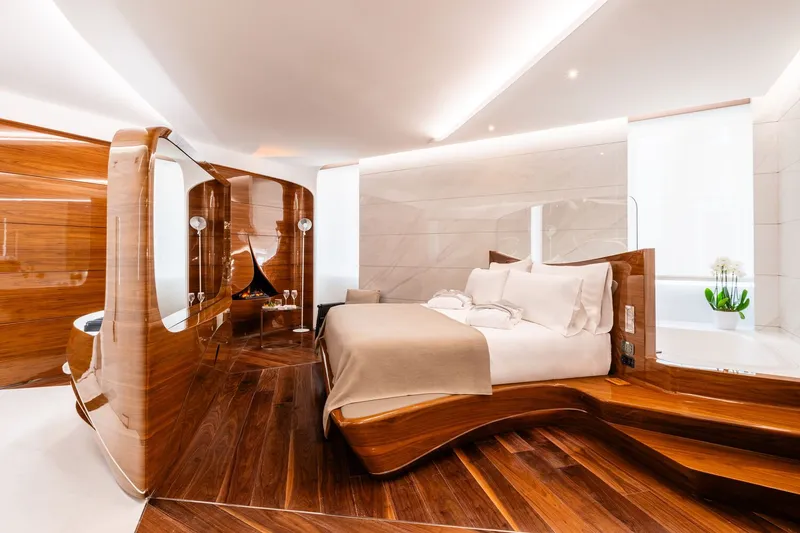
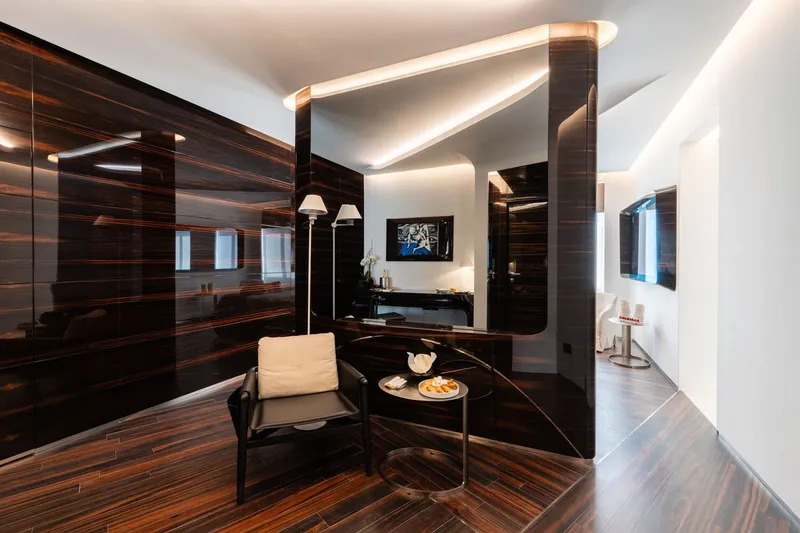
Beyond the Fresco Suites, the hotel's 74 rooms develop a consistent interior language built from striped wood grain, cove lighting, and curved partitions. Walls of lacquered American walnut and Makassar ebony flow into ceilings without interruption, creating enveloping enclosures deliberately devoid of any right angle. Floating white ceiling planes hover above platform beds, their edges backlit to dissolve the boundary between surface and air.
The material palette is precise. Carrara Statuarietto and Nero Marquina marble appear at thresholds and in bathrooms, while cedar and chestnut wood add warmth in sleeping areas. These choices serve a dual purpose: the wood and stone enhance acoustics and naturally moderate room temperature, functioning as passive climate elements as well as finishes. Every surface is part of the second skin, that thin membrane separating the guest from the untouched historic walls just centimeters behind.
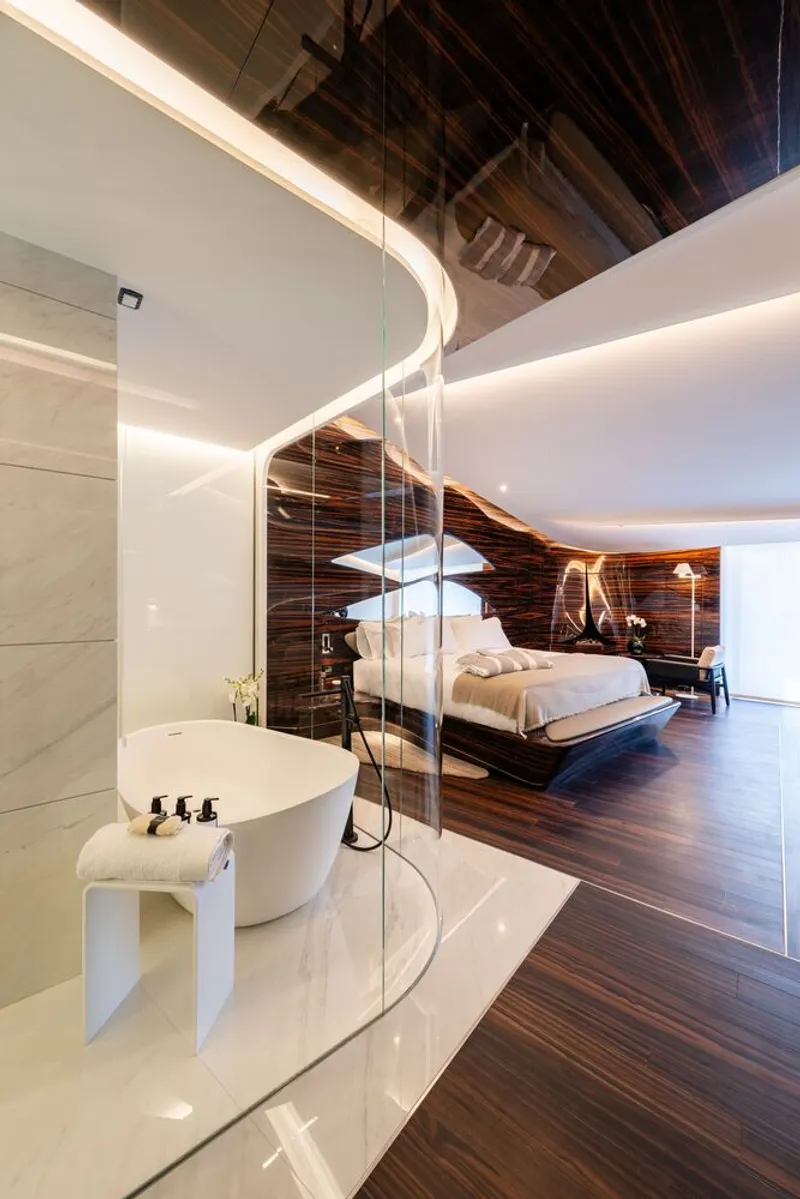
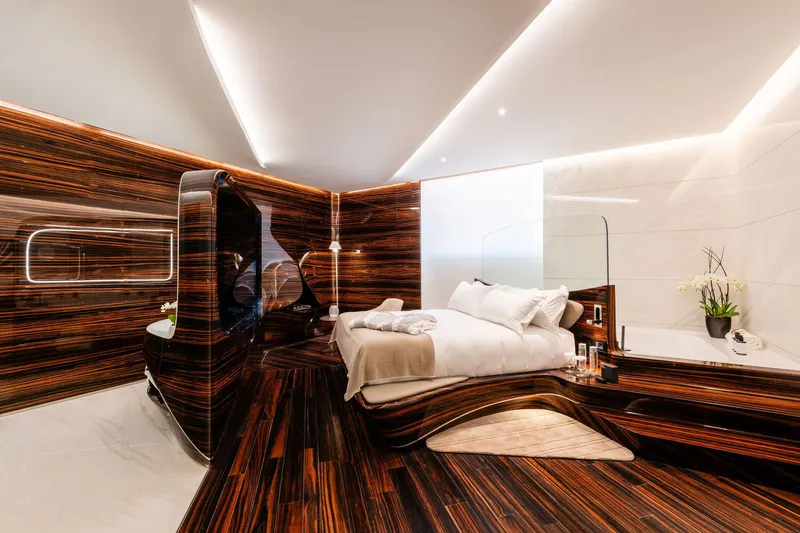
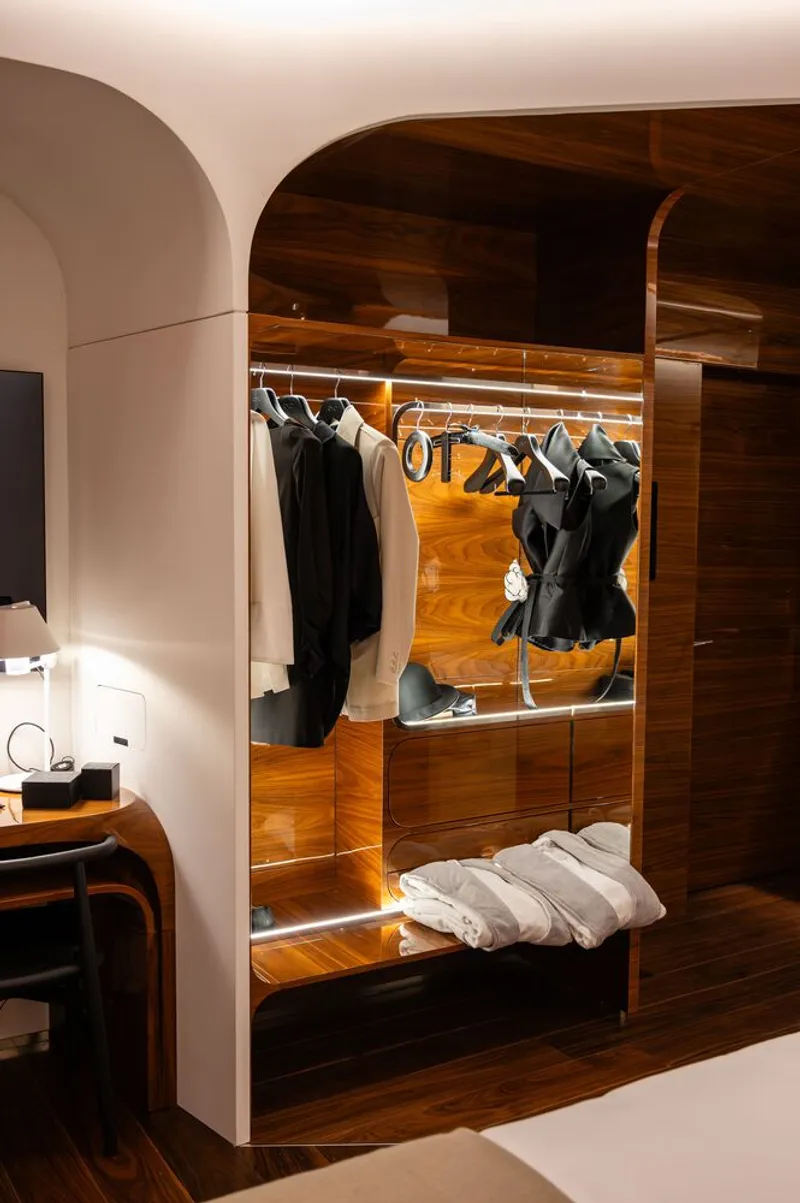
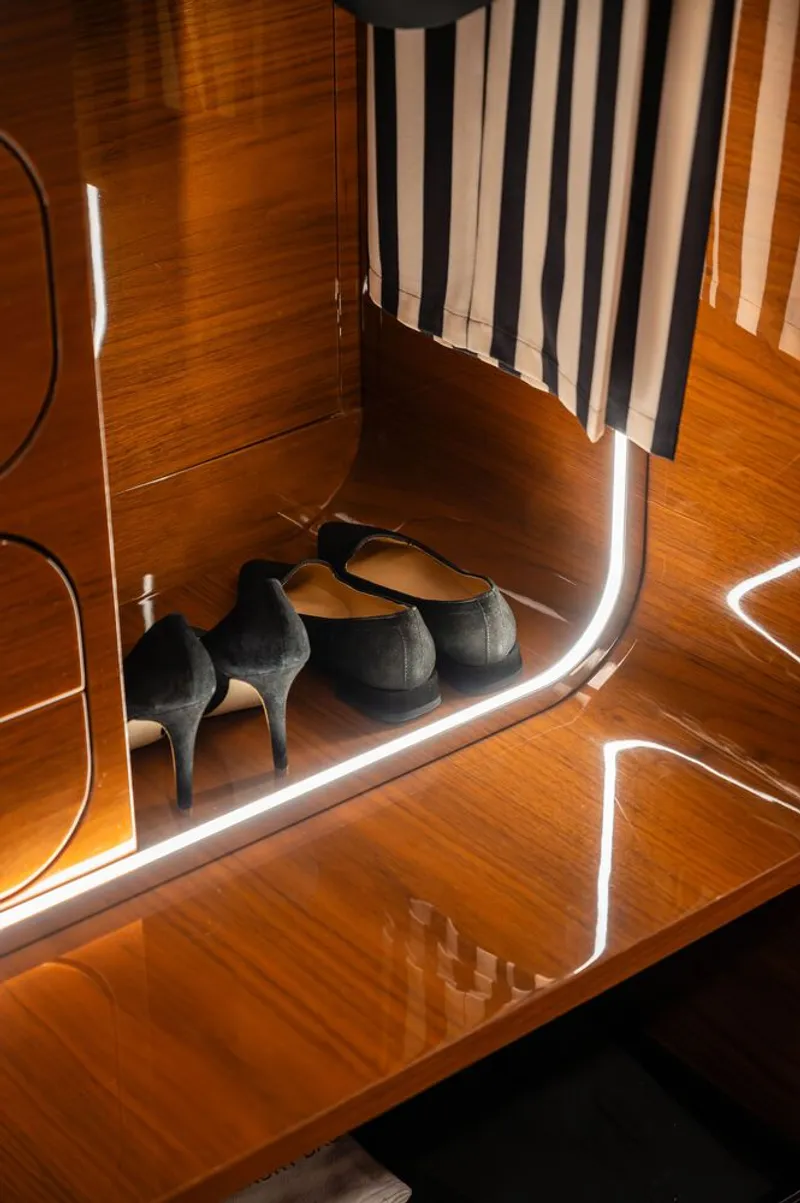
Curved glass partitions separate bathing areas from sleeping zones, allowing light to pass through while maintaining visual softness. Built-in wardrobes are carved into arched niches lined with the same striped wood cladding, their openings shaped by the vault geometries overhead. The detailing is obsessive. Every joint, every transition from wall to ceiling, follows a logic of continuous curvature that transforms a standard hotel room into something closer to the interior of a polished instrument.
Bathrooms and Spa: Tadelakt, Salt, and Lava Stone
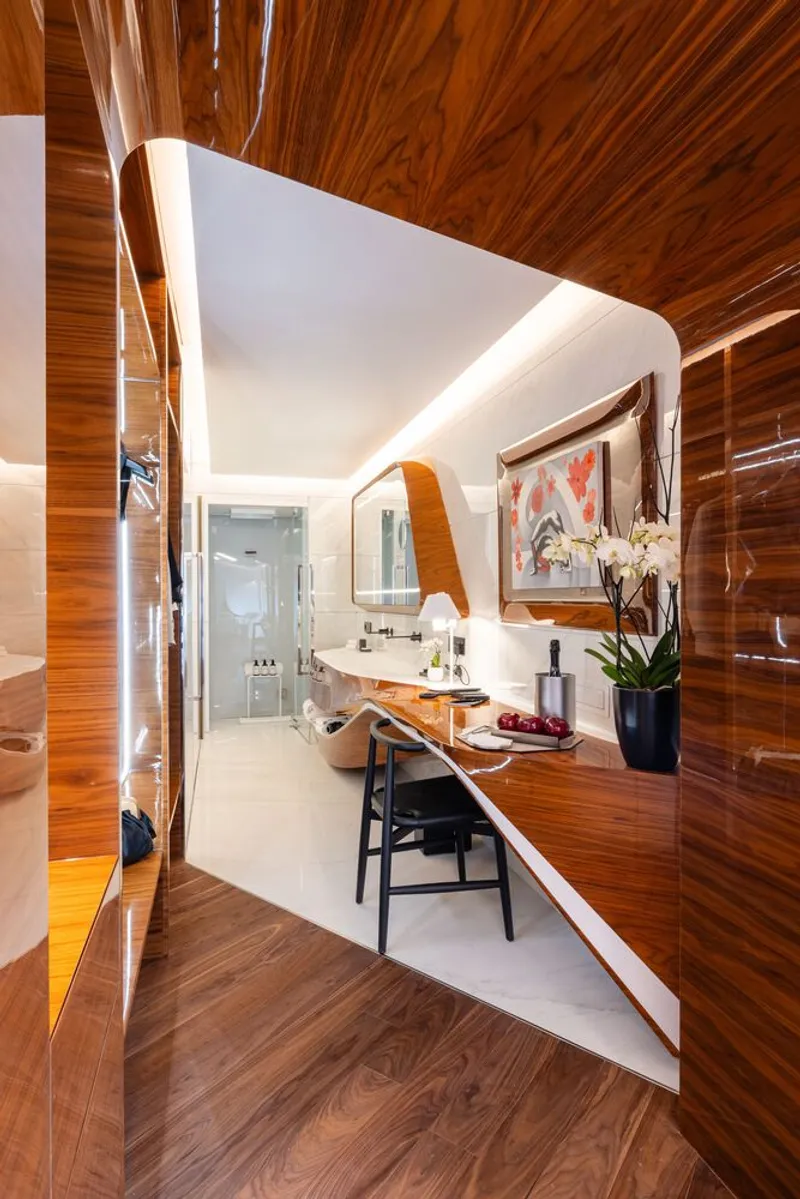
The bathrooms extend the wood-clad enclosure with vanity areas framed by indirect lighting along every edge, creating the impression that the room is carved from a single block of timber. Makassar ebony and walnut wrap the walls, while stone surfaces at the basin provide tactile contrast. The spa spaces below employ Sicilian rock salt and tadelakt, an ancient Moroccan lime-based wall treatment, adding sensory textures that go beyond the visual.
These material choices are not arbitrary exoticism. Tadelakt is naturally waterproof and breathable, ideal for steam-heavy environments. Lava stone, used throughout the floors, is similarly hard-wearing and thermally stable. The result is a spa built from materials chosen for their physical properties as much as their aesthetic ones, a rare alignment in luxury hospitality where decoration frequently overrules performance.
Archaeology Below: The Opus Reticulatum Gallery
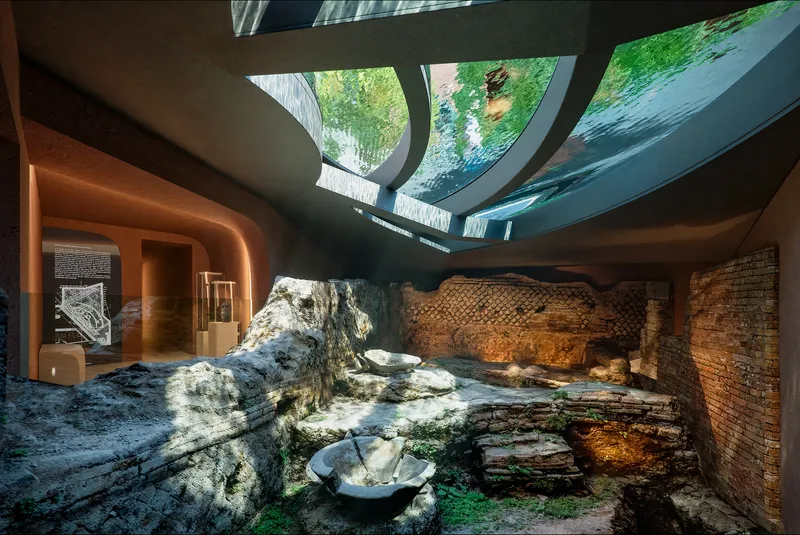
During early excavations to create the hotel's garden, workers struck a Roman wall, halting construction and triggering archaeological surveys under the Soprintendenza's supervision. What emerged was a previously undocumented bottega, a workshop featuring opus reticulatum, the diamond-shaped stone masonry characteristic of ancient Roman construction, dating back roughly 2,000 years. Rather than sealing the find, ZHA carved a 90-square-meter gallery approximately four meters beneath the garden.
The hotel's swimming pool sits directly above this gallery, its glazed ceiling doubling as a glass floor through which swimmers can look down at the excavated ruins. Brick walls and stone foundations are displayed under the skylight alongside carefully maintained plantings that recall the four-quadrant geometry of classical Italian gardens. It is a startling spatial section: contemporary leisure directly above ancient labor, separated by a pane of glass and twenty centuries.
Public Spaces and Fitness
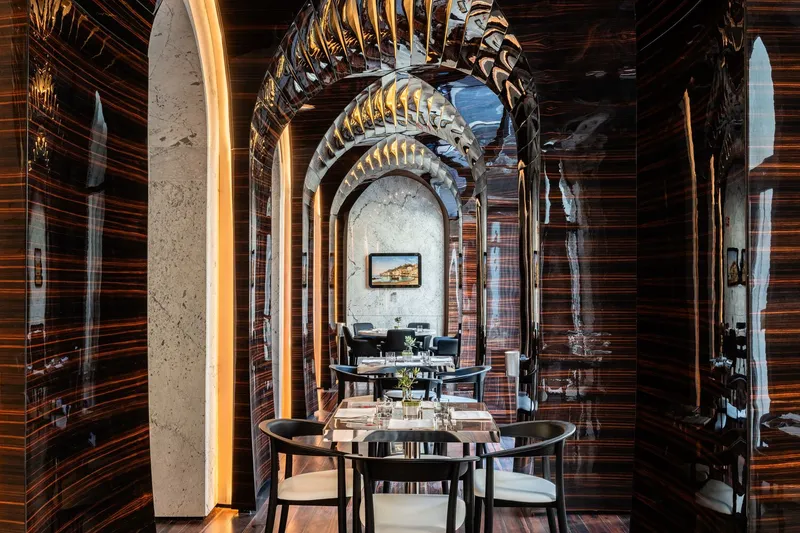
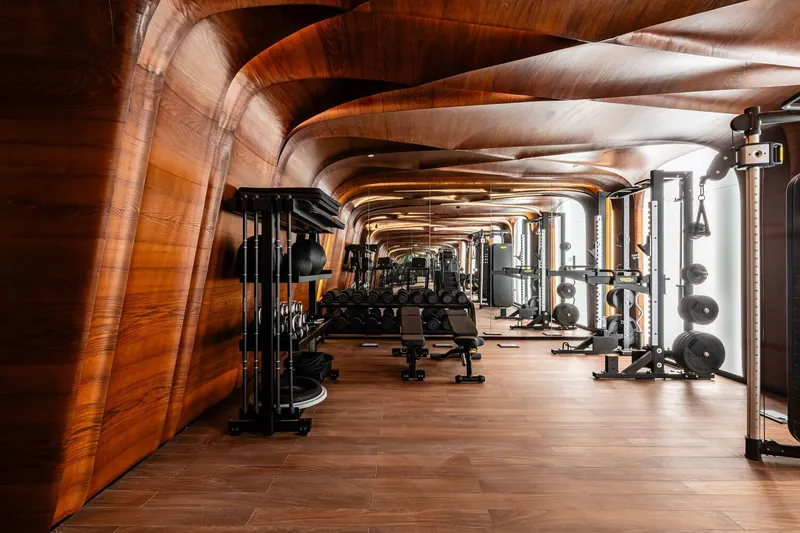
The dining room at ground level features striped wood paneling and backlit concrete columns that frame arched openings, a move that recalls the palazzo's original arcade while rendering it in a thoroughly contemporary vocabulary. The fitness room takes the undulating wood-clad language of the guest rooms and amplifies it, wrapping walls and ceiling in a continuous wave of timber over exercise equipment. Even in utilitarian spaces, the commitment to the vault-and-curve vocabulary never wavers.
Why This Project Matters
Hotel Romeo Roma is, at its core, a project about the intelligence of constraint. The listed status of Palazzo Capponi meant that ZHA could not bolt a bracket into a wall or run a conduit through a vault. Every system had to be concealed within a self-supporting interior shell only centimeters thick. That limitation forced a level of precision that most new-build hotels never demand, and it produced a spatial richness that could not have been designed in the abstract. The irregular geometries of the vaults, the moments where two barrel forms collide at unexpected angles, are direct consequences of the palazzo's imperfections. The architecture is responsive, not imposed.
The project also demonstrates that heritage preservation and radical contemporary design are not opposing forces. The 17th-century frescoes coexist with fluid Krion surfaces. A 2,000-year-old Roman workshop becomes a visual amenity beneath a swimming pool. ZHA treated Rome's layered history not as something to preserve behind glass but as active material, extending the city's tradition of building on top of what came before. That palimpsest approach, starting where the Baroque builders stopped and continuing forward, is arguably the most Roman thing about the entire hotel.
Hotel Romeo Roma, designed by Zaha Hadid Architects. Located in Palazzo Capponi, Via di Ripetta, Rome, Italy. 74 rooms and suites. Photography by Chris Dalton and Jacopo Spilimbergo.
About the Studio
Share Your Own Work on uni.xyz
If projects like this are the kind of work you want to make, uni.xyz is a place to publish your own, find collaborators, and enter design competitions.


Popular Articles
Popular articles from the community


The Musturak Paradise: Senior Living Architecture for a Connected Future in Temara, Morocco
The Musturak Paradise reimagines senior living architecture in Temara via private homes, social spaces, culture, community, and shared care.

Riyadh For All: Intergenerational Urban Design for Active Aging in Rabat
Riyadh For All reimagines urban design in Rabat with intergenerational co-living, adaptive courtyards, and Moroccan cultural exchange today.

Hill & Cross Opera: Sculptural Opera House Architecture Shaped by Tallinn’s Landscape and Identity
Hill & Cross Opera reimagines opera house architecture in Tallinn through its sculptural hill, civic plaza, glass wave and a luminous cross.

Conexión: Biophilic Design Reimagines High-Rise Living in Hong Kong
Conexión reimagines high-rise living in Hong Kong through biophilic design, green facades, shared spaces, daylight, water and nature within.


Similar Reads
You might also enjoy these articles


Hodi-Mandai Geram
Project Function: Preservation and revitalization of the Intangible heritage and socio-spatial identity of the Hodi by Housing, Cultural Memory Center, Sacred Grove, landscape, local tourism economy


Olio Towers: A Mid-Rise for Performers That Fuses Housing, Rehearsal, and Stage
Located blocks from Houston's Theater District, this modular tower stacks living units around a central performance atrium.

Oasis: Modular Green Housing Carved into Dhaka's Urban Fabric
A shortlisted Plugin Housing entry reclaims unauthorized settlements in Dhaka with stepped concrete volumes, green roofs, and ventilation-driven design.

Black Hole: A Floating Megastructure for the Post-Physical Era
Emiliano Mazzarotto envisions a spherical, self-scaling arena where e-sports, digital hotels, and holographic stadiums replace traditional public space.

Explore Hospitality Building Competitions
Discover active competitions in this discipline



Challenge to reimagine the Iron Throne


Photograph architecture without architects


Illustrate the lost glory of Angkor Wat - Render Challenge


Design challenge to reuse E-waste
Comments (0)
Please login or sign up to add comments
No comments yet. Be the first to comment!