

Hotel Rumour by Studio Modijefsky – A Historic Carriage House Transformed into a Vibrant Social Destination in Leiden
A historic Leiden carriage house transformed into a vibrant social hub with bespoke interiors, artful lighting, hidden lounges, and playful hospitality design.


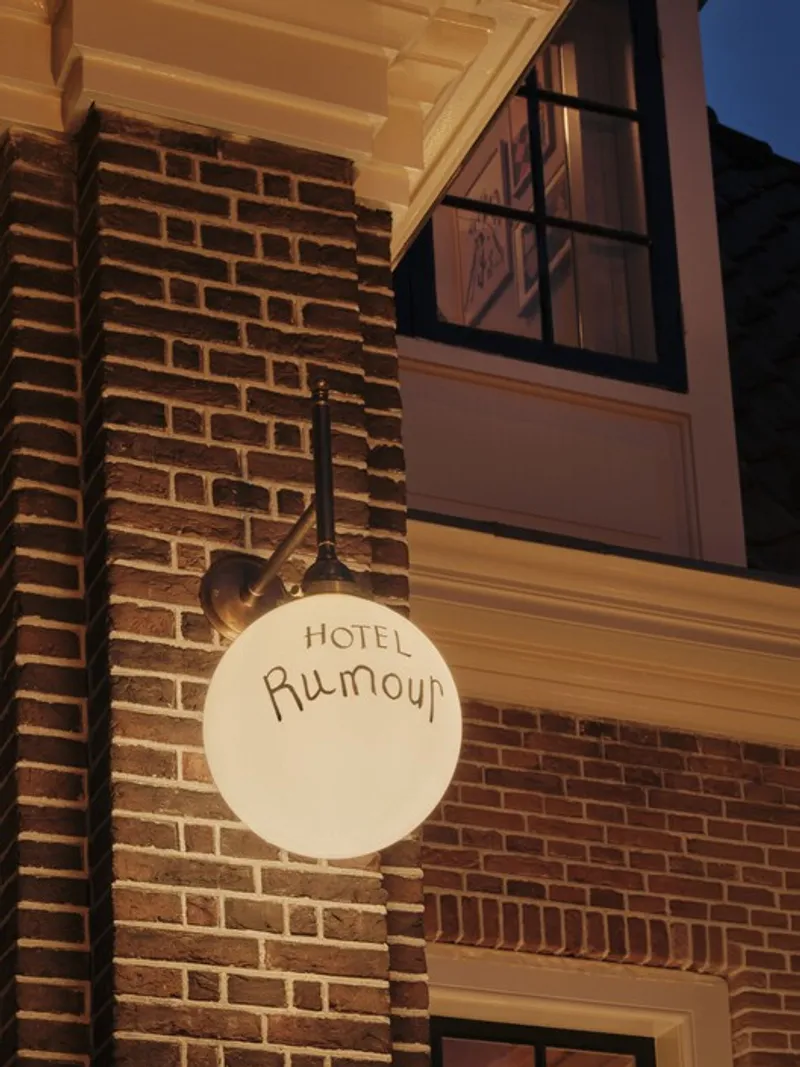
Hotel Rumour by Studio Modijefsky is an immersive hospitality concept that redefines the boundaries between dining, lounging, and nightlife. Located just below the ancient Burcht van Leiden castle, this 1657 carriage house has been transformed into a contemporary social hub that celebrates layered history, bold craftsmanship, and atmospheric interior design. Although the space playfully poses as a “hotel,” it offers everything except overnight stays—inviting guests instead to experience dining, cocktails, private gatherings, and dynamic evening events inside an iconic Dutch heritage building.
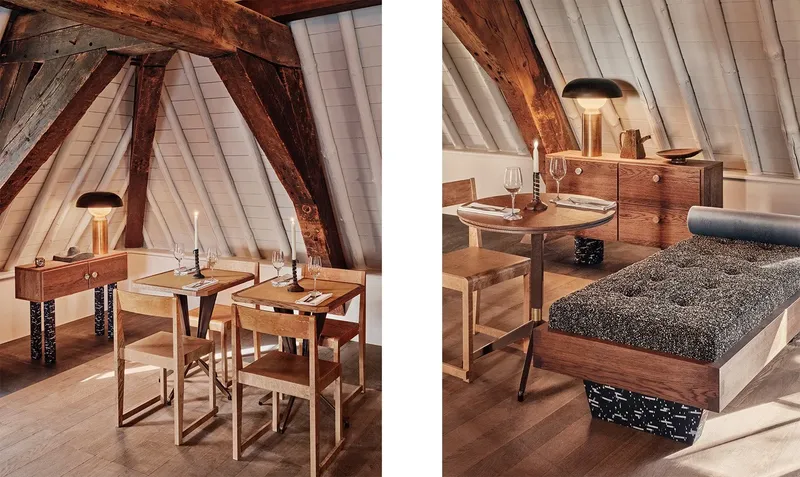
Studio Modijefsky developed the entire creative identity—from the name and branding to interior architecture, furniture design, lighting, material palette, and even the merchandise on display. The result is a theatrical, detail-rich environment where every corner reveals new textures, curated art, and surprising design compositions.
A Concept Rooted in Leiden’s Architectural Heritage
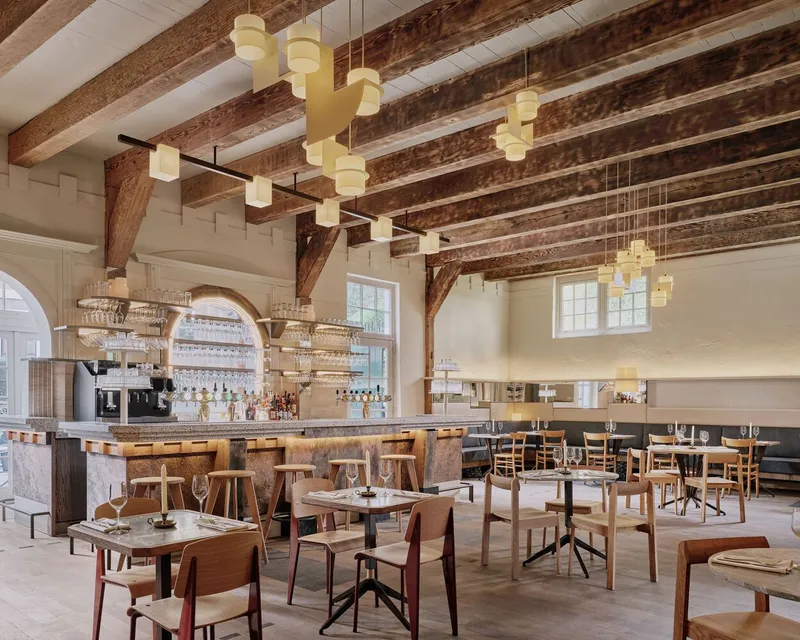
Drawing inspiration from the historic context, the design preserves and enhances original architectural features such as grand arches, soaring ceilings, and exposed wooden beams. These are complemented by layers of contemporary materials, bespoke furniture, sculptural lighting, and handcrafted finishes. Throughout the hotel, Studio Modijefsky introduces playful discoveries—daybeds tucked away in intimate corners, intriguing objects, carefully restored surfaces, and floors that feature decorative patterns reminiscent of the building’s layered past.
The Terrace – A Welcoming Social Threshold
The journey begins at the spacious outdoor terrace, positioned at the base of the hill leading down from the castle. Custom wooden corner benches and a circular seat embracing a central tree create a relaxed brasserie-style atmosphere. Tan parasols, pigeon-blue metal furniture, and warm wooden elements establish a visual language that flows into the interior. Whether for a coffee, lunch, or sunset drink, the terrace sets the tone for the vibrant social experience inside.
Ground Floor – Dining, Drinking, and Dance in a Historic Interior
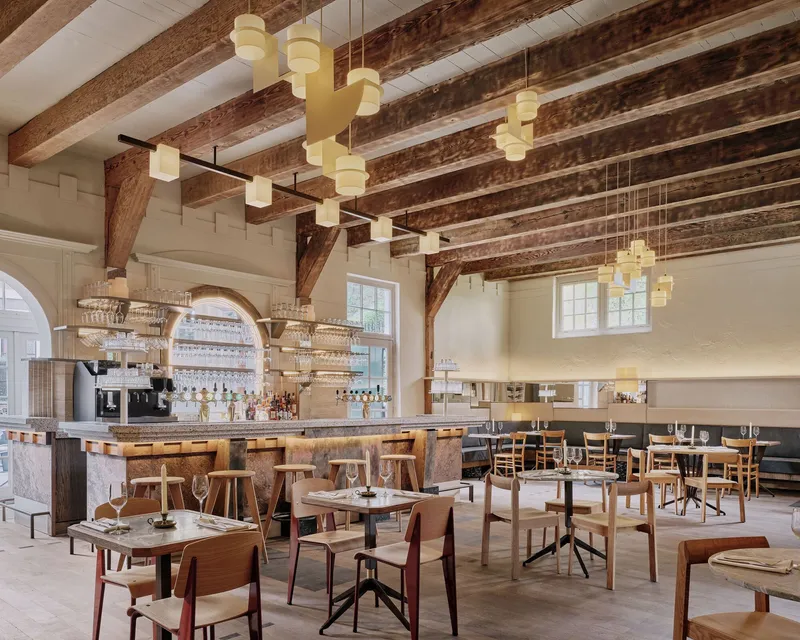
The ground floor is a flexible, atmospheric environment designed for meals, drinks, or late-night gatherings. Guests enter through monumental wooden doors into a vestibule featuring suspended artistic lighting and curated artwork. This artistic thread leads throughout the space alongside custom-designed lamps and sculptural fixtures.
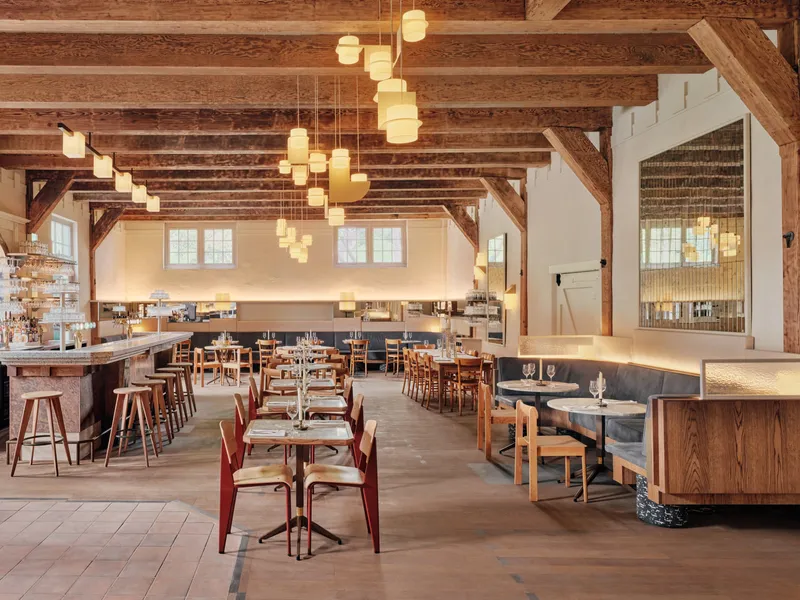
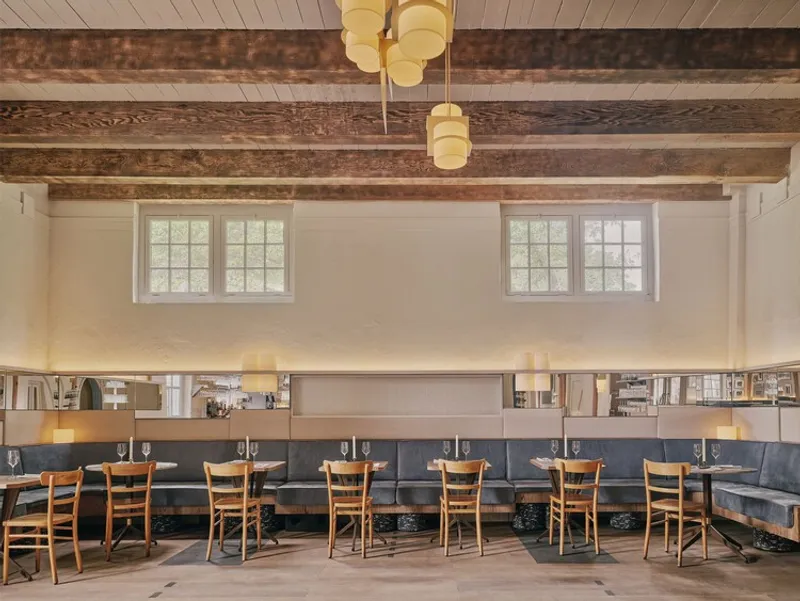
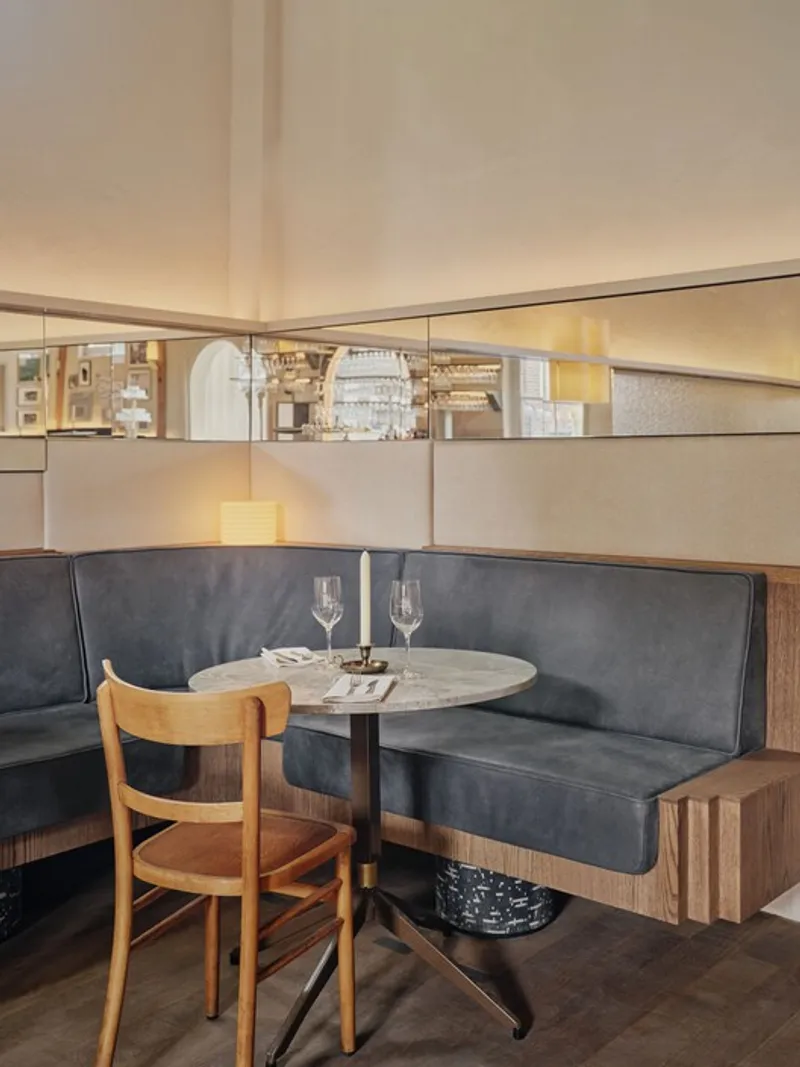
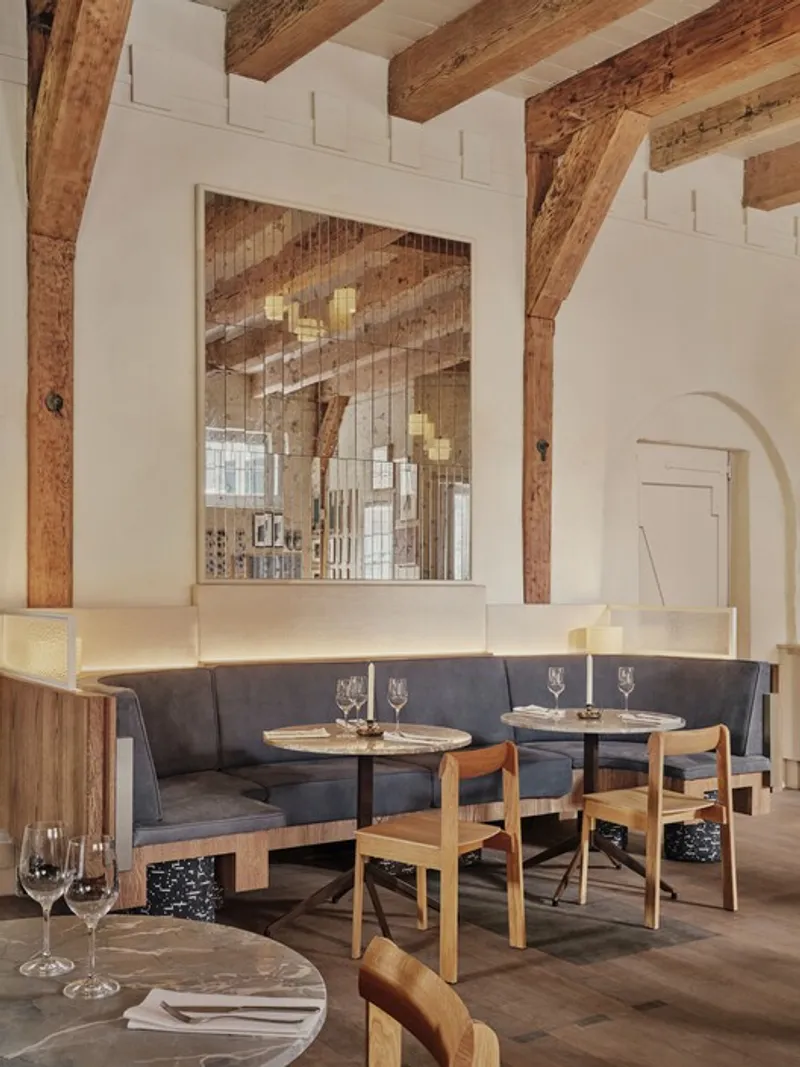
A vintage wine cabinet and patinated mirrors anchor the first zone, setting a refined yet lively mood. The dining area centers around three bespoke wooden benches: one beside the entrance, one facing the bar, and one tucked beneath high windows that frame views back toward the Burcht. Their legs reference the building’s original function as a carriage house, combining craftsmanship with subtle historical storytelling.
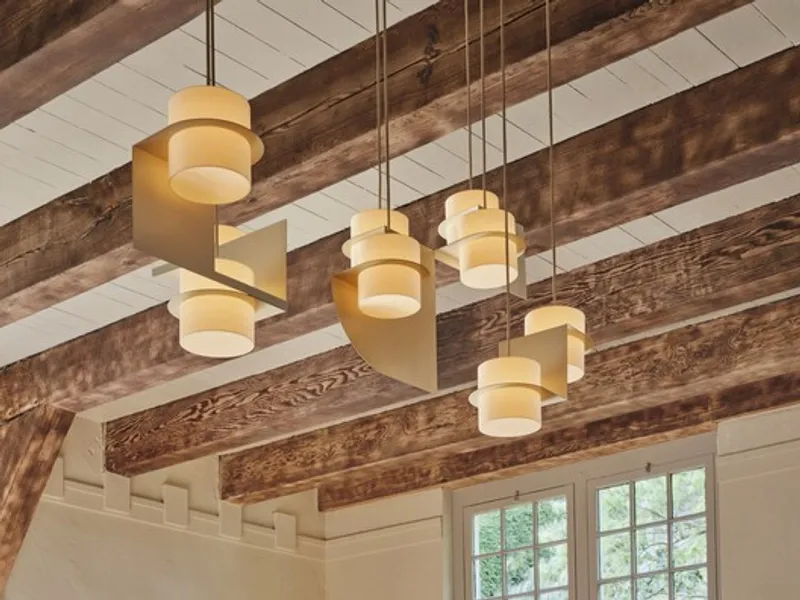
Rich wood, muted blue leather upholstery, and geometric patterns define the seating. Behind them, fabric-and-glass wall panels and custom 3D-printed lighting elements create layered visual depth. The ceiling’s restored wooden beams host a constellation of metal shapes and hanging light cylinders that animate the room with gentle illumination.
Two travertine and wood service stations act as elegant transitions between bar and dining areas, unifying the design language.
A Sculptural Bar as the Heart of the Ground Floor
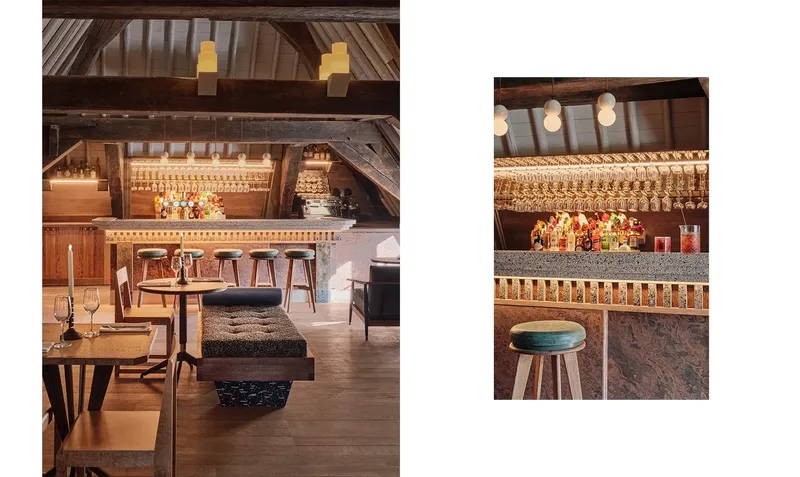
The bar is a striking centerpiece defined by a terrazzo countertop, beveled edges, and a façade of patterned veneer, brass elements, and dark green terrazzo blocks. The back bar features reflective curved metal and arched motifs, amplifying the sense of scale and elegance. Bespoke bar stools with sage green leather seats offer casual seating, while an eclectic mix of tables—including wood and blueish marble tops—adds character and flexibility. Suspended light cubes reference castle battlements, connecting the contemporary interior to its medieval surroundings.
Materiality and Hidden Corners
The ground floor walls are finished in light beige stucco with a soft, organic texture, while warm wooden flooring contrasts with graphic black accents. A concealed gathering space behind the bar extends into the front porch, painted in a deeper hue and arranged with a wall-mounted table and greenhouse-like ambiance—ideal for quiet drinks overlooking the historic square. Custom triangular-based cylindrical lights unify the lighting design across the floor.
Upper Floor – Lounge, Cocktail Bar, and Private Event Spaces
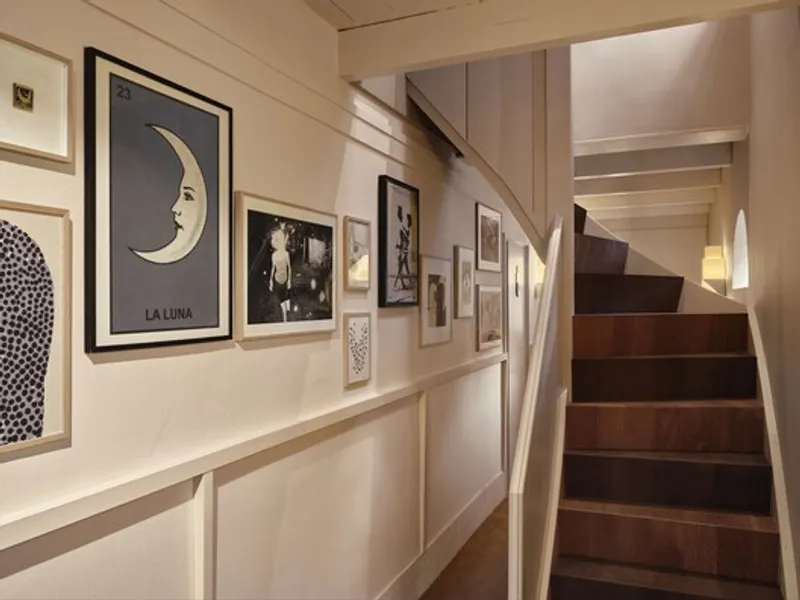
The upper floor of Hotel Rumour features a series of interconnected lounge and cocktail spaces, each defined by expressive materials, moody lighting, and rich textures. Visitors ascend through a blue tiled arch and a graphically patterned staircase, arriving in a velvety lounge perfect for intimate conversations.
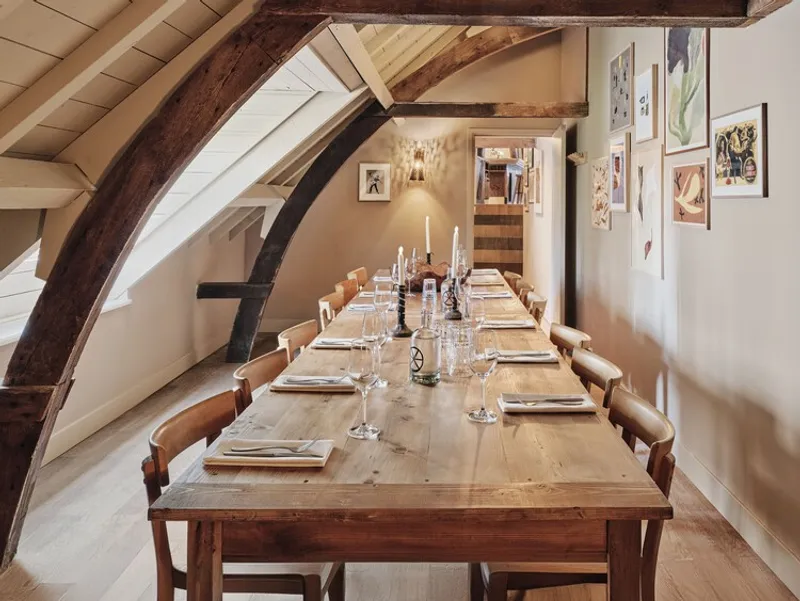
A discreet dining enclave, La Suite Petite, accommodates up to eight guests. It features a sloping roof, private bar, curated art, and a soft pink patterned curtain that enhances privacy and acoustics. This semi-secret room adds a sense of exclusivity to the experience.
Salone Royale – A Grand Attic Lounge
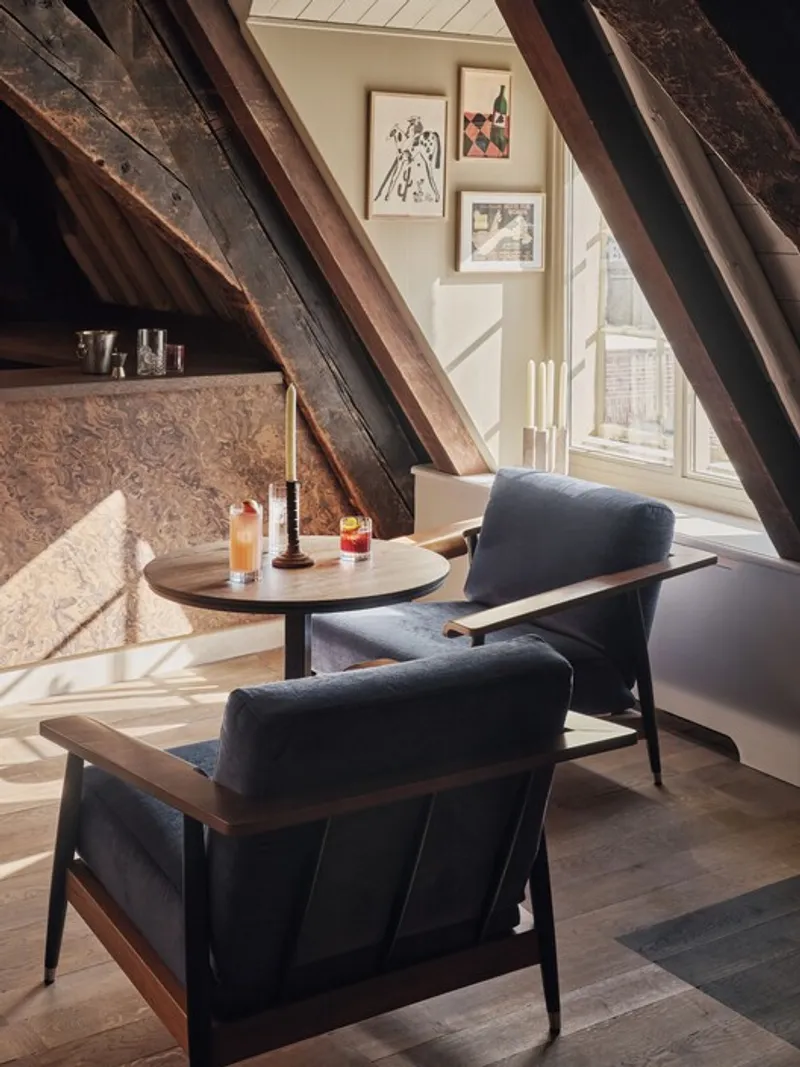
At the top of the building lies Salone Royale, a dramatic attic space designed for large groups. Its gabled roof, tall ceilings, and exposed beams evoke the building’s vernacular Dutch architecture while creating an expansive yet cozy atmosphere. A varied collection of poufs, chairs, daybeds, and tables encourages relaxed socializing.
The cocktail bar in this space echoes the material language of the ground floor, with suspended travertine spheres adding sculptural glow. Mirrored panels along the sloped back bar offer intimate reflections of the bartenders’ work, heightening the theatricality of the room.
A Playful, Immersive, and Historical Hospitality Experience
Hotel Rumour stands as a celebration of Leiden’s architectural history filtered through Studio Modijefsky’s imaginative and contemporary lens. With its rich layering of materials, lighting, art, and hidden details, the project transforms a centuries-old carriage house into a vibrant social destination full of atmosphere and discovery. Each visit uncovers new moments, textures, and stories—making Hotel Rumour not just a venue, but an ever-evolving experience.


Popular Articles
Popular articles from the community


LT2A and OPEN Architectes Thread a Brick and Glass High School Through a Wooded Belgian Campus
In Braine-l'Alleud, a 3,000 m² wing for Collège Cardinal Mercier pairs pale brick with a glazed colonnade, deferring to a small chapel and a dense wood.

U.GA Architects Wraps an Oval Rooftop Pool in Curved Board-Formed Concrete on Busan's Jeollidan-gil
In Busan's Jeonpo-dong, a 454 m² mixed-use block stacks a neighborhood facility, guest rooms and an oval rooftop pool inside spiraling concrete walls.

Cube Design Draws an Ecological Corridor Between Two Shenzhen Hills with the Nankai Building
Beside Shenzhen's container docks, the Nankai Building pairs stacked balconies with a climbing green screen to connect two hillsides across its height.

Juan García Correa, John González and Claudia Rueda Sink a Circular Amphitheater into a Manizales Engineering Building
On the La Nubia campus in Manizales, Colombia, the S1 Building folds labs and offices into a hillside of ramped lawns that double as a campus route.

Similar Reads
You might also enjoy these articles


Hodi-Mandai Geram
Project Function: Preservation and revitalization of the Intangible heritage and socio-spatial identity of the Hodi by Housing, Cultural Memory Center, Sacred Grove, landscape, local tourism economy


Olio Towers: A Mid-Rise for Performers That Fuses Housing, Rehearsal, and Stage
Located blocks from Houston's Theater District, this modular tower stacks living units around a central performance atrium.

Oasis: Modular Green Housing Carved into Dhaka's Urban Fabric
A shortlisted Plugin Housing entry reclaims unauthorized settlements in Dhaka with stepped concrete volumes, green roofs, and ventilation-driven design.

Black Hole: A Floating Megastructure for the Post-Physical Era
Emiliano Mazzarotto envisions a spherical, self-scaling arena where e-sports, digital hotels, and holographic stadiums replace traditional public space.

Explore Architecture Competitions
Discover active competitions in this discipline

Challenge to reimagine the Iron Throne

Photograph architecture without architects

Illustrate the lost glory of Angkor Wat - Render Challenge

Design challenge to reuse E-waste
Comments (0)
Please login or sign up to add comments
No comments yet. Be the first to comment!