

Hotel + Social Community Center by MEII ESTUDIO: Revitalizing a Historic School into a Vibrant Community Landmark
A former 1970s school transformed into a sustainable hotel and social hub with a wooden façade, revitalizing community life and urban identity.


The Hotel + Social Community Center by MEII ESTUDIO in Cartagena, Spain, is a powerful example of how architecture can revive the cultural, social, and environmental heart of a neighborhood. Once a 1970s school building—similar in structure to many institutional buildings of its era—the site had fallen silent after educational activities were relocated. What remained was an empty, deteriorating structure at the core of the community, leaving behind a void in daily life and urban identity.
MEII ESTUDIO, led by architects Elvira Carrión and Jose M. Mateo, approached the challenge with a clear mission: to restore life to the building by transforming it into a hybrid space that unites hospitality, social activity, and community services.
Reactivating a Forgotten Urban Space
The architects reimagined the former school as a Hotel + Social Community Center, a multifunctional project designed to bring together neighborhood associations, municipal services, and visitors from around the region. Instead of letting the site remain an abandoned relic, the design introduces a new social pulse—turning the structure into an urban generator that energizes the surrounding residential fabric throughout the day.
This intervention demonstrates how architecture can go beyond physical renovation to generate social cohesion, cultural activity, and community inclusivity.
A New Architectural Identity with a Wooden “Animal Print” Façade
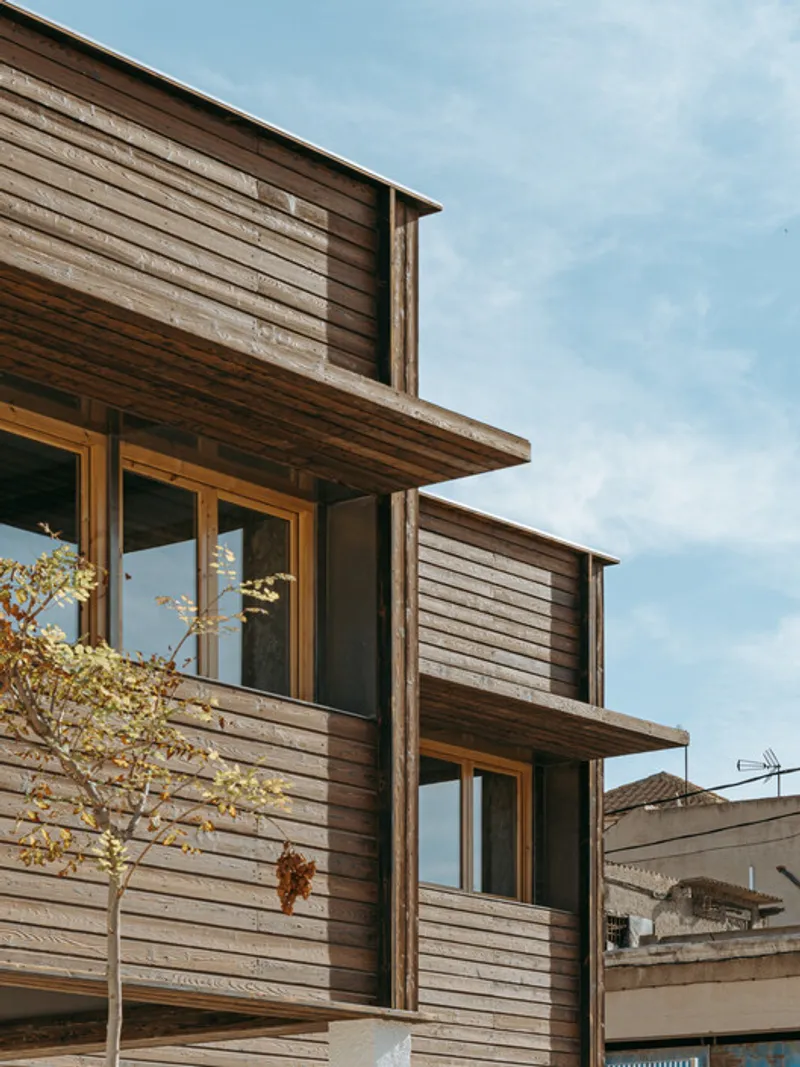
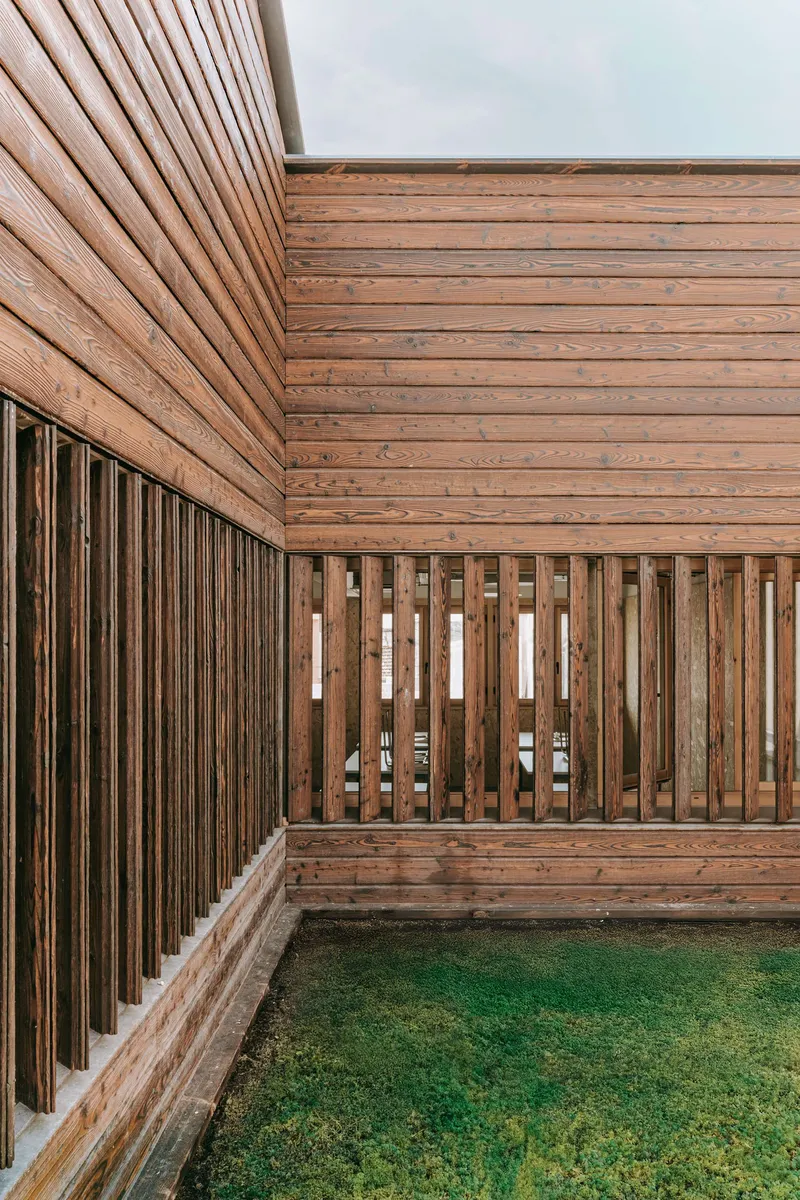
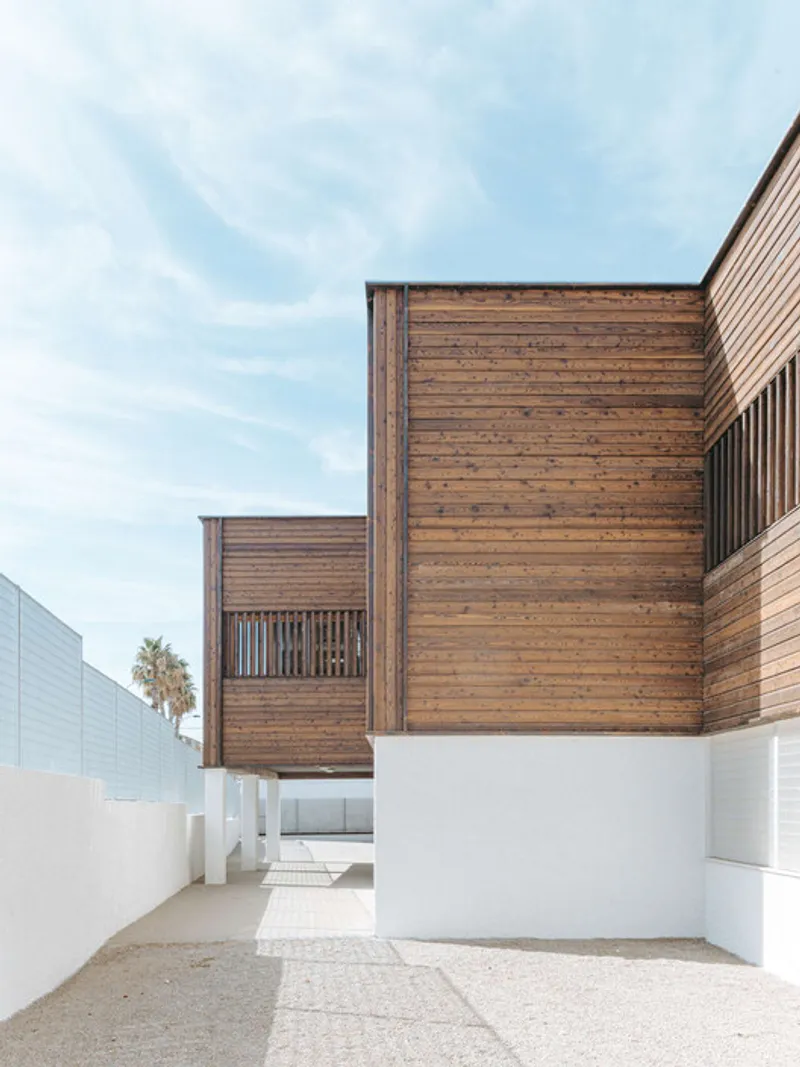
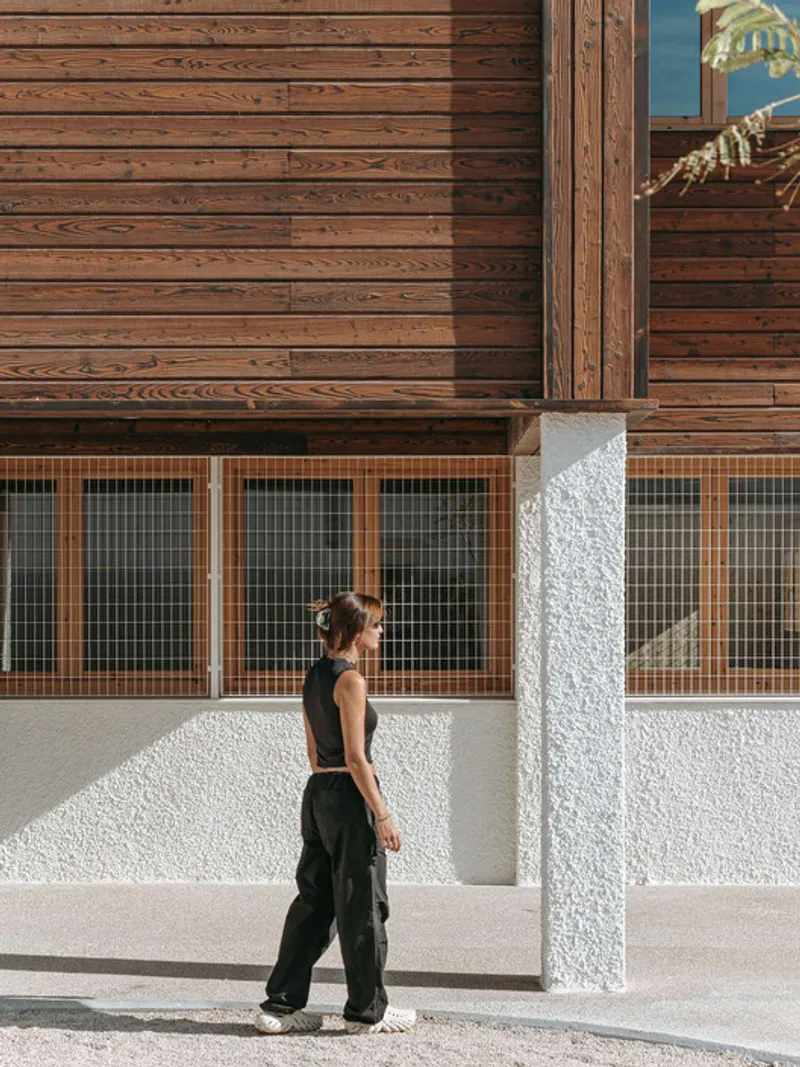
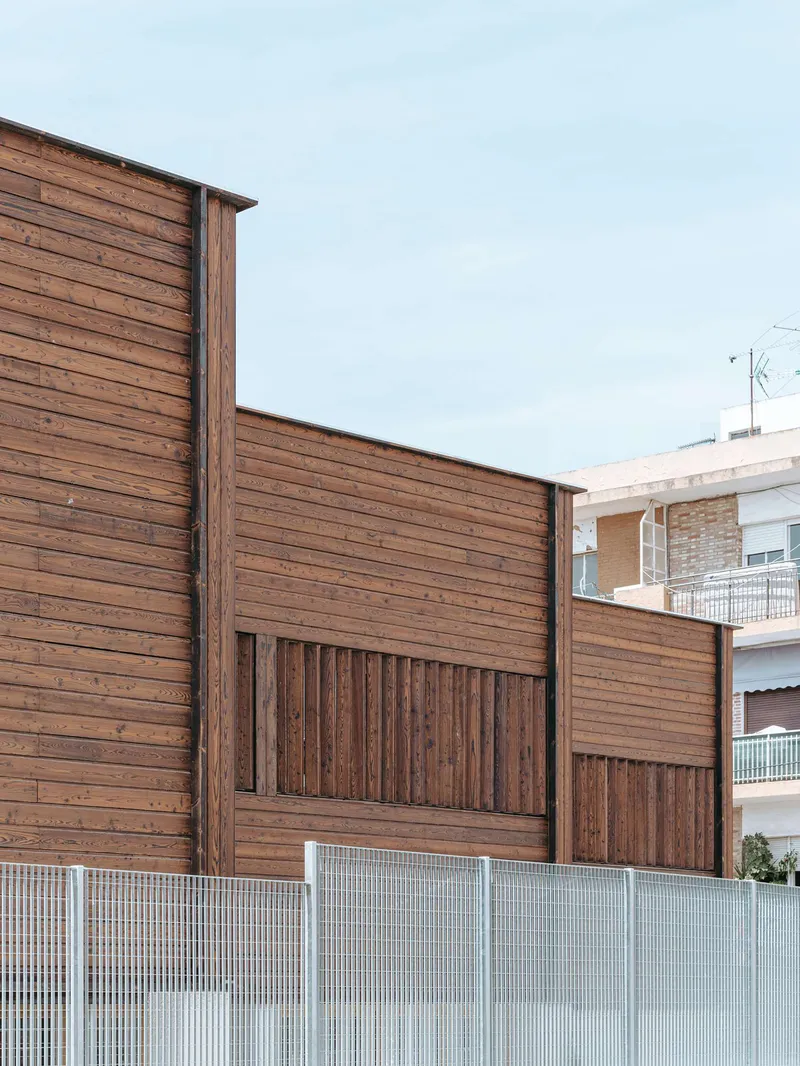
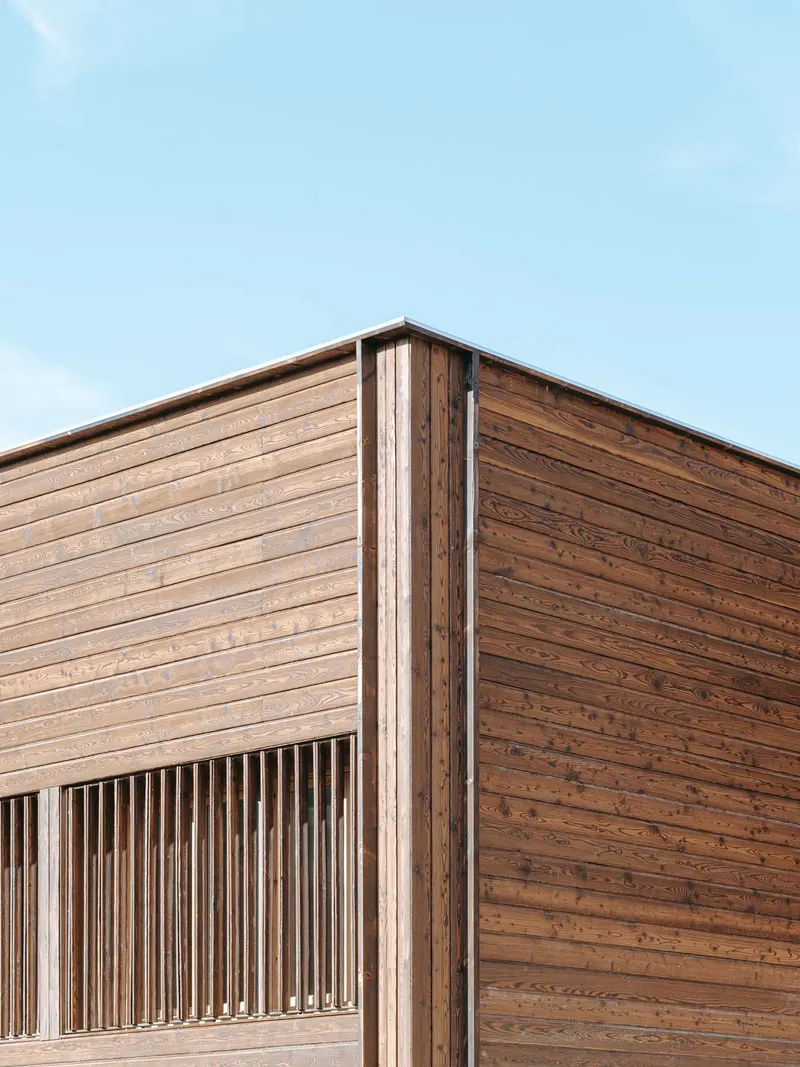
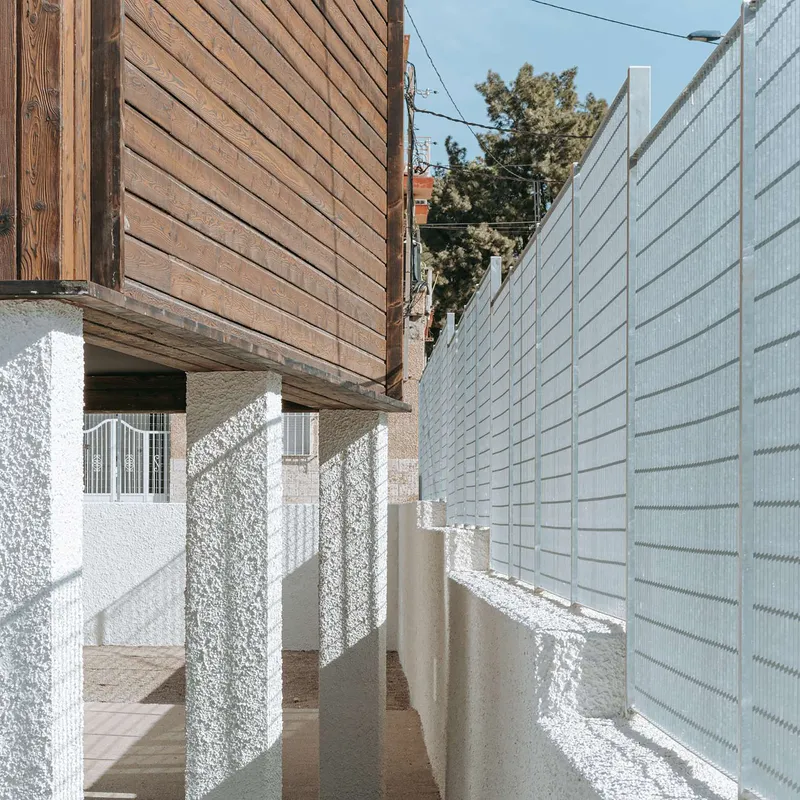
The project’s most iconic transformation is the addition of a ventilated wooden façade, crafted from pine with a unique “animal print” pattern. This expressive skin wraps around the first floor, giving the building a distinctive new identity while symbolically lifting the structure above the ground.
This lightweight volume appears suspended, creating a sense of openness and urban activation. It also improves the façade’s environmental performance by balancing solar exposure through strategic use of porches and vertical louvers.
Sustainable Construction and Circular Design Strategies
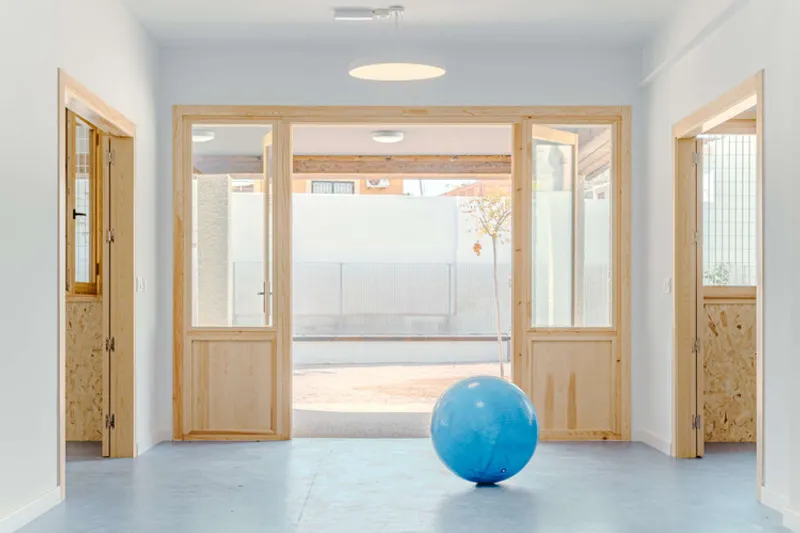
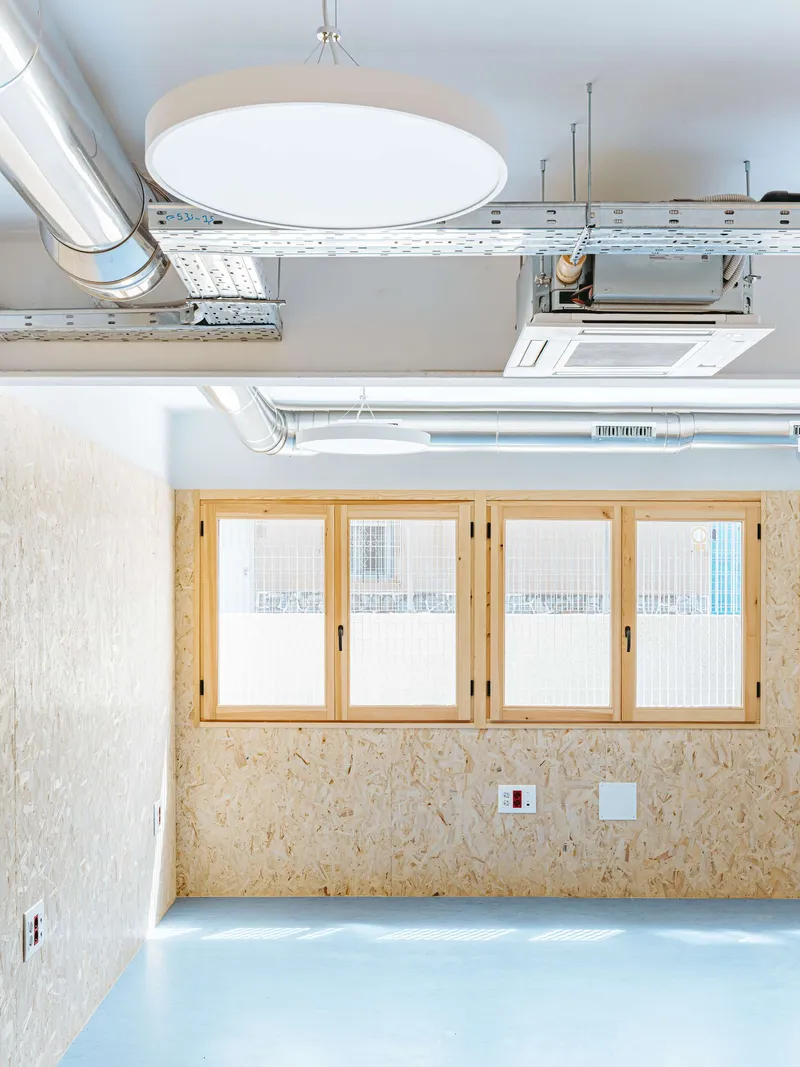
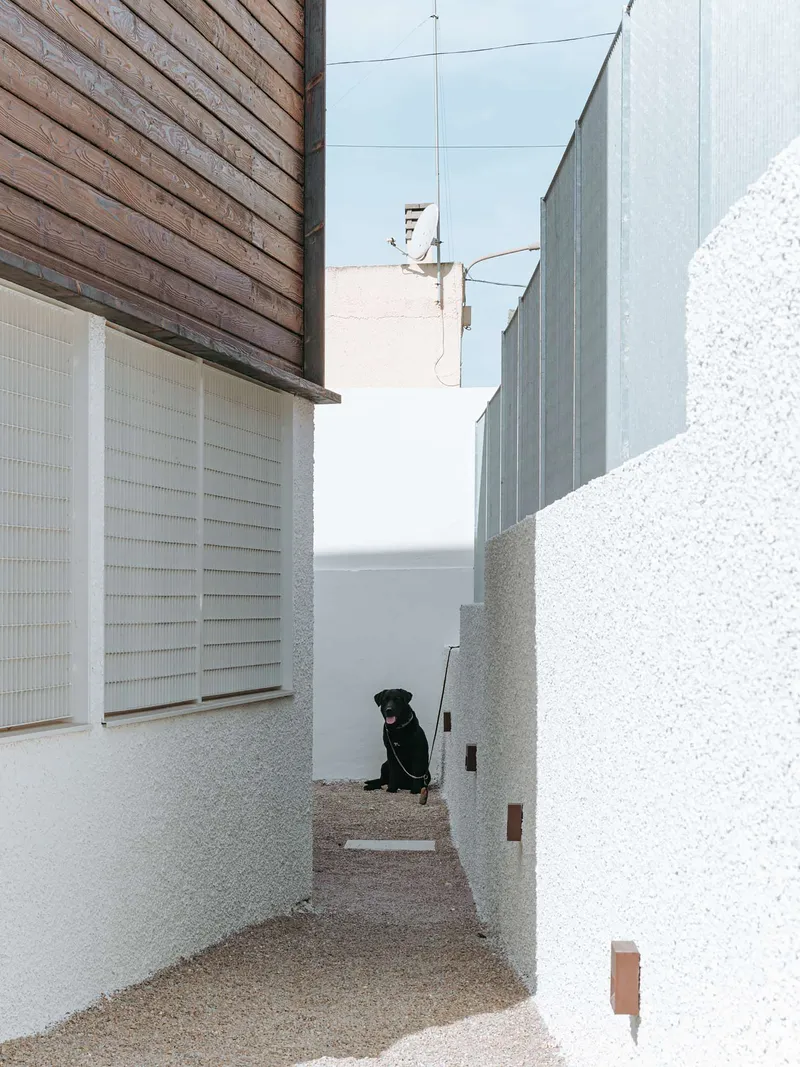
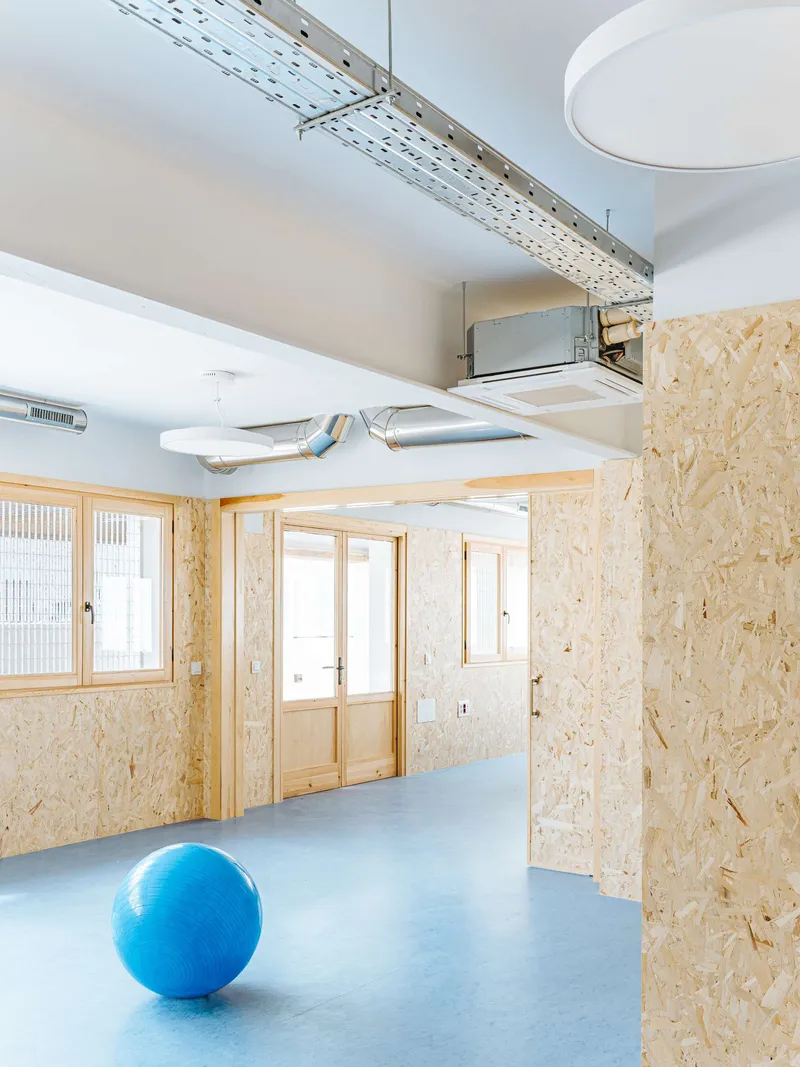
From the outset, sustainability played a central role. MEII ESTUDIO reused numerous elements from the original school, including fencing and ground-floor protective structures. They also incorporated environmentally responsible materials such as:
- Linoleum flooring
- OSB wall finishes
- Recycled components from the existing structure
A solar chimney was integrated to enhance natural ventilation, further elevating the building’s bioclimatic performance.
The new façade, insulation strategies, and energy-efficient design ensure that the renovated building not only looks modern but also functions sustainably for decades to come.
Reconnecting Nature and Community
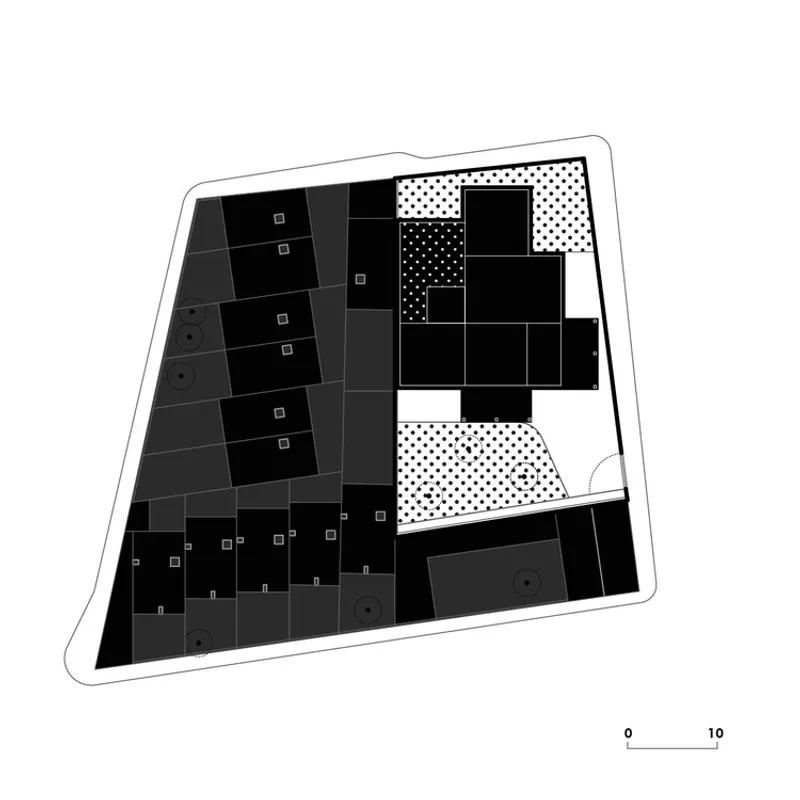
The project pays special attention to exterior spaces, renaturalizing the former schoolyard by removing unnecessary hardscape, introducing greenery, and planting new trees. A green roof augments biodiversity, enhances thermal comfort, and reduces the building’s ecological footprint.
This renewed outdoor environment supports community gatherings, improves climate resilience, and creates pleasant, shaded spaces for social interaction.
A Model of Public Architecture for the Future
Ultimately, the Hotel + Social Community Center becomes more than a renovated building—it is a manifesto for what public architecture can achieve. It embodies a commitment to sustainability, accessibility, cultural value, and community-first design.
MEII ESTUDIO demonstrates that transforming existing structures is not merely an architectural act—it is a social responsibility. By merging memory with innovation, the project restores the neighborhood's identity and reactivates urban life from its very core.
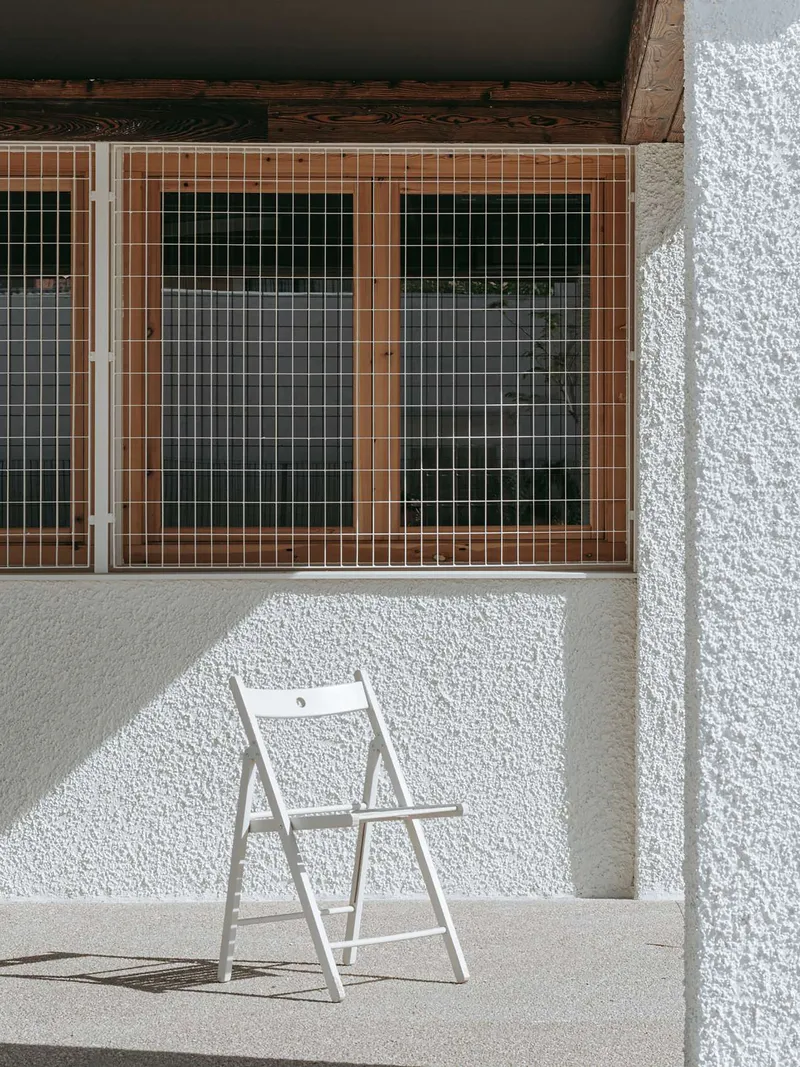
All the photographs are works of hiperfocal



Popular Articles
Popular articles from the community


Conexión: Biophilic Design Reimagines High-Rise Living in Hong Kong
Conexión reimagines high-rise living in Hong Kong through biophilic design, green facades, shared spaces, daylight, water and nature within.

The Earth Pod: 3D Printed Homes for Resilient Refugee Communities
The Earth Pod reimagines refugee housing through 3D printed homes made from clay, combining resilience, self-sufficiency, and rapid shelter.

Riyadh For All: Intergenerational Urban Design for Active Aging in Rabat
Riyadh For All reimagines urban design in Rabat with intergenerational co-living, adaptive courtyards, and Moroccan cultural exchange today.
AL-JANNAH: Sustainable Architecture and Permaculture for Afghan Widows
AL-JANNAH uses sustainable architecture and permaculture to create resilient oasis of housing, learning, work and renewal for Afghan widows.


Similar Reads
You might also enjoy these articles


Hodi-Mandai Geram
Project Function: Preservation and revitalization of the Intangible heritage and socio-spatial identity of the Hodi by Housing, Cultural Memory Center, Sacred Grove, landscape, local tourism economy


Olio Towers: A Mid-Rise for Performers That Fuses Housing, Rehearsal, and Stage
Located blocks from Houston's Theater District, this modular tower stacks living units around a central performance atrium.

Oasis: Modular Green Housing Carved into Dhaka's Urban Fabric
A shortlisted Plugin Housing entry reclaims unauthorized settlements in Dhaka with stepped concrete volumes, green roofs, and ventilation-driven design.

Black Hole: A Floating Megastructure for the Post-Physical Era
Emiliano Mazzarotto envisions a spherical, self-scaling arena where e-sports, digital hotels, and holographic stadiums replace traditional public space.
Explore Hospitality Building Competitions
Discover active competitions in this discipline



Challenge to reimagine the Iron Throne


Photograph architecture without architects


Illustrate the lost glory of Angkor Wat - Render Challenge


Design challenge to reuse E-waste
Comments (0)
Please login or sign up to add comments
No comments yet. Be the first to comment!