

House 300 by KSA Architects: Innovative Slope-Responsive Design in Aamby Valley
House 300 by KSA Architects floats above a natural slope, featuring inverted volumes, panoramic views, steel-glass bridge, and monsoon-protected, private living spaces.


Located in the serene landscapes of Aamby Valley City, India, House 300 by KSA Architects is a masterclass in adapting architecture to challenging topography. Sitting on a compact quarter-acre plot that slopes steeply towards a valley, waterbody, and rising cliff, the site presented multiple design constraints. Initially, filling the slope and building a 10-meter retaining wall was considered, but the architects wisely preserved the natural landscape, creating a home that respects its environment while offering breathtaking views.
Inverted Layout for Maximum Views
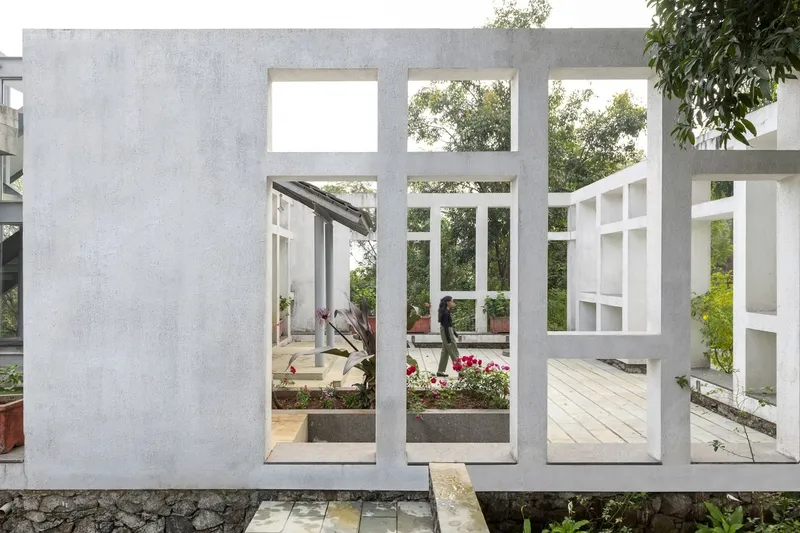
The design features an unconventional inverted hierarchy. Rather than approaching the living spaces first, visitors encounter the Open Room courtyard, a roofless and wallless volume anchored to the natural ground. This courtyard, robustly perforated, introduces a transitional experience before accessing the main living area.
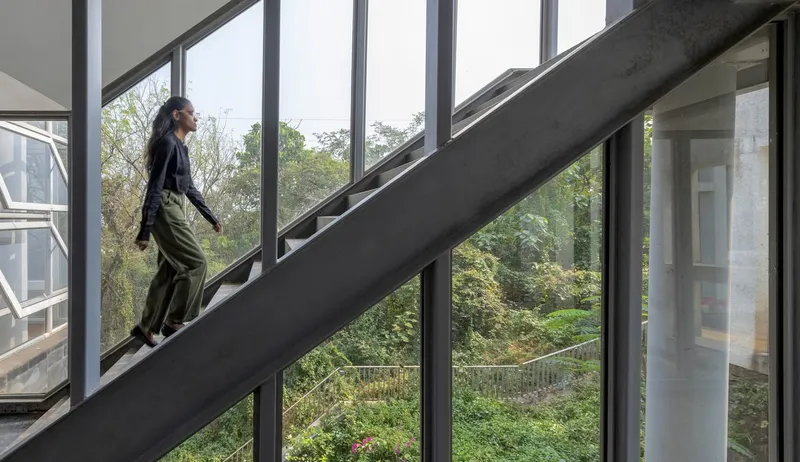
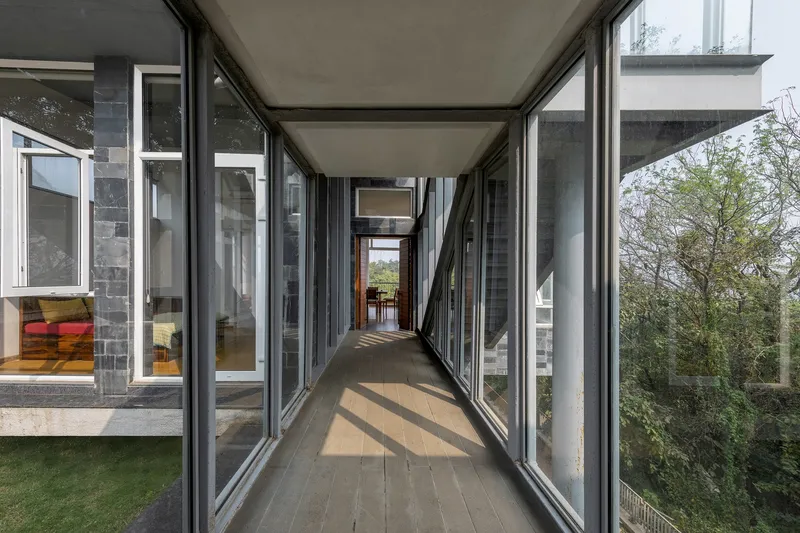
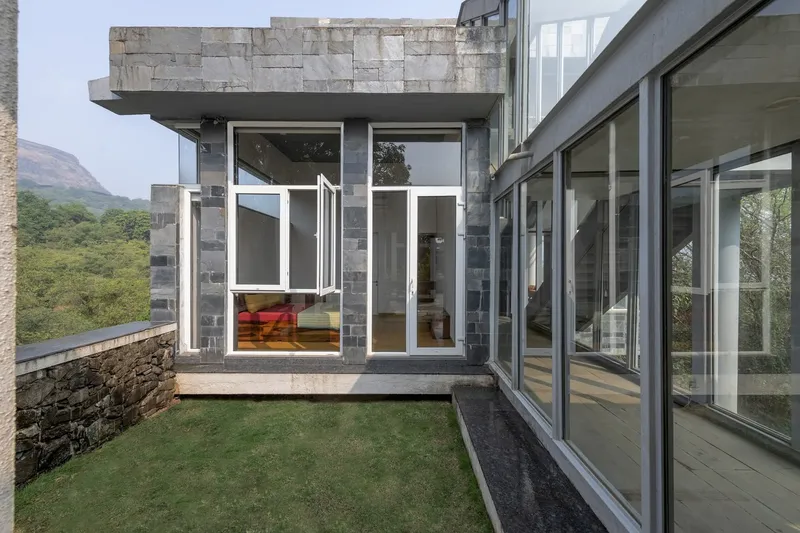
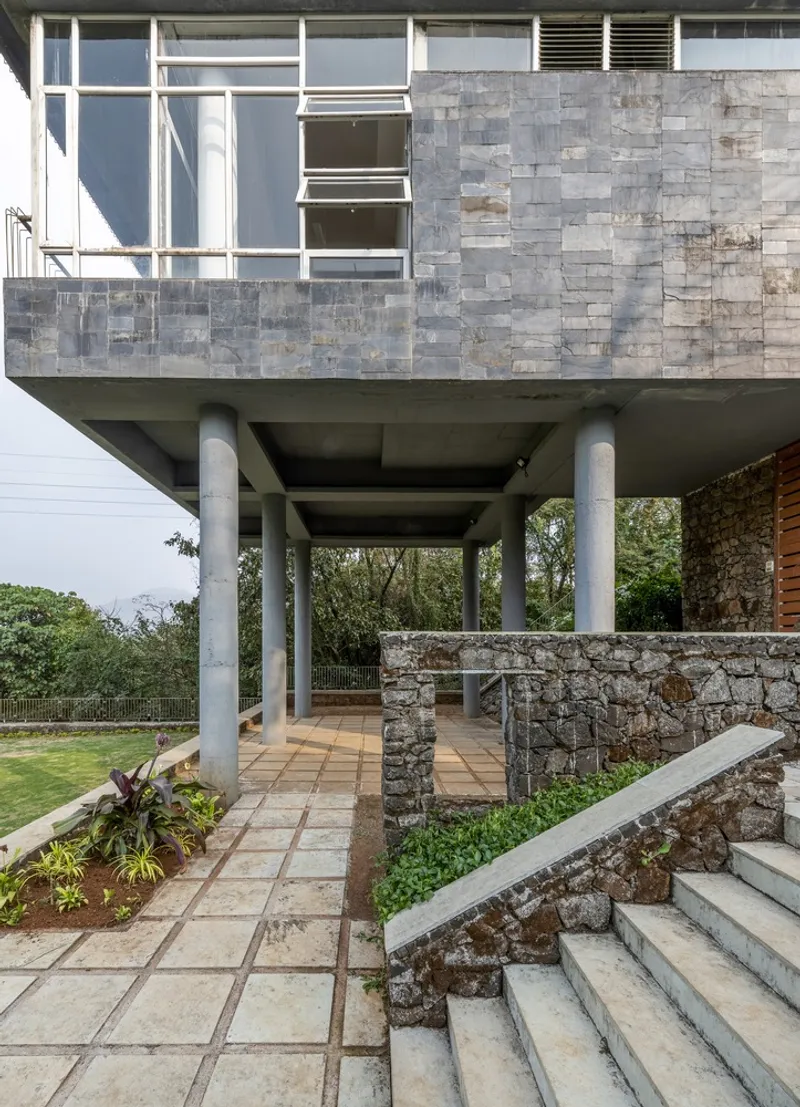
A Steel-and-Glass Bridge connects the Open Room to the elevated Main House. The bridge serves as vertical circulation, creating a dynamic interplay between the lower courtyard and upper living spaces. At nearly 9 meters above the natural slope, the Main House emerges as a transparent lower level crowned by solid, heavy upper volumes housing the bedrooms.
Architectural Volumes and Materiality
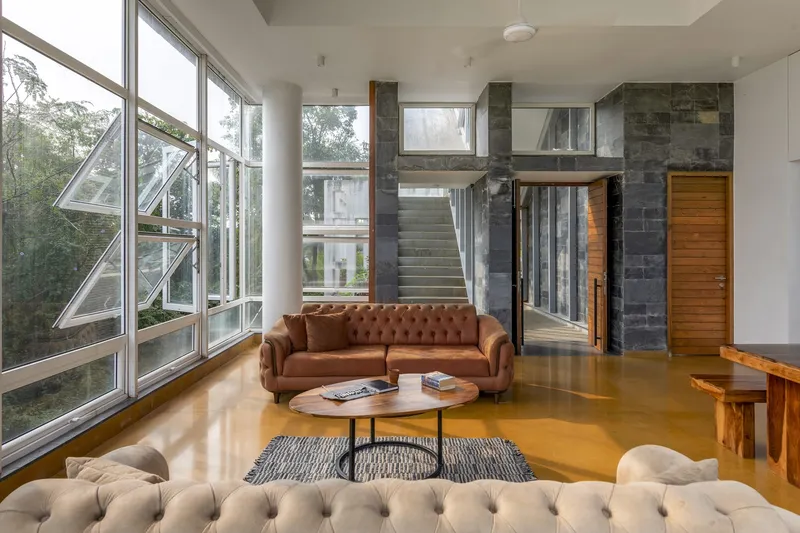
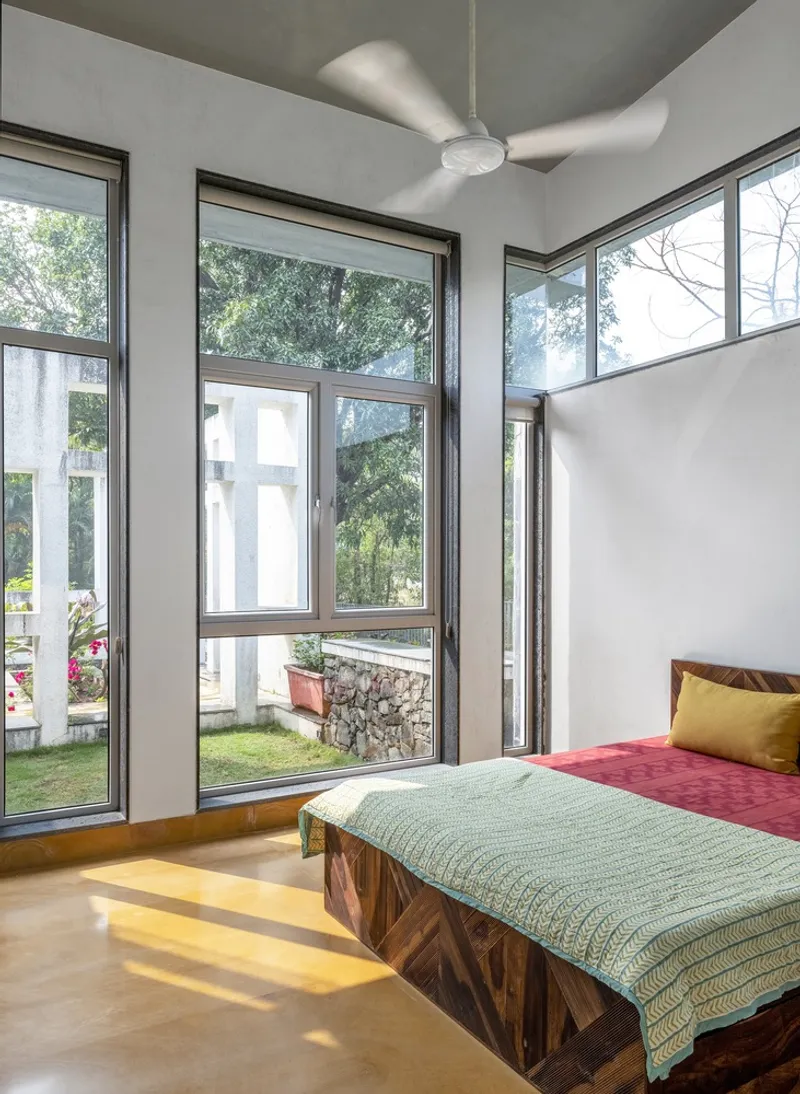
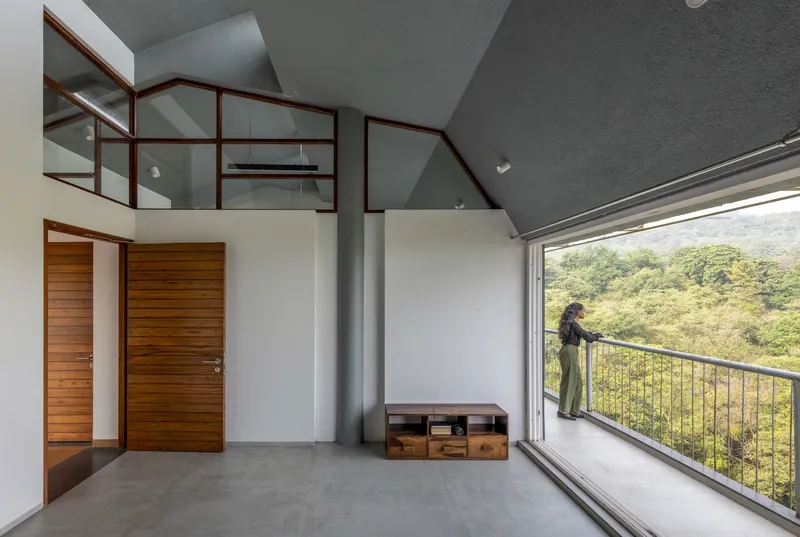
Horizontally, House 300 is divided into three volumes, each reflecting its function. The lower living space is entirely transparent, offering 270° panoramic views, seamless connections to the dining and kitchen areas, and a stilted outdoor space perfect for monsoon afternoons. Above, the bedrooms are constructed with reinforced concrete and clad in black slate, with skylights and deep verandas protecting against harsh monsoon rains while allowing natural light to penetrate interiors.
The design cleverly inverts conventional massing: heavier, opaque volumes rest above lighter, transparent ones. This approach balances privacy, climatic protection, and openness, ensuring the house remains private while visually light and integrated with its surroundings.
Spatial Experience and Sustainability
House 300 emphasizes spatial fluidity and modular articulation. The courtyard, bridge, and main house operate as separate entities that converge to form a cohesive living experience. Each volume has its own character, offering unexpected encounters and moments of surprise, whether through materials, structure, or light. The careful siting minimizes environmental disruption, preserves the slope, and optimizes natural ventilation and daylight.
This home is not just a dwelling but a narrative of site-responsive design, material intelligence, and innovative spatial sequencing, perfectly tuned to Aamby Valley’s monsoon climate and topographical challenges.
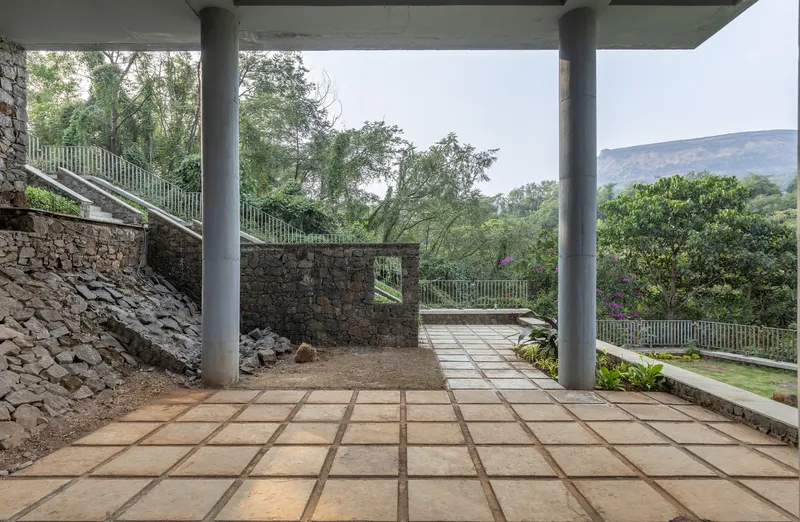
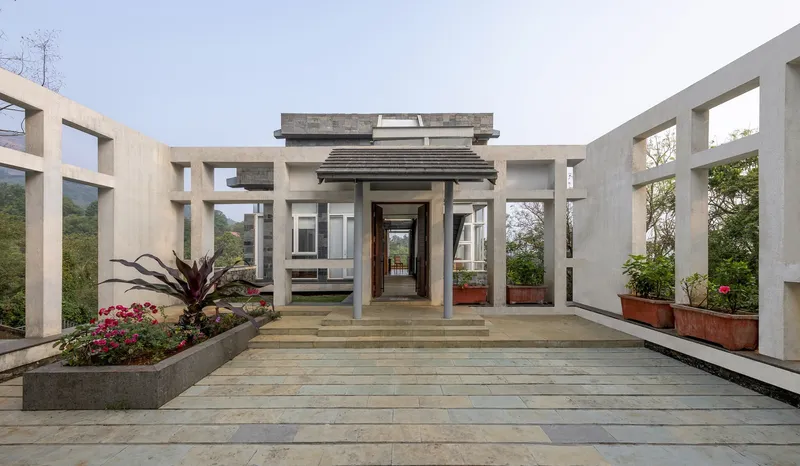
All photographs are works of
PHX India


Popular Articles
Popular articles from the community


David Ortega Stacks a Two-Story Mexico City Penthouse Around a Steel Stair and a Pergola-Shaded Roof Terrace
In Colonia Roma, a 300 m² penthouse uses oak joinery, a planted steel stair and a slatted roof pergola to make a new-build apartment feel like a house.

LT2A and OPEN Architectes Thread a Brick and Glass High School Through a Wooded Belgian Campus
In Braine-l'Alleud, a 3,000 m² wing for Collège Cardinal Mercier pairs pale brick with a glazed colonnade, deferring to a small chapel and a dense wood.

David Macias Steps a Doorless Stone and Plaster House Down a Tropical Colombian Hillside
In the humid hills of Colombia, Threshold House replaces the front door with an open void and terraces its 850 m² down the slope instead of fighting it.

Juan García Correa, John González and Claudia Rueda Sink a Circular Amphitheater into a Manizales Engineering Building
On the La Nubia campus in Manizales, Colombia, the S1 Building folds labs and offices into a hillside of ramped lawns that double as a campus route.

Similar Reads
You might also enjoy these articles

Bamboo Housing Challenge 2026: Design Affordable, Sustainable Homes Using Bamboo
An international design competition by Bamboo U and IBUKU inviting architects and designers to reimagine affordable housing using bamboo — with the winning design built full-scale in Bali.

Computational Design & Education: Beegraphy Design Awards Introduces 7th Category (Featuring Jiyun's Innovative Approach)
Dive into Beegraphy’s 7th Design Awards category, where computational design meets education to create immersive, interactive learning tools, inspired by Jiyun’s work.

From Parametric Lighting to Urban Furniture: Join the 2nd Workshop in Beegraphy’s Computational Design Series
Dive into Cutting-Edge Design Techniques and Practical Applications with Industry Experts

Last Call: Unleash Your Architectural Genius in SHAK's Kindergarten Design Competition
Urgent call for architects to join SHAK's kindergarten design competition before the looming deadline

Explore Architecture Competitions
Discover active competitions in this discipline

Challenge to reimagine the Iron Throne

Photograph architecture without architects

Illustrate the lost glory of Angkor Wat - Render Challenge

Design challenge to reuse E-waste
Comments (0)
Please login or sign up to add comments
No comments yet. Be the first to comment!