
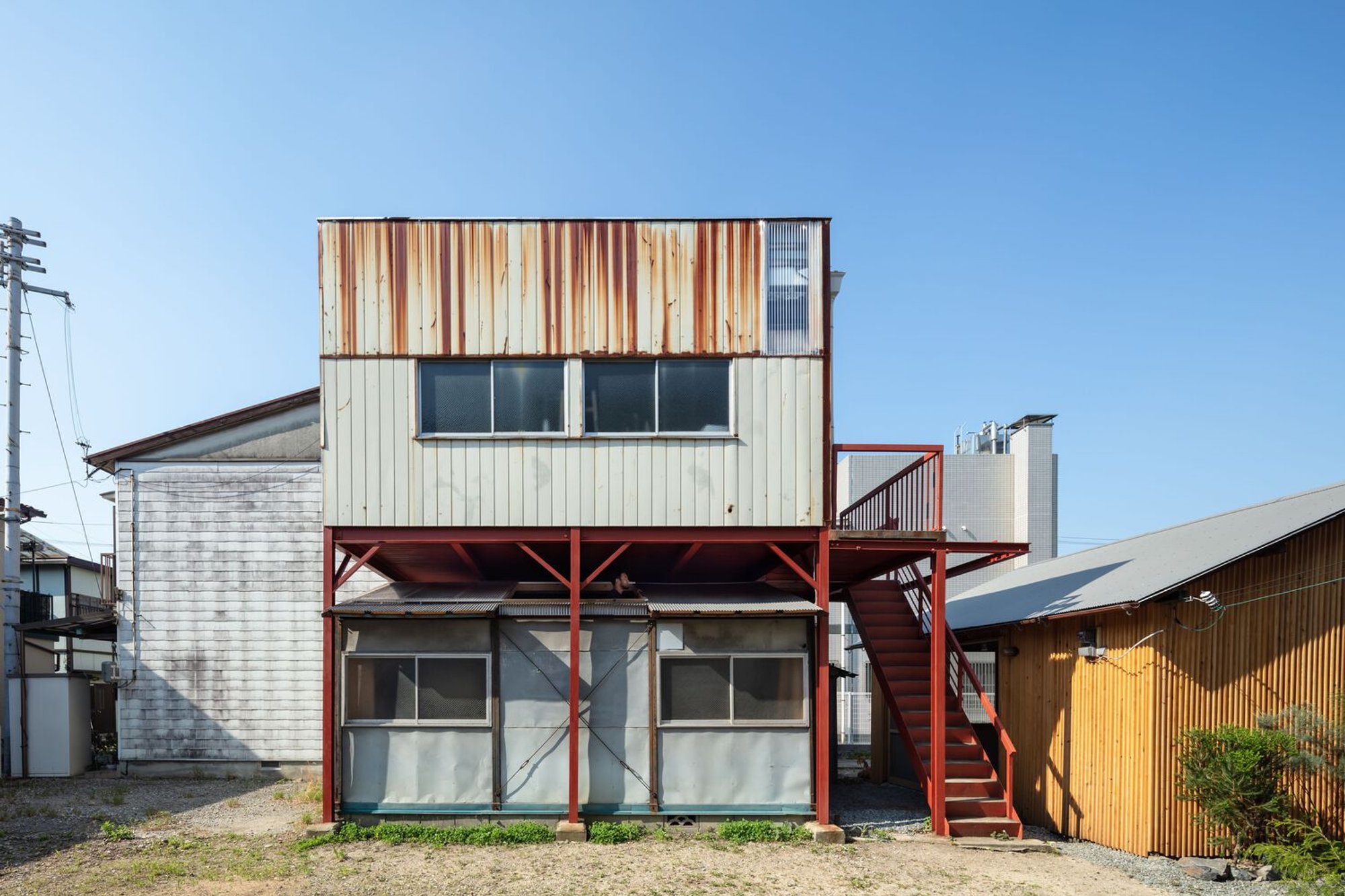
House for Gonda by Office for Environment Architecture
DIY-renovated house in Osaka blends adaptive reuse, seasonal living, and community spirit within a former warehouse structure.

A DIY Renovation That Redefines Community Living in a Semi-Industrial Osaka Neighborhood
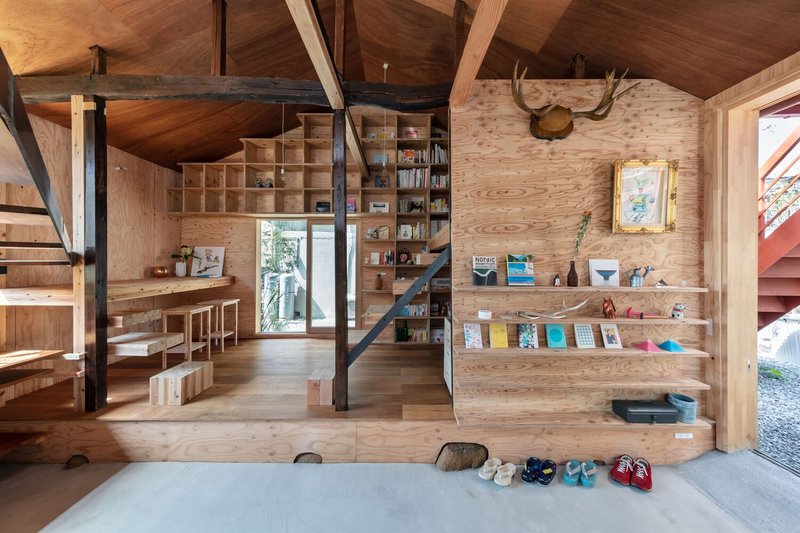
Located just 200 meters from Osaka Bay, the House for Gonda by Office for Environment Architecture is a compelling example of adaptive reuse and self-built renovation in urban Japan. Originally composed of three unconnected warehouses discovered on a real estate site, the structure had never functioned as a residence. Yet its unexpected features—a basic kitchen and a new toilet—offered a glimpse of potential.
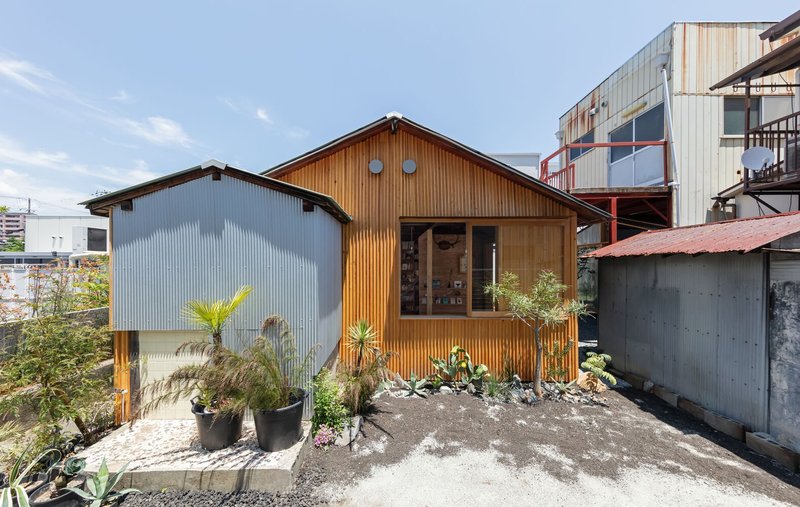
Completed in 2021 with a modest floor area of 89 square meters, the project was spearheaded by lead architect Norio Yoshinaga and documented through the lens of photographer Yohei Sasakura. The home sits in a semi-industrial zone where aging sake breweries, factories, and homes coexist in a layered urban context.
Embracing the Imperfect and the Existing
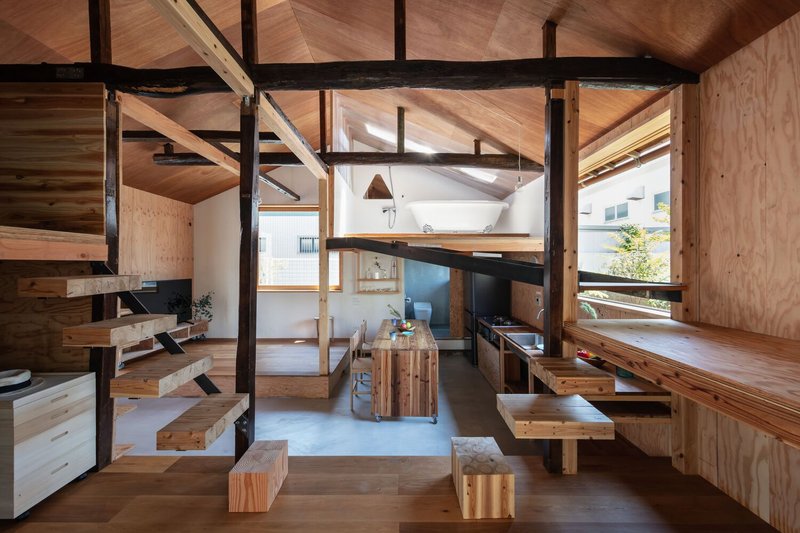
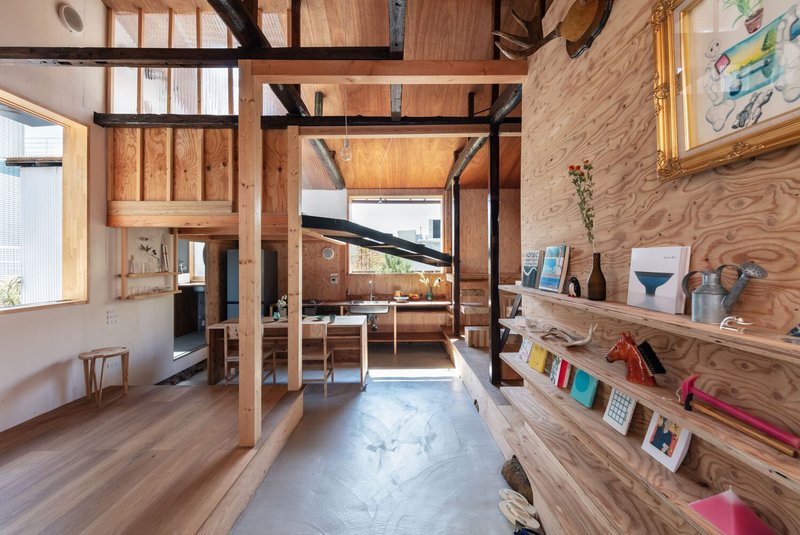
Built in 1975, the original structure bore the scars of multiple amateur renovations. Its framework was unstable, shaped by decades of expansions and removals—likely intensified by the impact of the Great Hanshin-Awaji Earthquake. Rather than erase these imperfections, the renovation embraced them. With a tight budget and a strong DIY ethos, the residents and their friends committed over a year of weekends to restore the home themselves, infusing the project with personal labor and love.
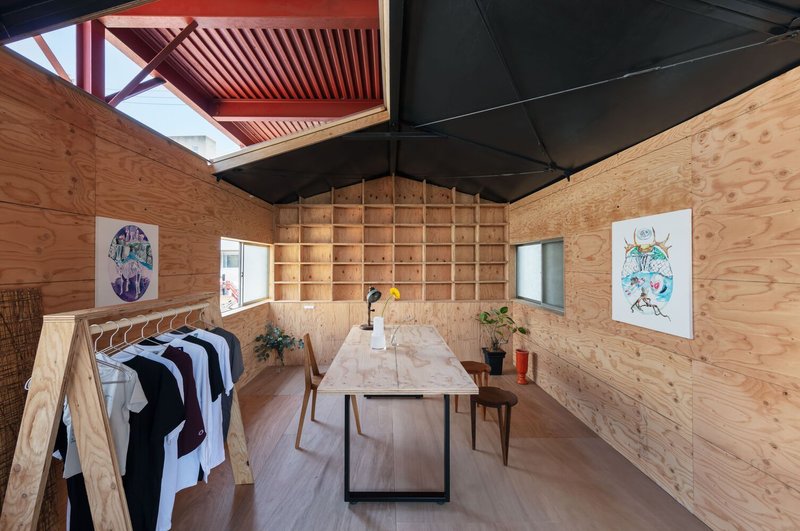
Seasonal Evolution and Environmental Response
The renovation progressed with the rhythm of the seasons. In the summer, heat under the tin roof became unbearable, prompting the urgent addition of insulation. By autumn, typhoon-damaged exterior walls were patched using salvaged materials. In the winter, the home became marginally habitable. By the second spring, further interventions such as a movable skylight were added to improve light and airflow in previously neglected areas.
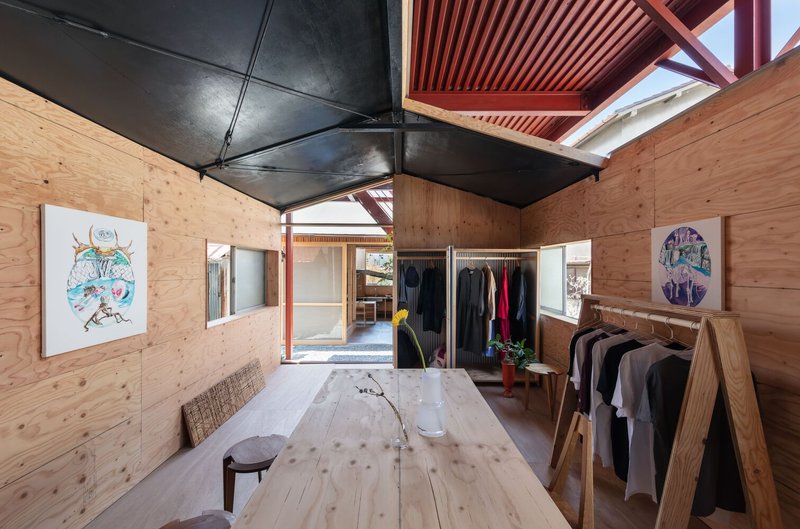
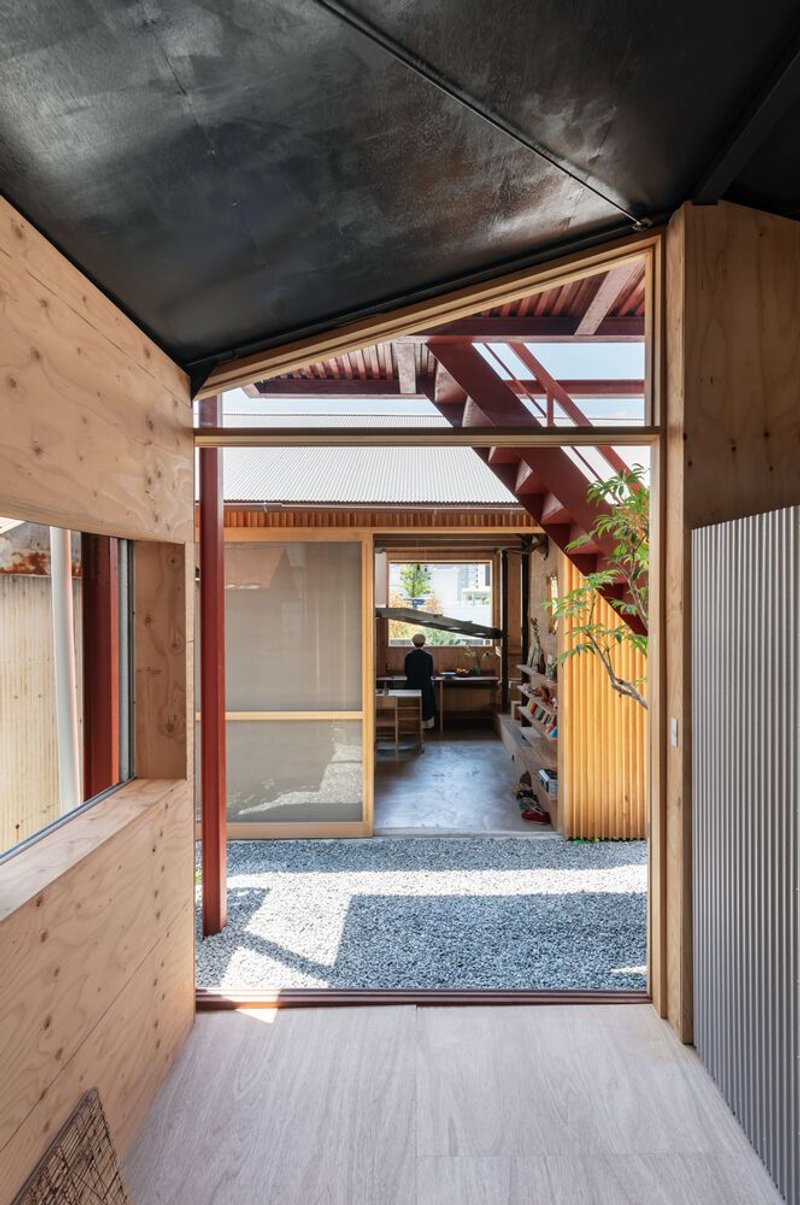
Rebuilding Connections — Spatial and Social
While the property itself did not conform to road contact conditions, it maintained a profound dialogue with its surroundings. Set within a block of wooden homes and narrow alleys, the project rekindled community ties. Informal exchanges between neighbors occurred daily, and the house organically integrated into the neighborhood’s shared life.
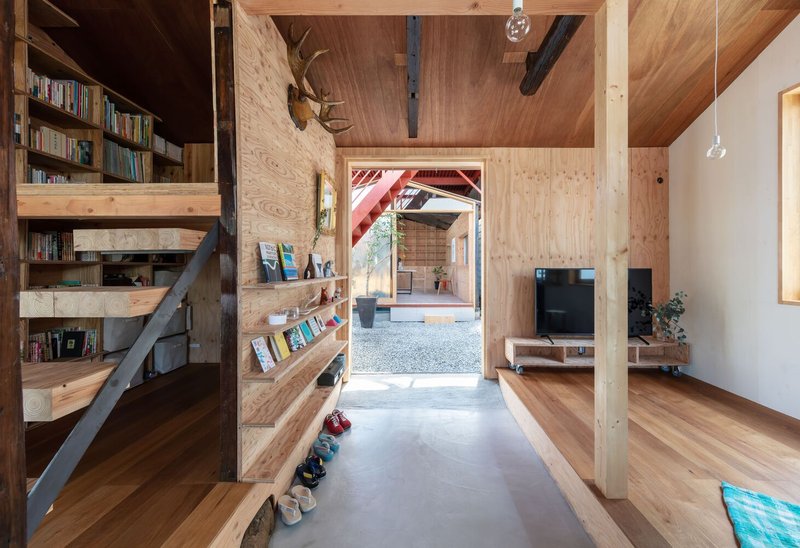
Even stray cats became regular visitors, eventually claiming the house as their nighttime shelter. These interactions symbolized the project's larger vision—to regenerate not just a building, but a way of living that intertwines domestic life with the broader urban ecology.
A New Frontier of Architecture
In this small but significant act of transformation, House for Gonda becomes more than a renovation—it’s a philosophical stance. It values the existing, repairs the damaged, and inherits the past to craft a sustainable, meaningful future. It invites a “primitive frontier” spirit, where architecture is not imposed but discovered, one layer at a time.
All Photogrphs are works of Yohei Sasakura



Popular Articles
Popular articles from the community

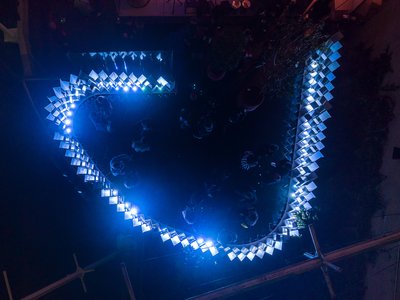
Rojkind Arquitectos and Think Parametric Build a Glueless Pavilion from 67 Interlocking Panels
A serpentine fiber-cement installation in Chapultepec Park celebrates a decade of architectural media in Mexico City.
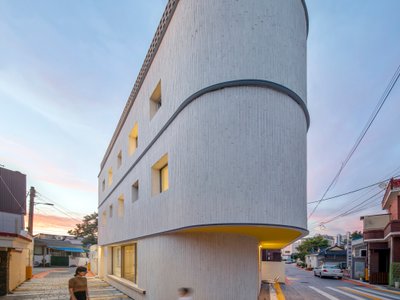
YOAP Architects Round a Corner in Yeongcheon with a Cylindrical Community Hub
A 197-square-meter brick and ribbed-clad tower turns a forgotten alley corner in South Korea into a public garden with a low threshold.
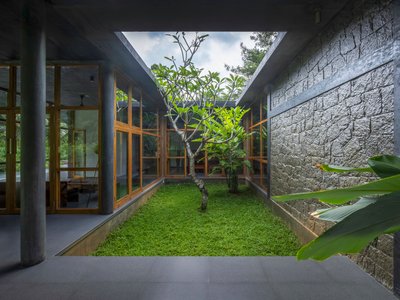
3dor Concepts Wraps a Kerala Home in Mirrored Concrete Arcs Around a Courtyard Tree
In the Western Ghats foothills of Thamarassery, a 270 m² single-story house uses two curved volumes to frame nature as its center.
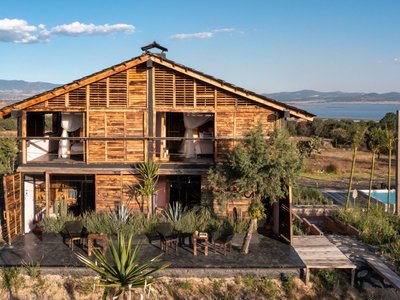
Fausto Terán and Toro Fuse Japanese Craft with Mexican Tradition in a Lakeside Retreat
Nakamura House pairs Shou-Sugi-Ban charred pine with handmade clay tile at the foot of Atlangatepec Lagoon in Mexico.


Similar Reads
You might also enjoy these articles

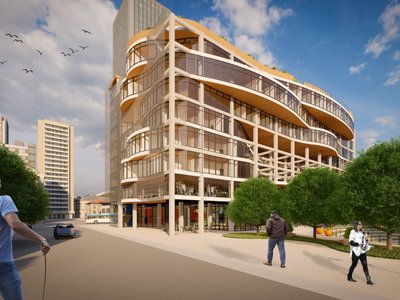
Olio Towers: A Mid-Rise for Performers That Fuses Housing, Rehearsal, and Stage
Located blocks from Houston's Theater District, this modular tower stacks living units around a central performance atrium.
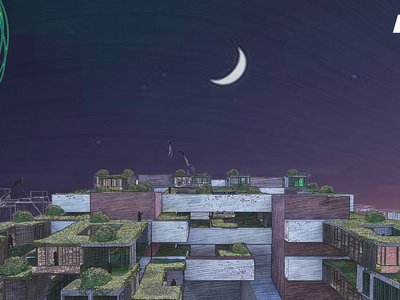
Oasis: Modular Green Housing Carved into Dhaka's Urban Fabric
A shortlisted Plugin Housing entry reclaims unauthorized settlements in Dhaka with stepped concrete volumes, green roofs, and ventilation-driven design.

Black Hole: A Floating Megastructure for the Post-Physical Era
Emiliano Mazzarotto envisions a spherical, self-scaling arena where e-sports, digital hotels, and holographic stadiums replace traditional public space.
Compact & Sustainable Living in Piraeus: A Four-Level Family Home Built Around Light and Air
A narrow townhouse in one of Greece's densest port cities uses a central atrium and passive strategies to house three generations under one roof.


Explore Architecture Competitions
Discover active competitions in this discipline




The International Standard for Design Portfolios


The Global Benchmark for Architecture Dissertation Awards


The Global Benchmark for Graduation Excellence


Challenge to design mud housing for contemporary communities
Comments (0)
Please login or sign up to add comments
No comments yet. Be the first to comment!