

House Hoinka by Atelier Kaiser Shen: Sustainable Straw Bale Architecture in Pfaffenhofen
House Hoinka by Atelier Kaiser Shen blends straw bale construction, wood, and clay into a sustainable, elevated rural home rethinking traditional architecture.


House Hoinka, designed by Atelier Kaiser Shen, is a remarkable example of sustainable residential architecture in Pfaffenhofen, Germany. Completed in 2023, this 521 m² project redefines rural housing by blending traditional village character with modern ecological construction methods.
A Village with History, A House with Vision
Pfaffenhofen is a charming village near Heilbronn, characterized by vineyards, a historic church, and half-timbered houses from the 16th and 17th centuries. House Hoinka fits seamlessly into this idyllic setting while making a bold architectural statement. The project introduces sustainability, density, and adaptability into the heart of the village.
Sustainable Architecture with Straw Bale Construction
Atelier Kaiser Shen’s approach is rooted in natural and renewable raw materials. The house uses straw bales with clay plaster as the primary thermal envelope for walls, roofs, floors, and ceilings. This low-tech yet highly efficient technique dates back to the 19th century and is now celebrated for its ecological and climate-friendly benefits.
- Straw as Insulation: Locally sourced, renewable, recyclable, and energy-efficient.
- Clay Plaster: Natural, breathable, and healthy for interiors.
- Wood Framework: Structural stability and a strong ecological footprint.
The entire building – including all six facades, roof, and floor slab – was constructed with this eco-friendly method, making it a true benchmark in sustainable building design.
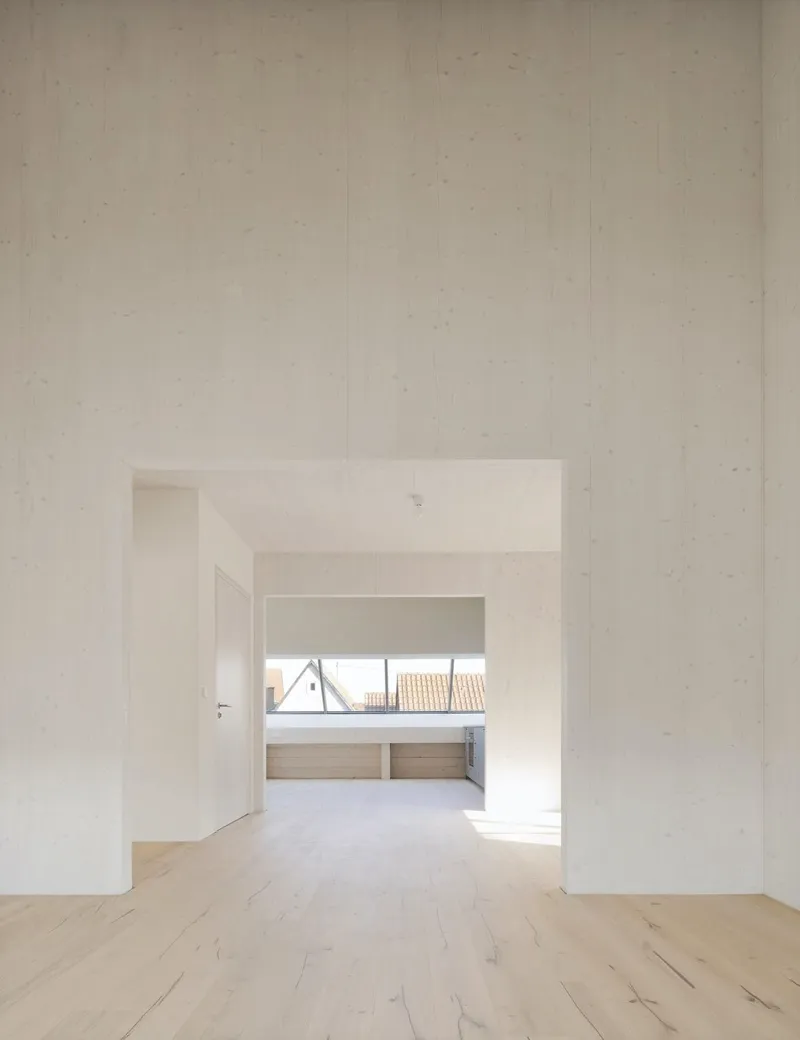
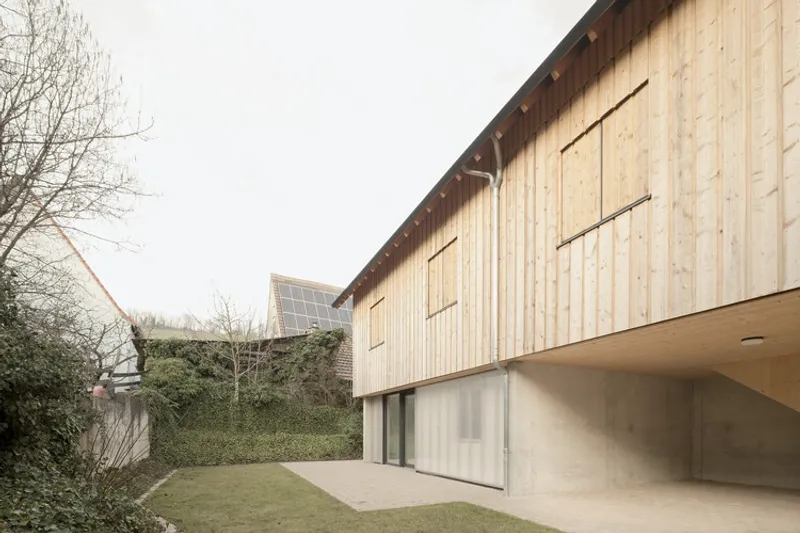
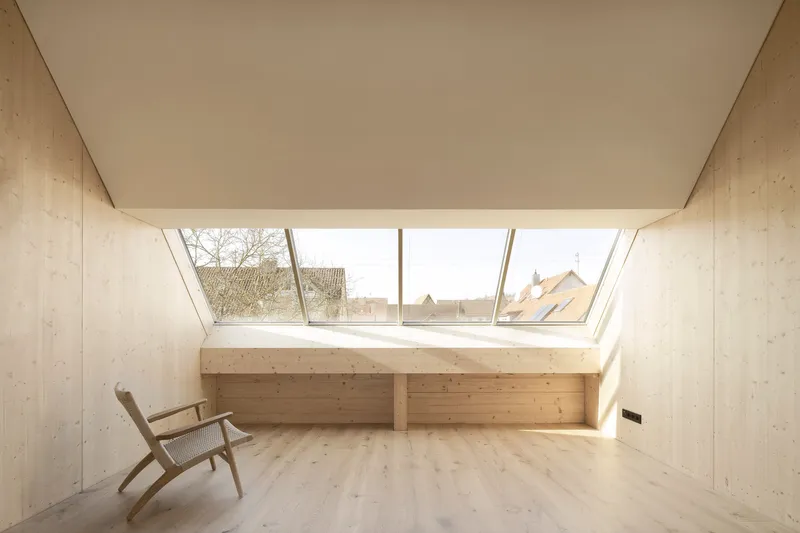
Elevated Design: A Floating Wooden Monolith
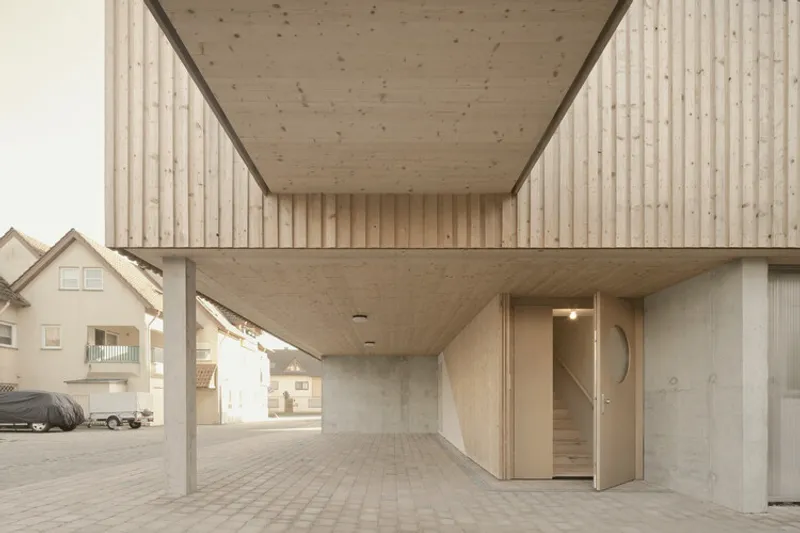
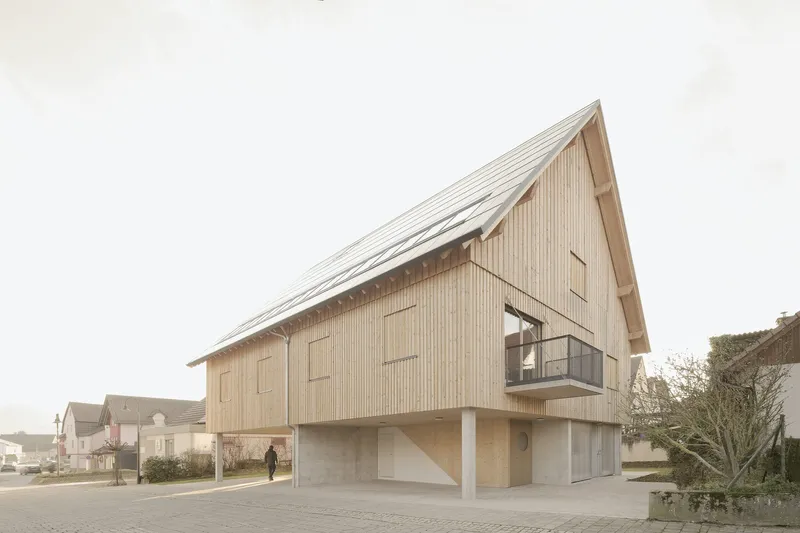
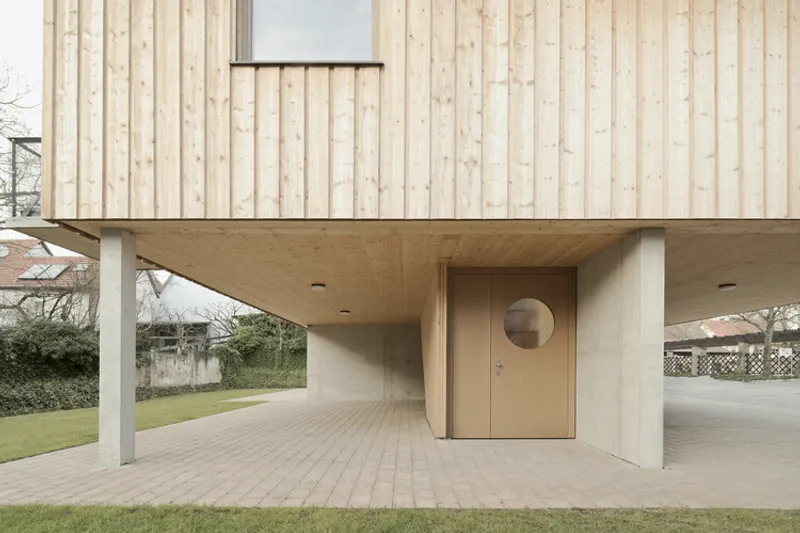
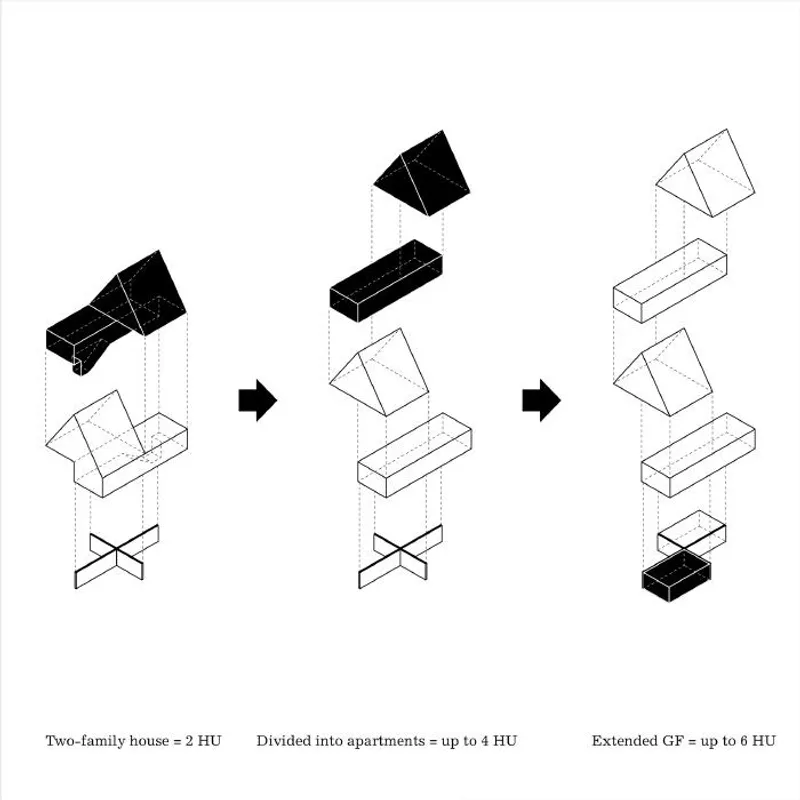
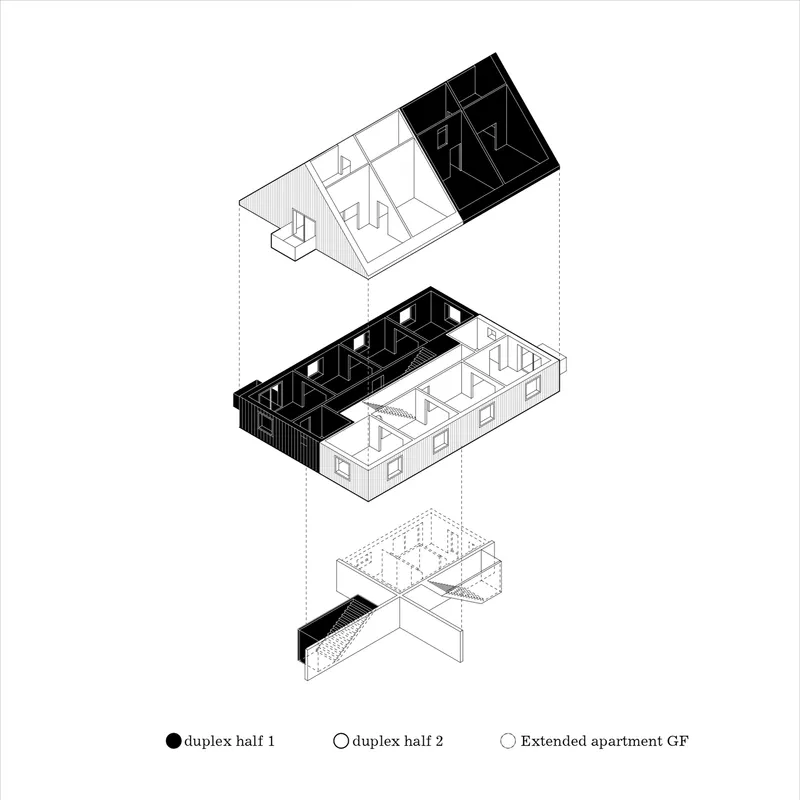
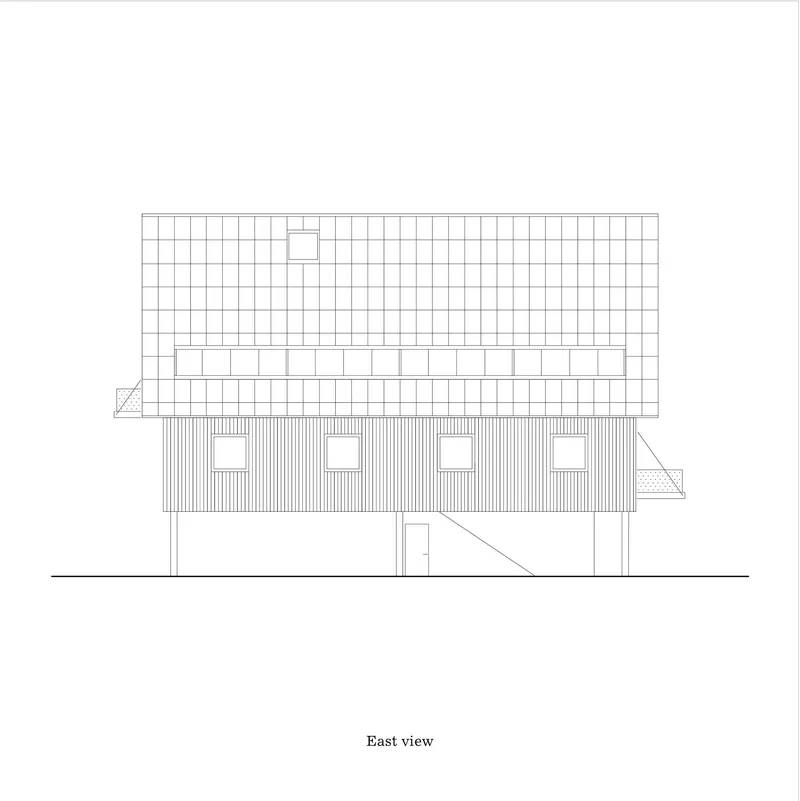
To protect the straw bale foundation from water damage, House Hoinka is elevated one full story above ground. Resting on a concrete cross and four supports, the home appears like a floating wooden monolith.
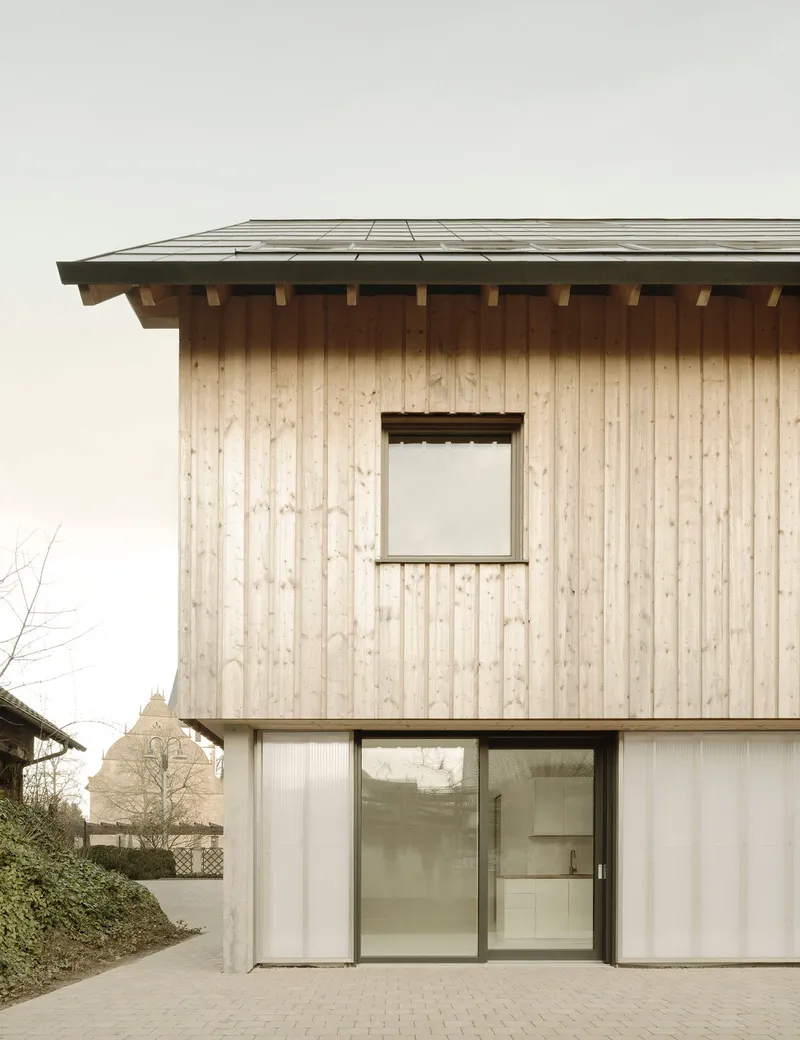
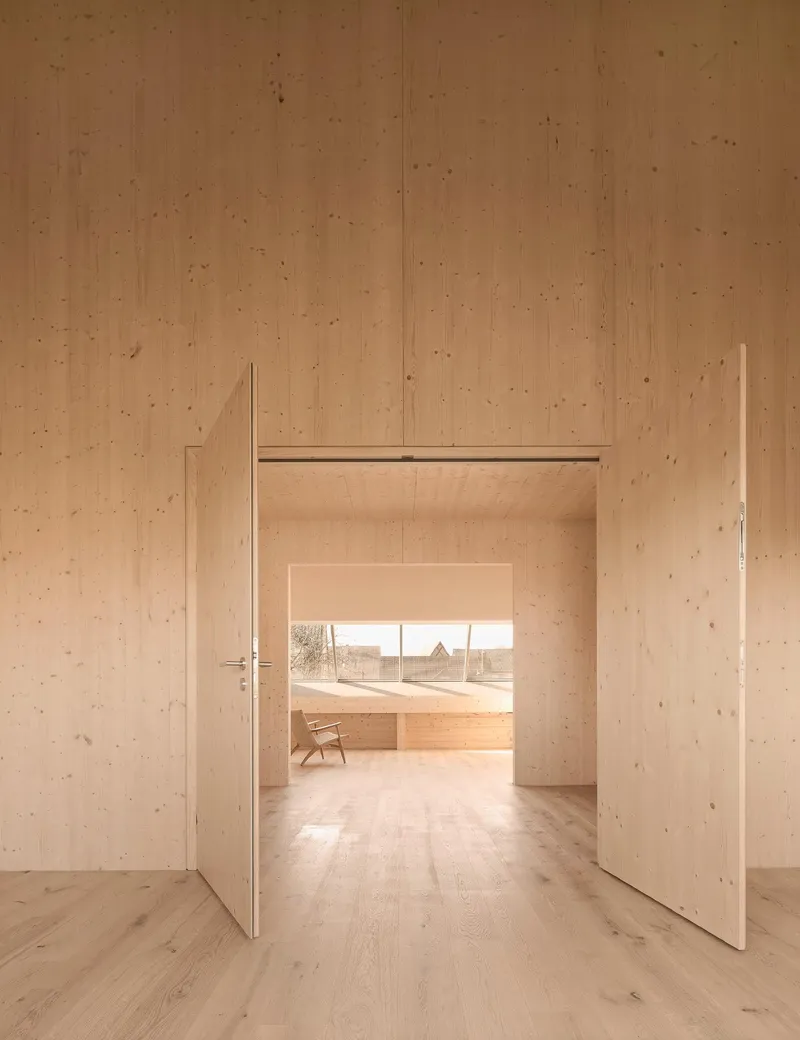
The facade of silver fir with subtle variations reflects the duality of the semi-detached home, while wooden shutters create a striking contrast with the open garden level. This design harmonizes with the grain and roofline of the surrounding village, paying homage to traditional half-timbered houses.
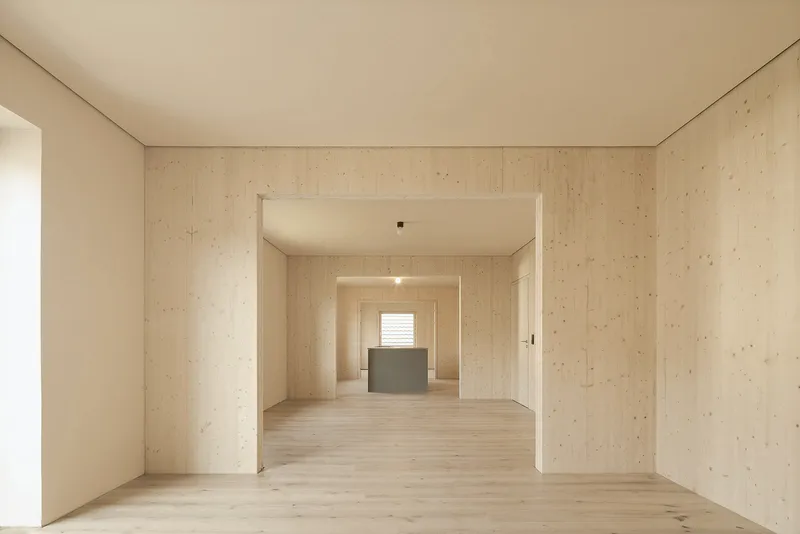
A Semi-Detached Home with Flexible Living
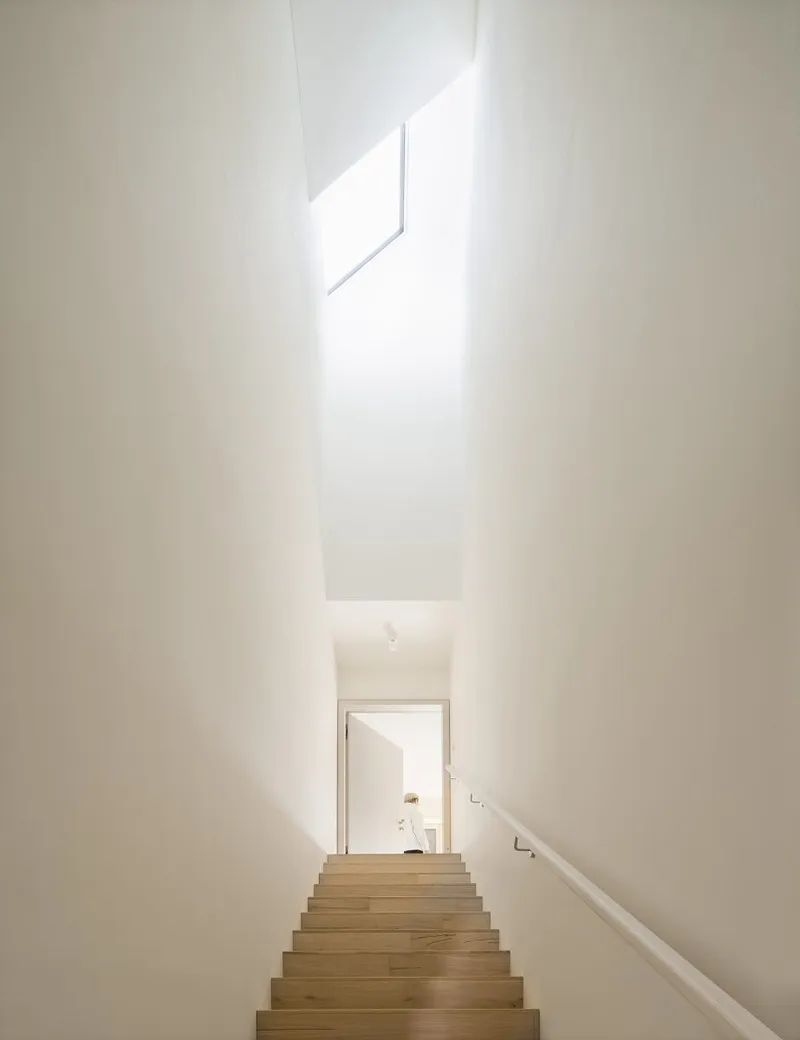
House Hoinka contains two residential units cleverly nested within one structure. Each unit is connected to the garden via a direct stair, with mirrored layouts providing panoramic views in all four directions:
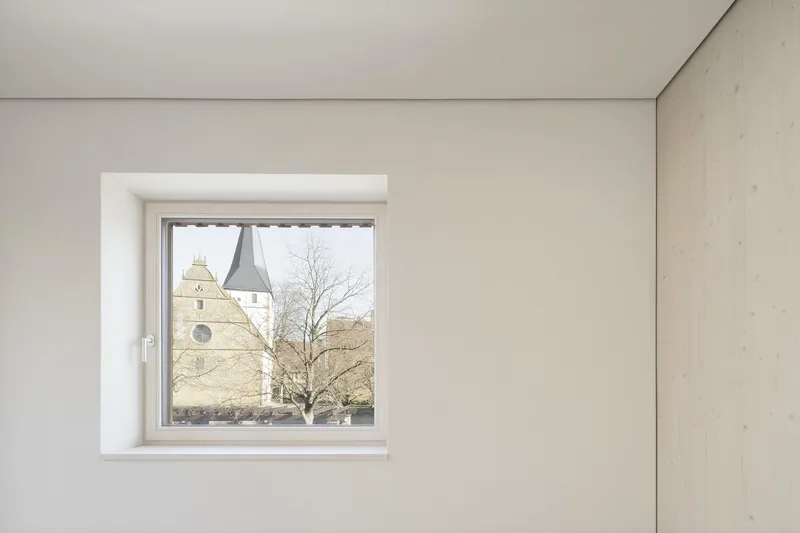
- East: the historic church square
- West: the garden
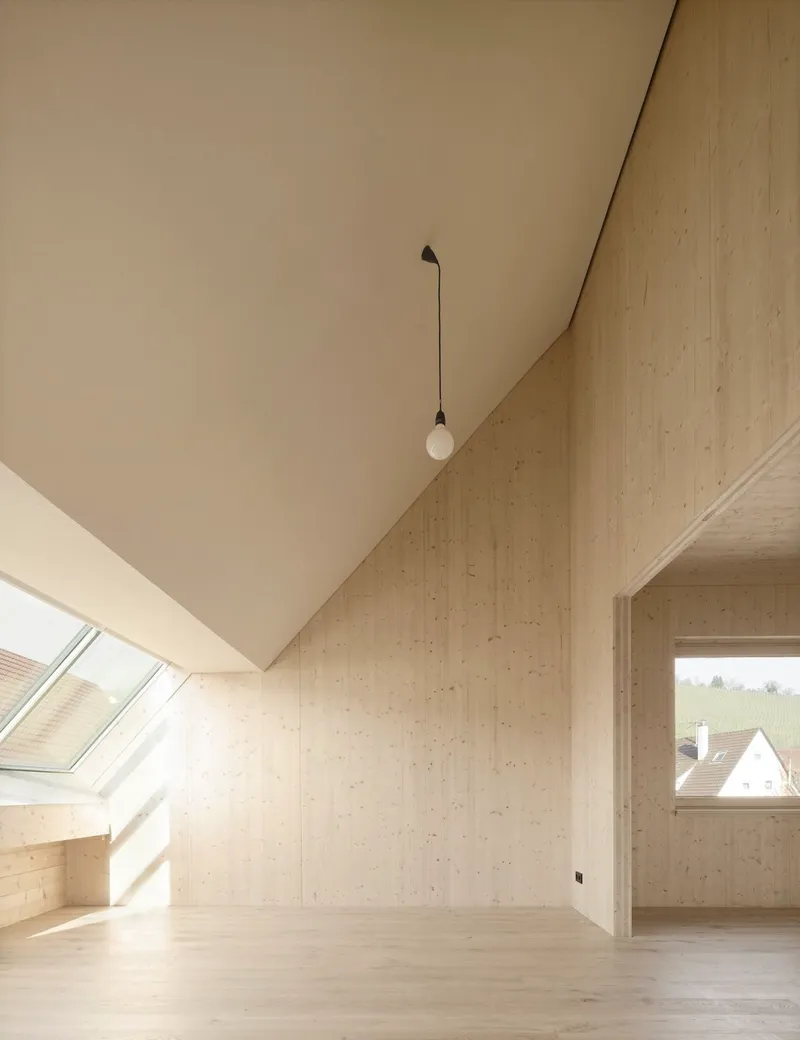
- North: the vineyards
- South: rooftops and distant landscapes
The home’s flexible design allows evolving uses: outdoor kitchens, workshops, granny flats, or living extensions. Inspired by Cité Verticale in Casablanca, the architects created a structure where residents shape the future uses of the home.
Eco-Friendly Materials and Smart Detailing
Every material was chosen for ecological balance and recyclability. Adhesives were minimized to allow easy separation of components. A sustainable building database was created to track materials and origins, setting a precedent for responsible construction practices.
- Straw + clay: Insulation and structure
- Wood (spruce, silver fir): Framework and facade
- Concrete base: Stability and elevation
- Recyclable fixtures and fittings: Responsible lifecycle design
Rethinking Rural Housing for the Future
House Hoinka is more than a home—it’s a model for sustainable rural living. By combining traditional village aesthetics with eco-conscious construction, Atelier Kaiser Shen shows how rural densification and green building design can coexist.
This project stands as an innovative milestone in straw bale construction, providing not only ecological benefits but also adaptability for future generations.
All the photographs are works of Brigida González



Popular Articles
Popular articles from the community


Lunar Spiral: Space Architecture Shaped by the Mathematics of the Universe
Lunar Spiral reimagines space architecture through Fibonacci geometry, lunar regolith, levitating habitats, and self-sustaining Moon living.

Co-Life: Senior Housing Design That Reconnects Older Adults With the City
Co-Life reimagines senior housing design through healing gardens, shared streets, workshops, and a sustainable community across generations.

The Musturak Paradise: Senior Living Architecture for a Connected Future in Temara, Morocco
The Musturak Paradise reimagines senior living architecture in Temara via private homes, social spaces, culture, community, and shared care.

Riyadh For All: Intergenerational Urban Design for Active Aging in Rabat
Riyadh For All reimagines urban design in Rabat with intergenerational co-living, adaptive courtyards, and Moroccan cultural exchange today.
Similar Reads
You might also enjoy these articles


Hodi-Mandai Geram
Project Function: Preservation and revitalization of the Intangible heritage and socio-spatial identity of the Hodi by Housing, Cultural Memory Center, Sacred Grove, landscape, local tourism economy


Olio Towers: A Mid-Rise for Performers That Fuses Housing, Rehearsal, and Stage
Located blocks from Houston's Theater District, this modular tower stacks living units around a central performance atrium.

Oasis: Modular Green Housing Carved into Dhaka's Urban Fabric
A shortlisted Plugin Housing entry reclaims unauthorized settlements in Dhaka with stepped concrete volumes, green roofs, and ventilation-driven design.

Black Hole: A Floating Megastructure for the Post-Physical Era
Emiliano Mazzarotto envisions a spherical, self-scaling arena where e-sports, digital hotels, and holographic stadiums replace traditional public space.
Explore Housing Competitions
Discover active competitions in this discipline



Challenge to reimagine the Iron Throne


Photograph architecture without architects


Illustrate the lost glory of Angkor Wat - Render Challenge


Design challenge to reuse E-waste
Comments (0)
Please login or sign up to add comments
No comments yet. Be the first to comment!