

House in Cieneguilla: A Brutalist House Design Rooted in Peruvian Cultural Heritage
A brutalist house in Peru that blends monolithic design with cultural memory and natural materials inspired by pre-Hispanic architecture.


A Sculptural Mass in the Lurín River Valley
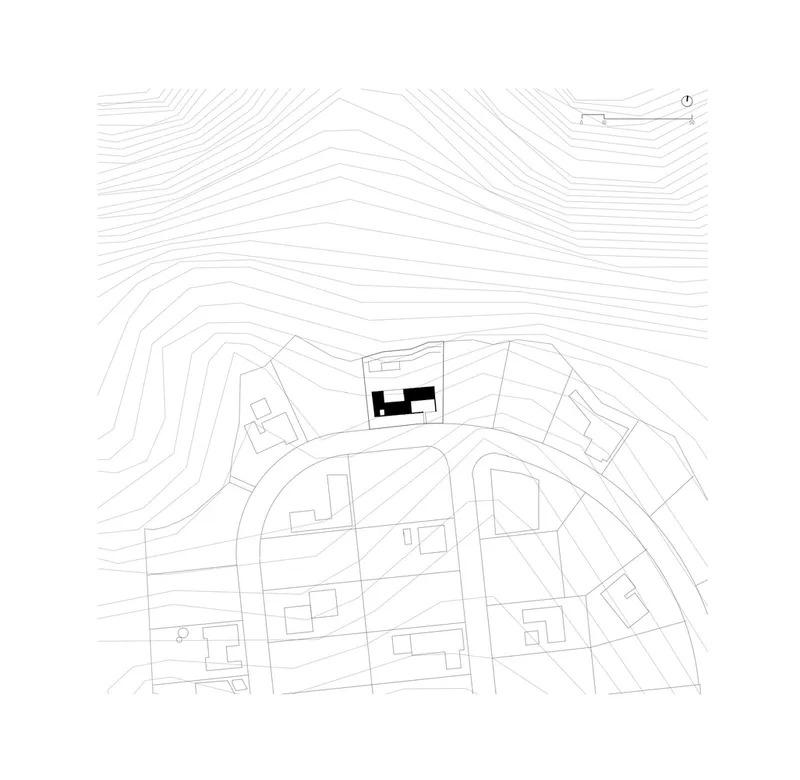
The House in Cieneguilla, designed by Vásquez & López Arquitectos, is a prime example of brutalist house design deeply embedded in the cultural and physical landscape of Peru. Situated in the Lurín River Valley, an area historically inhabited by pre-Hispanic civilizations, the house responds to both context and memory with a bold architectural language defined by mass, void, and raw materiality.
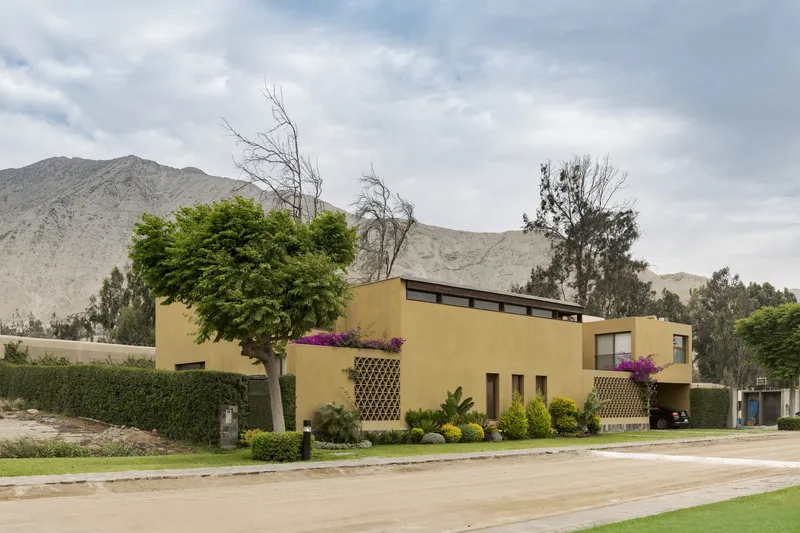
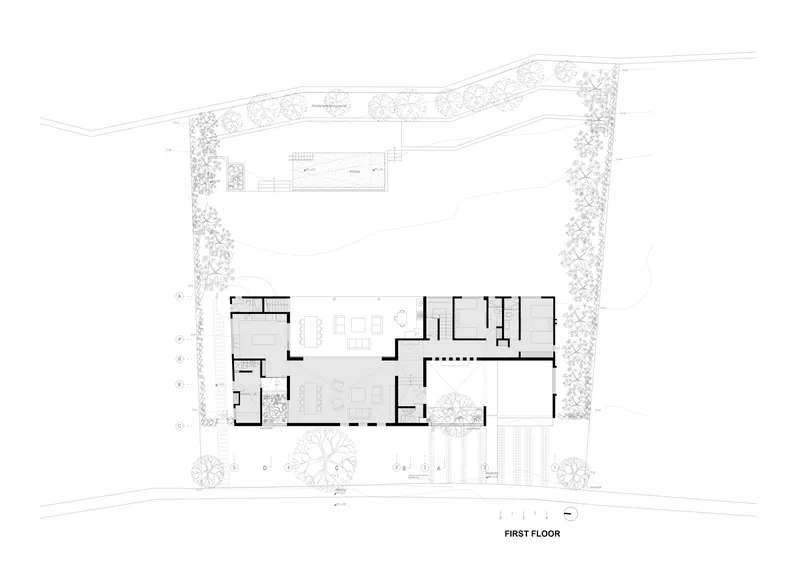
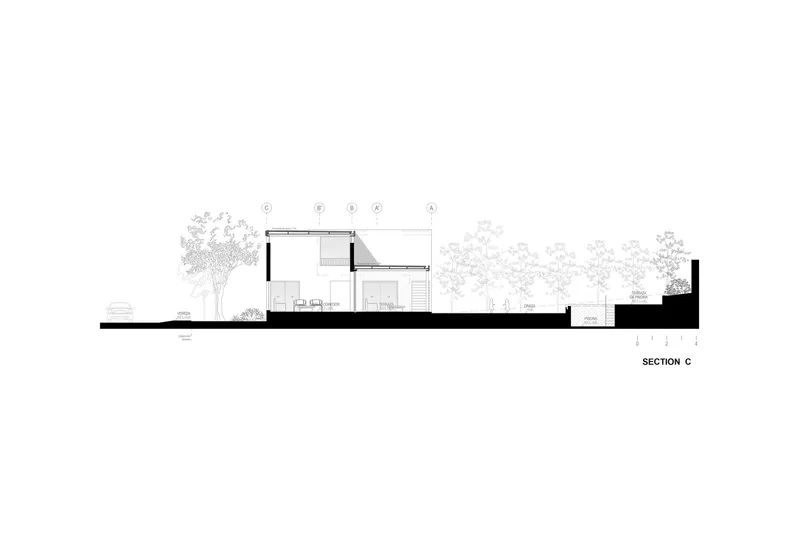
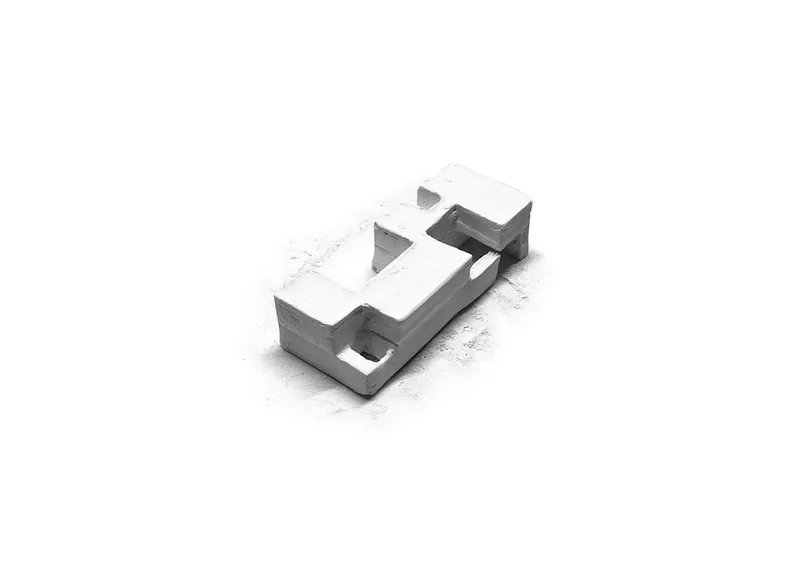
Occupying the full width of the plot’s front, the structure asserts itself as a monolithic block. This deliberate stereotomic gesture—where architecture is carved rather than assembled—creates a sense of permanence, weight, and timelessness. The rear of the lot is left open, reserved for the family’s private life and connection to nature.
Spatial Choreography Through Carved Volumes
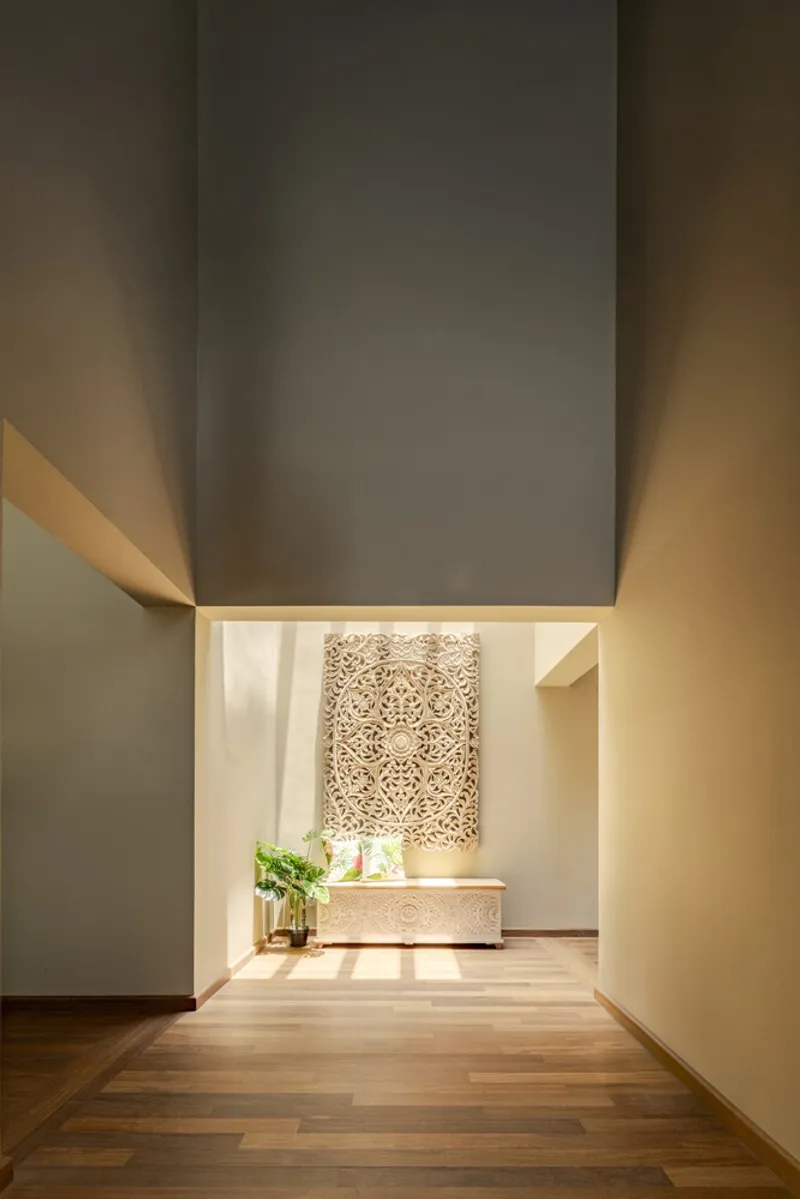
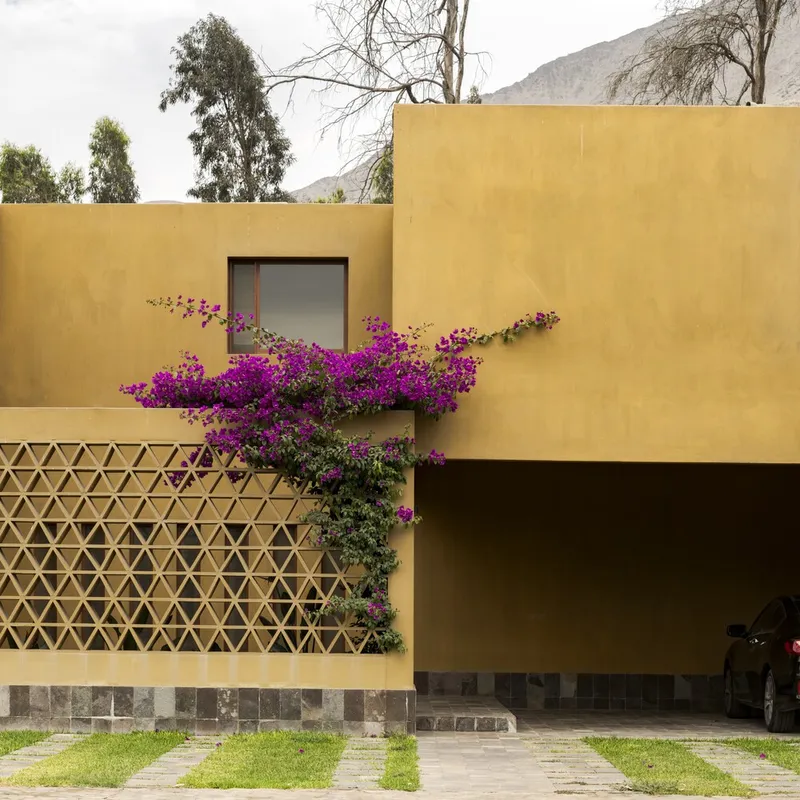
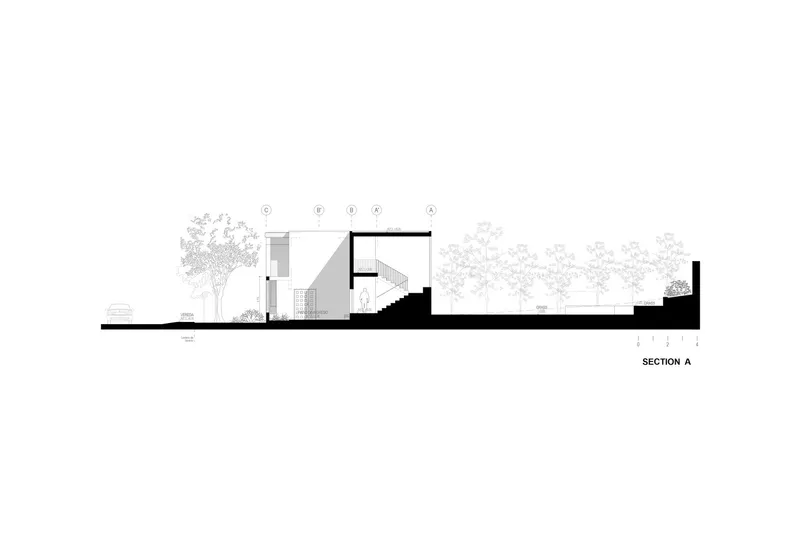
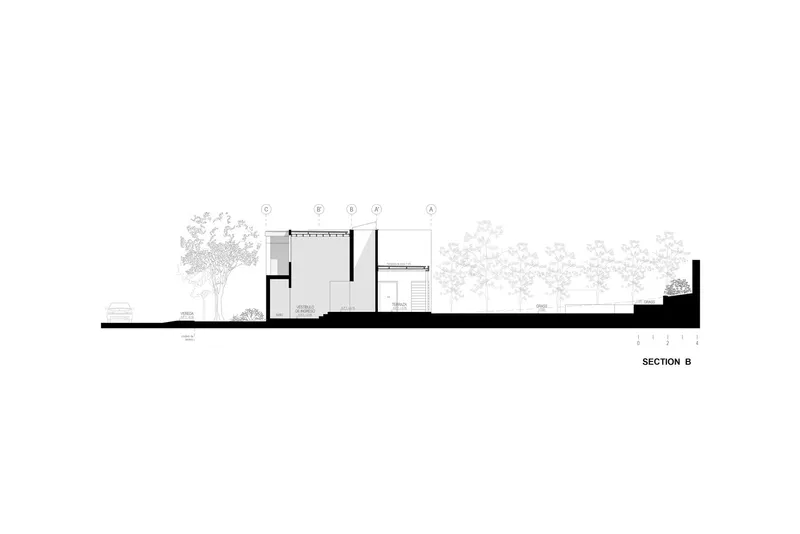
Rather than functioning as a simple container, the house is sculpted from within. The entry sequence is a carefully composed narrative of spaces that slow movement and frame experience. A large opening in the solid facade forms an intimate patio—a pause between the outside world and the interior realm.
The entrance lobby introduces a level change that interrupts flow and encourages mindfulness. From this transitional space, the staircase ascends to reveal the rear landscape, using light, rhythm, and form to orchestrate a sense of discovery. The architecture gradually opens up, with rooms like the dining area and kitchen offering framed views of the mountains.
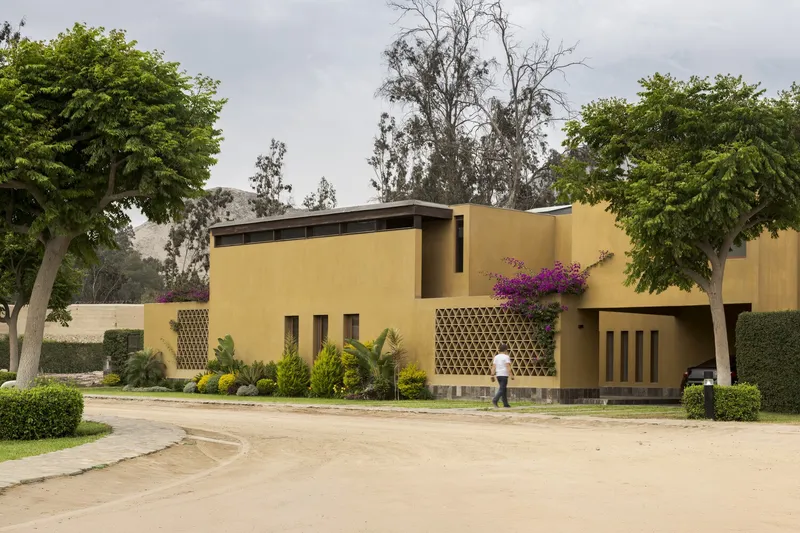
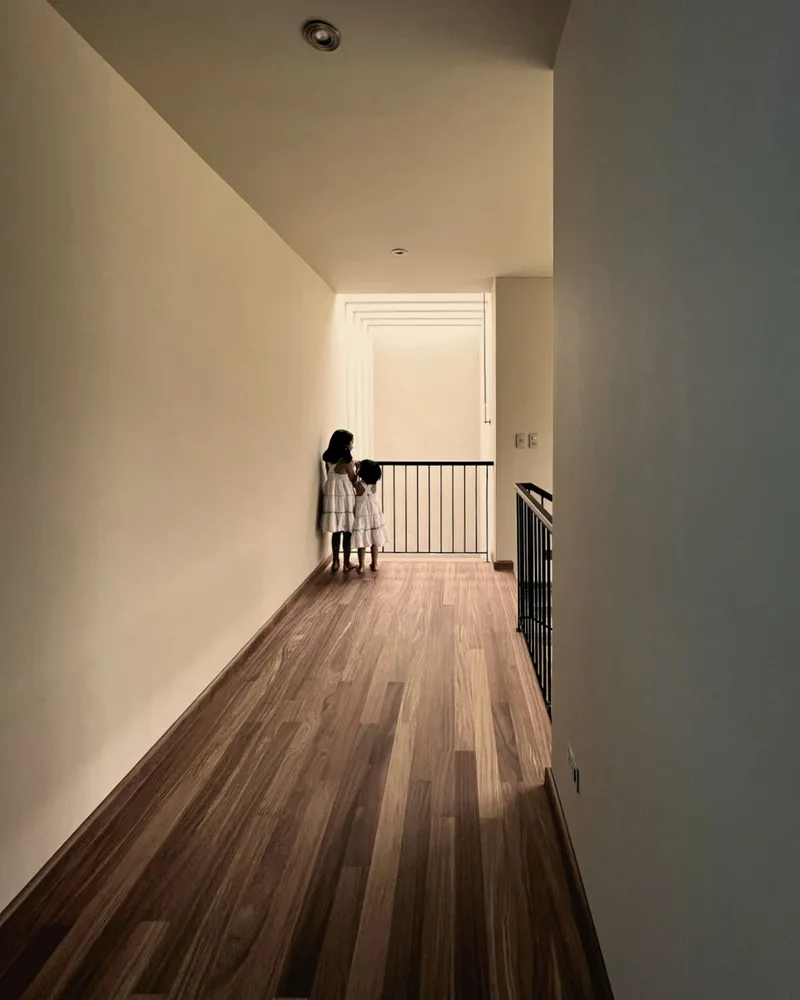
Interior spatial transitions are not abrupt. Circulation paths and lighting conditions are used to define zones of privacy and openness, intimacy and exposure. The result is a rich interplay of enclosure and release, grounding and levity.
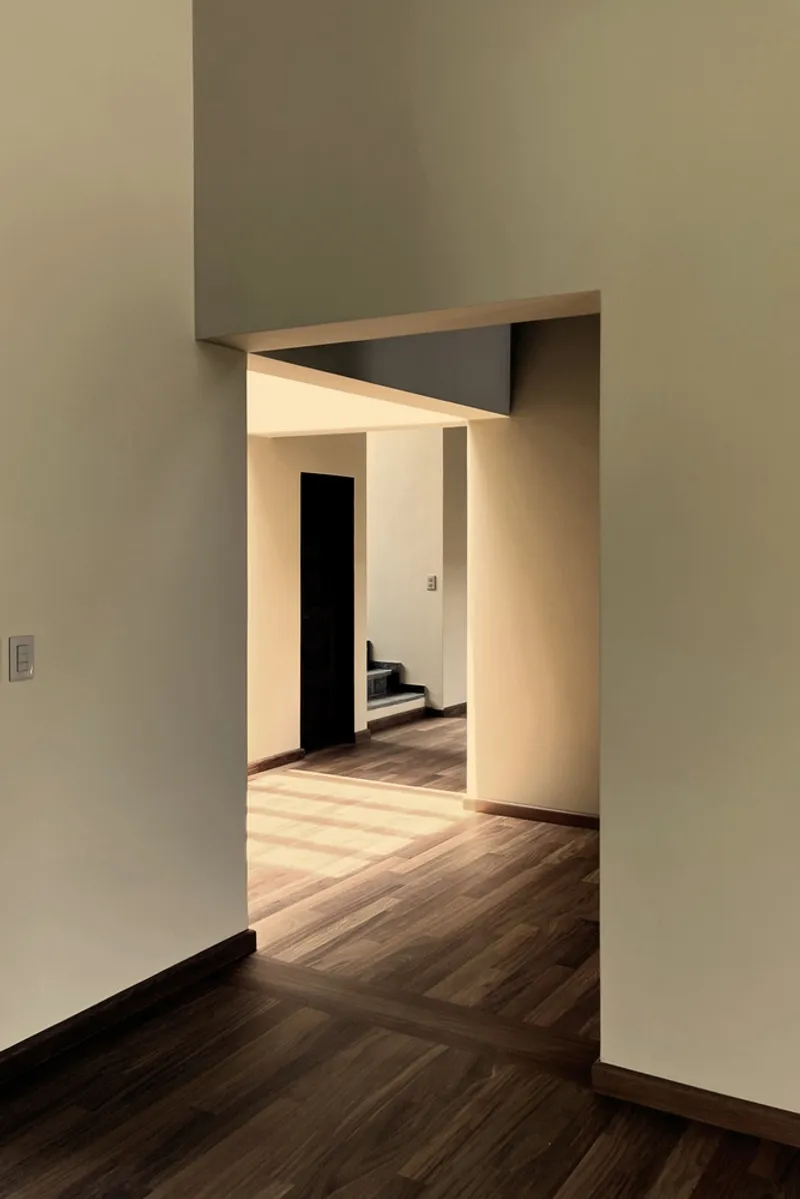
Materiality Reflecting the Valley’s History
Brutalist house design here isn’t merely a stylistic choice—it is a cultural response. The materials are drawn directly from the valley’s traditional building practices. Local stone and textured surfaces define patios, terraces, and transitional areas, while wooden ceilings and floors soften the mass and offer warmth within the concrete framework.
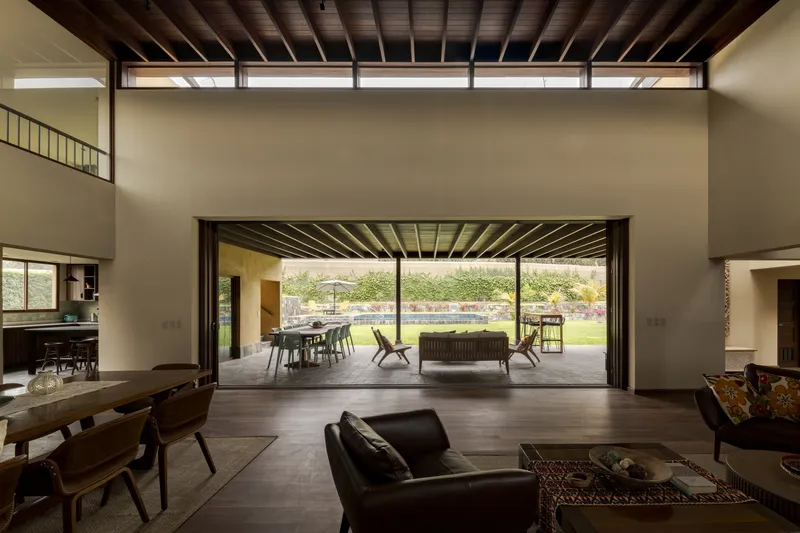
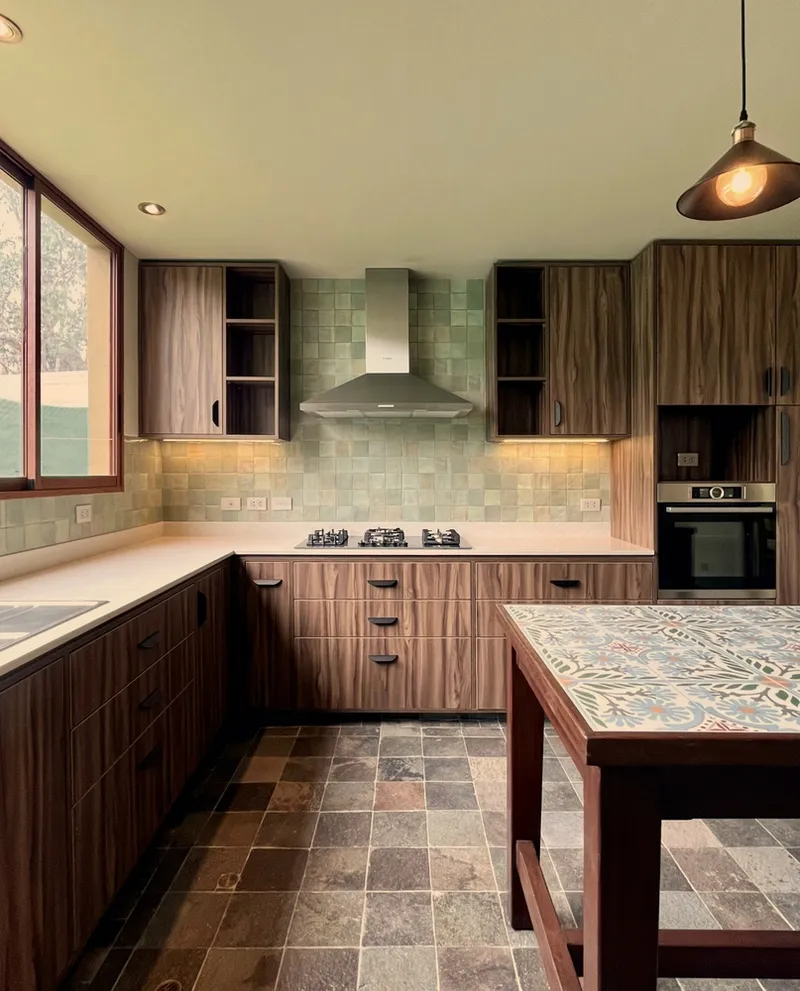
Exterior walls carry the rough tactile quality of earthen construction, evoking the rawness of pre-Hispanic structures. The flooring of the open areas, including the kitchen, features local stone, reinforcing the sense of place and grounding the building in its context.
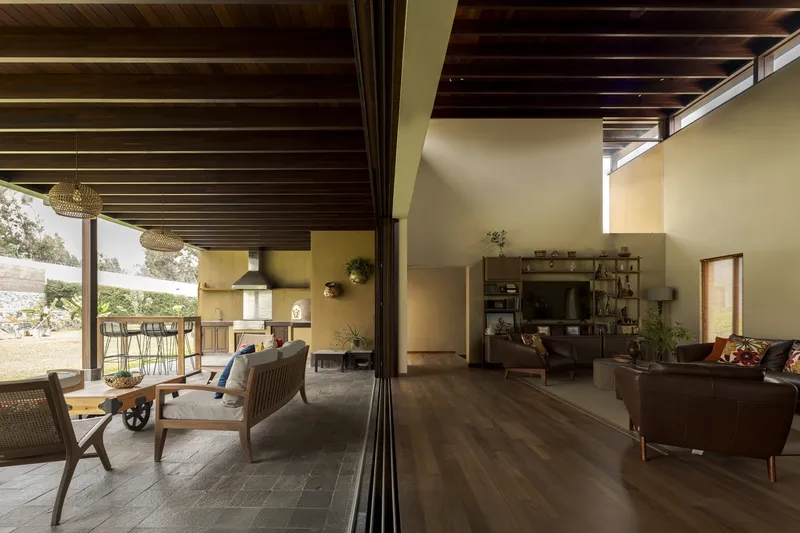
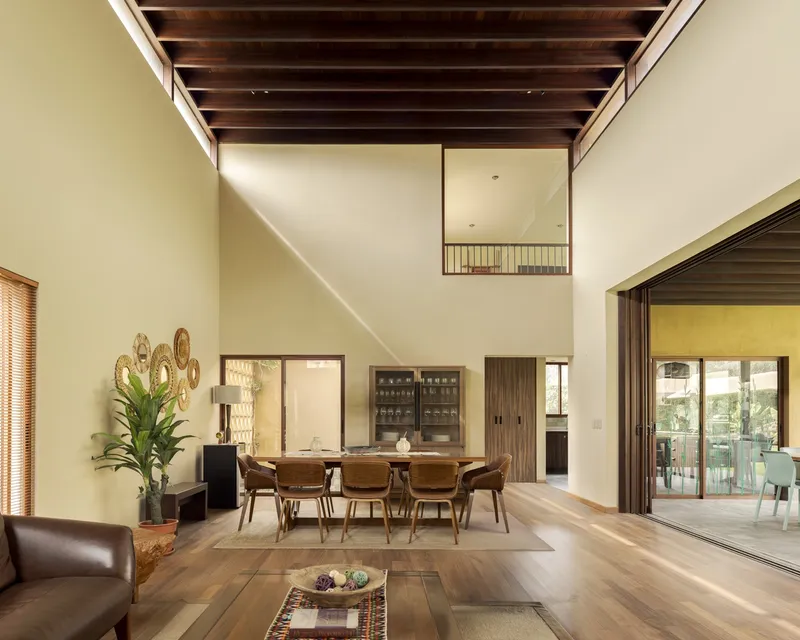
The vast living room is crowned with a dramatic double-height wooden ceiling, bringing natural materiality into the spatial hierarchy. This elemental combination of concrete, stone, and wood establishes a dialogue between ancient vernacular forms and contemporary living.
Programmatic Clarity and Layered Intimacy
The layout is straightforward yet nuanced. Social areas are organized along a central hall, connecting the living and dining spaces to a generous terrace that merges with the rear garden. The kitchen is strategically placed to serve both indoor and outdoor zones, maintaining connectivity with the household’s daily flow.
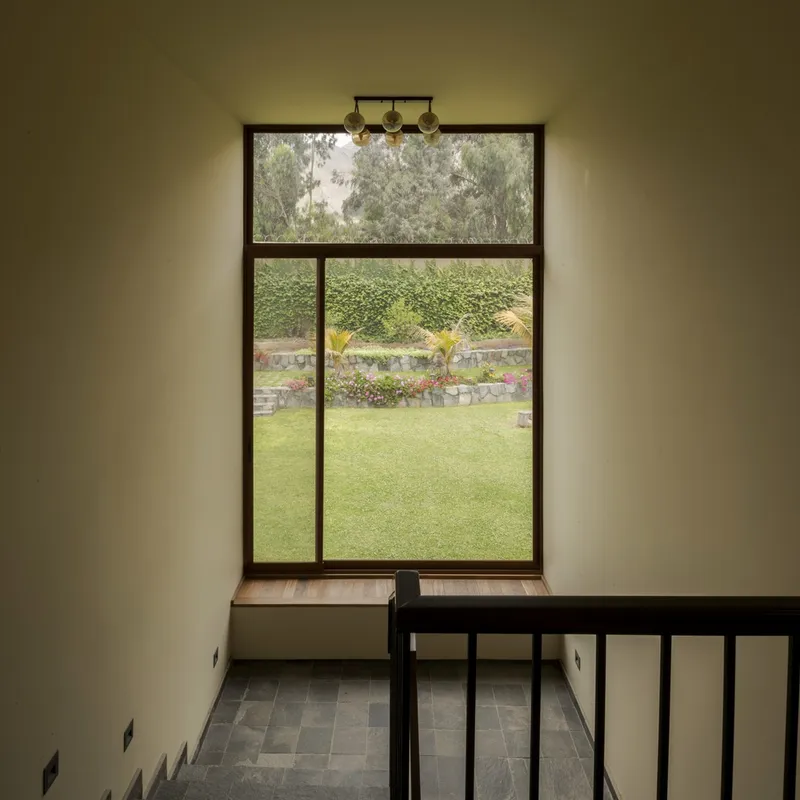
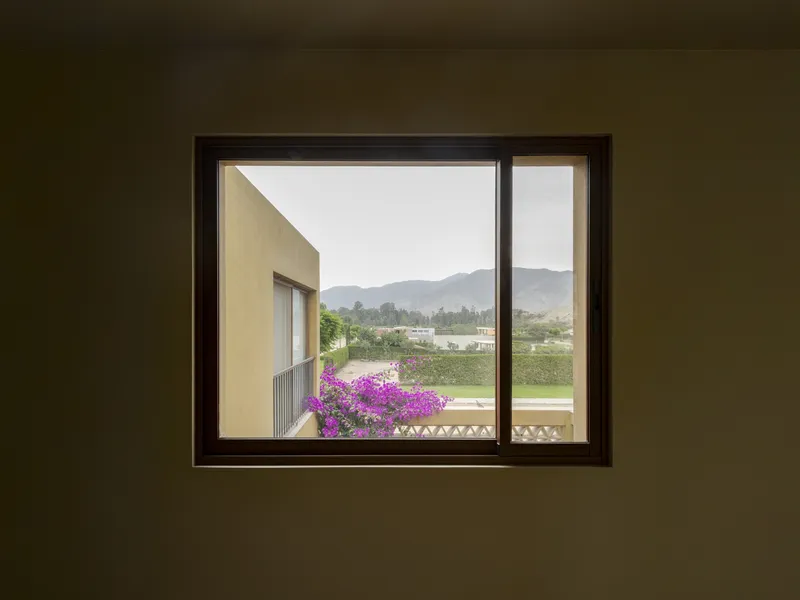
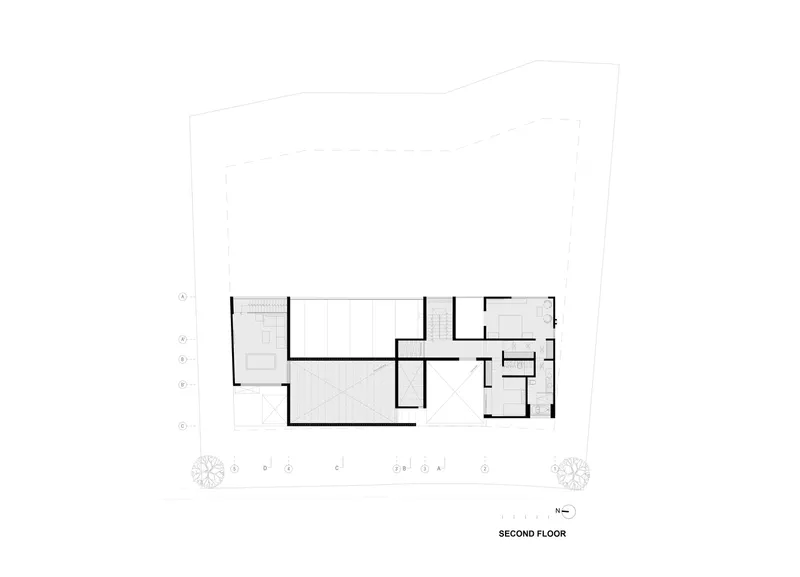
Private quarters are arranged across two levels. The lower floor hosts two secondary bedrooms, while the upper floor accommodates additional rooms, including the master suite. A game room sits independently above the kitchen, accessible from the terrace, adding another layer of flexibility and privacy within the residence.
A Brutalist Manifestation of Cultural Continuity
The House in Cieneguilla transcends aesthetics—it is an architectural response to history, climate, and tradition. It harnesses the brutalist house design language to express a powerful connection to land and ancestry. Rather than romanticizing the past, the architecture reinterprets it through contemporary forms and spatial strategies, producing a home that feels both ancient and forward-looking.
Its sculptural mass, material honesty, and sensory transitions make it a remarkable example of how architecture can embody place, memory, and function in equal measure.


Popular Articles
Popular articles from the community


Manzana Morphosis: Stretching Barcelona's Grid into a Living Landscape for 2050
A radical reworking of the Eixample manzana turns density into a tool for generous public space, vertical ecology, and environmental performance.


Cube Design Draws an Ecological Corridor Between Two Shenzhen Hills with the Nankai Building
Beside Shenzhen's container docks, the Nankai Building pairs stacked balconies with a climbing green screen to connect two hillsides across its height.

Singing Woman: An Opera House That Performs Before the Curtain Rises
Ovidiu Cristian Pavel's conceptual opera house translates Estonia's choral identity into a sculpted waterfront landmark facing the Baltic Sea.

graciastudio Turns a Viewless Tijuana Lot Inward Around a Courtyard of Concrete, Timber and Trees
In Tijuana, Jorge Gracia's GA2 House stacks a timber-clad private floor over exposed concrete and replaces a missing view with a planted interior patio.

Similar Reads
You might also enjoy these articles
Cube Design Draws an Ecological Corridor Between Two Shenzhen Hills with the Nankai Building
Beside Shenzhen's container docks, the Nankai Building pairs stacked balconies with a climbing green screen to connect two hillsides across its height.

Praksis A and Studio Sted Bend a Red Timber Cabin Across the Granite of Norway's Southern Coast
On the southern Norwegian coast, a 105 m² cabin follows the rock on slender posts, pairing red cladding outside with pine, brick and plywood within.

David Ortega Stacks a Two-Story Mexico City Penthouse Around a Steel Stair and a Pergola-Shaded Roof Terrace
In Colonia Roma, a 300 m² penthouse uses oak joinery, a planted steel stair and a slatted roof pergola to make a new-build apartment feel like a house.

PARALELA and LB2 Thread a Public Walkway Through the Base of a Las Condes Residential Tower
In Las Condes, Santiago, the Hamlet Building gives its fenceless ground floor to a 70-metre wooded passage linking two streets and the metro.

Explore Brutalist Architecture Competitions
Discover active competitions in this discipline

Challenge to reimagine the Iron Throne

Photograph architecture without architects

Illustrate the lost glory of Angkor Wat - Render Challenge

Design challenge to reuse E-waste
Comments (0)
Please login or sign up to add comments
No comments yet. Be the first to comment!