

House in Gakuenmae by KKAA YTAA: Compact Living Connected with Nature in Nara, Japan
A compact, nature-integrated home for a young couple, blending light, greenery, and flexible indoor-outdoor spaces in Nara, Japan.


Architects: KKAA YTAA
Designed for a newlywed couple balancing busy professional lives, the House in Gakuenmae embraces a compact lifestyle while maintaining close connections with nature. Nestled in a serene valley in Nara, the site benefits from natural groundwater flows from an upstream reservoir, creating a unique ecological context. The architects prioritized creating light-filled, airy spaces, even within a modest 79 m² footprint.
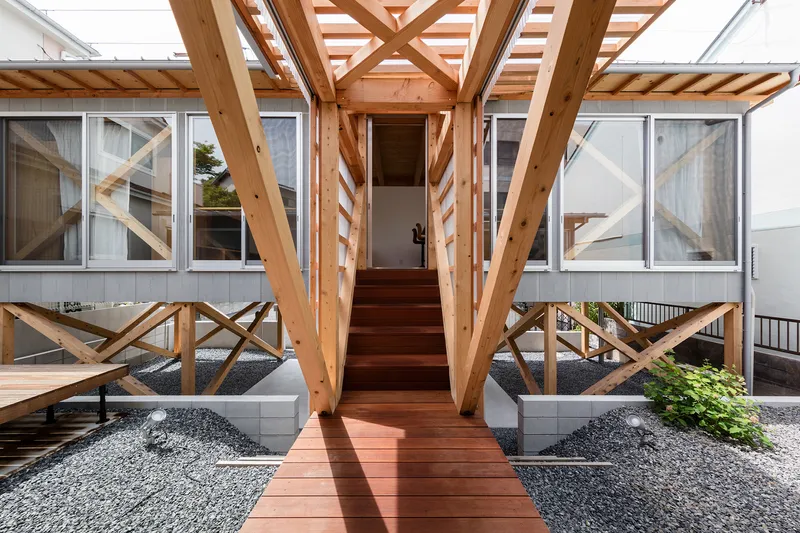
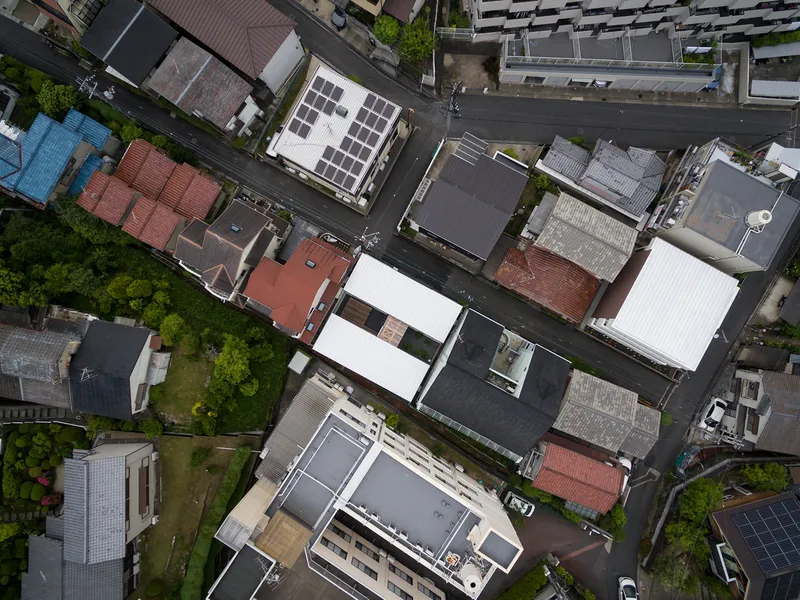
The surrounding neighborhood features rental apartments, vacant houses, and narrow 4-meter roads. While quiet and low-traffic, the area initially lacked the vibrancy and openness needed for modern family life. The architects’ solution was to split the building into two volumes, forming a central blank space that channels light, wind, and greenery into the heart of the home.
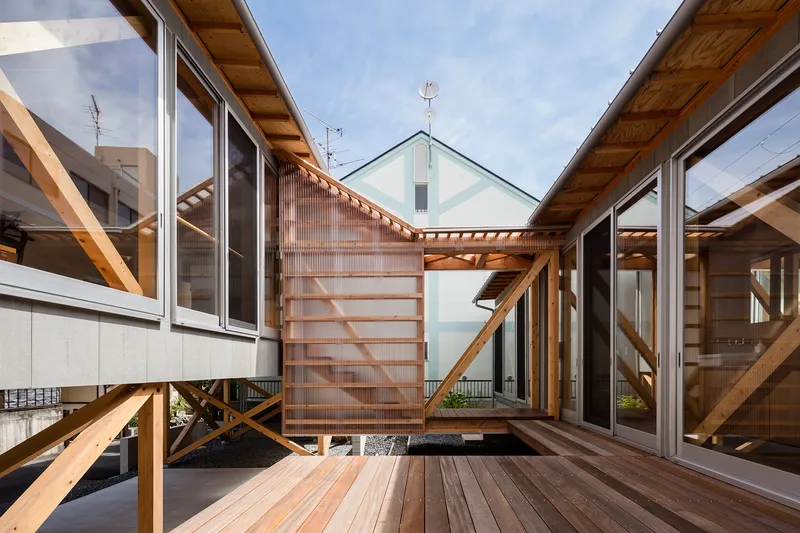
Integrating Topography and Privacy
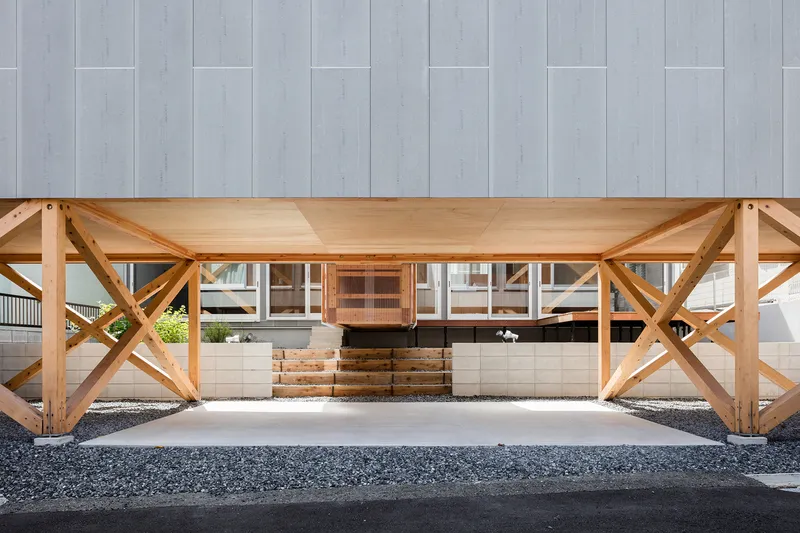
The site has a natural height difference of roughly one meter from the roadside to the rear. To address construction cost constraints and moisture from groundwater, the roadside volume is elevated. This high-floor configuration accommodates a parking area beneath the home while allowing passersby to enjoy glimpses of greenery and light without compromising the family’s privacy.
By raising the structure, the architects also enhanced natural ventilation and daylighting. Gaps between the elevated floors create visual and spatial connections between the home, the surrounding landscape, and the city, fostering a sense of openness uncommon in compact urban housing.
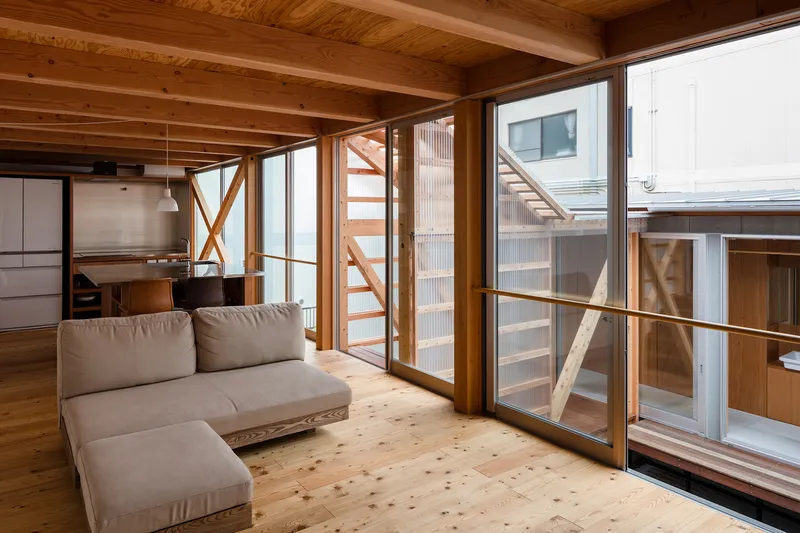
Flexible Semi-Outdoor Spaces
A bridge connects the two separate volumes, creating a unique transitional space that is neither fully indoor nor outdoor. The walls of this bridge and adjacent spaces can be opened or closed depending on seasonal needs, offering versatile configurations.
- External use: Wind flows freely, allowing the space to function like a micro-garden or balcony.
- Internal use: Acts as a connecting corridor between living areas.
- Semi-outdoor use: Links decks and green spaces, merging family life with nature.
This design strategy ensures that daily living engages both interior comfort and outdoor sensory experiences, creating a home that feels larger and more connected than its actual size.
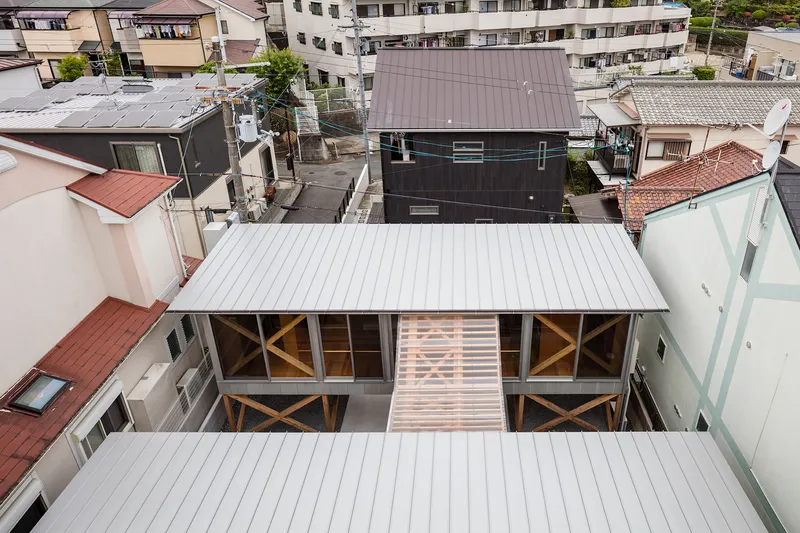
Materials and Construction
The architects employed KMEW and KOUSEI materials for cladding and finishes, integrating natural textures with clean, minimalist lines. IKESHO Co., Ltd. managed construction, while Ukyo Architectural Construction Office handled structural design, ensuring durability on a challenging, moisture-prone site.
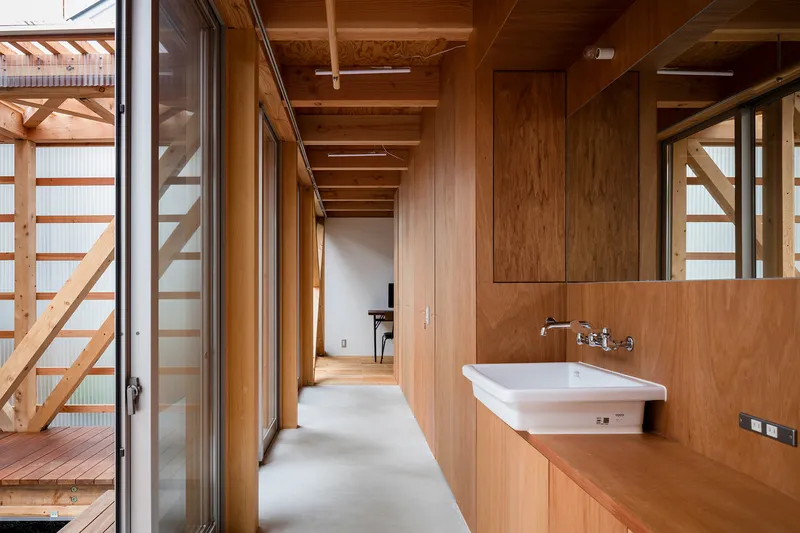
The interior features exposed beams, natural wood finishes, and large windows, maximizing visual connections to the surrounding greenery. Each room is thoughtfully oriented toward the central void or the outdoor landscape, enhancing daylight penetration and passive ventilation.
Architectural Highlights
- Split Volumes: Creates central void for light, wind, and greenery.
- Raised Floor Design: Provides parking below and improves privacy.
- Bridge Connection: Flexible indoor-outdoor semi-space connecting volumes.
- Natural Integration: Groundwater management, passive ventilation, and light optimization.
- Compact Footprint: Efficient 79 m² layout tailored for a young couple.
The home’s architecture embodies the principles of compact living, biophilic design, and urban privacy, while promoting a seamless relationship between family life and nature.
Experience and Lifestyle
The House in Gakuenmae transforms everyday routines into interactions with nature. Morning light filters through the central blank space, while gentle breezes circulate freely through open walls. This fosters a sense of calm and connection rarely found in densely built residential neighborhoods.
The flexible bridge and semi-outdoor spaces allow family life to extend beyond the interior, blending urban living with the therapeutic qualities of a natural environment. By rethinking the relationship between built form, topography, and open space, KKAA YTAA has created a home that feels both intimate and expansive, compact yet full of possibilities.
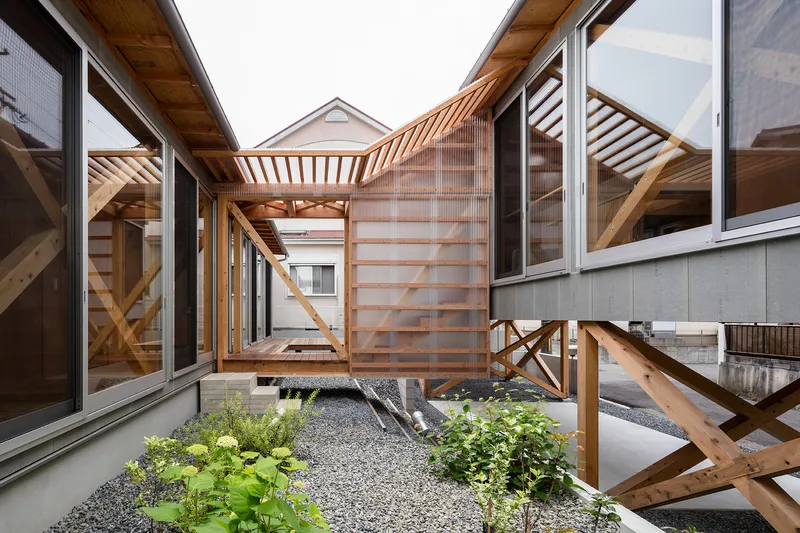

The House in Gakuenmae demonstrates how thoughtful architecture can reconcile compact urban living with nature immersion, daylight optimization, and spatial flexibility. Through split volumes, elevated floors, and a central connecting bridge, KKAA YTAA has crafted a home that enhances daily life, fosters connection to the environment, and redefines privacy and openness in contemporary Japanese housing.
All photographs are works of
Norihito Yamauchi



Popular Articles
Popular articles from the community


The Ocean Hive: Sustainable Architecture for a Self-Sufficient Civilization at Sea
The Ocean Hive imagines sustainable architecture at sea, where modular habitats, algae, wave power and ocean waste sustain a growing colony.

Co-Life: Senior Housing Design That Reconnects Older Adults With the City
Co-Life reimagines senior housing design through healing gardens, shared streets, workshops, and a sustainable community across generations.
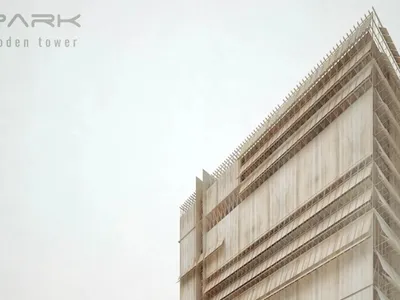
EW PARK: Sustainable Architecture Reimagines the Future of Urban Parking
EW PARK reimagines city parking as a modular wooden tower combining automation, solar energy, electric mobility, and adaptable urban design.

Hill & Cross Opera: Sculptural Opera House Architecture Shaped by Tallinn’s Landscape and Identity
Hill & Cross Opera reimagines opera house architecture in Tallinn through its sculptural hill, civic plaza, glass wave and a luminous cross.


Similar Reads
You might also enjoy these articles

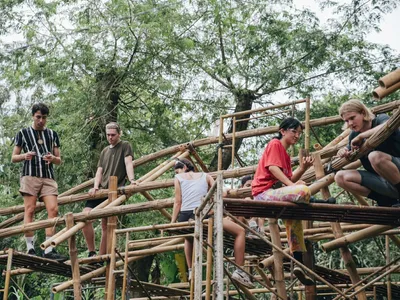
Bamboo Housing Challenge 2026: Design Affordable, Sustainable Homes Using Bamboo
An international design competition by Bamboo U and IBUKU inviting architects and designers to reimagine affordable housing using bamboo — with the winning design built full-scale in Bali.
Computational Design & Education: Beegraphy Design Awards Introduces 7th Category (Featuring Jiyun's Innovative Approach)
Dive into Beegraphy’s 7th Design Awards category, where computational design meets education to create immersive, interactive learning tools, inspired by Jiyun’s work.
From Parametric Lighting to Urban Furniture: Join the 2nd Workshop in Beegraphy’s Computational Design Series
Dive into Cutting-Edge Design Techniques and Practical Applications with Industry Experts

Last Call: Unleash Your Architectural Genius in SHAK's Kindergarten Design Competition
Urgent call for architects to join SHAK's kindergarten design competition before the looming deadline


Explore Architecture Competitions
Discover active competitions in this discipline



Challenge to reimagine the Iron Throne


Photograph architecture without architects


Illustrate the lost glory of Angkor Wat - Render Challenge


Design challenge to reuse E-waste
Comments (0)
Please login or sign up to add comments
No comments yet. Be the first to comment!