
House in Itu by Lucio Fleury Arquitetura: A Modern Italian-Brazilian Residential Design
House in Itu by Lucio Fleury Arquitetura blends Italian village charm with Brazilian outdoor living, featuring brick courtyards, terraces, and climate-responsive design.


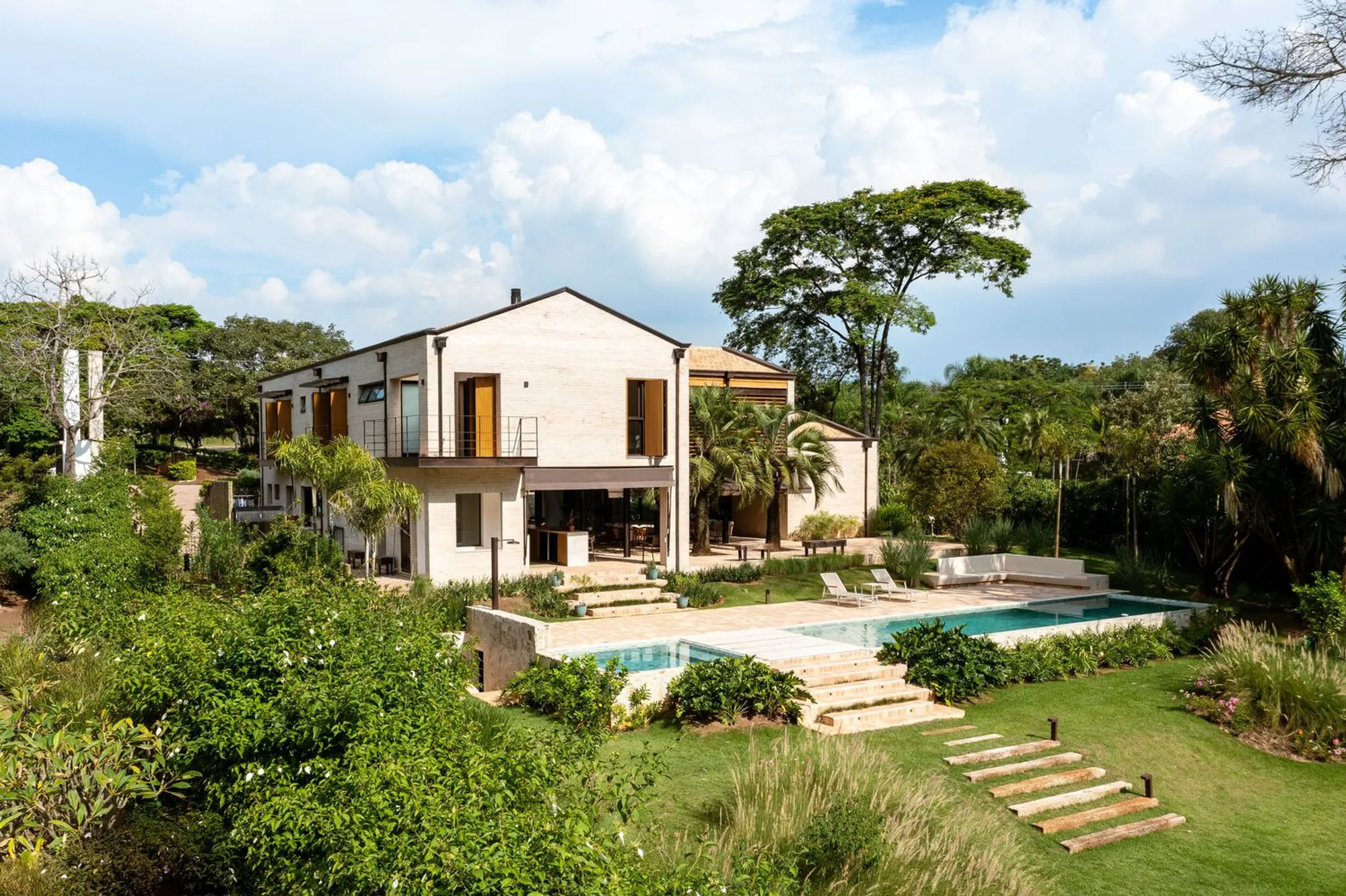
Nestled in the serene landscape of Itu, Brazil, the House in Itu by Lucio Fleury Arquitetura is a striking example of contemporary residential architecture that harmoniously blends Italian village charm with Brazilian vernacular elements. Completed in 2023 and covering a generous 520 m², this project showcases a thoughtful integration of landscape, volumetry, and outdoor living spaces, designed to respond perfectly to the clients’ unique lifestyle and the region’s climate.


Site and Design Challenges
The plot posed distinct challenges due to its 37-meter frontage, tapering along a 117-meter depth, combined with stringent condominium setback regulations. From the outset, the clients envisioned a residence reminiscent of an “Italo-country village,” prompting a design that balanced formal elegance with a warm, rural sensibility.
At the entrance, two articulated volumes define a welcoming plaza, completely free of walls or railings. A three-meter cantilevered marquee marks the port cochère, establishing a grand and functional arrival sequence for residents and guests.

Strategic Use of the Land’s Slope
The clients’ directive to take advantage of the land’s natural slope shaped the house’s circulation. Mid-level access was incorporated to simplify movement, whether carrying luggage to bedrooms or groceries to the kitchen. The resulting design is an L-shaped residence that surrounds a large courtyard, reminiscent of traditional rural barns.
The main circulation axis, aligned with the entrance, leads the eye toward three expansive terraces that extend into the lush garden. A subtle half-level descent into the living room and verandas strengthens the connection between indoor and outdoor spaces while maintaining a fluid spatial experience.

Italian Village Influence with Brazilian Essence
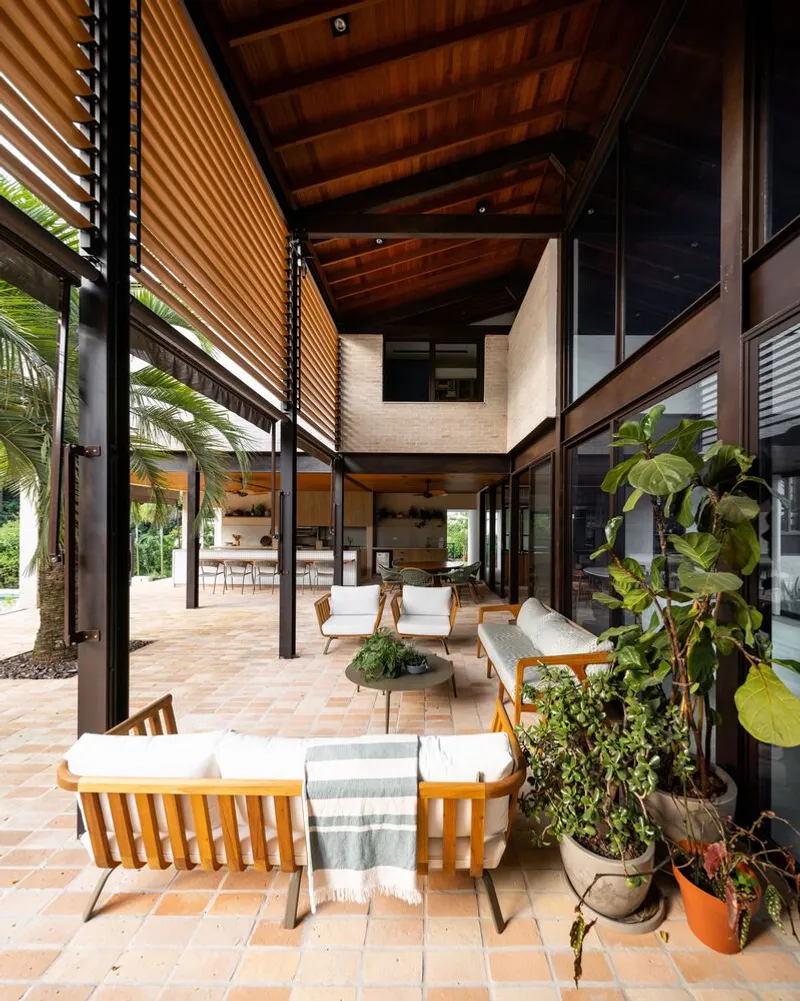
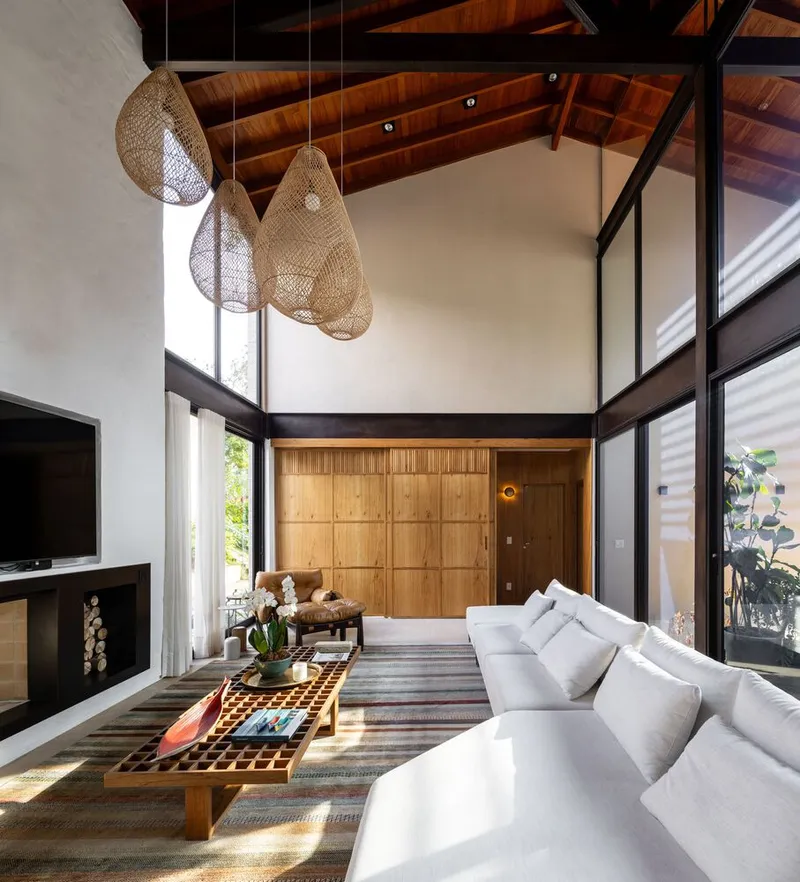
The concept continuously references the charm of an Italian village, translating it into the Brazilian context through verandas and open outdoor areas. Local brick, abundant in the region, dominates the courtyard and clads the house’s walls, promoting both aesthetic warmth and thermal comfort. The full-height glass living room facade is shielded by a veranda and two strategically placed trees, allowing ample natural light while mitigating heat gain.
Given Itu’s intense afternoon sun, the architects integrated an adjustable brise-soleil, ensuring optimal light control and maintaining comfortable interior temperatures throughout the day.

Interior and Outdoor Living
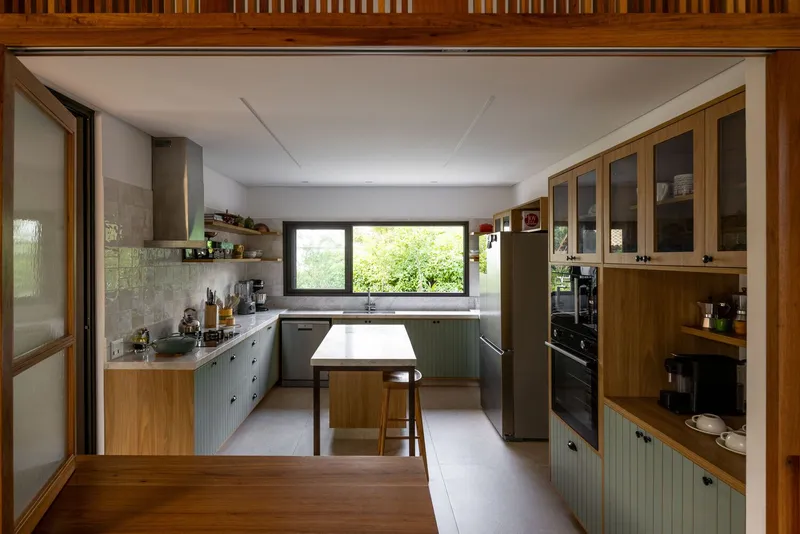
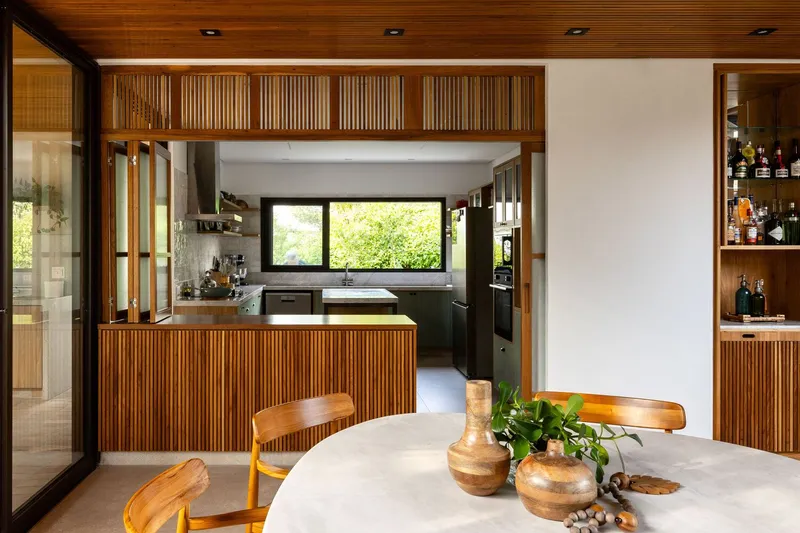
On the ground floor, the design accommodates two versatile guest bedrooms, with one capable of extending the living room via large sliding doors. A well-equipped outdoor kitchen is a central hub, reflecting the clients’ passion for cooking. From here, residents can descend to the pool area, seamlessly connecting to garden terraces along a continuous visual axis.
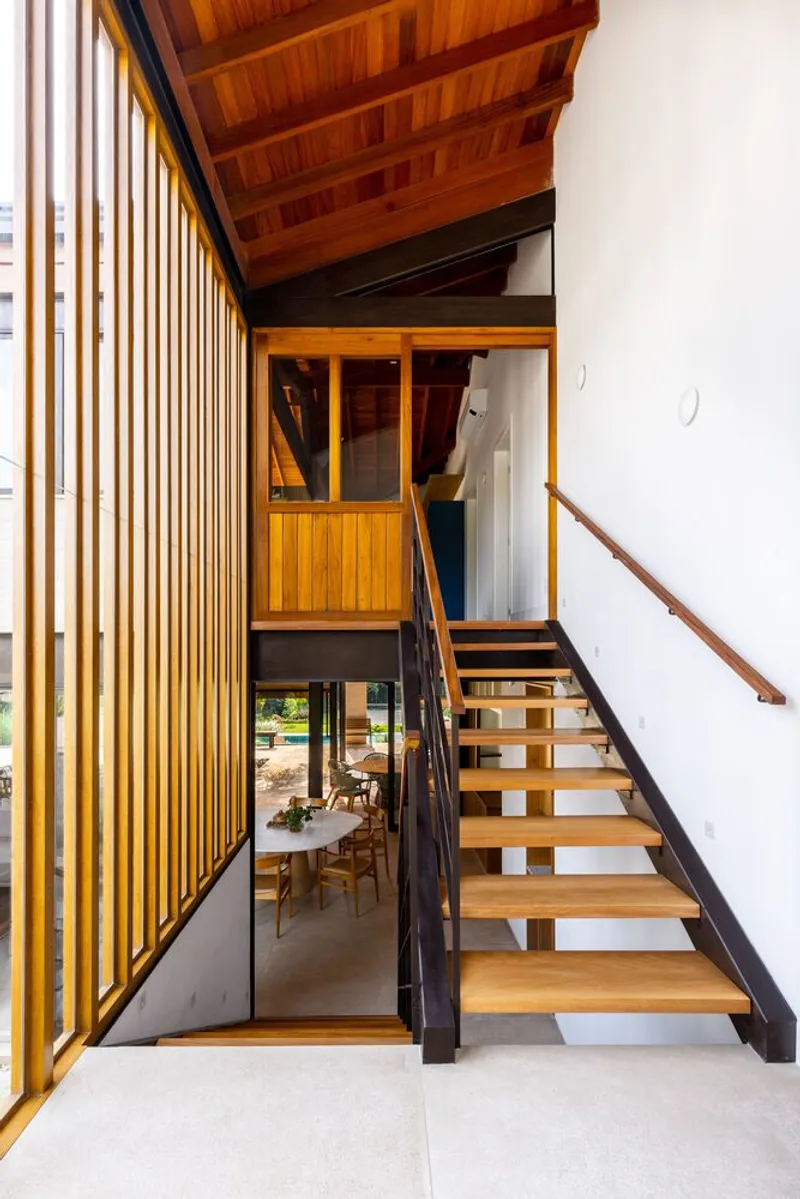
The upper floor features a mezzanine intimate living room overlooking the double-height ceiling of the living room below. Bedrooms receive abundant morning sunlight, while the master suite includes a terrace that integrates the bathroom with serene garden views, emphasizing connection with nature and enhancing the sense of privacy.

Materials and Sustainability
Lucio Fleury Arquitetura carefully selected materials to reinforce both sustainability and comfort. The extensive use of regional brick, combined with protective shading devices and integrated landscaping, ensures natural thermal regulation and reduces energy dependence. The project demonstrates an elegant balance between aesthetic refinement, environmental responsiveness, and functional planning.

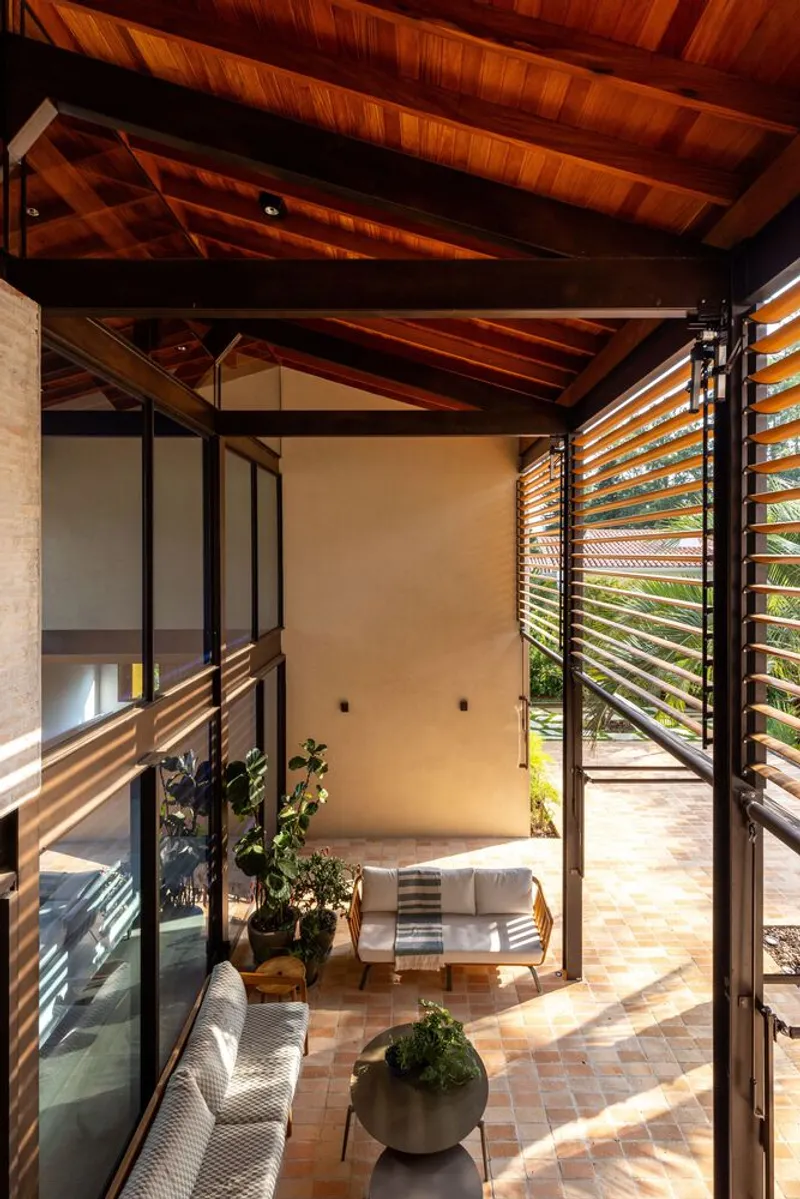
The House in Itu exemplifies modern residential architecture that bridges cultural inspiration and environmental responsiveness. By combining Italian village motifs, Brazilian outdoor living traditions, and innovative climate-responsive solutions, this project offers a blueprint for sophisticated, sustainable living in contemporary Brazil.

All photographs are works of
Manuel Sá




Popular Articles
Popular articles from the community


The Earth Pod: 3D Printed Homes for Resilient Refugee Communities
The Earth Pod reimagines refugee housing through 3D printed homes made from clay, combining resilience, self-sufficiency, and rapid shelter.

The Ocean Hive: Sustainable Architecture for a Self-Sufficient Civilization at Sea
The Ocean Hive imagines sustainable architecture at sea, where modular habitats, algae, wave power and ocean waste sustain a growing colony.

The Musturak Paradise: Senior Living Architecture for a Connected Future in Temara, Morocco
The Musturak Paradise reimagines senior living architecture in Temara via private homes, social spaces, culture, community, and shared care.

Riyadh For All: Intergenerational Urban Design for Active Aging in Rabat
Riyadh For All reimagines urban design in Rabat with intergenerational co-living, adaptive courtyards, and Moroccan cultural exchange today.


Similar Reads
You might also enjoy these articles

FAMM Arquitectura Organizes Ten Villas Around Courtyards and Jungle in Nosara, Costa Rica
El Molino pairs two elongated volumes with deep overhangs and timber louvers to build a compact coastal community five minutes from the beach.
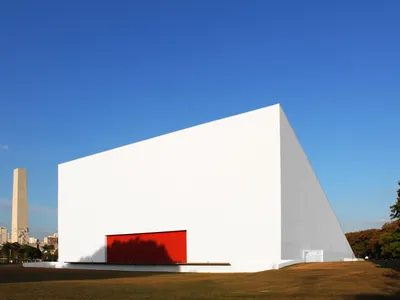
Oscar Niemeyer's Ibirapuera Park Pavilions Define São Paulo's Cultural Identity in Concrete and Curve
A constellation of modernist volumes set within São Paulo's most important urban park, conceived for the city's 400th anniversary in 1954.
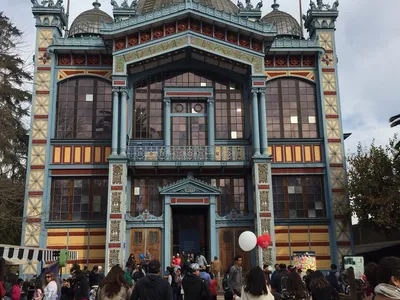
How Henri Picq's 1889 Paris Pavilion Traveled 11,000 Kilometers to Become Santiago's Artequín Museum
A prefabricated iron and glass pavilion built for the Paris Universal Exposition found a second life as a children's art museum in Chile.
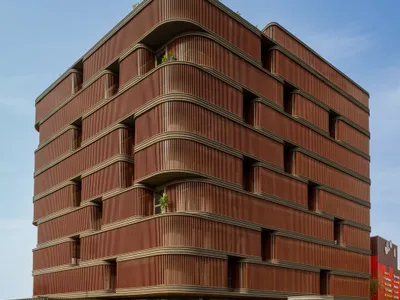
Sanjay Puri Architects Wraps a Jaipur Office Tower in Capsule-Shaped Green Buffers
A nine-level climate-responsive workplace near Jaipur Airport uses stacked planter terraces and aluminium screens to fight 40°C heat.


Explore Housing Competitions
Discover active competitions in this discipline



Challenge to reimagine the Iron Throne


Photograph architecture without architects


Illustrate the lost glory of Angkor Wat - Render Challenge


Design challenge to reuse E-waste
Comments (0)
Please login or sign up to add comments
No comments yet. Be the first to comment!