
House in Las Golondrinas – Sustainable Rural Design by Arquitecto Sebastián Miranda & Arquitecto Julián Ierace
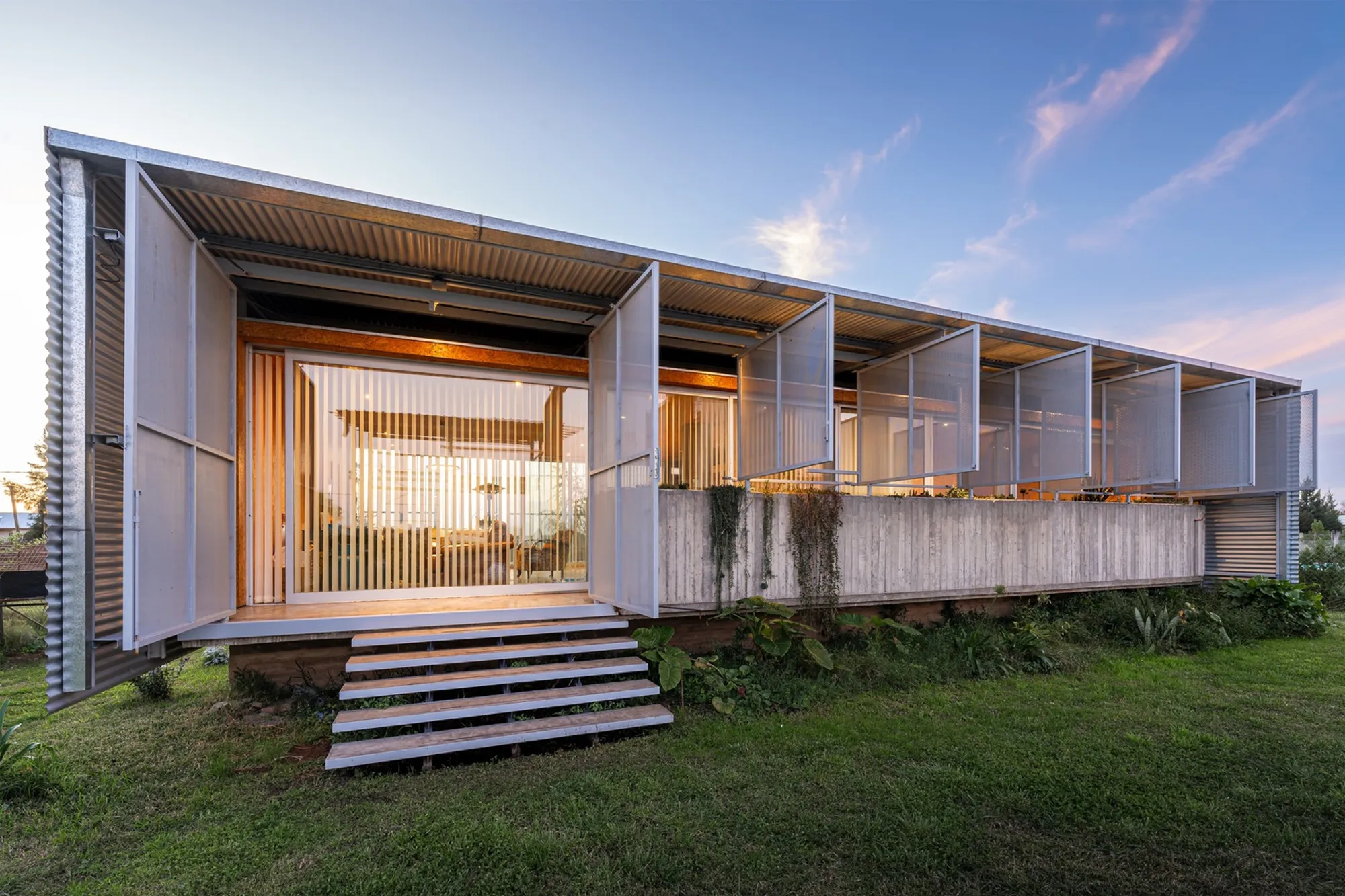
House in Las Golondrinas is a sustainable, semi-rural weekend home in Argentina, combining passive design, natural materials, and landscape integration.


Nestled within a rural cluster in Brandsen, Buenos Aires, alongside the tranquil San Luis stream, the House in Las Golondrinas is a thoughtful exploration of sustainable weekend living. Completed in 2023, this 1,798 ft² residence was designed by Arquitecto Sebastián Miranda and Arquitecto Julián Ierace for a couple seeking a simple, cost-effective, and environmentally sensitive retreat.
Contextual Integration and Rural Living
Positioned in the heart of the pampas plains, the house responds to its semi-rural surroundings with a design strategy that balances comfort, efficiency, and connection to nature. The architects approached this project as both an investigation and experimentation in domestic life in a rural context, emphasizing environmentally conscious technologies and integrated solutions. The dwelling operates as a cohesive system, harmonizing seamlessly with its landscape and local climate.
Architectural Design and Spatial Strategy
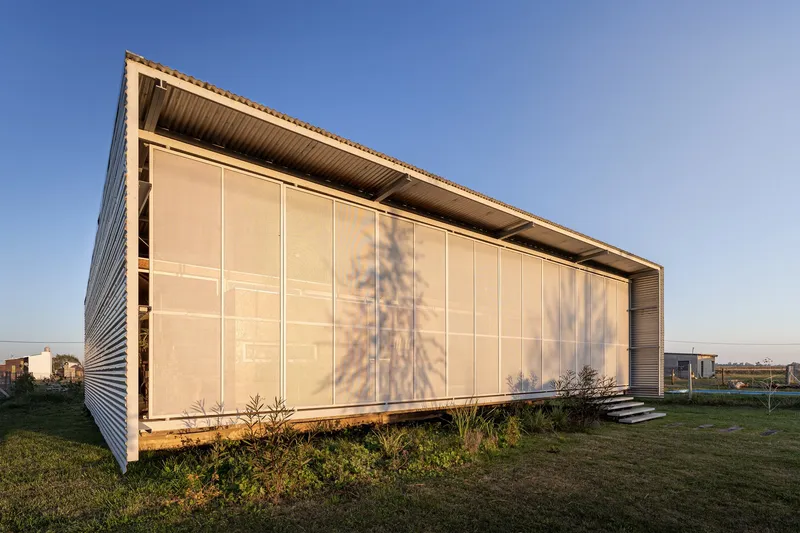
The main structure rests on a concrete platform supported by two prominent ground-level beams, creating cantilevered sections that elevate the home above the moist terrain near the brook. This solution not only mitigates potential flooding but also frames expansive views of the horizon, connecting the interior spaces to the surrounding landscape.
Inspired by Ludwig Mies van der Rohe’s Farnsworth House, the residence maintains a regular, uniform level that maximizes spatial flexibility. Social and private areas are articulated through intermediate humid zones, while concealed, large glazed enclosures enhance fluidity between interior and exterior spaces, expanding social zones seamlessly.
Sustainability and Passive Strategies
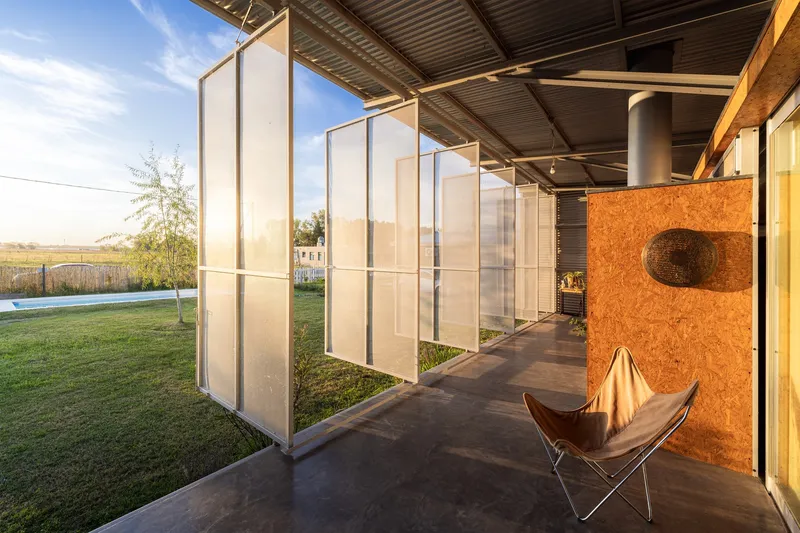
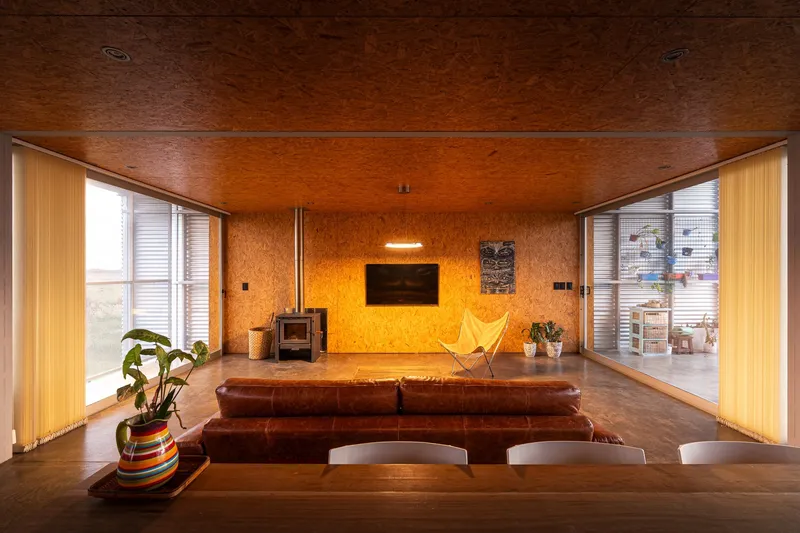
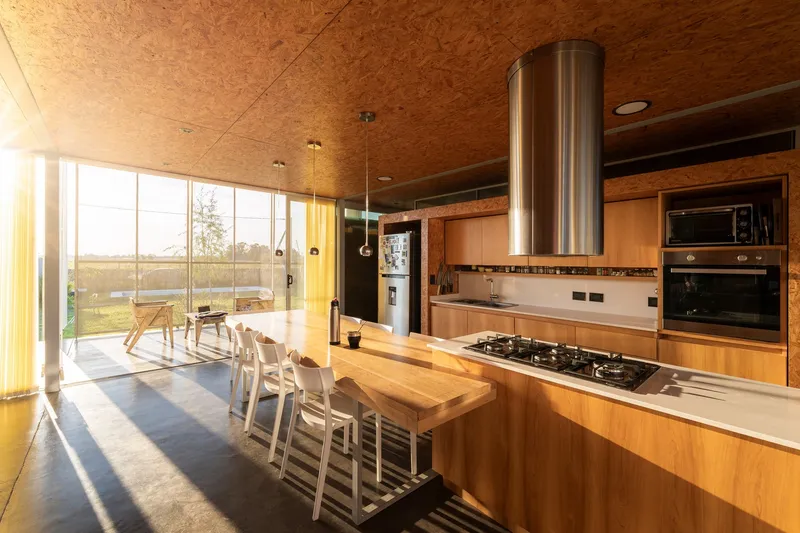
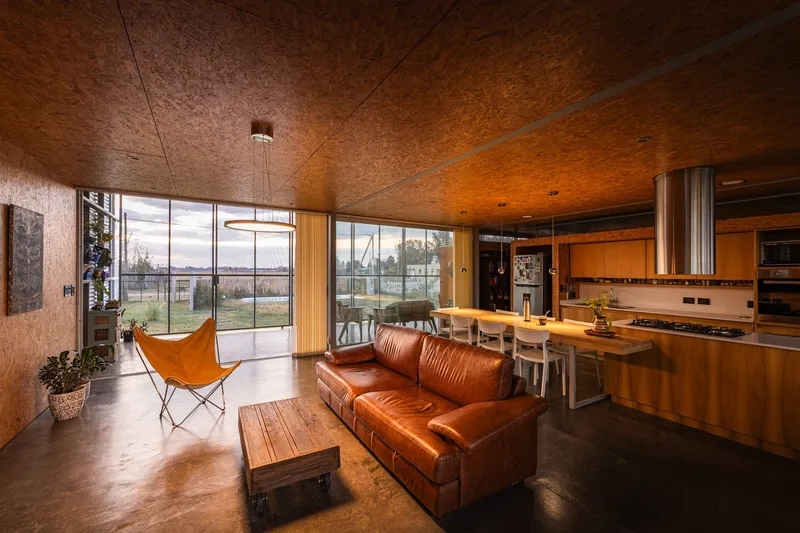
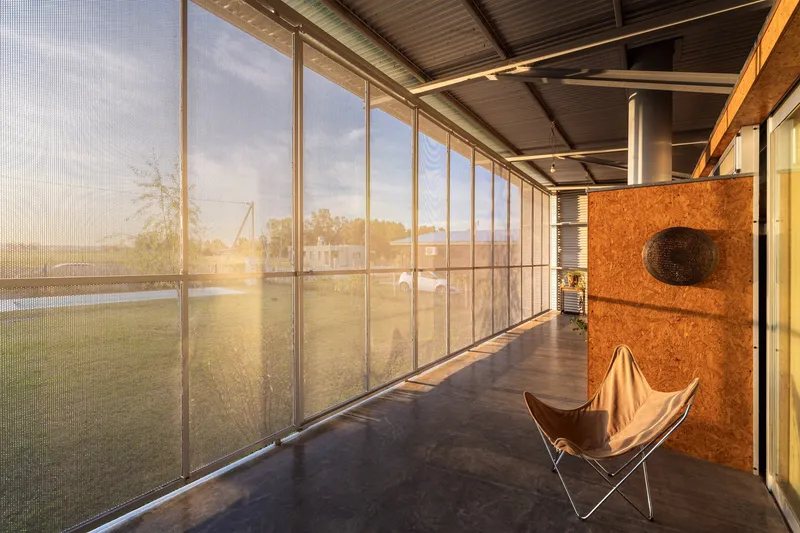
Sustainability is a core focus of the design. Passive strategies include strategically placed galleries, cross ventilation, solar incidence regulation, thermal insulation, and maximized natural light. Active systems such as rainwater harvesting for irrigation, a biodigester for sewage water, and a solar water heating collector further reduce the home’s environmental footprint. Interior walls feature phenolic sheets made from recycled wood shavings, providing the warmth and tactile comfort typical of rural cabins while promoting circular material use.
Innovative Envelope and Energy Efficiency
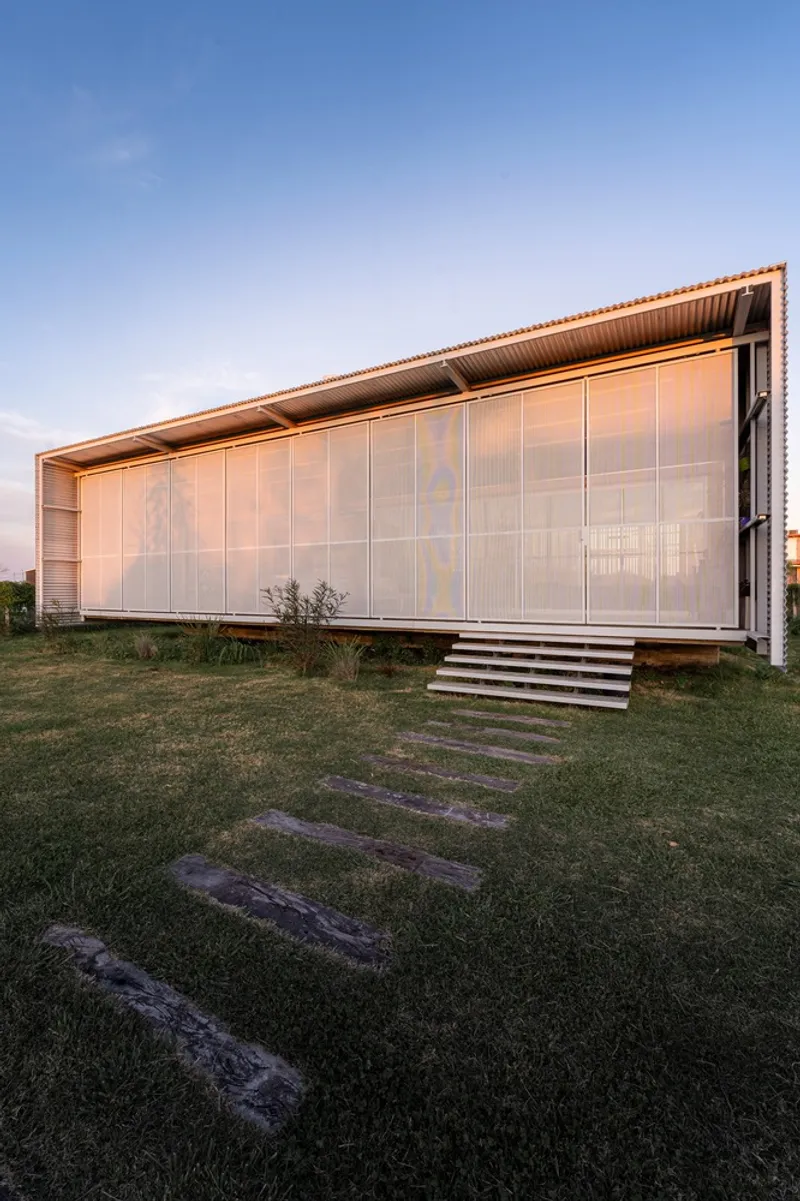
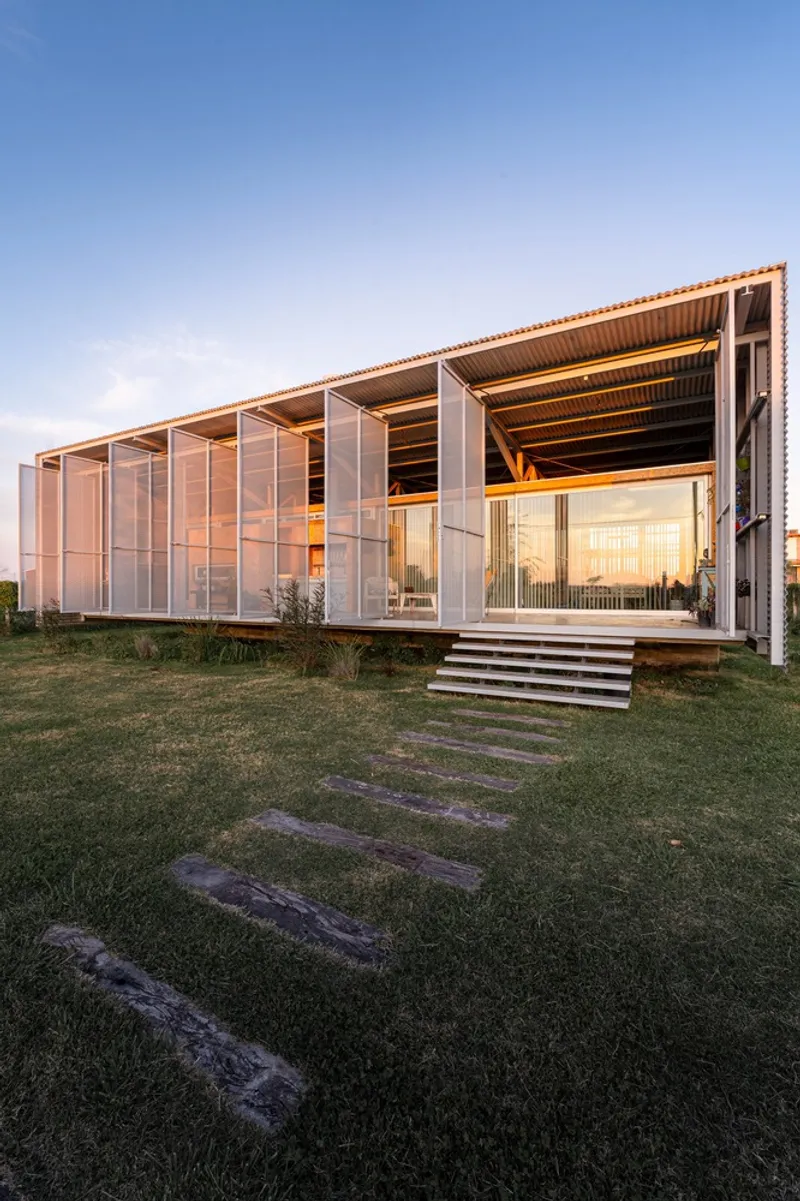
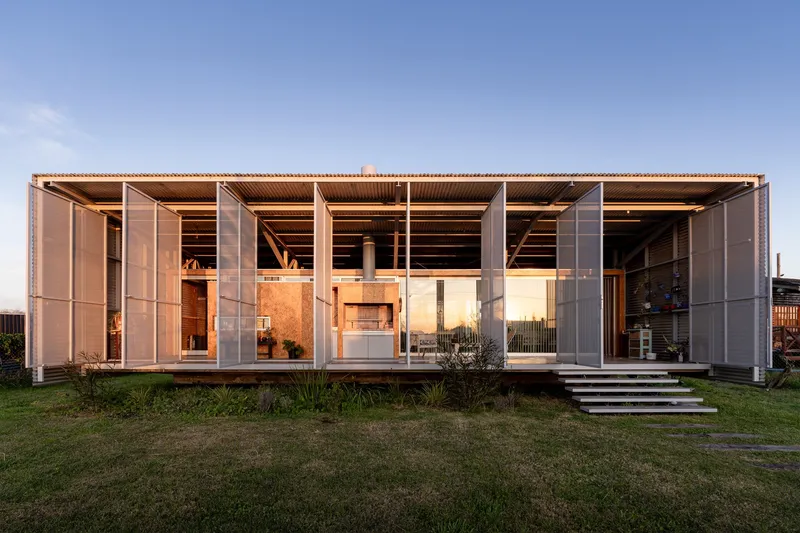
The zinc-clad envelope forms a protective layer along lateral walls and extends over the roof, creating an insulating air chamber that reduces energy consumption and exposure to external elements. Complementing this, pivoting micro-perforated sheet enclosures regulate sunlight, enhance visual connection to the landscape, and ensure security when the house is unoccupied. Raw concrete and natural wood in flooring and garden paths underscore the architects’ commitment to natural materials and landscape integration.
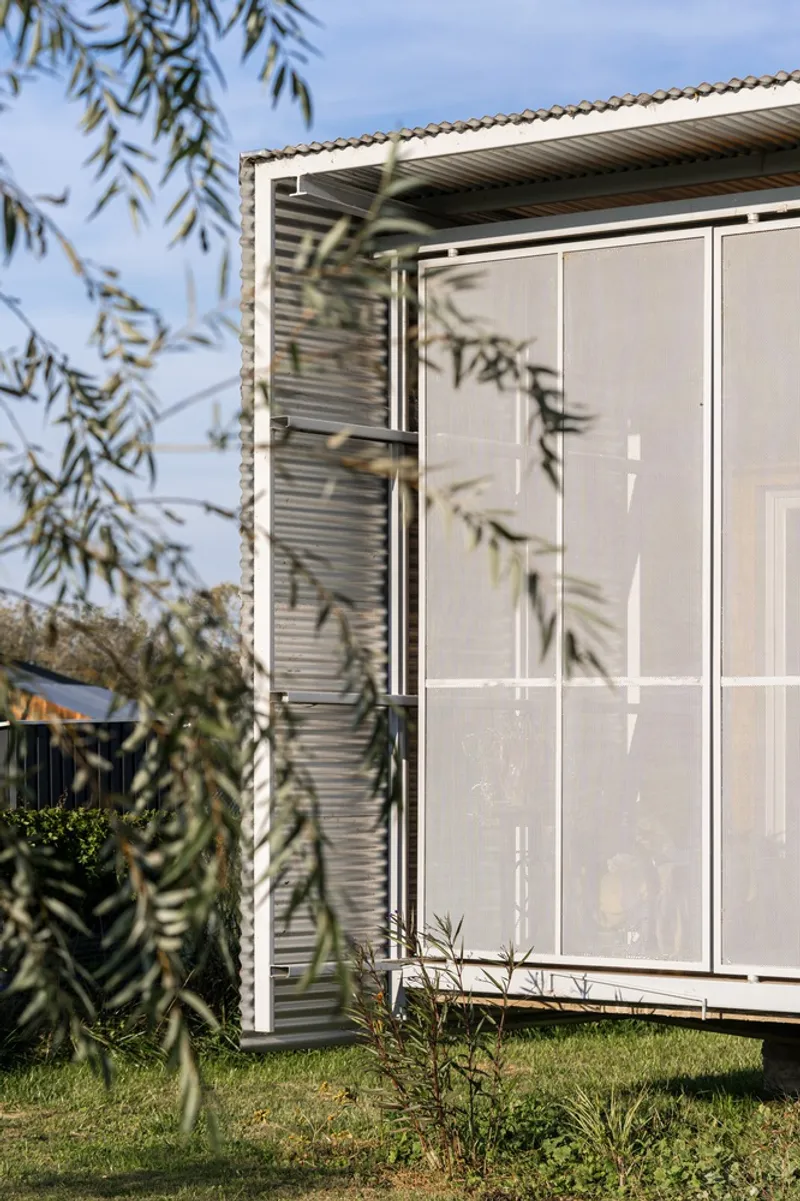
Construction Efficiency and Environmental Regeneration
The combination of walls, phenolic partitions, structural elements, and metallic envelope allows for fast construction, optimized storage in hard-to-access areas, and lower future maintenance costs. Currently, the surrounding landscape is being restored with native plant species to regenerate indigenous flora and fauna affected by urban expansion and deforestation.
All photographs are works of Arquitecto Sebastián Miranda



Popular Articles
Popular articles from the community


Lunar Spiral: Space Architecture Shaped by the Mathematics of the Universe
Lunar Spiral reimagines space architecture through Fibonacci geometry, lunar regolith, levitating habitats, and self-sustaining Moon living.

The Ocean Hive: Sustainable Architecture for a Self-Sufficient Civilization at Sea
The Ocean Hive imagines sustainable architecture at sea, where modular habitats, algae, wave power and ocean waste sustain a growing colony.

Play: Fragments of Their World
Familiar architecture becomes modular playground design, creating safe spaces where displaced children can learn, connect, imagine and play.

The Musturak Paradise: Senior Living Architecture for a Connected Future in Temara, Morocco
The Musturak Paradise reimagines senior living architecture in Temara via private homes, social spaces, culture, community, and shared care.


Similar Reads
You might also enjoy these articles


Hodi-Mandai Geram
Project Function: Preservation and revitalization of the Intangible heritage and socio-spatial identity of the Hodi by Housing, Cultural Memory Center, Sacred Grove, landscape, local tourism economy


Olio Towers: A Mid-Rise for Performers That Fuses Housing, Rehearsal, and Stage
Located blocks from Houston's Theater District, this modular tower stacks living units around a central performance atrium.

Oasis: Modular Green Housing Carved into Dhaka's Urban Fabric
A shortlisted Plugin Housing entry reclaims unauthorized settlements in Dhaka with stepped concrete volumes, green roofs, and ventilation-driven design.

Black Hole: A Floating Megastructure for the Post-Physical Era
Emiliano Mazzarotto envisions a spherical, self-scaling arena where e-sports, digital hotels, and holographic stadiums replace traditional public space.


Explore Housing Competitions
Discover active competitions in this discipline



Challenge to reimagine the Iron Throne


Photograph architecture without architects


Illustrate the lost glory of Angkor Wat - Render Challenge


Design challenge to reuse E-waste
Comments (0)
Please login or sign up to add comments
No comments yet. Be the first to comment!