
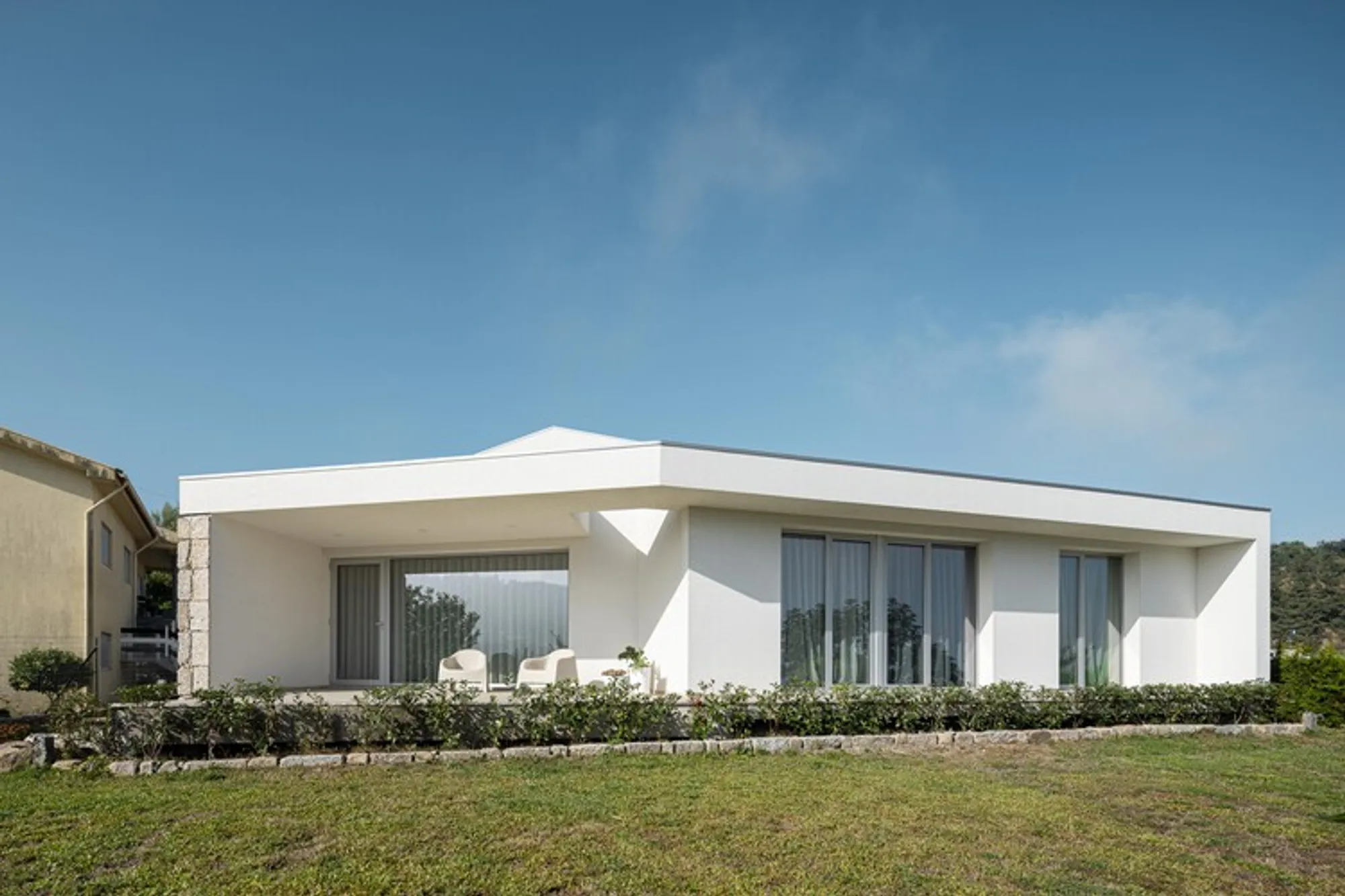
House in Mesão Frio — felixARQS • Daniel Félix Arquitectos
A restored family ruin evolves into a modern home, balancing memory, stone, wood, and light through architecture rooted in continuity and belonging.


A Home Built from Memory, Ruin, and Return
At the quiet end of a narrow residential street in Guimarães, framed by the hills and humid green of Portugal’s Minho region, there once stood a ruin — crumbling, forgotten, and darkened by time. It belonged to a family who knew its every stone, who had lived around it, walked past it, and carried its memory as part of their own. To another architect, it may have been a structure destined for demolition; to this family, it was ancestry. The ruin was not seen as remains, but as origin — a place once held together by the lives of grandparents, a place where stories had been baked into walls like sunlight into clay.
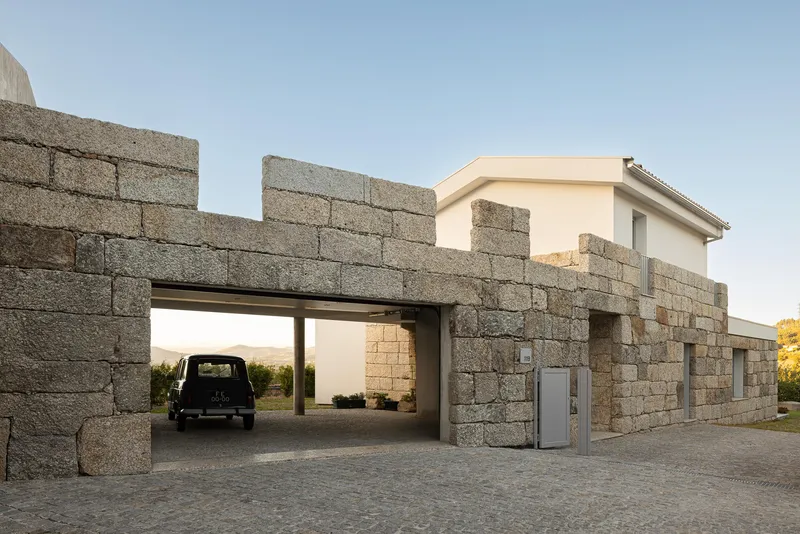
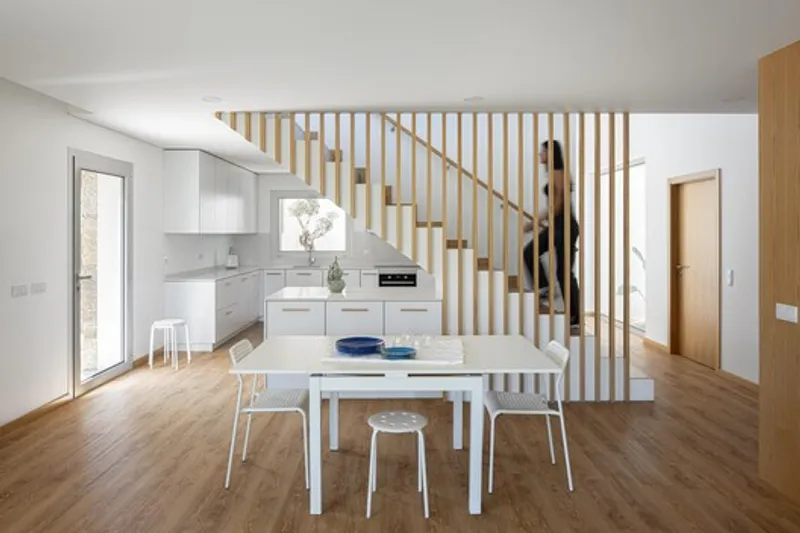
This is where House in Mesão Frio begins: not with a blank plot of land or an abstract formal intention, but with affection, inheritance, and the powerful pull of returning home. felixARQS – Daniel Félix Arquitectos were given a commission rooted not only in architecture, but in lineage. The young family who would inhabit it no longer wished to distance themselves from where they came from; instead, they hoped to live within it — to continue the thread of generations, not break it. Next door still stands the house of the client’s parents. Between both houses exists a passage of memory, a threshold of decades. The new house needed to hold that continuity — to keep past and present touching, like two hands across time.
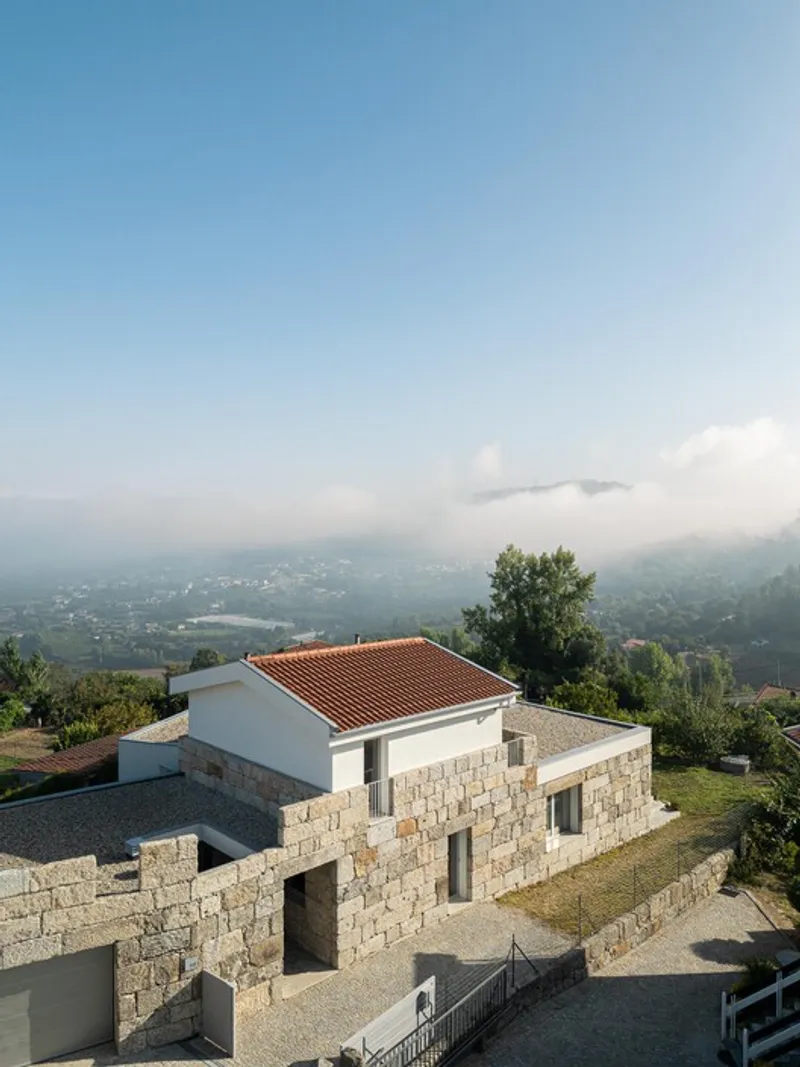
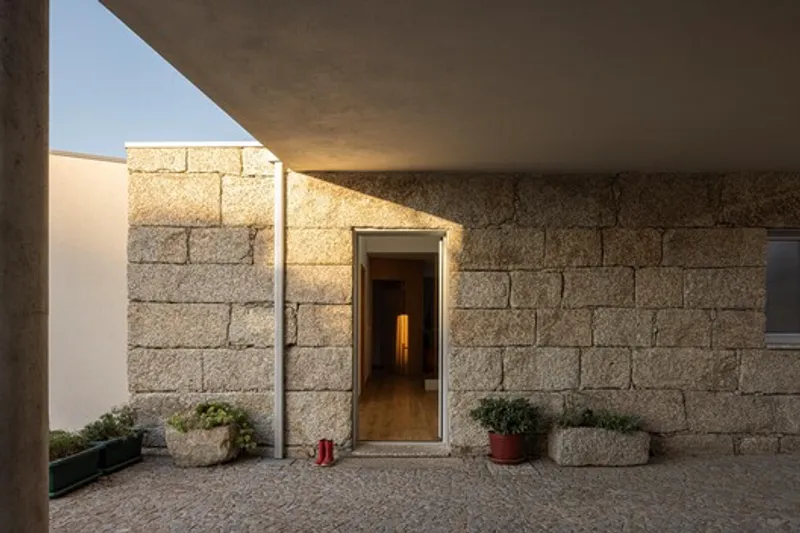
Rebuilding the ruin therefore was not an act of replacement, but of re-inhabitation. The design is shaped by absence as much as presence. It is an architecture born from what remained, not from what was removed; from what was remembered, not from what was forgotten.
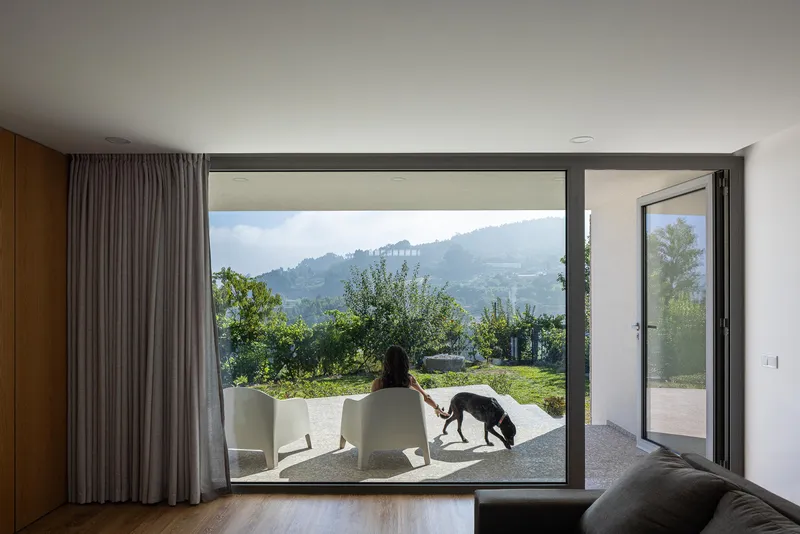
A home built through continuity, not correction
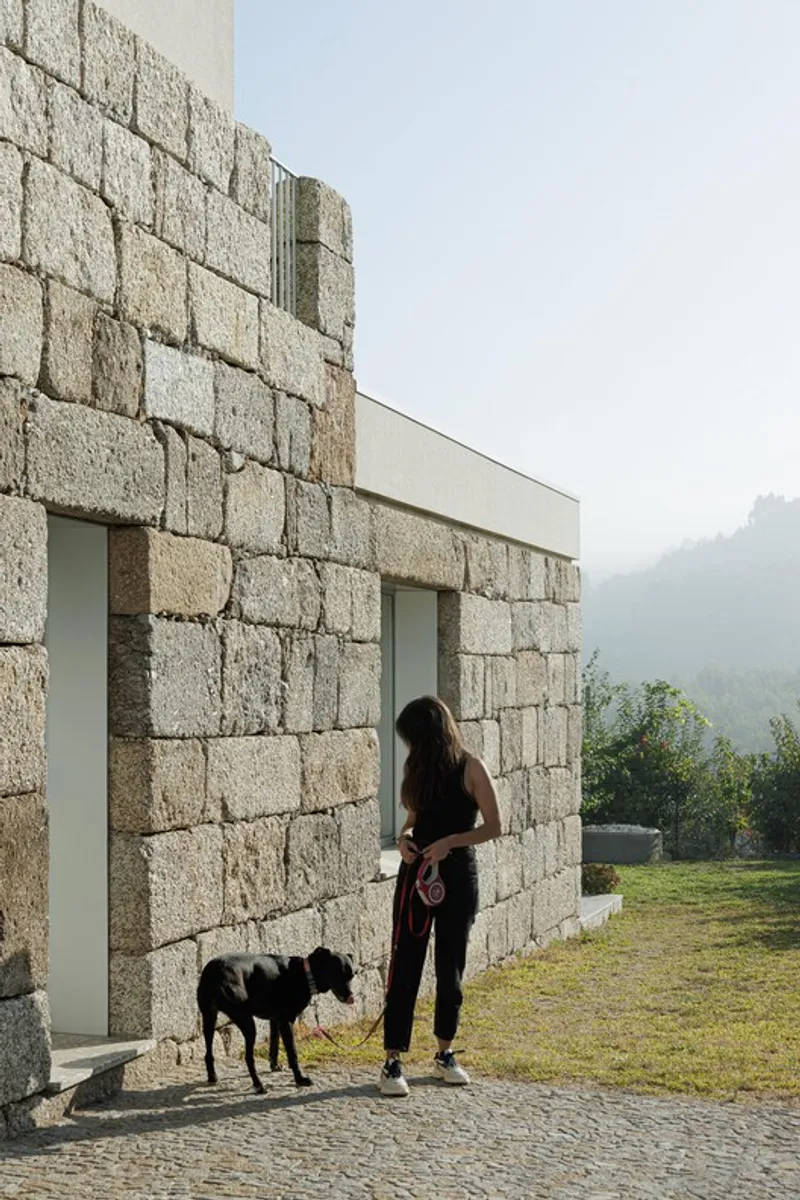
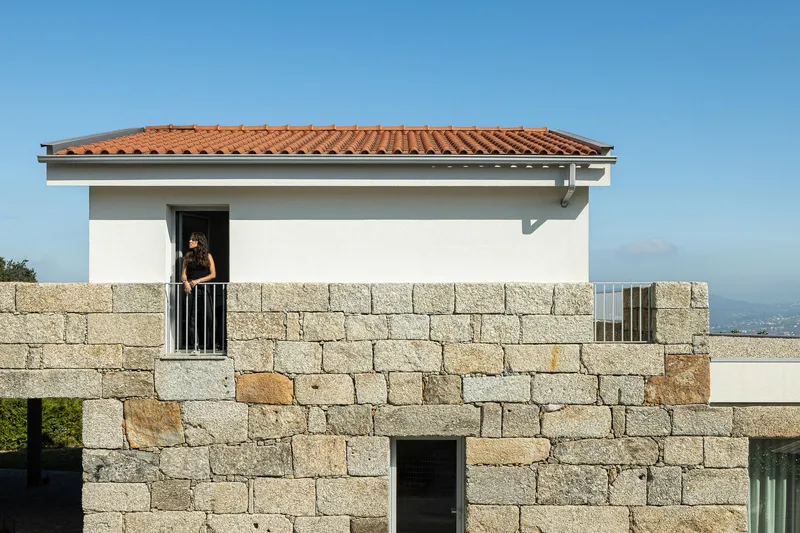
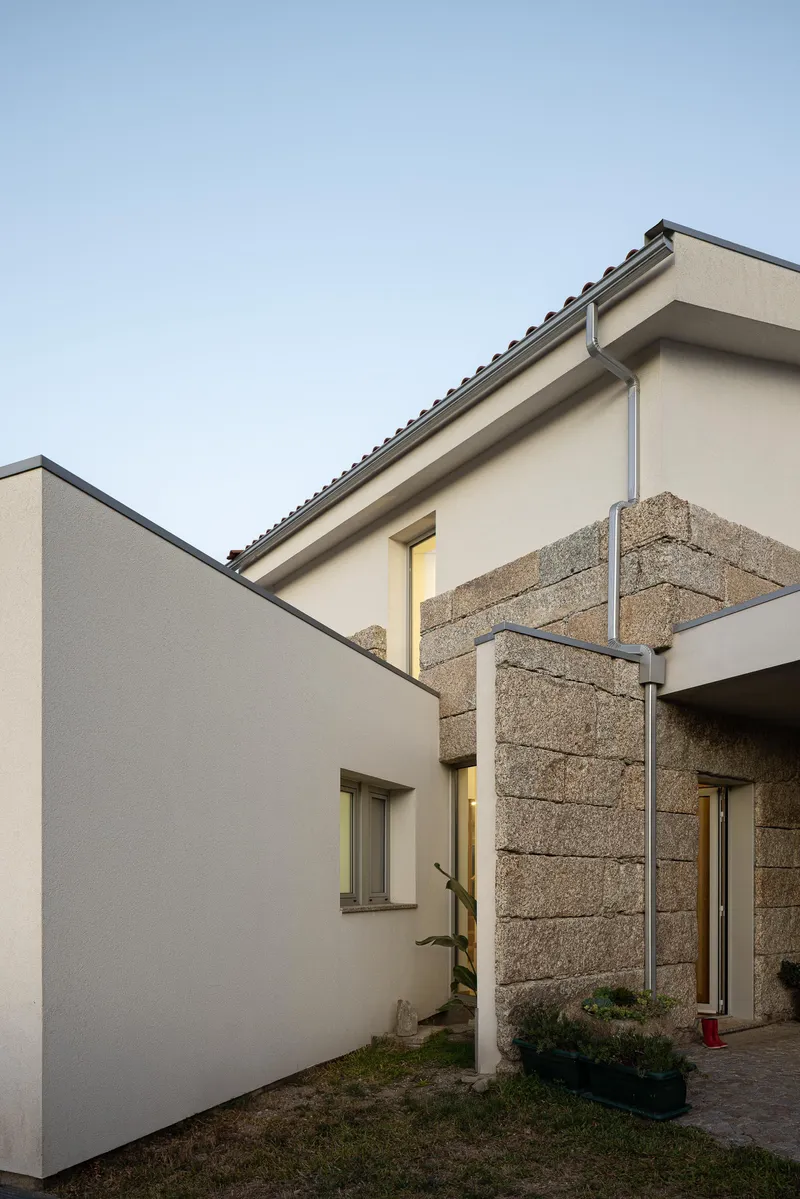
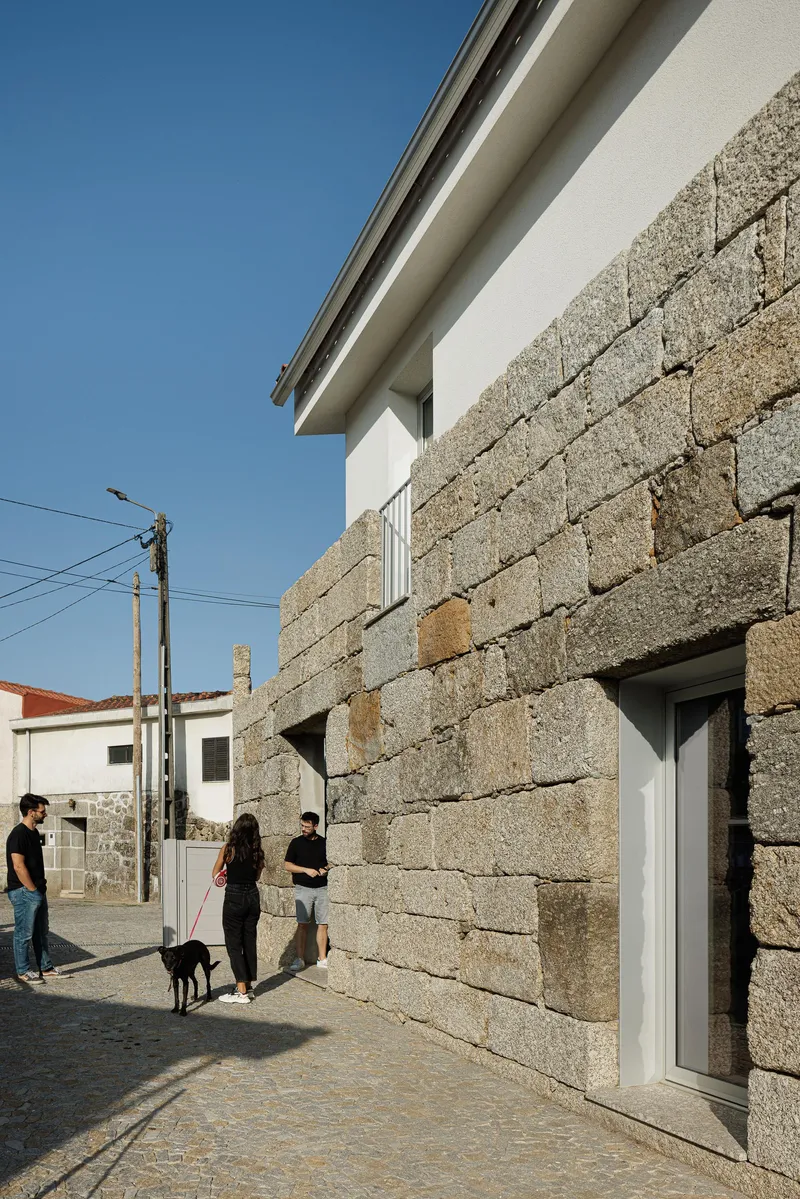
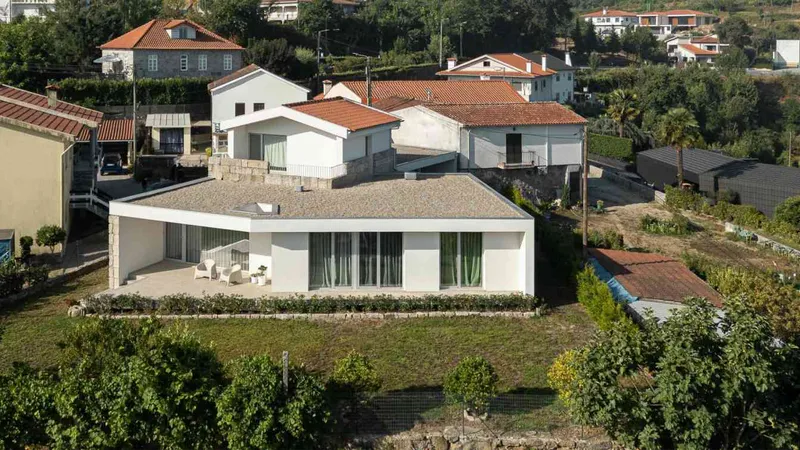
The ruin was not erased, it was held — embraced, restored, kept partially raw and partially transformed. It forms the entrance to the new house, meaning that arriving home is a journey through ancestry. The pedestrian access leads the visitor through the old remaining stone walls beneath a sheltered outdoor vestibule so that upon entering, one must first step through history. One enters by going outside — a poetic inversion that reminds the resident daily that they inhabit more than one era, that habitation is layered.
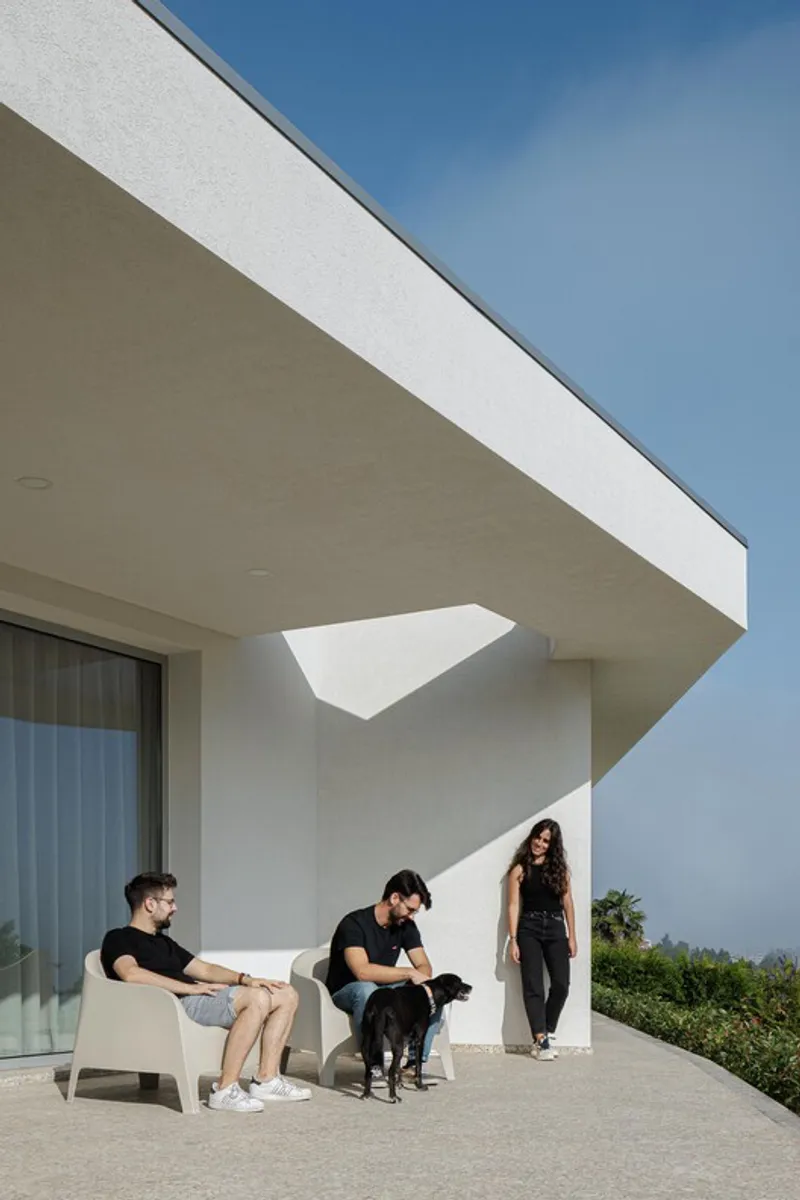
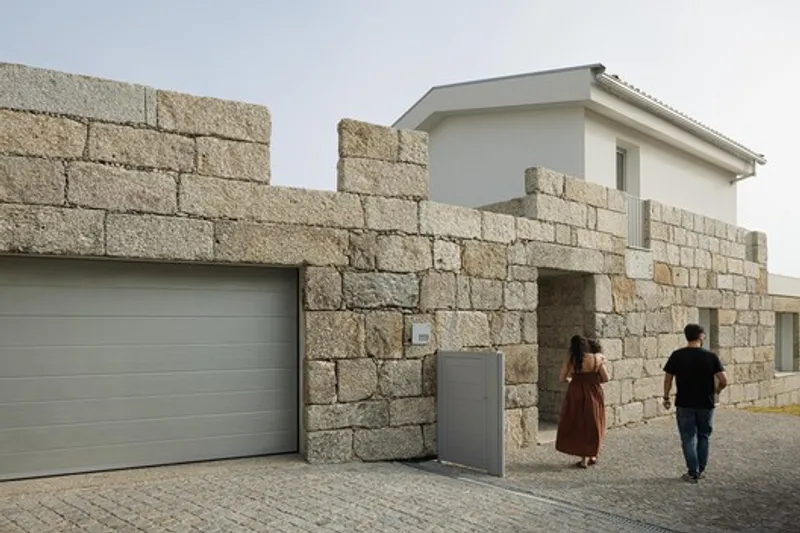
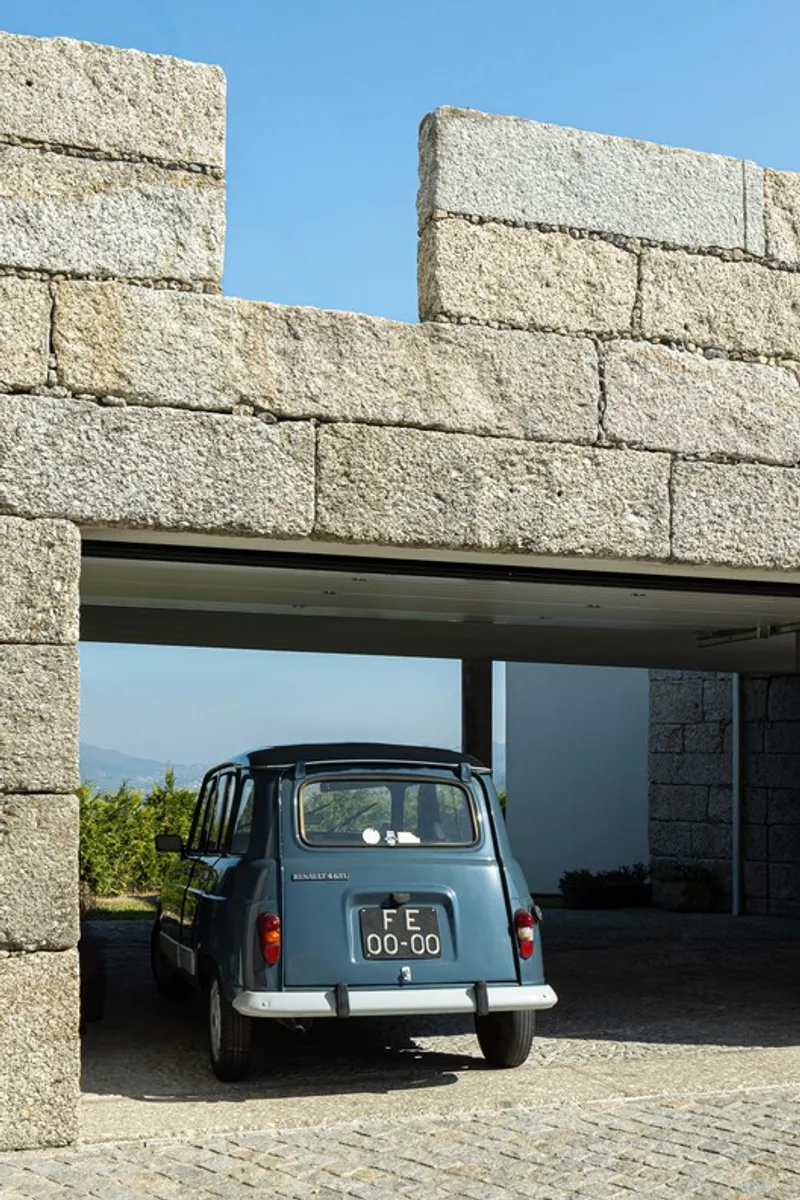
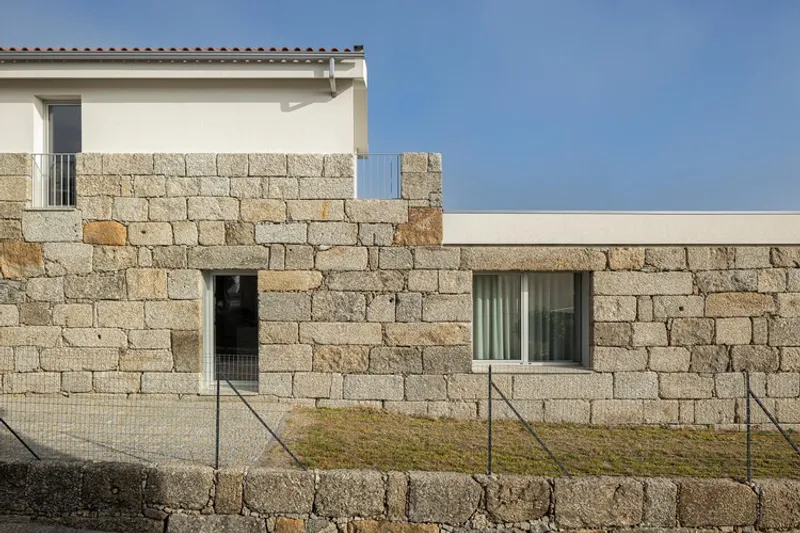
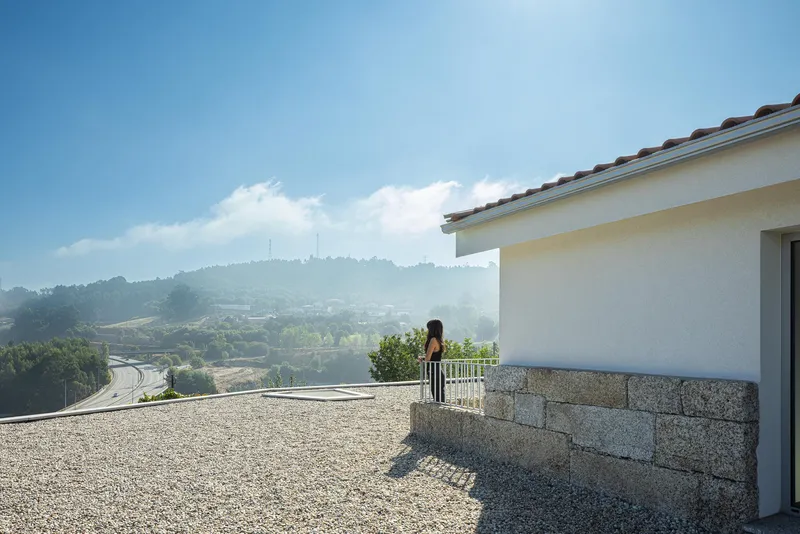
The existing ruin defined not only the front threshold but the organization of internal rooms. The architects retained the placement of the original kitchen, a gesture both cultural and emotional. In Minho, the kitchen is considered the nucleus of domestic life — a place not just for cooking, but for gathering, storytelling, and intergenerational presence. By keeping it where it always was, the project preserves spatial memory, allowing old rhythms to continue under new light. Above the kitchen rises a newly defined studio, preserving the two-storey height of the existing ruin and its terracotta-tiled roofline. This small upper volume ensures the house sits humbly among its neighbours rather than overpowering them, acknowledging village scale rather than declaring architectural rupture.
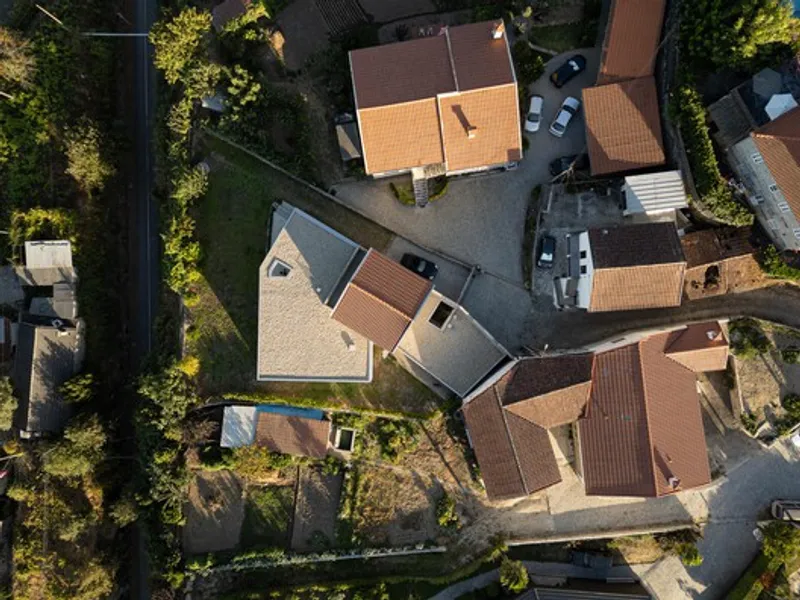
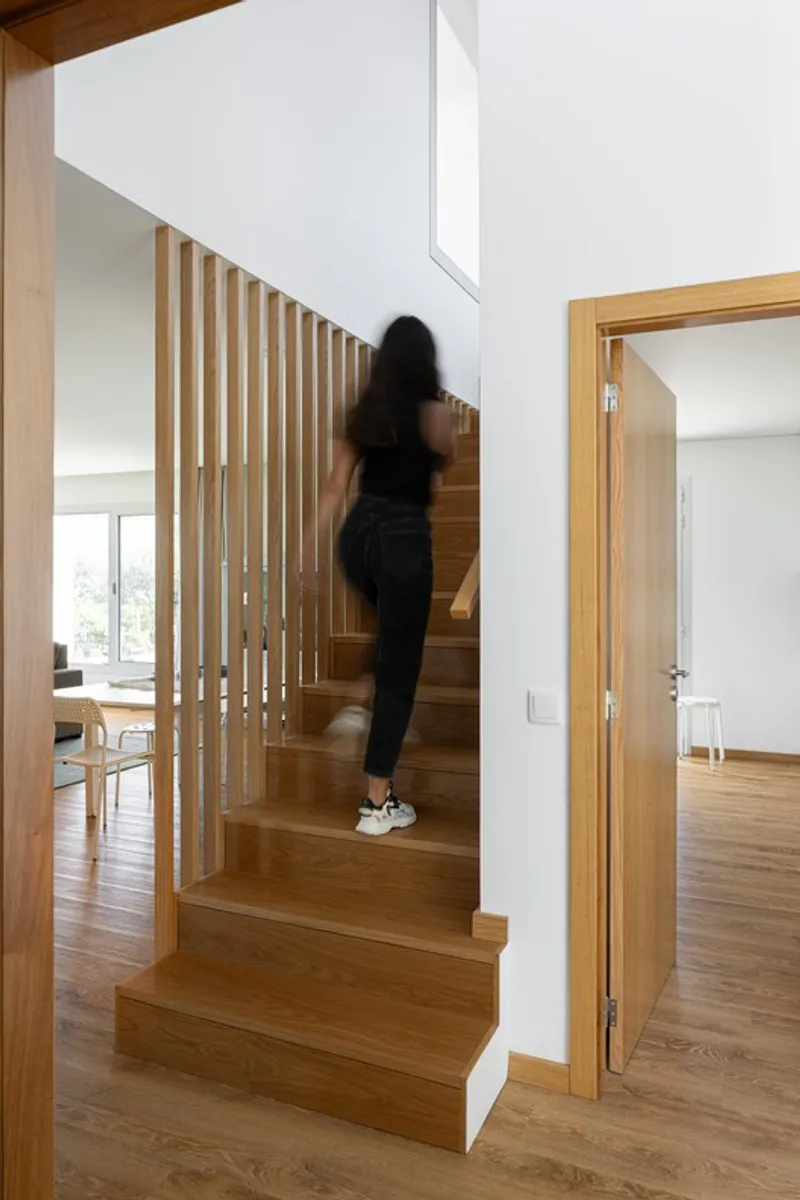
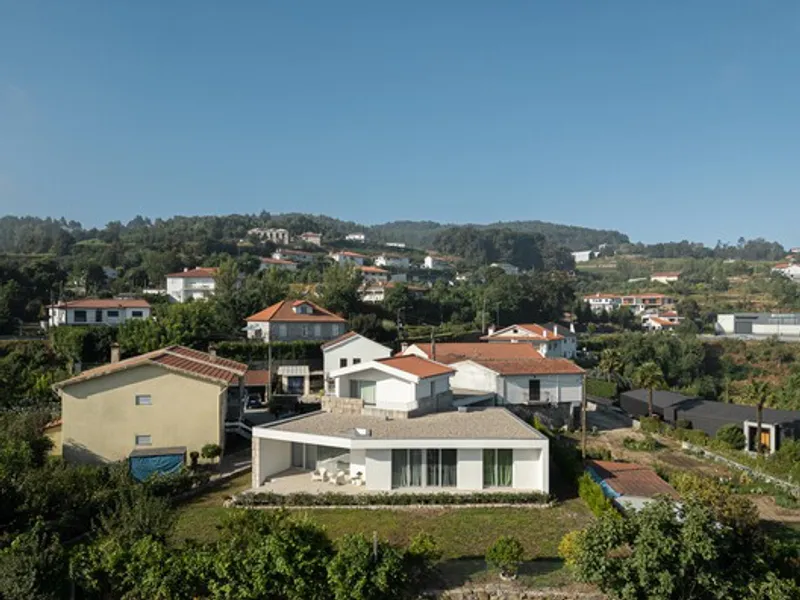
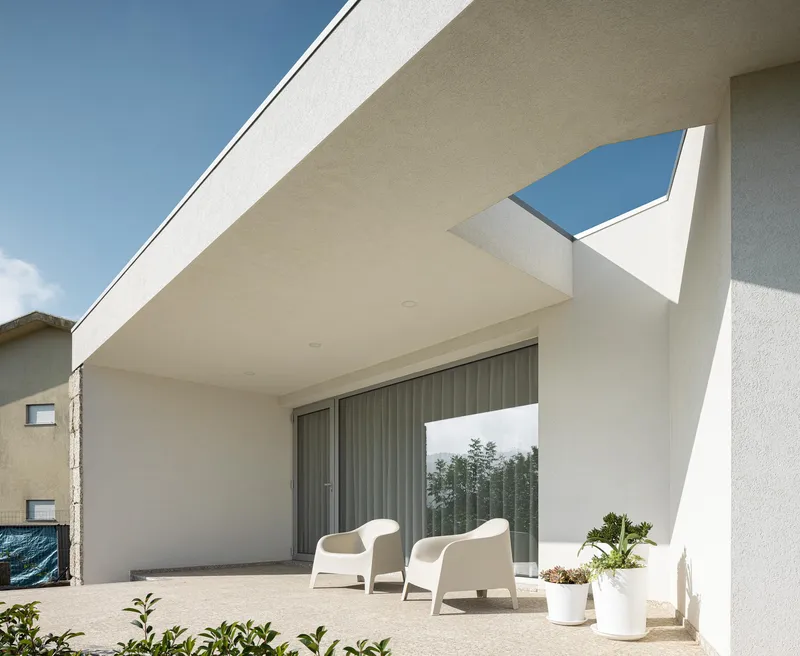
The new extends gently from the old — bedrooms and living spaces grow outward, anchored to the footprint of what once was. A roof plate slides like a plane of time across stone and concrete, marking the transition between eras. The tactile roughness of the ruin meets the smooth modernity of new surfaces in a meeting that feels neither violent nor disguised. Instead, the connection is natural, as though the house grew from its ruin like new bark around old tree heartwood.
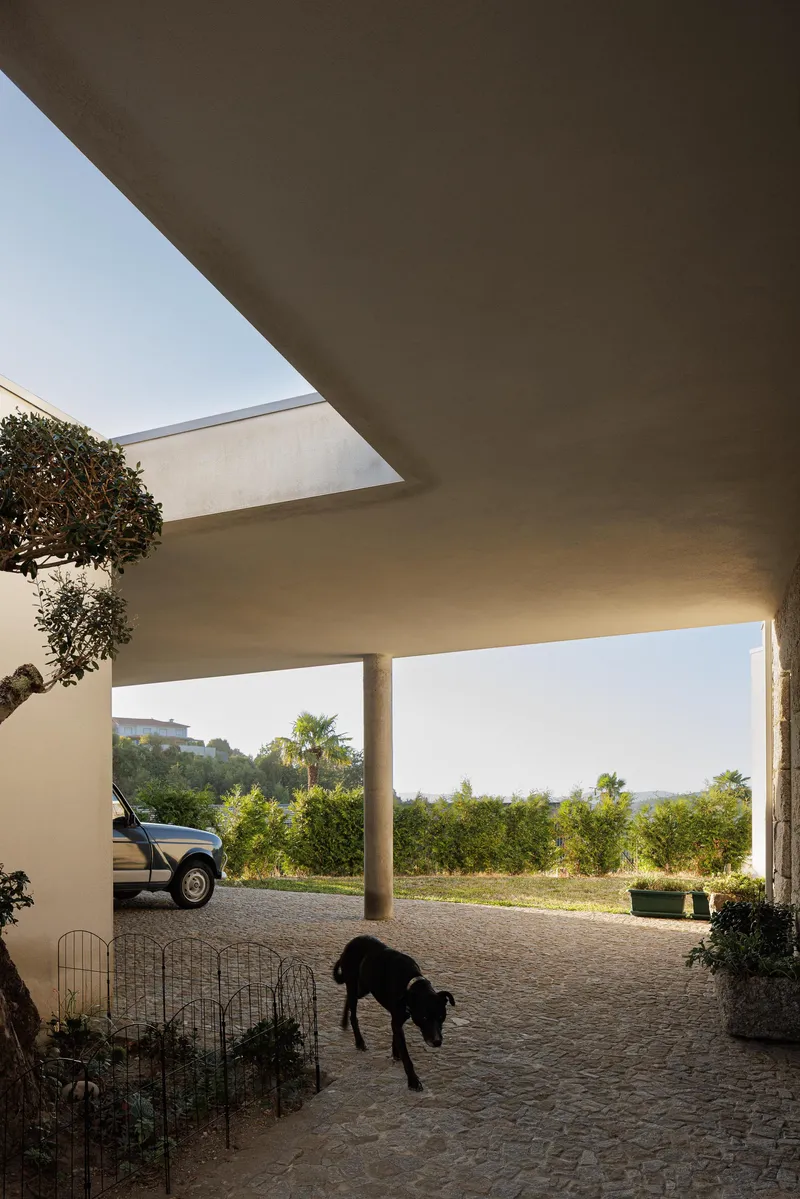
The project succeeds because it does not romanticize the ruin, nor does it force it into nostalgia. It respects its presence without fossilizing it. The ruin becomes structure, memory, threshold, and texture — not museum, but matter.
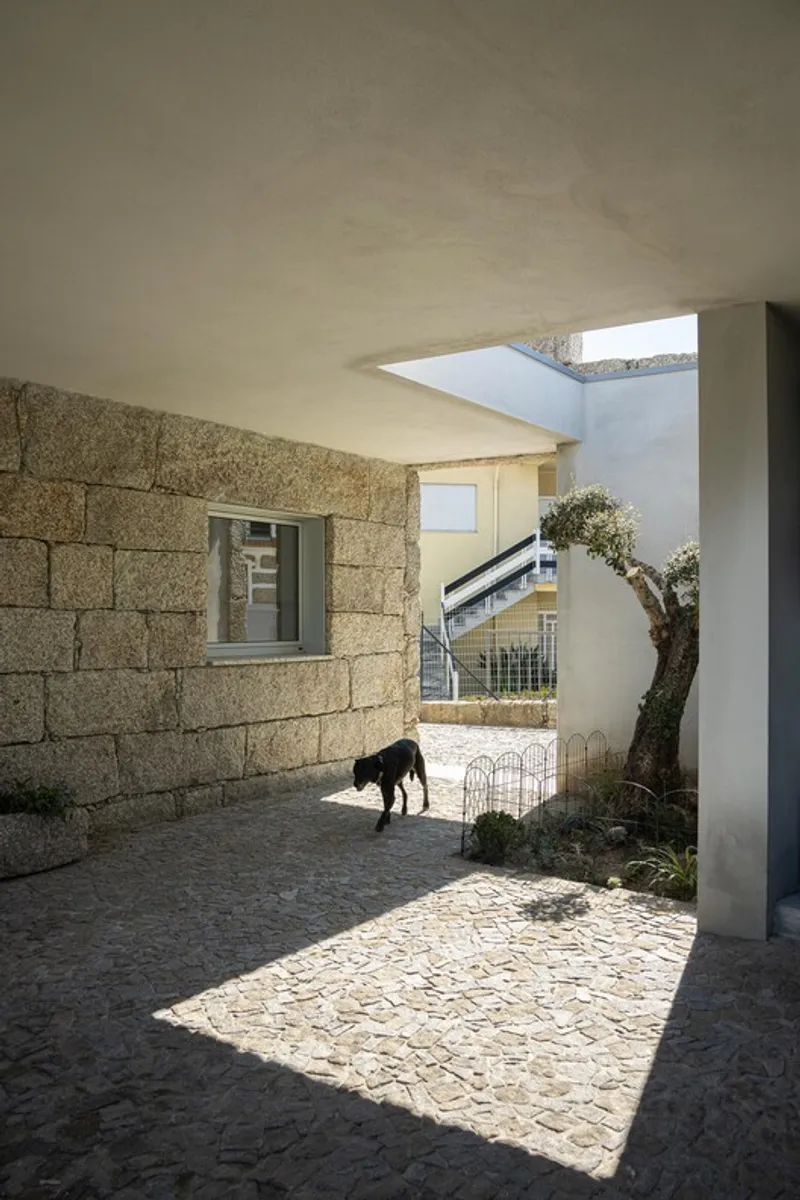
Light, texture, and the architecture of inheritance
Inside, tectonics frame atmosphere. Daylight enters through generous openings, washing interior surfaces in soft, shifting nuance. Concrete walls meet wood flooring; stone meets warm grain. The materiality is minimal, but not cold — the house feels tactile, rooted, and domestic. The architects did not over-finish the surfaces; they let the materials speak. The ruin outside remains rough and monumental, while the interior wood softens daily life, providing warmth where memory may otherwise hold weight.
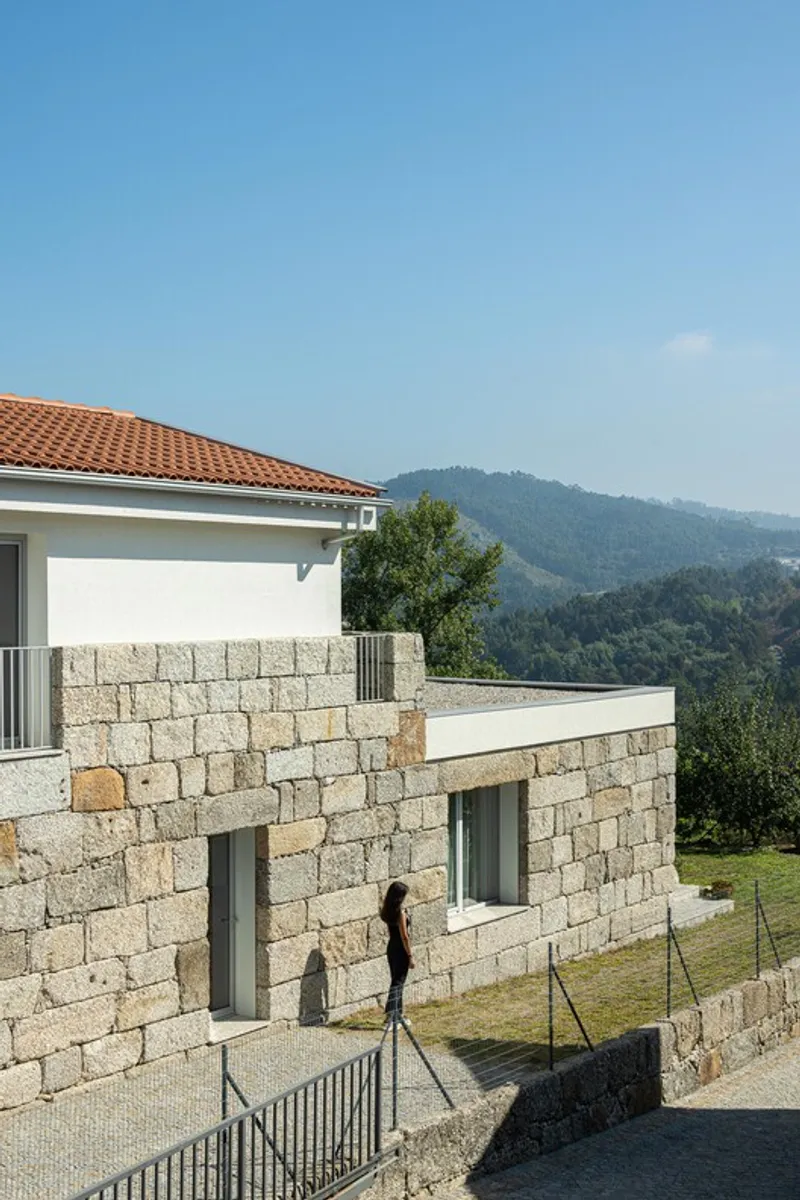
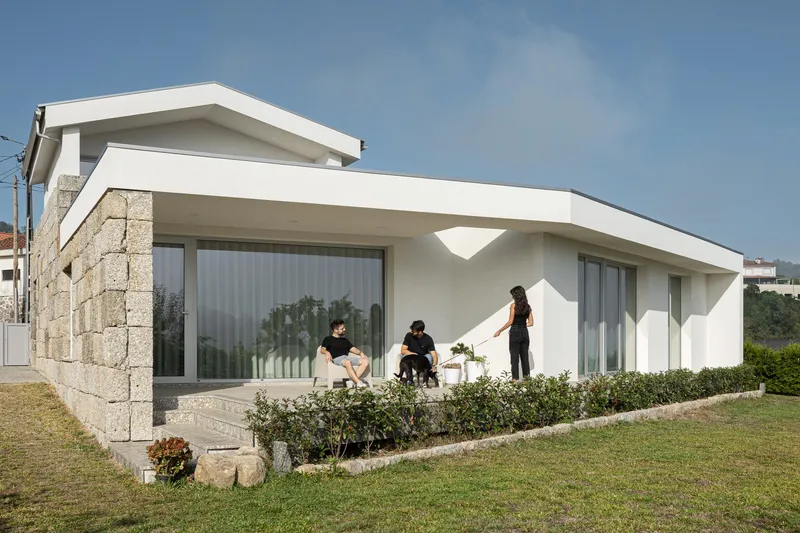
Light acts like a second material — shaping, warming, revealing. Where it touches wood, it glows. Where it touches concrete, it sharpens. Where it touches stone, it vibrates. Shadows slide across planes like time across memory. Architecture becomes sensory — not simply to be read, but felt.
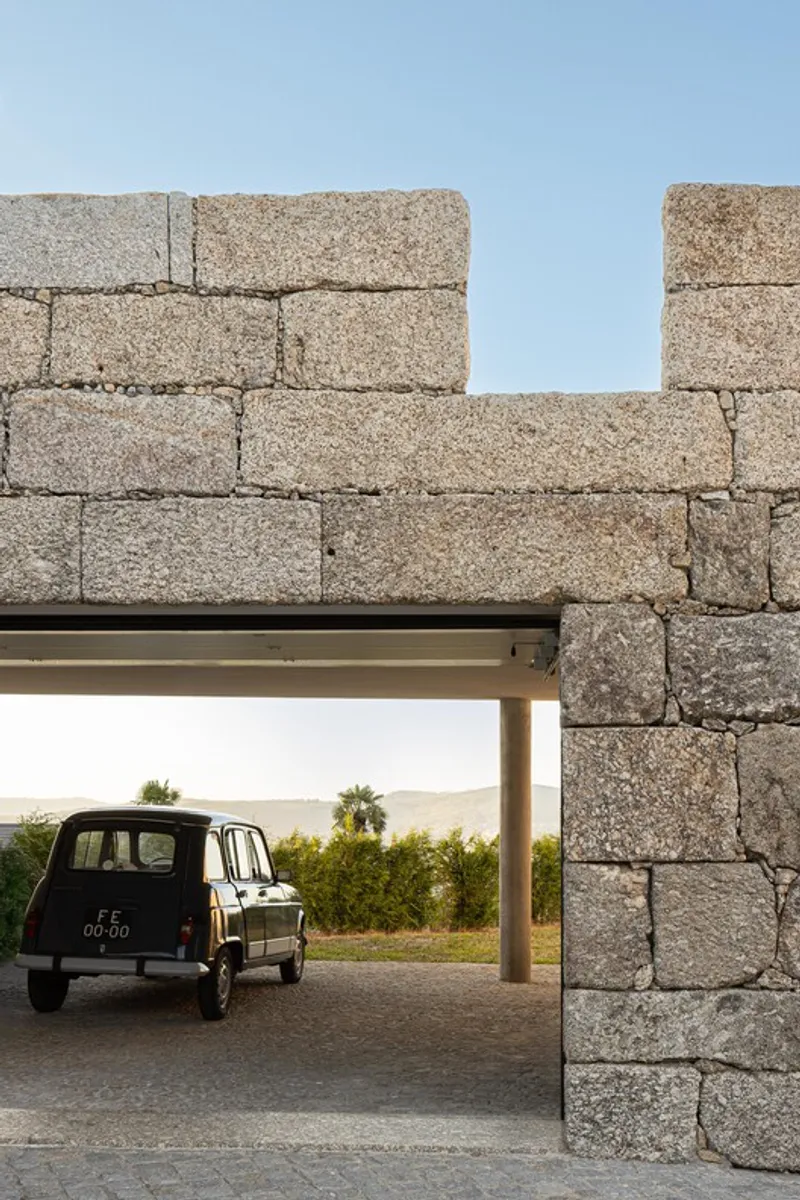
Different spatial zones arise from the dialogue between permanence and newness. Spaces for gathering, cooking, and family life exist in continuation with the ruin’s footprint, while private spaces extend outward, allowing the family to sleep, work, and grow in what once was potential rather than history. Courtyards and exterior passages break the mass into lived fragments. The family does not inhabit one large object, but a constellation of connected experiences.
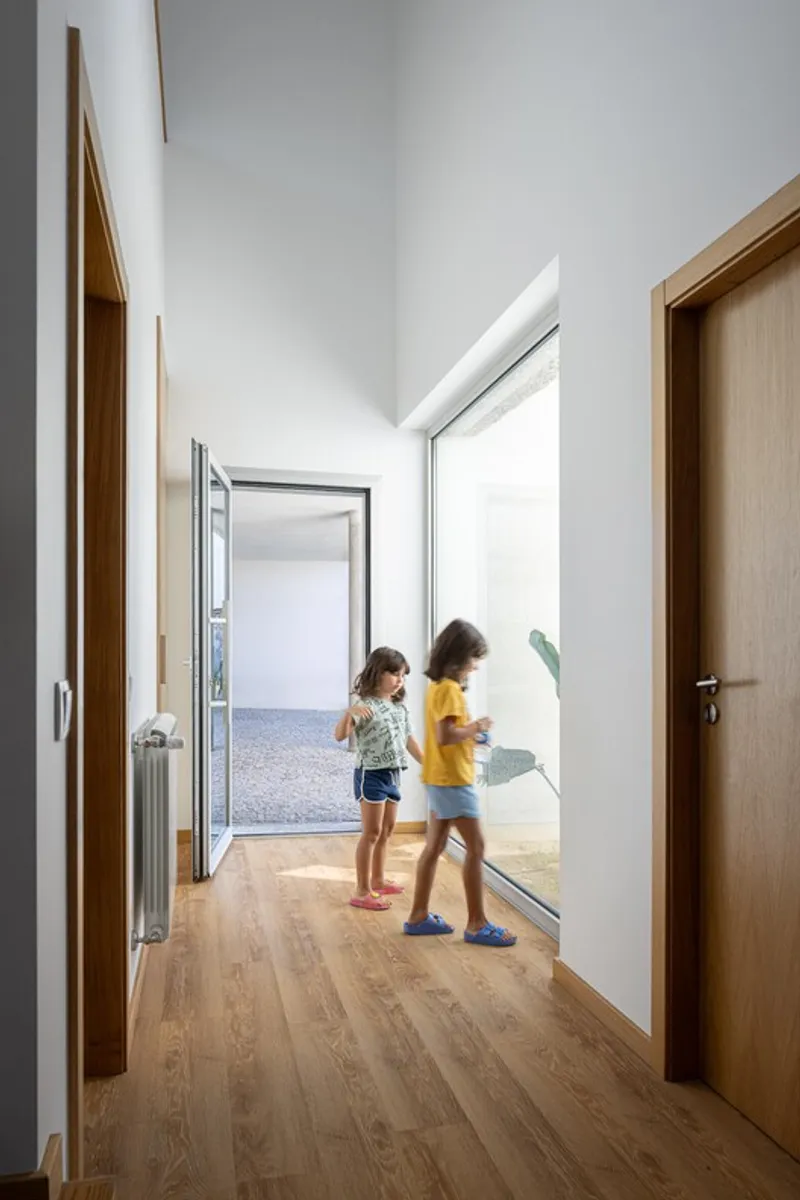
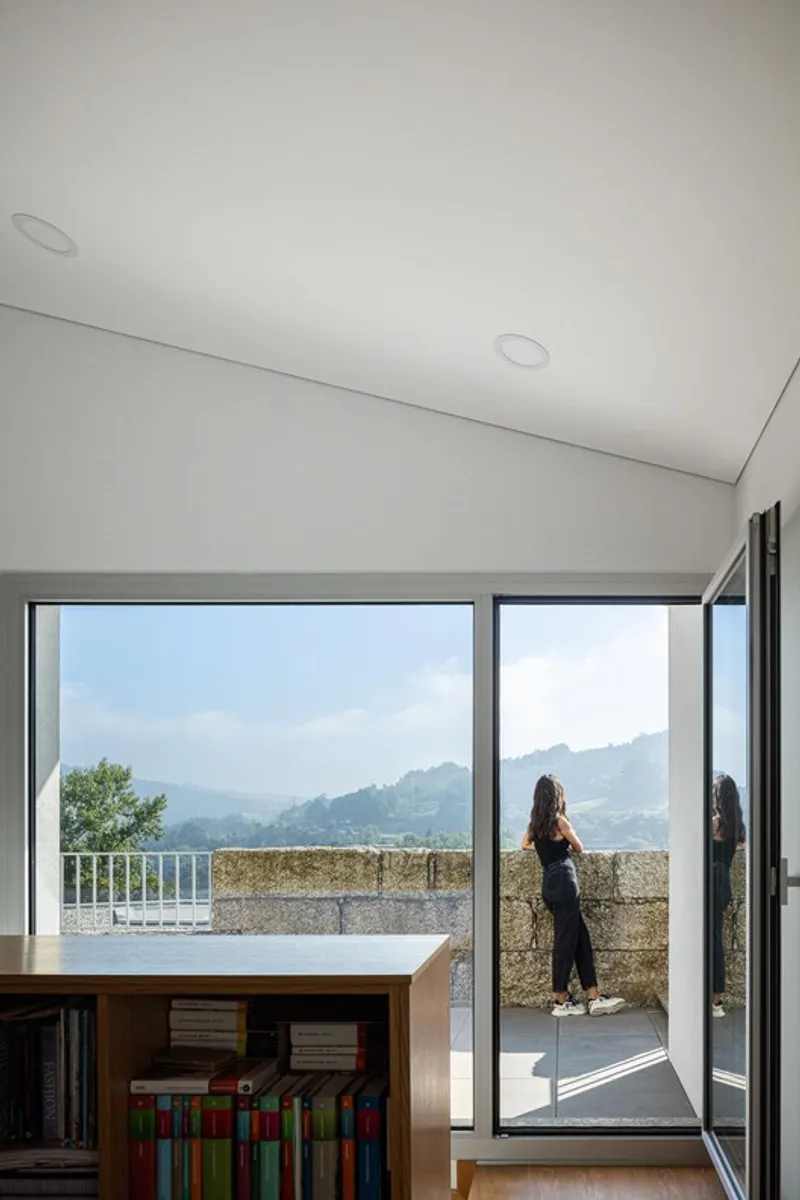
This fragmentation increases domestic richness. Each volume holds a different light, a different acoustic, a different intimacy. Movement through the house mirrors memory — shifting, episodic, unfolding rather than static.
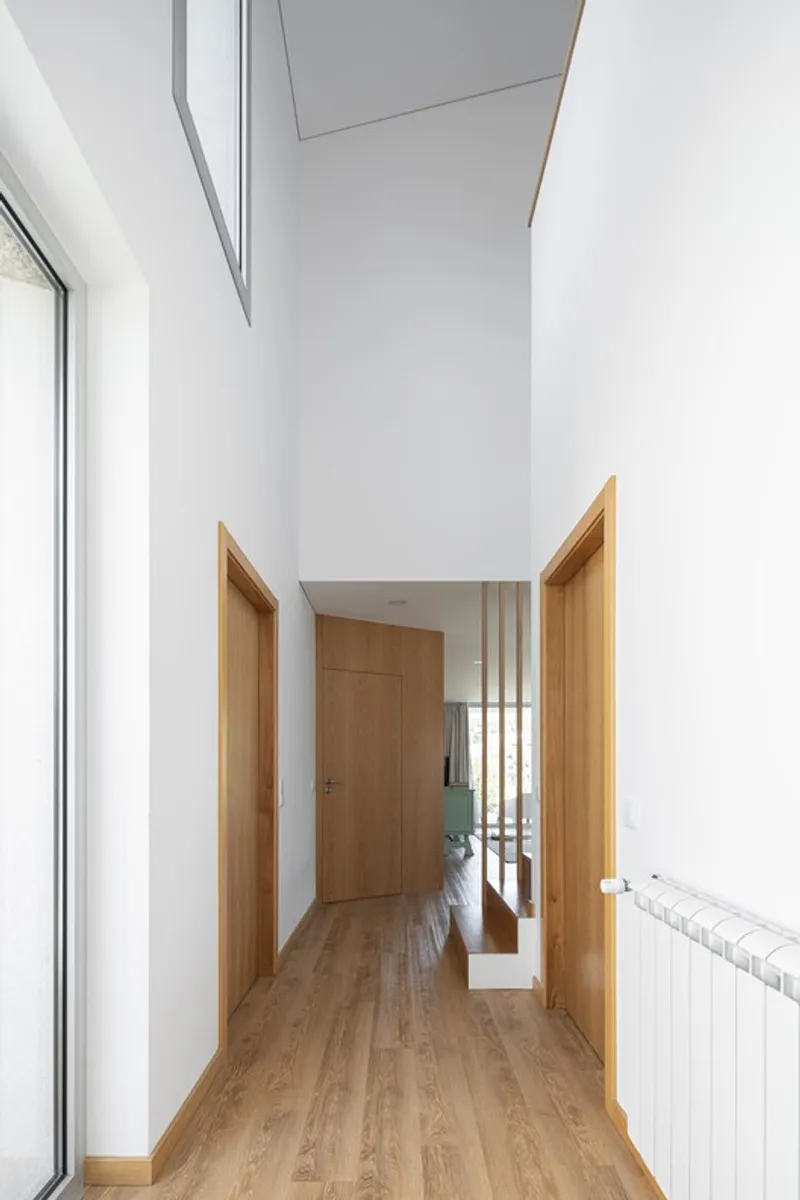
A house as a vessel of ancestry
To live here is to live inside a story. The grandparents’ walls remain visible; children now run through spaces their ancestors once stood inside. The act of rebuilding was an act of return — a return not only to a place, but to belonging. For the family, this is not a new house. It is their old house, alive again, breathing differently.
Architecture here is not an object; it is witness. It witnesses legacy. It witnesses continuity. It witnesses the passing of time not as loss, but as layering.
In a world where demolition often replaces memory with novelty, House in Mesão Frio demonstrates another path: one where ruin becomes foundation rather than obstacle, where domesticity builds on what came before rather than overwriting it. It proves that architecture does not only construct space — it constructs time.
And time, in this house, is visible.




Popular Articles
Popular articles from the community


Conexión: Biophilic Design Reimagines High-Rise Living in Hong Kong
Conexión reimagines high-rise living in Hong Kong through biophilic design, green facades, shared spaces, daylight, water and nature within.

Play: Fragments of Their World
Familiar architecture becomes modular playground design, creating safe spaces where displaced children can learn, connect, imagine and play.

Co-life: Sustainable Architecture for Age-Friendly Community Living
Co-life reimagines sustainable architecture for seniors through courtyards, rammed earth, shared gardens, and spaces designed for belonging.

Lunar Spiral: Space Architecture Shaped by the Mathematics of the Universe
Lunar Spiral reimagines space architecture through Fibonacci geometry, lunar regolith, levitating habitats, and self-sustaining Moon living.

Similar Reads
You might also enjoy these articles


Hodi-Mandai Geram
Project Function: Preservation and revitalization of the Intangible heritage and socio-spatial identity of the Hodi by Housing, Cultural Memory Center, Sacred Grove, landscape, local tourism economy


Olio Towers: A Mid-Rise for Performers That Fuses Housing, Rehearsal, and Stage
Located blocks from Houston's Theater District, this modular tower stacks living units around a central performance atrium.

Oasis: Modular Green Housing Carved into Dhaka's Urban Fabric
A shortlisted Plugin Housing entry reclaims unauthorized settlements in Dhaka with stepped concrete volumes, green roofs, and ventilation-driven design.

Black Hole: A Floating Megastructure for the Post-Physical Era
Emiliano Mazzarotto envisions a spherical, self-scaling arena where e-sports, digital hotels, and holographic stadiums replace traditional public space.

Explore Romanian Architecture Competitions
Discover active competitions in this discipline



Challenge to reimagine the Iron Throne


Photograph architecture without architects


Illustrate the lost glory of Angkor Wat - Render Challenge


Design challenge to reuse E-waste
Comments (0)
Please login or sign up to add comments
No comments yet. Be the first to comment!