
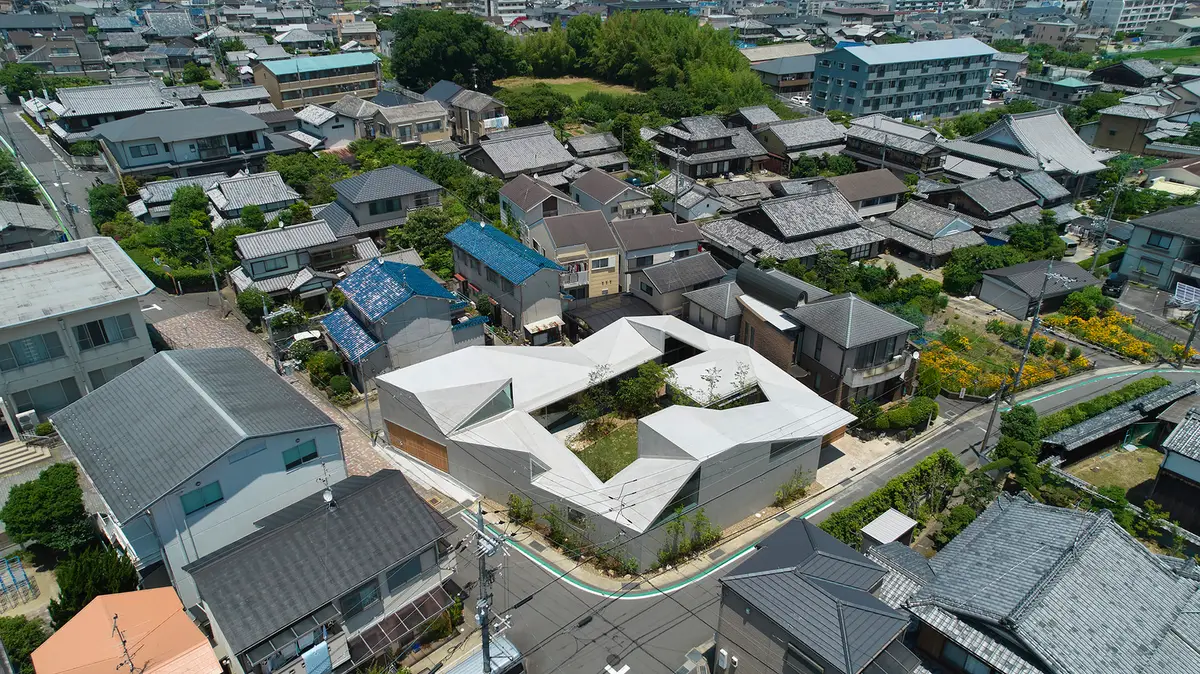
House in Muko by Tomohiro Hata Architect and Associates: Blending Rural Tradition with Contemporary Japanese Living
Contemporary Kyoto residence reinterpreting traditional farmhouses through clustered volumes, courtyard living, and open spaces that connect modern life with rural heritage.


The House in Muko, designed by Tomohiro Hata Architect and Associates, is a thoughtfully crafted residential project located in Muko City, Kyoto Prefecture, Japan. Completed in 2023, this 260-square-meter house represents a compelling example of contemporary Japanese residential architecture that respectfully integrates the region’s historical rural settlement patterns with modern lifestyles.
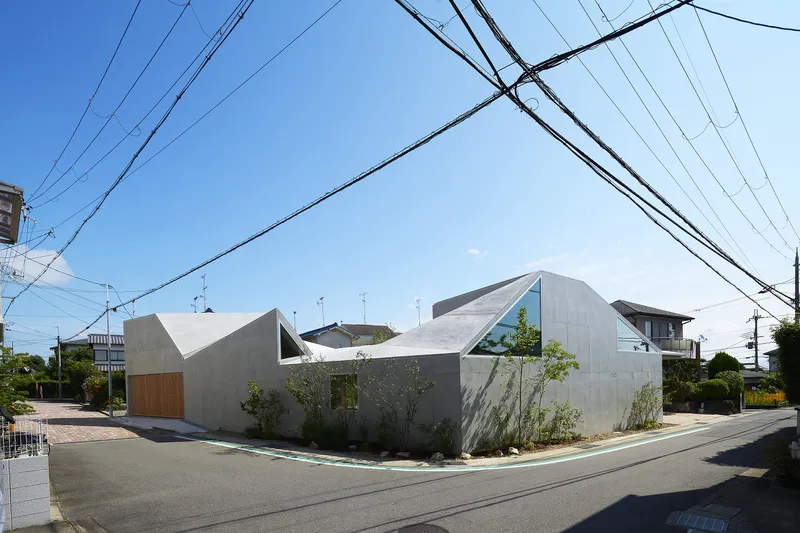
Surrounded by farmland and bamboo forests, the site lies within a landscape historically defined by stone walls and traditional farm-style dwellings. These rural residences once consisted of a main house accompanied by smaller clustered buildings, forming a unified living compound deeply connected to agricultural life. However, as urbanization expanded from central Kyoto, many of these traditional homes were demolished, and the land was subdivided into a mixture of historical remnants and new constructions.
Against this evolving backdrop, the architects sought to create a home that bridges past and present, offering a contemporary way of living that still acknowledges the cultural memory and spatial traditions of rural Kyoto.
Architectural Context: Responding to Kyoto’s Changing Rural Landscape
The project site reflects a transitional environment where traditional Japanese farming settlements meet modern suburban development. Historically, homes in this region were organized around agricultural productivity and communal living, with large open areas used for farming activities and daily domestic work.
These farmhouses typically followed two defining characteristics. The first was the presence of generous open spaces that allowed for farming, processing crops, and shared family activities. The second was the hierarchical arrangement of buildings, where the main residence served as the center of a network of supporting structures such as storage buildings, workshops, and secondary dwellings.
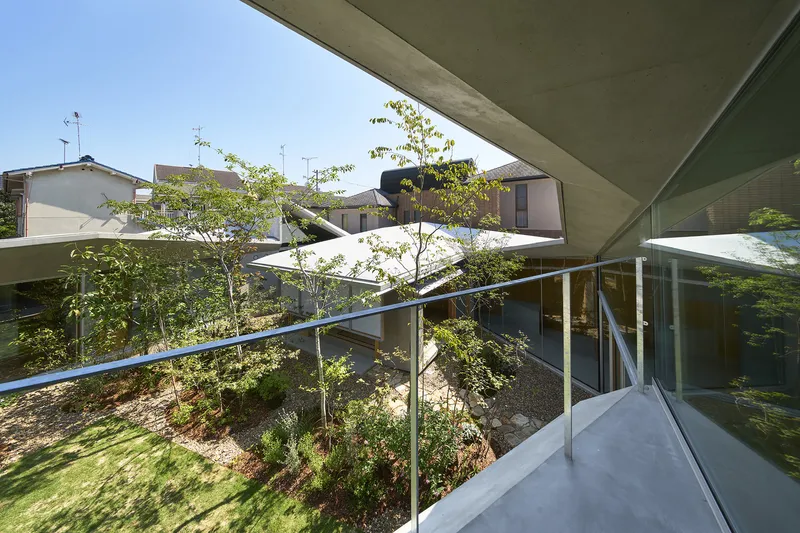
As modernization progressed, this traditional arrangement began to disappear. New residential developments introduced more compact and independent housing units, often disconnected from the spatial logic of historical villages. The challenge for the architects was therefore to reinterpret these traditional spatial relationships within a contemporary architectural language.
Reinterpreting the Traditional Farmhouse Layout
Rather than directly replicating the historic farmhouse typology, the architects approached the design by reimagining its spatial principles.
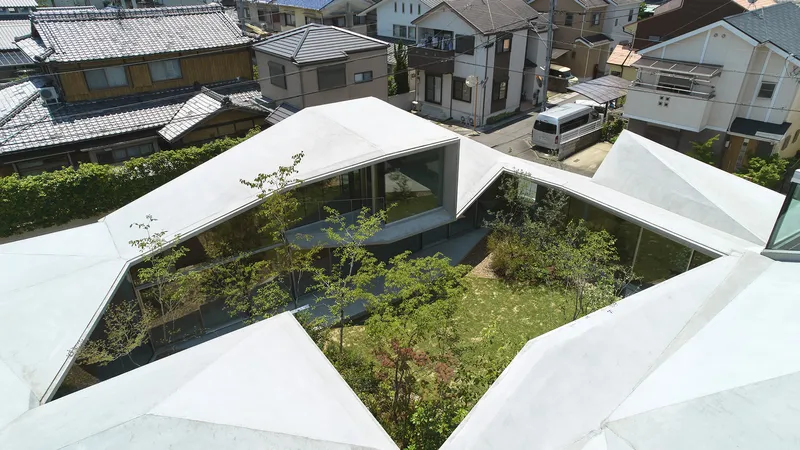
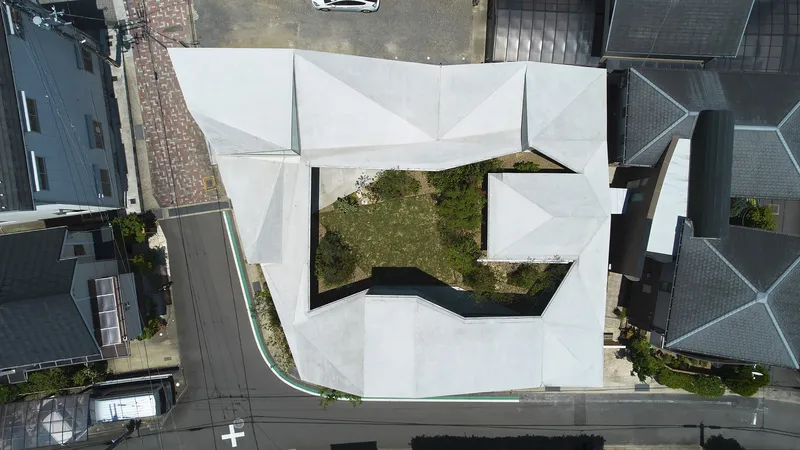
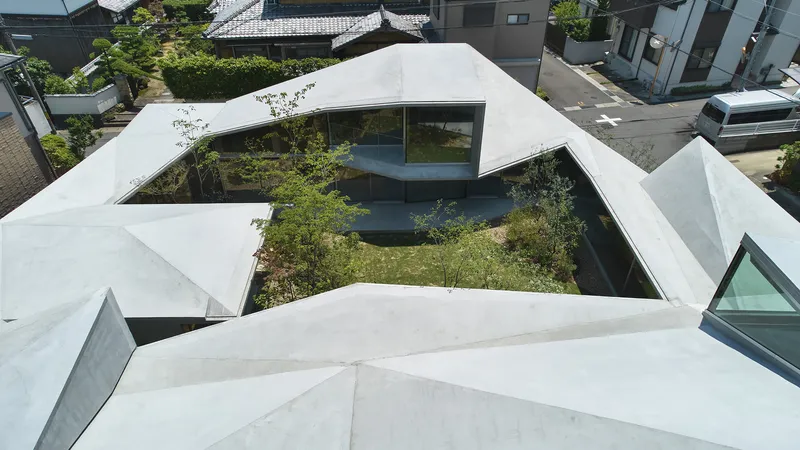
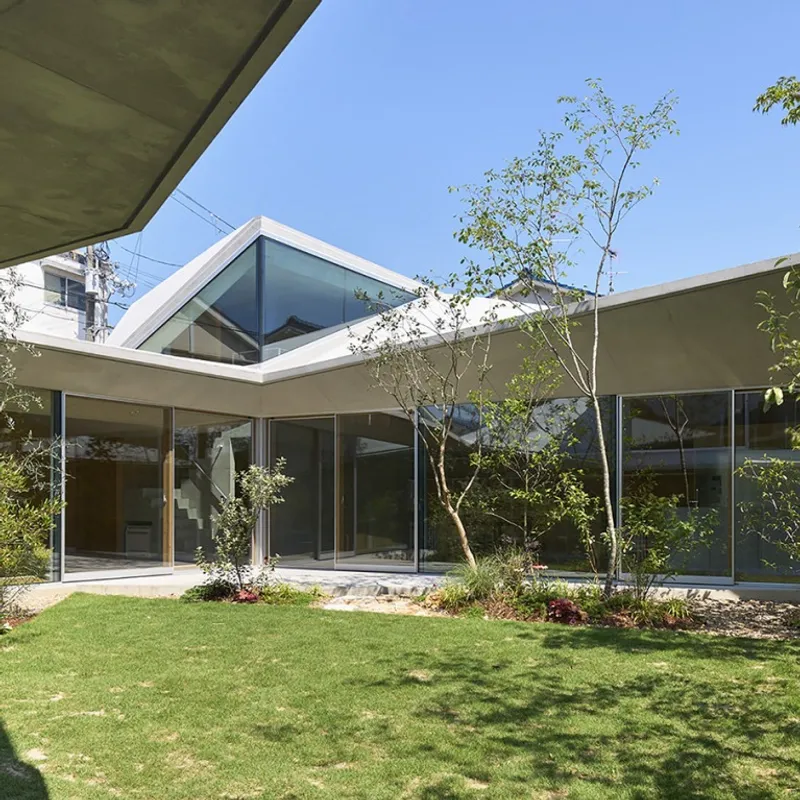
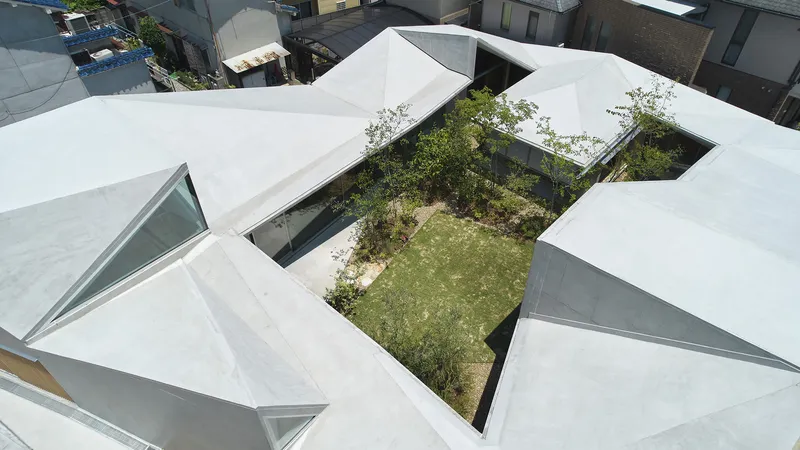
Instead of maintaining a strict hierarchy centered on a main building, the house is composed of multiple small volumes that interact freely with one another. These volumes appear to collide and overlap, forming a network of interconnected spaces that gradually merge together.
This strategy dissolves the traditional hierarchical order while still referencing the clustered composition of agricultural settlements. The result is a home that feels both fragmented and unified, allowing spaces to remain flexible, open, and adaptable to modern living.
The layout creates a large shared living zone surrounded by smaller functional areas. These spatial clusters define the residence while maintaining visual and physical connections between different parts of the house.
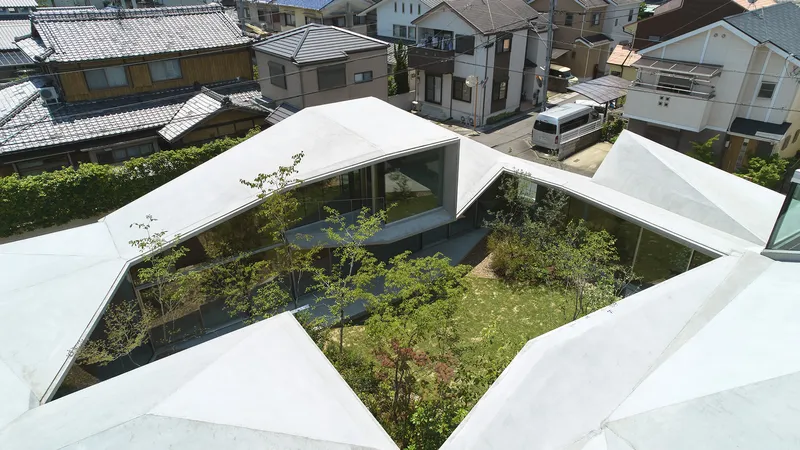
Creating a Contemporary Courtyard Living Experience
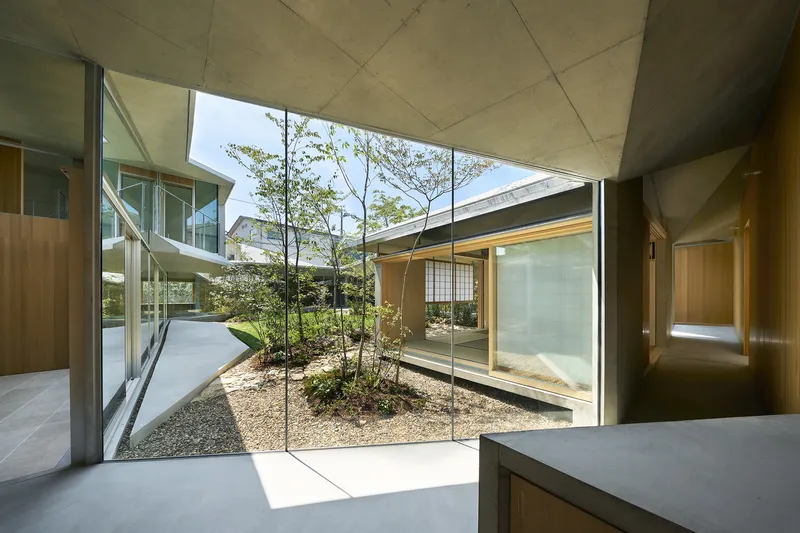
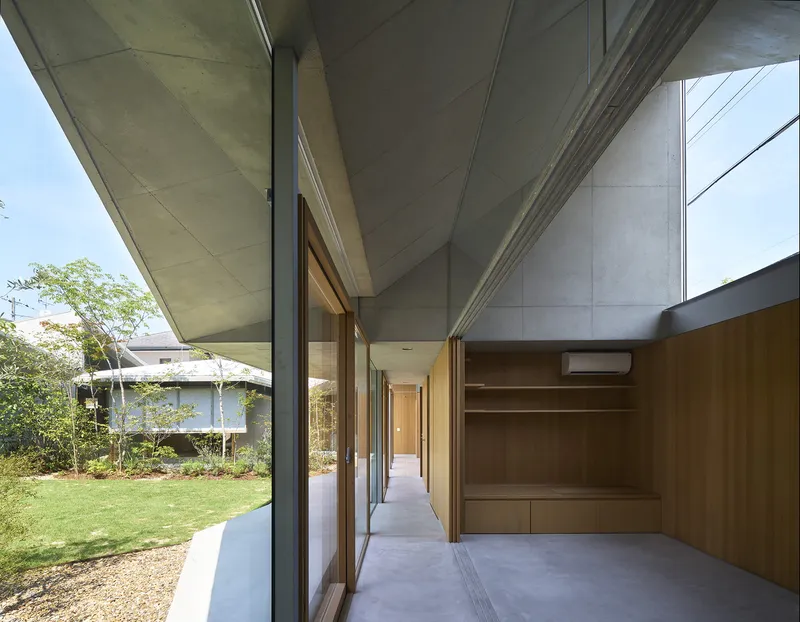
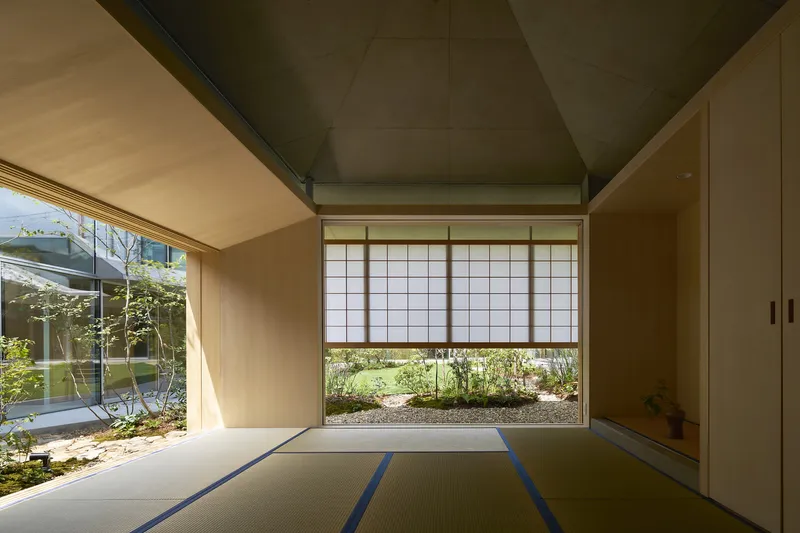
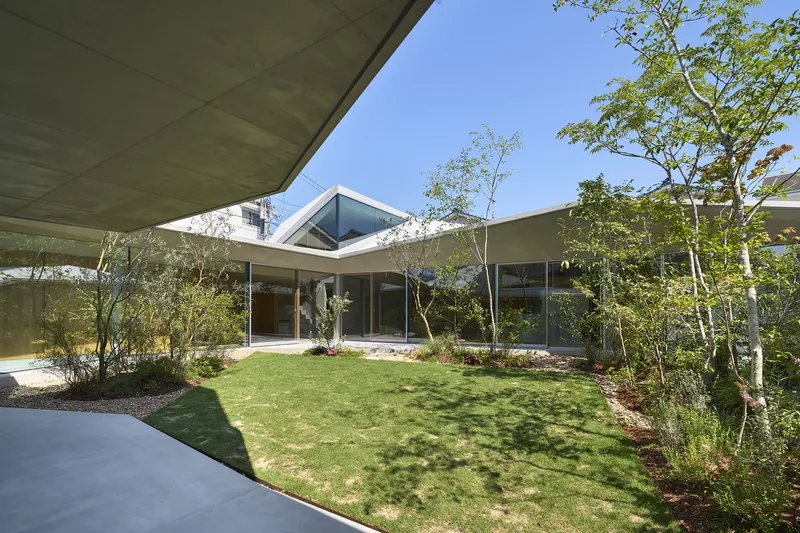
One of the most distinctive features of the project is the creation of a central living environment reminiscent of a Japanese courtyard house. Instead of isolated rooms connected by corridors, the interior spaces flow continuously, allowing residents to experience the house as a series of overlapping environments rather than separate compartments.
This spatial organization encourages movement, openness, and interaction, reflecting a contemporary lifestyle while still drawing inspiration from traditional settlement patterns. Natural light enters the house through strategically positioned openings and windows, enhancing the sense of openness and connection with the surrounding rural landscape.
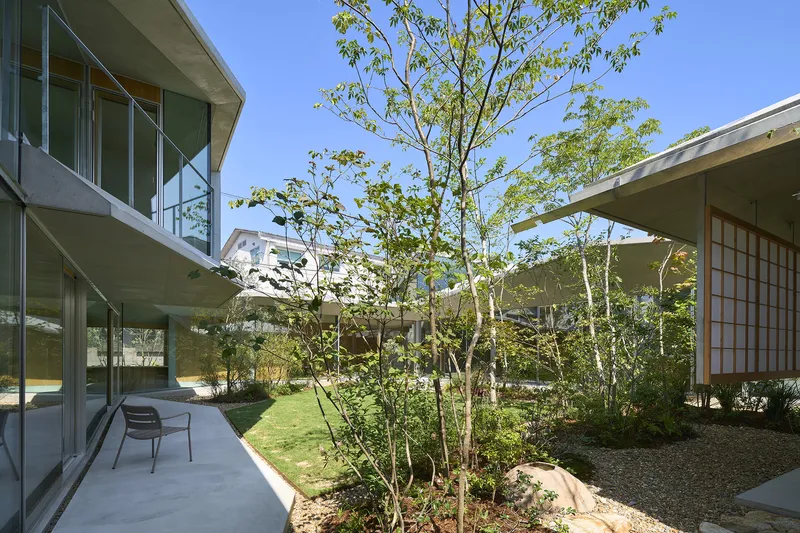
The design also reinforces the relationship between indoor and outdoor spaces, a key element in traditional Japanese architecture. Views of farmland, bamboo groves, and neighboring houses create a constant dialogue between the home and its environment.
Material Expression and Architectural Simplicity
The architectural language of House in Muko reflects the clarity and minimalism typical of modern Japanese residential design. The exterior façade features a restrained palette that blends naturally with the surrounding rural setting, while the interior emphasizes light, openness, and material authenticity.
Large windows frame the landscape and allow natural light to permeate the interiors, creating calm and comfortable living spaces. Structural simplicity ensures that the spatial organization remains the central focus of the design.
This minimal yet expressive approach aligns with broader trends in contemporary Japanese architecture, where simplicity, functionality, and environmental integration are essential design principles.
Bridging Historical Memory and Modern Living
The core concept of House in Muko revolves around layering two different time axes: the historical lifestyle rooted in agricultural traditions and the demands of modern urban living.
By reinterpreting the clustered spatial organization of traditional farmhouses, the architects created a residence that honors local heritage while offering the flexibility and openness required in contemporary homes.
The project demonstrates how architecture can preserve cultural identity while embracing change, offering a model for future residential developments in areas experiencing rapid transformation.
Expanding the Idea of Contemporary Rural Housing
House in Muko represents more than a single residential project. It reflects a broader architectural exploration of how modern housing can coexist with historical landscapes. By blending rural traditions with innovative spatial strategies, the design creates a living environment that is both contextually sensitive and forward-looking.
As cities continue to expand and rural environments evolve, projects like this illustrate the potential for architecture to mediate between history, culture, and modern lifestyles. The house stands as a thoughtful response to the transformation of Kyoto’s rural outskirts while celebrating the enduring spirit of its traditional settlements.
All photographs are works of
Toshiyuki Yano


Popular Articles
Popular articles from the community


U.GA Architects Wraps an Oval Rooftop Pool in Curved Board-Formed Concrete on Busan's Jeollidan-gil
In Busan's Jeonpo-dong, a 454 m² mixed-use block stacks a neighborhood facility, guest rooms and an oval rooftop pool inside spiraling concrete walls.

GROUP A Strips a 1969 Rotterdam Harbor Headquarters to Its Frame and Wraps It in Timber Louvers
In Rotterdam's M4H harbor district, Ferro Offices reuses a 1969 frame, adds one timber storey and reaches BREEAM-NL Outstanding.

David Macias Steps a Doorless Stone and Plaster House Down a Tropical Colombian Hillside
In the humid hills of Colombia, Threshold House replaces the front door with an open void and terraces its 850 m² down the slope instead of fighting it.

LT2A and OPEN Architectes Thread a Brick and Glass High School Through a Wooded Belgian Campus
In Braine-l'Alleud, a 3,000 m² wing for Collège Cardinal Mercier pairs pale brick with a glazed colonnade, deferring to a small chapel and a dense wood.

Similar Reads
You might also enjoy these articles

Bamboo Housing Challenge 2026: Design Affordable, Sustainable Homes Using Bamboo
An international design competition by Bamboo U and IBUKU inviting architects and designers to reimagine affordable housing using bamboo — with the winning design built full-scale in Bali.

Computational Design & Education: Beegraphy Design Awards Introduces 7th Category (Featuring Jiyun's Innovative Approach)
Dive into Beegraphy’s 7th Design Awards category, where computational design meets education to create immersive, interactive learning tools, inspired by Jiyun’s work.
From Parametric Lighting to Urban Furniture: Join the 2nd Workshop in Beegraphy’s Computational Design Series
Dive into Cutting-Edge Design Techniques and Practical Applications with Industry Experts

Last Call: Unleash Your Architectural Genius in SHAK's Kindergarten Design Competition
Urgent call for architects to join SHAK's kindergarten design competition before the looming deadline

Explore Housing Competitions
Discover active competitions in this discipline

Challenge to reimagine the Iron Throne

Photograph architecture without architects

Illustrate the lost glory of Angkor Wat - Render Challenge

Design challenge to reuse E-waste
Comments (0)
Please login or sign up to add comments
No comments yet. Be the first to comment!