

House in Shikenbaru by Studio Cochi Architects – A Sustainable Farmhouse Integrating Okinawan Traditions
A single-story Okinawan farmhouse blending living and farming spaces, with vaulted ceilings, earthen floors, and a productive green roof.


Architects: Studio Cochi Architects
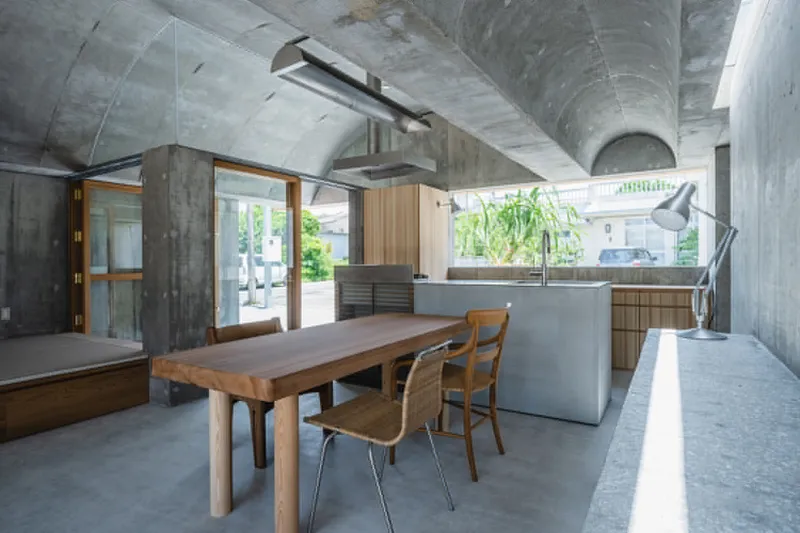
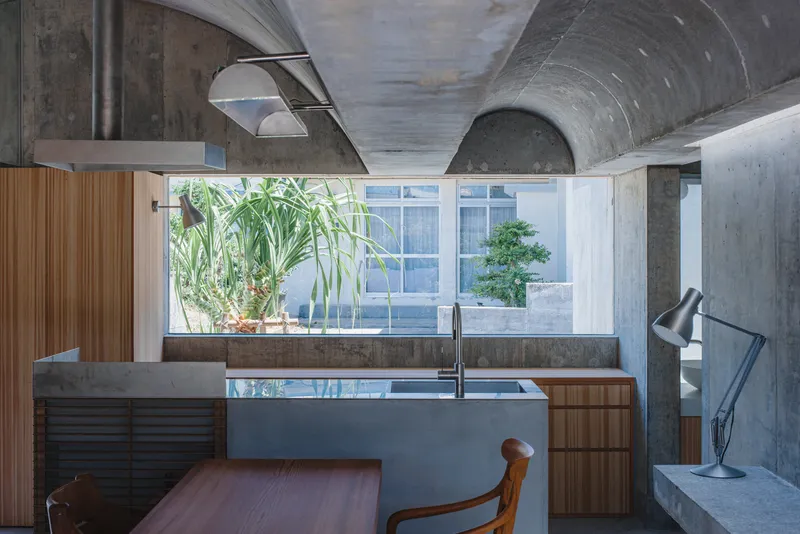
A Home Rooted in the Land and Climate of Okinawa
The House in Shikenbaru, designed by Studio Cochi Architects, is more than a family home—it is a living, breathing part of the agricultural lifestyle of its owners. Situated in a quiet village near the sea in southern Okinawa, the residence is designed for a couple and their four children, harmonizing with both the rural landscape and the rhythms of farm life.
Okinawa’s warm climate, free from frost and snow, allows vegetables typically grown in spring or summer on Japan’s main island of Honshu to be harvested year-round. This unique agricultural context directly shaped the architectural concept.


Living in Sync with Farming Rhythms
The homeowner runs a local farm, cultivating okra, green beans, papaya, and other crops. His workday starts before sunrise, with harvesting and fieldwork lasting until mid-morning. During the hottest hours, he sorts produce in shaded areas, returning to the fields in the cooler evenings. The home needed to accommodate this schedule, serving both as a family residence and as a functional workspace for agricultural tasks.

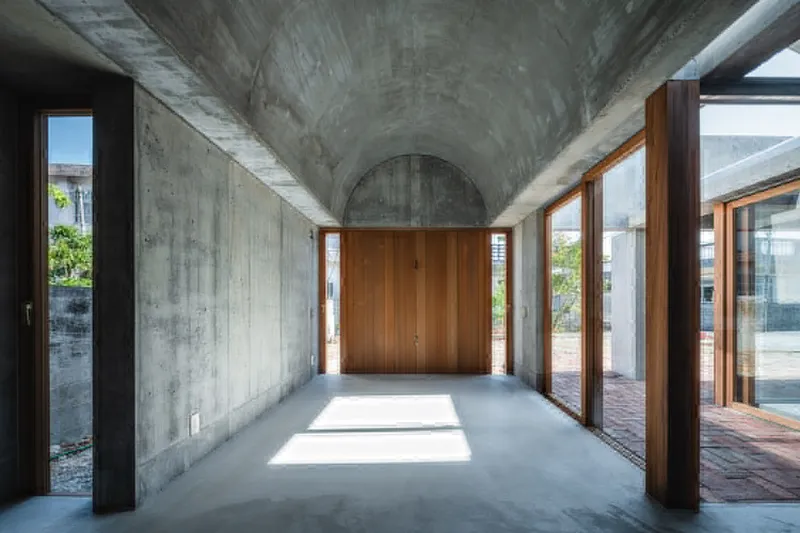
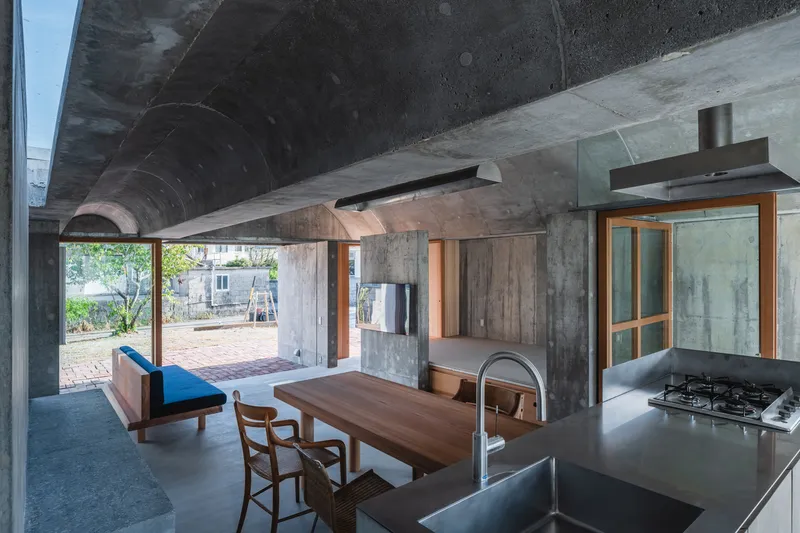
Open Layout and Seamless Indoor-Outdoor Connection
With a generous plot of land available, the architects opted for a single-story design, maximizing accessibility and flow. The site’s original block wall was removed, allowing tractors and cultivators to enter freely from any direction. This also created an open perimeter space for storing farming tools and extending work activities outdoors.
The house features a continuous earthen floor that blurs the line between interior and exterior. A vaulted ceiling, running north to south, shelters both indoor living areas and semi-outdoor spaces beneath deep eaves. These eaves act as transitional zones, functioning as shaded work areas during the day and social spaces in the evening.
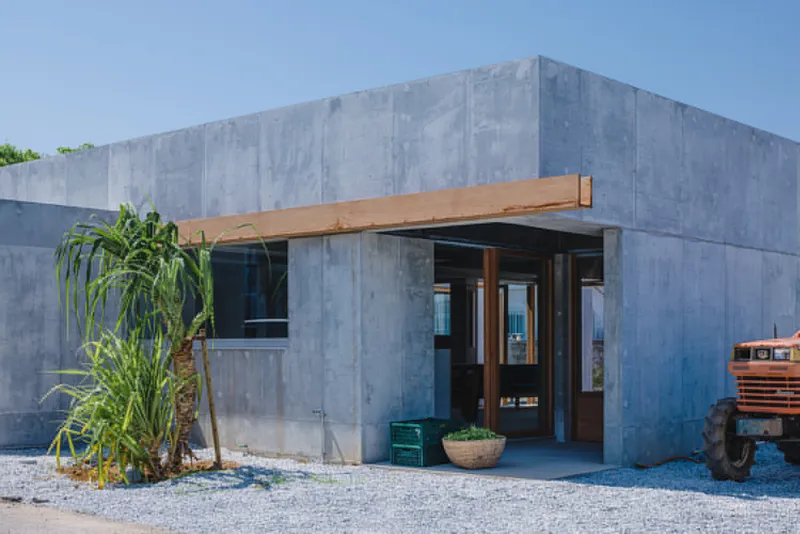
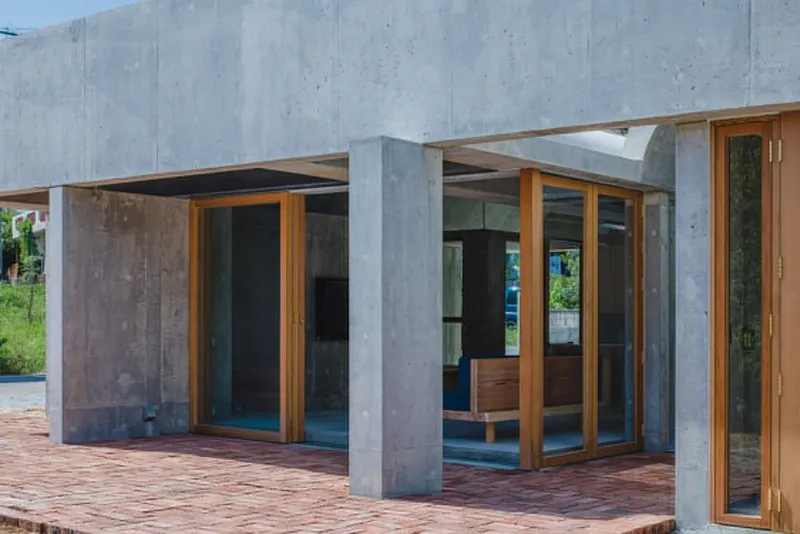
Climate-Responsive and Sustainable Roof Design
One of the home’s most distinctive features is its living vaulted roof. The top of the vault is filled with soil, providing natural insulation against Okinawa’s intense sun. Over time, passion fruit vines, bougainvillea, and other climbing plants have spread across the roof, offering shade and cooling benefits while blending the house into its natural surroundings.
The roof also doubles as a productive garden, with different soil depths allowing for the cultivation of varied crops. The owner now grows fruits and vegetables on the roof, expanding the home’s self-sufficiency. This green roof not only supports biodiversity but also helps regulate the home’s microclimate.


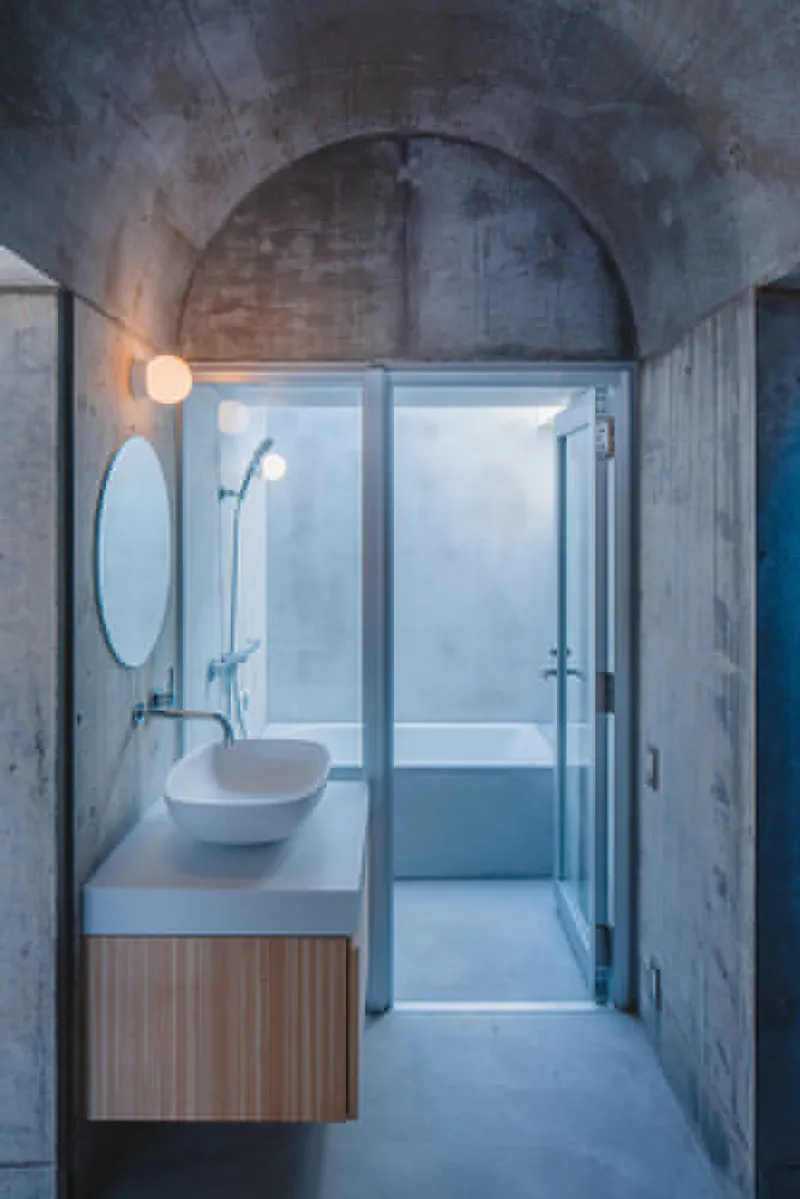
A Rhythmic, Light-Filled Interior
Inside, the vaulted ceiling varies in height, introducing a subtle rhythm to the simple floor plan. Gaps between the roof and walls allow soft daylight to filter in, creating a gradation of light and shadow throughout the day. The open interior is functional, uncluttered, and well-suited to a lifestyle that flows constantly between indoor comfort and outdoor labor.
The House in Shikenbaru stands as a model of context-driven design, merging architecture with farming culture, climate-responsive strategies, and sustainable living. Studio Cochi Architects has created a home that is not only tailored to its inhabitants’ daily rhythms but also deeply rooted in the agricultural heritage of Okinawa.
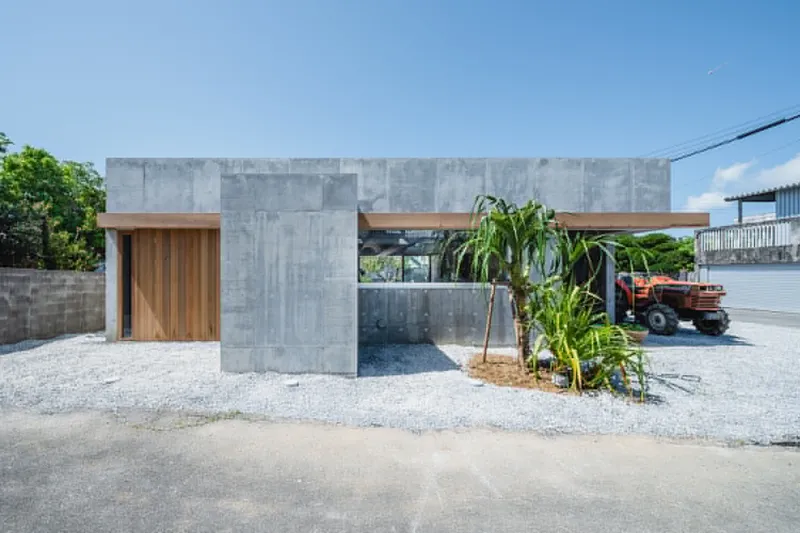
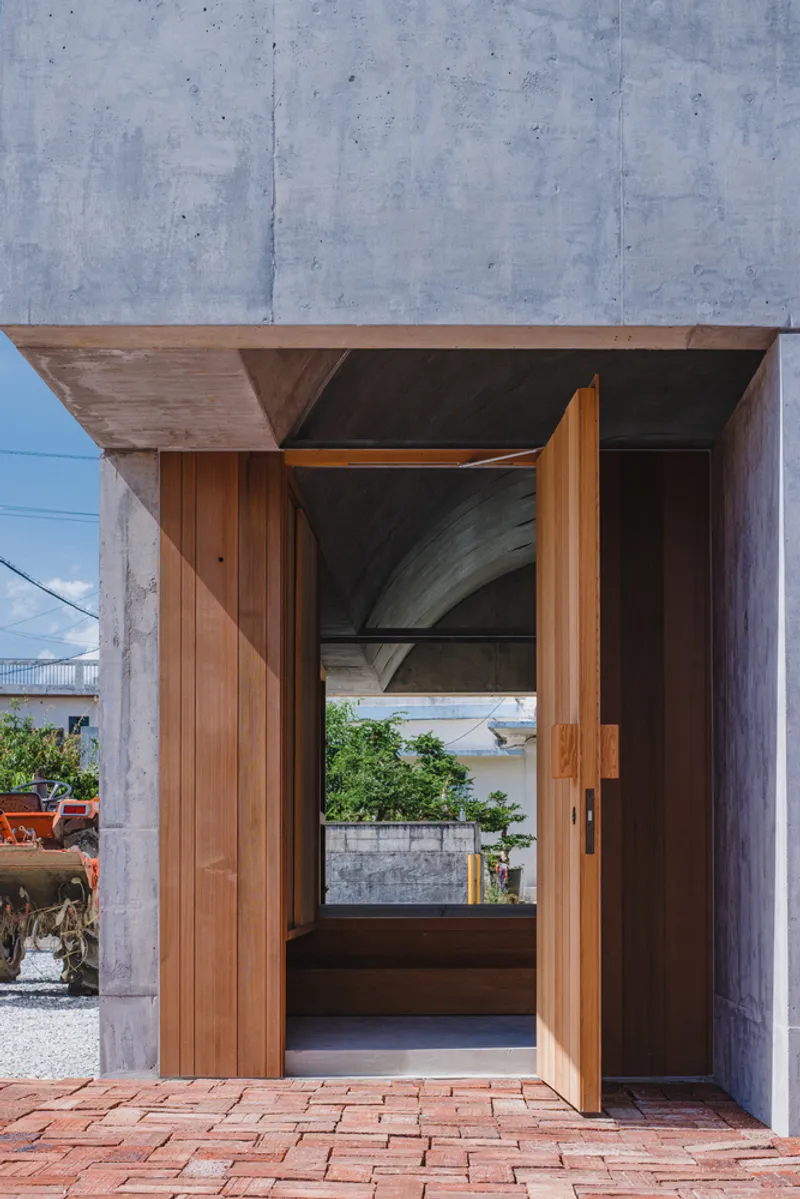
All photographs are works of Ooki Jingu


Popular Articles
Popular articles from the community


David Macias Steps a Doorless Stone and Plaster House Down a Tropical Colombian Hillside
In the humid hills of Colombia, Threshold House replaces the front door with an open void and terraces its 850 m² down the slope instead of fighting it.

Juan García Correa, John González and Claudia Rueda Sink a Circular Amphitheater into a Manizales Engineering Building
On the La Nubia campus in Manizales, Colombia, the S1 Building folds labs and offices into a hillside of ramped lawns that double as a campus route.

LT2A and OPEN Architectes Thread a Brick and Glass High School Through a Wooded Belgian Campus
In Braine-l'Alleud, a 3,000 m² wing for Collège Cardinal Mercier pairs pale brick with a glazed colonnade, deferring to a small chapel and a dense wood.

GROUP A Strips a 1969 Rotterdam Harbor Headquarters to Its Frame and Wraps It in Timber Louvers
In Rotterdam's M4H harbor district, Ferro Offices reuses a 1969 frame, adds one timber storey and reaches BREEAM-NL Outstanding.

Similar Reads
You might also enjoy these articles


Hodi-Mandai Geram
Project Function: Preservation and revitalization of the Intangible heritage and socio-spatial identity of the Hodi by Housing, Cultural Memory Center, Sacred Grove, landscape, local tourism economy


Olio Towers: A Mid-Rise for Performers That Fuses Housing, Rehearsal, and Stage
Located blocks from Houston's Theater District, this modular tower stacks living units around a central performance atrium.

Oasis: Modular Green Housing Carved into Dhaka's Urban Fabric
A shortlisted Plugin Housing entry reclaims unauthorized settlements in Dhaka with stepped concrete volumes, green roofs, and ventilation-driven design.

Black Hole: A Floating Megastructure for the Post-Physical Era
Emiliano Mazzarotto envisions a spherical, self-scaling arena where e-sports, digital hotels, and holographic stadiums replace traditional public space.

Explore Housing Competitions
Discover active competitions in this discipline

Challenge to reimagine the Iron Throne

Photograph architecture without architects

Illustrate the lost glory of Angkor Wat - Render Challenge

Design challenge to reuse E-waste
Comments (0)
Please login or sign up to add comments
No comments yet. Be the first to comment!