

House in the Forest by Office Ten Architecture — A Minimalist Cedar Retreat Near Mount Fuji
A compact cedar retreat near Mount Fuji, blending Japanese and Scandinavian influences with passive cooling, a tall timber structure, and serene forest views.


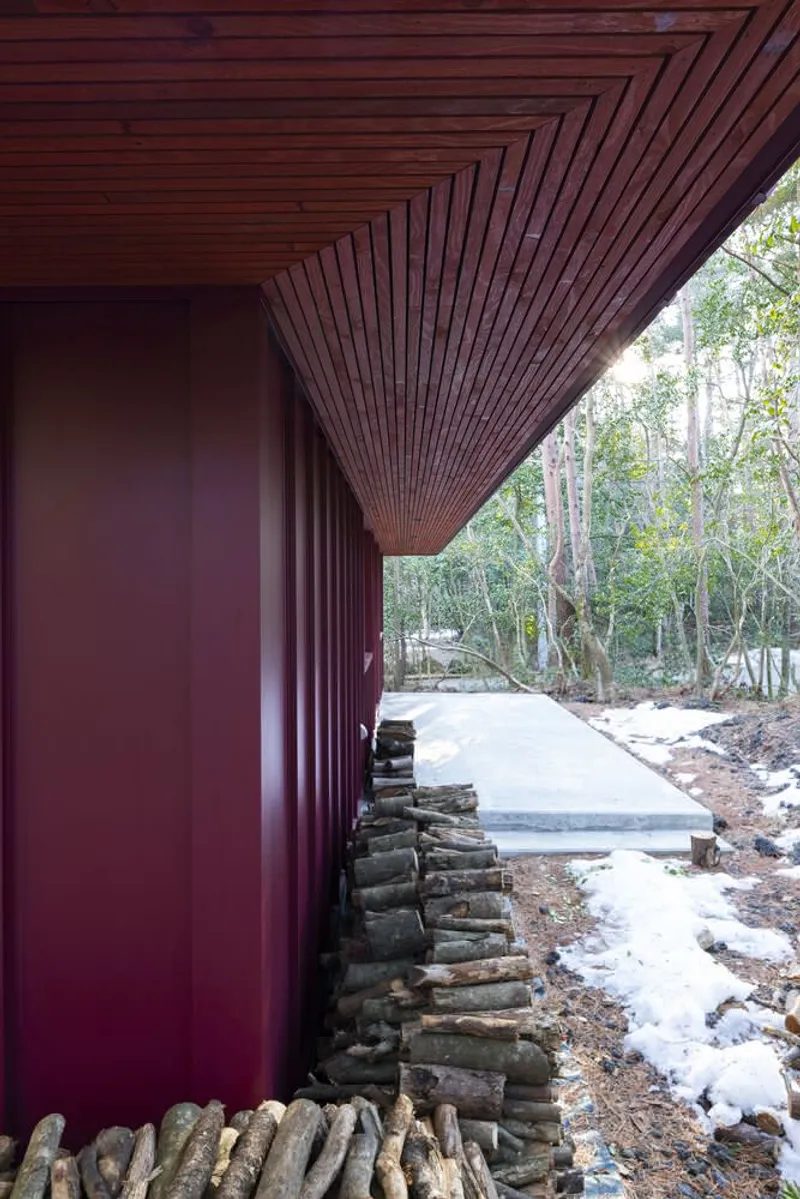
The House in the Forest by Office Ten Architecture is a compact yet thoughtfully crafted 53 m² wooden retreat located in Yamanashi, Japan. Designed as an escape from the heat, noise, and density of Tokyo, the cottage sits quietly among the trees, drawing inspiration from both Scandinavian timber cabins and traditional Japanese shrine architecture. With its cedar-clad interiors, soaring roof geometry, and climate-responsive design, the project creates a serene woodland refuge only 90 minutes from the city.
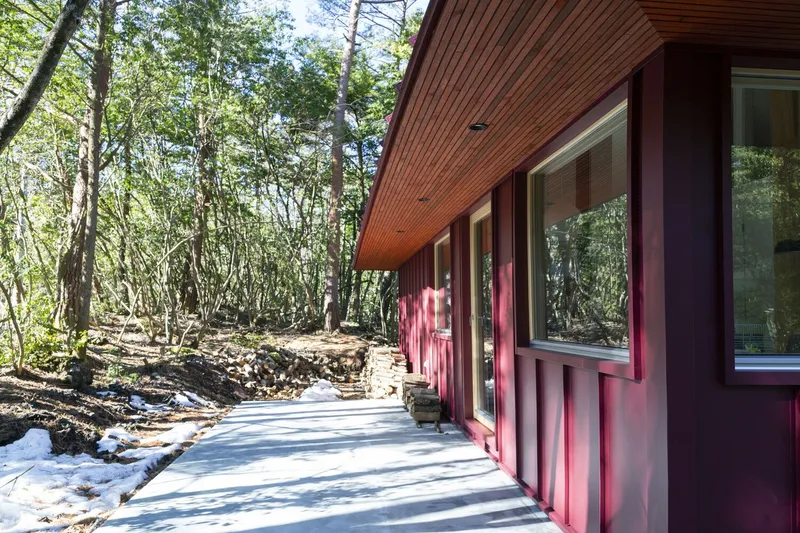
A Nature-Focused Refuge for Hot Japanese Summers
The architects approached the design with a clear principle: appearance, construction, and performance must work together. Japan’s summers are hot and humid, and the building responds passively to this climate.
Large cedar surfaces, strategically placed openings, and a dramatic internal volume allow the home to stay naturally cool. The form and structure work in harmony with the forest environment, reducing mechanical cooling needs and reinforcing a connection to the landscape.
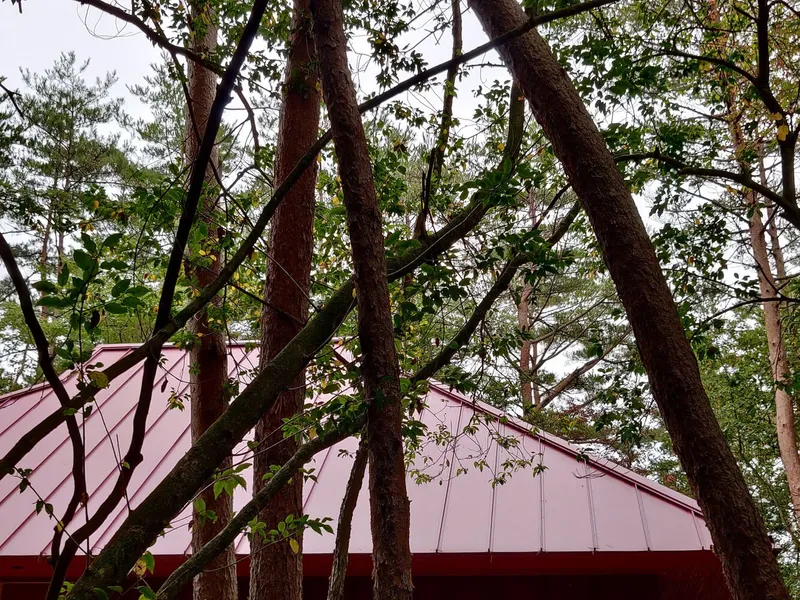
The retreat’s location—framed by the presence of Mount Fuji and close to Sai Lake—deepens its sense of escape. The architecture blends effortlessly into the wooded surroundings, creating a tranquil, restorative atmosphere.
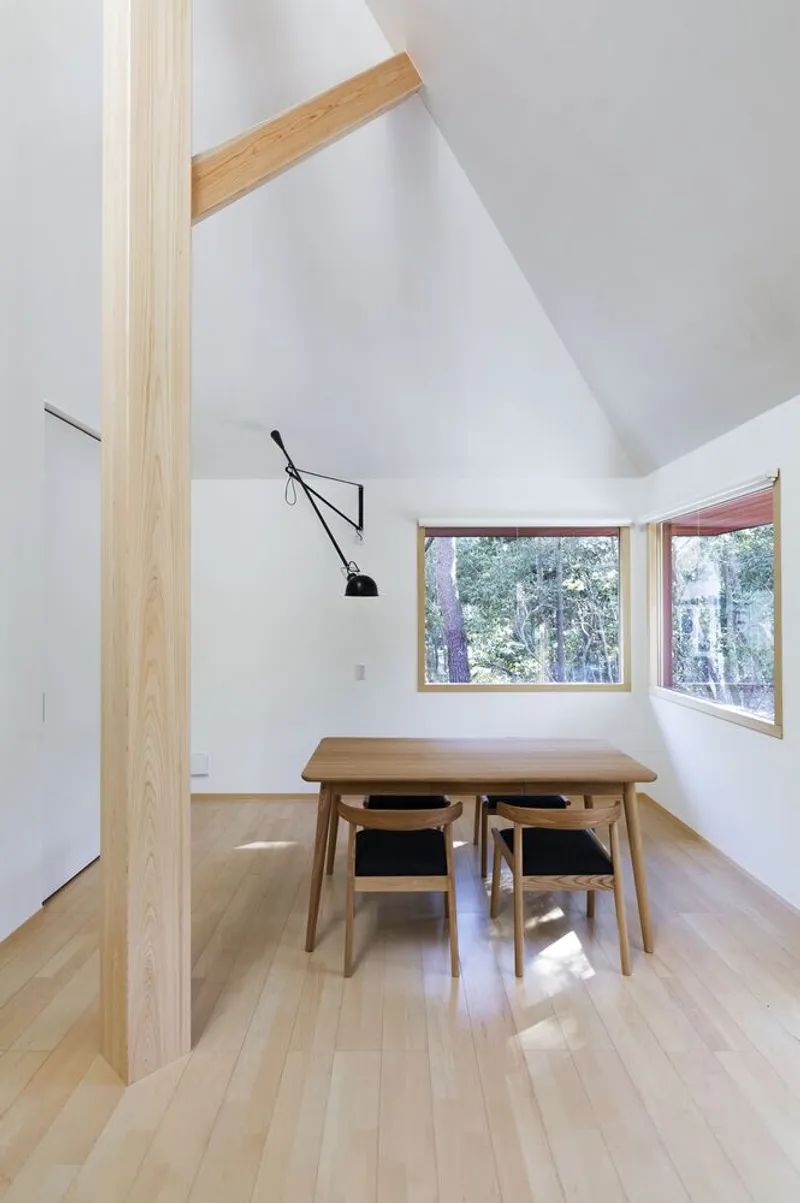
A Grid System Inspired by Traditional Tatami Dimensions
At the core of the design is a carefully calibrated grid based on the standard Japanese tatami mat size: approximately 90 × 180 cm. This module informs the entire layout and construction logic.
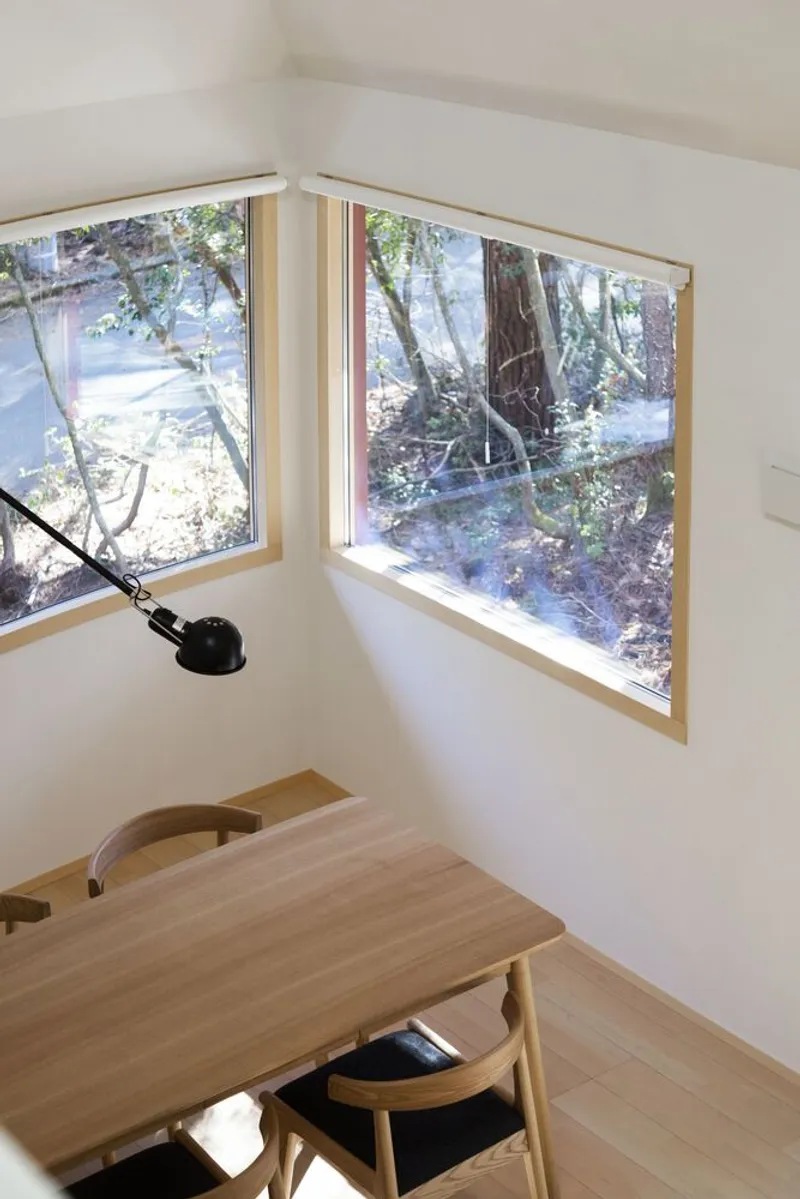
Every architectural element, from floor plates to timber beams, is a multiple of the tatami dimension, ensuring:
- Efficient material use
- Streamlined construction
- Minimal waste
- A consistent spatial rhythm
This grid-based design reflects a uniquely Japanese sensitivity to proportion, craftsmanship, and material honesty.
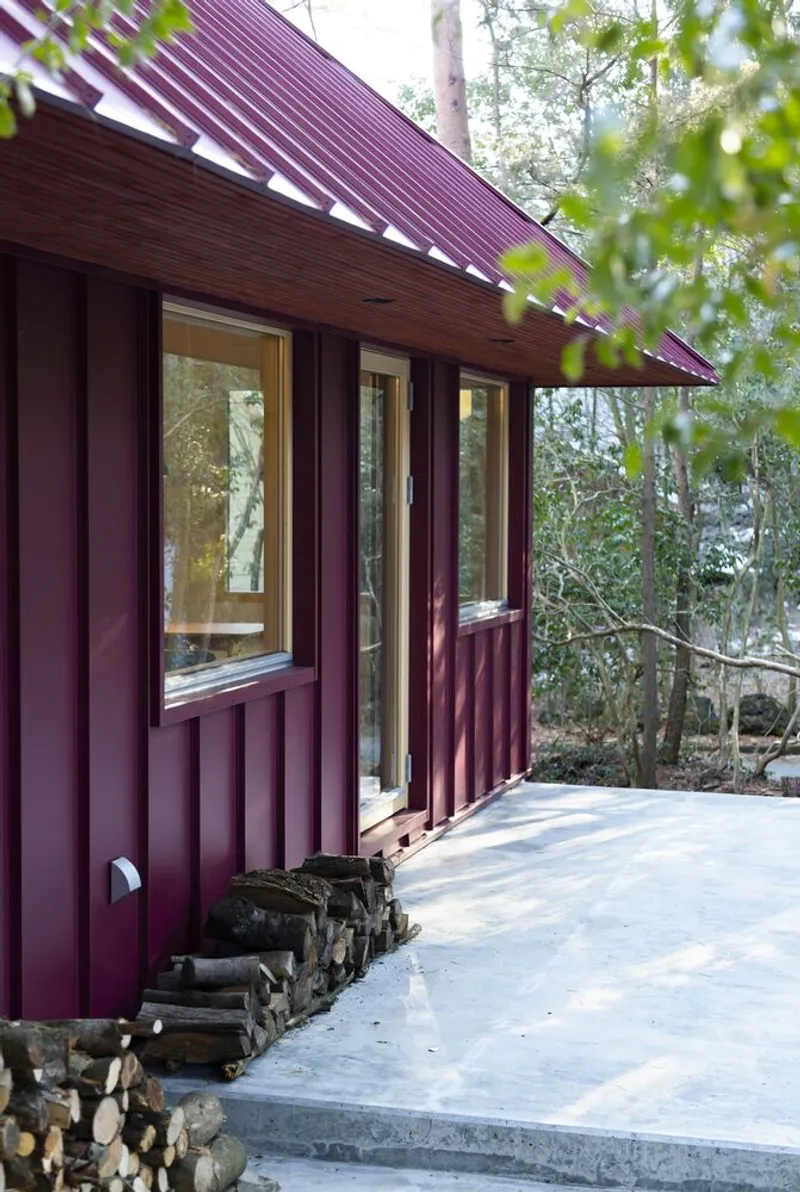
A Dramatic Cedar Interior Supported by a Tree-Like Column
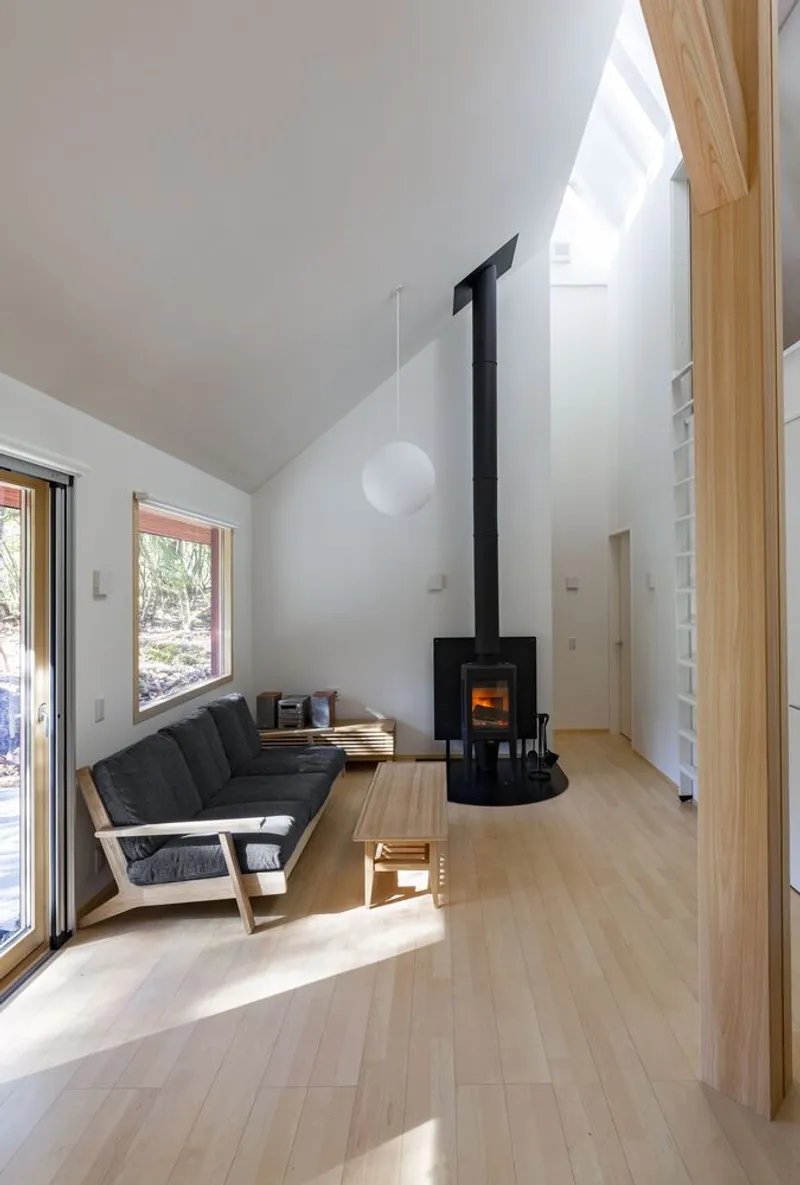
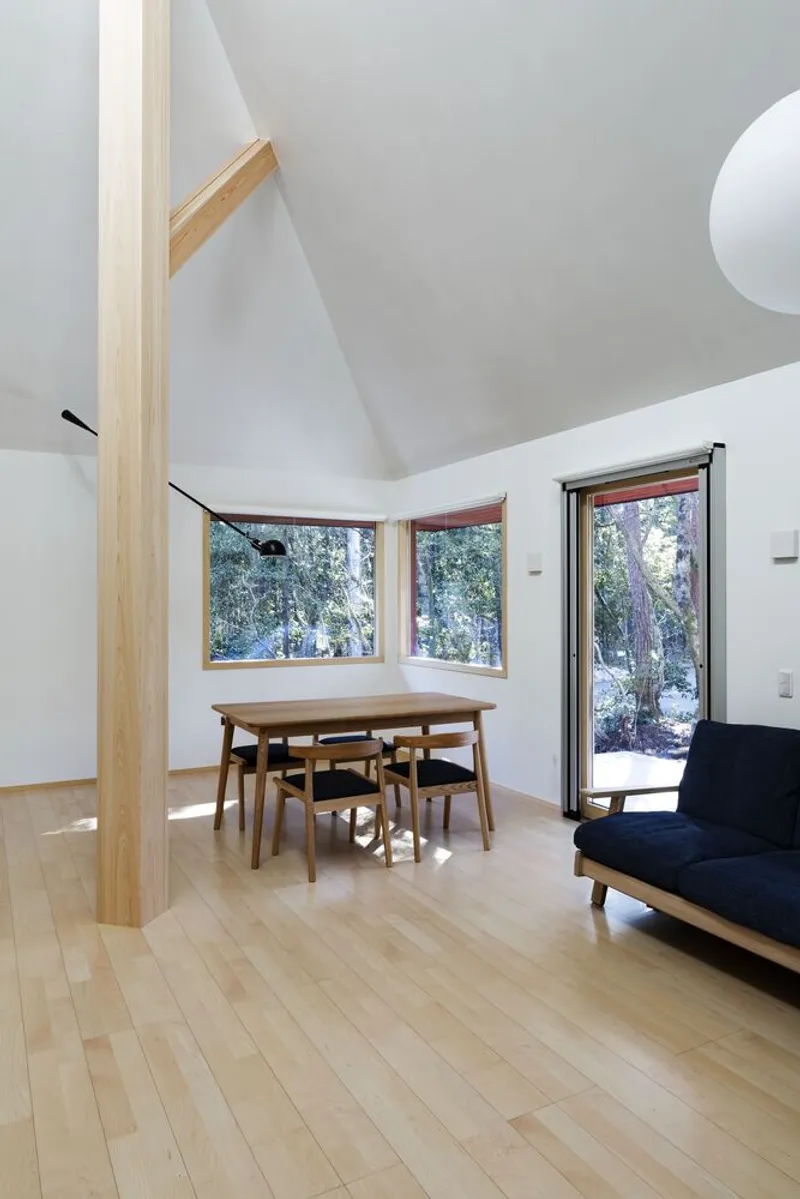
Inside, the space is defined by a striking tall roof structure supported by a sculptural central column made from local cedar. The column branches like a tree, reinforcing the home’s relationship with its surroundings while distributing structural loads.
The interior is warm, quiet, and materially consistent—dominated by natural wood, diffused daylight, and clean lines. The architecture embraces simplicity, creating a soft, calming environment ideal for retreat and relaxation.
Passive Cooling Through Stack-Effect Ventilation
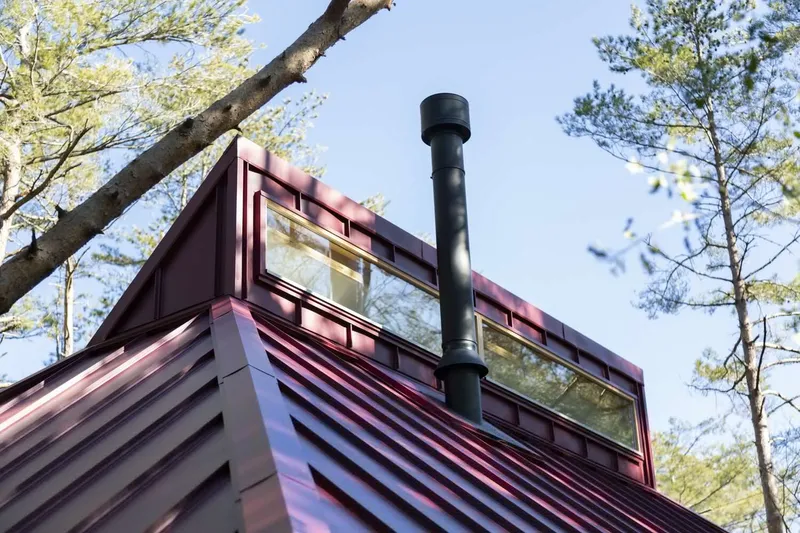
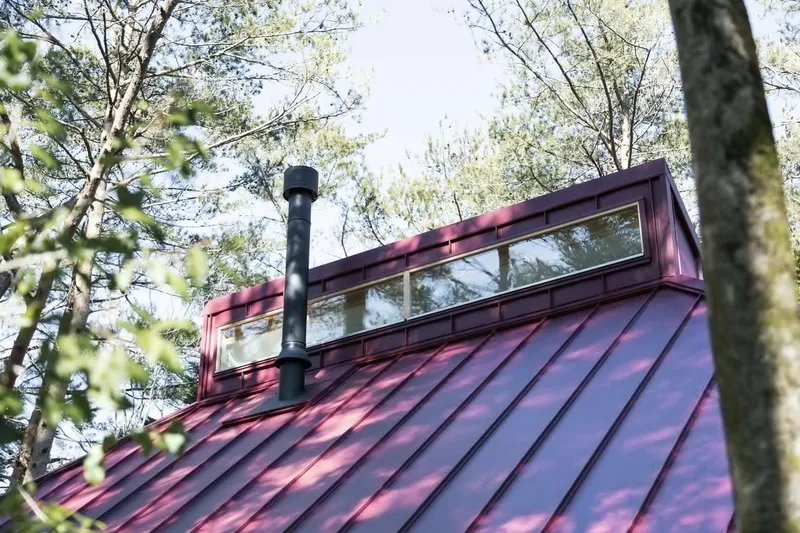
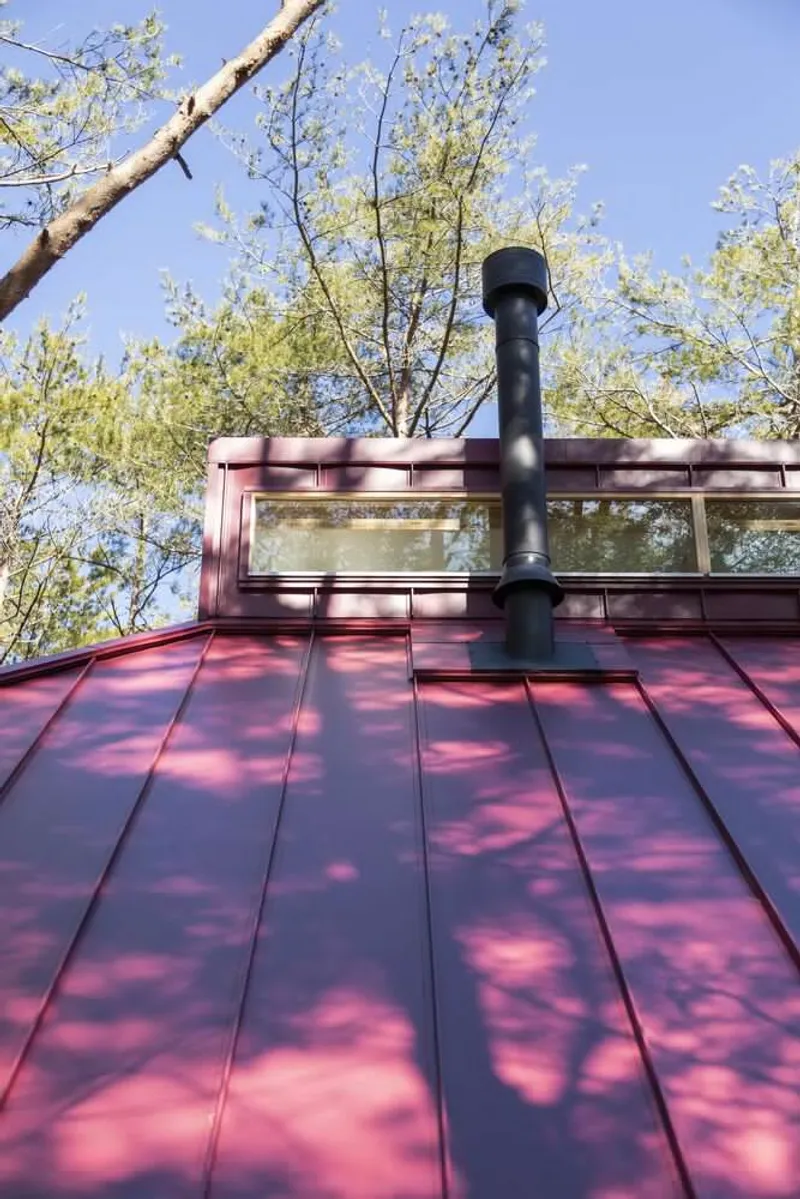
One of the most innovative features of the home is its stack-effect ventilation system. As warm air rises to the uppermost point of the tall roof, it exits through vents beside the clerestory window. This movement pulls cool air from the forest floor into the building, creating a continuous natural breeze.
This passive strategy significantly reduces the need for air conditioning, aligning with sustainable principles while enhancing comfort.
A Modern Retreat Rooted in Tradition and Crafted for Escape
The House in the Forest demonstrates how small-scale architecture can feel expansive, atmospheric, and deeply connected to nature. By merging vernacular Japanese references, Nordic minimalism, sustainable ventilation techniques, and precise modular planning, Office Ten Architecture has created a serene woodland sanctuary designed to restore both body and mind.
All photographs are works of Kazuhisa Kouta


Popular Articles
Popular articles from the community


Juan García Correa, John González and Claudia Rueda Sink a Circular Amphitheater into a Manizales Engineering Building
On the La Nubia campus in Manizales, Colombia, the S1 Building folds labs and offices into a hillside of ramped lawns that double as a campus route.

Architekt Andreas Gruber Scatters 23 Dark Timber Chalets Across a South Tyrolean Forest Edge
In Molini di Tures, Amonti Chalets breaks a resort into a hamlet of gabled timber houses, with parking, storage and services pushed into the slope.

longwave studio Reorganizes a 112 m² Tainan Apartment Around the Daily Routines of a Family and Two Cats
In Tainan, Taiwan, birch plywood, rust-red furniture and a freestanding plaster wall link arrival, storage, work and family life in one apartment.

Cube Design Draws an Ecological Corridor Between Two Shenzhen Hills with the Nankai Building
Beside Shenzhen's container docks, the Nankai Building pairs stacked balconies with a climbing green screen to connect two hillsides across its height.

Similar Reads
You might also enjoy these articles


Hodi-Mandai Geram
Project Function: Preservation and revitalization of the Intangible heritage and socio-spatial identity of the Hodi by Housing, Cultural Memory Center, Sacred Grove, landscape, local tourism economy


Olio Towers: A Mid-Rise for Performers That Fuses Housing, Rehearsal, and Stage
Located blocks from Houston's Theater District, this modular tower stacks living units around a central performance atrium.

Oasis: Modular Green Housing Carved into Dhaka's Urban Fabric
A shortlisted Plugin Housing entry reclaims unauthorized settlements in Dhaka with stepped concrete volumes, green roofs, and ventilation-driven design.

Black Hole: A Floating Megastructure for the Post-Physical Era
Emiliano Mazzarotto envisions a spherical, self-scaling arena where e-sports, digital hotels, and holographic stadiums replace traditional public space.

Explore Tree House Competitions
Discover active competitions in this discipline

Challenge to reimagine the Iron Throne

Photograph architecture without architects

Illustrate the lost glory of Angkor Wat - Render Challenge

Design challenge to reuse E-waste
Comments (0)
Please login or sign up to add comments
No comments yet. Be the first to comment!