
House in the Trees by OECO Architectes: A Sustainable Timber Home in Biscarrosse, France
Black timber-clad forest house in Biscarrosse featuring organic volumes, preserved trees, independent rental studio, minimalist interiors, and seamless indoor-outdoor living.


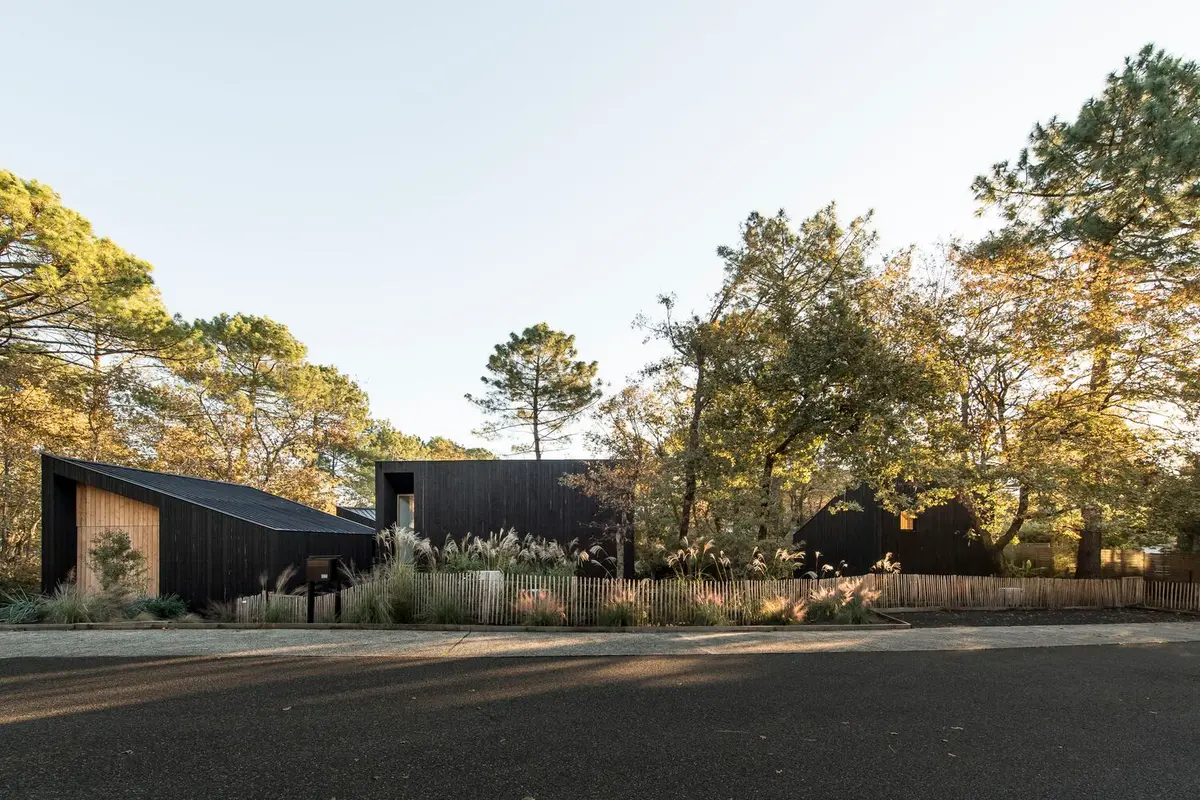
Located in Biscarrosse, France, House in the Trees is a 206 m² contemporary timber residence designed in 2023 by OECO Architectes. Nestled within a golf development neighborhood on the Atlantic coastal dune, this sustainable residential architecture project carefully preserves the existing pine trees to create a secluded and immersive woodland living environment.
Conceived as both a primary retirement home and a seasonal rental property, the house responds to dual functions, private living and independent hospitality, while maintaining architectural coherence and environmental sensitivity. Interestingly, the entire design process was conducted remotely during the COVID-19 pandemic, with video consultations shaping every aspect of the project until construction began.
Organic Layout Shaped by Trees and Topography
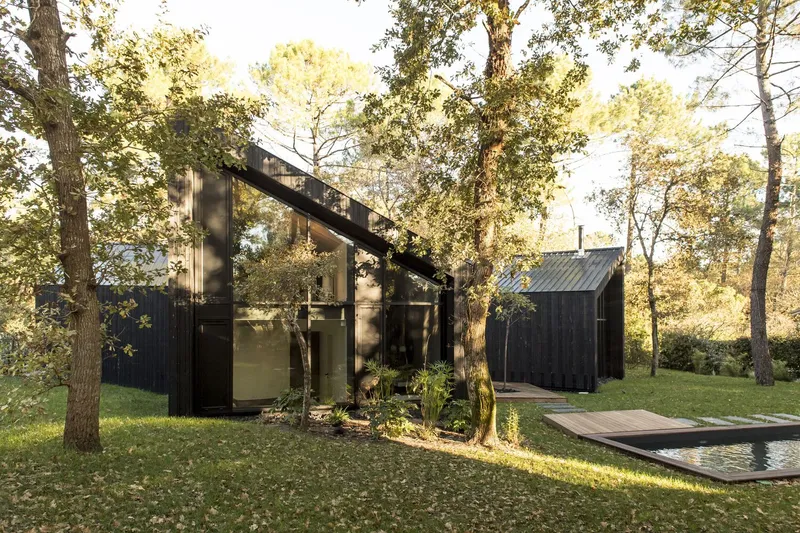
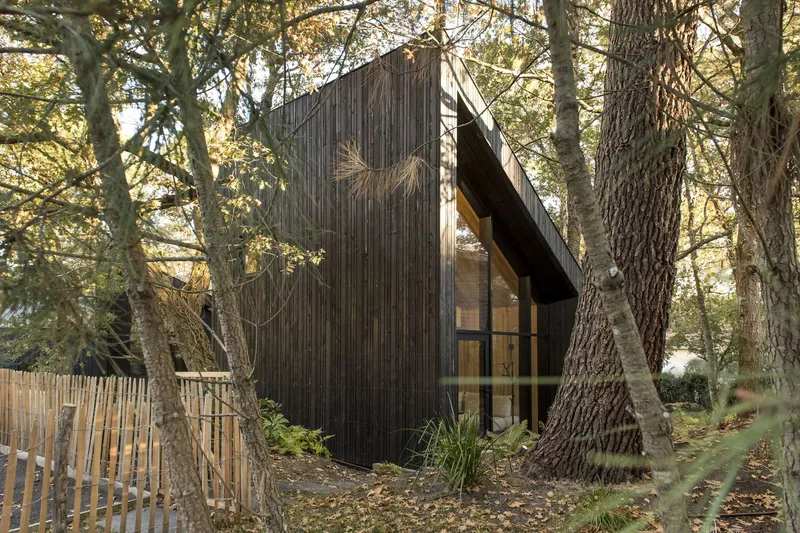
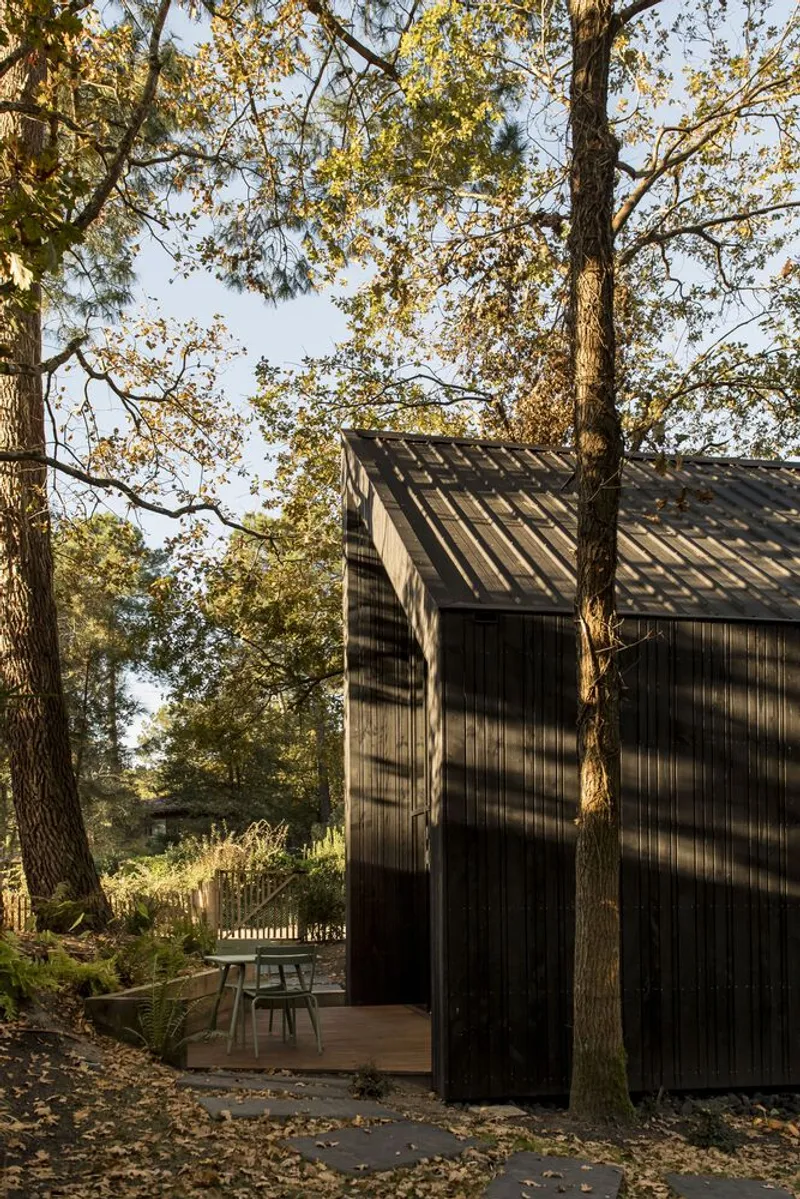
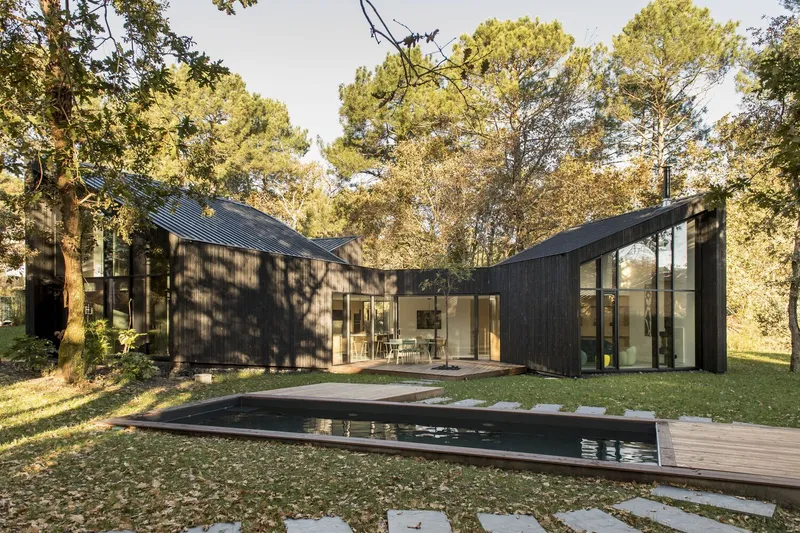
The architectural concept is driven by the natural landscape. Rather than clearing the site, OECO Architectes designed the house around the preserved trees, allowing the built form to emerge organically between trunks and root systems.
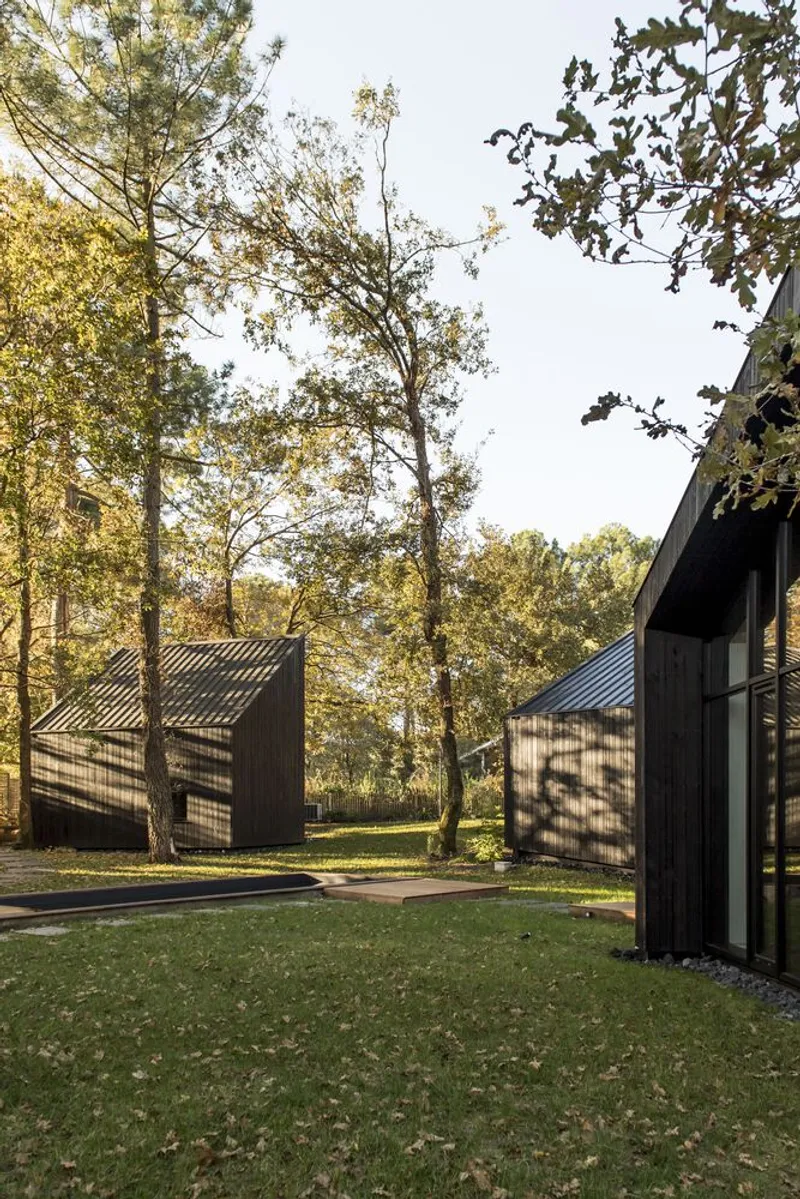
The result is a fluid composition of volumes topped with single-sloped roofs, echoing the irregularity of the forest canopy. The dune’s natural topography is strategically used to recess the house slightly from the road, ensuring privacy while enhancing its relationship with the terrain.
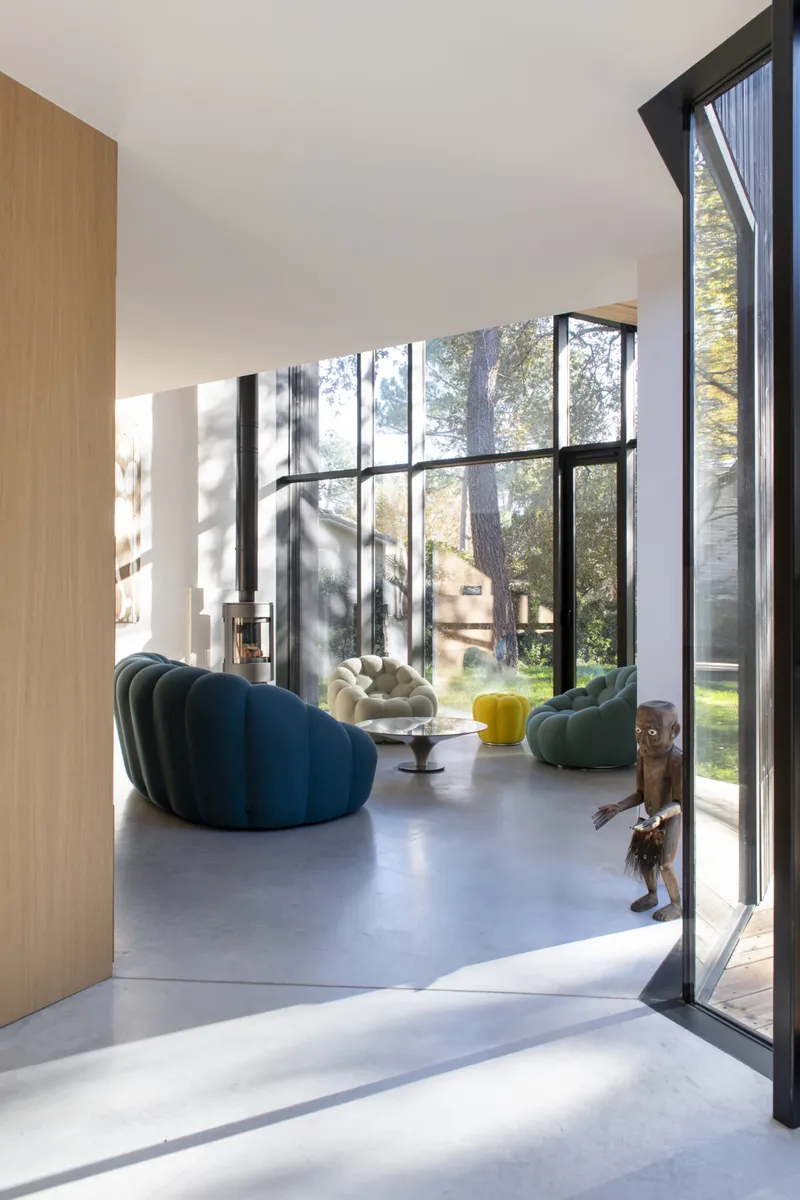
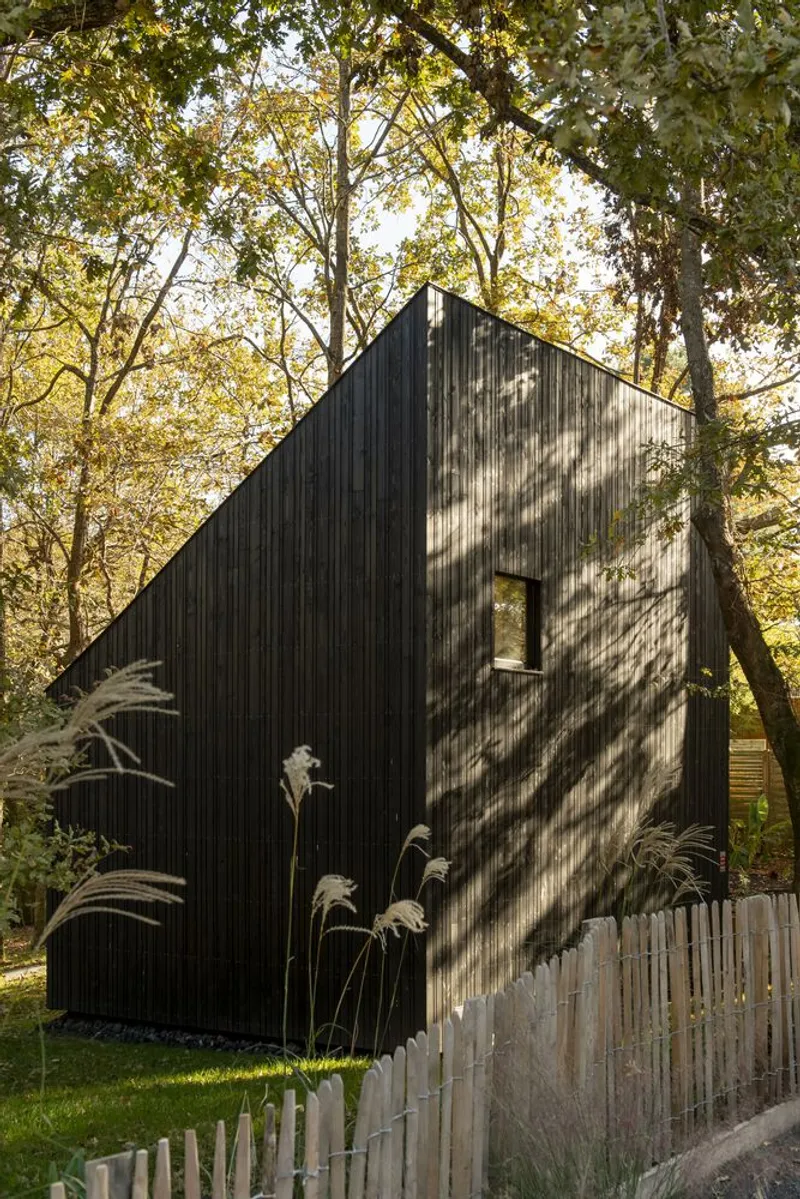
The street façade remains relatively closed, while the garden façade opens generously toward the landscape. This deliberate contrast strengthens the indoor-outdoor connection, a defining feature of this French coastal home design.
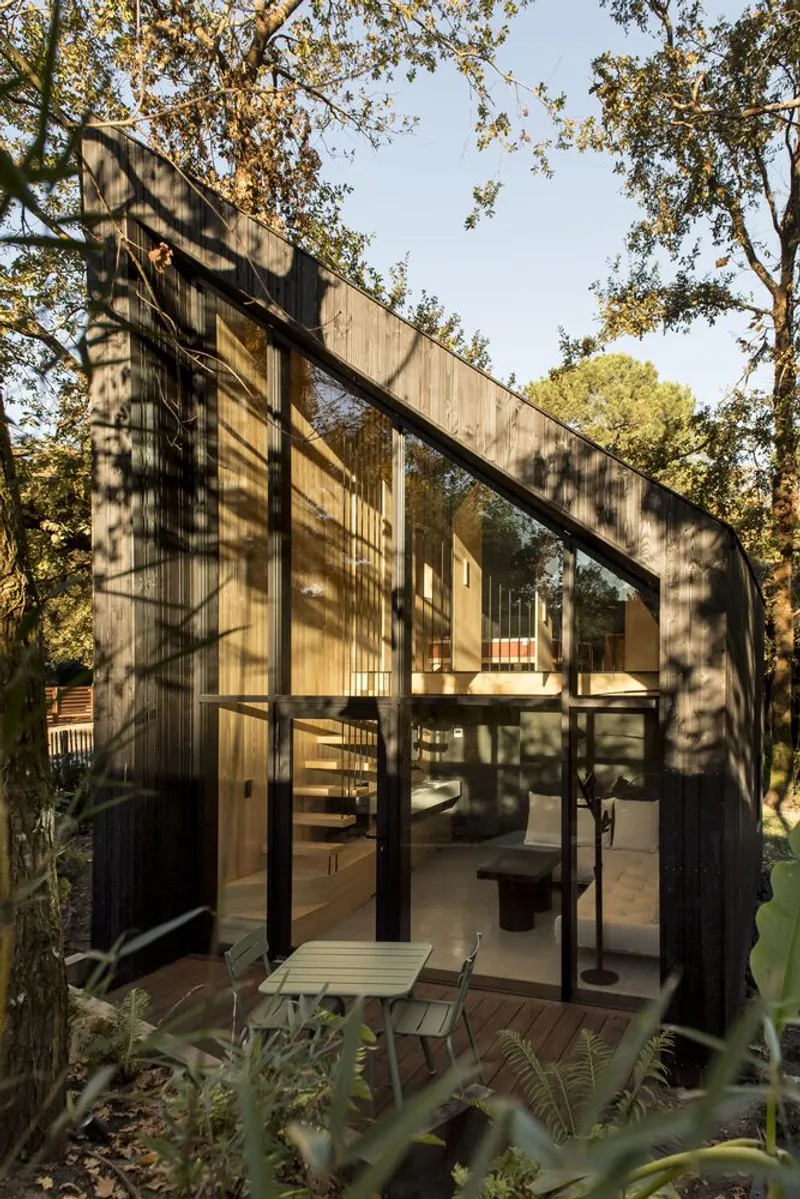
Vertically framed openings capture views of treetops and sky, emphasizing verticality and reinforcing the sensation of living among the trees.


Independent Studio for Seasonal Rental and Guests
A key architectural gesture is the inclusion of a fully detached studio volume, designed for seasonal rental or visiting relatives. This separate structure enhances privacy for both homeowners and guests.
The studio adopts a vertical spatial configuration with:
- A double-height living area
- An upper-level bedroom
- Large pivoting wooden panels that open or close the sleeping space
- A suspended wood-and-metal staircase
- Metal rods extending into the bedroom balustrade
Surrounded by a micro-garden, the studio functions as an autonomous dwelling, demonstrating flexibility in contemporary residential architecture.
Timber Construction and Sustainable Material Strategy
Sustainability is central to the project’s architectural language. The house is primarily constructed using:
- Timber-framed walls
- Traditional wooden structural framing
- Concrete foundations and ground floor slab
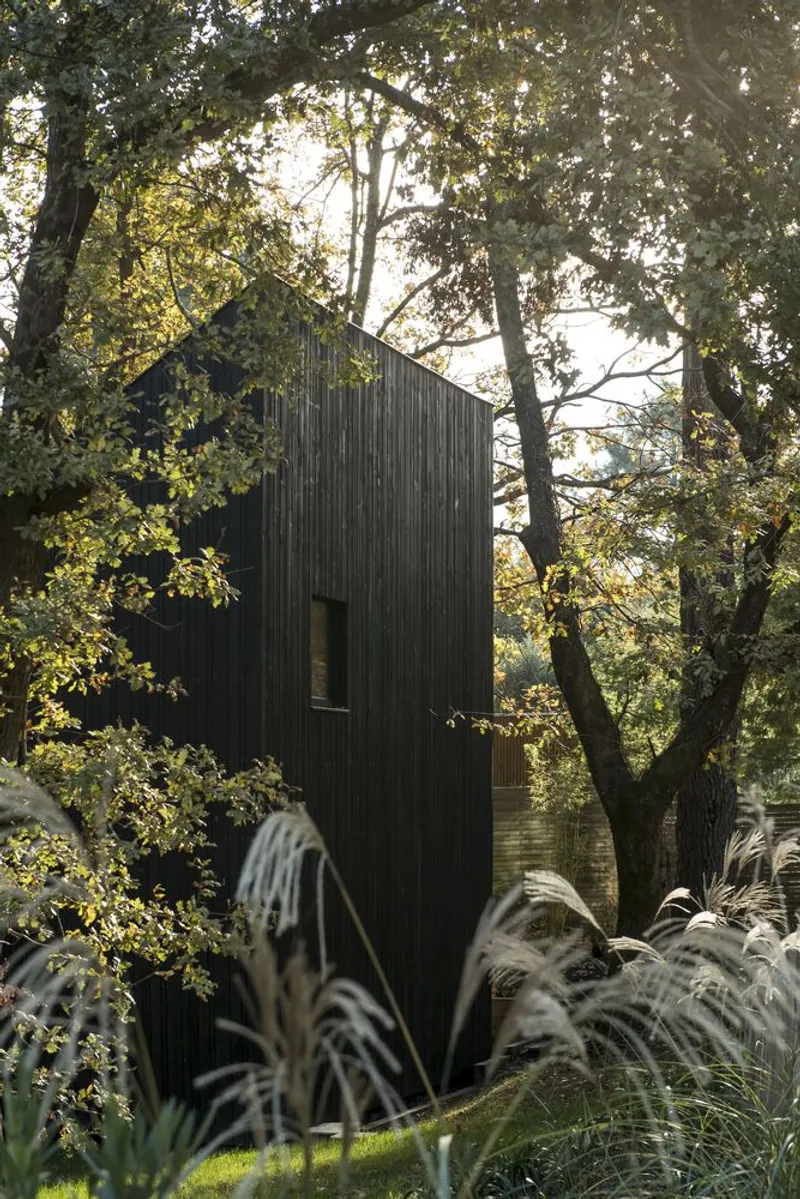
The exterior is clad in black-saturated Douglas fir, allowing the façade to blend seamlessly with pine bark and forest shadows. Under shifting daylight conditions, the cladding appears in nuanced tones of black and charcoal, reinforcing the house’s camouflaged presence within the wooded site.
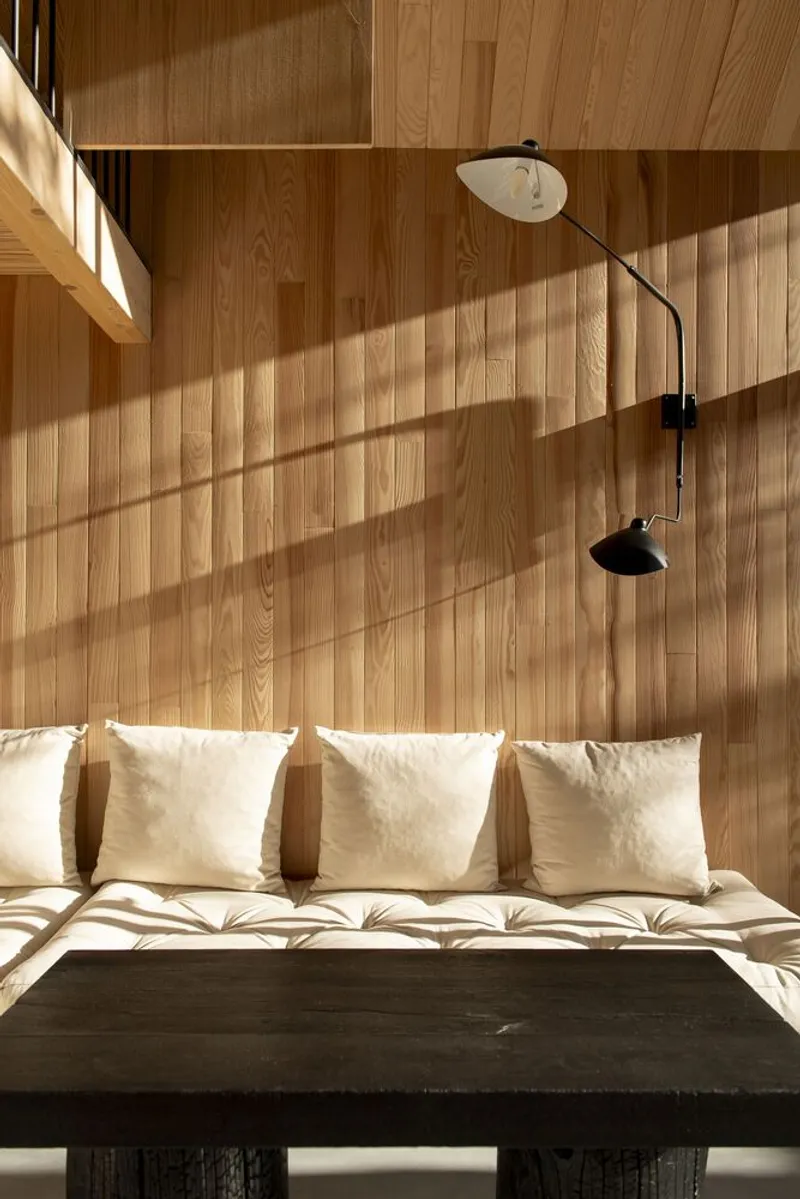
Inside, Landes pine paneling wraps the studio walls and ceilings, creating warmth and regional identity. Selected oak surfaces define distinct interior volumes, subtly differentiating spaces while maintaining material continuity.
Built-in furniture, custom-designed in pine and oak with an oiled finish, reflects the clients’ minimalist lifestyle. Storage, cabinetry, and integrated furnishings reduce visual clutter and emphasize clean architectural lines.
Landscape Design and Privacy Strategy
The landscape design extends the architectural concept rather than decorating it. Existing undergrowth was preserved to maintain the dune’s natural ecosystem. Additional plantings were strategically introduced to:
- Screen neighboring properties
- Reinforce privacy
- Maintain a natural woodland atmosphere
The terrace seamlessly continues the interior flooring, dissolving boundaries between house and garden. Sloped planting beds frame outdoor spaces, varying in scale from low groundcover to taller vegetation, enhancing spatial depth and privacy.
In front of the independent studio, a carefully designed micro-landscape complements the large bay window, reinforcing the sense of retreat and autonomy.
Architectural Significance: Forest Integration and Minimal Living
House in the Trees represents a refined example of:
- Sustainable timber architecture in France
- Forest-integrated residential design
- Dual-function primary residence and rental home
- Minimalist interior architecture with integrated furniture
- Climate-responsive coastal housing
By combining organic planning, preserved vegetation, natural materials, and flexible programmatic design, OECO Architectes demonstrates how contemporary homes can coexist respectfully with fragile dune ecosystems.
All photographs are works of
Toshiyuki Yano


Popular Articles
Popular articles from the community


Play: Fragments of Their World
Familiar architecture becomes modular playground design, creating safe spaces where displaced children can learn, connect, imagine and play.

The Musturak Paradise: Senior Living Architecture for a Connected Future in Temara, Morocco
The Musturak Paradise reimagines senior living architecture in Temara via private homes, social spaces, culture, community, and shared care.

Co-Life: Senior Housing Design That Reconnects Older Adults With the City
Co-Life reimagines senior housing design through healing gardens, shared streets, workshops, and a sustainable community across generations.

Conexión: Biophilic Design Reimagines High-Rise Living in Hong Kong
Conexión reimagines high-rise living in Hong Kong through biophilic design, green facades, shared spaces, daylight, water and nature within.

Similar Reads
You might also enjoy these articles

FAMM Arquitectura Organizes Ten Villas Around Courtyards and Jungle in Nosara, Costa Rica
El Molino pairs two elongated volumes with deep overhangs and timber louvers to build a compact coastal community five minutes from the beach.
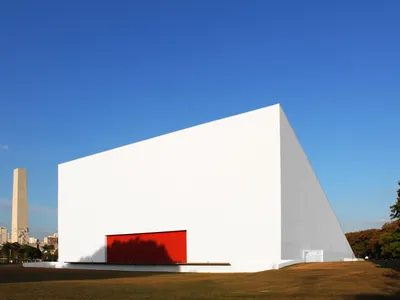
Oscar Niemeyer's Ibirapuera Park Pavilions Define São Paulo's Cultural Identity in Concrete and Curve
A constellation of modernist volumes set within São Paulo's most important urban park, conceived for the city's 400th anniversary in 1954.
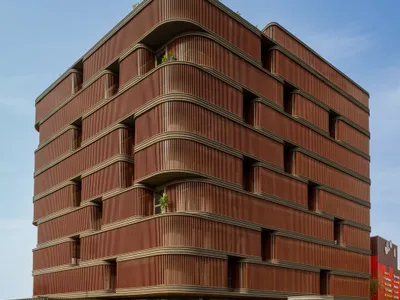
Sanjay Puri Architects Wraps a Jaipur Office Tower in Capsule-Shaped Green Buffers
A nine-level climate-responsive workplace near Jaipur Airport uses stacked planter terraces and aluminium screens to fight 40°C heat.
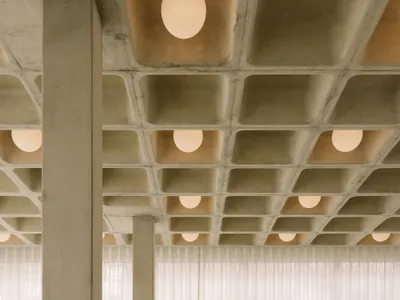
RHO Converts a Berlin Spree-Side Industrial Courtyard into Enkime's 1,000 m² Agency Headquarters
A social media agency's new home in Charlottenburg trades glossy branding for concrete waffle ceilings, glazed tile, and sheer curtains.

Explore Heavy Timber Competitions
Discover active competitions in this discipline

Challenge to design mud housing for contemporary communities

Challenge to reimagine the Iron Throne

Photograph architecture without architects

Illustrate the lost glory of Angkor Wat - Render Challenge
Comments (0)
Please login or sign up to add comments
No comments yet. Be the first to comment!