

House in Villa Paranacito by architect Martina Lew
A linear wooden house in Argentina’s Paraná Delta, thoughtfully elevated and oriented to frame canal and landscape while coexisting with nature.


landscape-driven retreat embedded within the fragile ecosystem of the Delta Entrerriano in Entre Ríos, Argentina. Positioned along the banks of a secondary canal branching from the Martínez Stream, the project responds sensitively to a territory defined by low, flood-prone islands, dense riverside vegetation, and constantly shifting waterways.
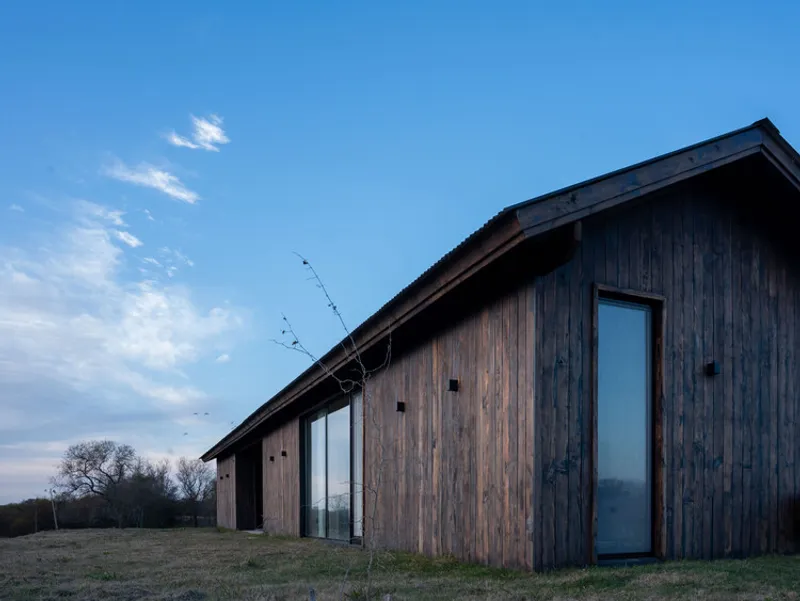
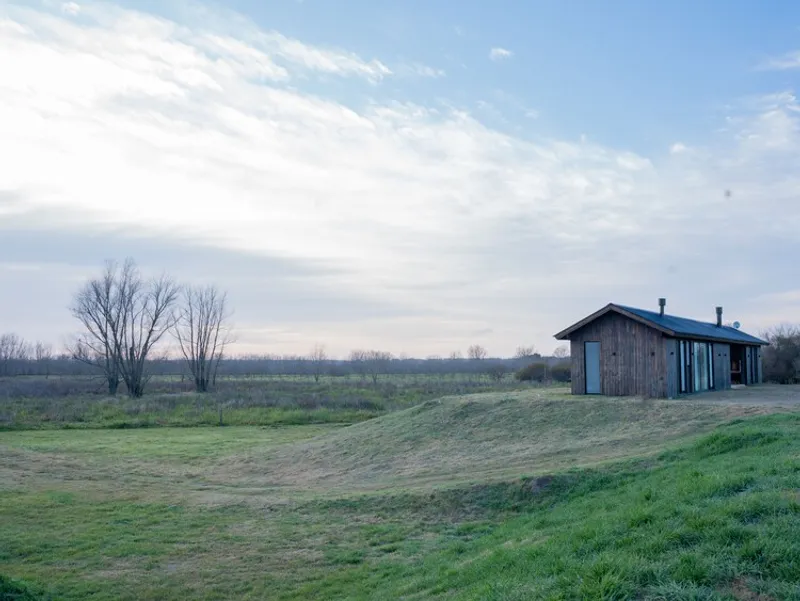
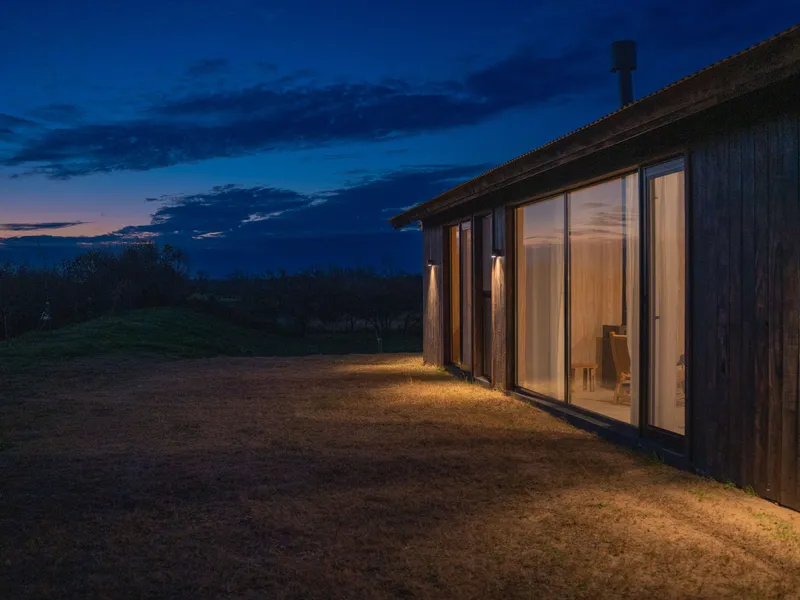
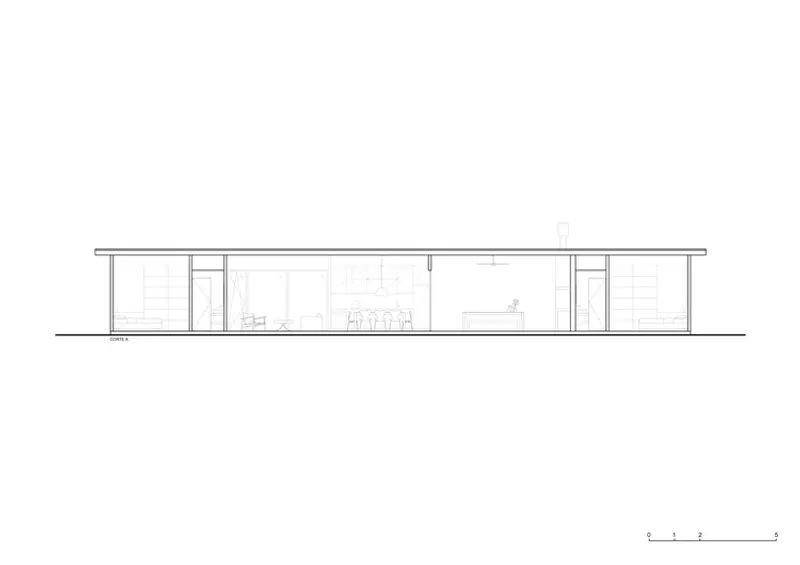
Rather than imposing itself on this dynamic environment, the house is carefully placed on a natural elevation, ensuring protection from flooding while preserving the site’s ecological balance. This strategic positioning allows the architecture to coexist with the delta’s rhythms, adapting to its conditions instead of resisting them. The project is conceived as a linear wooden structure, measuring just 4 meters wide and 22 meters long, reinforcing its minimal footprint and respectful relationship with the landscape.
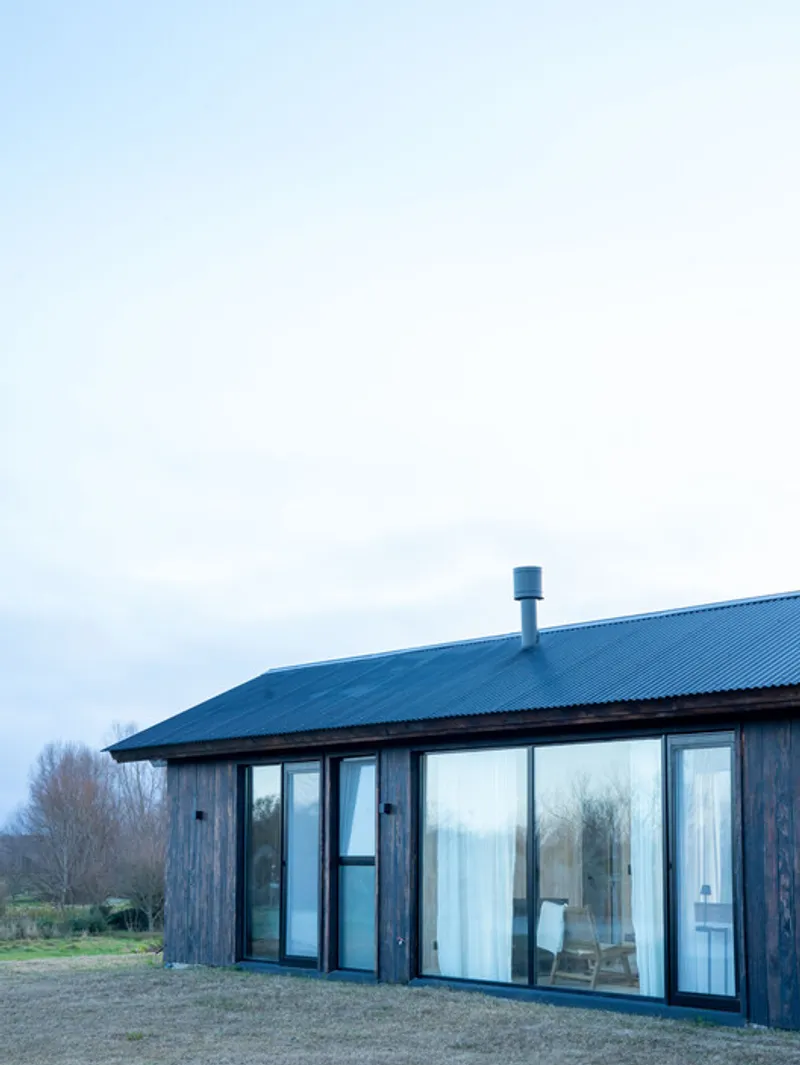
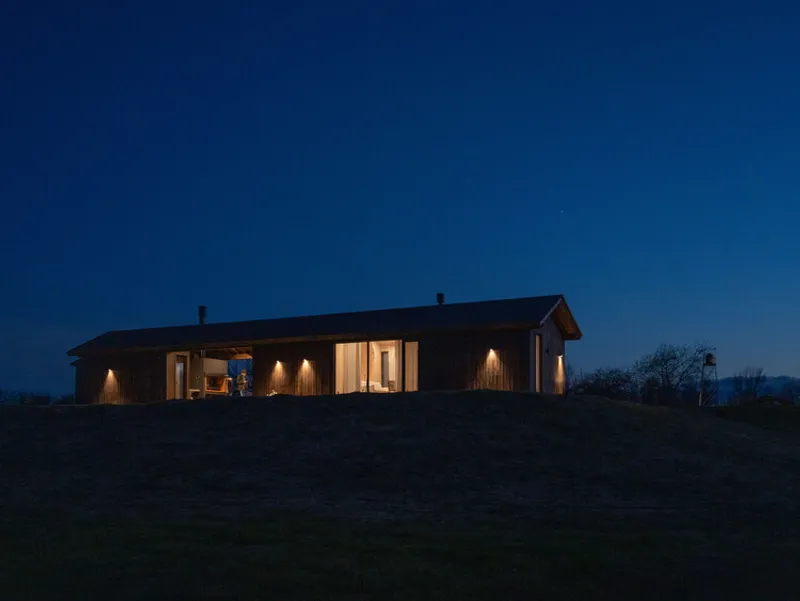
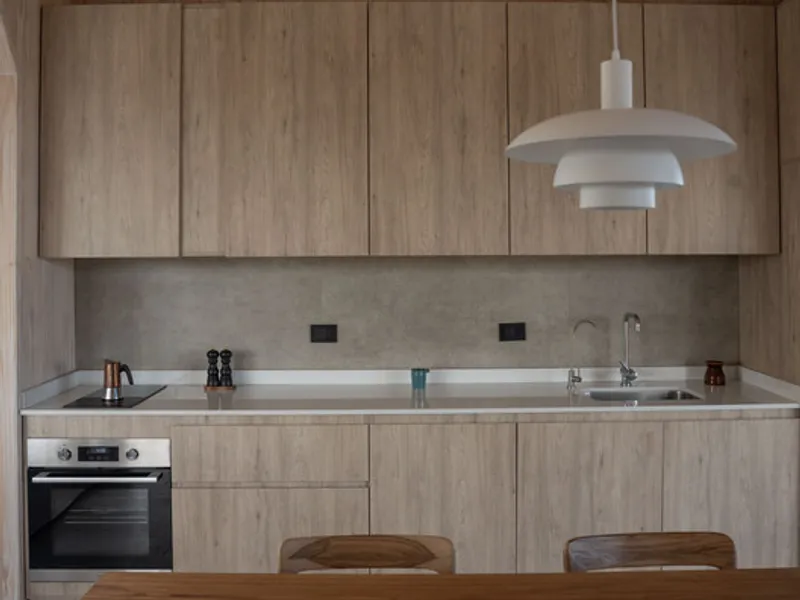
The house is oriented to capture dual views: toward the canal on one side and the expansive open fields on the other. This bidirectional relationship shapes both the form and the spatial organization. A longitudinal gallery runs the length of the house, acting as a climatic buffer, circulation spine, and transitional space between interior and exterior. It divides the program into two distinct zones: the main domestic core: comprising an open kitchen, dining area, living room, and primary suite, and a separate guest room, ensuring privacy while maintaining continuity.
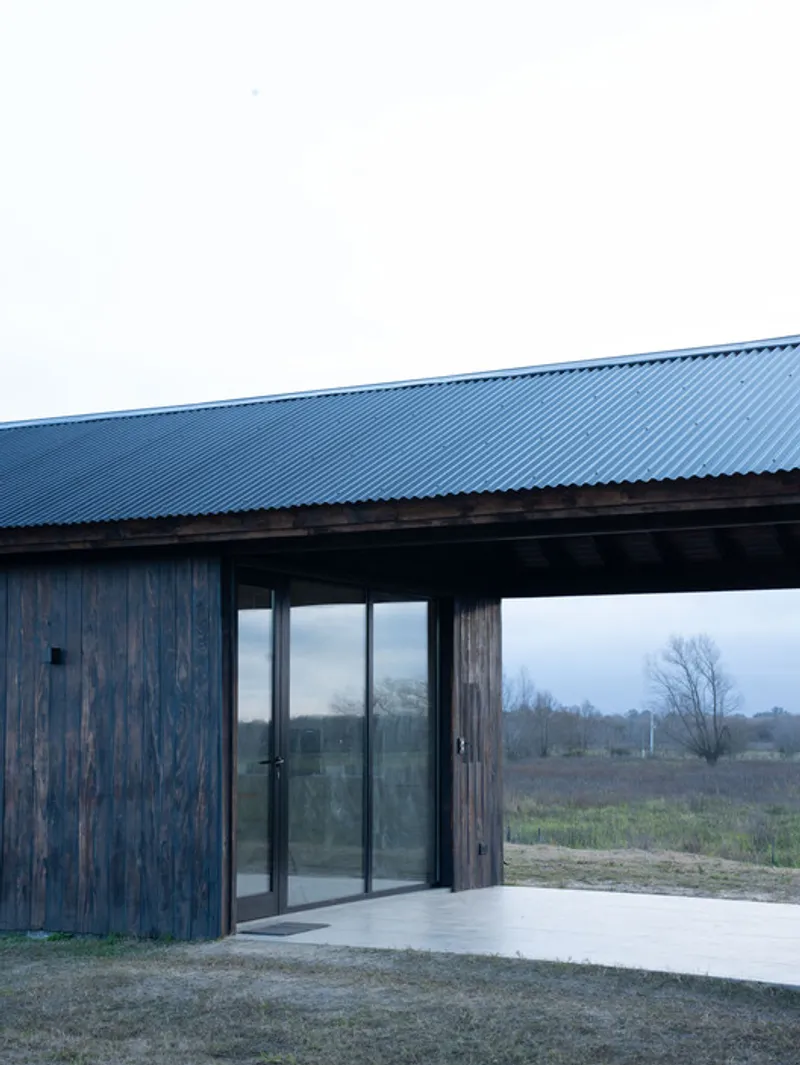
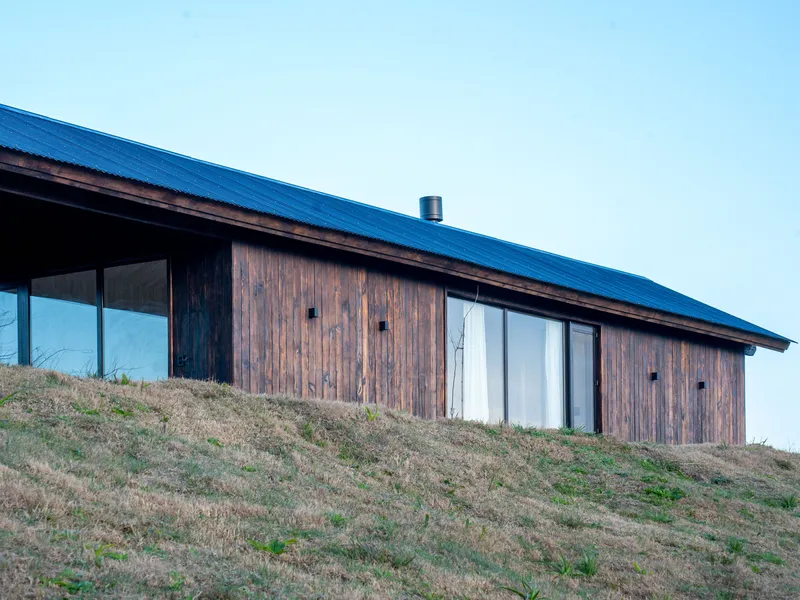
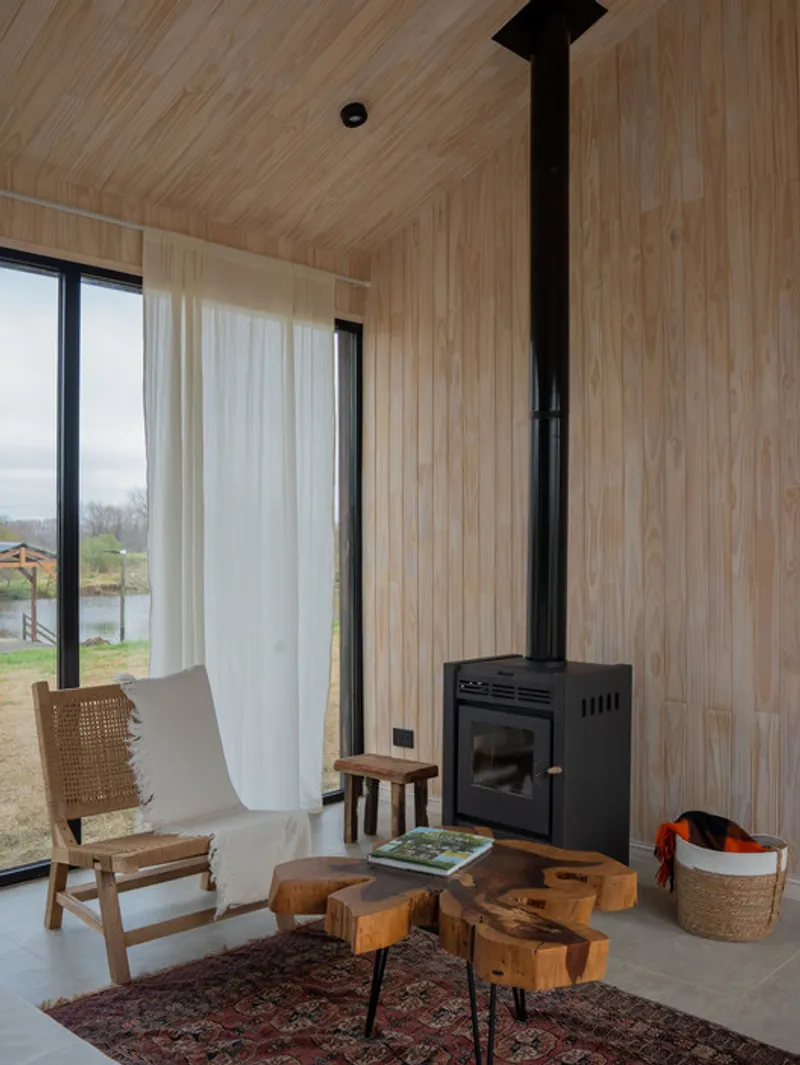
Internally, the spaces are modest, warm, and uncluttered. The extensive use of wood construction enhances thermal comfort while reinforcing a tactile connection to the surrounding environment. Large openings frame carefully composed views, transforming the canal, vegetation, and sky into ever-changing interior backdrops. The linear configuration allows natural light and cross-ventilation to flow freely, reducing the need for mechanical systems and reinforcing the home’s passive design strategy.
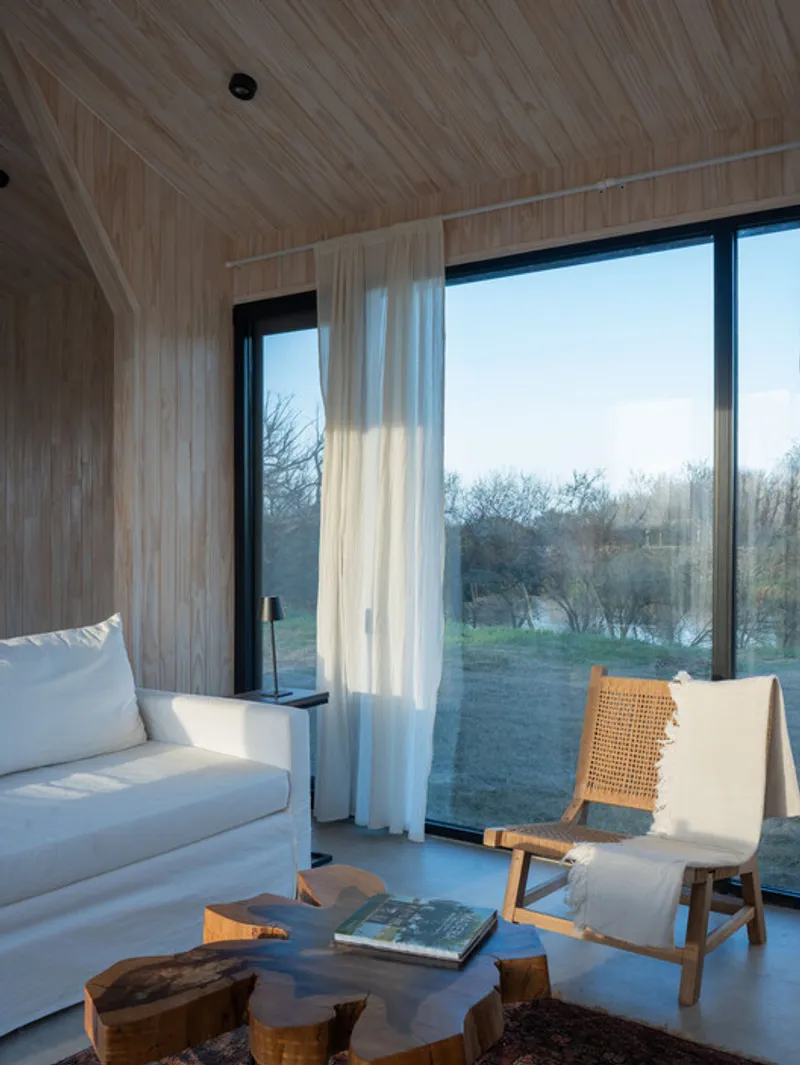
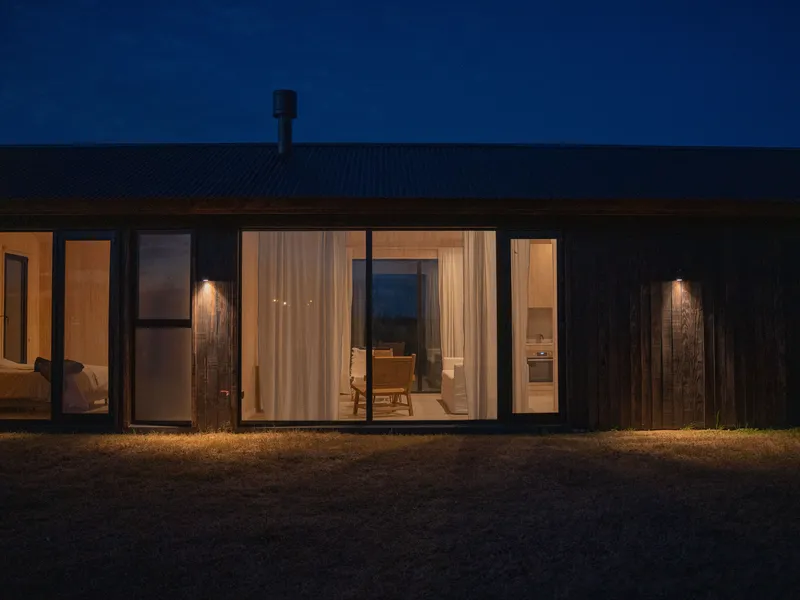
More than a conventional dwelling, the House in Villa Paranacito is an architectural response rooted in territorial logic. Its scale, materiality, and orientation reflect a deep understanding of the Paraná Delta’s environmental conditions. The project demonstrates how contemporary residential architecture can achieve comfort and clarity through restraint, proving that simplicity, when guided by landscape and ecology, can result in powerful spatial experiences.
This house stands as a thoughtful example of sustainable architecture in river delta environments, where living lightly on the land becomes both a design philosophy and a necessity.
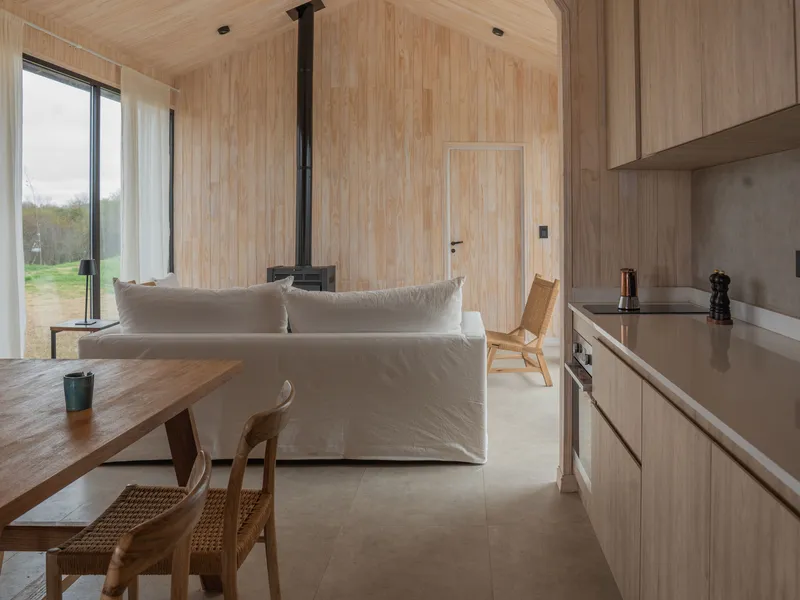
All the photographs are works of Alex Freixá Kalwill


Popular Articles
Popular articles from the community


Jaramillo Van Sluys Arquitectura and Urbanismo Turn a Demolished Registry Lot in Quito into an Orchard Plaza
In Quito's Centro Histórico, a 2,800 m² plaza exposes the San Agustín convent wall and redraws its lost Augustinian orchard in volcanic stone.

Cube Design Draws an Ecological Corridor Between Two Shenzhen Hills with the Nankai Building
Beside Shenzhen's container docks, the Nankai Building pairs stacked balconies with a climbing green screen to connect two hillsides across its height.

U.GA Architects Wraps an Oval Rooftop Pool in Curved Board-Formed Concrete on Busan's Jeollidan-gil
In Busan's Jeonpo-dong, a 454 m² mixed-use block stacks a neighborhood facility, guest rooms and an oval rooftop pool inside spiraling concrete walls.

LT2A and OPEN Architectes Thread a Brick and Glass High School Through a Wooded Belgian Campus
In Braine-l'Alleud, a 3,000 m² wing for Collège Cardinal Mercier pairs pale brick with a glazed colonnade, deferring to a small chapel and a dense wood.

Similar Reads
You might also enjoy these articles


Hodi-Mandai Geram
Project Function: Preservation and revitalization of the Intangible heritage and socio-spatial identity of the Hodi by Housing, Cultural Memory Center, Sacred Grove, landscape, local tourism economy


Olio Towers: A Mid-Rise for Performers That Fuses Housing, Rehearsal, and Stage
Located blocks from Houston's Theater District, this modular tower stacks living units around a central performance atrium.

Oasis: Modular Green Housing Carved into Dhaka's Urban Fabric
A shortlisted Plugin Housing entry reclaims unauthorized settlements in Dhaka with stepped concrete volumes, green roofs, and ventilation-driven design.

Black Hole: A Floating Megastructure for the Post-Physical Era
Emiliano Mazzarotto envisions a spherical, self-scaling arena where e-sports, digital hotels, and holographic stadiums replace traditional public space.

Explore Housing Competitions
Discover active competitions in this discipline

Challenge to reimagine the Iron Throne

Photograph architecture without architects

Illustrate the lost glory of Angkor Wat - Render Challenge

Design challenge to reuse E-waste
Comments (0)
Please login or sign up to add comments
No comments yet. Be the first to comment!