

House in White By UCEES
A minimalist white concrete villa in Kraków, sculpted like an iceberg, blending precision detailing, modern form, and sustainable architectural solutions.


Set within the leafy enclave of Wola Justowska in Kraków, House in White by Polish studio UCEES redefines the contemporary urban villa through precision, restraint, and environmental responsibility. Often described as Kraków’s “Beverly Hills,” the district combines proximity to the historic city center with rare access to extensive green landscapes, including woodland parks and protected natural areas. Against this privileged backdrop, the architects conceived a minimalist residence that asserts its identity through material depth rather than visual excess.
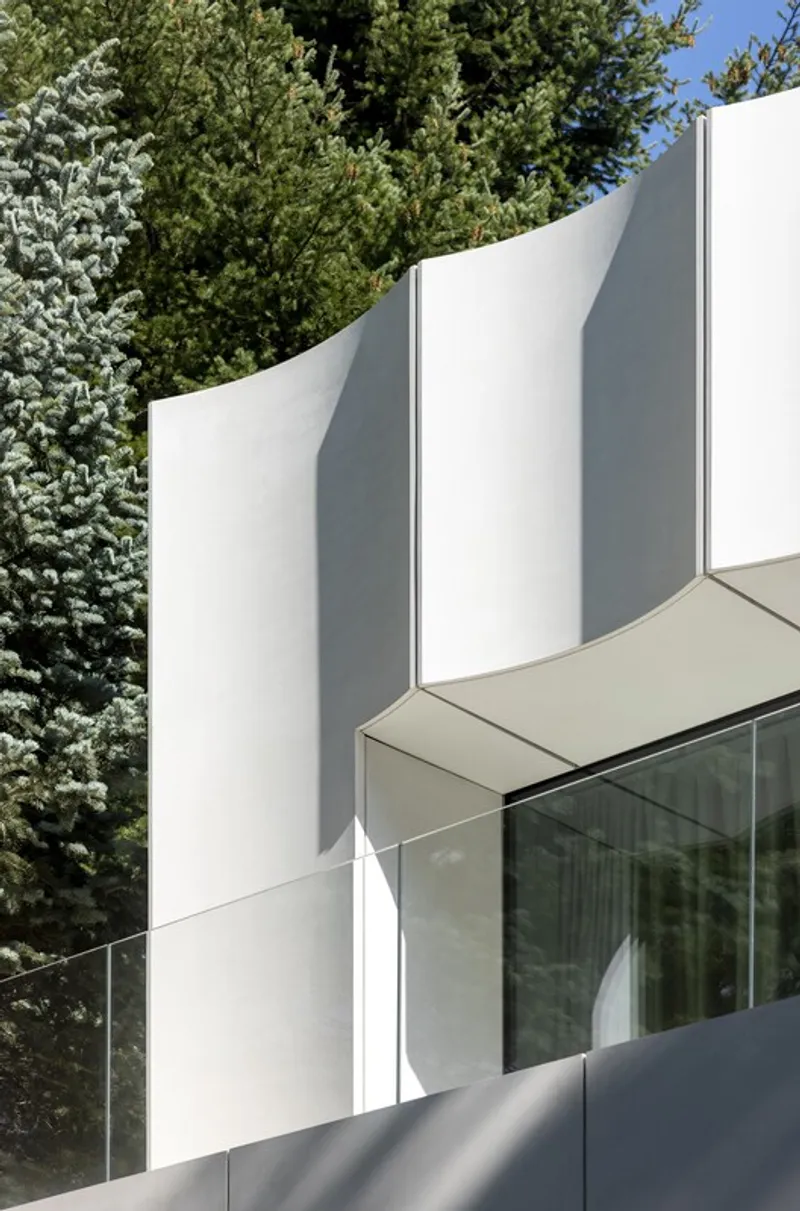
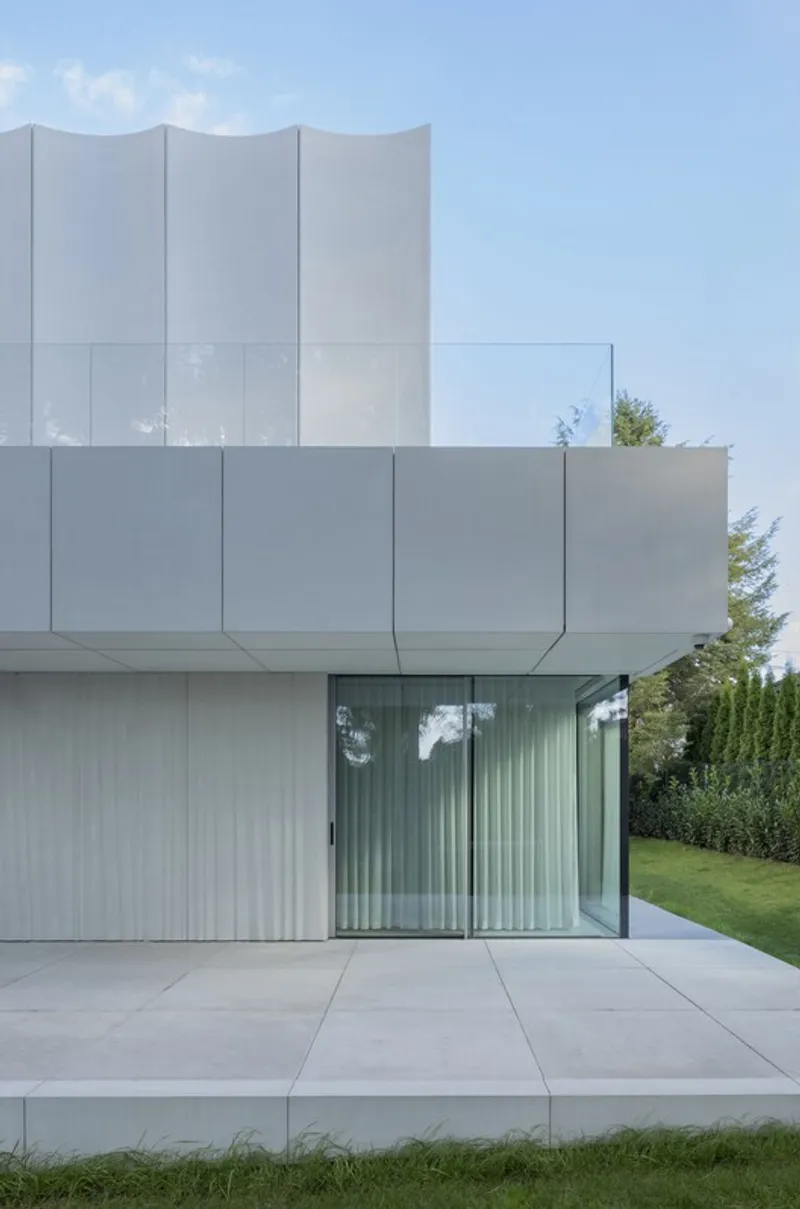
Conceived as a compact, near-square volume, the house takes the archetype of the modernist villa as its point of departure. Rather than competing with its architectural surroundings, the building engages in a subtle dialogue with neighboring modernist homes. The form is intentionally calm and monolithic, wrapped entirely in white, allowing light, shadow, and texture to become the primary expressive tools.
The architectural concept is rooted in a process of sculpting rather than assembling. Starting from a pure white cube, the architects “chiseled away” layers to shape recessed terraces, concave lens-like openings, and a stepped upper floor. These subtractive gestures create a dynamic interplay between solid and void, openness and privacy. Toward the garden, the house unfolds with generosity and transparency, while the street-facing elevation remains more introverted and protective.
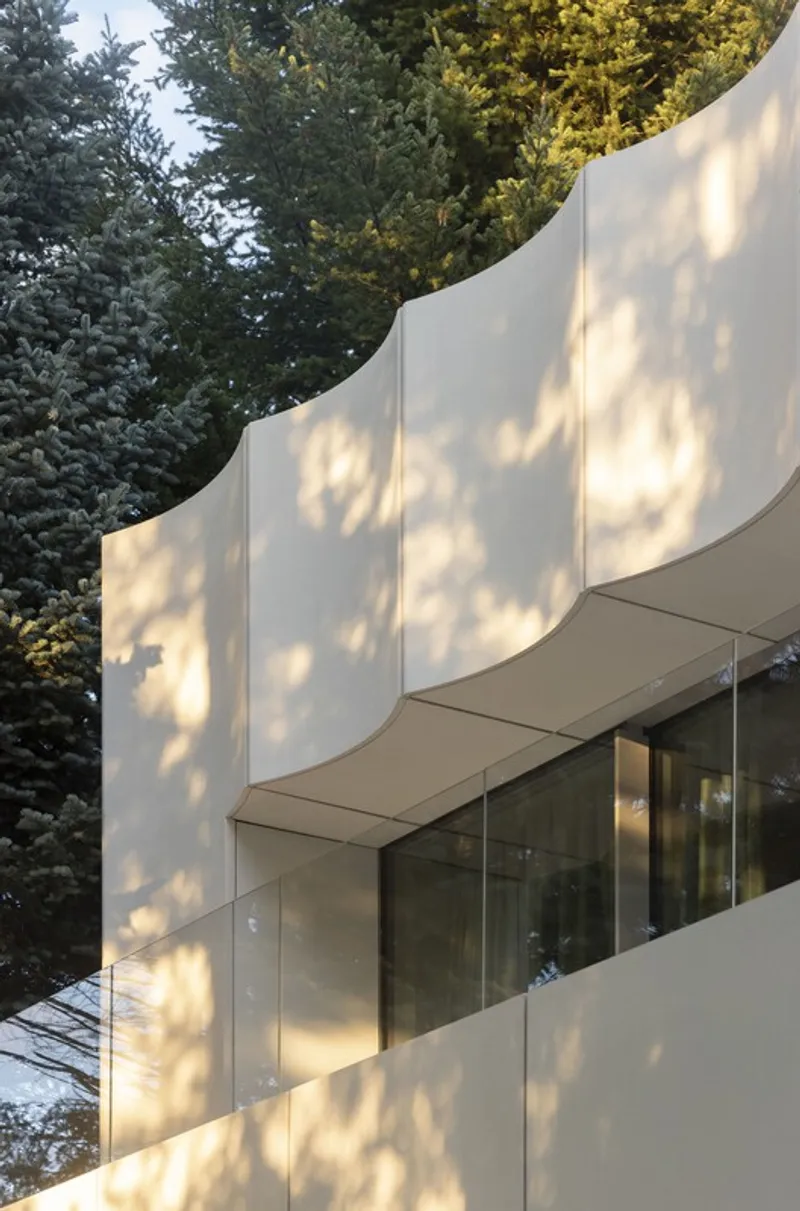
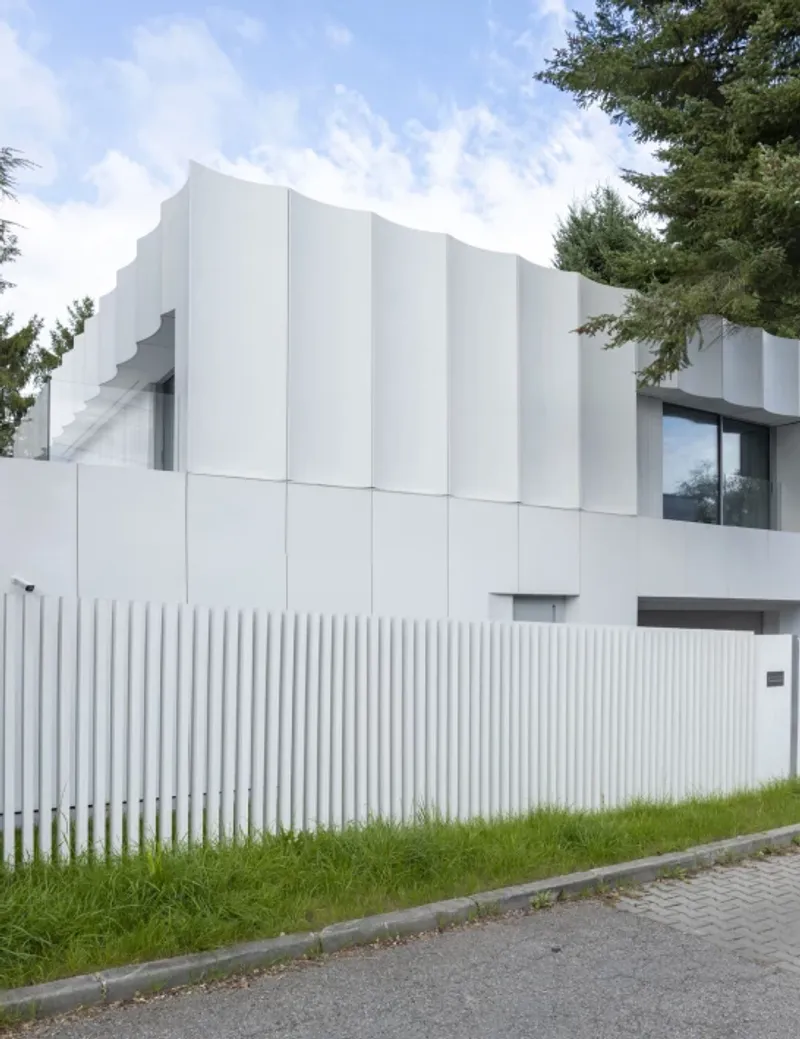
Materiality plays a central role in defining the building’s character. The structure is primarily concrete, clad in custom-made glass-fiber reinforced concrete (GRC) panels produced using white cement. Both flat and three-dimensional panels are carefully composed across the façade like a continuous puzzle, eliminating the need for traditional architectural add-ons such as cornices, sills, or metal flashings. With glass used sparingly and balustrades rendered nearly invisible, the architecture achieves an almost abstract purity.
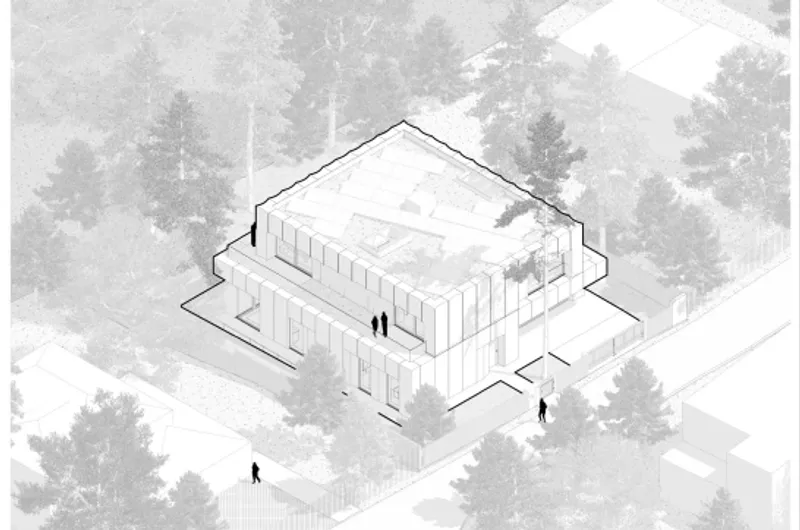

Exceptional attention to detail elevates the project from minimalism to craftsmanship. Every joint, edge, and transition between façade panels, windows, terraces, and floors has been meticulously designed and executed. These refined details repeat rhythmically across the building: within recessed soffits, terrace outlines, façade breaks, and even extending to the perimeter fence and entrance gate, creating a unified architectural language that reveals itself gradually upon closer inspection.
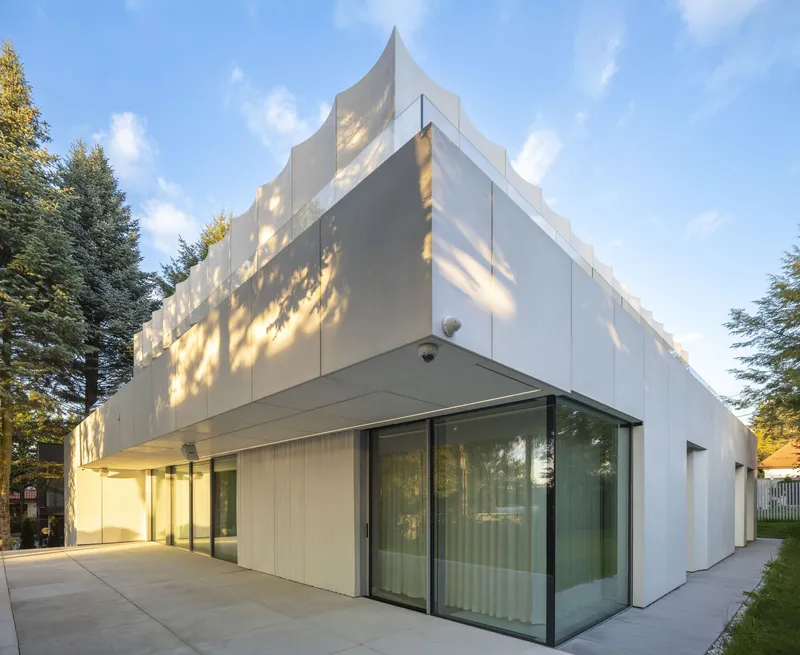
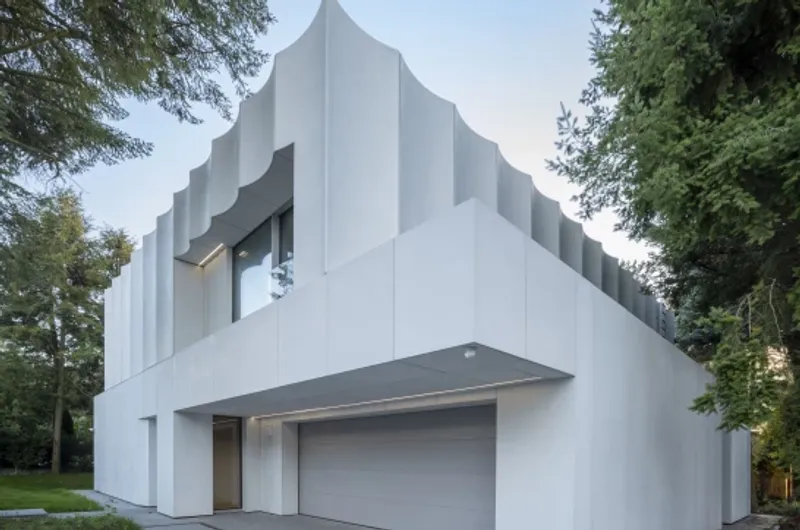
Sustainability is deeply embedded in both concept and construction. The façade panels incorporate TioCem® photocatalytic cement, a pioneering material capable of neutralizing nitrogen oxides from polluted air, effectively giving the house anti-smog properties. Complementing this innovation are photovoltaic panels, heat-recovery ventilation systems, rainwater harvesting, and green terraces. The building’s placement on the site was carefully planned to preserve all existing mature trees, reinforcing the project’s commitment to ecological stewardship.
House in White stands as a quiet yet confident architectural statement: one that balances sculptural minimalism, environmental innovation, and rigorous detailing. It demonstrates how contemporary residential architecture can be both technologically progressive and emotionally restrained, offering a refined living environment that gains depth through time, light, and proximity.
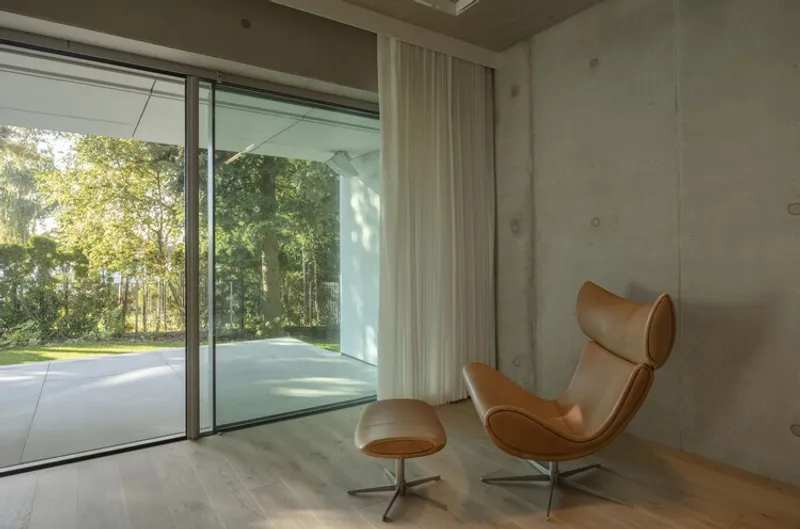

All the photographs are works of Paweł Ulatowski


Popular Articles
Popular articles from the community


LT2A and OPEN Architectes Thread a Brick and Glass High School Through a Wooded Belgian Campus
In Braine-l'Alleud, a 3,000 m² wing for Collège Cardinal Mercier pairs pale brick with a glazed colonnade, deferring to a small chapel and a dense wood.

Cube Design Draws an Ecological Corridor Between Two Shenzhen Hills with the Nankai Building
Beside Shenzhen's container docks, the Nankai Building pairs stacked balconies with a climbing green screen to connect two hillsides across its height.

longwave studio Reorganizes a 112 m² Tainan Apartment Around the Daily Routines of a Family and Two Cats
In Tainan, Taiwan, birch plywood, rust-red furniture and a freestanding plaster wall link arrival, storage, work and family life in one apartment.

David Macias Steps a Doorless Stone and Plaster House Down a Tropical Colombian Hillside
In the humid hills of Colombia, Threshold House replaces the front door with an open void and terraces its 850 m² down the slope instead of fighting it.

Similar Reads
You might also enjoy these articles


Hodi-Mandai Geram
Project Function: Preservation and revitalization of the Intangible heritage and socio-spatial identity of the Hodi by Housing, Cultural Memory Center, Sacred Grove, landscape, local tourism economy


Olio Towers: A Mid-Rise for Performers That Fuses Housing, Rehearsal, and Stage
Located blocks from Houston's Theater District, this modular tower stacks living units around a central performance atrium.

Oasis: Modular Green Housing Carved into Dhaka's Urban Fabric
A shortlisted Plugin Housing entry reclaims unauthorized settlements in Dhaka with stepped concrete volumes, green roofs, and ventilation-driven design.

Black Hole: A Floating Megastructure for the Post-Physical Era
Emiliano Mazzarotto envisions a spherical, self-scaling arena where e-sports, digital hotels, and holographic stadiums replace traditional public space.

Explore Housing Competitions
Discover active competitions in this discipline

Challenge to reimagine the Iron Throne

Photograph architecture without architects

Illustrate the lost glory of Angkor Wat - Render Challenge

Design challenge to reuse E-waste
Comments (0)
Please login or sign up to add comments
No comments yet. Be the first to comment!