
House J: A Mountain Sanctuary Blending Light, Memory, and Renewal by Atelier About Architecture
House J redefines mountain living in Beijing, blending light, landscape, and memory through floating spaces, gardens, and timeless architectural renewal.


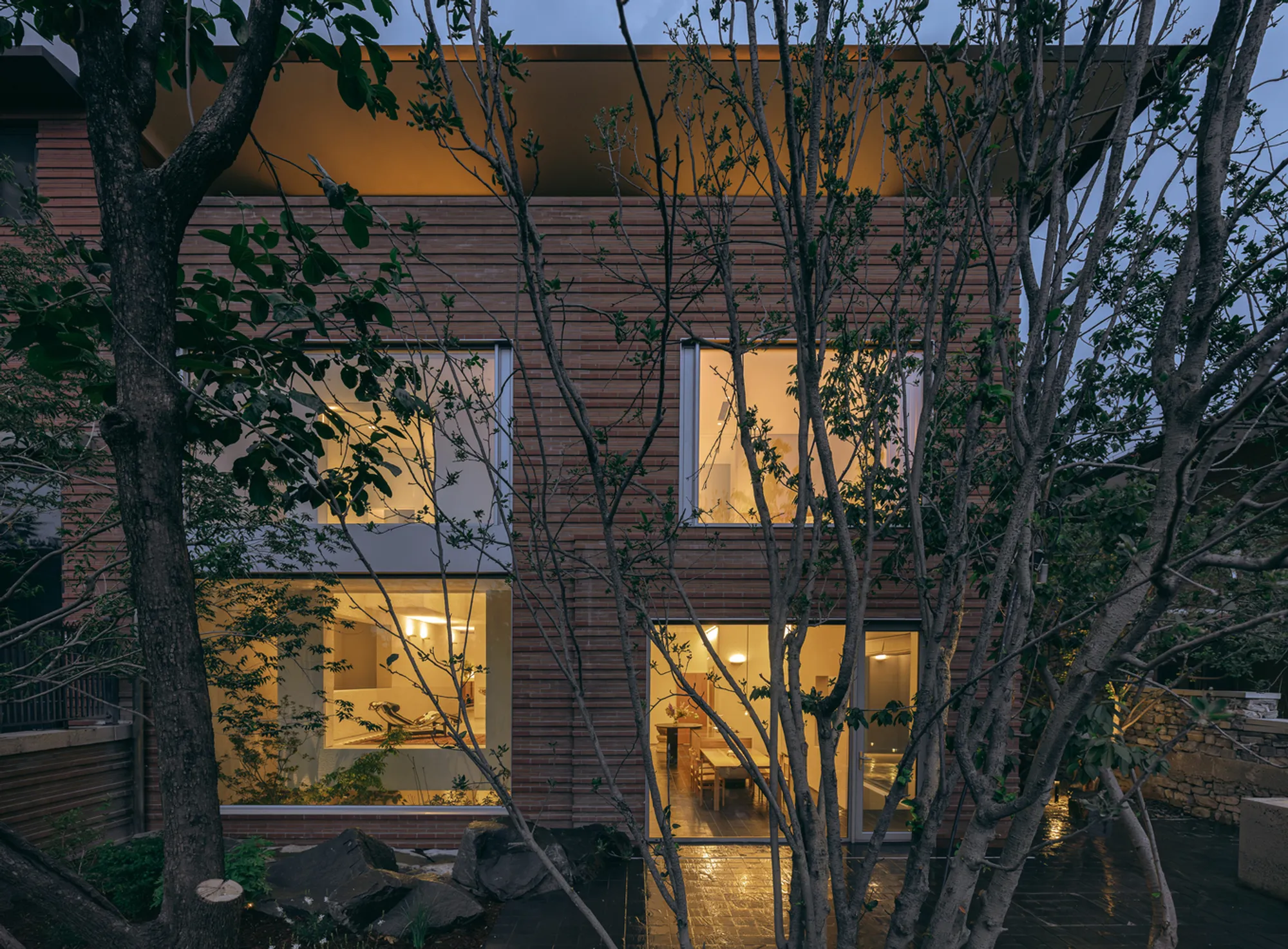
Perched high in the western mountains of Beijing, House J byAtelier About Architecture reimagines a family residence as a poetic dialogue between nature, memory, and modern living. Surrounded by the lush landscape of Fragrant Hills Park to the north and the distant Yuquan Mountain to the east, the 650-square-meter home captures a serene balance between intimacy and openness.
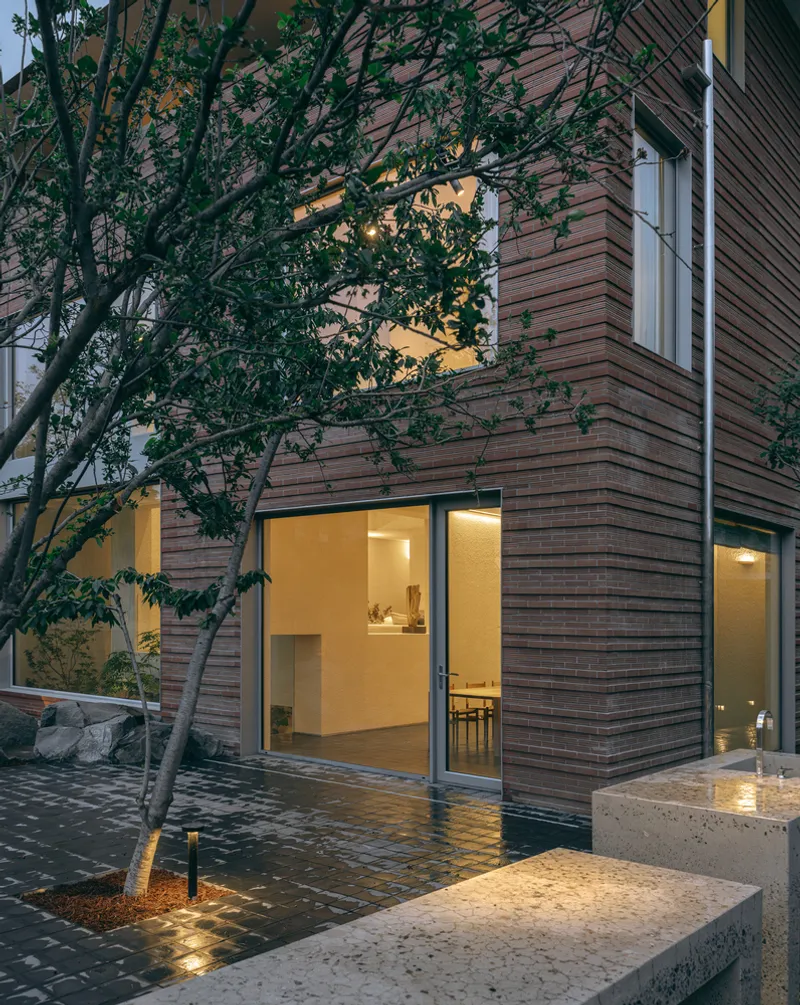
The owners, having lived abroad for more than a decade, returned to a house where time had quietly layered itself — red brick walls weathered by age, a sunroom streaked with patina, and a garden where once-tended plants now intertwined with wild grasses. Rather than erase these traces, the architects embraced them, transforming House J into a narrative of coexistence between past and present.
Reconfiguring the Original Structure
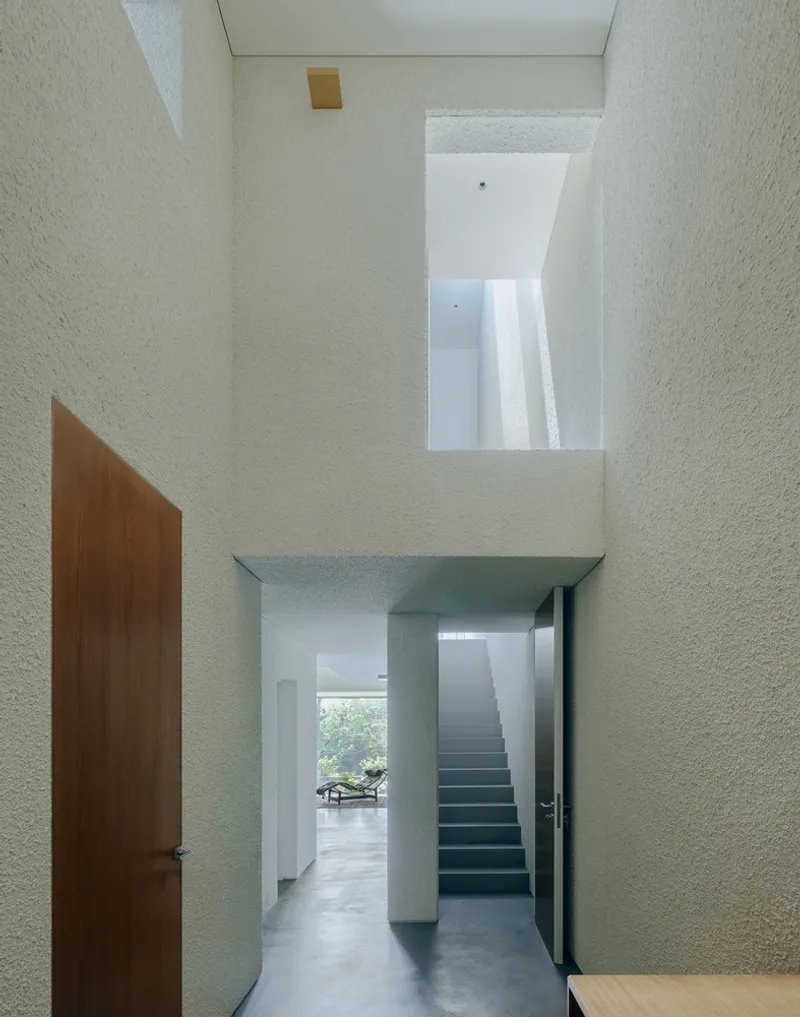
The existing home sat on the northern edge of the garden, dominated by an oversized central hall that compressed the private zones and obstructed natural light. A sunroom addition had further darkened the interiors, and the deep building footprint left many spaces in shadow.
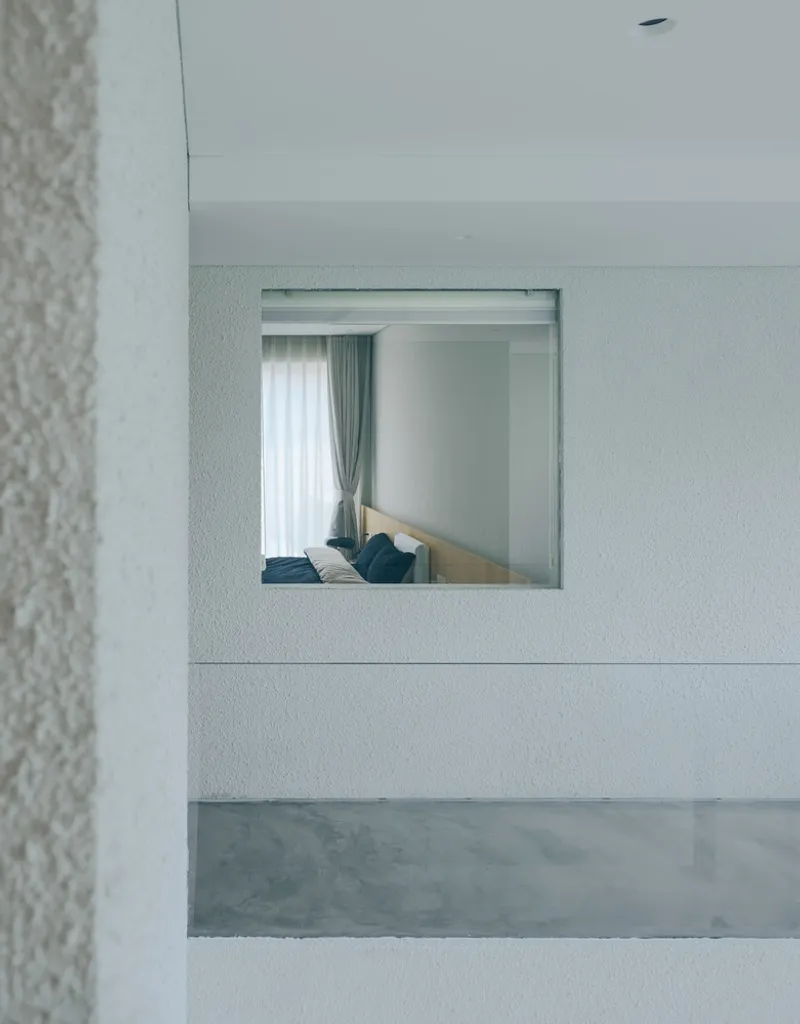
Atelier About Architecture responded with a sensitive yet radical restructuring. The house was stripped of its protruding sunroom and rebalanced — portions expanded or reduced, floor heights recalibrated — to create a cohesive hierarchy of space and light.
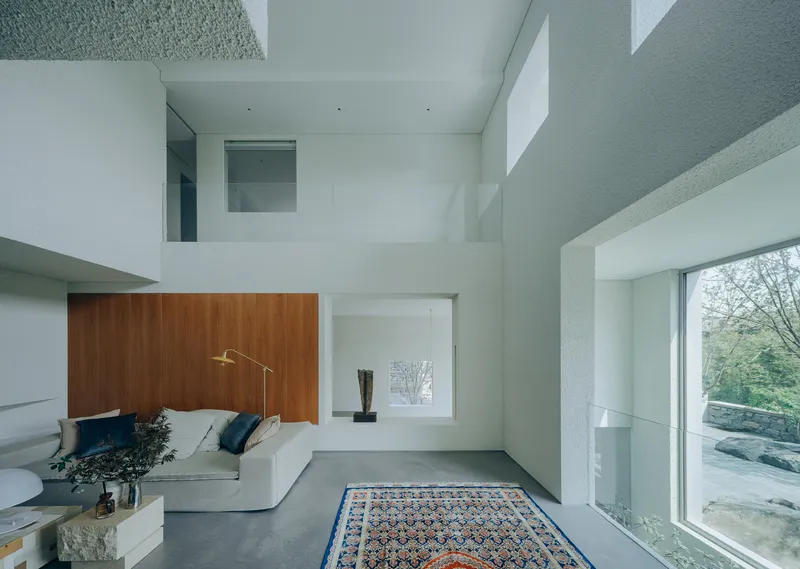
Skylights above a newly formed double-height entrance hall flood the interiors with daylight, while a transitional corridor guides light deeper into the living area. This living room, now conceived as a cantilevered “floating box,” becomes the luminous heart of the home — visually and symbolically suspended between interior and garden.

A Floating Living Room and Garden Continuum
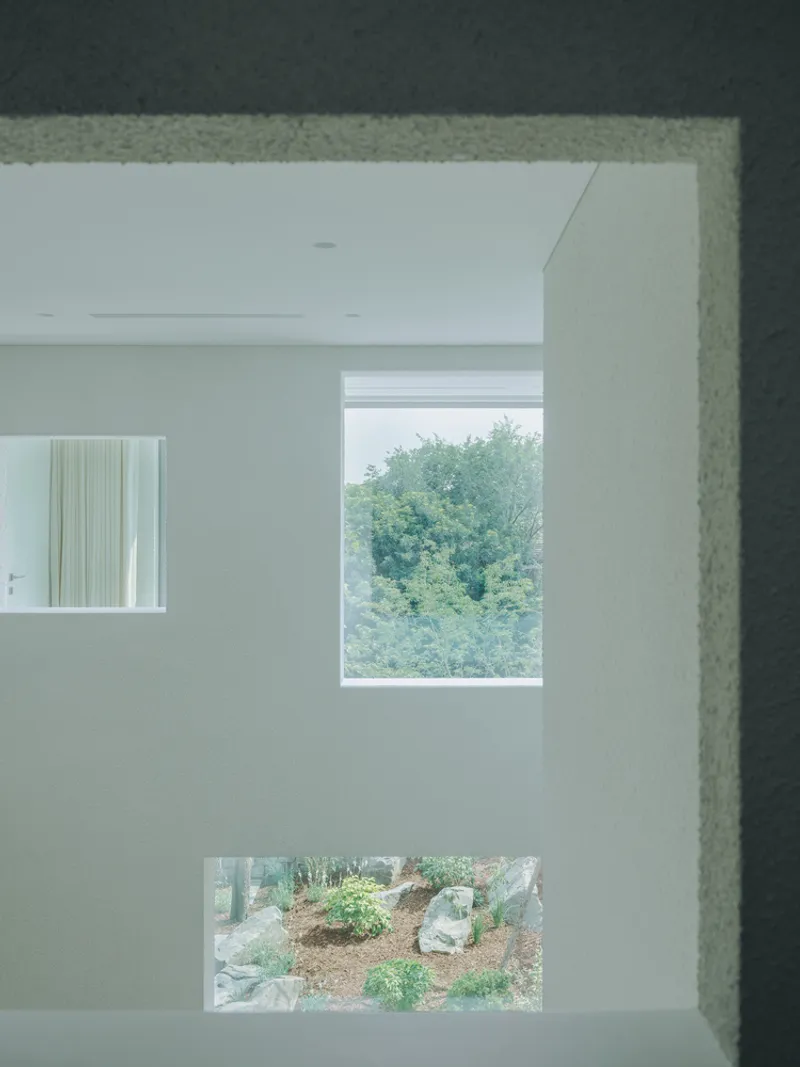
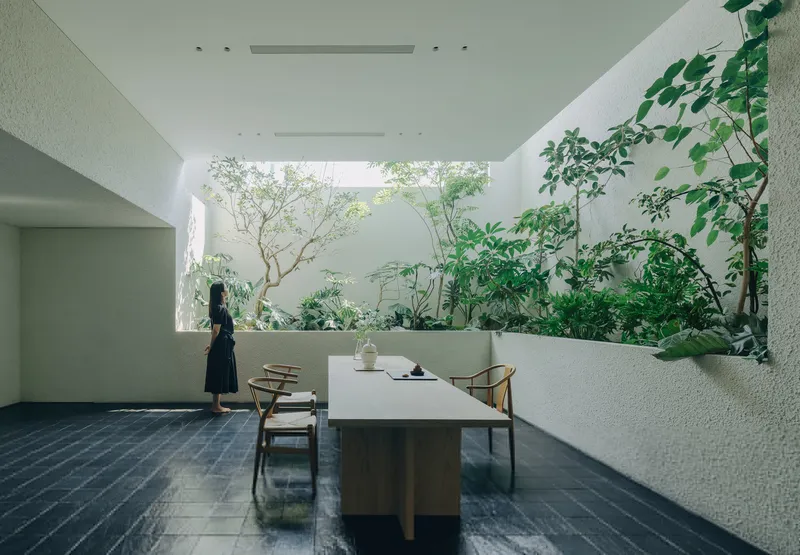
The reimagined living room extends outward, overlooking a slightly offset dining area and a sunken indoor garden below. By raising the concrete beams, the architects created a column-free garden space beneath the cantilever — an architectural gesture that merges structural clarity with emotional resonance.
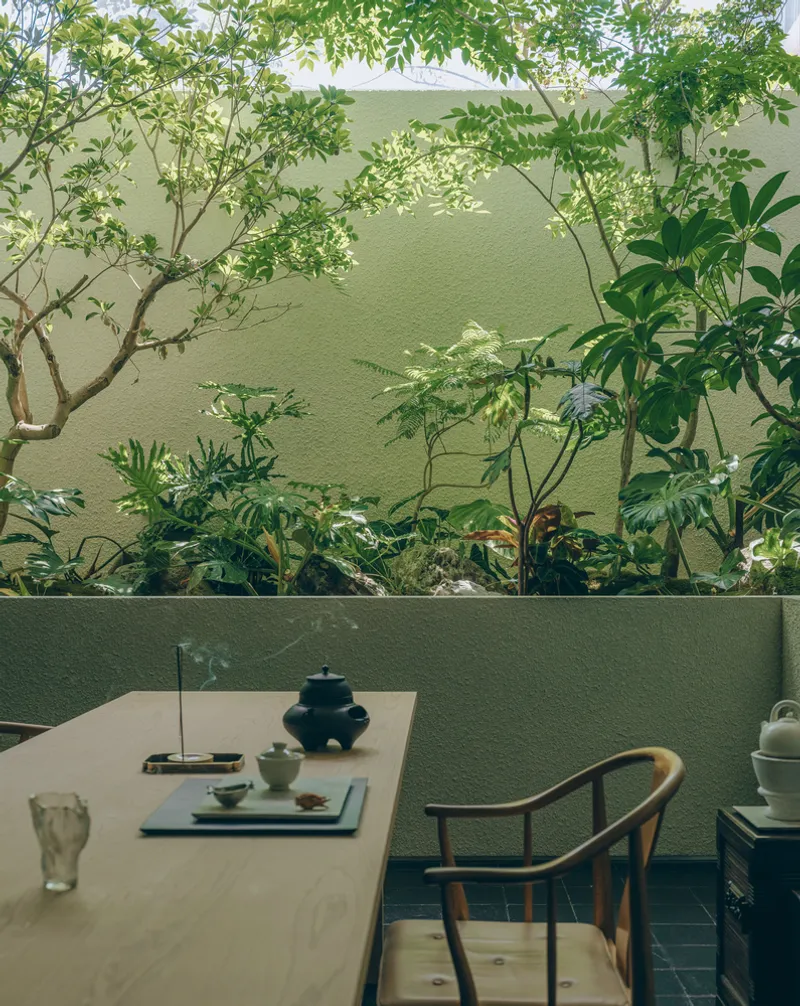
As daylight filters through skylights and greenery, the floating volume will, over time, be embraced by tree canopies, blurring the boundary between architecture and landscape. The result is a multi-layered ecosystem of light, air, and vegetation, where the built and the natural coexist in gentle equilibrium.
Spatial Flow and Human Experience
Ascending to the second floor, a double-height central atrium links three bedrooms through a corridor that wraps around the floating living room. The circulation paths vary subtly, offering ever-changing visual connections between interior and exterior. Views cut through layers of space — from atrium to garden, from room to mountain — reinforcing a sense of continuity across different living zones.
Each family member’s route becomes personal and introspective, transforming movement into experience. As the architects describe it, this is a “garden within a garden,” where privacy and connection, interior and exterior, light and shadow overlap and intertwine.

Culinary Warmth and Garden Life
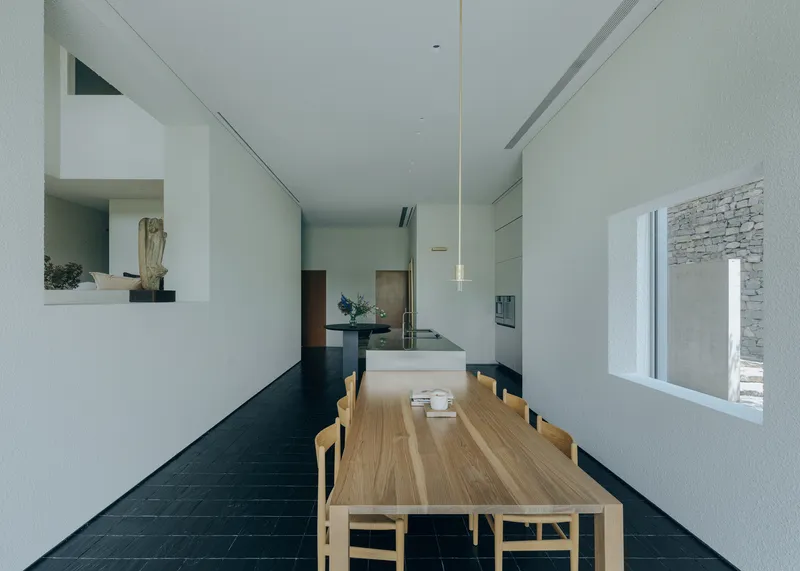
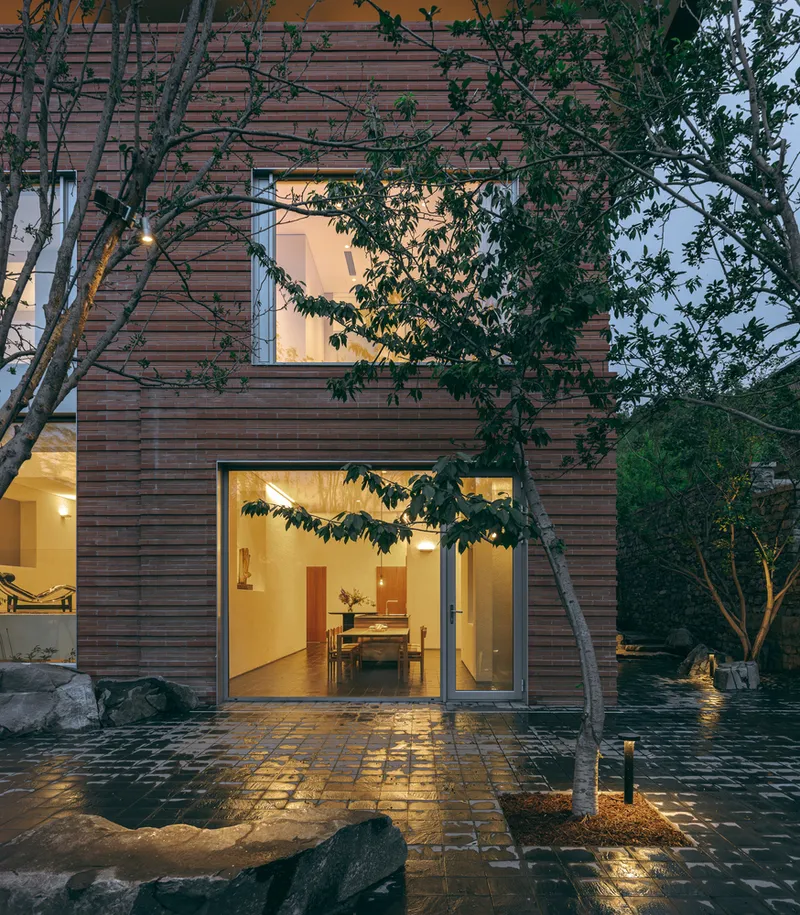
The owners, passionate about cooking, envisioned a kitchen and dining area that would foster both interaction and independence. The open kitchen faces the living room and the indoor-outdoor garden, allowing quiet visual dialogue between spaces dedicated to creation and contemplation.
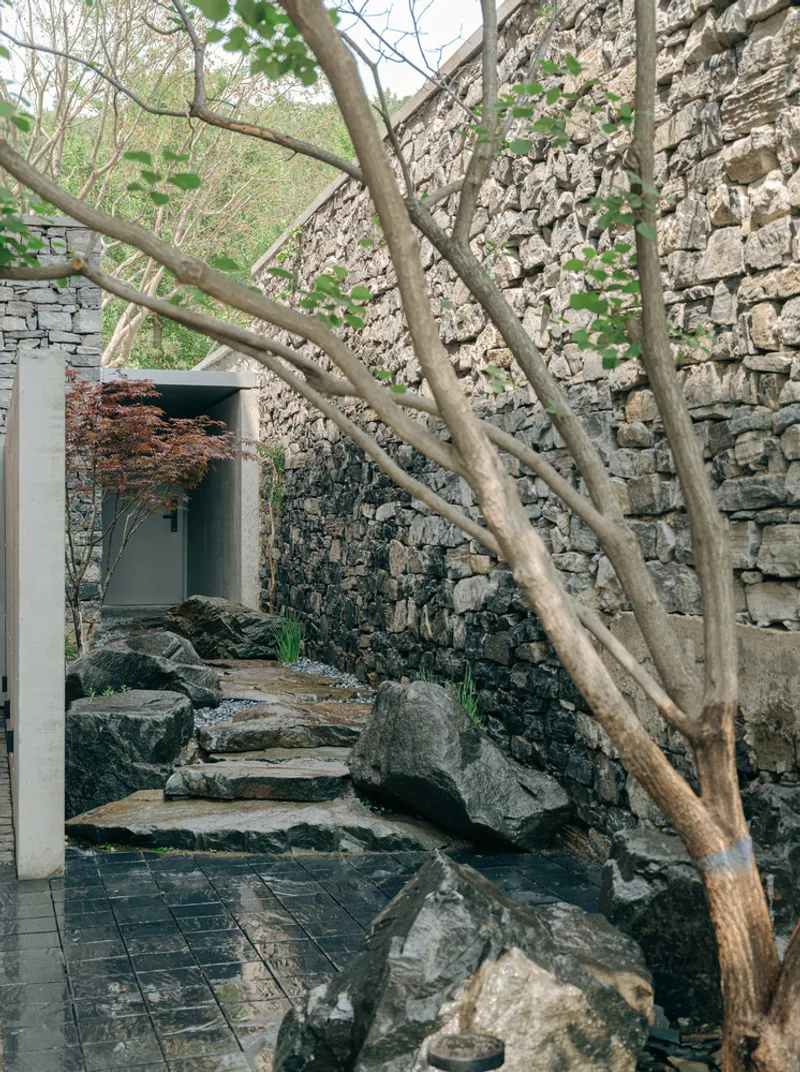
The dining area flows effortlessly toward the outdoor terrace, unified through warm natural materials. Existing plants were preserved in situ, maintaining a living continuity between the old and the new. To the east, a garden path framed by stones leads guests directly from the mountain-facing courtyard into the home’s layered spatial sequence — a serene approach that mirrors the topography of the site.

Living Among Mountains and Memory
Through its architectural transformation, House J becomes more than a renovation — it is a meditation on time, family, and belonging. Light and landscape intertwine with everyday domestic rituals, creating spaces that invite both social connection and solitude.
The architects describe the project as an exploration of “multidimensional, overlapping gardens” — spaces that are not only physical but emotional, connecting reality and imagination. Each inhabitant discovers their own internal landscape within the architecture, a metaphorical garden rooted in memory and spirit.
Project Information
Architects: Atelier About Architecture Lead Architect: Wang Ni Location: Beijing, China Area: 650 m² Year: 2025 Photography: Yumeng Zhu Construction: Zhiyingzao Decoration Engineering Co., Ltd Lighting Design: Beijing Zhongxin Hengrui Lighting Design Co., Ltd, Viabizzuno Manufacturers: Poliform, Toto, Viabizzuno
All photographs are works of Yumeng Zhu



Popular Articles
Popular articles from the community

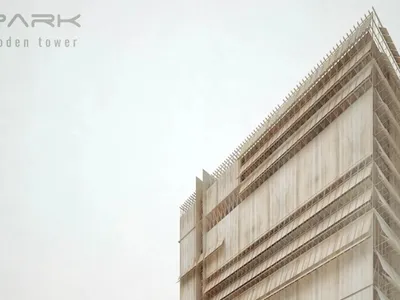
EW PARK: Sustainable Architecture Reimagines the Future of Urban Parking
EW PARK reimagines city parking as a modular wooden tower combining automation, solar energy, electric mobility, and adaptable urban design.

The Ocean Hive: Sustainable Architecture for a Self-Sufficient Civilization at Sea
The Ocean Hive imagines sustainable architecture at sea, where modular habitats, algae, wave power and ocean waste sustain a growing colony.

Riyadh For All: Intergenerational Urban Design for Active Aging in Rabat
Riyadh For All reimagines urban design in Rabat with intergenerational co-living, adaptive courtyards, and Moroccan cultural exchange today.

Co-life: Sustainable Architecture for Age-Friendly Community Living
Co-life reimagines sustainable architecture for seniors through courtyards, rammed earth, shared gardens, and spaces designed for belonging.


Similar Reads
You might also enjoy these articles


Hodi-Mandai Geram
Project Function: Preservation and revitalization of the Intangible heritage and socio-spatial identity of the Hodi by Housing, Cultural Memory Center, Sacred Grove, landscape, local tourism economy


Olio Towers: A Mid-Rise for Performers That Fuses Housing, Rehearsal, and Stage
Located blocks from Houston's Theater District, this modular tower stacks living units around a central performance atrium.

Oasis: Modular Green Housing Carved into Dhaka's Urban Fabric
A shortlisted Plugin Housing entry reclaims unauthorized settlements in Dhaka with stepped concrete volumes, green roofs, and ventilation-driven design.

Black Hole: A Floating Megastructure for the Post-Physical Era
Emiliano Mazzarotto envisions a spherical, self-scaling arena where e-sports, digital hotels, and holographic stadiums replace traditional public space.

Explore Architecture Competitions
Discover active competitions in this discipline



Challenge to reimagine the Iron Throne


Photograph architecture without architects


Illustrate the lost glory of Angkor Wat - Render Challenge


Design challenge to reuse E-waste
Comments (0)
Please login or sign up to add comments
No comments yet. Be the first to comment!