

House K by Bangkok Tokyo Architecture: A Living Framework of Adaptive Domesticity
House K blends brick and concrete in an exposed grid, creating adaptive, multi-level living that embraces light, air, and flexibility.


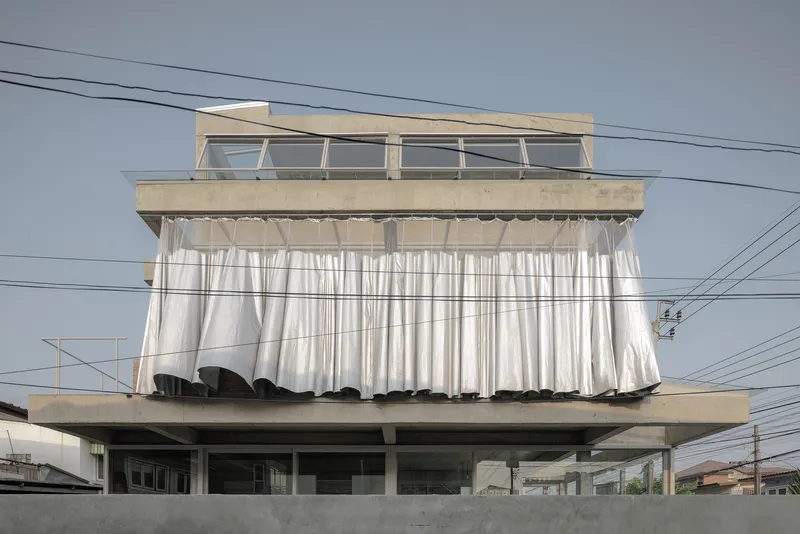
Located in an evolving neighborhood of Bangkok, House K by Bangkok Tokyo Architecture redefines the domestic dwelling as an open-ended framework that adapts to time, environment, and human relationships. The project responds to the changing structure of a multigenerational family while embracing the layered history and visual diversity of its surrounding residential landscape.
Context and Client Brief
The site lies within an older residential district, originally dominated by modest two-story homes with gabled roofs, neatly aligned and set back from the street. Over the years, these houses have been incrementally altered—fences replaced, windows modernized, and walls repainted—creating a mosaic of styles that reflect the personal narratives of their inhabitants.
Amid this continuously evolving backdrop, the client—motivated by family restructuring and the aging condition of the original house—commissioned a complete rebuild of their family home. The brief was not to simply design a static object but to create an architecture that supports participation, change, and continuous dialogue.
Architectural Concept: Organic Framework and Participatory Space
House K’s design is less about formal finality and more about organic emergence—a residence that feels like it grew from the environment rather than being imposed upon it. It is a spatial framework for living, rather than a completed form.
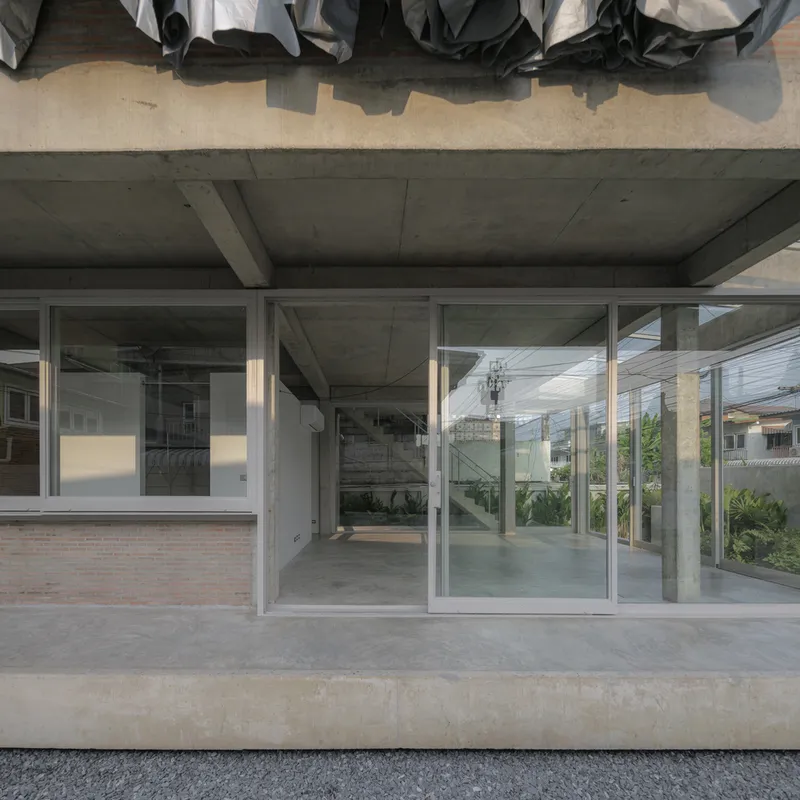
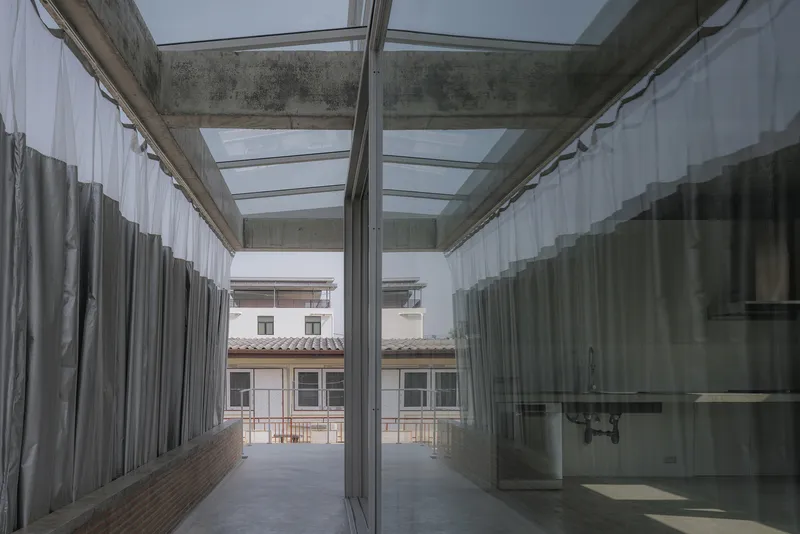
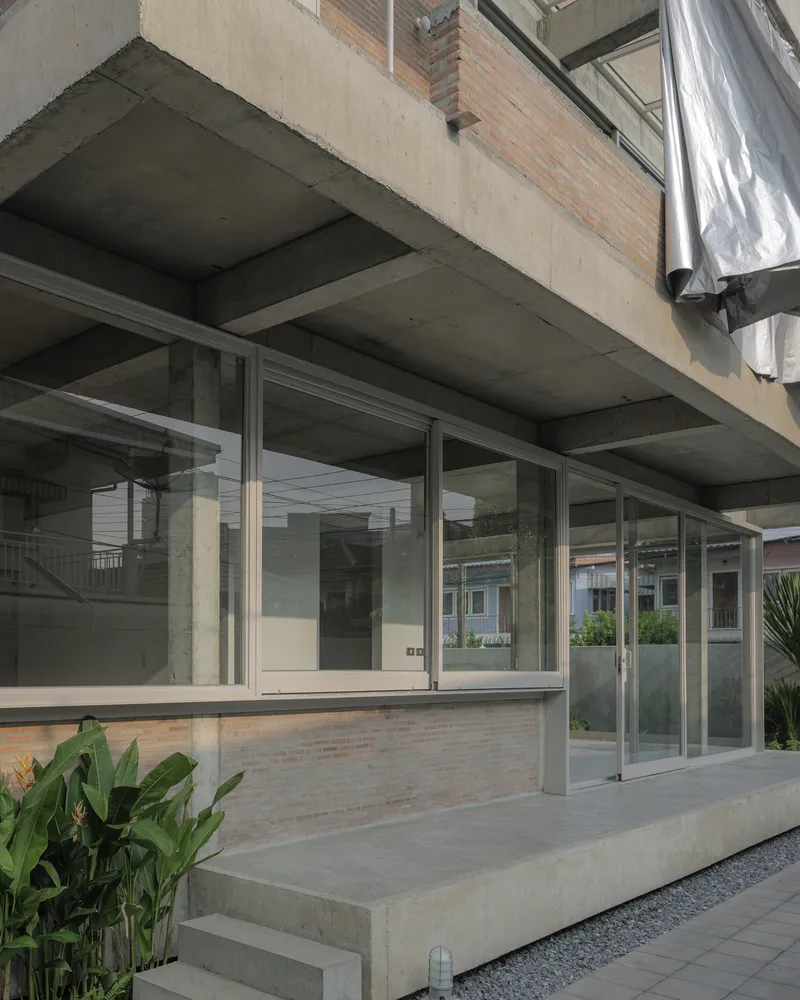
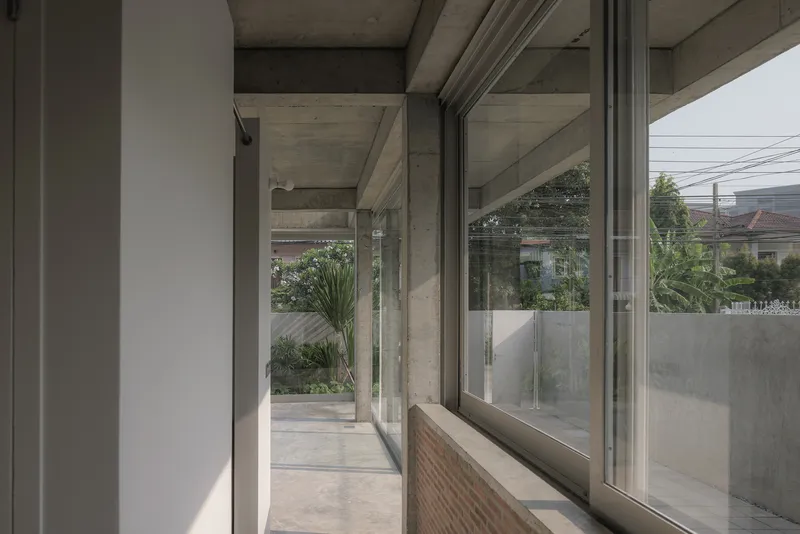
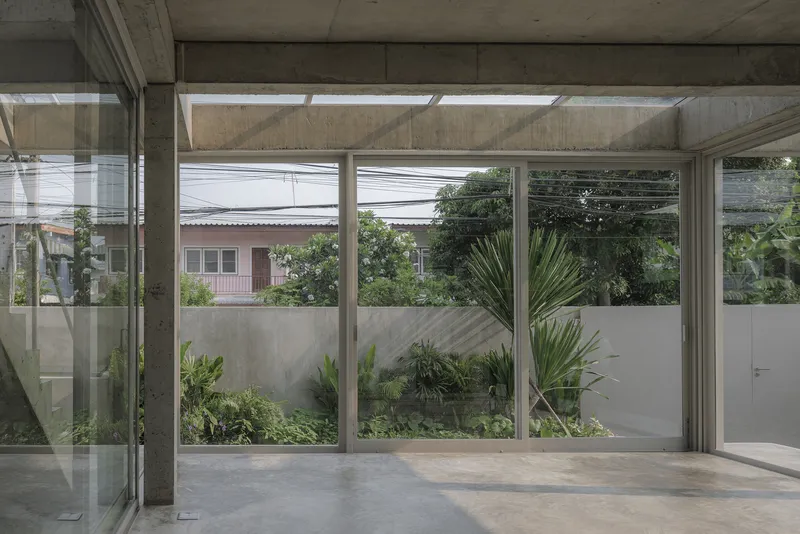
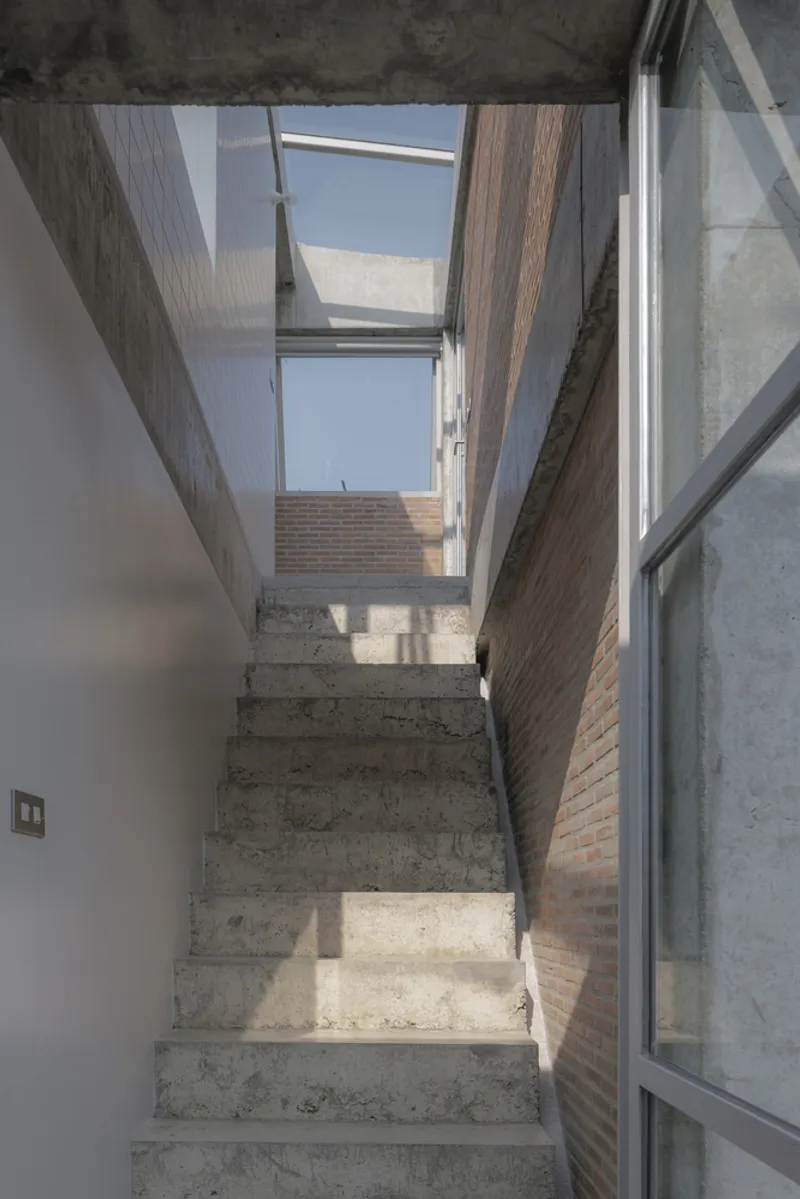
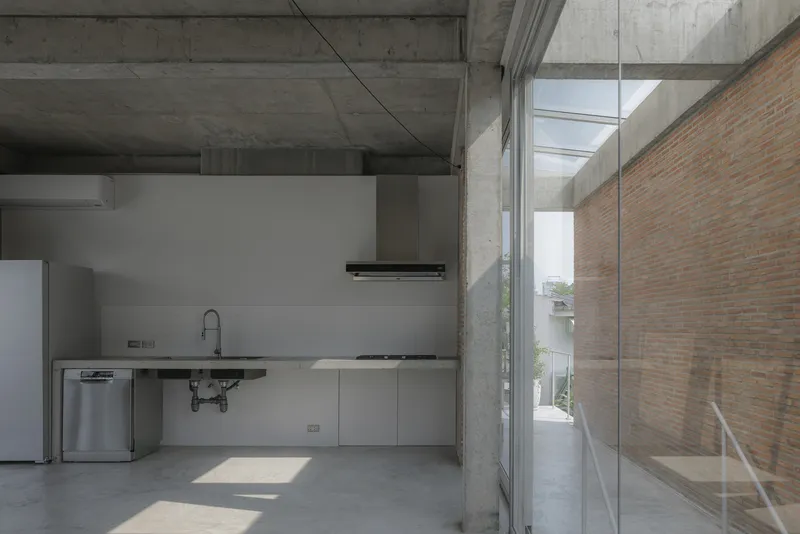
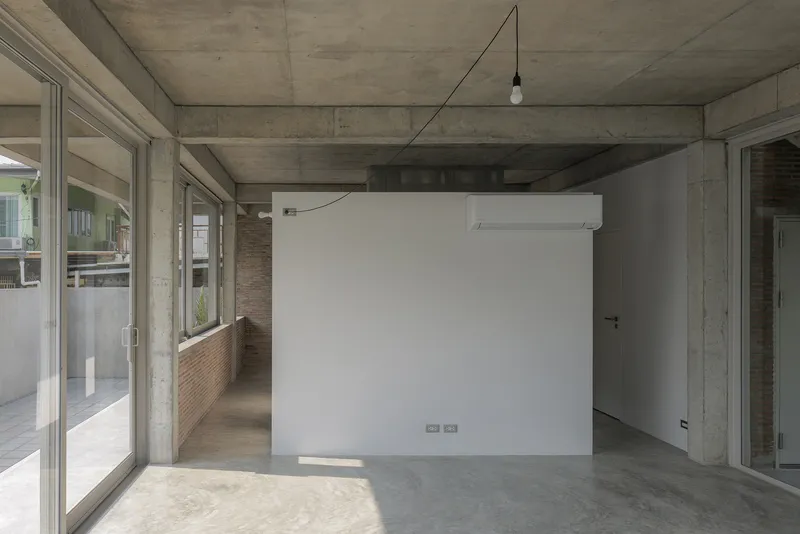
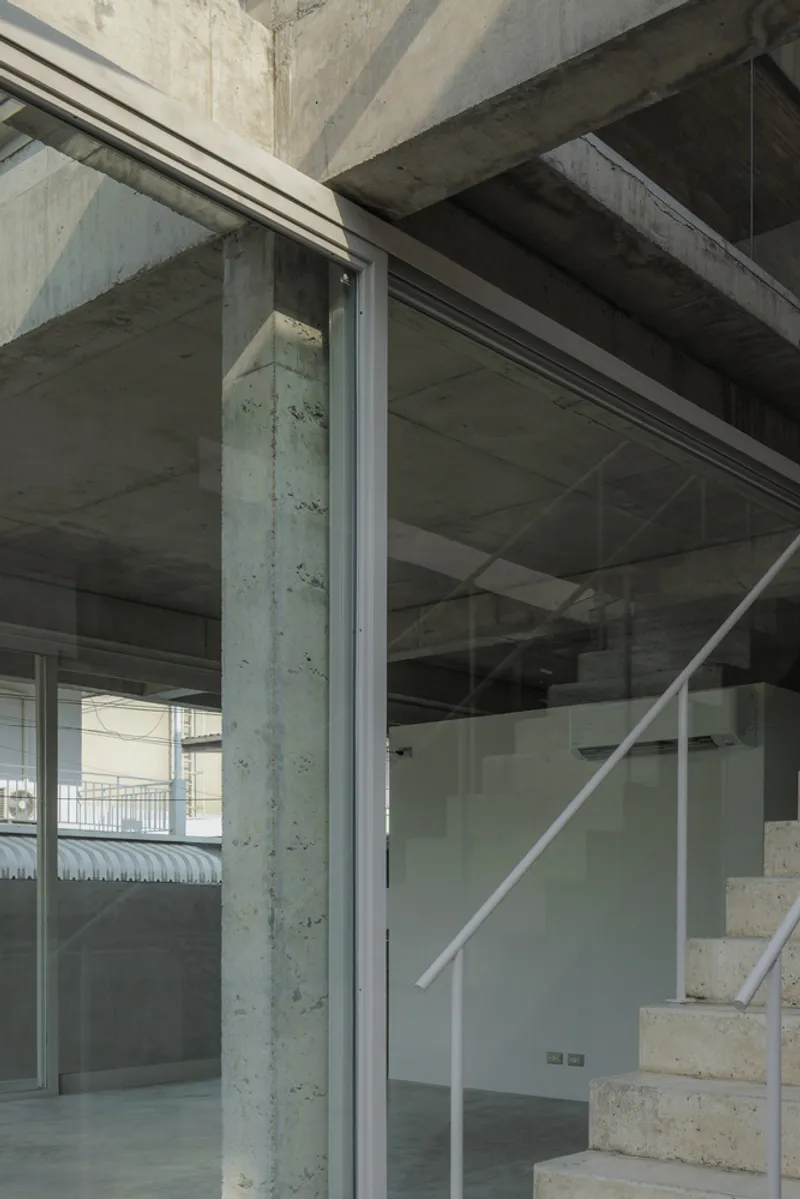
The architects began with a three-story reinforced concrete grid structure, establishing a rational framework onto which various architectural elements could be layered and modified. Brick infill walls, windows, skylights, staircases, and bathrooms were introduced incrementally. Rather than aligning rigidly with the grid, these elements deviate slightly, generating spatial ambiguity and a sense of fragmented coexistence—each part distinct yet harmoniously integrated.
Programmatic Layers and Fluid Zones
Each level of House K serves a dedicated function:
- The ground floor accommodates the mother's private suite.
- The middle floor contains a shared living and dining area, the heart of the house.
- The top floor is home to the son’s room, emphasizing privacy while still participating in the home's vertical sequence.
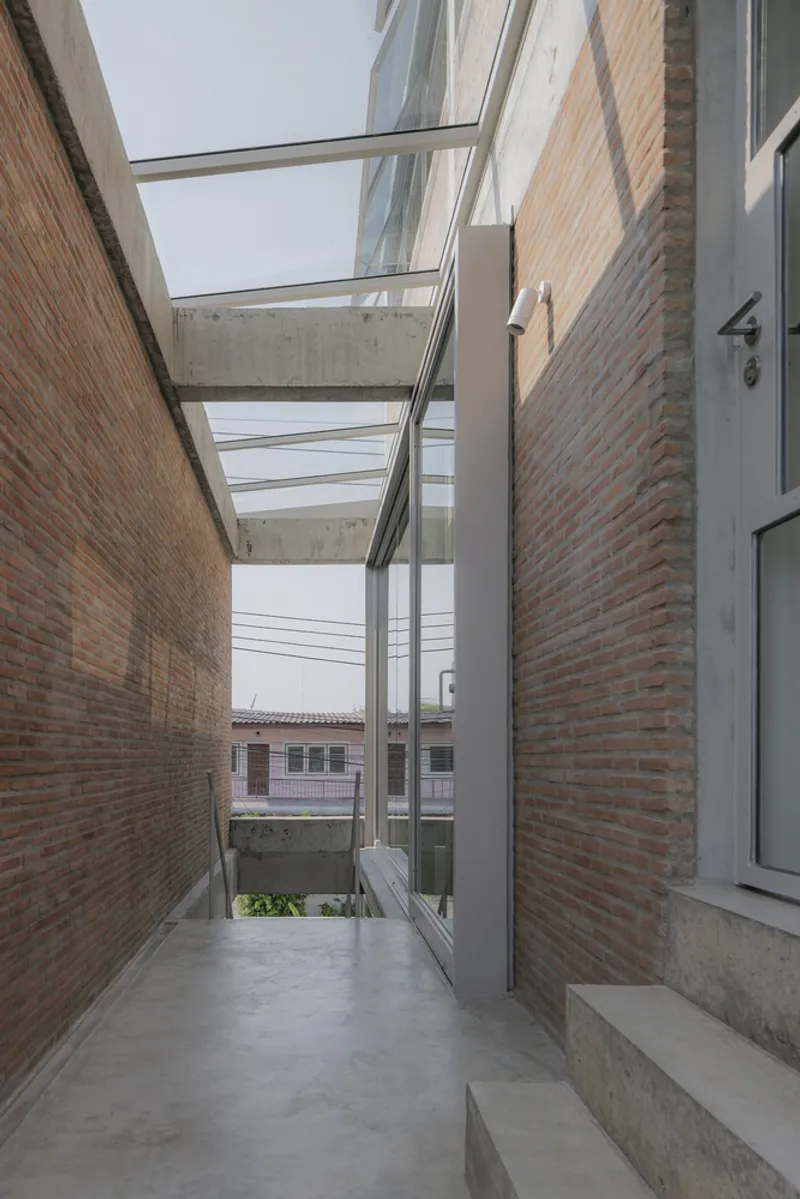
Projecting beams and structural extensions generate semi-outdoor transitional spaces—balconies, corridors, and approach zones—that act as both connectors and buffers. These spaces allow light, air, and views to infiltrate the interior, dissolving boundaries between inside and outside. They also provide potential for future expansion, embracing the impermanence and flexibility of family life.
Materiality and Structural Exposure
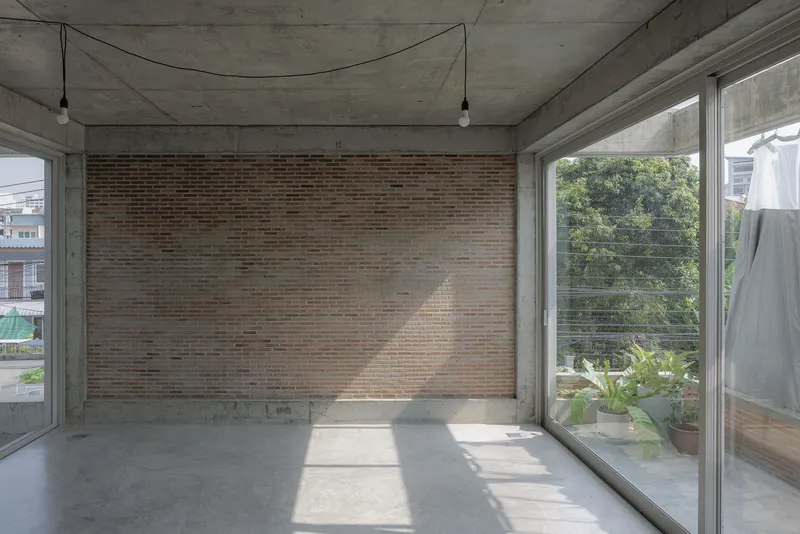
A key design decision was to retain material honesty and structural legibility. In contrast to the neighboring buildings that conceal their frameworks behind decorative cladding, House K boldly exposes its concrete skeleton and brick infill, revealing the construction process and the architecture's adaptive potential. This choice not only roots the house in local building traditions but also democratizes the architecture, making it both accessible and expressive.
The method—brickwork within a concrete grid—is deeply familiar in the local context, yet here, it is elevated to become a visible narrative tool. The structure becomes a lived diagram, one that traces decisions, deviations, and additions over time.
Architecture as an Ongoing Process
More than a finished object, House K represents architecture as an ongoing process, echoing the daily and generational acts of living. Every deviation from the grid, every added curtain or beam, becomes part of a continuing conversation between form and function. In this way, House K is not just a building—it is a framework for domestic evolution, a structure that lives, breathes, and adapts with its inhabitants.
All Photographs are works of Soopakorn Srisakul


Popular Articles
Popular articles from the community


David Macias Steps a Doorless Stone and Plaster House Down a Tropical Colombian Hillside
In the humid hills of Colombia, Threshold House replaces the front door with an open void and terraces its 850 m² down the slope instead of fighting it.

U.GA Architects Wraps an Oval Rooftop Pool in Curved Board-Formed Concrete on Busan's Jeollidan-gil
In Busan's Jeonpo-dong, a 454 m² mixed-use block stacks a neighborhood facility, guest rooms and an oval rooftop pool inside spiraling concrete walls.

David Ortega Stacks a Two-Story Mexico City Penthouse Around a Steel Stair and a Pergola-Shaded Roof Terrace
In Colonia Roma, a 300 m² penthouse uses oak joinery, a planted steel stair and a slatted roof pergola to make a new-build apartment feel like a house.

Jaramillo Van Sluys Arquitectura and Urbanismo Turn a Demolished Registry Lot in Quito into an Orchard Plaza
In Quito's Centro Histórico, a 2,800 m² plaza exposes the San Agustín convent wall and redraws its lost Augustinian orchard in volcanic stone.

Similar Reads
You might also enjoy these articles


Hodi-Mandai Geram
Project Function: Preservation and revitalization of the Intangible heritage and socio-spatial identity of the Hodi by Housing, Cultural Memory Center, Sacred Grove, landscape, local tourism economy


Olio Towers: A Mid-Rise for Performers That Fuses Housing, Rehearsal, and Stage
Located blocks from Houston's Theater District, this modular tower stacks living units around a central performance atrium.

Oasis: Modular Green Housing Carved into Dhaka's Urban Fabric
A shortlisted Plugin Housing entry reclaims unauthorized settlements in Dhaka with stepped concrete volumes, green roofs, and ventilation-driven design.

Black Hole: A Floating Megastructure for the Post-Physical Era
Emiliano Mazzarotto envisions a spherical, self-scaling arena where e-sports, digital hotels, and holographic stadiums replace traditional public space.

Explore Building Patterns Competitions
Discover active competitions in this discipline

Challenge to design a shop stop sunk in the city

Challenge to reimagine the Iron Throne

Photograph architecture without architects

Illustrate the lost glory of Angkor Wat - Render Challenge
Comments (0)
Please login or sign up to add comments
No comments yet. Be the first to comment!