

House M by Atelier About Architecture: A Multi-Layered Courtyard Residence Reimagining Memory, Light, and Materiality
House M blends courtyards, textured materials, and shifting light to create a serene, memory-filled multigenerational home within enclosed Beijing walls.


House M by Atelier About Architecture is a 600-square-meter multi-story residence located in the eastern region of Beijing, surrounded by mature trees, dense greenery, and a distinct atmosphere shaped by time and memory. Designed by lead architect Wang Ni and photographed by Yumeng Zhu and Haiting Sun, the home responds to a deeply personal brief rooted in recollection, childhood impressions, and the emotional resonance of domestic spaces. The project reinterprets these memories—sunlit windows opening onto tree crowns, long bookshelves, dark terrazzo floors, and flickering shadows on red brick walls—transforming them into a contemporary architectural language that connects the past with the present.

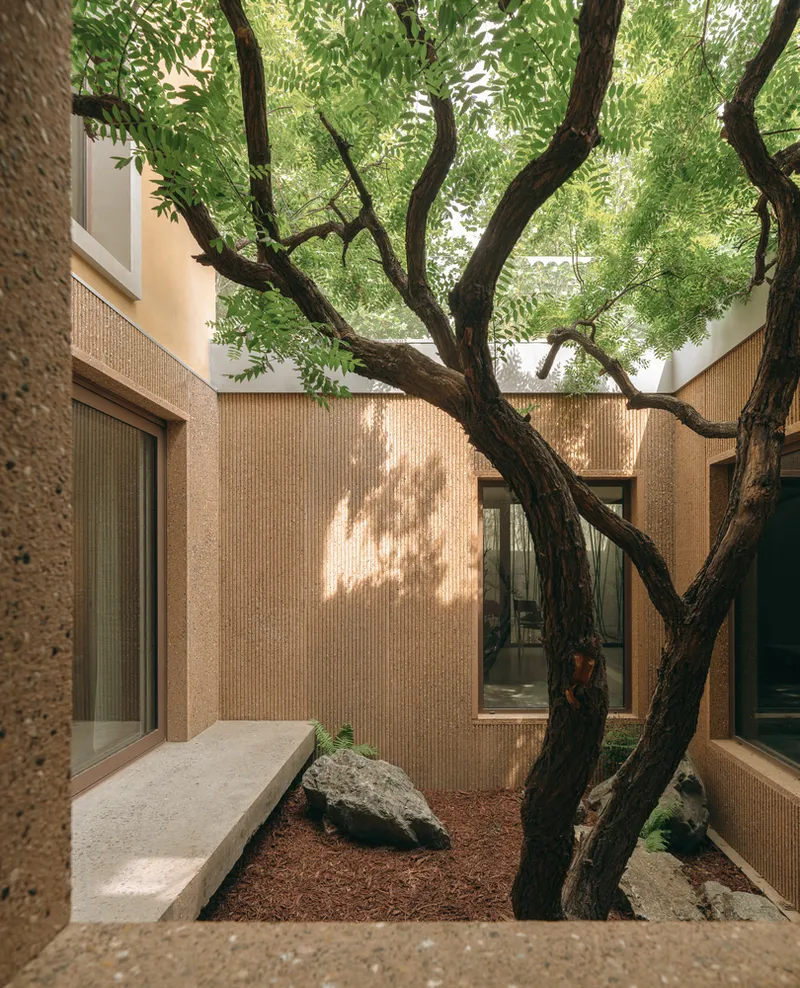
The site is characterized by high perimeter walls and a central courtyard that functions as the sole light source for the surrounding structures. The original interiors were narrow and dim, with limited access to daylight. In response, the design introduces an entirely new spatial framework beneath the tall enclosure, focusing not on vertical expansion but on a sophisticated strategy of horizontal layering. Five courtyards of varying proportions are positioned across the plan, each offering unique experiences of light, scale, and movement. These courtyards establish continuous visual dialogue throughout the residence, echoing the rhythms of a multigenerational household in which family members coexist in shifting proximities—sometimes near, sometimes apart, always visually connected.


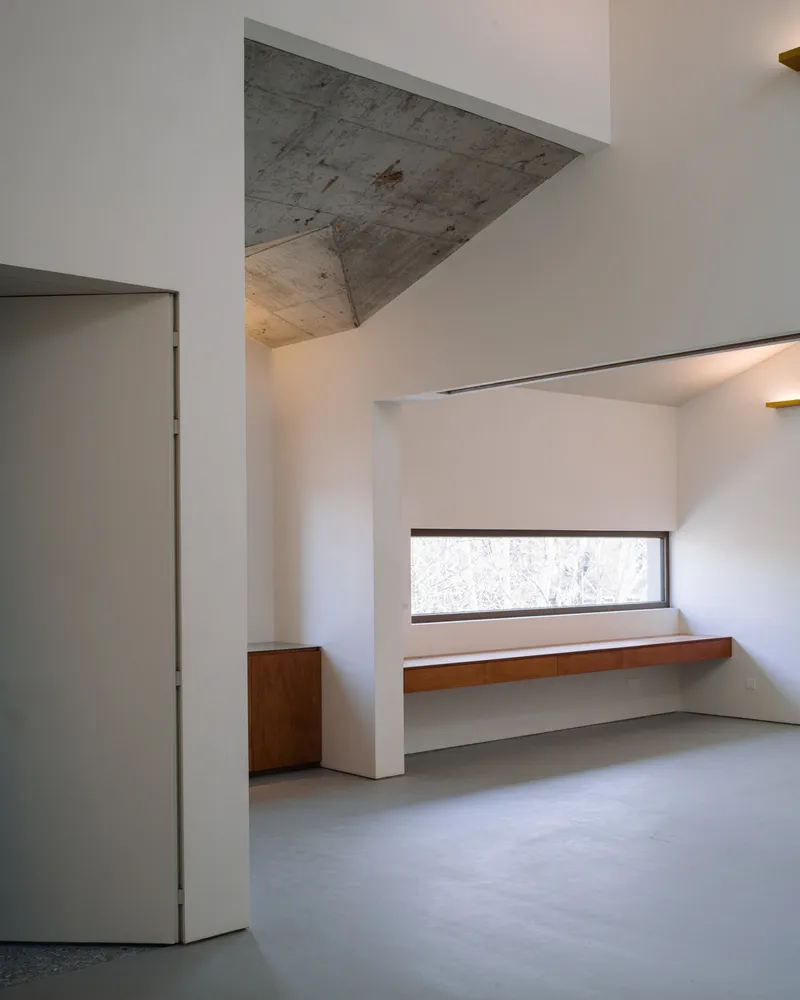
From any space within House M, sightlines extend across rooms, gardens, and atriums, creating a dynamic spatial narrative. These intentional overlaps and separations allow architectural scenes to transform with the viewer’s position. Without moving, one perceives subtle changes in perspective, volume, and illumination. This approach enriches daily life, offering a home that evolves from morning to evening with the changing qualities of natural light.


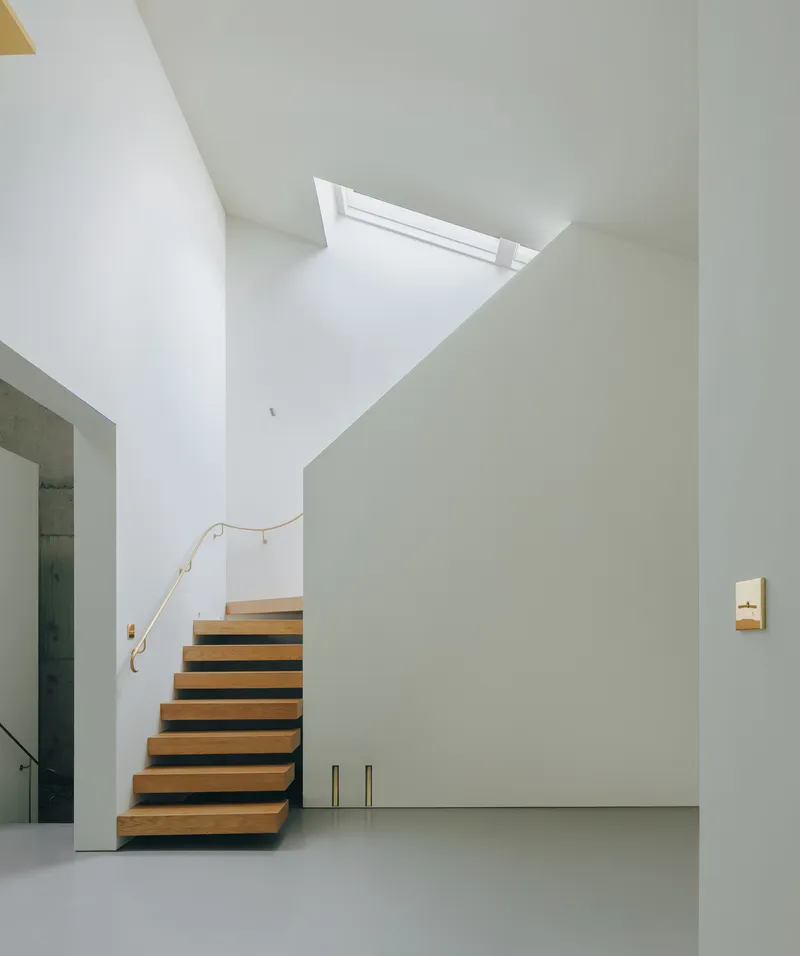
Light becomes the central protagonist of House M. Through carefully oriented windows, controlled apertures, terraces, and rooftop openings, sunlight enters as a gradient rather than a singular source. The front yard, side yard, roof terraces, and multi-level atriums correspond to different moments of living, each shaping its own choreography of shadow and luminosity. Although the enclosing walls remain solid, the introduction of interconnected courtyards expands the perceived scale of the residence. What was once dark becomes a continuous spectrum of grayscale atmospheres, softened through layers of vegetation, garden pockets, and thoughtfully crafted transitions.
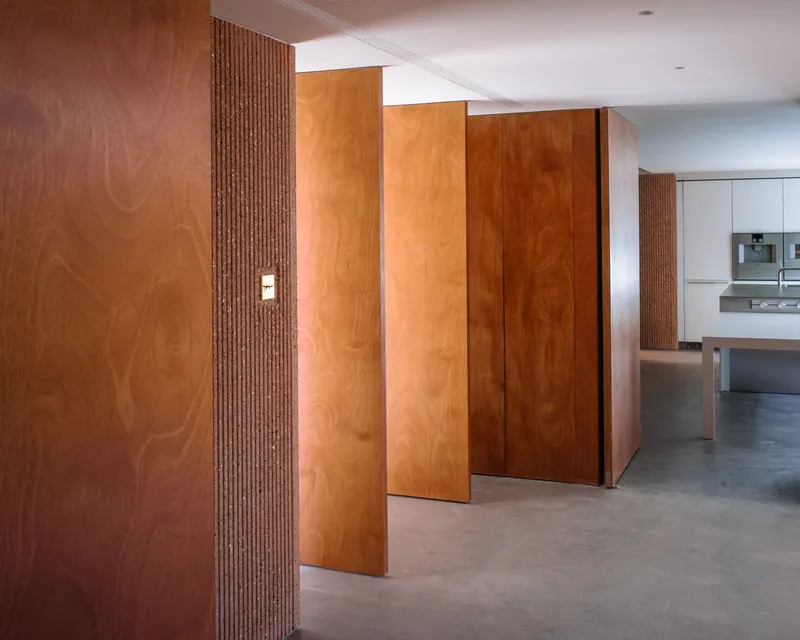
Materiality plays a defining role in creating the tactile and emotional identity of House M. The architects studied the natural aging of the original structure and synthesized these qualities into a custom pigmented concrete embedded with coarse aggregate. Cast into vertically ridged trapezoidal panels, each measuring 900 by 2200 millimeters, the prefabricated cladding forms a unified interior-exterior material language. These dry-hung panels cultivate a sensory sequence, enhancing the architecture’s weight, rhythm, and depth. The textures encourage touch, grounding the experience of space in physical reality.
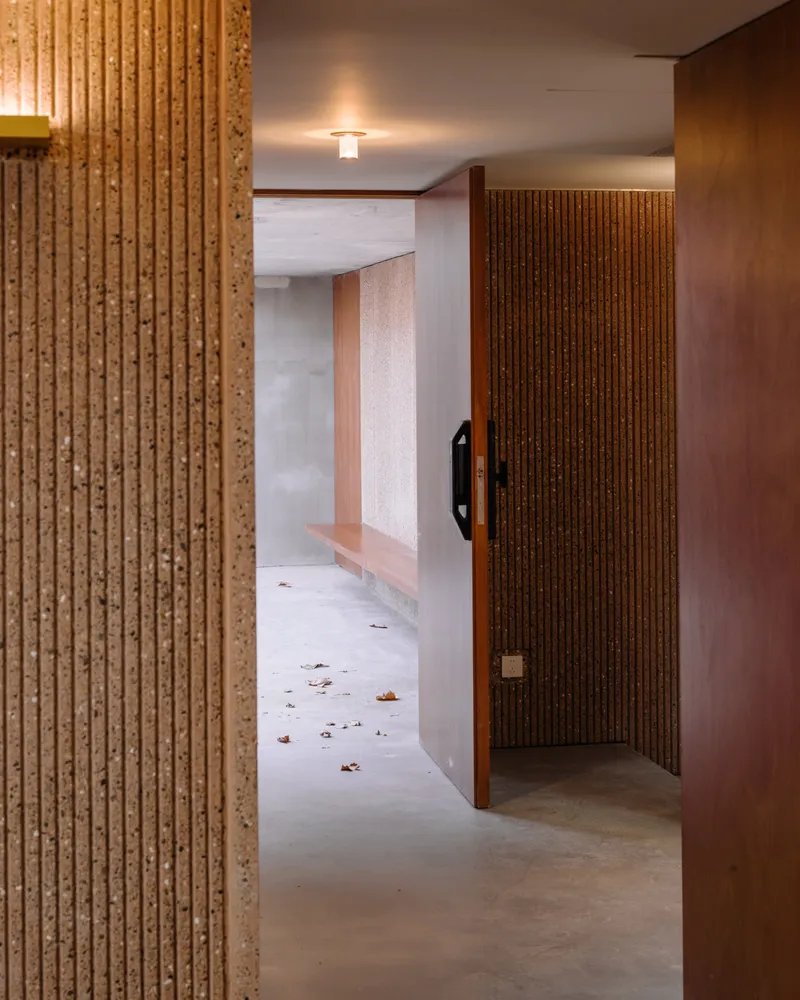
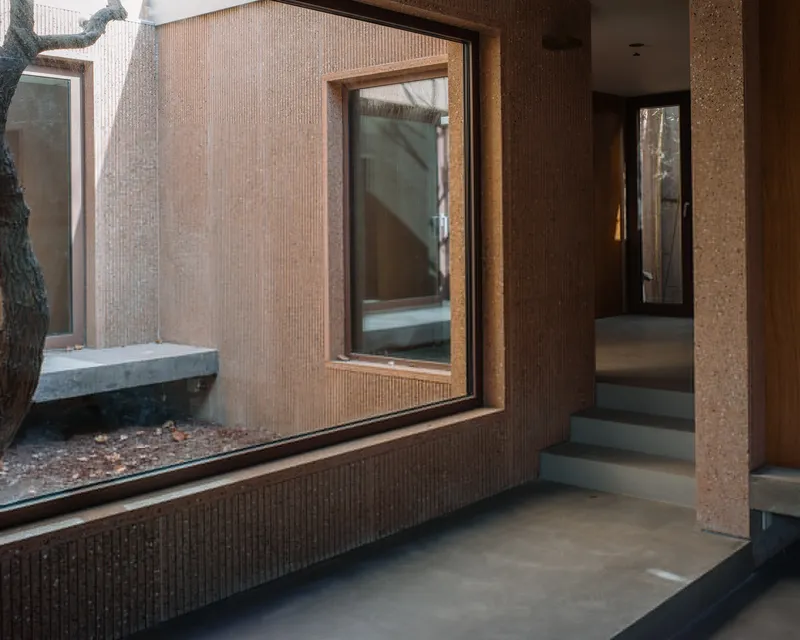
Inside, the atmosphere becomes serene, introspective, and almost monastic. The architecture unfolds gradually, much like the process of understanding a person from appearance to personality, habits, inner thoughts, and ultimately spirit. House M invites visitors and inhabitants into a layered sensory world shaped by memory and perception. Shadows drift across ridged concrete, wood surfaces absorb warm light, and circulation paths reveal the relationship between rooms and nature. Through material density, spatial compression and release, and the presence of evolving natural light, the project becomes an exploration of authenticity and emotional resonance.

All photographs are of
Yumeng Zhu, Haiting Sun




Popular Articles
Popular articles from the community


Riyadh For All: Intergenerational Urban Design for Active Aging in Rabat
Riyadh For All reimagines urban design in Rabat with intergenerational co-living, adaptive courtyards, and Moroccan cultural exchange today.

Conexión: Biophilic Design Reimagines High-Rise Living in Hong Kong
Conexión reimagines high-rise living in Hong Kong through biophilic design, green facades, shared spaces, daylight, water and nature within.

The Musturak Paradise: Senior Living Architecture for a Connected Future in Temara, Morocco
The Musturak Paradise reimagines senior living architecture in Temara via private homes, social spaces, culture, community, and shared care.
EW PARK: Sustainable Architecture Reimagines the Future of Urban Parking
EW PARK reimagines city parking as a modular wooden tower combining automation, solar energy, electric mobility, and adaptable urban design.

Similar Reads
You might also enjoy these articles


Hodi-Mandai Geram
Project Function: Preservation and revitalization of the Intangible heritage and socio-spatial identity of the Hodi by Housing, Cultural Memory Center, Sacred Grove, landscape, local tourism economy


Olio Towers: A Mid-Rise for Performers That Fuses Housing, Rehearsal, and Stage
Located blocks from Houston's Theater District, this modular tower stacks living units around a central performance atrium.

Oasis: Modular Green Housing Carved into Dhaka's Urban Fabric
A shortlisted Plugin Housing entry reclaims unauthorized settlements in Dhaka with stepped concrete volumes, green roofs, and ventilation-driven design.

Black Hole: A Floating Megastructure for the Post-Physical Era
Emiliano Mazzarotto envisions a spherical, self-scaling arena where e-sports, digital hotels, and holographic stadiums replace traditional public space.

Explore Architecture Competitions
Discover active competitions in this discipline



Challenge to reimagine the Iron Throne


Photograph architecture without architects


Illustrate the lost glory of Angkor Wat - Render Challenge


Design challenge to reuse E-waste
Comments (0)
Please login or sign up to add comments
No comments yet. Be the first to comment!