

House of Bluff by Chaoffice: Transforming a Forgotten Wasteland into a Mountain Retreat
House of Bluff by Chaoffice transforms a neglected site into a playful mountain retreat, featuring geometric forms, sunken bath, and modular spaces.


Architects: Chaoffice
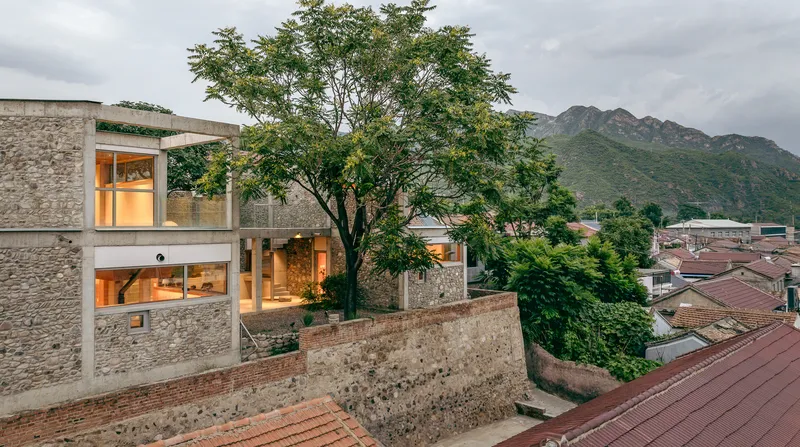
Nestled at the far end of a terraced landscape in Mentougou District, the House of Bluff began its life as a neglected, derelict property. Estranged from neighboring homes, the site had become overrun with wild plants, collapsed structures, and debris. Stray animals, birds, bees, and even palm-sized spiders had claimed the area as their own. Amidst the chaos, two resilient toon trees flourished, shielding the land like silent guardians.
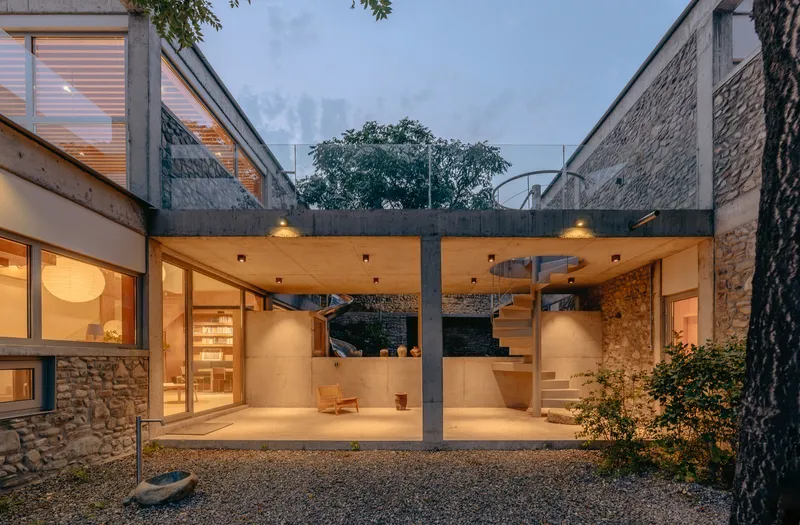
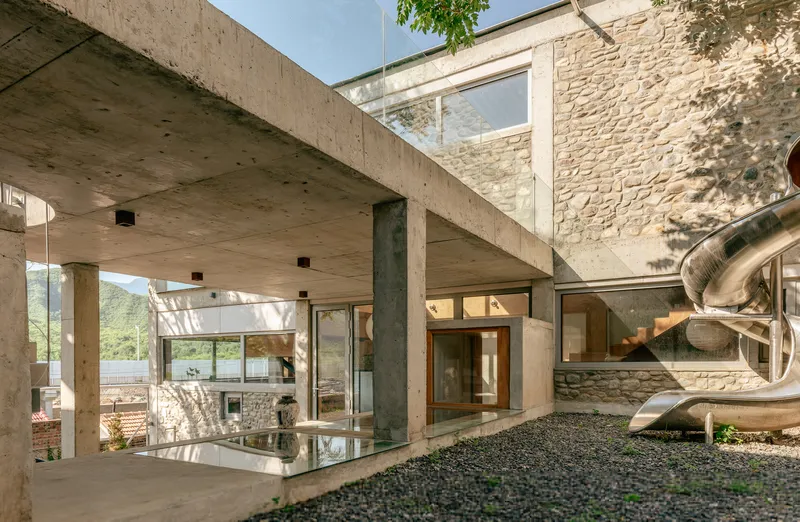
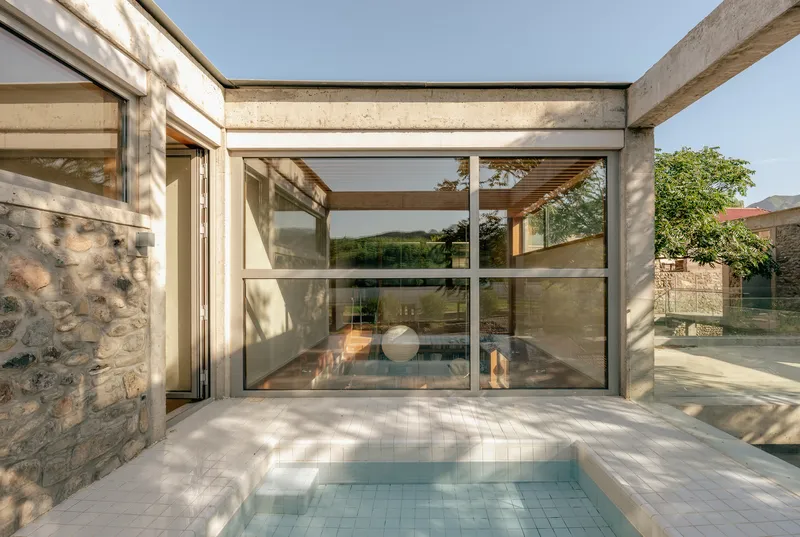
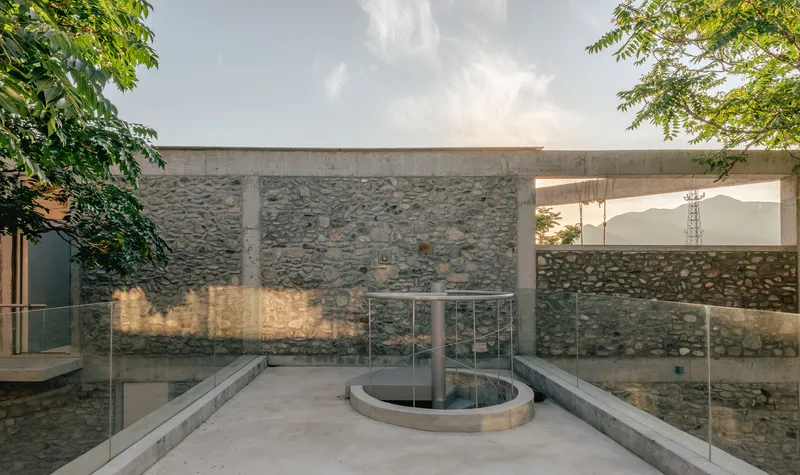
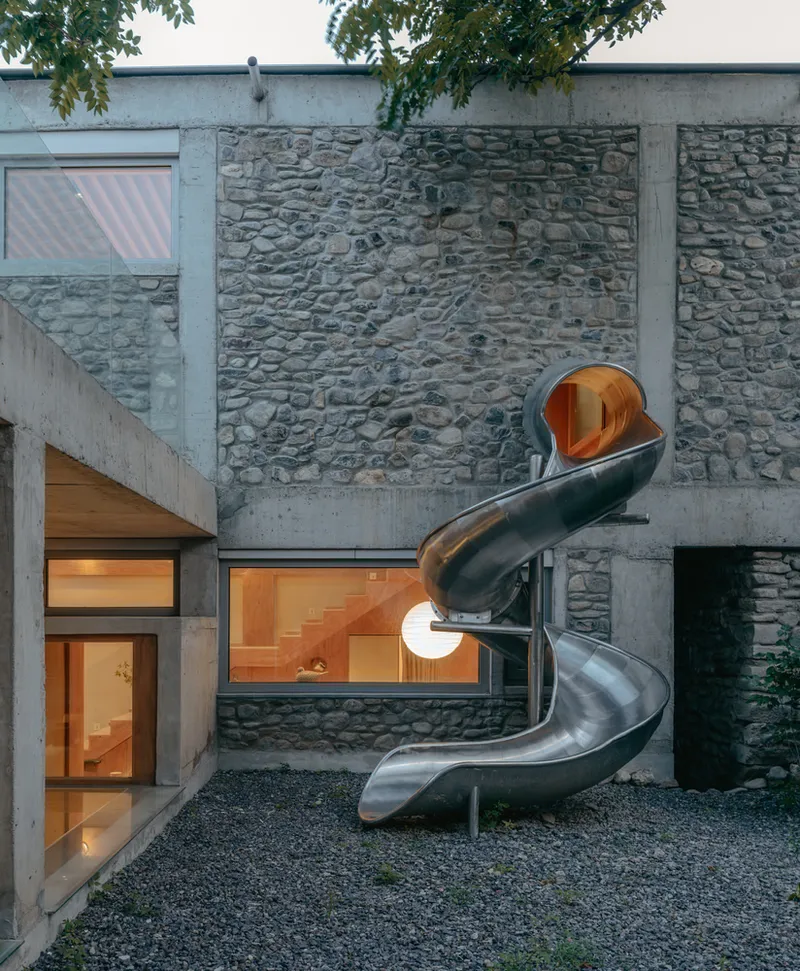
Years later, the owner envisioned transforming this forgotten wasteland into a lively mountain retreat: a sanctuary blending relaxation, play, and nature. The redevelopment included five bedrooms, expansive indoor and outdoor spaces, a sunken open-air bath, a swing, and a slide, ensuring enjoyment for both adults and children.
Design Concept: Rejuvenation Through Geometry
The design philosophy draws inspiration from Lucas Cranach the Elder’s Fountain of Youth (1573), where a meticulously crafted sunken basin symbolizes rejuvenation amidst a rough landscape. Similarly, Chaoffice approached the site as a canvas of renewal, turning a chaotic, underutilized land into a playful, structured environment.
Working within a modest budget, the architects employed simple geometric forms to maximize spatial impact. Just as the painting juxtaposes youthful vitality against the hardships of age, the House of Bluff introduces clarity and order to a previously chaotic site.
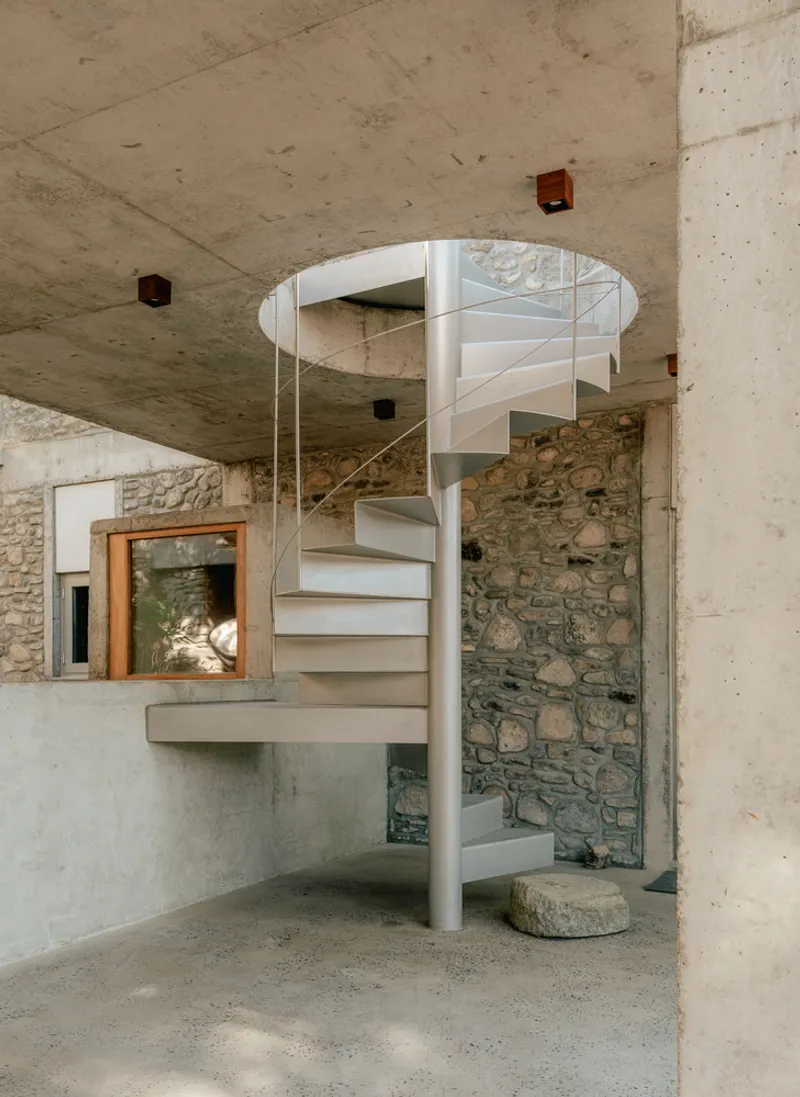

Architectural Strategy: Multi-Level, Semi-Outdoor Living
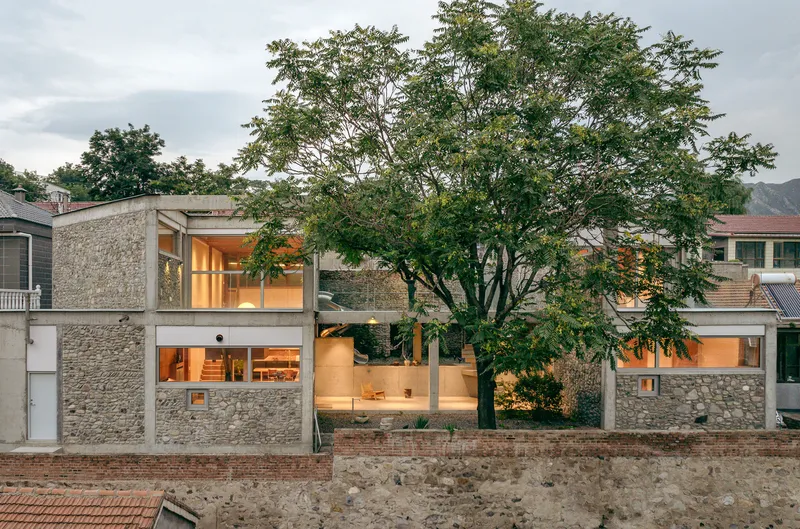
The 300 m² two-level construction had to be sensitively placed within a larger 400 m² courtyard. The neighboring property’s imposing scale required a design that avoided creating an awkward visual relationship.
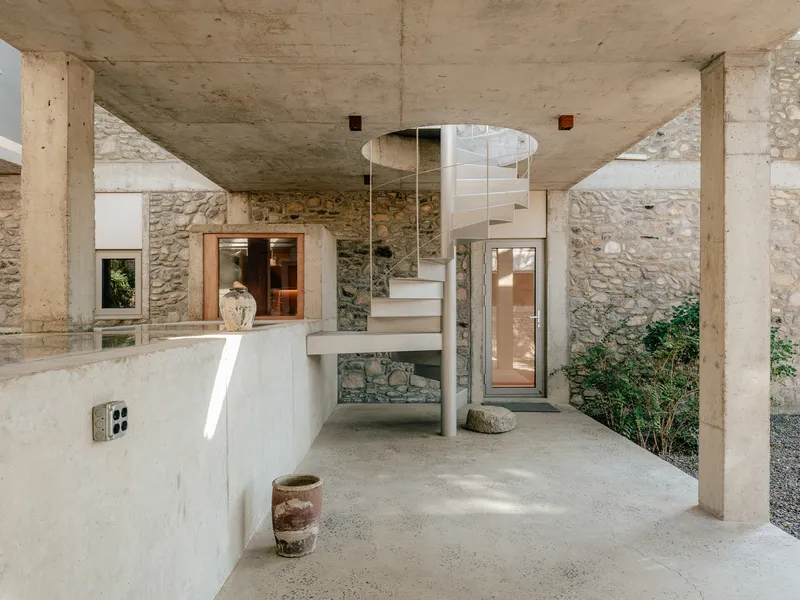
Chaoffice’s solution was to develop a series of semi-outdoor spaces and independent structures, generating a sense of grandeur despite the limited footprint. The design centers around cubic units of 4.5m x 4.5m, forming modular houses, porches, and 'hollow frames.' Some units were partially removed to improve light, enhance sightlines, and soften the building’s presence on the street, cultivating a playful yet cohesive architectural experience.
Layout & Spatial Experience
The main entrance, positioned at the northwest corner, descends into a double-height main living area. The kitchen, dining, and living rooms flow sequentially from south to north, while a sunken outdoor bathtub faces south, framed by exposed concrete structures. Concrete folding beams and vertical columns support the bath, aligned above the kitchen and central fireplace. This dynamic visual, flames beneath water, was so striking that the project was humorously considered to be named House of Hotpot.

Materiality: Contrast and Harmony
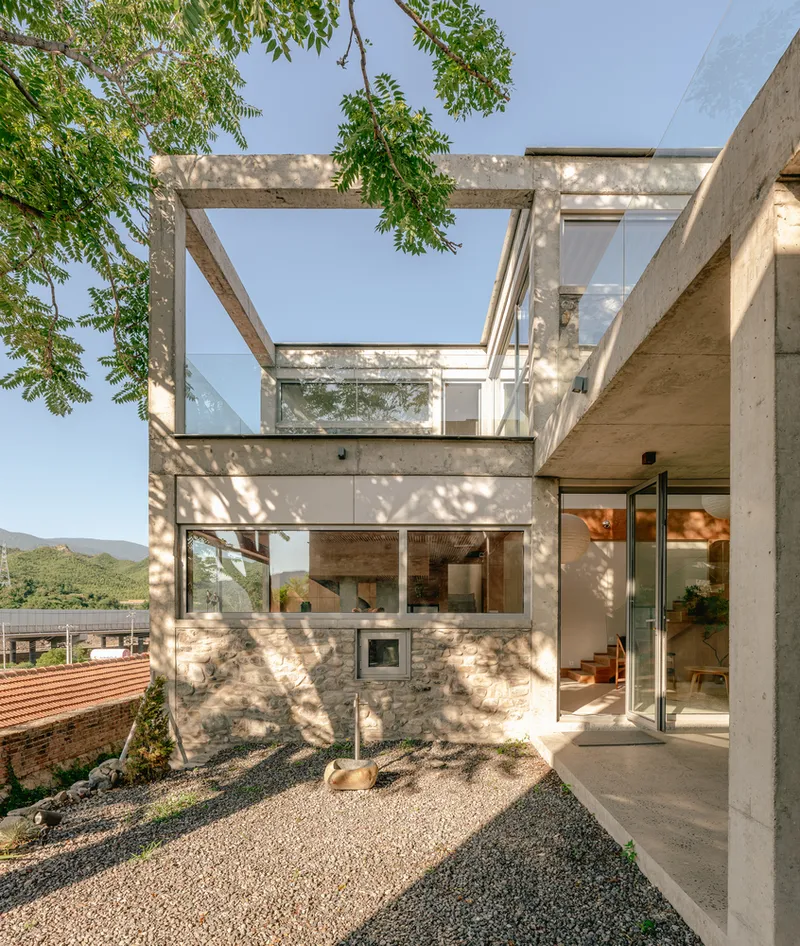
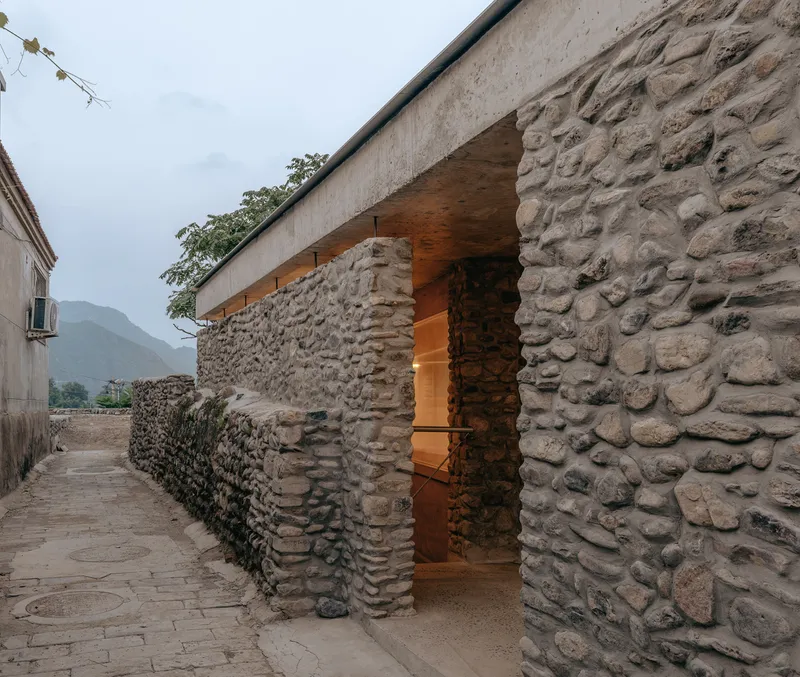
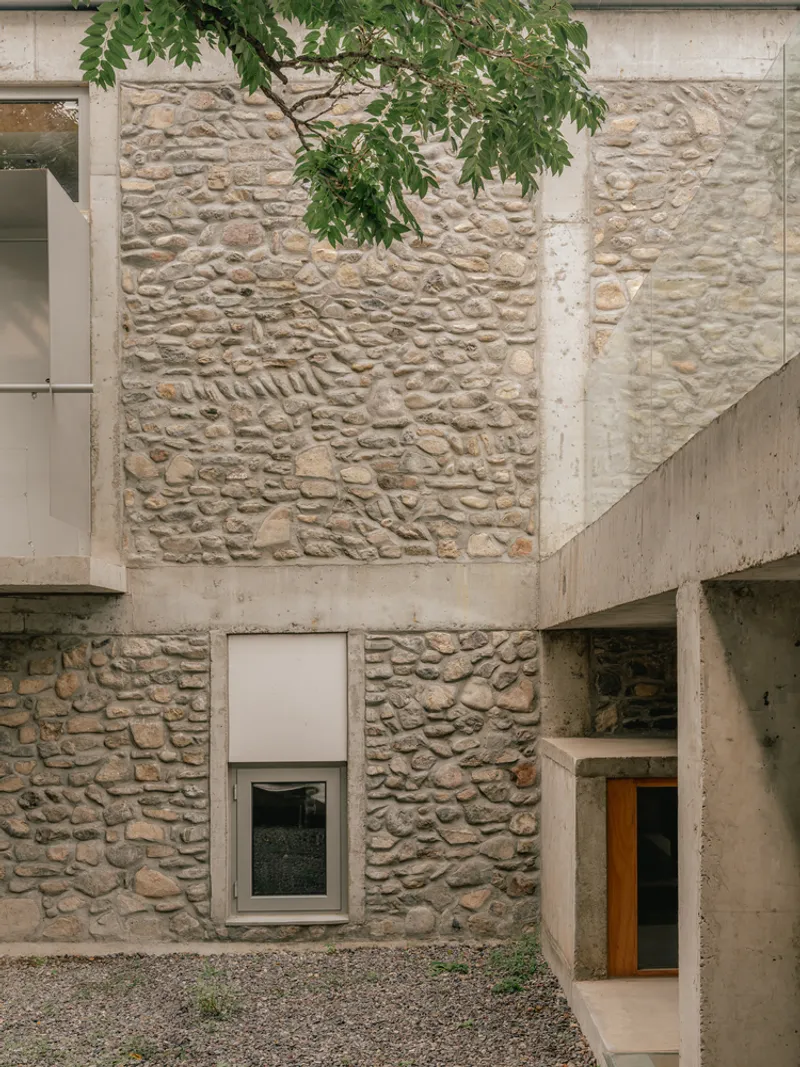
Externally, the house features a concrete frame with stone infill, grounding it within the natural surroundings. Internally, warm-toned stucco walls are complemented by wooden panels covering structural projections, creating a tactile and visual contrast. This interplay of concrete, stone, and wood not only enhances the aesthetic but also reflects the duality of structure versus maintenance, a subtle narrative embedded in the architecture itself.
House of Bluff: A Playground of Architecture
The House of Bluff exemplifies how thoughtful design can rejuvenate a neglected site. Through geometric simplicity, modular planning, and careful material selection, the project transforms a chaotic wasteland into a vibrant retreat, harmonizing nature, play, and living spaces.
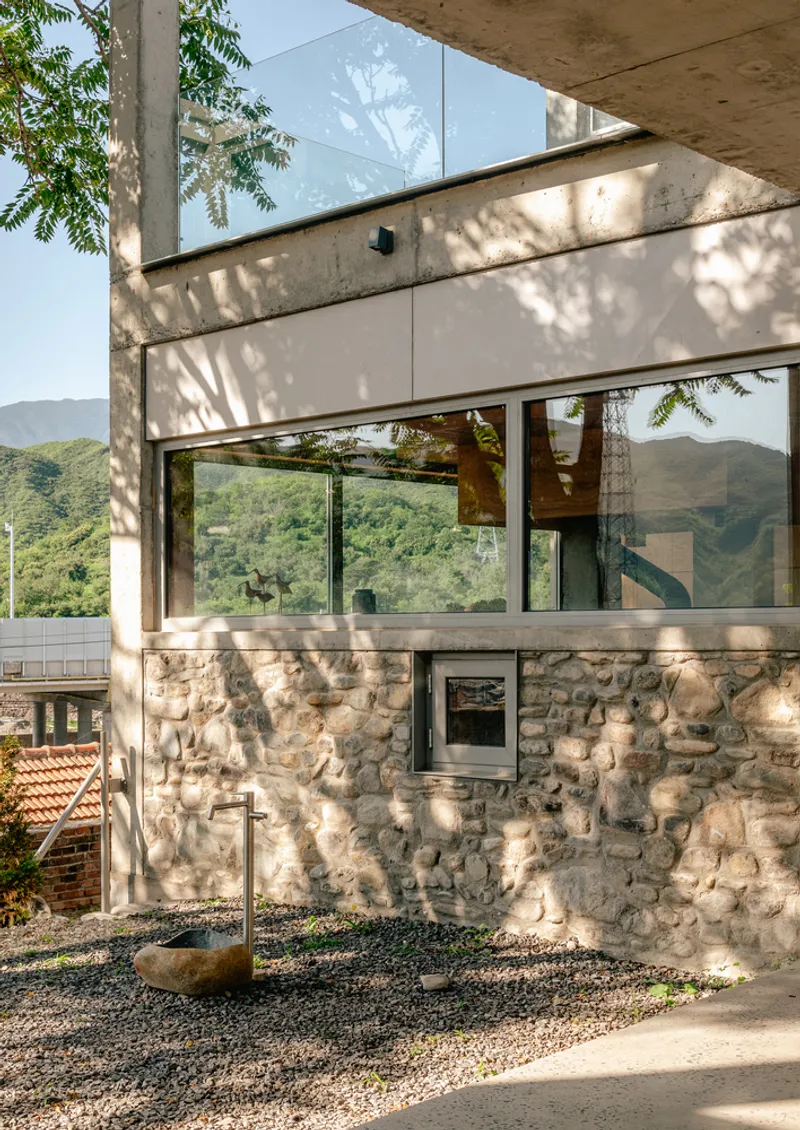
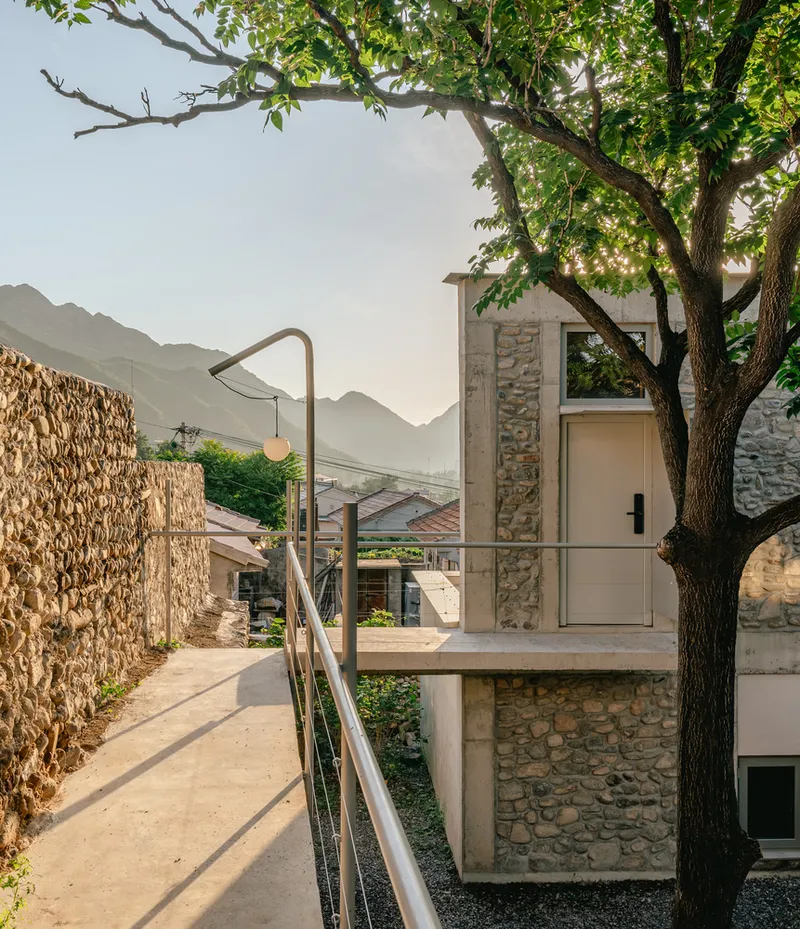
All photographs are works of Yumeng Zhu




Popular Articles
Popular articles from the community


Riyadh For All: Intergenerational Urban Design for Active Aging in Rabat
Riyadh For All reimagines urban design in Rabat with intergenerational co-living, adaptive courtyards, and Moroccan cultural exchange today.

The Musturak Paradise: Senior Living Architecture for a Connected Future in Temara, Morocco
The Musturak Paradise reimagines senior living architecture in Temara via private homes, social spaces, culture, community, and shared care.

Co-life: Sustainable Architecture for Age-Friendly Community Living
Co-life reimagines sustainable architecture for seniors through courtyards, rammed earth, shared gardens, and spaces designed for belonging.
AL-JANNAH: Sustainable Architecture and Permaculture for Afghan Widows
AL-JANNAH uses sustainable architecture and permaculture to create resilient oasis of housing, learning, work and renewal for Afghan widows.
Similar Reads
You might also enjoy these articles


Hodi-Mandai Geram
Project Function: Preservation and revitalization of the Intangible heritage and socio-spatial identity of the Hodi by Housing, Cultural Memory Center, Sacred Grove, landscape, local tourism economy


Olio Towers: A Mid-Rise for Performers That Fuses Housing, Rehearsal, and Stage
Located blocks from Houston's Theater District, this modular tower stacks living units around a central performance atrium.

Oasis: Modular Green Housing Carved into Dhaka's Urban Fabric
A shortlisted Plugin Housing entry reclaims unauthorized settlements in Dhaka with stepped concrete volumes, green roofs, and ventilation-driven design.

Black Hole: A Floating Megastructure for the Post-Physical Era
Emiliano Mazzarotto envisions a spherical, self-scaling arena where e-sports, digital hotels, and holographic stadiums replace traditional public space.


Explore Residential Design Competitions
Discover active competitions in this discipline



Challenge to reimagine the Iron Throne


Photograph architecture without architects


Illustrate the lost glory of Angkor Wat - Render Challenge


Design challenge to reuse E-waste
Comments (0)
Please login or sign up to add comments
No comments yet. Be the first to comment!