
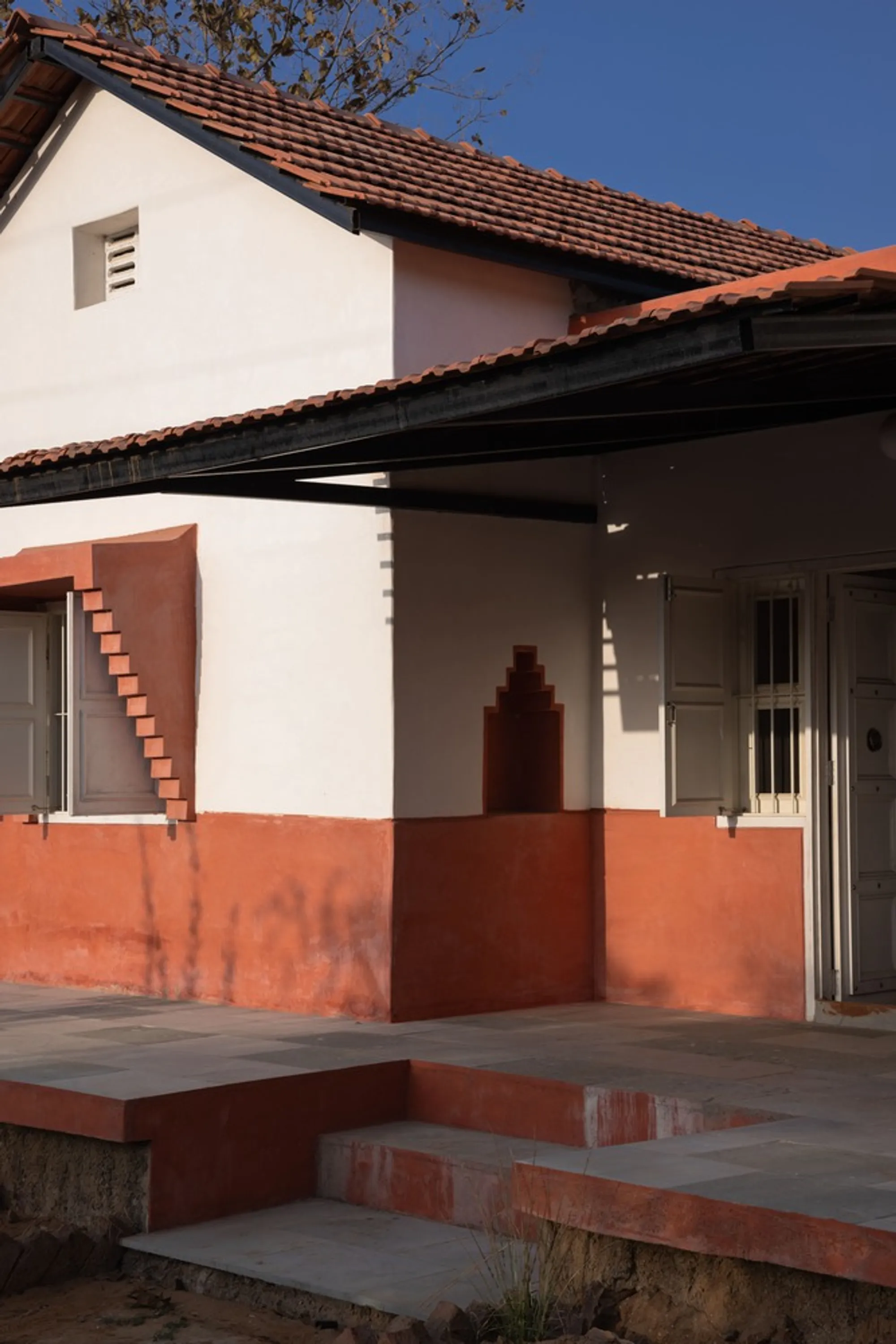
House of Nostalgia by PROJECT TERRA
House of Nostalgia by Project Terra blends modular design, local materials, and rural traditions into a sustainable, adaptable, climate-responsive home.


Reimagining Rural Architecture in India
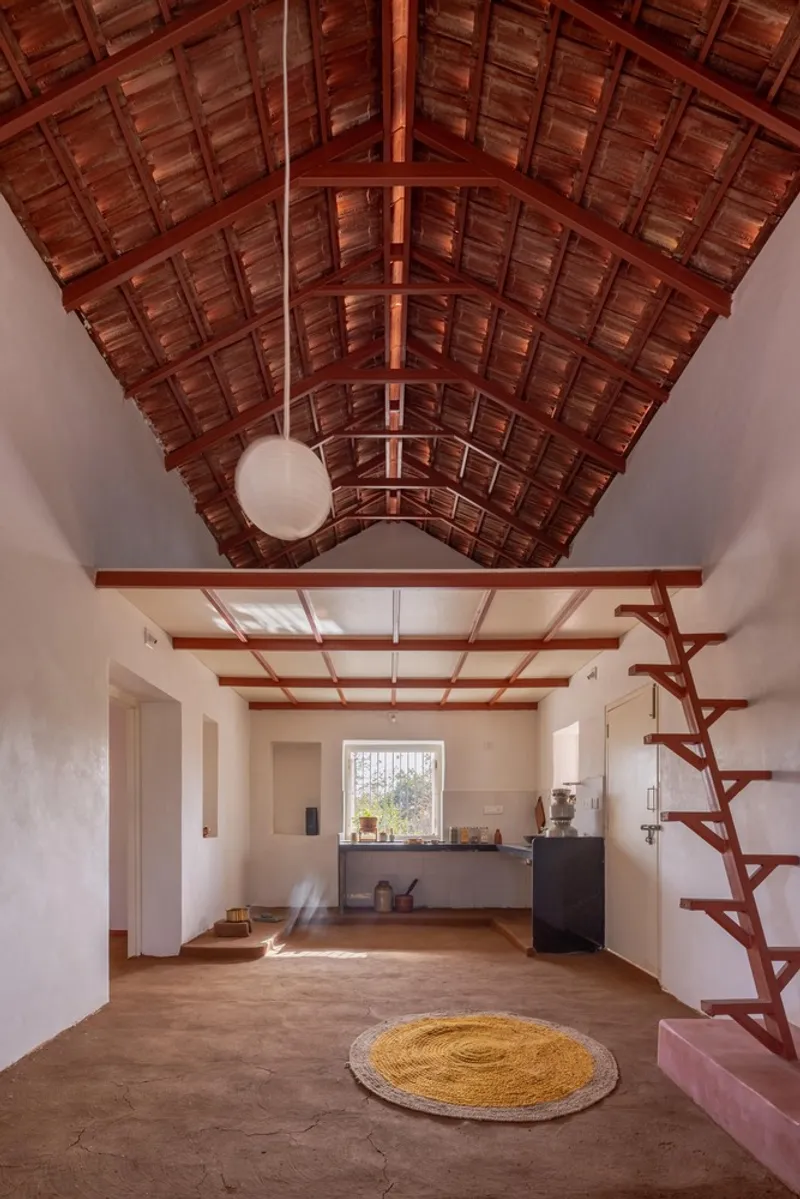
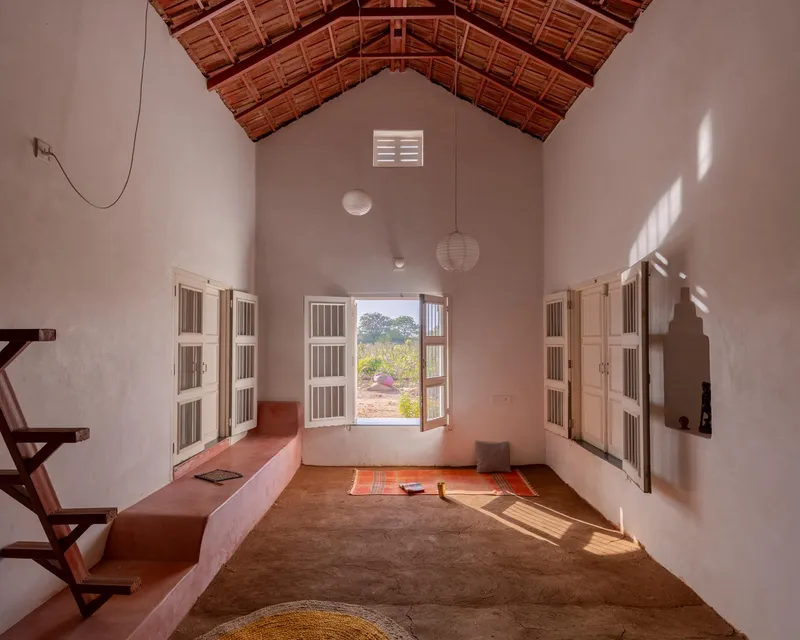
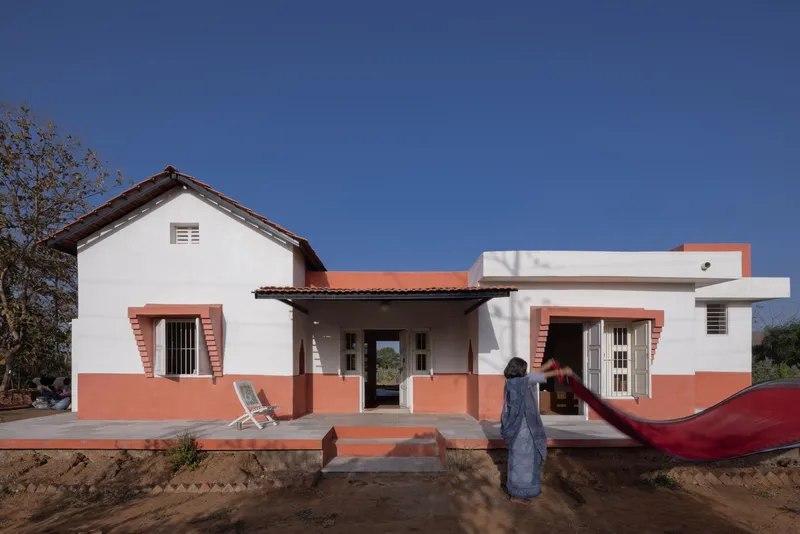
In the serene village of Khandiya, Gujarat, House of Nostalgia emerges as a thoughtful exploration of rural living, memory, and architectural evolution. Rooted in local traditions yet addressing contemporary challenges, this home proposes a fresh dialogue between heritage and modernity. With sloped tiled roofs, thick lime-plastered walls, earthen floors, and shaded plinths, it evokes the familiar comfort of rural homes while offering a forward-looking architectural proposition.
Could rural architecture evolve rather than be abandoned? Could modular design bridge the gap between India’s transitioning villages and modern housing needs? House of Nostalgia answers with a resounding yes.
Modular Design as a Strategy
Designed for a private client, this house functions as a working prototype, not simply a vernacular revival but a replicable model. It reinvents spatial and material intelligence embedded in rural practice, adapting it to today’s social, economic, and environmental realities.
India’s villages are in flux: families are smaller, landholdings are changing, and aspirations are shaped by urban exposure. Conventional rural housing often defaults to low-cost concrete boxes or boutique “vernacular” farmhouses that disconnect from daily life. House of Nostalgia occupies the space between—durable, affordable, and adaptive, balancing permanence and possibility.
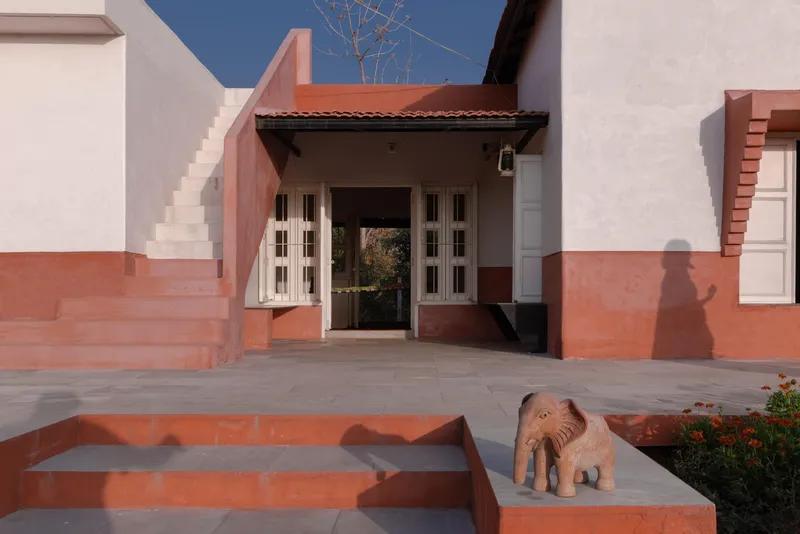
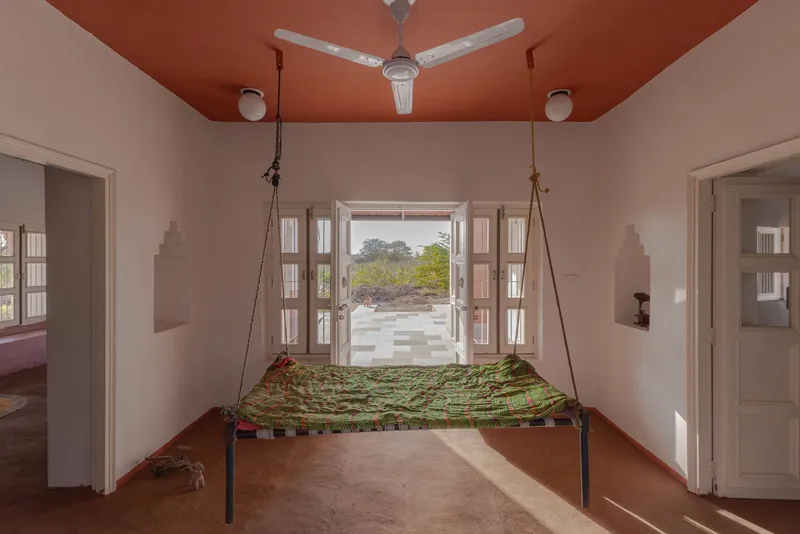
The house is organized into three interconnected modules:
- A Mangalore-tiled unit with a mezzanine loft
- An RCC slab module
- A bamboo-reinforced slab housing kitchen and services
Two of the modules span 40 m², with a 20 m² connecting module. An H-shaped layout allows phased construction, costing approximately ₹7 lakhs (8,000 USD) per 40 m² module. Modularity is not a compromise—it is a strategy for incremental growth, essential for evolving rural contexts.
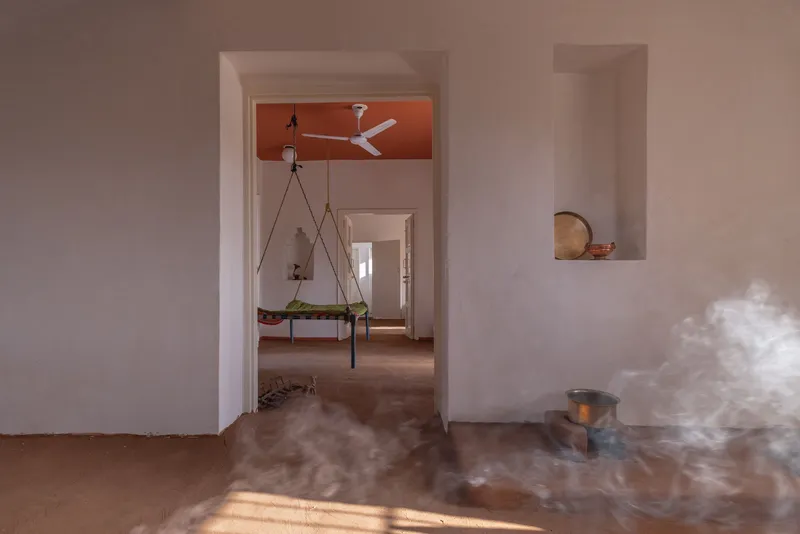
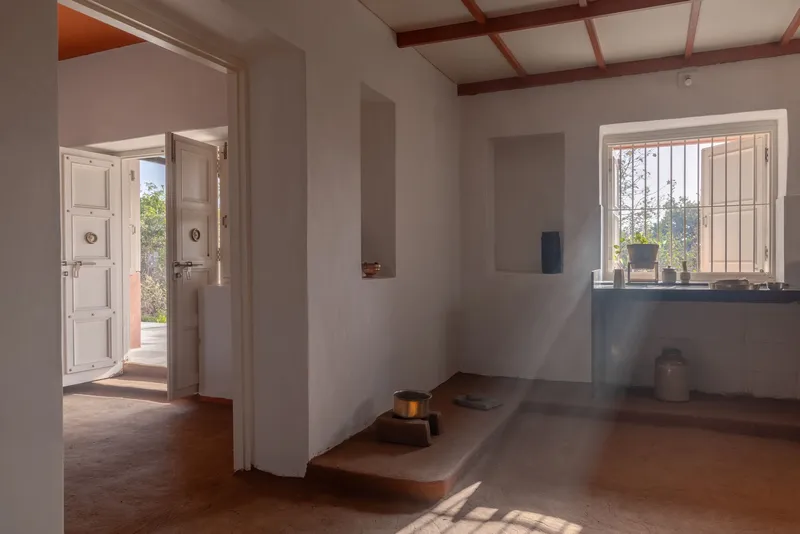
Locally Sourced Materials for Sustainability
House of Nostalgia prioritizes local materials for performance and sustainability:
- Stone and brick for thermal mass
- Lime plaster for cooling interiors
- Bamboo for lightweight, cost-effective construction
- Reclaimed metal sections and nearby timber
These choices ensure breathability, durability, and climate responsiveness, countering the trend of urban-style concrete homes that often fail in rural environments. The project proposes a “regional modernity”, deeply rooted in local aesthetics and geography.
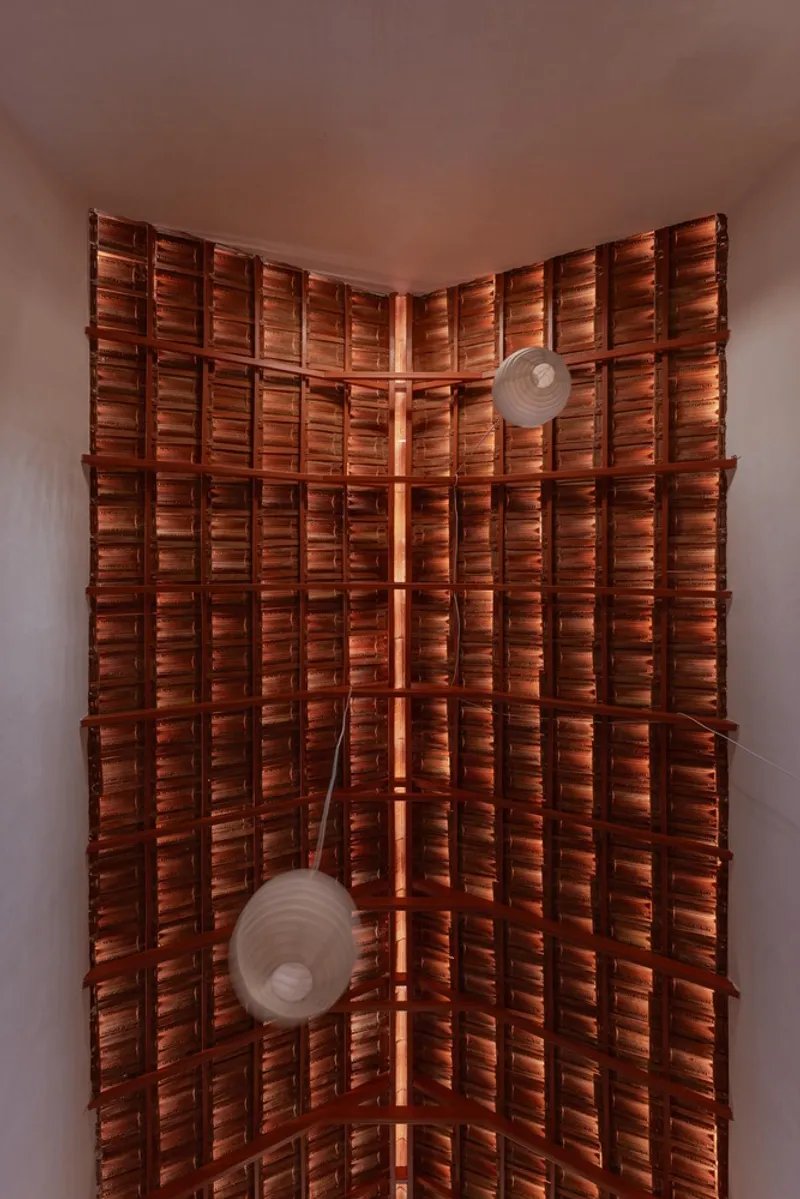
Architecture that Responds to Life
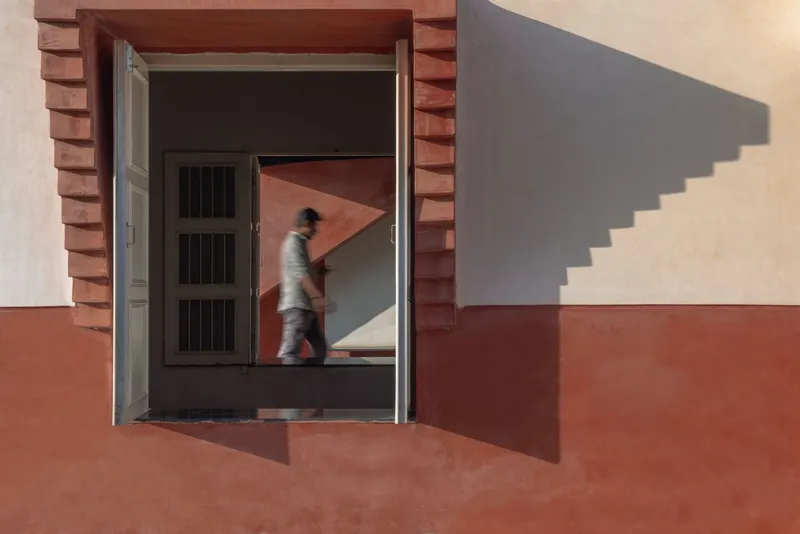
The architectural language borrows from rural logic: thick walls, built-in niches, verandahs, and semi-open connectors regulate heat, organize space, and foster social interaction. Key design elements include:
- Plinths acting as semi-public edges
- Mezzanine lofts serving as playful perches
- Semi-open connectors as restful pauses
Passive cooling strategies are integrated directly into the form and layout, not added as an afterthought.
A Framework for the Future
More than a building, House of Nostalgia is a replicable framework adaptable to specific geographies. Its philosophy emphasizes:
- Using local resources
- Designing for incremental growth
- Reinforcing regional identity
- Treating rural housing as a site for innovation
The project challenges conventional notions of rural housing by suggesting that the future lies in deep engagement with place, memory, and modular systems, creating homes that evolve with the communities they serve.
All Photographs are works of The Space Tracing Company



Popular Articles
Popular articles from the community


Play: Fragments of Their World
Familiar architecture becomes modular playground design, creating safe spaces where displaced children can learn, connect, imagine and play.

The Earth Pod: 3D Printed Homes for Resilient Refugee Communities
The Earth Pod reimagines refugee housing through 3D printed homes made from clay, combining resilience, self-sufficiency, and rapid shelter.

Co-Life: Senior Housing Design That Reconnects Older Adults With the City
Co-Life reimagines senior housing design through healing gardens, shared streets, workshops, and a sustainable community across generations.

The Musturak Paradise: Senior Living Architecture for a Connected Future in Temara, Morocco
The Musturak Paradise reimagines senior living architecture in Temara via private homes, social spaces, culture, community, and shared care.

Similar Reads
You might also enjoy these articles


Hodi-Mandai Geram
Project Function: Preservation and revitalization of the Intangible heritage and socio-spatial identity of the Hodi by Housing, Cultural Memory Center, Sacred Grove, landscape, local tourism economy


Olio Towers: A Mid-Rise for Performers That Fuses Housing, Rehearsal, and Stage
Located blocks from Houston's Theater District, this modular tower stacks living units around a central performance atrium.

Oasis: Modular Green Housing Carved into Dhaka's Urban Fabric
A shortlisted Plugin Housing entry reclaims unauthorized settlements in Dhaka with stepped concrete volumes, green roofs, and ventilation-driven design.

Black Hole: A Floating Megastructure for the Post-Physical Era
Emiliano Mazzarotto envisions a spherical, self-scaling arena where e-sports, digital hotels, and holographic stadiums replace traditional public space.

Explore Vernacular Architecture Competitions
Discover active competitions in this discipline



Challenge to reimagine the Iron Throne


Photograph architecture without architects


Illustrate the lost glory of Angkor Wat - Render Challenge


Design challenge to reuse E-waste
Comments (0)
Please login or sign up to add comments
No comments yet. Be the first to comment!