
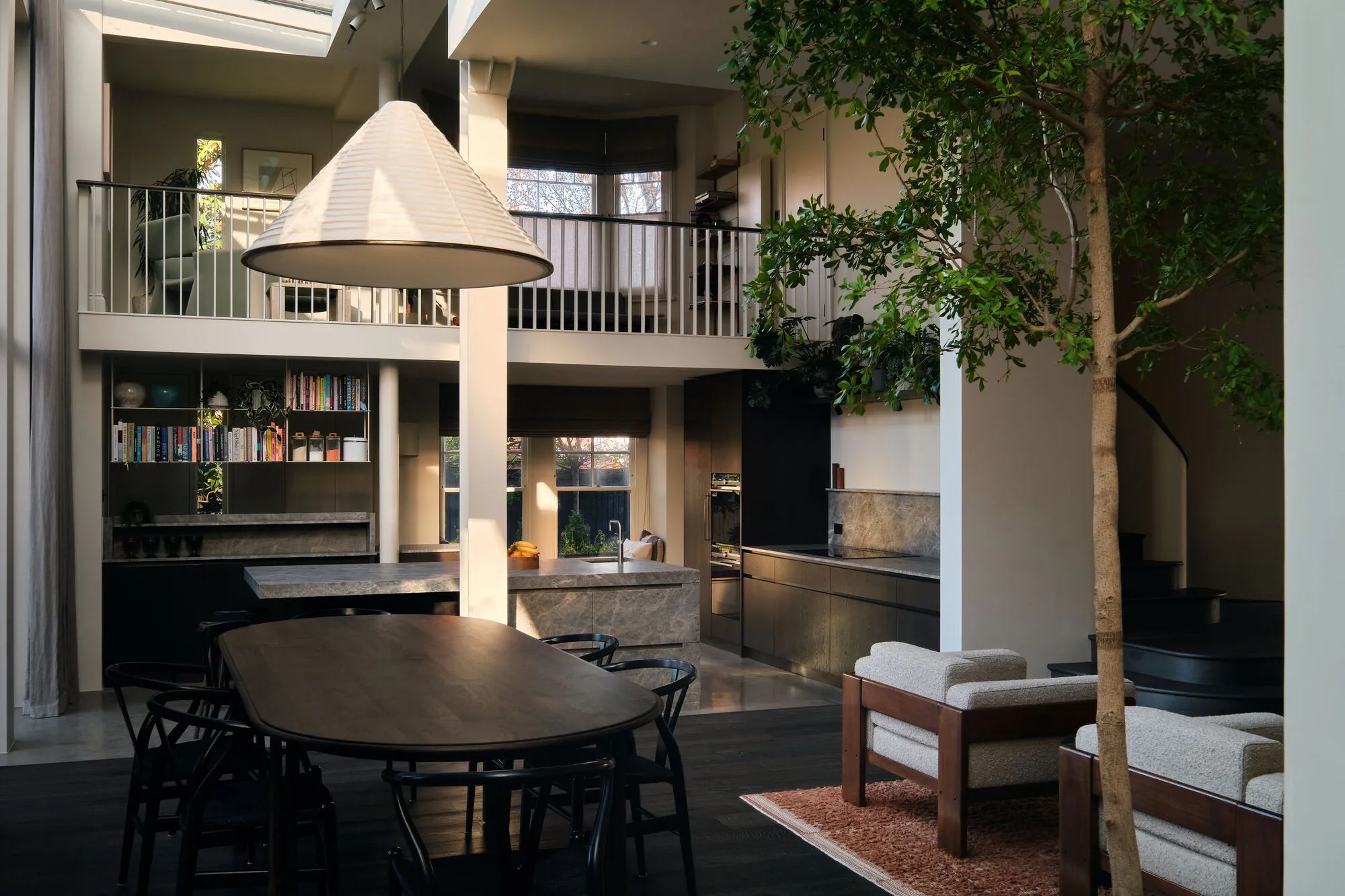
House of Porphyry by Mosley Thorold
A Victorian villa in Highgate transformed through refined circulation, porphyry stone detailing, and bespoke craftsmanship into a calm, light-filled family home.


Located in Highgate, North London, House of Porphyry is a carefully orchestrated residential renovation that transforms a fragmented Victorian villa into a coherent, light-filled, and materially expressive family home. Designed by Mosley Thorold and completed in 2022, the 330-square-metre project reclaims architectural clarity and domestic comfort after decades of ad-hoc alterations had compromised the building’s spatial integrity.
Through strategic reconfiguration, material refinement, and precise craftsmanship, the project restores flow, balance, and permanence, replacing performative excess with quiet, enduring quality.
Reclaiming a Disrupted Victorian House
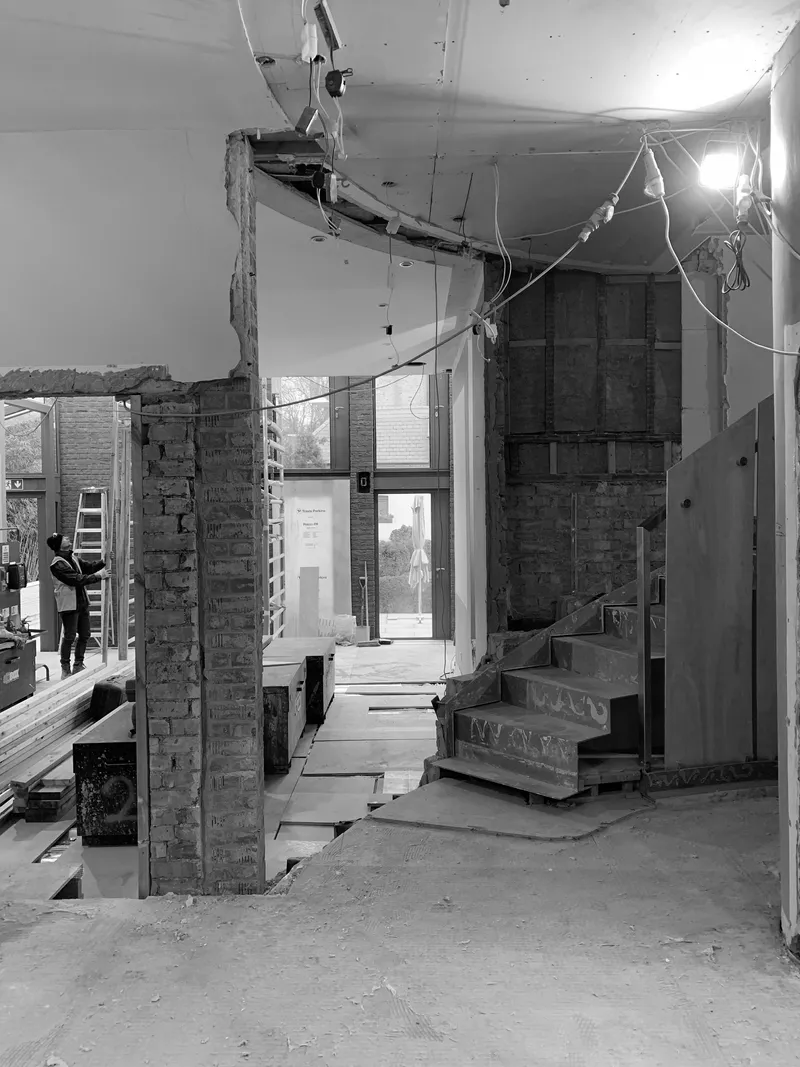
Prior to renovation, the house had been heavily altered in the 1990s, when it was converted into a flamboyant party residence. These interventions introduced awkward circulation routes, including a poorly detailed mezzanine walkway that terminated abruptly and severed visual connections to the rear garden.
A convoluted spiral staircase further disrupted movement and daylight penetration. Together, these elements fragmented the plan and undermined the building’s suitability for family life.
Mosley Thorold approached the refurbishment as an act of architectural repair, stripping away unnecessary accretions while selectively introducing new elements to restore coherence.
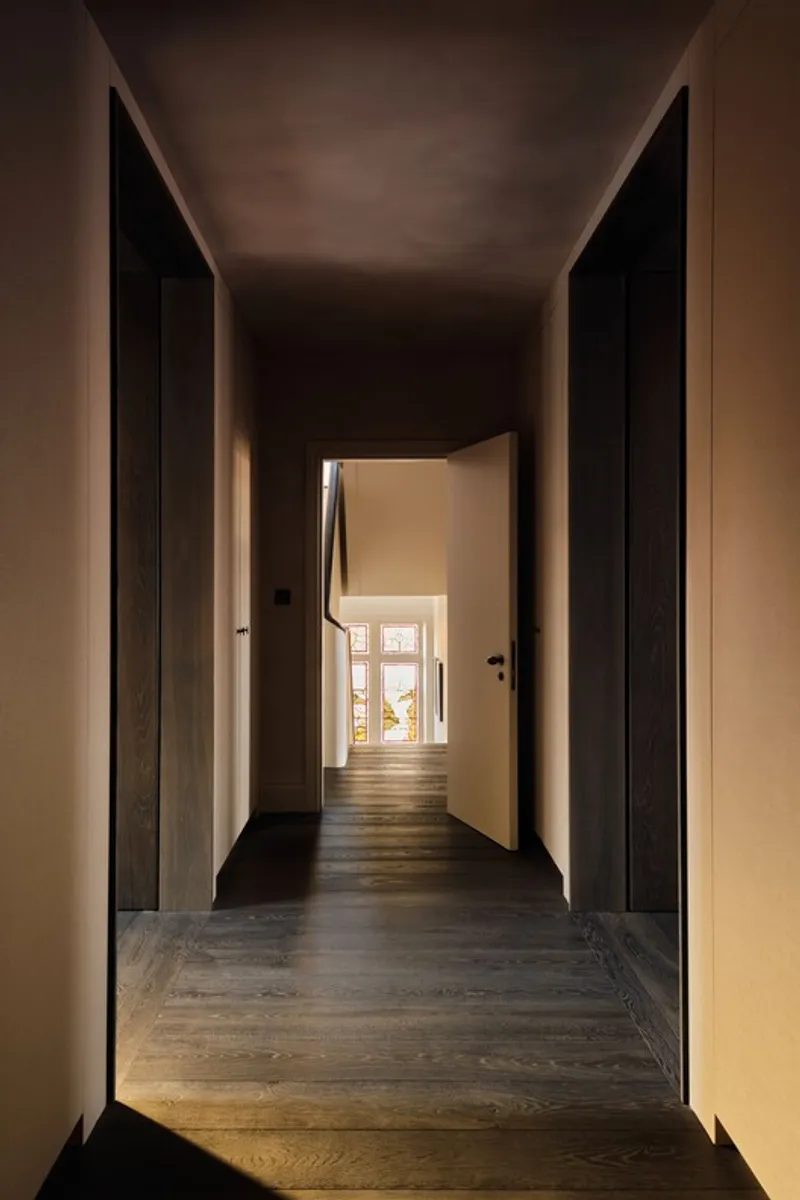
The Staircase as Spatial Anchor
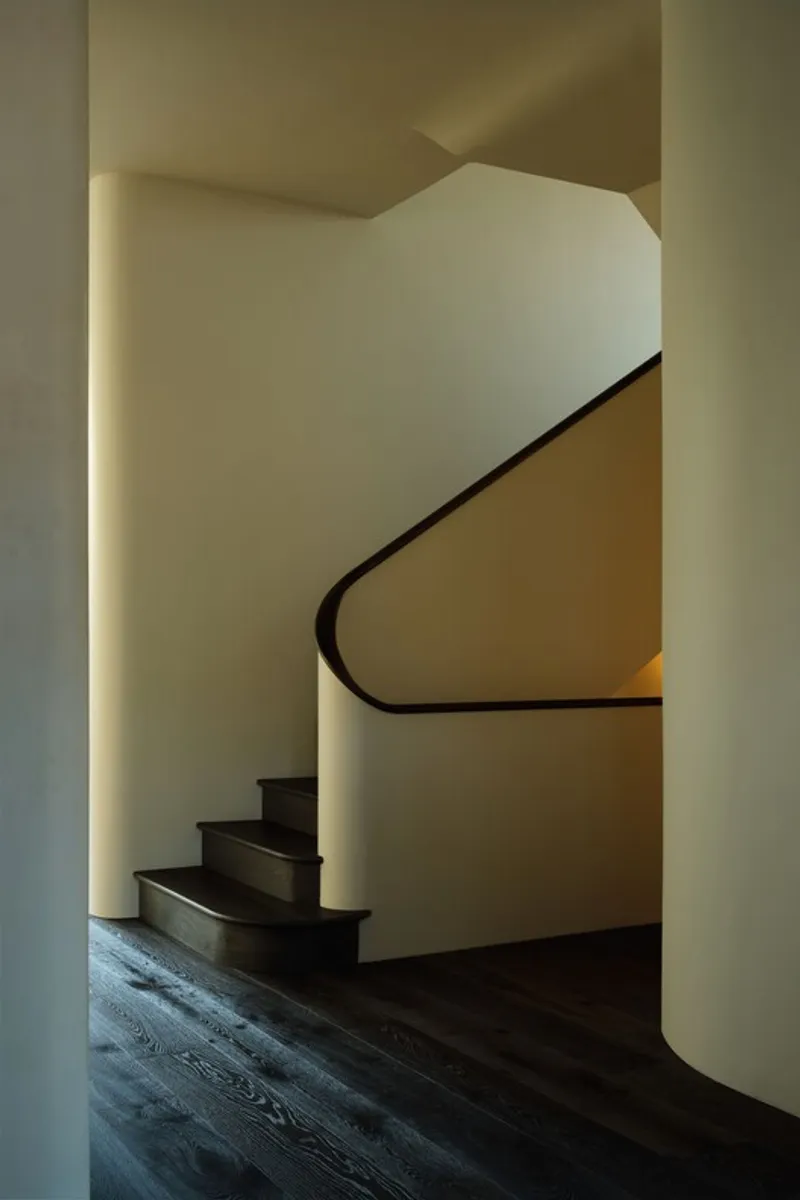
The most decisive intervention was the complete reconfiguration of the central staircase. Replacing the dysfunctional spiral stair, the new stair was reoriented and rebuilt as a sculptural yet functional core.
Positioned to draw daylight deep into the plan, it establishes a clear vertical connection across three levels. From the entrance hall, it now leads intuitively through the house: linking kitchen, dining, living, and private spaces in a legible sequence.
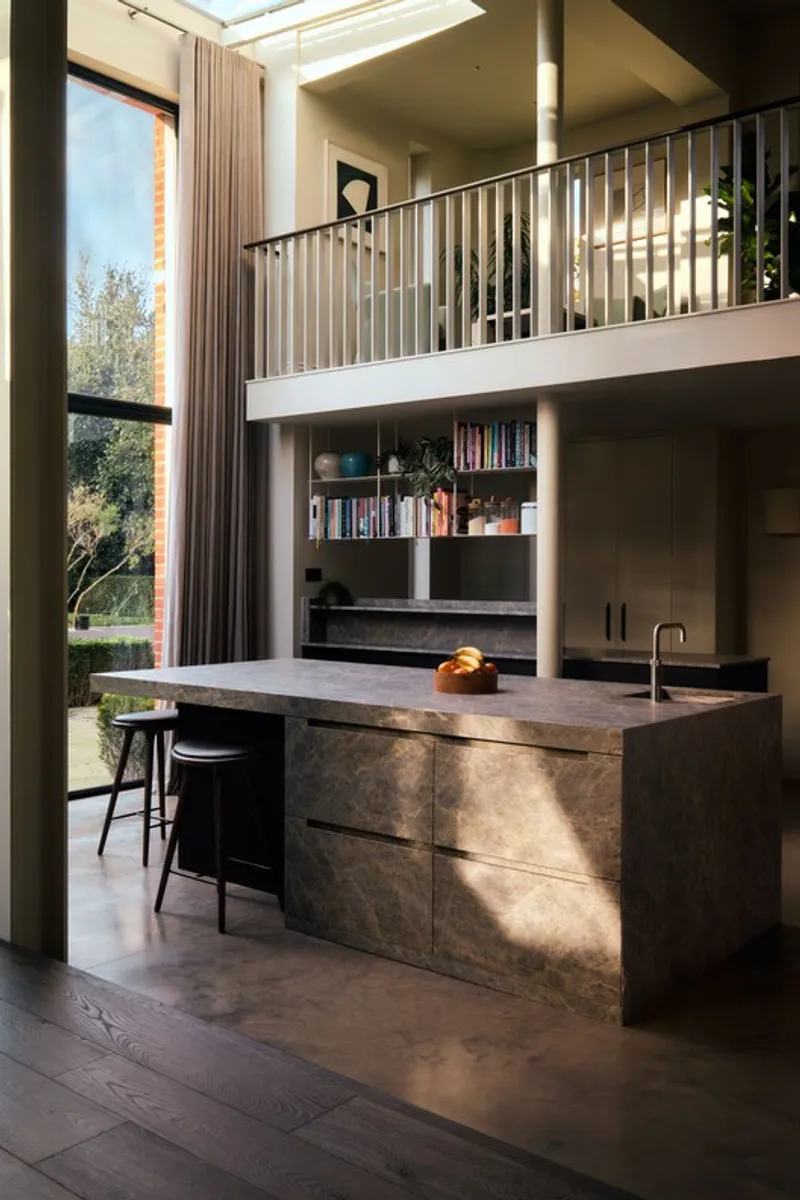
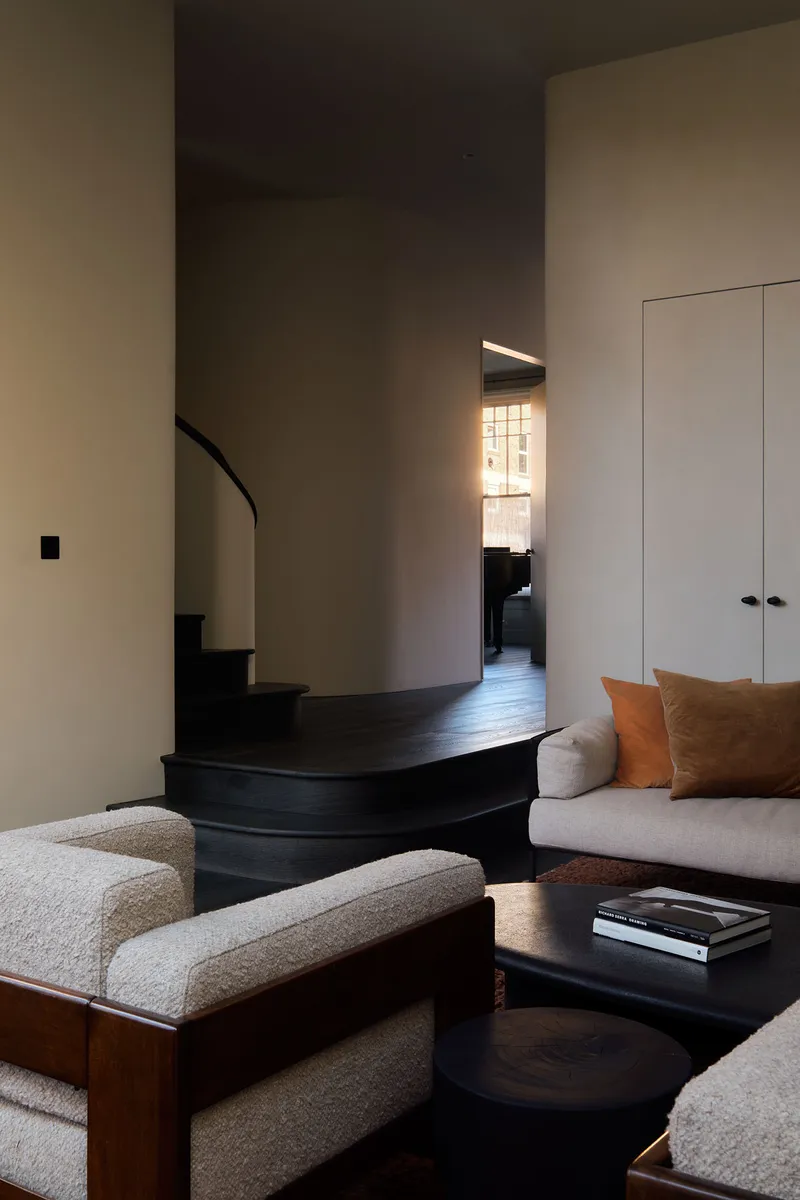
A curved plaster balustrade and solid timber handrail soften the geometry of the stair, balancing monumentality with tactility. This element operates as both circulation device and architectural centerpiece.
Restoring Flow and Visual Continuity
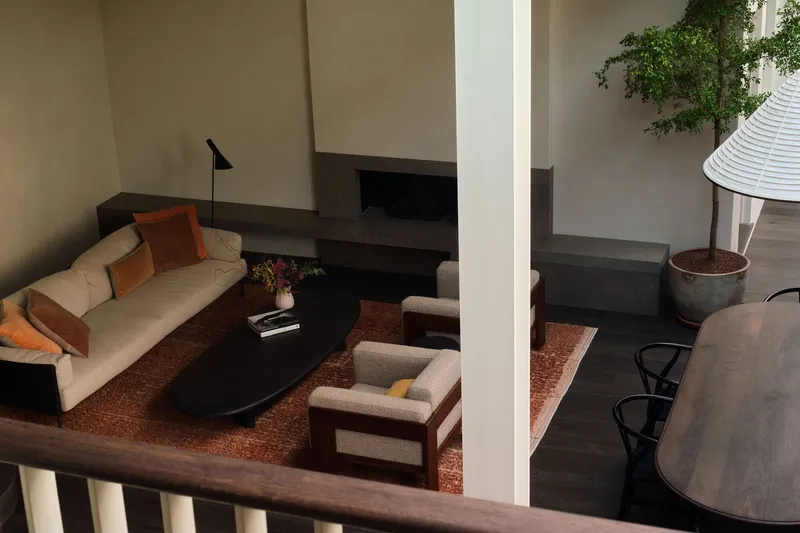
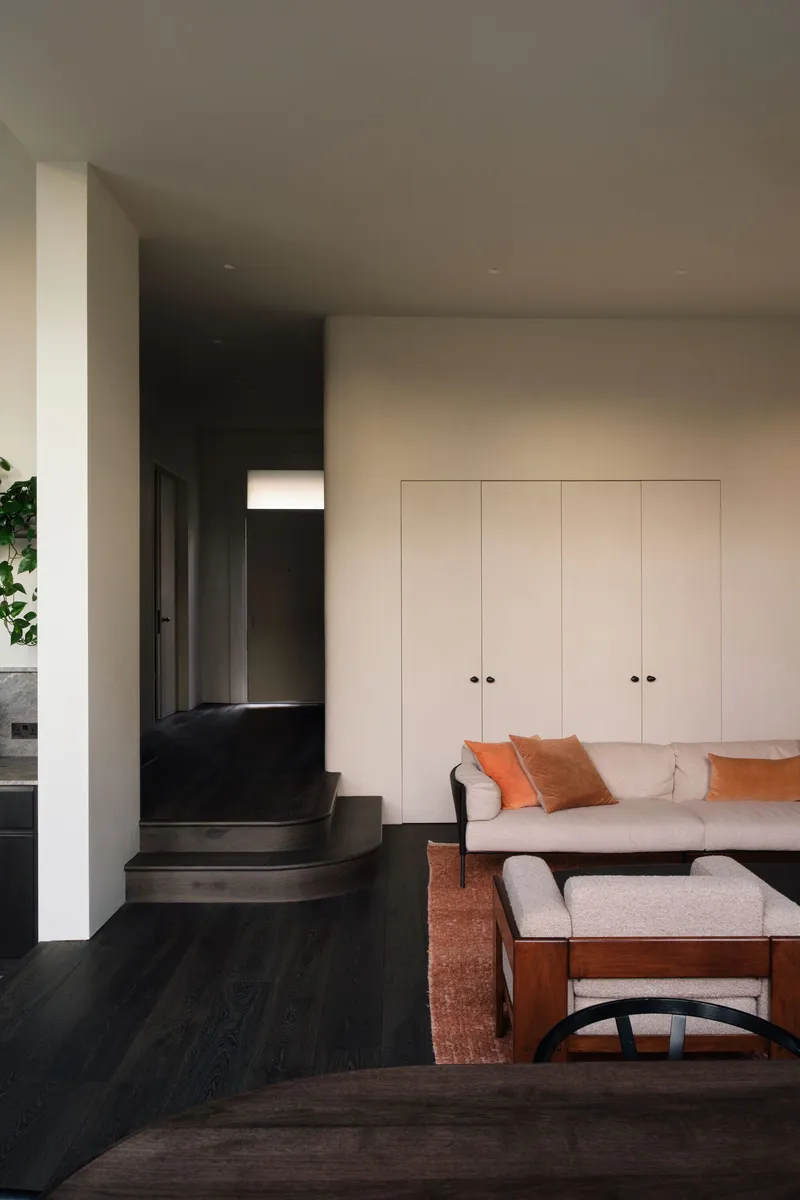
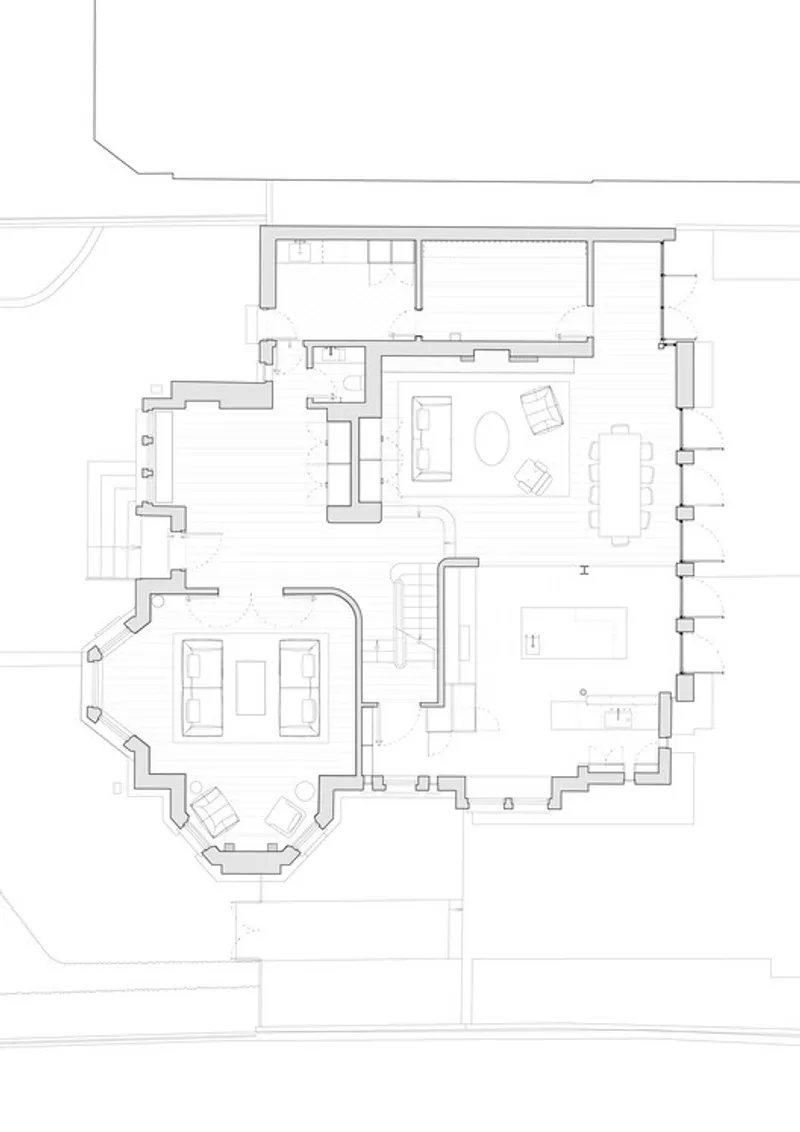
With circulation clarified, the ground floor was reorganized into a series of interconnected spaces. The kitchen and dining area occupy the heart of the house, forming a social nucleus around which daily life revolves.
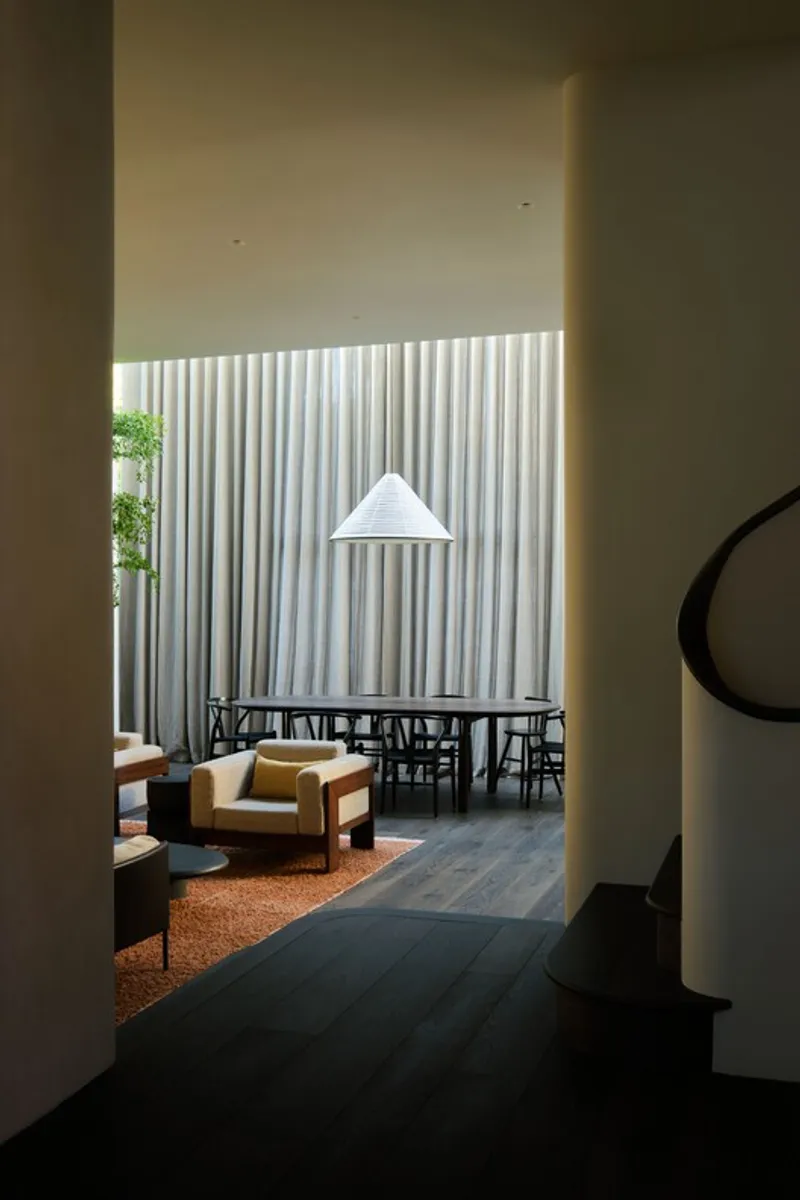
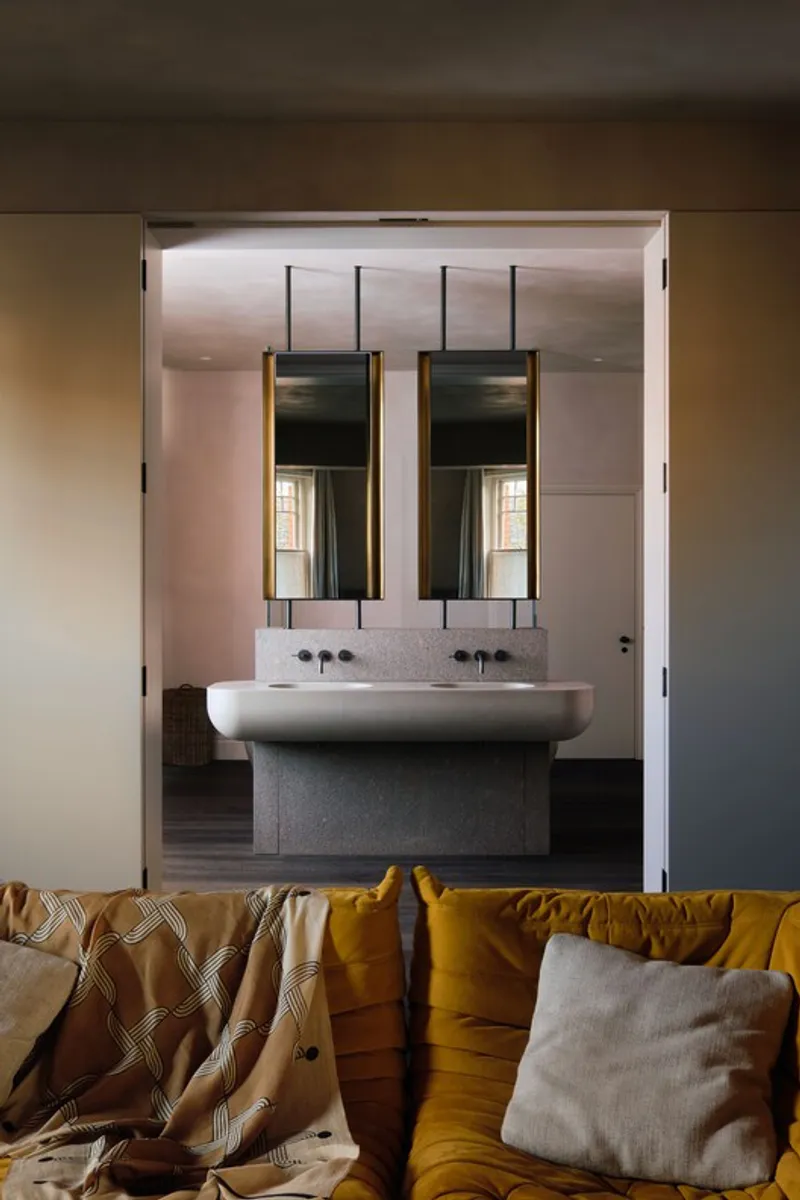
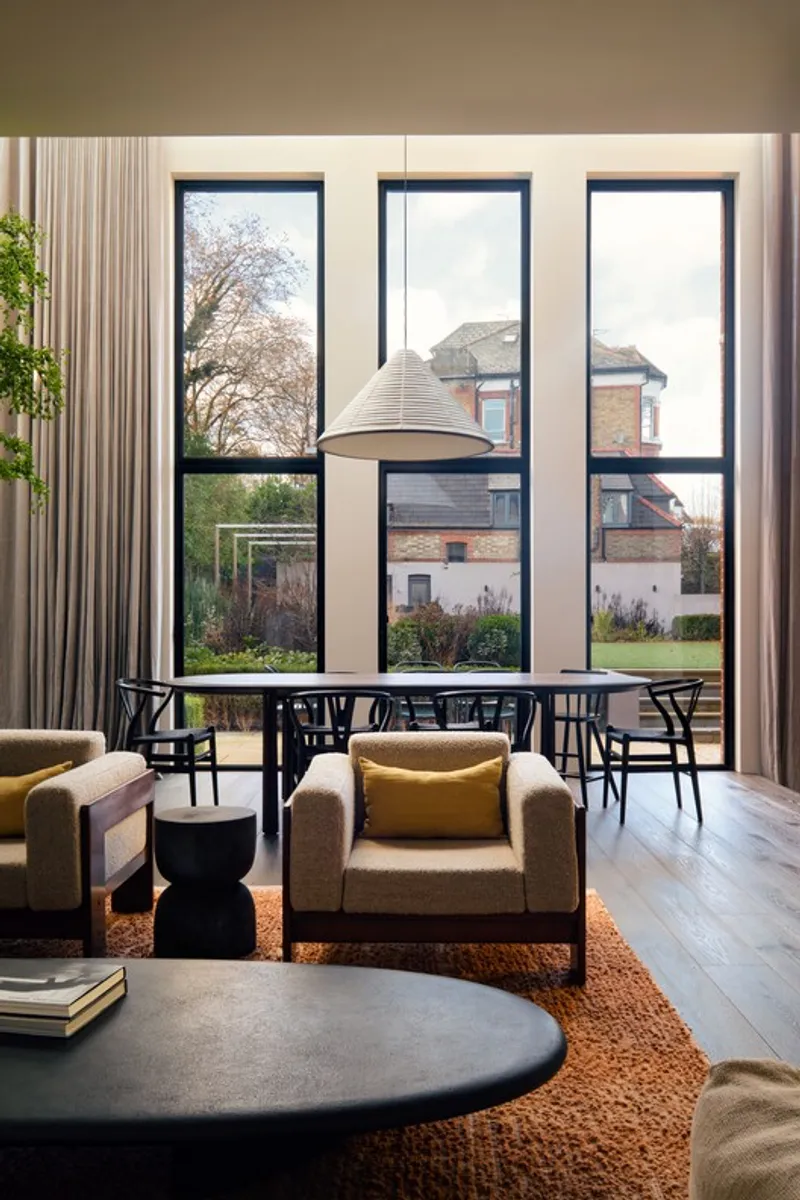
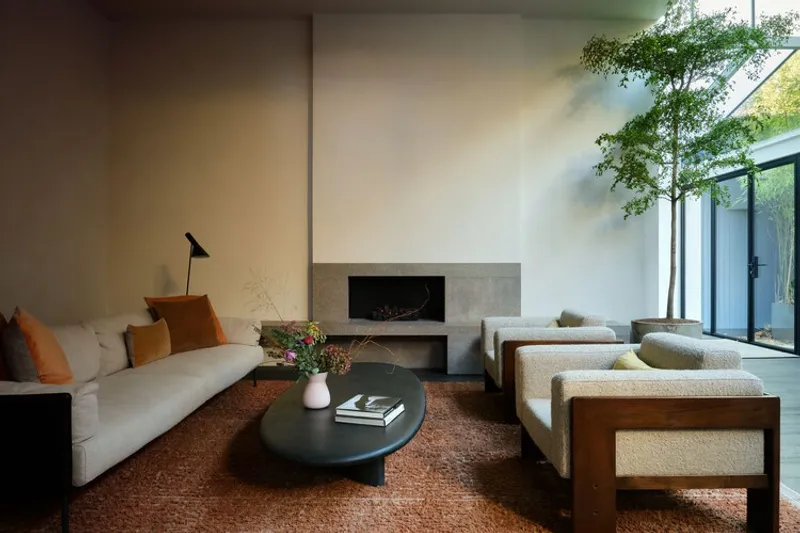
Once isolated by walls and awkward stair insertions, this space has been opened to allow fluid movement and generous daylight. From here, the living room extends toward the garden, reinforcing indoor-outdoor continuity.
The plan now unfolds intuitively, supporting both family interaction and private retreat without rigid zoning.
Reconfiguring Private Spaces
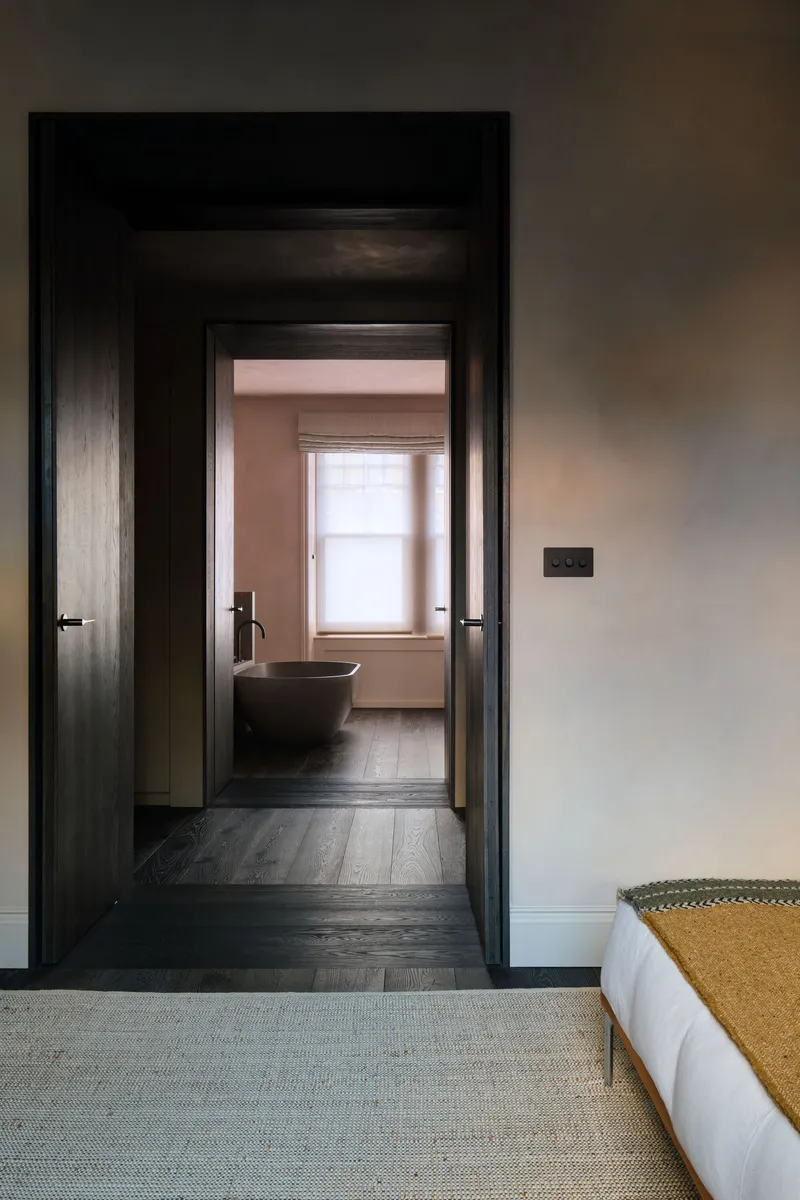
On the upper levels, bedrooms and ancillary spaces were redistributed to improve privacy and functionality. The master suite was reorganized to include a study, dressing room, and bathroom, while the bedroom was relocated to a quieter rear-facing position.
These adjustments created a renewed spatial rhythm, aligning domestic routines with natural light, views, and acoustic comfort. The house now accommodates work, rest, and leisure with equal clarity.
Porphyry as Material Foundation
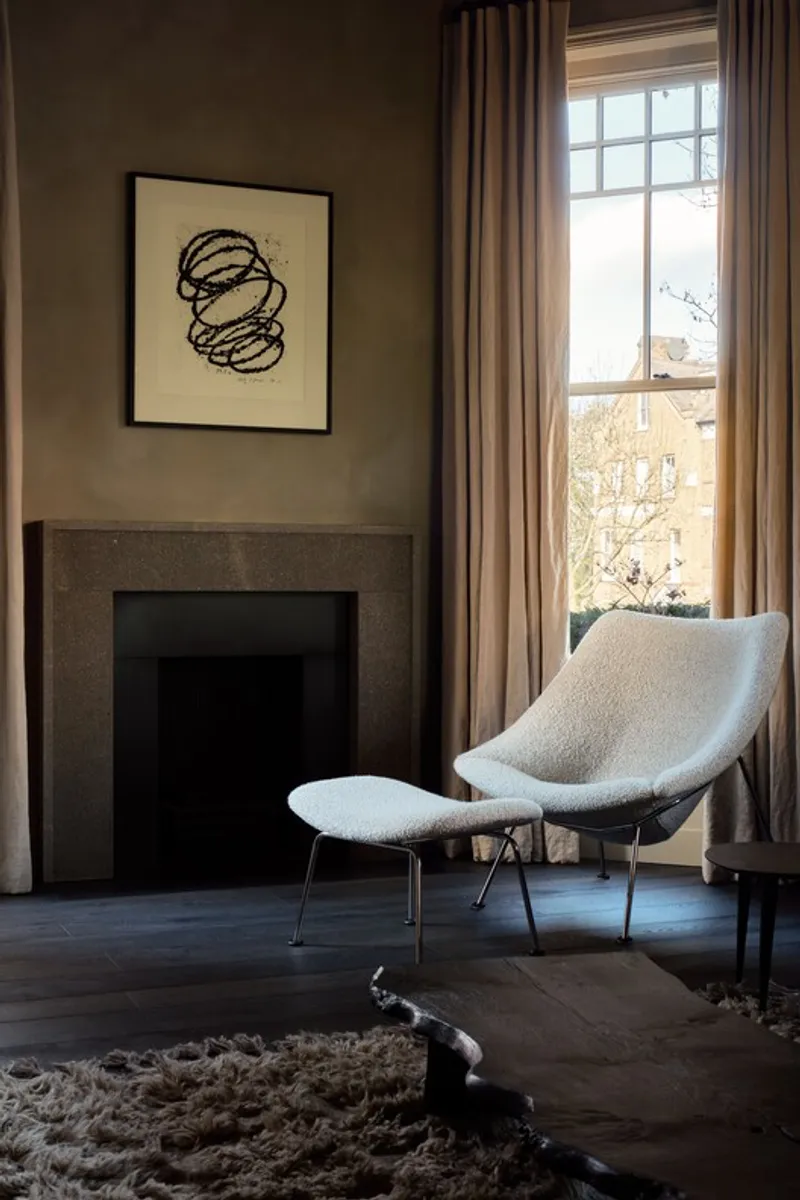
Materiality is central to the project’s identity. The name House of Porphyry refers to the recurring use of porphyry stone, a dense, richly textured material historically associated with permanence and craftsmanship.
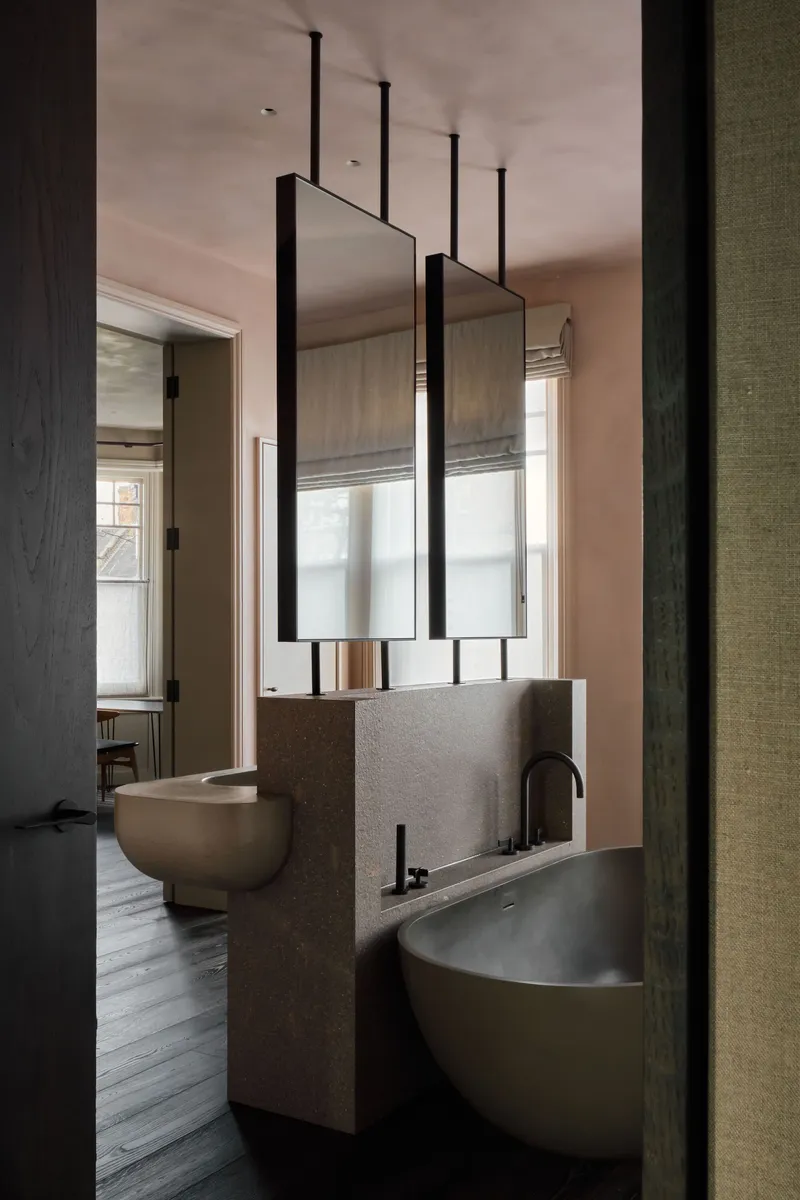
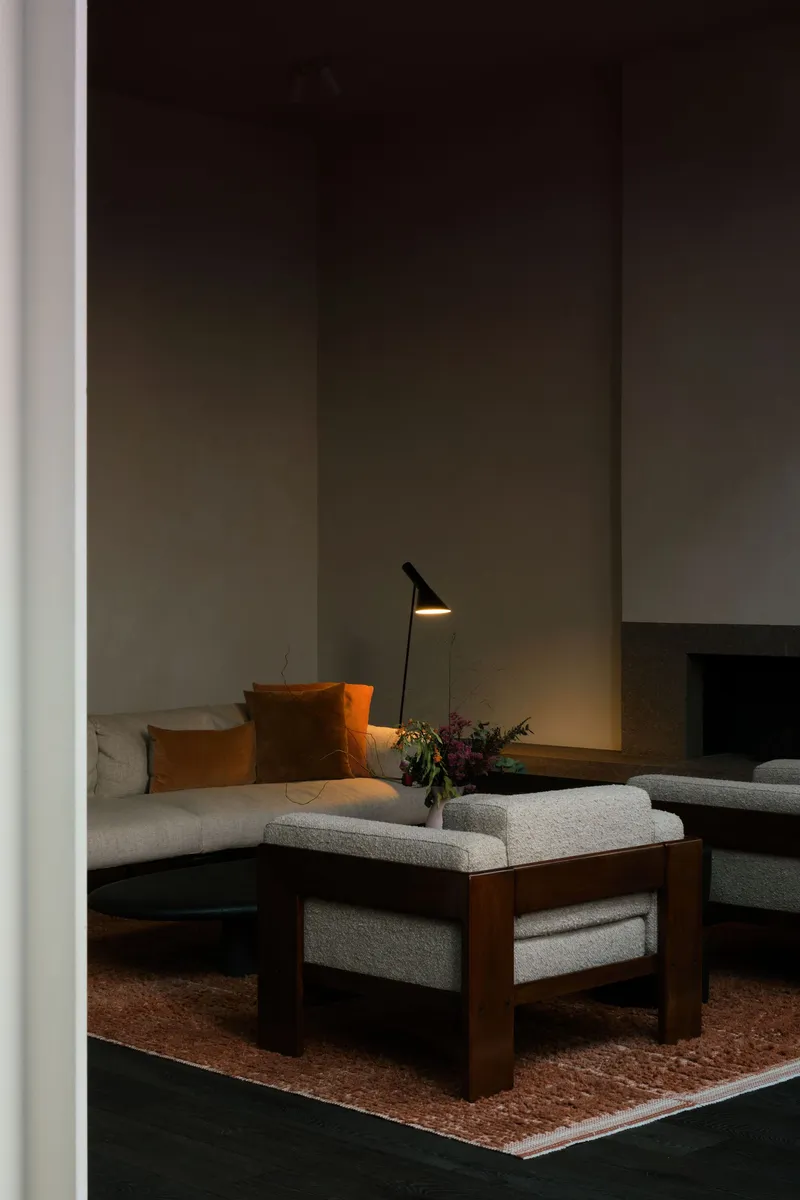
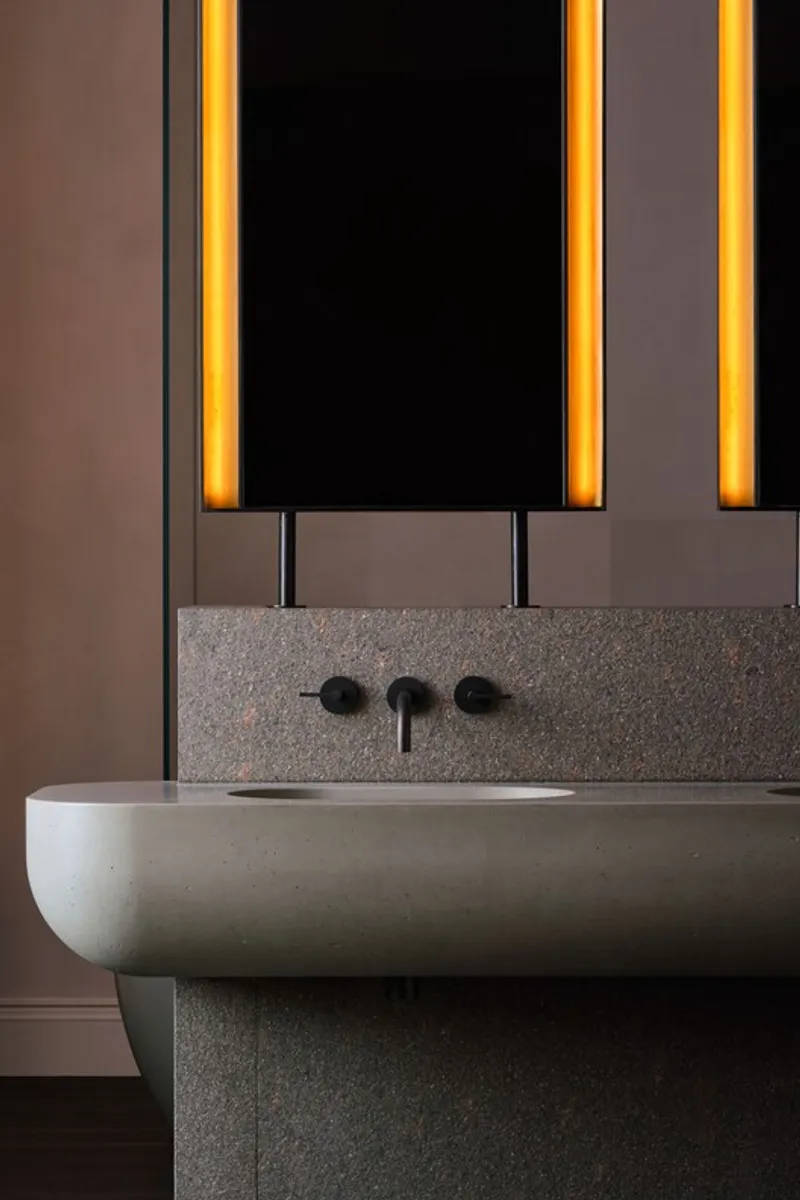
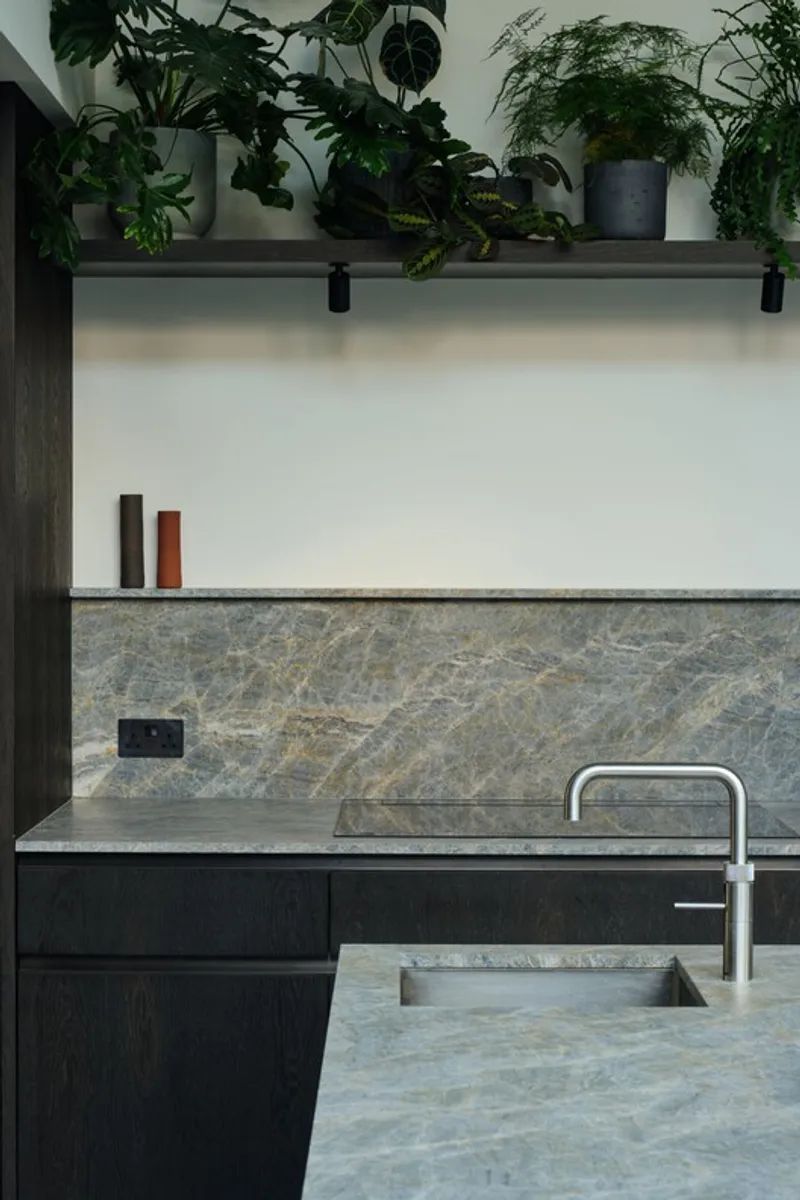
Porphyry is employed with restraint and precision, appearing in two fireplaces and as a dramatic feature wall in the bathroom. Here, stone blocks are paired with a cast-concrete basin and bespoke brass mirrors, forming a composition of weight, tactility, and refinement.
These elements anchor the interiors, providing visual gravity and long-term durability.
A Cohesive Material Language
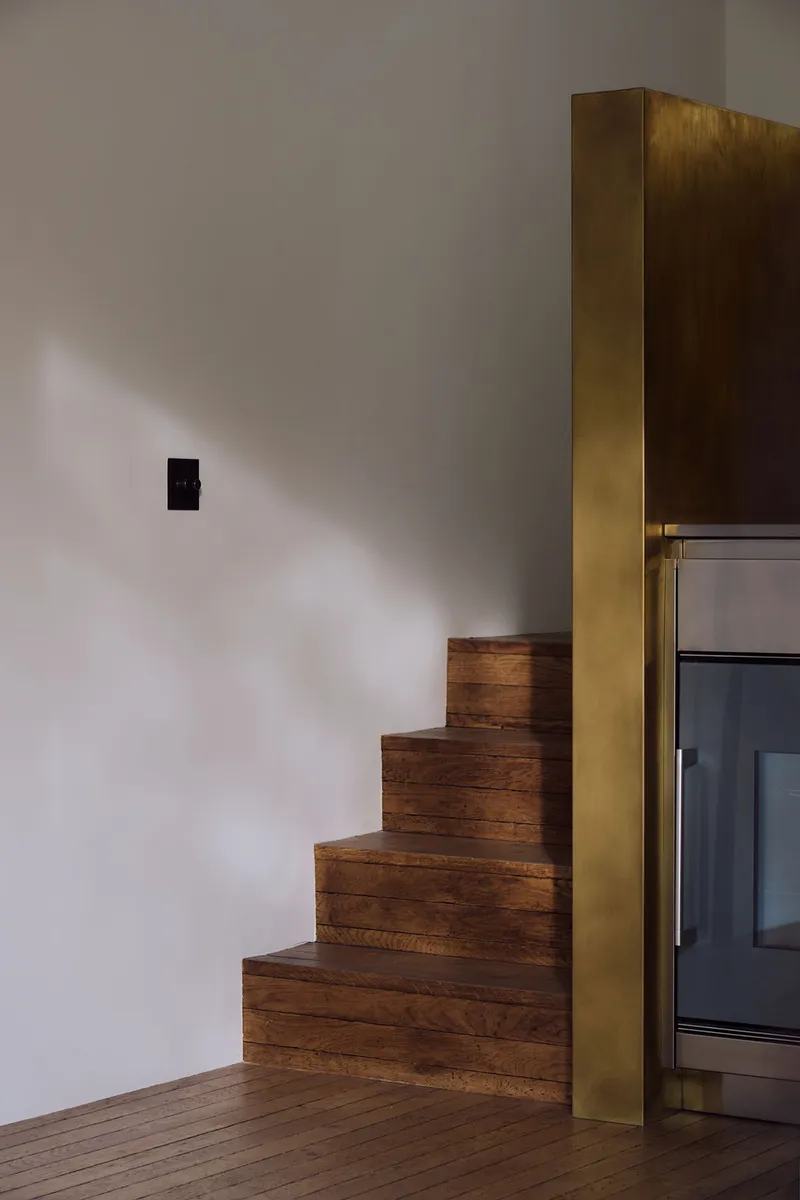
Around this stone foundation, Mosley Thorold developed a coherent palette of natural and patinated materials. Dark oak floorboards, oak doors, and bespoke joinery establish continuity across levels and rooms.
Patinated bronze ironmongery introduces subtle tactile richness and is designed to age gracefully with use. Rather than concealing wear, the materials are chosen to record time and occupation.
This layered palette creates interiors that are robust yet sensitive, capable of withstanding family life while rewarding close engagement.
Craft, Detail, and Domestic Comfort
Every element of the renovation reflects careful attention to craft. Joinery is precisely proportioned, transitions are finely resolved, and custom fittings integrate seamlessly with structural components.
Lighting is used to enhance material textures and spatial depth rather than dominate. Warm, indirect illumination complements daylight, supporting varied atmospheres from morning activity to evening calm.
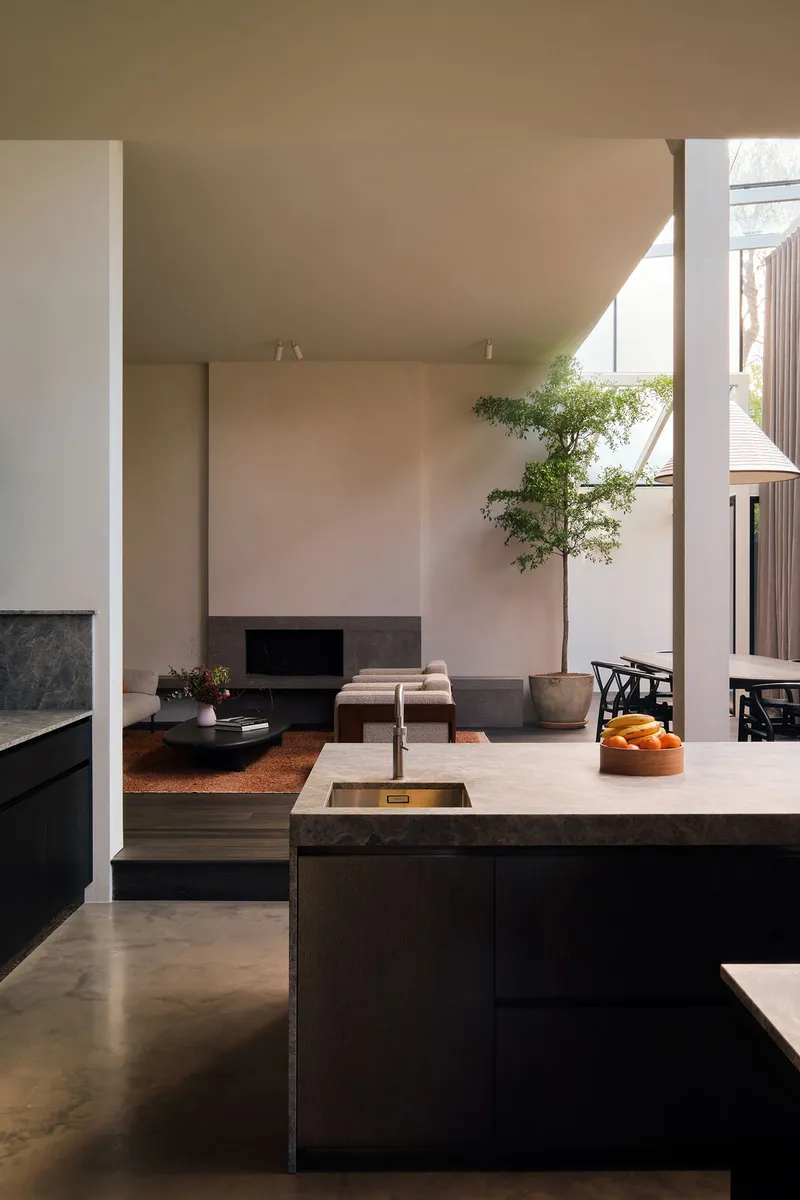
The result is a home that feels considered without feeling precious, designed for everyday use rather than display.
From Spectacle to Substance
One of the project’s central achievements is its shift in values. Where the house once prioritized visual drama and novelty, it now emphasizes usability, clarity, and material depth.
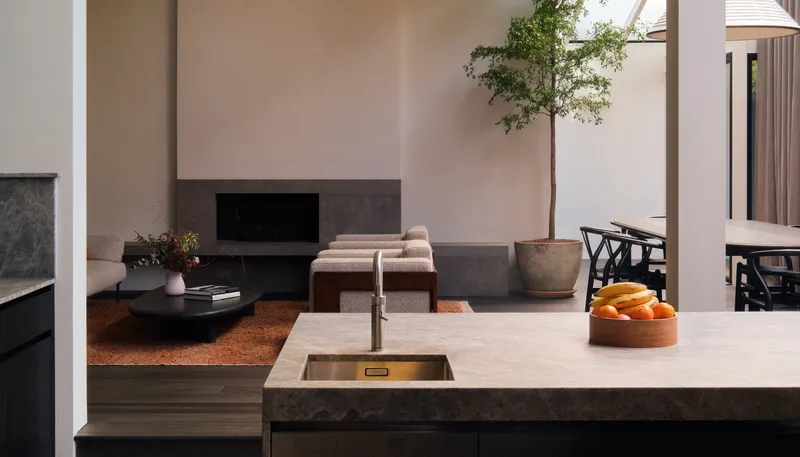
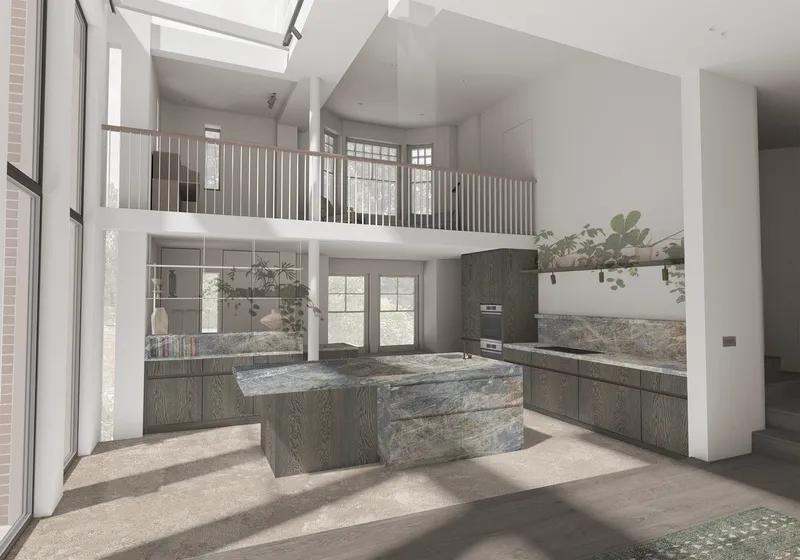
Spaces are neither overly minimalist nor excessively decorative. Instead, they balance openness with intimacy, allowing different modes of occupation to coexist.
This transformation reflects a broader architectural philosophy: that true luxury lies in comfort, coherence, and longevity.
Architecture That Evolves With Life
Mosley Thorold conceived House of Porphyry as a living framework rather than a finished object. Materials are meant to patinate, spaces to adapt, and routines to reshape the house over time.
By restoring the building’s original spirit while introducing contemporary performance and comfort, the project ensures relevance across generations.
The house is designed not only to be admired but to be inhabited fully.

All the Photographs are works of Ollie Tomlinson



Popular Articles
Popular articles from the community


Conexión: Biophilic Design Reimagines High-Rise Living in Hong Kong
Conexión reimagines high-rise living in Hong Kong through biophilic design, green facades, shared spaces, daylight, water and nature within.

The Earth Pod: 3D Printed Homes for Resilient Refugee Communities
The Earth Pod reimagines refugee housing through 3D printed homes made from clay, combining resilience, self-sufficiency, and rapid shelter.

Play: Fragments of Their World
Familiar architecture becomes modular playground design, creating safe spaces where displaced children can learn, connect, imagine and play.

Hill & Cross Opera: Sculptural Opera House Architecture Shaped by Tallinn’s Landscape and Identity
Hill & Cross Opera reimagines opera house architecture in Tallinn through its sculptural hill, civic plaza, glass wave and a luminous cross.


Similar Reads
You might also enjoy these articles


Hodi-Mandai Geram
Project Function: Preservation and revitalization of the Intangible heritage and socio-spatial identity of the Hodi by Housing, Cultural Memory Center, Sacred Grove, landscape, local tourism economy


Olio Towers: A Mid-Rise for Performers That Fuses Housing, Rehearsal, and Stage
Located blocks from Houston's Theater District, this modular tower stacks living units around a central performance atrium.

Oasis: Modular Green Housing Carved into Dhaka's Urban Fabric
A shortlisted Plugin Housing entry reclaims unauthorized settlements in Dhaka with stepped concrete volumes, green roofs, and ventilation-driven design.

Black Hole: A Floating Megastructure for the Post-Physical Era
Emiliano Mazzarotto envisions a spherical, self-scaling arena where e-sports, digital hotels, and holographic stadiums replace traditional public space.
Explore Architecture Competitions
Discover active competitions in this discipline



Challenge to reimagine the Iron Throne


Photograph architecture without architects


Illustrate the lost glory of Angkor Wat - Render Challenge


Design challenge to reuse E-waste
Comments (0)
Please login or sign up to add comments
No comments yet. Be the first to comment!