

House Sunnehaldenstrasse by DHPA: A Harmonious Fusion of Mid-Century Character and Contemporary Clarity
DHPA transforms a 1960s pavilion house in Switzerland into a serene blend of Prairie style and Japanese minimalist architecture.


Located in the serene residential landscape of Brütten, Switzerland, House Sunnehaldenstrasse by DHPA reimagines a 1960s single-family home with remarkable sensitivity and precision. Through minimal yet powerful architectural interventions, the renovation unlocks the full potential of this pavilion-like dwelling, transforming it into a tranquil and refined space that harmonizes Prairie-style principles with the poetic restraint of a Japanese pavilion.

Architectural Concept: Redefining a 1960s Pavilion
Originally designed as a U-shaped residence, the house embraced a strong connection to its garden but lacked a sense of spatial continuity. The architects from DHPA reinterpreted this modernist layout, extending the living area to form a continuous plan that embraces an inner courtyard. At its heart lies a contemplative gravel garden with a pine tree, reflecting the timeless balance between nature and architecture.
This gesture transforms the fragmented mid-century structure into a cohesive and fluid living environment—an architectural promenade where transparency, materiality, and spatial rhythm define the experience.

Material Expression and Structural Language
Central to the renovation is the exposed timber structure, which organizes the open plan while articulating the dialogue between interior and exterior. Generous floor-to-ceiling glazing dissolves boundaries, allowing natural light to animate every surface throughout the day.
The material palette is both restrained and tactile. The original red-brick masonry, carefully preserved, anchors the home within its era and grounds it in material authenticity. New layers of polished concrete floors, larch wood finishes, glass mosaics, and finely plastered walls establish a sense of serene continuity. Each surface is chosen not only for its aesthetic qualities but also for its ability to connect old and new—craftsmanship and modernity—into a unified architectural language.


Interior Ambience: Light, Warmth, and Clarity
Inside, the spatial atmosphere feels both intimate and expansive. The rhythm of the wooden structure defines subtle zones of living, dining, and reflection, while the large glazing frames curated garden views. The interior finishes—warm larch, soft plaster, and cool stone—form a dialogue between tactile comfort and minimalist precision.
In every detail, from the custom joinery by Schreinerei Schneider AG to the elegant fittings by Vola, DHPA’s design underscores the importance of craftsmanship in creating spaces that are as timeless as they are contemporary.

A Contemporary Prairie House
While the architectural language draws inspiration from Frank Lloyd Wright’s Prairie Houses, the project equally embodies the Japanese ethos of spatial harmony and restraint. The open plan, central courtyard, and strong horizontality reflect a sensitivity to both landscape and proportion, resulting in an atmosphere that is calm, luminous, and profoundly connected to nature.


Project Details
- Architects: DHPA
- Location: Brütten, Switzerland
- Area: 419 m²
- Year: 2025
- Photographer: Björn Siegrist
- Manufacturers: Bisazza, Huber Fenster AG, Schreinerei Schneider AG, TopAkustik, Vola
House Sunnehaldenstrasse exemplifies how thoughtful renovation can breathe new life into existing structures while honoring their historical essence. Through refined materials, structural honesty, and contextual sensitivity, DHPA transforms a modest 1960s home into an architectural statement of clarity, warmth, and timeless beauty.


All photographs are works of Björn Siegrist


Popular Articles
Popular articles from the community


Diogo Aguiar Studio Strings Eight Identical Timber Modules Across a Hillside Above Porto
In the Serras do Porto, a prefabricated timber house of identical sloping modules reads as a small mountain range and lets its program grow.

Bokey Grant Wedges a Brick Lookout Tower into a Flame Zone Escarpment in the Southern Highlands
A double brick family home in New South Wales's Southern Highlands, reached by an 18 metre bridge and built to read as both watchtower and bunker.


Ayodele: Earth-Built Housing That Pushes Back Against Accra's Concrete and Asphalt
A modular earth-built housing block for central Accra stacks family units around shared courtyards, craft studios and planted roofs.

The Student Center As A Modular Space: A Timber Grid That Behaves Like a Street in Amsterdam
Shortlisted at Overseas Oasis 2020, a stacked wooden frame holds cafés, shops, studios and terraces in parts that can serve shifting demands.

Similar Reads
You might also enjoy these articles

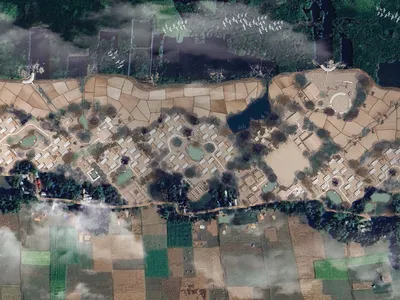
Hodi-Mandai Geram
Project Function: Preservation and revitalization of the Intangible heritage and socio-spatial identity of the Hodi by Housing, Cultural Memory Center, Sacred Grove, landscape, local tourism economy

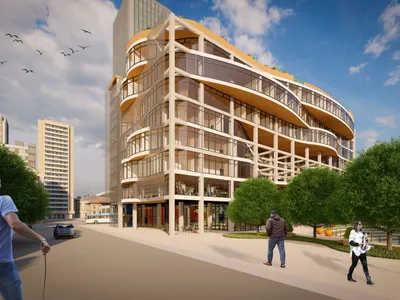
Olio Towers: A Mid-Rise for Performers That Fuses Housing, Rehearsal, and Stage
Located blocks from Houston's Theater District, this modular tower stacks living units around a central performance atrium.
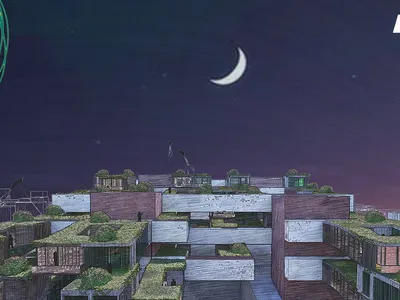
Oasis: Modular Green Housing Carved into Dhaka's Urban Fabric
A shortlisted Plugin Housing entry reclaims unauthorized settlements in Dhaka with stepped concrete volumes, green roofs, and ventilation-driven design.

Black Hole: A Floating Megastructure for the Post-Physical Era
Emiliano Mazzarotto envisions a spherical, self-scaling arena where e-sports, digital hotels, and holographic stadiums replace traditional public space.

Explore Architecture Competitions
Discover active competitions in this discipline

The International Standard for Design Portfolios

The Global Benchmark for Architecture Dissertation Awards

The Global Benchmark for Graduation Excellence

Challenge to design mud housing for contemporary communities
Comments (0)
Please login or sign up to add comments
No comments yet. Be the first to comment!