
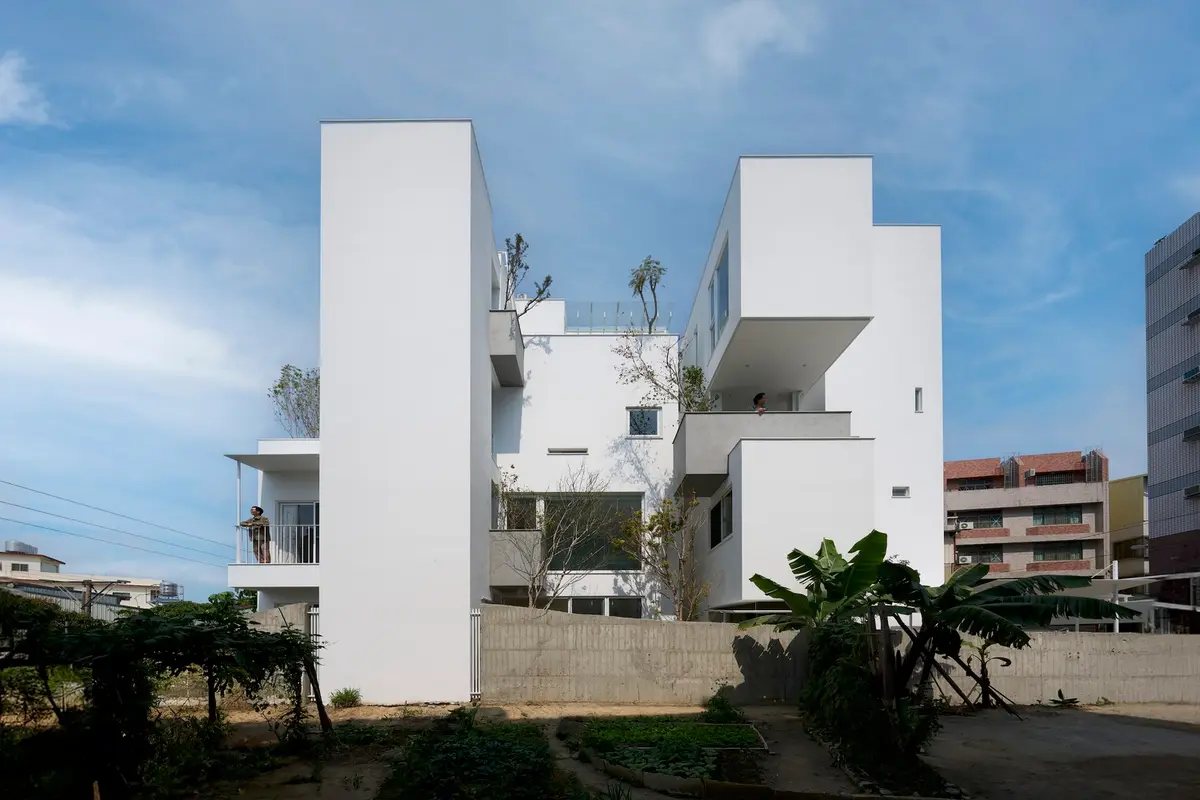
House Valley by Soar Design Studio + Ray Architects: Deconstructed Living in Harmony with Nature
House Valley in Taiwan deconstructs traditional homes into staggered volumes, merging courtyards and valleys, creating climate-responsive, nature-integrated, multi-level residential spaces.


House Valley, designed collaboratively by Soar Design Studio and Ray Architects, is a transformative residential project that reimagines conventional standalone housing in Taiwan. Situated on a long, narrow site, the home faces the challenge of limited exposure to the surrounding environment, with windows only at the front and rear and neighboring buildings closely attached. By employing deconstructive architectural techniques, the design turns these limitations into an opportunity, creating a residence that deeply integrates with nature while optimizing comfort against cold, humid northeast winds.
Staggered Volumes Inspired by Valleys and Courtyards
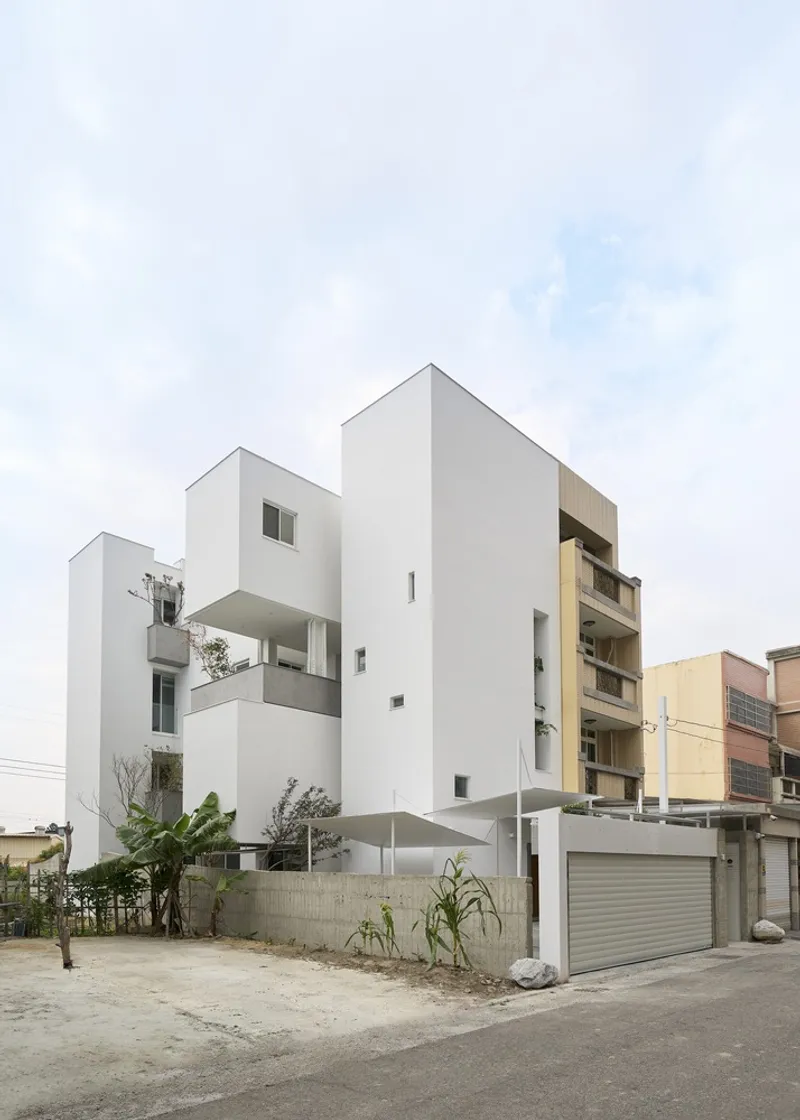
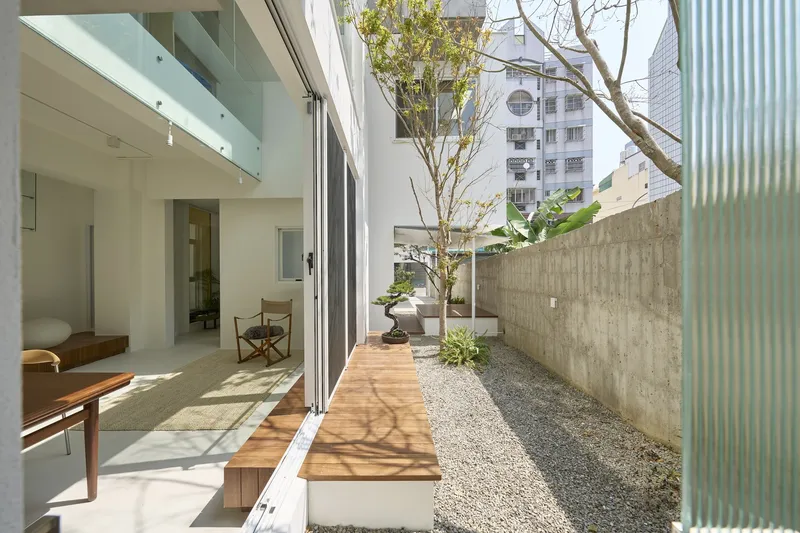
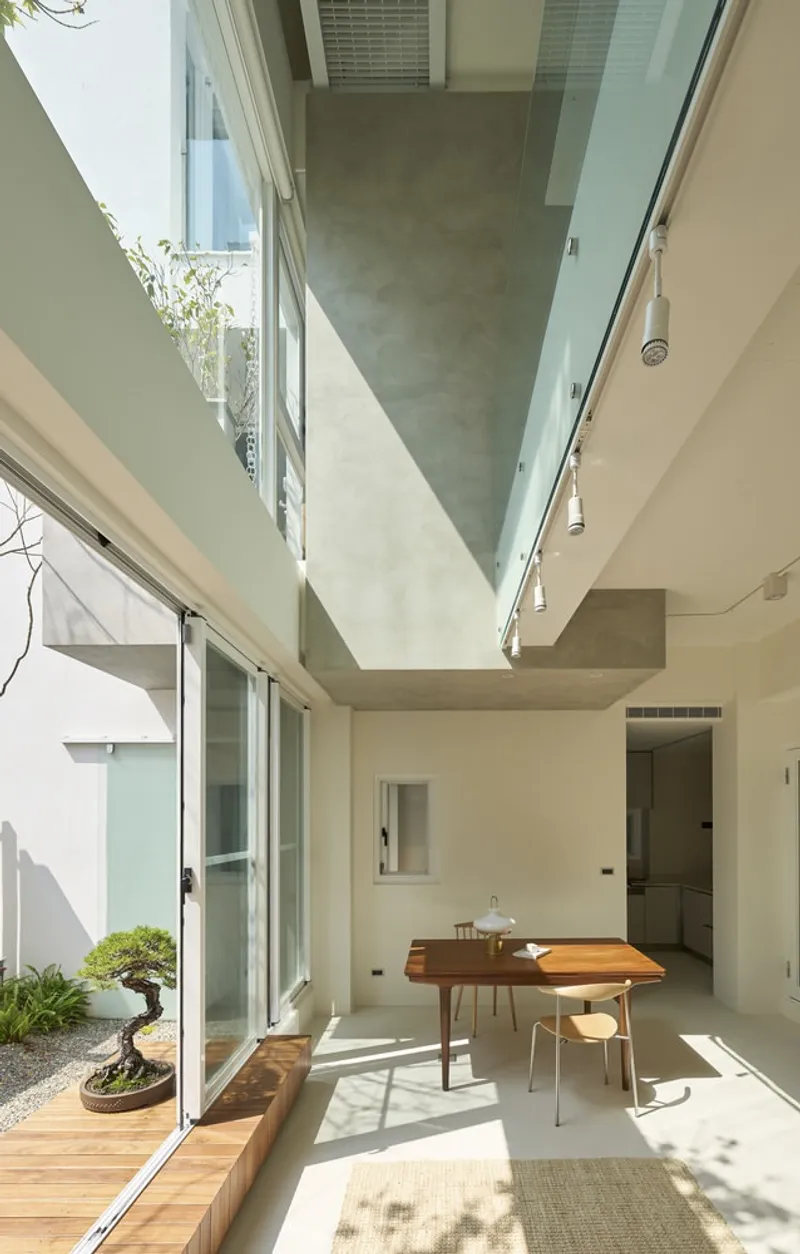
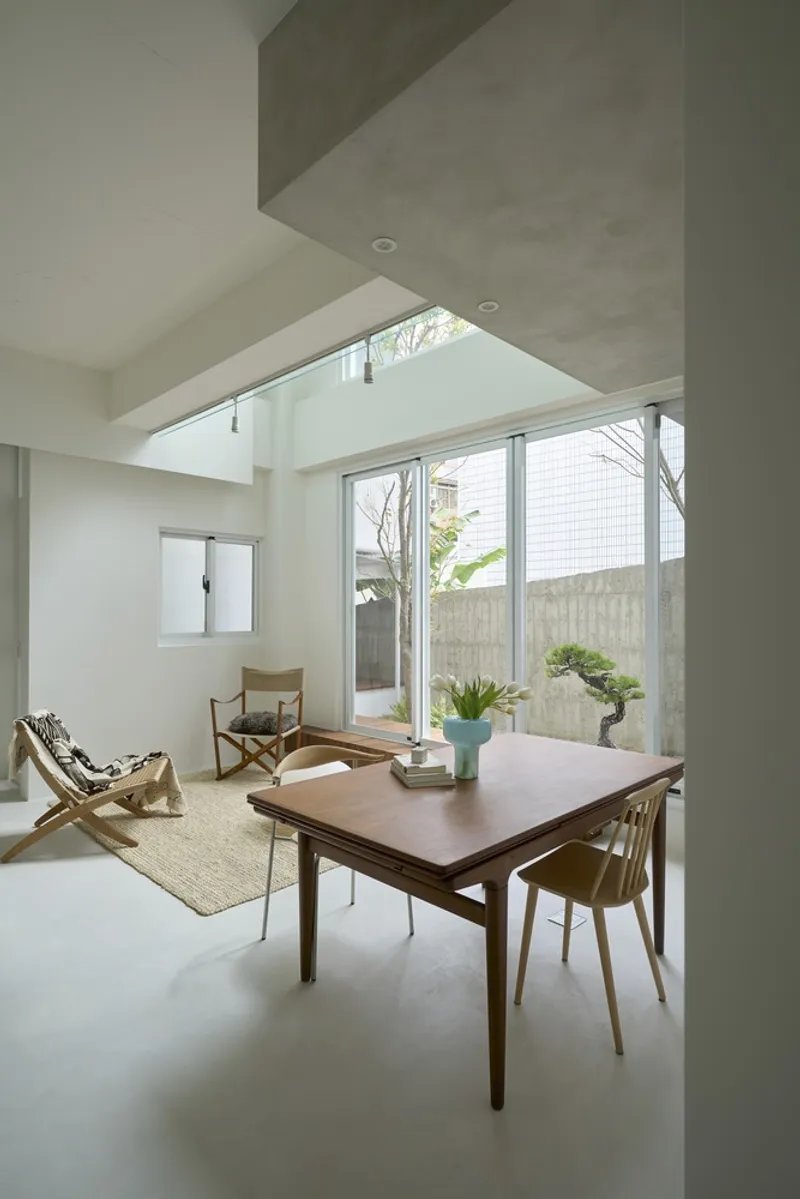
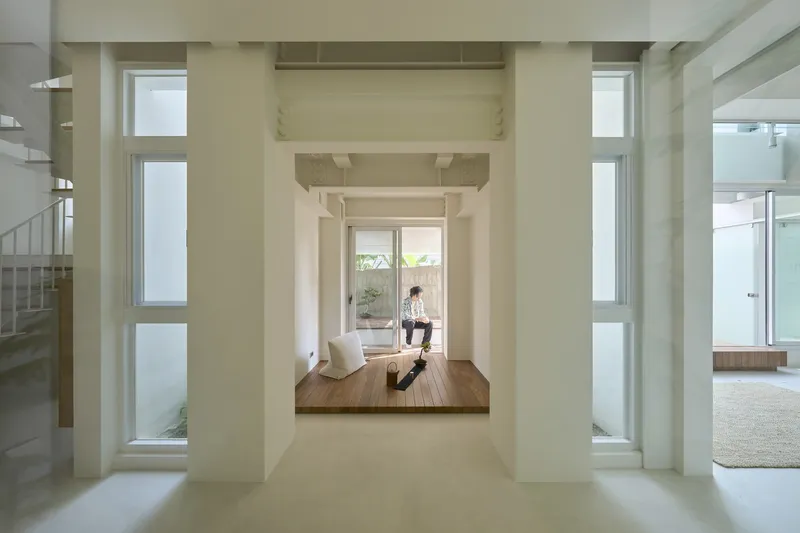
The home deconstructs the traditional linear layout into five staggered volumes with deliberate gaps between them. Horizontal and vertical planes form multi-level floors, allowing natural light, wind, and vegetation to permeate the living spaces. This concept merges the imagery of valleys with the traditional Taiwanese courtyard, crafting a dynamic architecture that adapts to sun, wind, and natural elements.
Key Design Features:
- Deconstructive Techniques: Break the conventional home layout to enhance natural microclimates and indoor-outdoor connectivity.
- Valley-Courtyard Fusion: Blends Eastern landscape concepts with functional courtyard spaces.
- Immersive Natural Experience: Spaces allow residents to experience sunlight, wind, and greenery even while indoors.
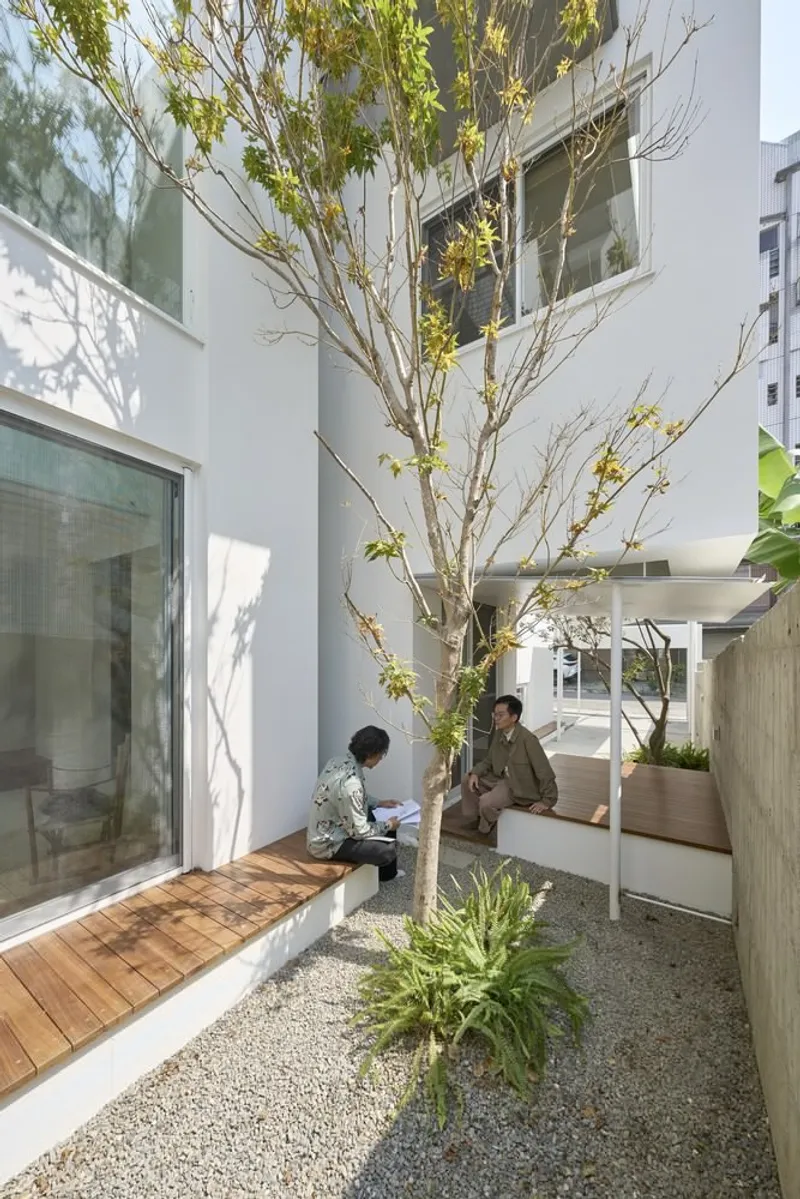
Climate-Responsive Residential Design
House Valley responds to both environmental and site-specific challenges. By repositioning living spaces, inserting gaps, and varying building heights, the architects mitigated the cold northeast wind and enhanced ventilation. The first building faces the wind, while living spaces are strategically pushed backward. Reduced heights on the southwest side capture warmer winds, while narrowed wind passages accelerate airflow through the courtyards and between buildings. The result is a comfortable indoor microclimate that allows residents to fully experience the surrounding nature.
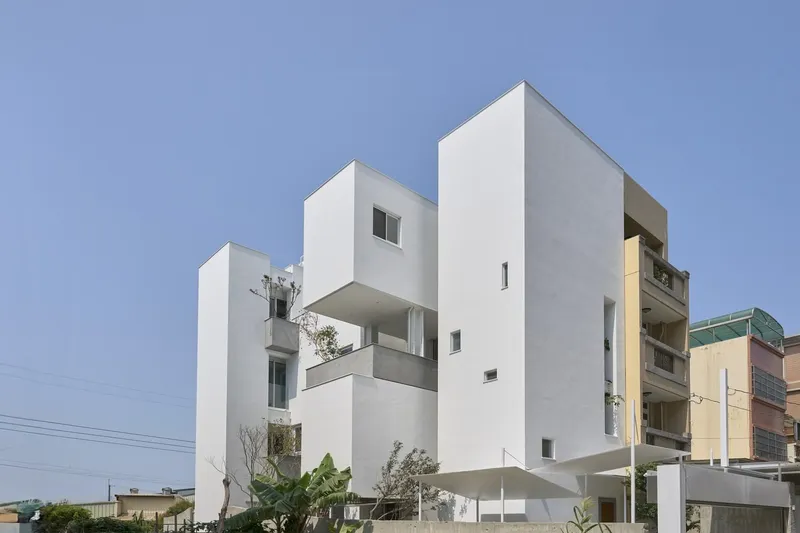
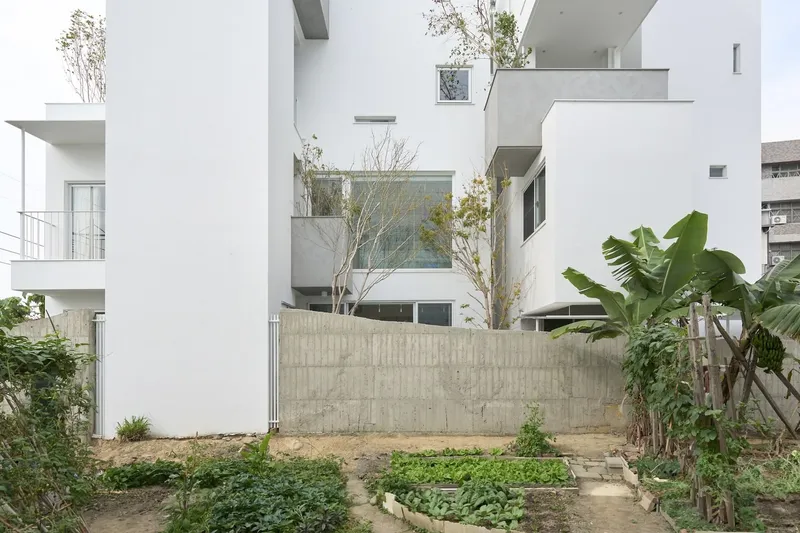
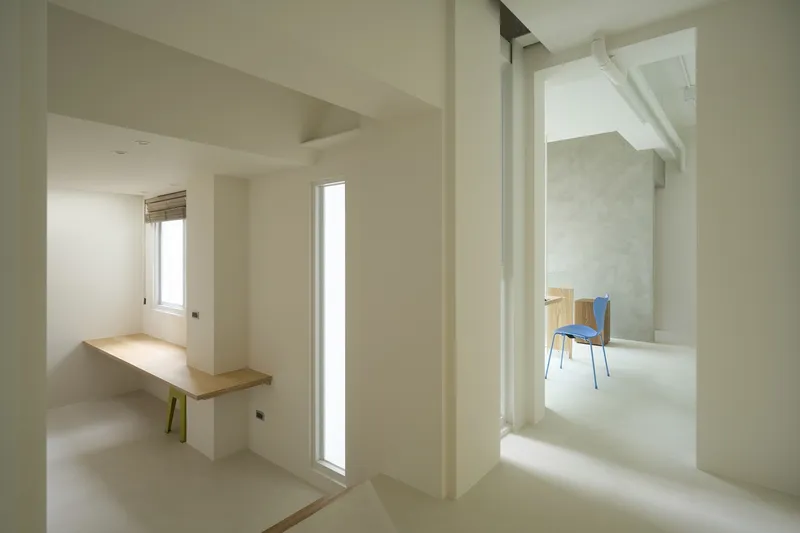
A Multi-Dimensional Connection with Nature
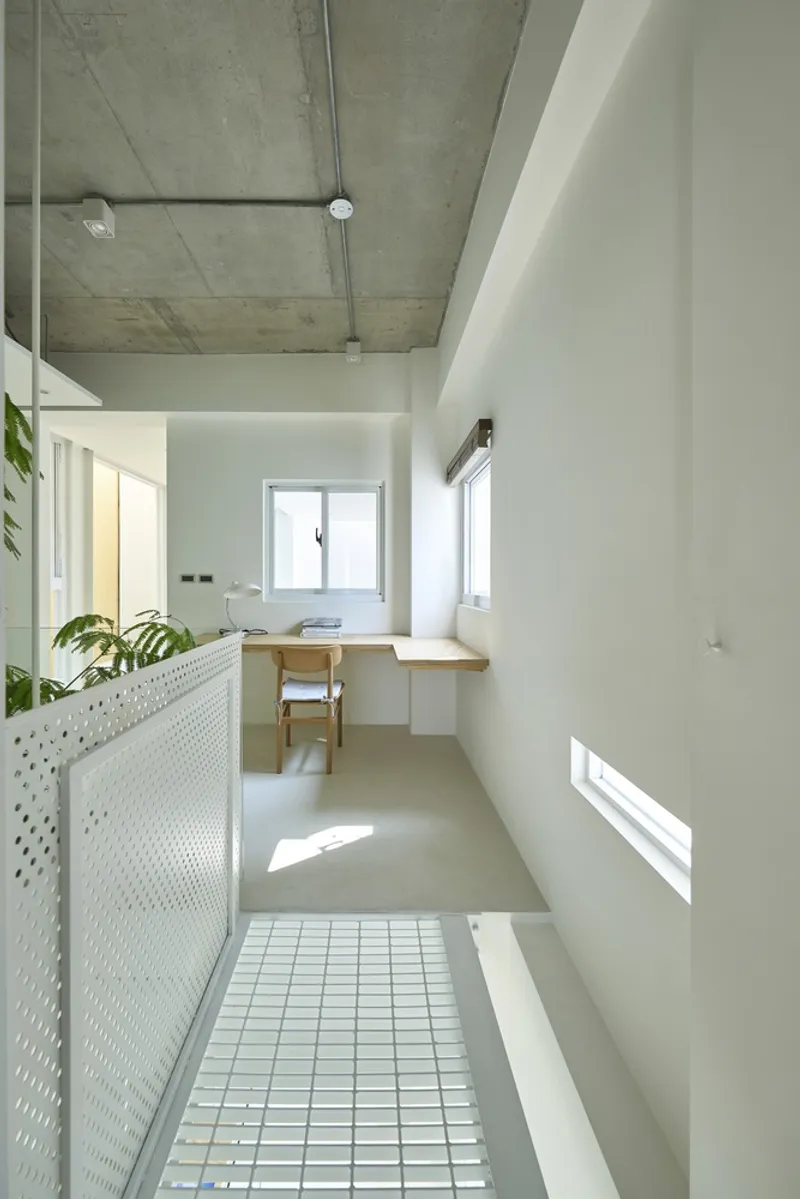
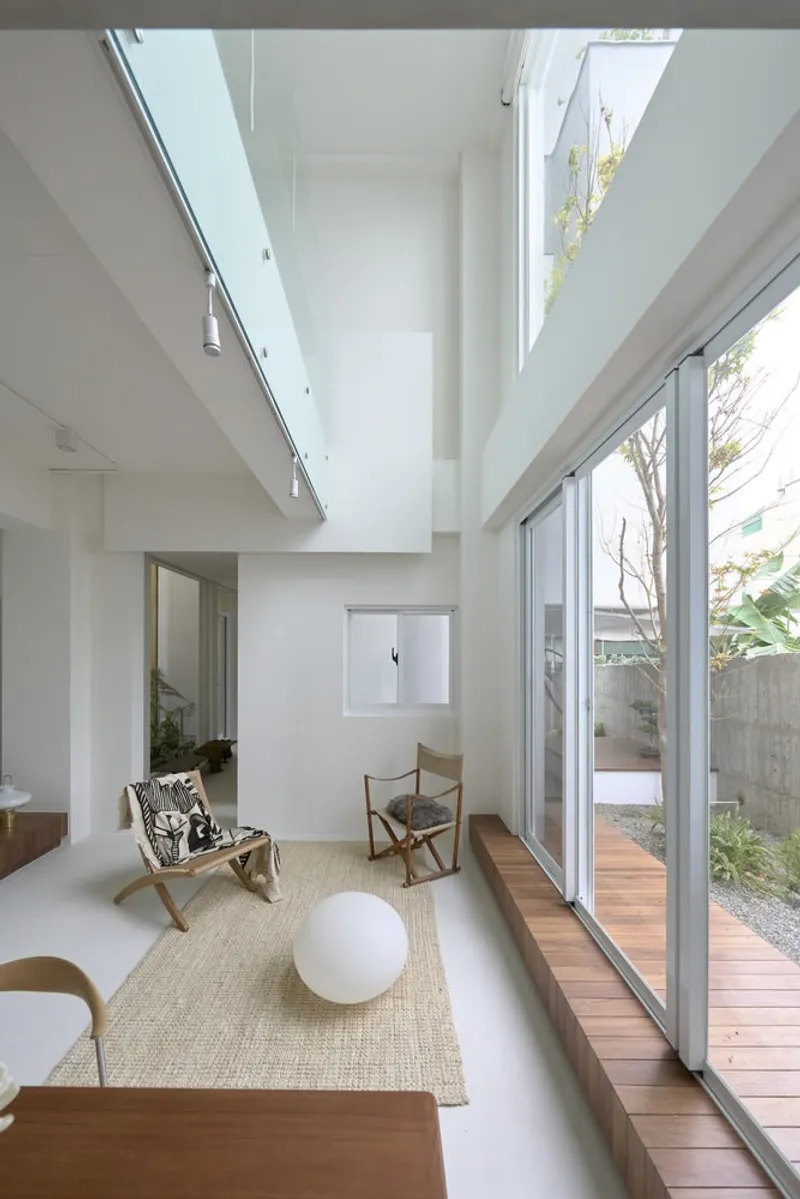
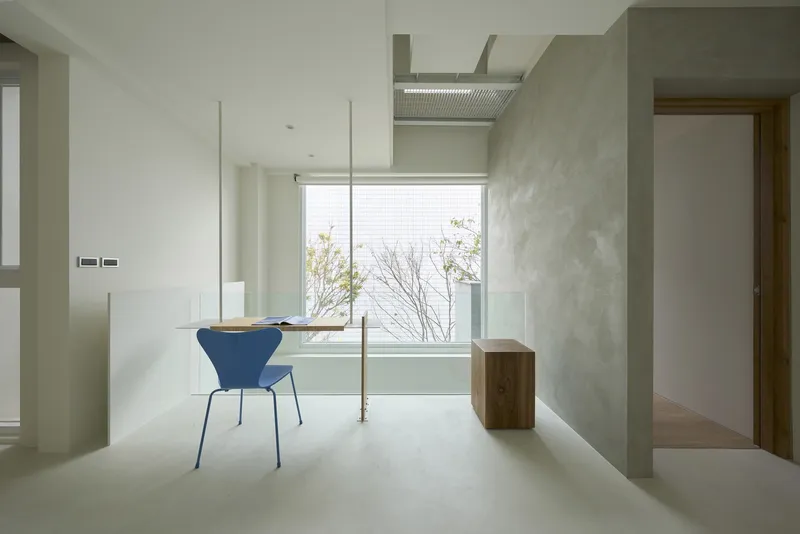
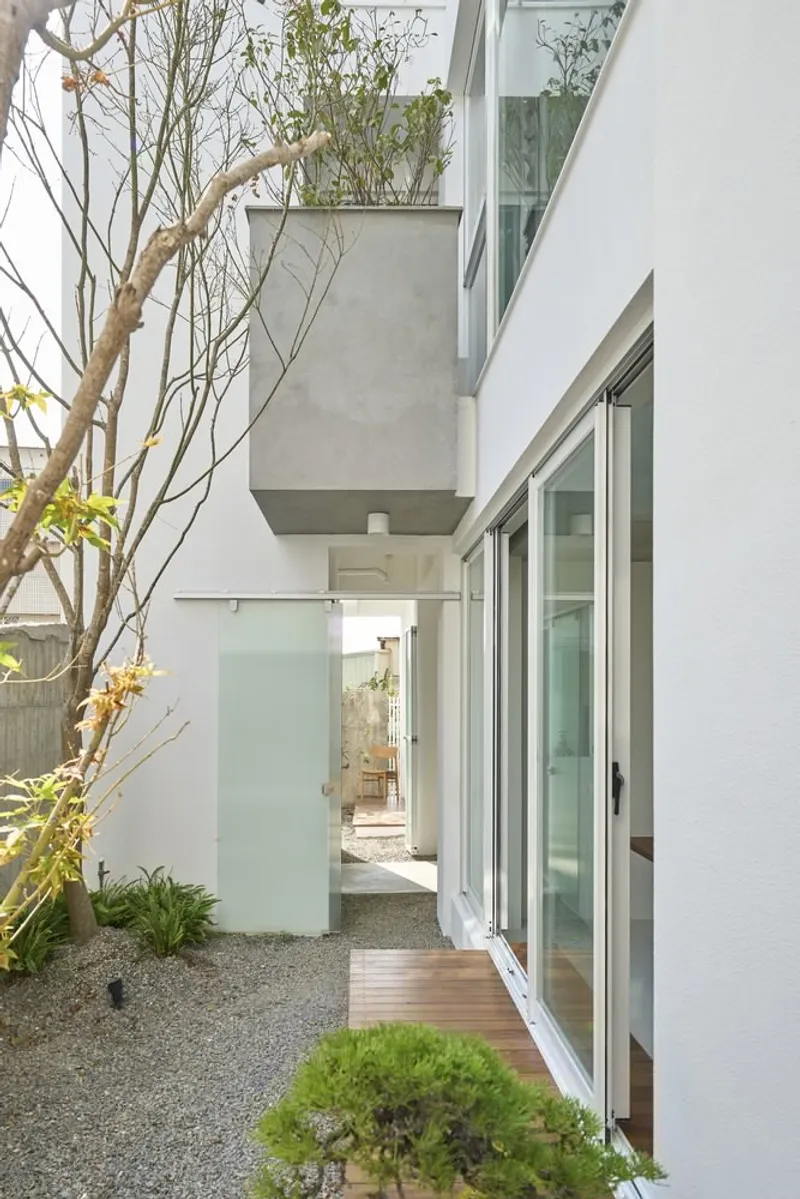
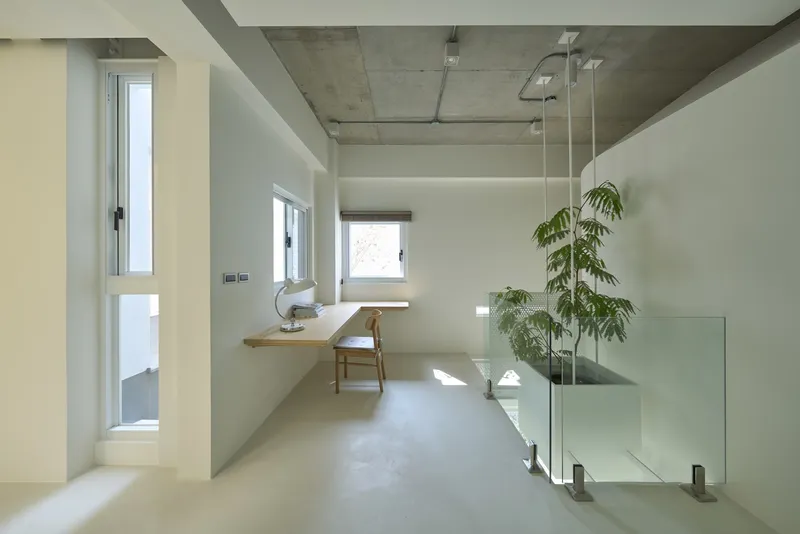
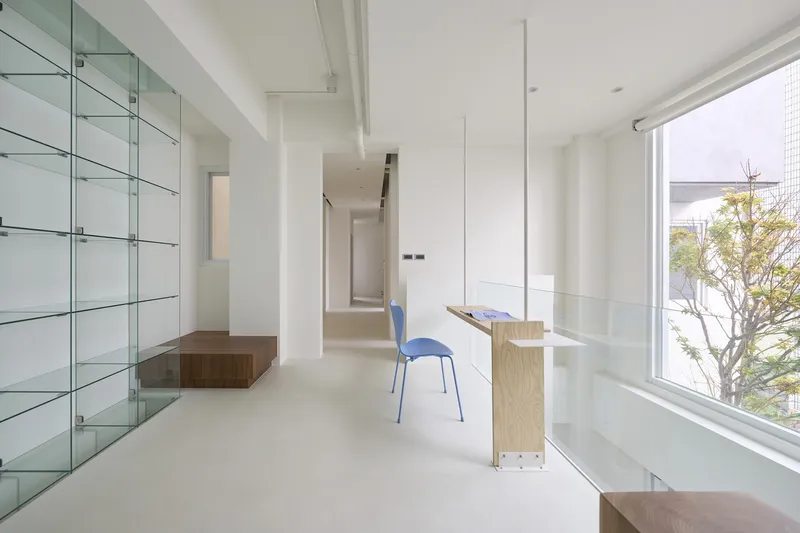
The design introduces a vertical and horizontal relationship between architecture and landscape, creating a living experience that evolves with movement through the house. Gradually receding balconies act as miniature valleys for wind, vegetation, and human activity. Indoors, voids mirror the verticality of the valleys, connecting the senses visually and spatially to the natural environment.
Innovative Spatial Concepts:
- Permeable Spaces: Recessions and excavations invite nature into interior spaces.
- Multi-Generational Adaptation: Flexible spaces accommodate diverse living needs, from communal gatherings to private retreats.
- Dynamic Indoor-Outdoor Interaction: Views from above, below, and eye level redefine living boundaries.
Functional Layout and Harmonized Living
The house integrates service and living areas across multiple buildings to optimize both privacy and communal interaction:
- Service Functions: Located in the first and fourth buildings.
- Living Spaces: Tea room, study, dining area, and reading nooks positioned in the second and third buildings.
- Bedrooms: Situated in the fifth building for private southwest wind access and internal valley views.
- Vegetation Integration: Trees planted on staggered balconies enhance the valley-inspired aesthetics and natural ventilation.
This spatial arrangement ensures balanced utilization of elongated site dimensions while encouraging diverse scenarios for gatherings, solitude, and interaction with nature.
Experience House Valley
House Valley represents a new typology for urban standalone residences, demonstrating how deconstruction, climate responsiveness, and natural integration can redefine contemporary living. By breaking conventional layouts, embracing multi-level volumes, and prioritizing indoor-outdoor connectivity, the project delivers a harmonious living environment that balances privacy, community, and nature.
All photographs are works of Hey! Cheese


Popular Articles
Popular articles from the community


LT2A and OPEN Architectes Thread a Brick and Glass High School Through a Wooded Belgian Campus
In Braine-l'Alleud, a 3,000 m² wing for Collège Cardinal Mercier pairs pale brick with a glazed colonnade, deferring to a small chapel and a dense wood.

Cube Design Draws an Ecological Corridor Between Two Shenzhen Hills with the Nankai Building
Beside Shenzhen's container docks, the Nankai Building pairs stacked balconies with a climbing green screen to connect two hillsides across its height.

GROUP A Strips a 1969 Rotterdam Harbor Headquarters to Its Frame and Wraps It in Timber Louvers
In Rotterdam's M4H harbor district, Ferro Offices reuses a 1969 frame, adds one timber storey and reaches BREEAM-NL Outstanding.

U.GA Architects Wraps an Oval Rooftop Pool in Curved Board-Formed Concrete on Busan's Jeollidan-gil
In Busan's Jeonpo-dong, a 454 m² mixed-use block stacks a neighborhood facility, guest rooms and an oval rooftop pool inside spiraling concrete walls.

Similar Reads
You might also enjoy these articles


Hodi-Mandai Geram
Project Function: Preservation and revitalization of the Intangible heritage and socio-spatial identity of the Hodi by Housing, Cultural Memory Center, Sacred Grove, landscape, local tourism economy


Olio Towers: A Mid-Rise for Performers That Fuses Housing, Rehearsal, and Stage
Located blocks from Houston's Theater District, this modular tower stacks living units around a central performance atrium.

Oasis: Modular Green Housing Carved into Dhaka's Urban Fabric
A shortlisted Plugin Housing entry reclaims unauthorized settlements in Dhaka with stepped concrete volumes, green roofs, and ventilation-driven design.

Black Hole: A Floating Megastructure for the Post-Physical Era
Emiliano Mazzarotto envisions a spherical, self-scaling arena where e-sports, digital hotels, and holographic stadiums replace traditional public space.

Explore Architecture Competitions
Discover active competitions in this discipline

Challenge to design mud housing for contemporary communities

Challenge to reimagine the Iron Throne

Photograph architecture without architects

Illustrate the lost glory of Angkor Wat - Render Challenge
Comments (0)
Please login or sign up to add comments
No comments yet. Be the first to comment!