

House within a House by MADE.V arquitectos – A Contemporary Transformation of Rural Heritage
House within a House by MADE.V arquitectos transforms a historic Sasamón pigsty into a contemporary, warm, flexible, and sustainable family home.


Located in the historic center of Sasamón, Burgos, Spain, House within a House by MADE.V arquitectos is a striking example of adaptive reuse architecture. What was once a modest pigsty has now been reimagined as a contemporary single-family home that embraces the duality between past and present, tradition and innovation.
This project demonstrates how rural heritage buildings can be respectfully transformed to meet modern needs while preserving cultural identity. By carefully balancing architectural restoration with modern interior design, the architects created a home that feels both deeply rooted in its history and entirely suited to contemporary living.
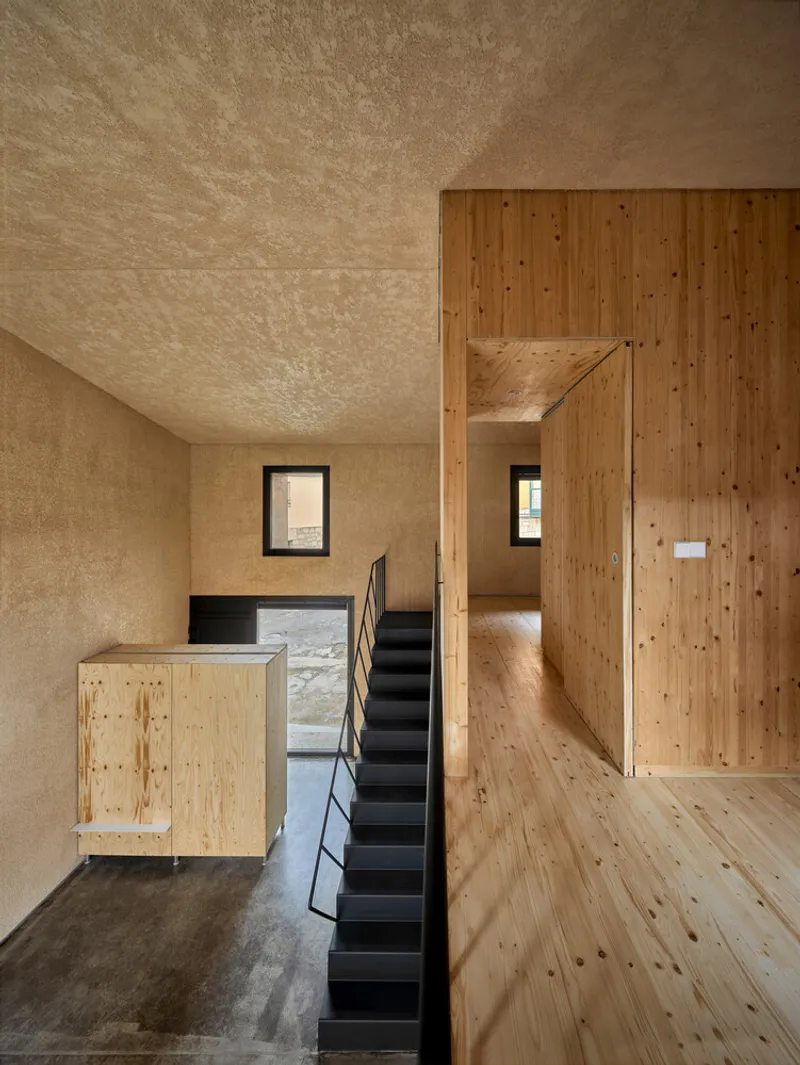
Preserving the Rural Identity
The client’s vision was clear: to keep the rural identity of the building while transforming it into a warm, functional living space. Instead of demolishing or heavily altering the structure, MADE.V arquitectos retained the existing facades and perimeter stone walls, which serve as a living testimony of the building’s past.
By respecting the heritage fabric of Sasamón, the architects ensured that the home blends seamlessly with its surroundings while quietly standing out as a modern reinterpretation of rural architecture.
A House Inside a House
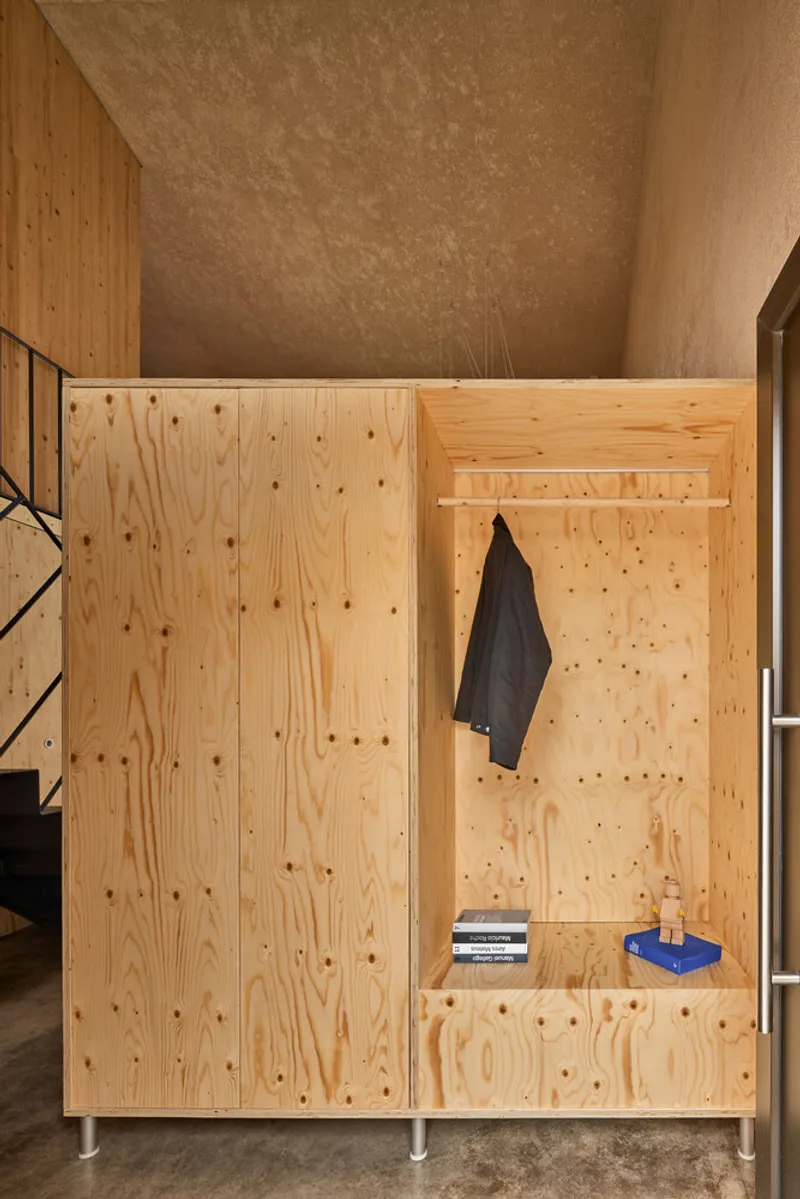
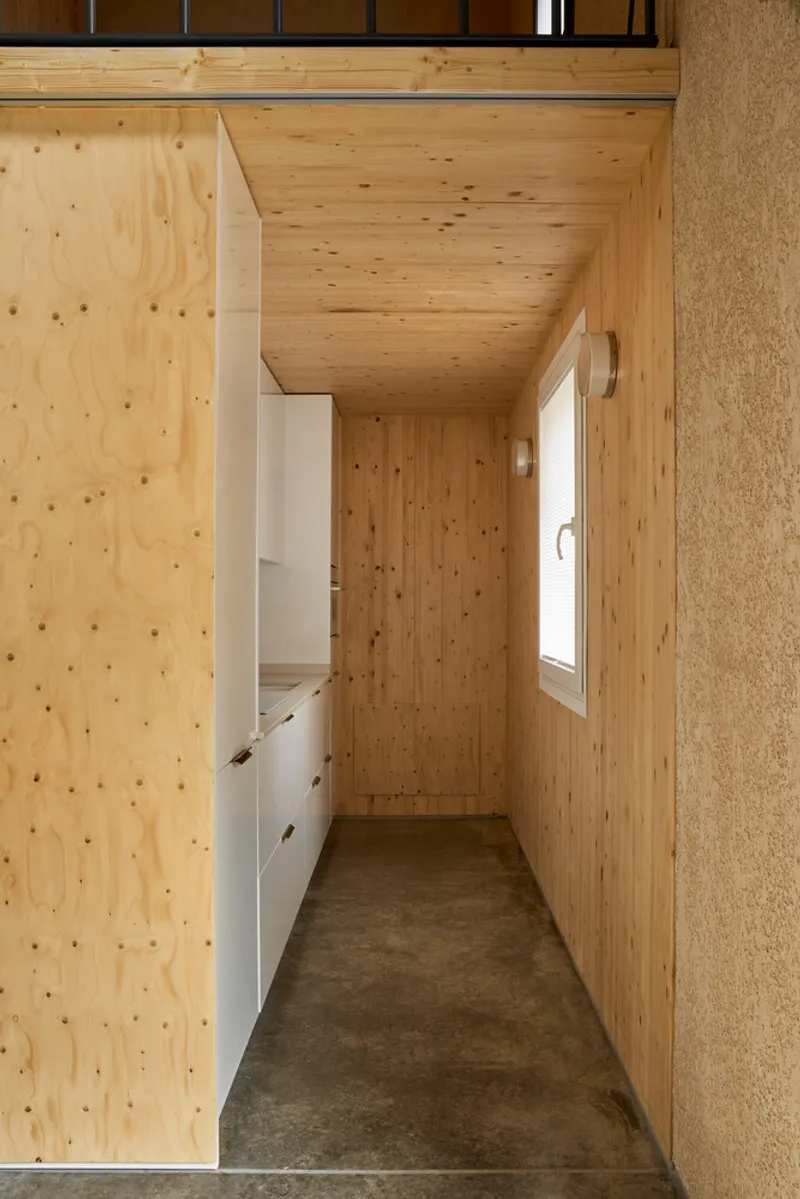
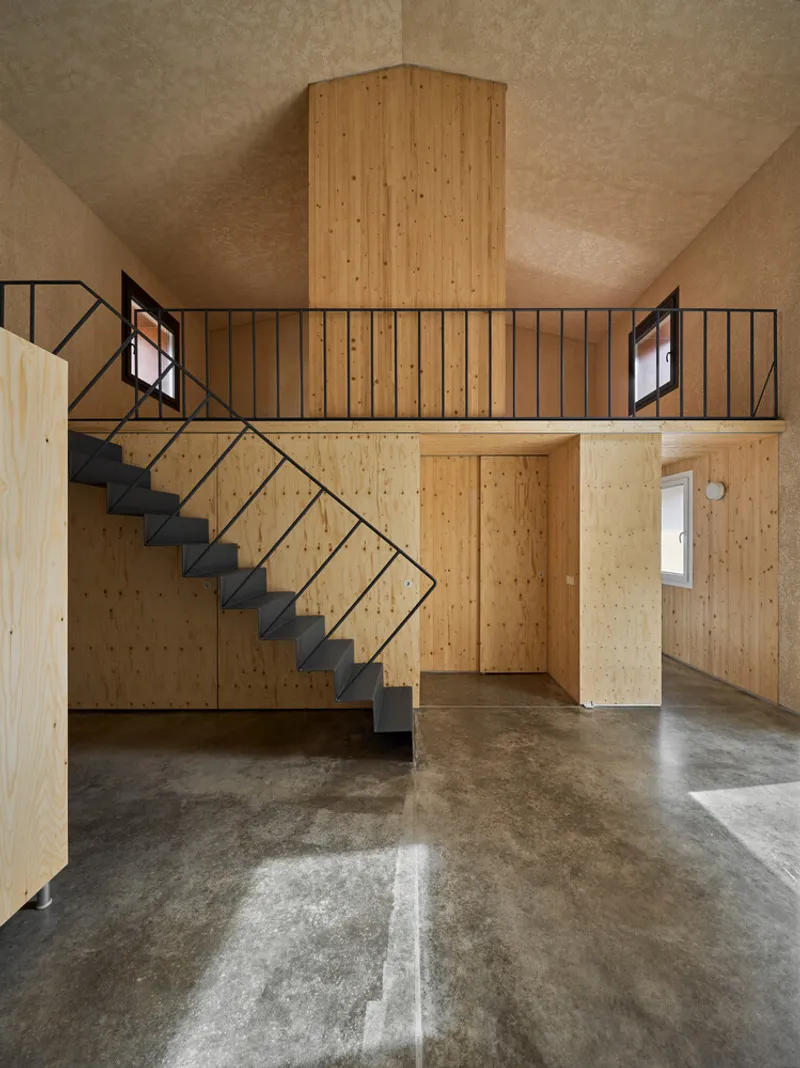
At the heart of the project lies its most defining concept: inserting a laminated wooden box within the preserved shell. This “house within a house” strategy creates a fascinating architectural dialogue between the old stone enclosure and the new timber structure.
- The wooden box occupies around half of the interior volume.
- Its design allows the space to “breathe,” maintaining openness while offering privacy.
- Large sliding and folding wooden doors create flexible living areas that can adapt to different needs.
This approach highlights the contrast between materials—the rough solidity of the stone walls and the warm lightness of wood—while also offering visual and spatial fluidity.


Sustainable and Efficient Construction
Energy efficiency and sustainable building methods were central to the design. Key strategies include:
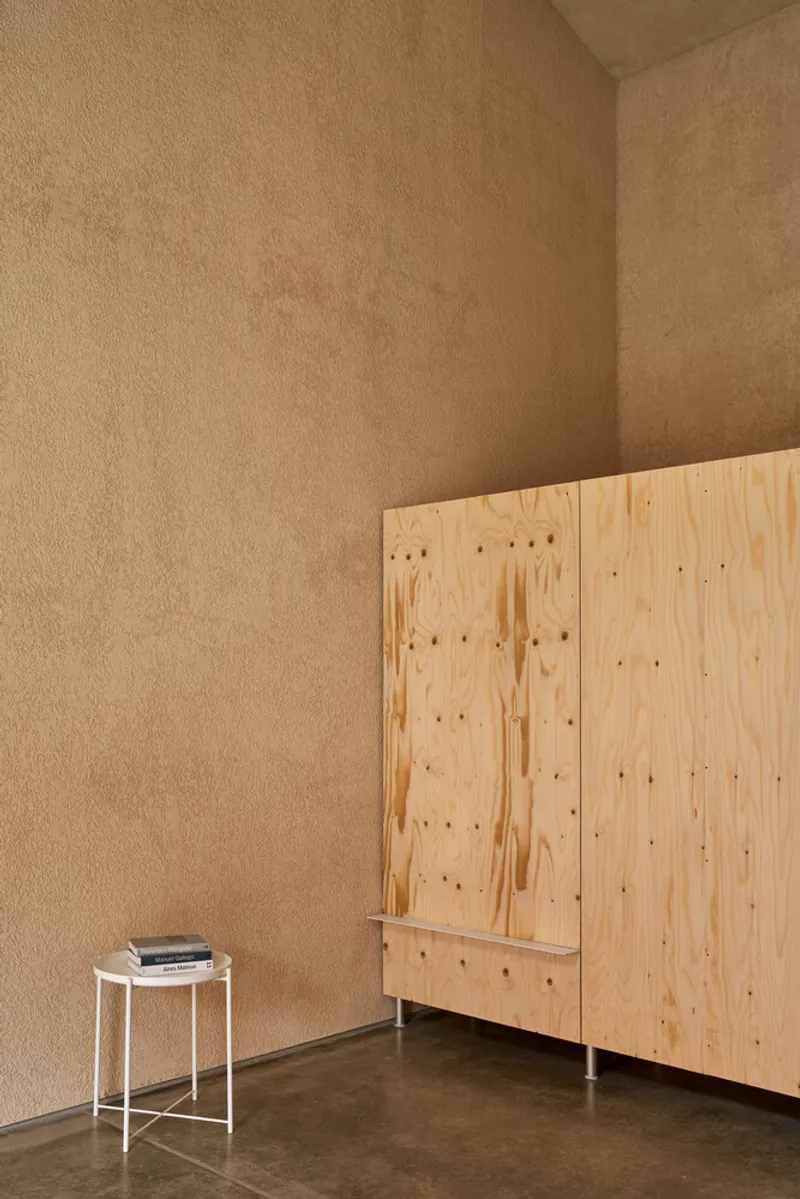
- Thermal continuity: a continuous insulating layer inside the envelope, finished with mortar to maintain coherence with the exterior.
- Roof renovation: the traditional pair-and-row scheme was reconstructed using laminated wood for improved structural stability.
- Local craftsmanship: the prefabricated wooden modules were produced by a nearby company, reducing transportation and strengthening ties with the rural economy.
The material palette is intentionally minimal—exposed structural wood, continuous mortar finishes, and a transparent resin floor over a radiant heating system. This constructive honesty allows the architecture itself to define the home’s character without unnecessary embellishment.

Living with Heritage in a Contemporary Way
The resulting 102 m² home is more than a renovation—it is a reinterpretation of rural living. By weaving together the memory of the past and the comforts of modern life, the project offers:
- Bright and open interiors that maximize natural light.
- Flexible spaces that adapt to the changing needs of a family.
- A minimal yet warm atmosphere, where wood becomes the central protagonist.
In essence, House within a House demonstrates how heritage architecture can evolve without losing authenticity. It proves that even the most modest rural structures can be transformed into sustainable, contemporary homes that celebrate simplicity and craft.


Popular Articles
Popular articles from the community


David Macias Steps a Doorless Stone and Plaster House Down a Tropical Colombian Hillside
In the humid hills of Colombia, Threshold House replaces the front door with an open void and terraces its 850 m² down the slope instead of fighting it.

Cube Design Draws an Ecological Corridor Between Two Shenzhen Hills with the Nankai Building
Beside Shenzhen's container docks, the Nankai Building pairs stacked balconies with a climbing green screen to connect two hillsides across its height.

longwave studio Reorganizes a 112 m² Tainan Apartment Around the Daily Routines of a Family and Two Cats
In Tainan, Taiwan, birch plywood, rust-red furniture and a freestanding plaster wall link arrival, storage, work and family life in one apartment.

Jaramillo Van Sluys Arquitectura and Urbanismo Turn a Demolished Registry Lot in Quito into an Orchard Plaza
In Quito's Centro Histórico, a 2,800 m² plaza exposes the San Agustín convent wall and redraws its lost Augustinian orchard in volcanic stone.

Similar Reads
You might also enjoy these articles


Hodi-Mandai Geram
Project Function: Preservation and revitalization of the Intangible heritage and socio-spatial identity of the Hodi by Housing, Cultural Memory Center, Sacred Grove, landscape, local tourism economy


Olio Towers: A Mid-Rise for Performers That Fuses Housing, Rehearsal, and Stage
Located blocks from Houston's Theater District, this modular tower stacks living units around a central performance atrium.

Oasis: Modular Green Housing Carved into Dhaka's Urban Fabric
A shortlisted Plugin Housing entry reclaims unauthorized settlements in Dhaka with stepped concrete volumes, green roofs, and ventilation-driven design.

Black Hole: A Floating Megastructure for the Post-Physical Era
Emiliano Mazzarotto envisions a spherical, self-scaling arena where e-sports, digital hotels, and holographic stadiums replace traditional public space.

Explore Housing Competitions
Discover active competitions in this discipline

Challenge to reimagine the Iron Throne

Photograph architecture without architects

Illustrate the lost glory of Angkor Wat - Render Challenge

Design challenge to reuse E-waste
Comments (0)
Please login or sign up to add comments
No comments yet. Be the first to comment!