
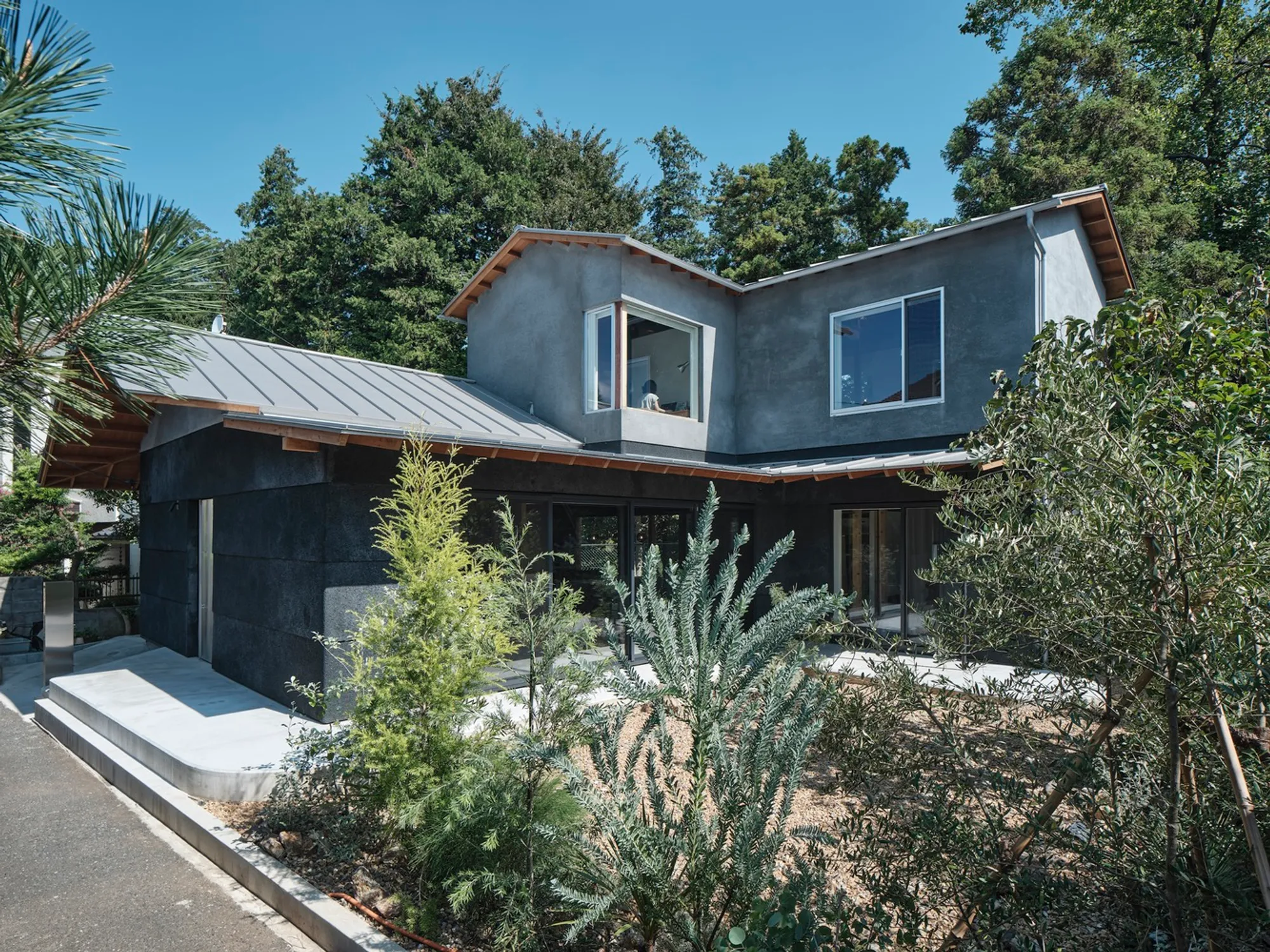
House ZPK Renovation by GoGo1122 – A Timeless Fusion of Heritage, Community, and Contemporary Japanese Living
A 75-year-old Japanese home transformed with open spaces, recycled materials, and community-focused design, blending heritage with contemporary living.


In a quiet Japanese neighborhood shaped by a century of unchanged urban planning, House ZPK stands as a poetic example of how architecture can honor the past while embracing the future. Originally built 75 years ago, the residence has long been a witness to generational continuity, shared memories, and the deep-rooted bonds of its close-knit community. Through a thoughtful renovation led by GoGo1122 and architect Go Kawakita, the home is transformed into a contemporary sanctuary that preserves the emotional and architectural heritage of its site while reimagining its role for future inhabitants.
A Renovation That Preserves Community Memory
The surrounding neighborhood has remained largely untouched for decades, preserving a unique rhythm of life where families grow, move, and return. Yet, despite its enduring charm, urban migration and strict zoning regulations have contributed to gradual depopulation. Instead of replacing what existed, the design team chose a more sensitive path: to renovate the home in a way that maintains its historical presence and strengthens its connection to the community.
This approach allowed the house to evolve without erasing the stories embedded in its foundations. It acts as a bridge between generations—past residents, current inhabitants, and those yet to come—ensuring that the affection for this land continues to thrive.
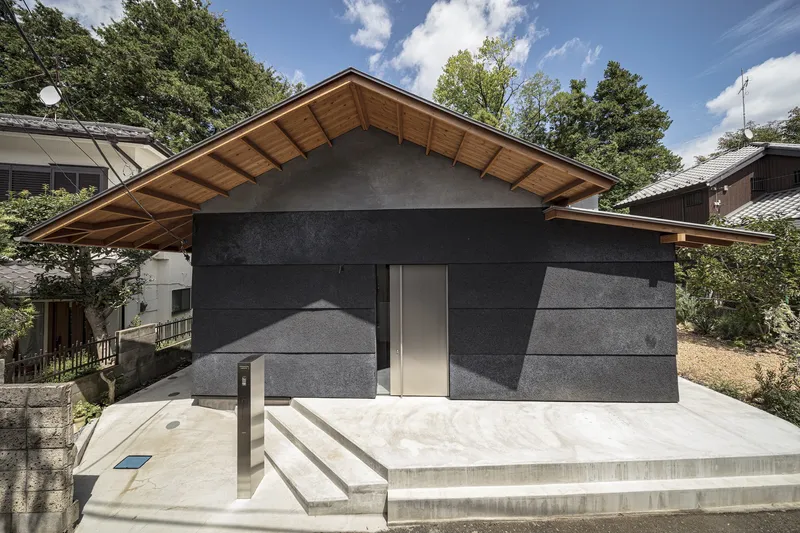
Opening the Home to Nature and the Neighborhood
Historically, the house turned inward, with openings directed only toward its front garden. Blank walls and high hedges created rigid boundaries that separated the home from the surrounding park to the east and the local path to the west.
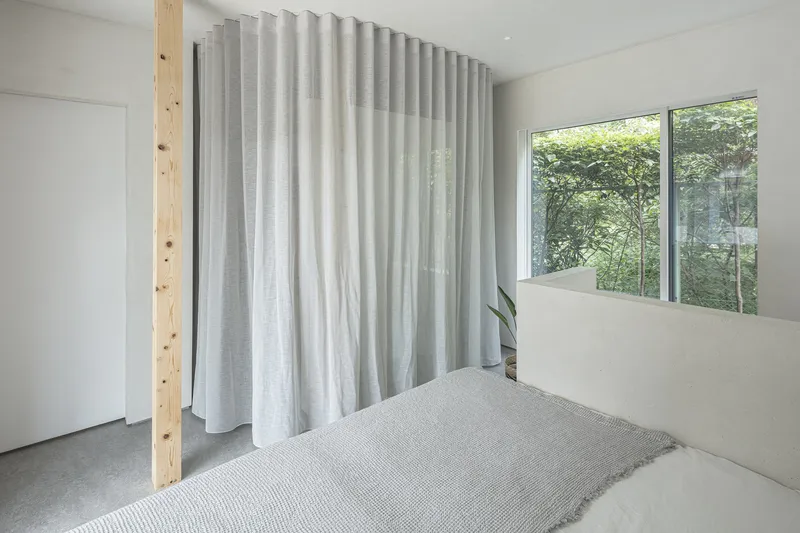
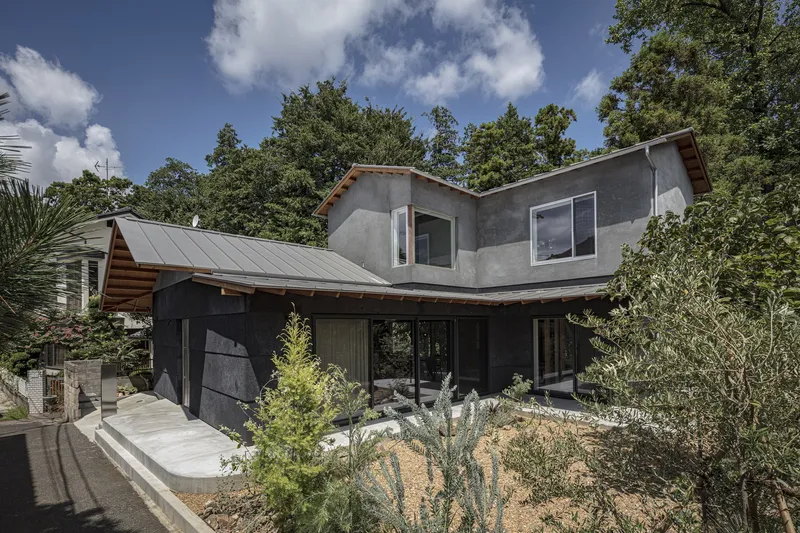
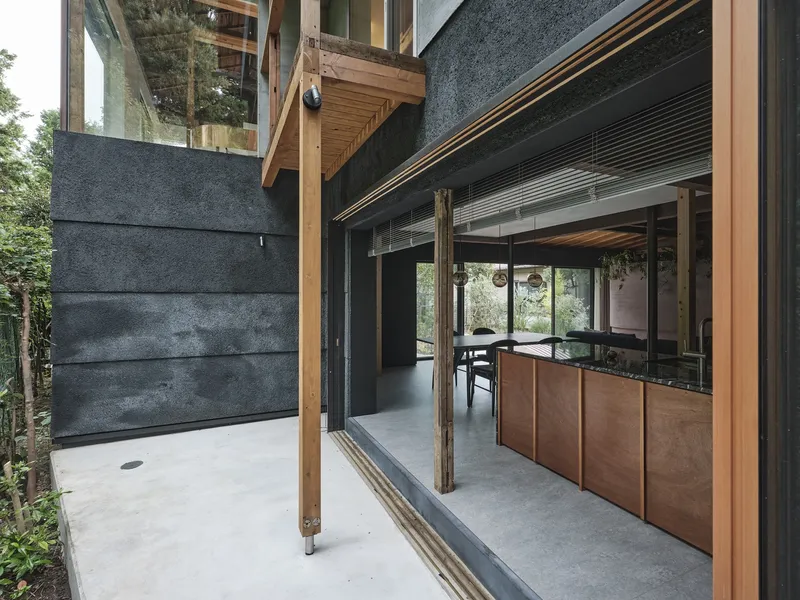
The renovation overturns this separation by introducing a large opening along the eastern façade. A flowing earthen terrace extends directly from the living space, dissolving barriers and allowing seamless visual and spatial continuity between the interior and the natural world outside. This reorientation transforms the home into a crossroads of landscape, daylight, and community movement—an ever-changing tableau reflecting the passage of time.
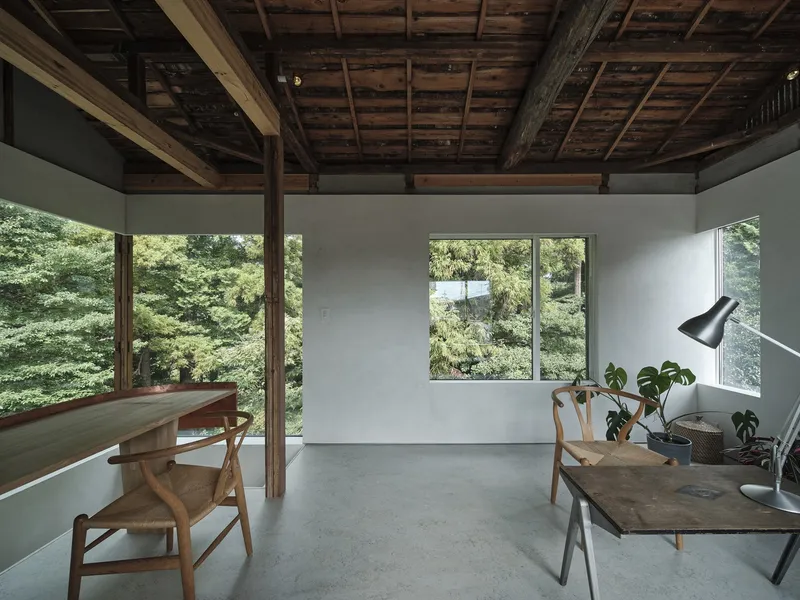
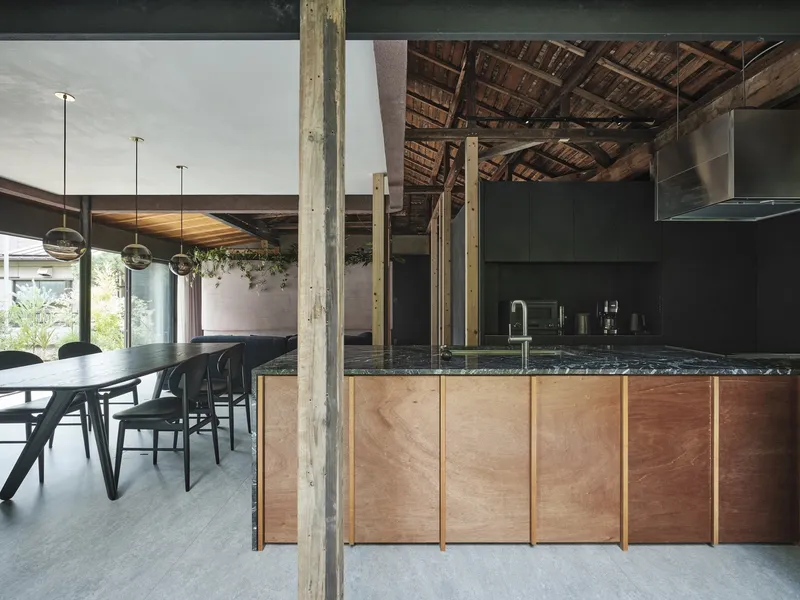
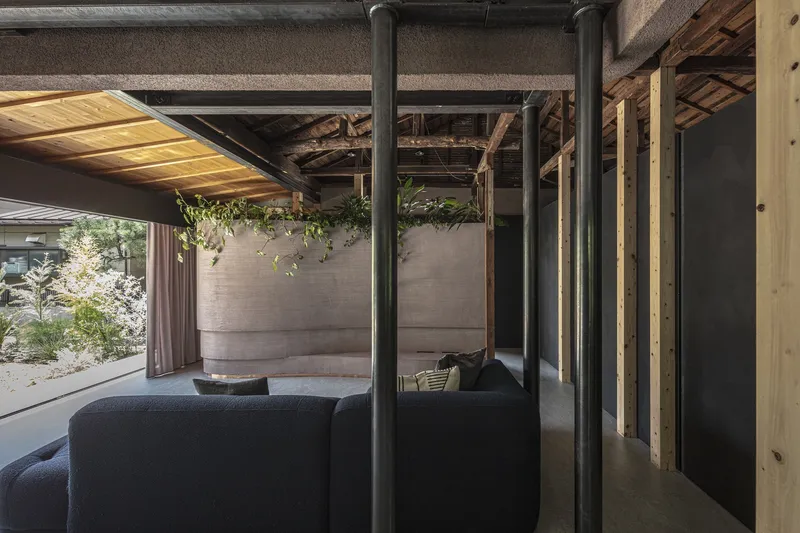
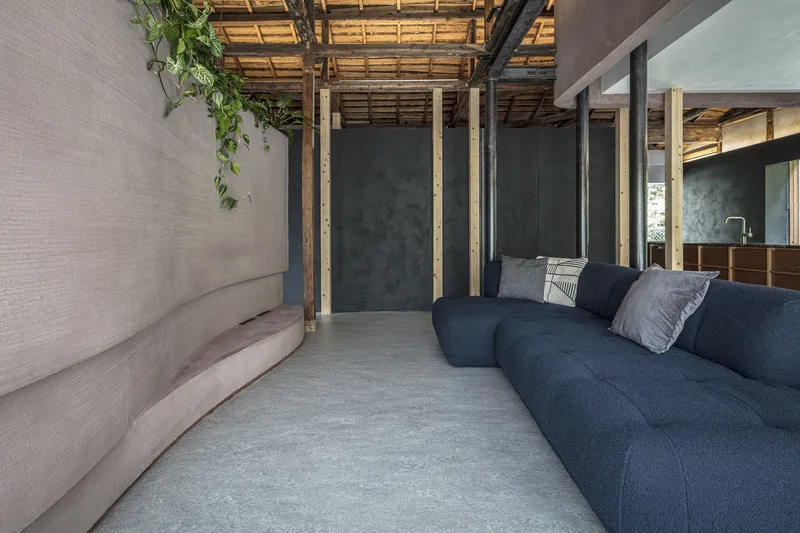
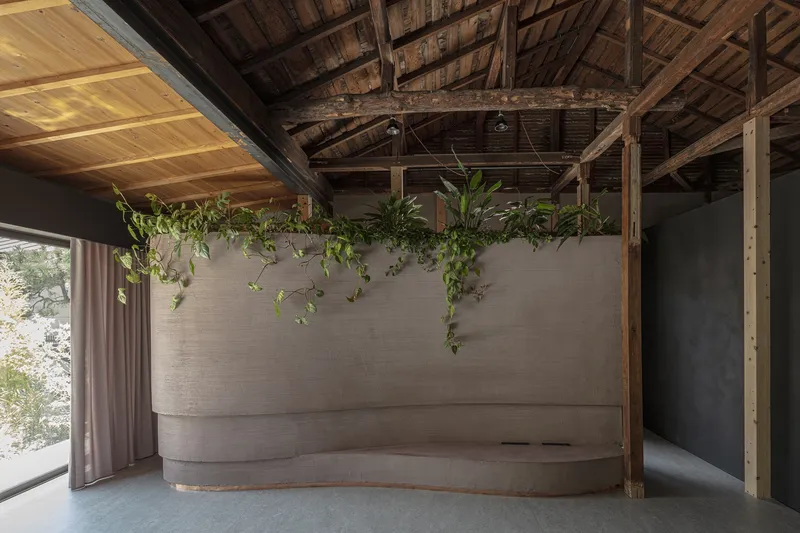
Inside, once-fragmented rooms have been reconfigured into an open, continuous environment. The original earthen materials were carefully reused, their textures and tones reincarnated into a new earthen wall that acts as the spatial centerpiece. Through this mindful material rebirth, the architecture carries forward both ecological responsibility and emotional resonance.
Design Datums That Honor the Past
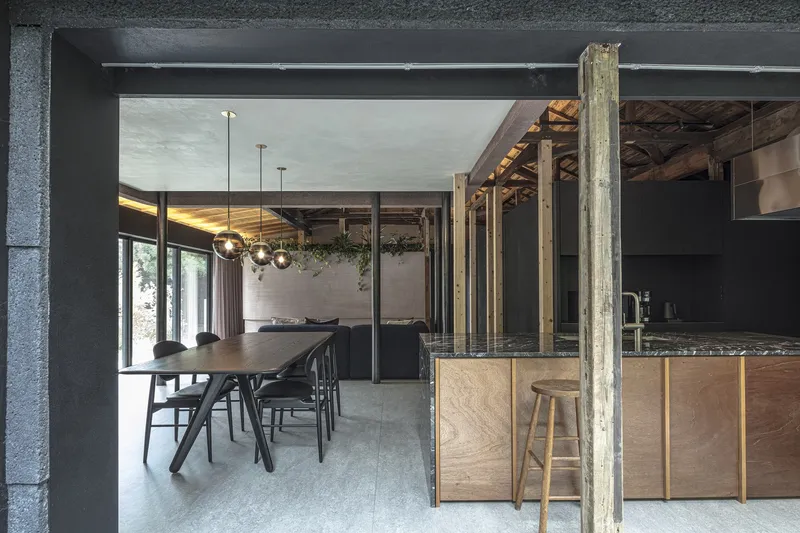
To preserve the memory of the existing structure, the architects introduced two guiding “Design Datums” that anchor the renovated home in its history:
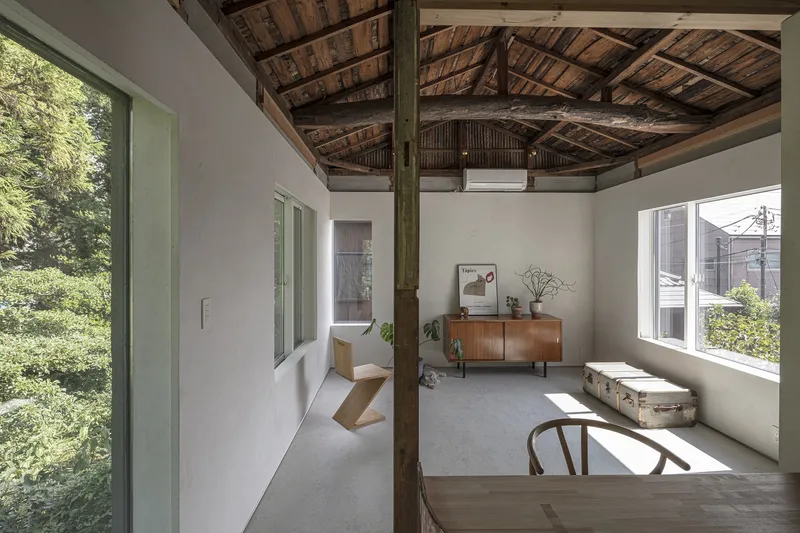
• Opening Alignment at H1950mm: New openings align with the height of the original lintels, creating a subtle but powerful rhythm that echoes the memory of the former dwelling.
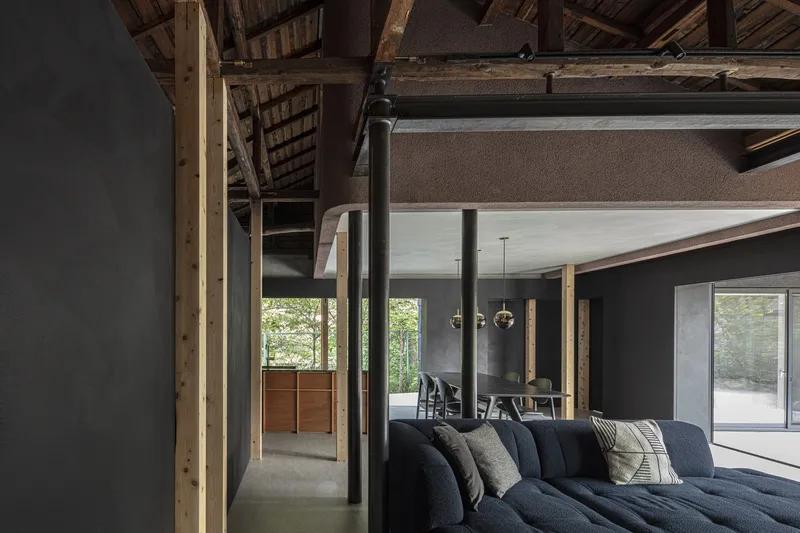
• Finish Boundary at H2300mm: All new finishes stop at the height of the former ceiling, allowing the untouched structure above to remain visible. This juxtaposition becomes a living timeline—new walls rising beneath exposed structural bones that bear the marks of age.
These carefully crafted datums weave the building’s temporal layers together, making the presence of the past inseparable from the experience of the new.
A Sensory Dialogue Between Old and New
House ZPK invites residents to engage directly with recycled materials, weathered timber, and the restored structural framework. Textures, shadows, and natural scents form a sensory conversation between eras. As new memories accumulate within the refreshed spaces, the home continues to evolve, enriched rather than obscured by its history.
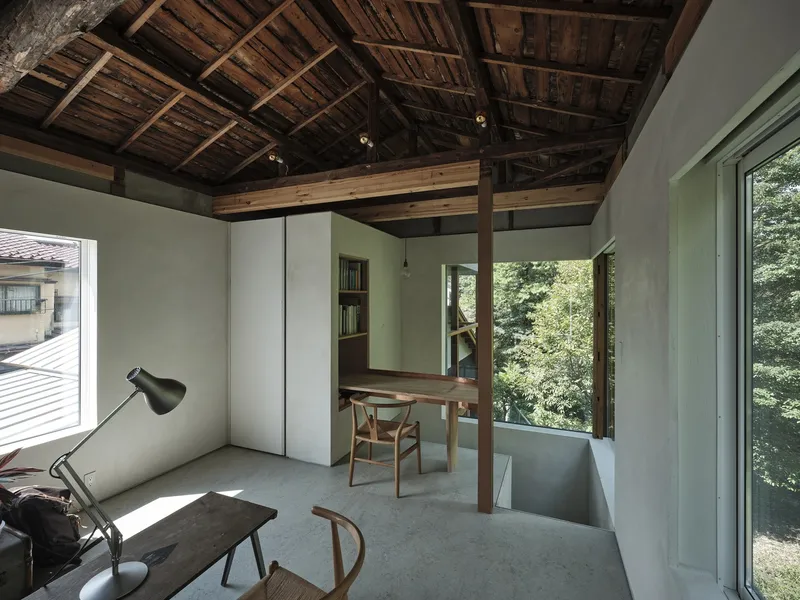
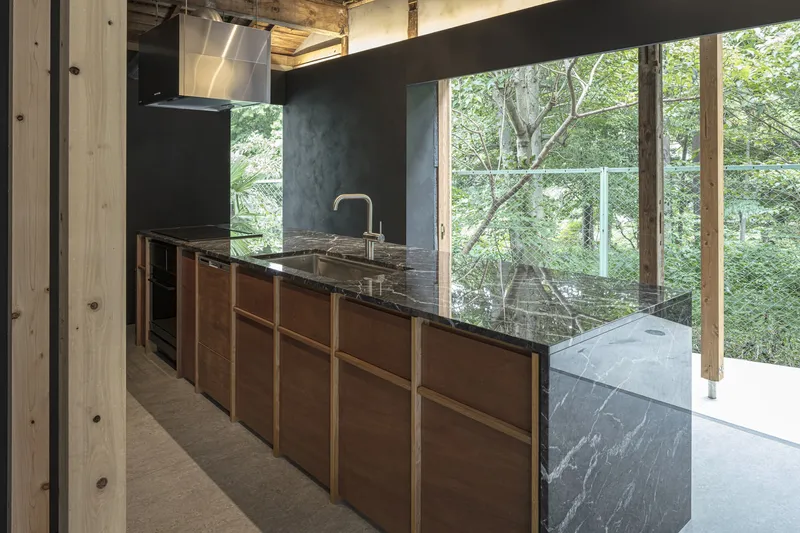
Exterior terraces extend the architecture beyond its walls, softening boundaries with the community and encouraging gentle interaction among neighbors. Through these gestures, the design nurtures continuity—of place, people, and the quiet daily rituals that define life in this rural enclave.
The renovation of House ZPK is a beautifully restrained example of adaptive reuse, proving that architecture can be both a vessel of memory and a canvas for future living. By reimagining the home with sensitivity, material honesty, and community awareness, GoGo1122 has created a timeless environment where heritage, landscape, and human connection coexist in harmony.
All photographs are works of
Akira Nakamura, Satoshi Asakawa



Popular Articles
Popular articles from the community


Co-life: Sustainable Architecture for Age-Friendly Community Living
Co-life reimagines sustainable architecture for seniors through courtyards, rammed earth, shared gardens, and spaces designed for belonging.

Co-Life: Senior Housing Design That Reconnects Older Adults With the City
Co-Life reimagines senior housing design through healing gardens, shared streets, workshops, and a sustainable community across generations.

Conexión: Biophilic Design Reimagines High-Rise Living in Hong Kong
Conexión reimagines high-rise living in Hong Kong through biophilic design, green facades, shared spaces, daylight, water and nature within.

Hill & Cross Opera: Sculptural Opera House Architecture Shaped by Tallinn’s Landscape and Identity
Hill & Cross Opera reimagines opera house architecture in Tallinn through its sculptural hill, civic plaza, glass wave and a luminous cross.

Similar Reads
You might also enjoy these articles


Hodi-Mandai Geram
Project Function: Preservation and revitalization of the Intangible heritage and socio-spatial identity of the Hodi by Housing, Cultural Memory Center, Sacred Grove, landscape, local tourism economy


Olio Towers: A Mid-Rise for Performers That Fuses Housing, Rehearsal, and Stage
Located blocks from Houston's Theater District, this modular tower stacks living units around a central performance atrium.

Oasis: Modular Green Housing Carved into Dhaka's Urban Fabric
A shortlisted Plugin Housing entry reclaims unauthorized settlements in Dhaka with stepped concrete volumes, green roofs, and ventilation-driven design.

Black Hole: A Floating Megastructure for the Post-Physical Era
Emiliano Mazzarotto envisions a spherical, self-scaling arena where e-sports, digital hotels, and holographic stadiums replace traditional public space.

Explore Housing Competitions
Discover active competitions in this discipline



Challenge to reimagine the Iron Throne


Photograph architecture without architects


Illustrate the lost glory of Angkor Wat - Render Challenge


Design challenge to reuse E-waste
Comments (0)
Please login or sign up to add comments
No comments yet. Be the first to comment!