

Housing in Bad Aibling by Florian Nagler Architekten: A Minimalist Approach to Sustainable Living
Minimalist timber housing in Bad Aibling by Florian Nagler Architekten promotes sustainable living through modular design, natural materials, and flexibility.


Building Simply for a Better Future
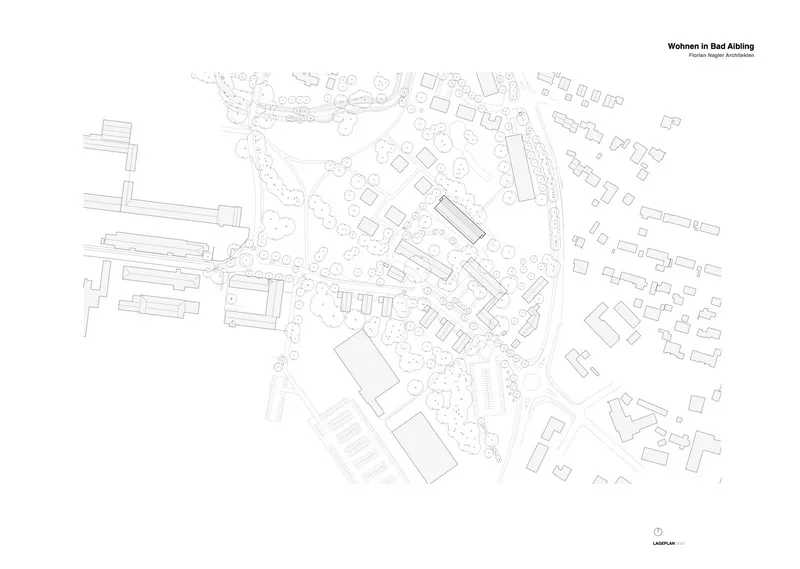
Rooted in the philosophy of “Build Simply”, the Housing in Bad Aibling project by Florian Nagler Architekten demonstrates how simplicity in architecture can lead to efficiency, sustainability, and community-centric living. Commissioned by WOGENO, a cooperative housing developer, this residential project prioritizes clarity in design, low environmental impact, and a rational use of space and materials.
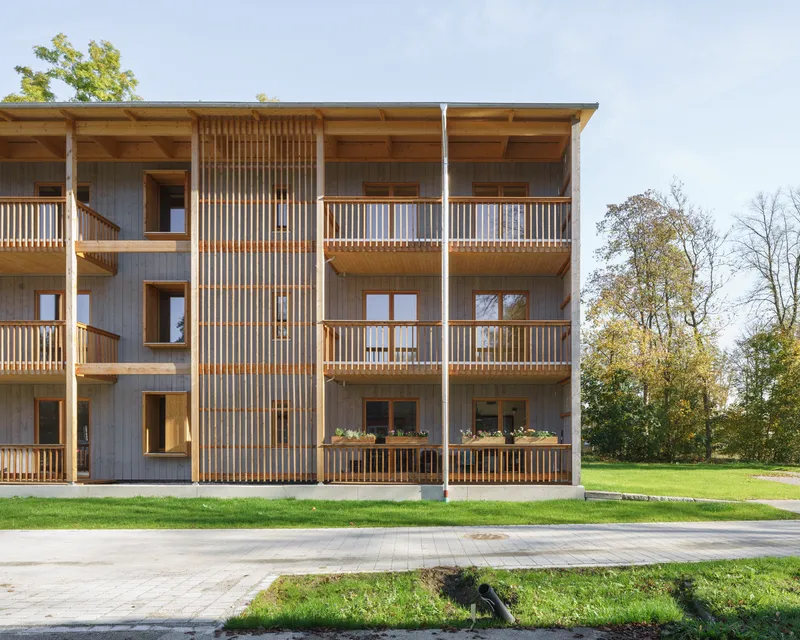
Design Concept: A Rational Grid for Flexibility and Function
At the heart of the design is a clear 3.10-meter grid, tailored to support modular timber construction and offer spatial flexibility. This rational framework allows for various apartment configurations, resulting in eight apartments per floor—each optimized for natural light, cross-ventilation, and thermal efficiency.
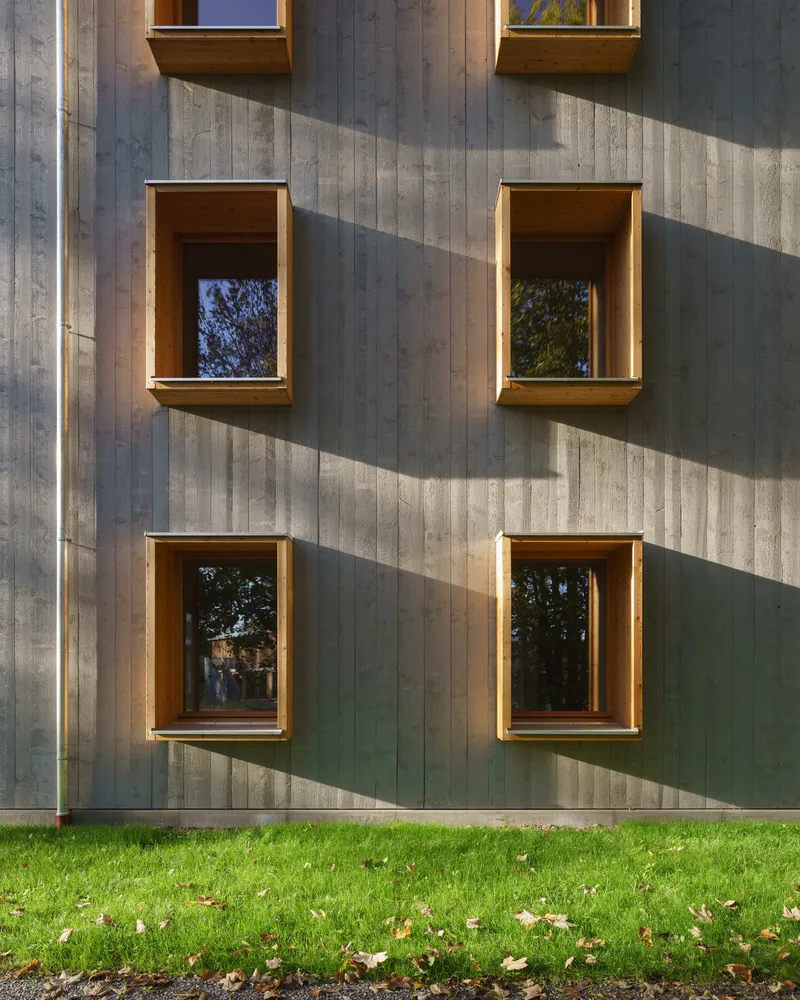
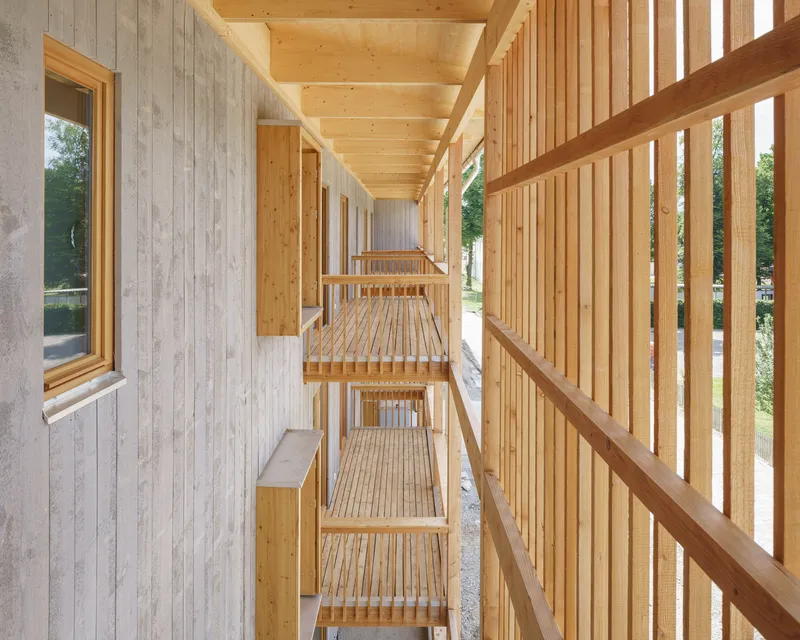
Despite its apparent simplicity, the grid layout offers a wide range of apartment types, accommodating different resident needs without compromising spatial quality or material economy.
Materiality: Sustainability Through Cross-Laminated Timber
The building’s load-bearing structure centers around a solid, elongated access core, which anchors the vertical circulation. Surrounding it, the external load-bearing walls are built with cross-laminated timber (CLT)—a renewable, insulating material that minimizes the use of glue and other carbon-intensive components. This choice not only improves indoor air quality and thermal comfort but also aligns with Germany’s growing commitment to sustainable construction.
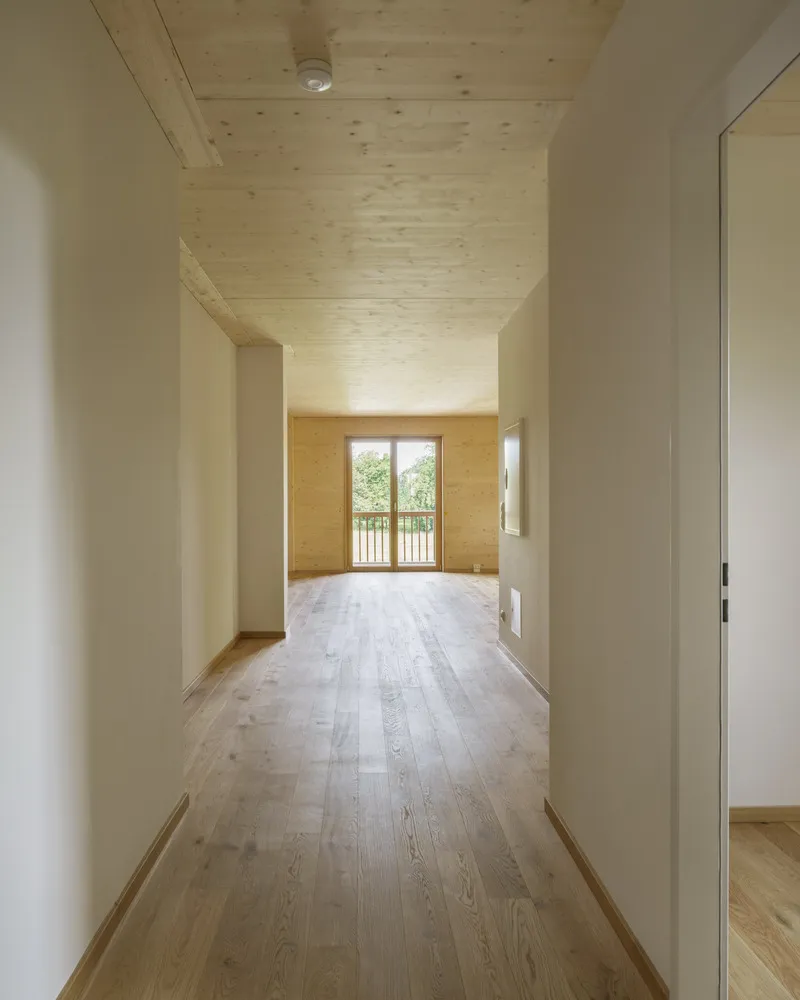
A Unified Entrance and Shared Spaces
Residents enter the complex through a shared entrance, reinforcing a sense of community and belonging. Two central stairwells branch off from this common access point, efficiently distributing traffic flow across the building and reducing unnecessary duplication of infrastructure.
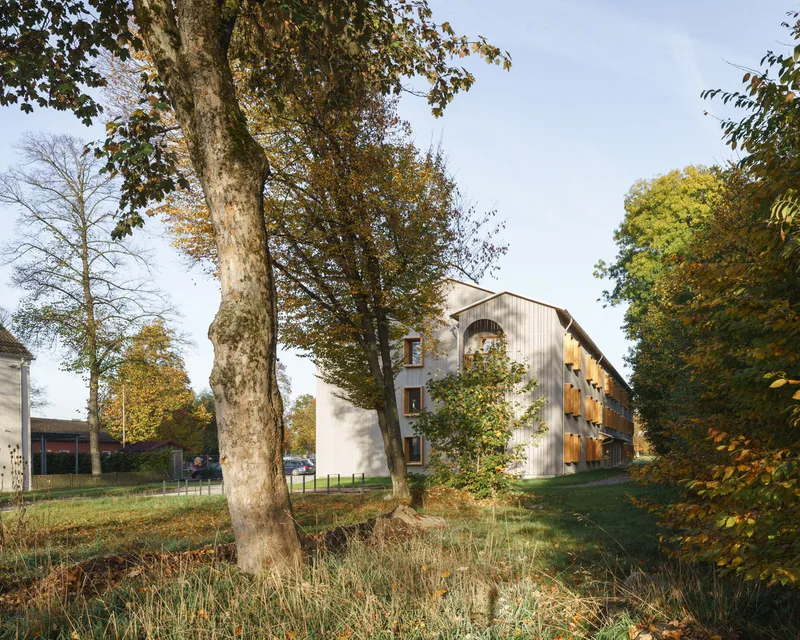
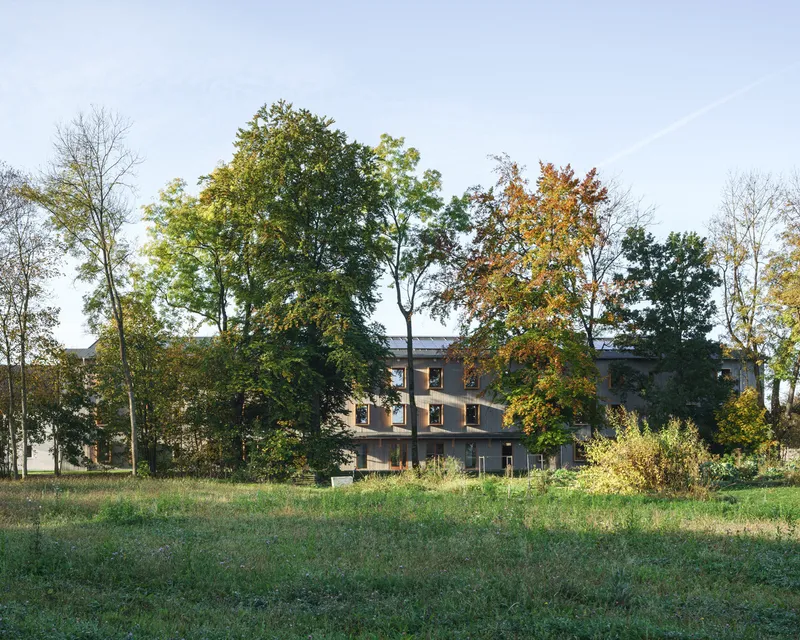
This approach encourages social interaction and echoes cooperative housing principles—where shared space is valued as much as private living areas.
Aesthetic Simplicity and Structural Clarity
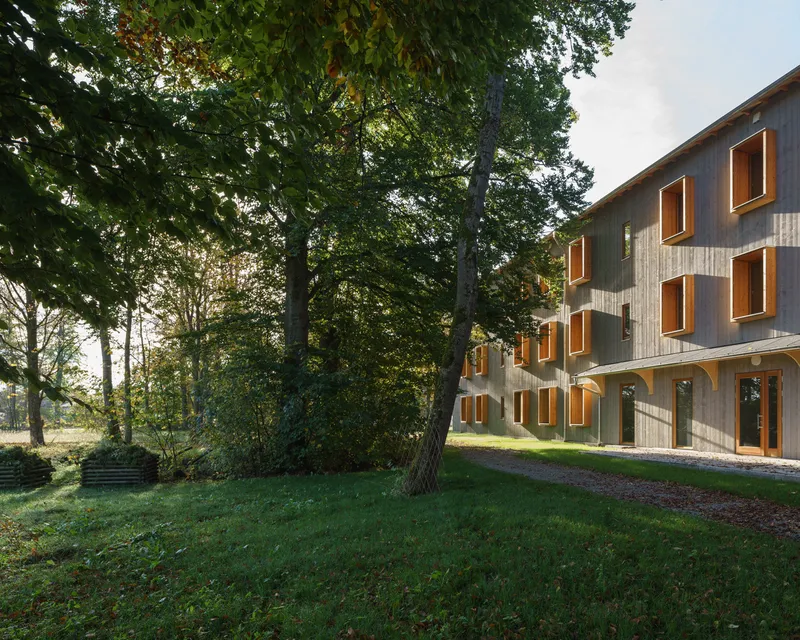
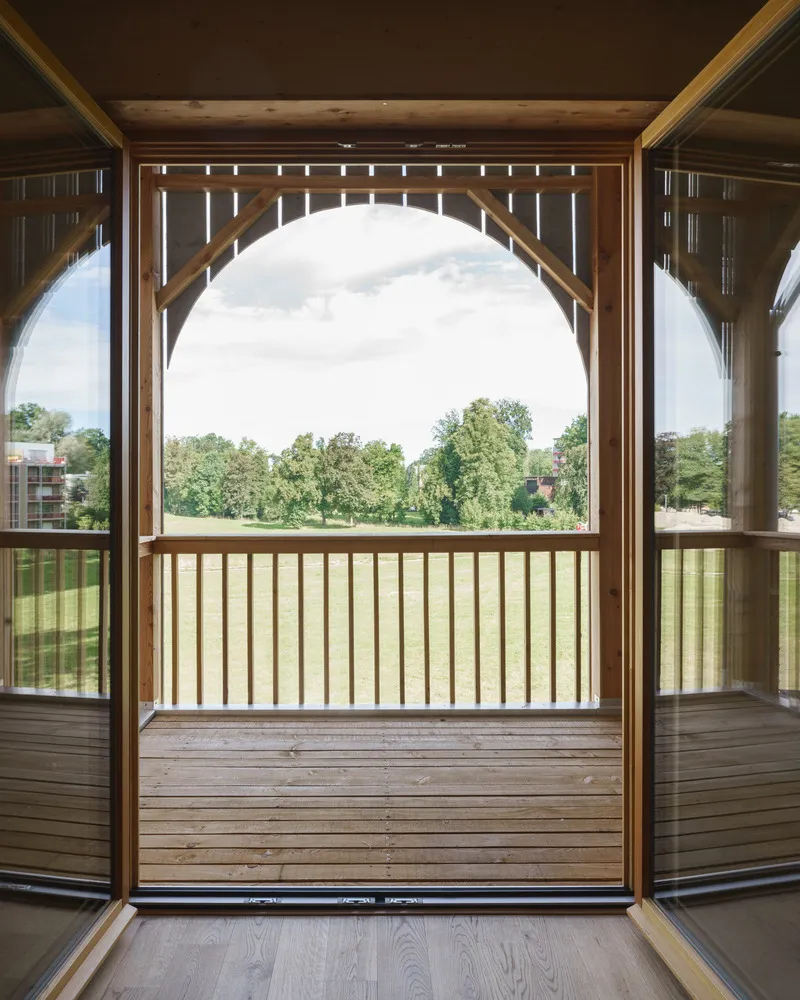
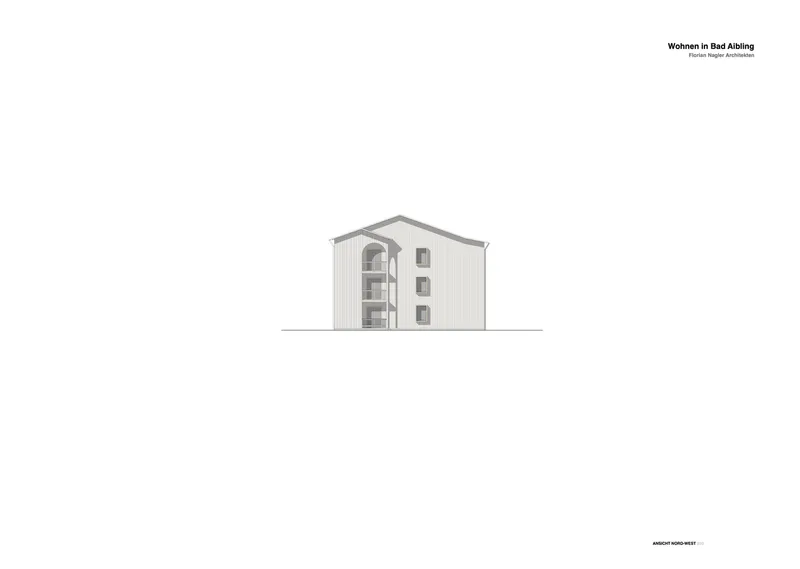
Visually, the housing complex balances modern minimalism with tactile warmth. The timber-and-concrete facadeshowcases honest materials, clean lines, and repetitive rhythms that contribute to the building’s quiet, understated elegance. Large windows punctuate the elevation, enhancing daylight penetration and fostering a strong connection with the outdoors.
Inside, exposed timber beams and surfaces evoke a sense of calm, natural warmth—essential qualities for creating a home environment that is both comforting and sustainable.
Adaptability and Long-Term Value
By emphasizing construction simplicity, low-energy strategies, and minimal maintenance, Florian Nagler Architekten not only reduced the project’s carbon footprint but also increased its long-term value. The flexible floorplans and robust structural logic ensure the building can easily adapt to future residential needs, making it an exemplary model for cost-effective and climate-resilient urban housing.

All the photographs are works of Schels, Lanz, PK Odessa


Popular Articles
Popular articles from the community


Cube Design Draws an Ecological Corridor Between Two Shenzhen Hills with the Nankai Building
Beside Shenzhen's container docks, the Nankai Building pairs stacked balconies with a climbing green screen to connect two hillsides across its height.

longwave studio Reorganizes a 112 m² Tainan Apartment Around the Daily Routines of a Family and Two Cats
In Tainan, Taiwan, birch plywood, rust-red furniture and a freestanding plaster wall link arrival, storage, work and family life in one apartment.

LT2A and OPEN Architectes Thread a Brick and Glass High School Through a Wooded Belgian Campus
In Braine-l'Alleud, a 3,000 m² wing for Collège Cardinal Mercier pairs pale brick with a glazed colonnade, deferring to a small chapel and a dense wood.

Architekt Andreas Gruber Scatters 23 Dark Timber Chalets Across a South Tyrolean Forest Edge
In Molini di Tures, Amonti Chalets breaks a resort into a hamlet of gabled timber houses, with parking, storage and services pushed into the slope.

Similar Reads
You might also enjoy these articles


Hodi-Mandai Geram
Project Function: Preservation and revitalization of the Intangible heritage and socio-spatial identity of the Hodi by Housing, Cultural Memory Center, Sacred Grove, landscape, local tourism economy


Olio Towers: A Mid-Rise for Performers That Fuses Housing, Rehearsal, and Stage
Located blocks from Houston's Theater District, this modular tower stacks living units around a central performance atrium.

Oasis: Modular Green Housing Carved into Dhaka's Urban Fabric
A shortlisted Plugin Housing entry reclaims unauthorized settlements in Dhaka with stepped concrete volumes, green roofs, and ventilation-driven design.

Black Hole: A Floating Megastructure for the Post-Physical Era
Emiliano Mazzarotto envisions a spherical, self-scaling arena where e-sports, digital hotels, and holographic stadiums replace traditional public space.

Explore Housing Competitions
Discover active competitions in this discipline

Challenge to reimagine the Iron Throne

Photograph architecture without architects

Illustrate the lost glory of Angkor Wat - Render Challenge

Design challenge to reuse E-waste
Comments (0)
Please login or sign up to add comments
No comments yet. Be the first to comment!