
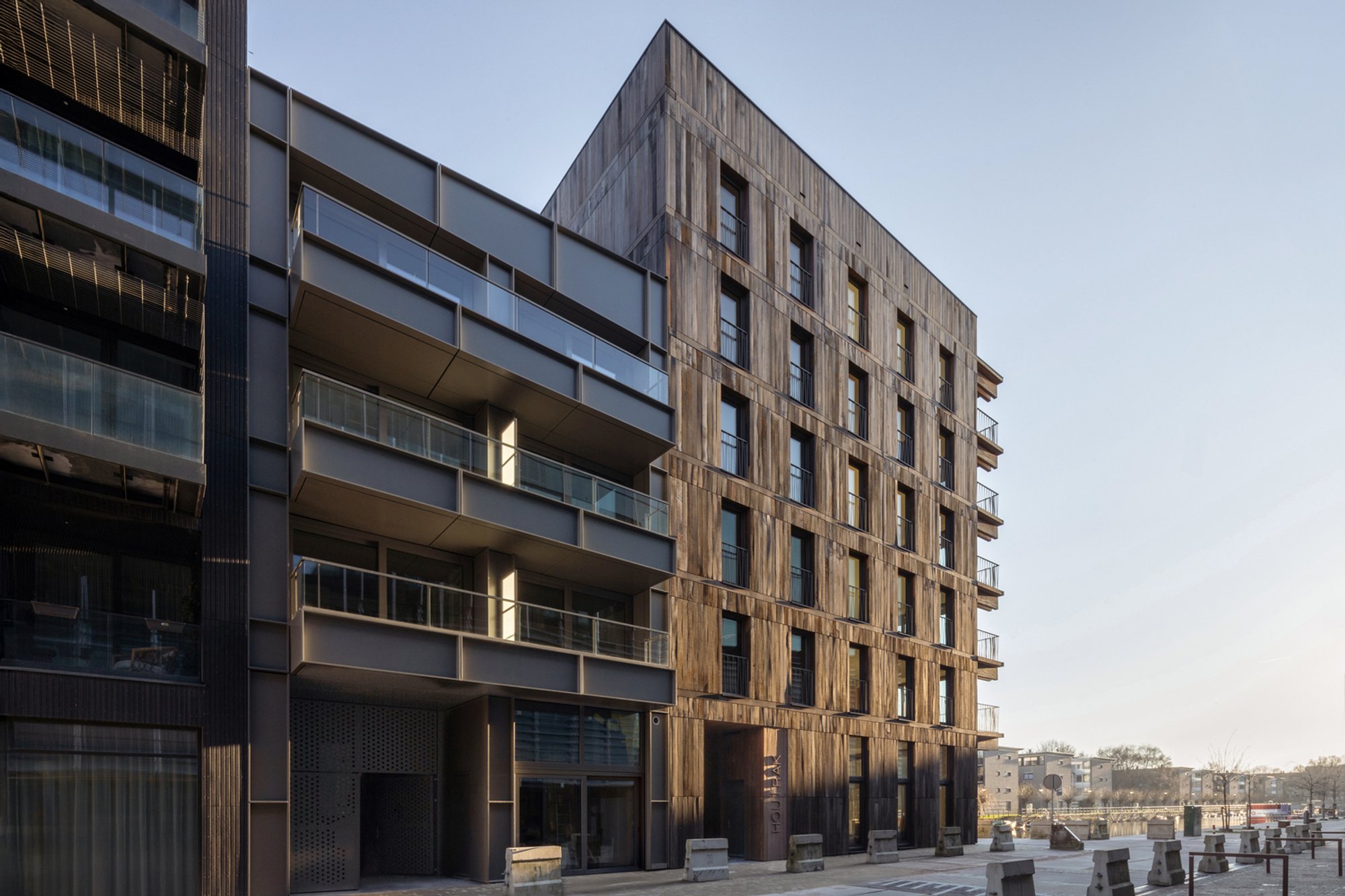
Houtrak Apartments: Sustainable Prefabricated Living on Oostenburg Island, Amsterdam
Houtrak Apartments in Amsterdam feature sustainable prefabricated modular construction, wooden and metal facades, spacious balconies, flexible layouts, and rooftop communal gardens.

Houtrak Apartments, designed by Marcel Lok Architect and Workshop Architecten, exemplifies contemporary residential architecture on Amsterdam’s Oostenburg Island. Completed in 2025, the 3,339 m² complex is strategically positioned at the end of the Oostenburgervaart, within a revitalized former industrial area. This urban district now thrives with a mix of residential and commercial spaces, including cafes, shops, and a hotel, anchored by the monumental Van Gendt Hallen and the INIT-building.
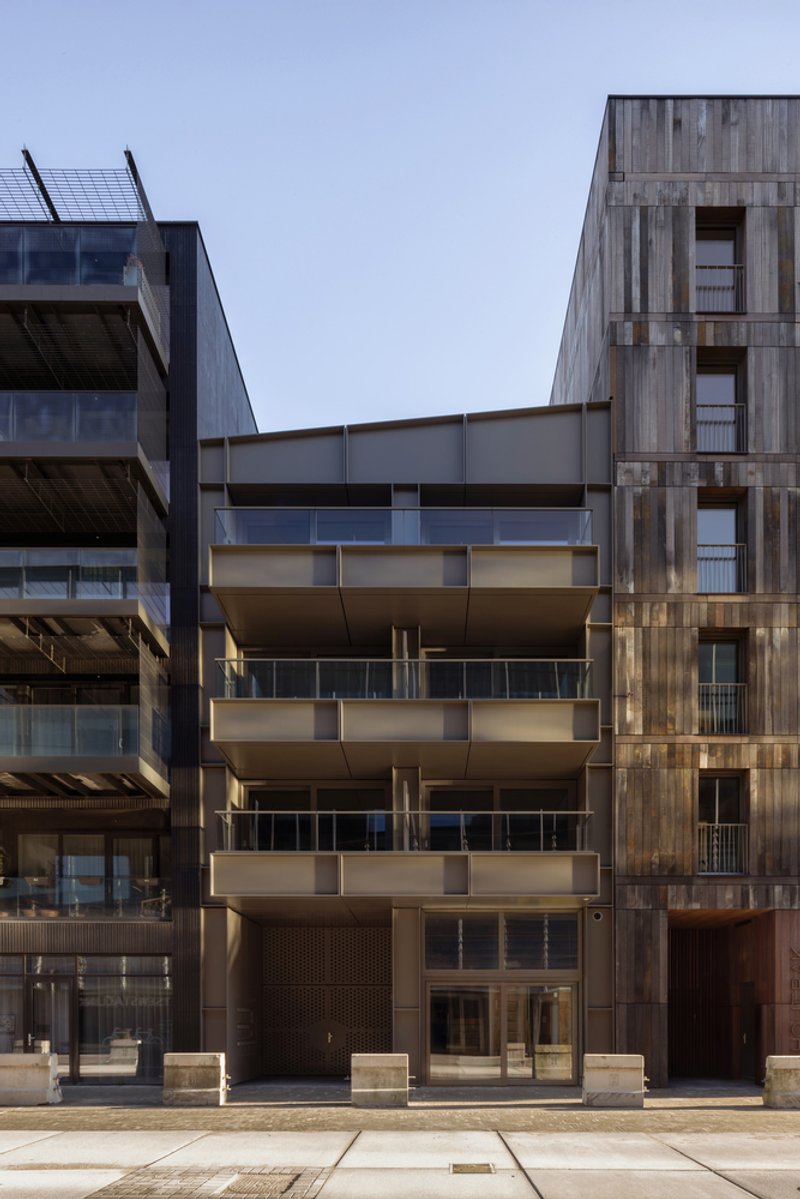
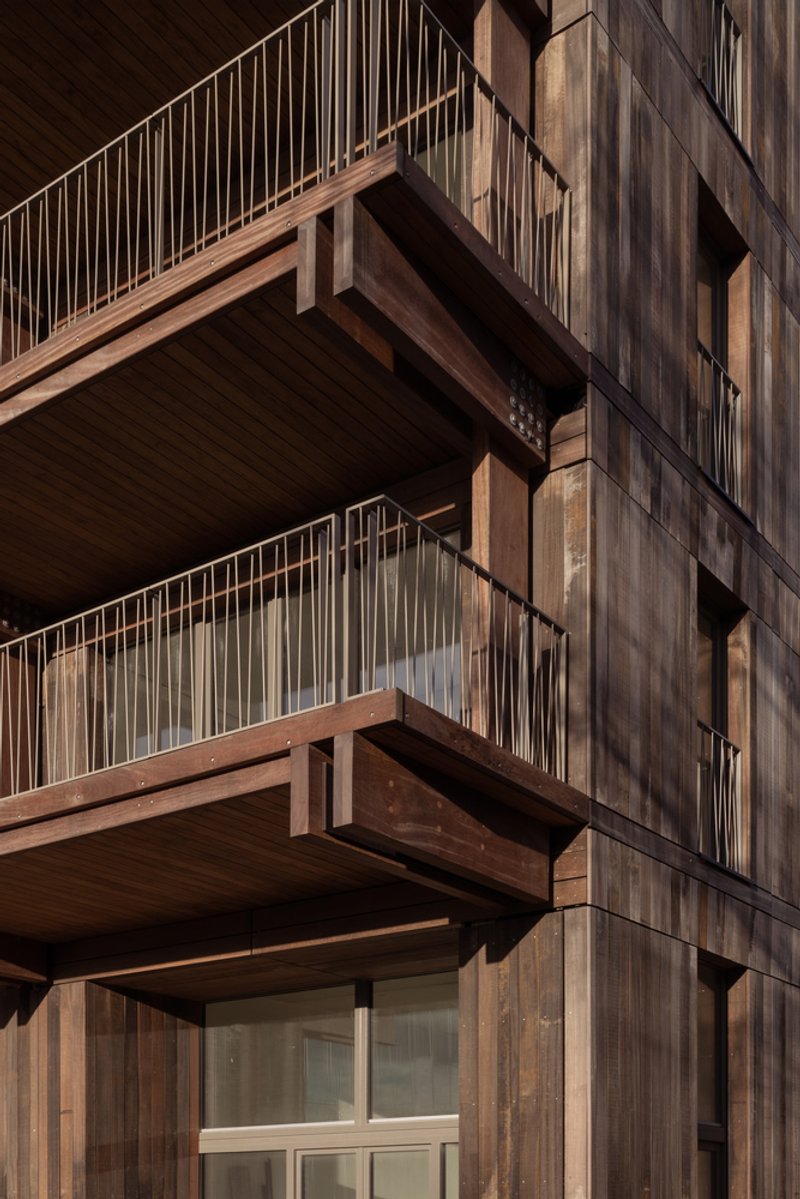
The Houtrak project consists of two distinct buildings. The first is a six-story block featuring recycled Azobé wooden facades and solid wooden balconies overlooking the water. The second is a four-story structure with shed roofs and black-brown metal facade cladding, oriented towards Isaac Titsingkade and Rumphiusstraat. Together, they balance industrial heritage with modern sustainable design.
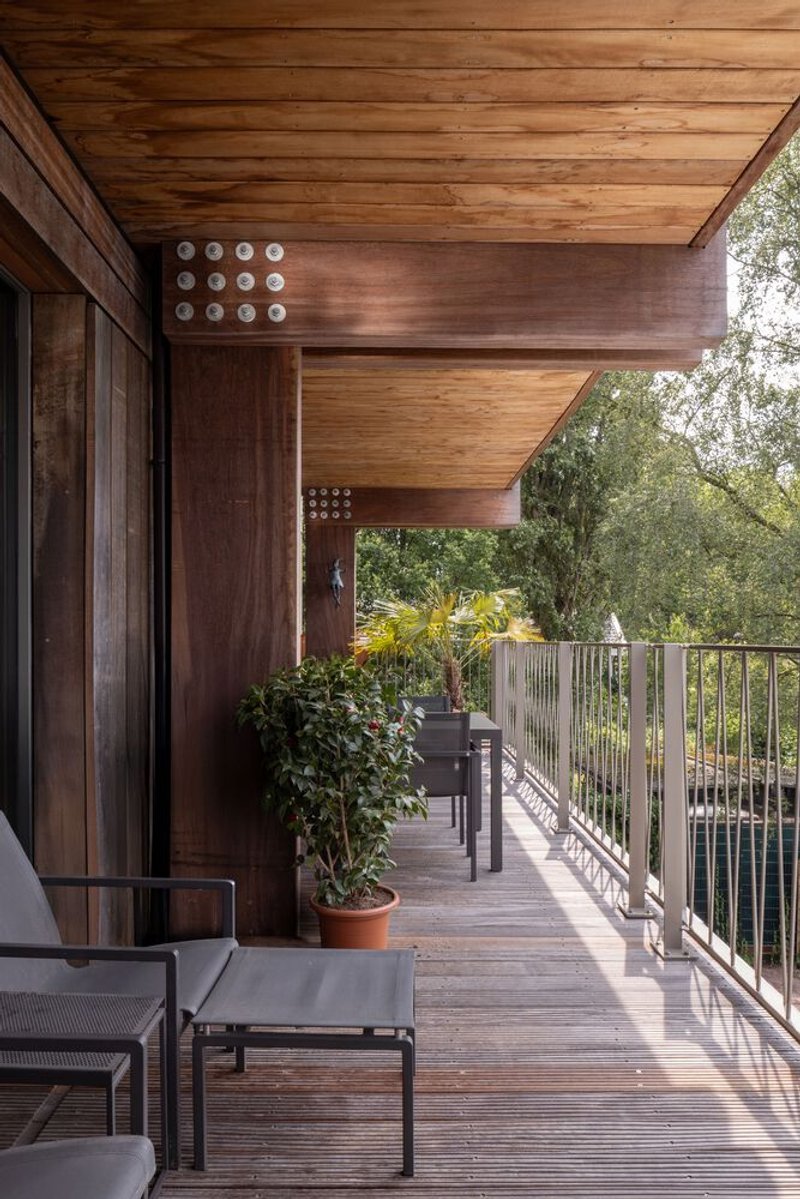
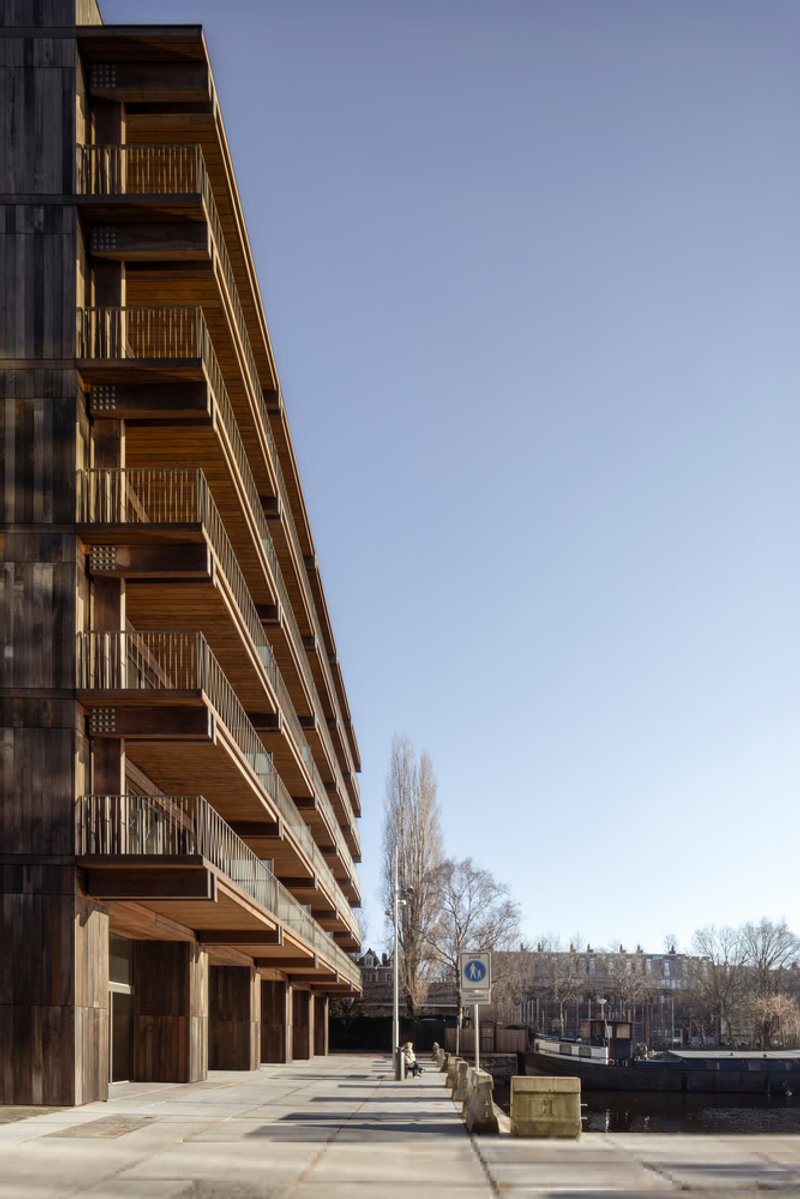
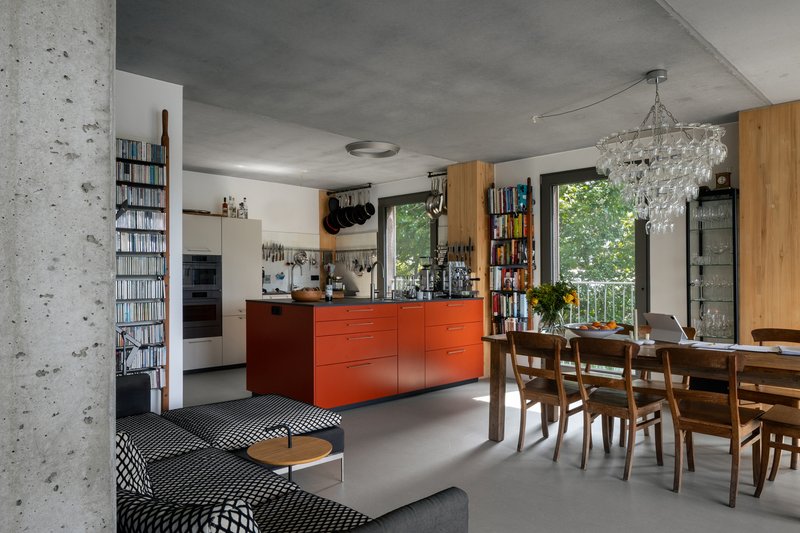
A key innovation in Houtrak Apartments is its fully prefabricated modular construction. Utilizing the CD20 modular system, prefabricated concrete floor slabs rest on massive wooden columns, creating an open structural framework. Light partition walls fill this structure, while all installations are separated from the load-bearing system, allowing future adaptability and layout flexibility. The solid Azobé wooden balconies reference the site’s industrial past while providing generous outdoor spaces for residents. This approach enables fast construction, durability, and flexible living options.
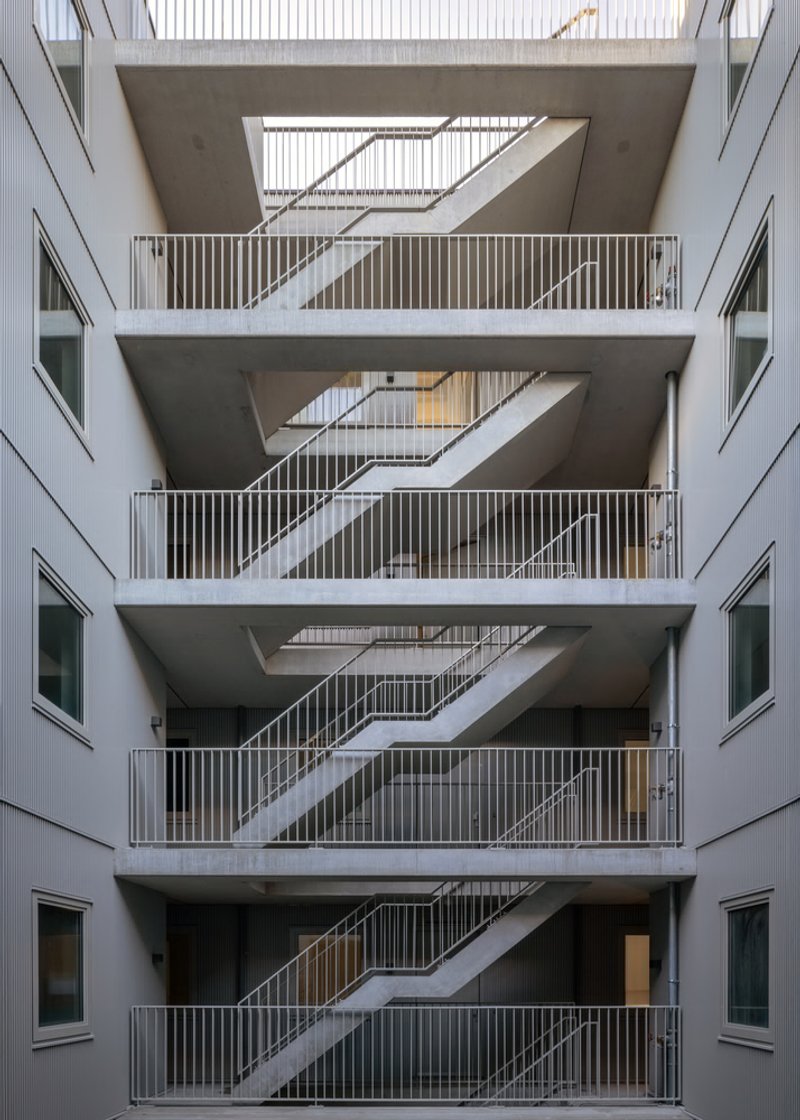
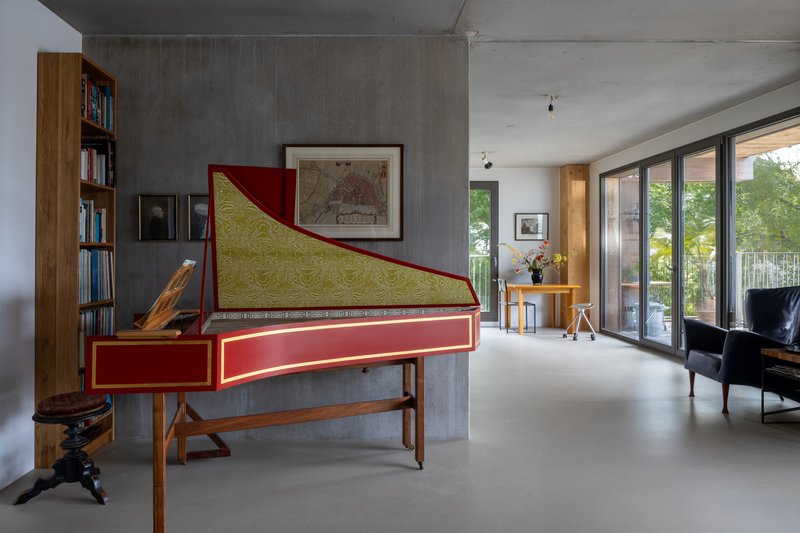
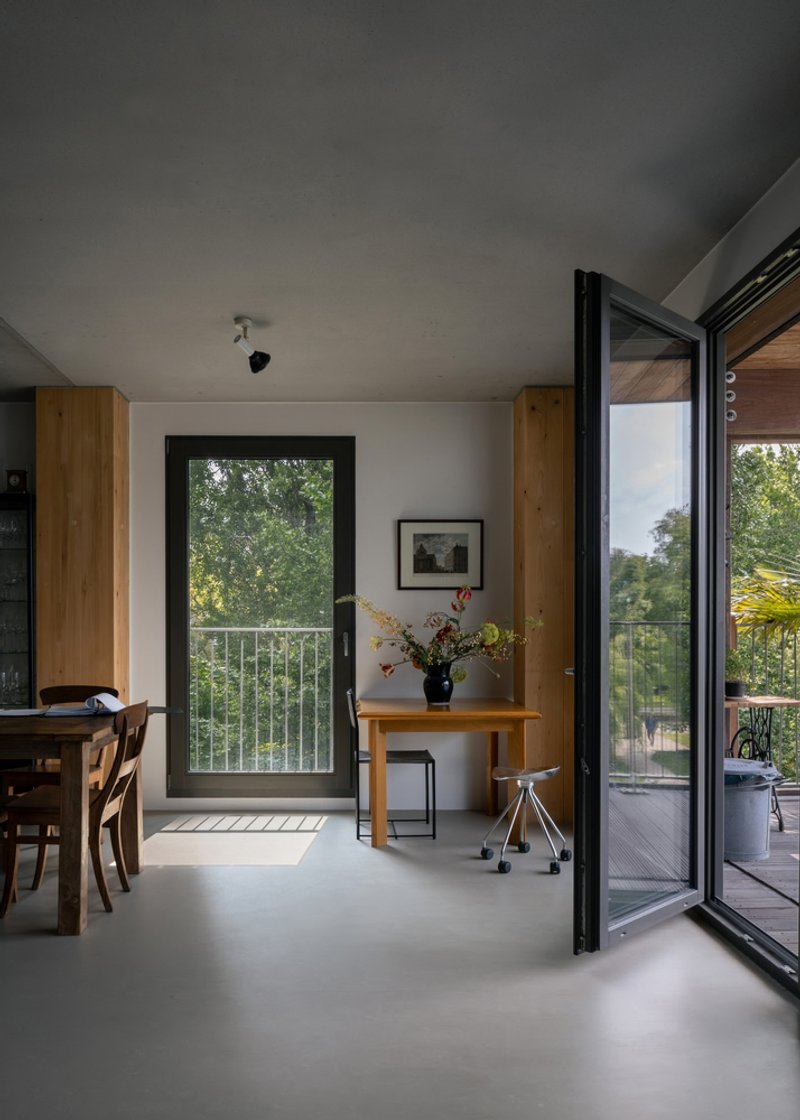
The complex houses 36 diverse apartments, ranging from compact 38m² studios to 160m² top-floor units. Every apartment features expansive balconies, 2.5 meters deep and spanning the full width of the unit. Roofs are also designed for private and communal roof terraces, with select apartments enjoying private spaces and a shared terrace atop the wooden building. Practical amenities include a semi-sunken communal bicycle shed, reflecting Amsterdam’s cycling culture.
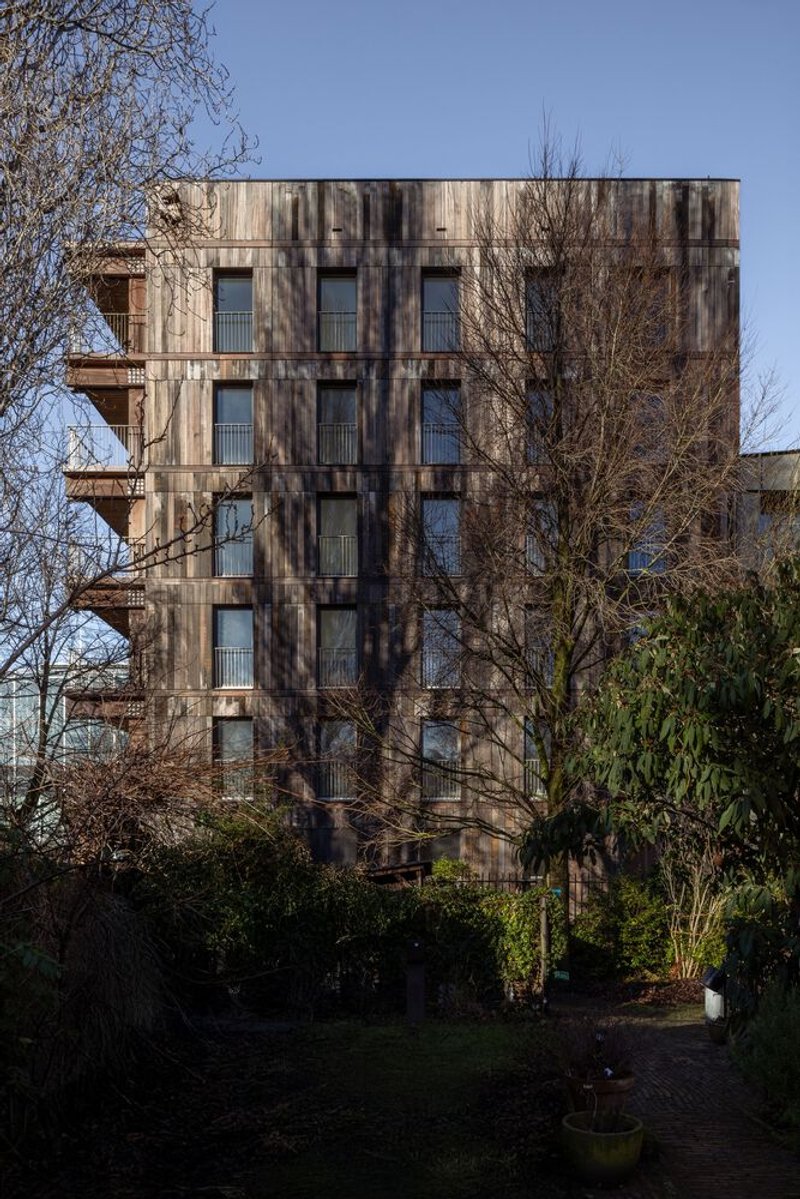
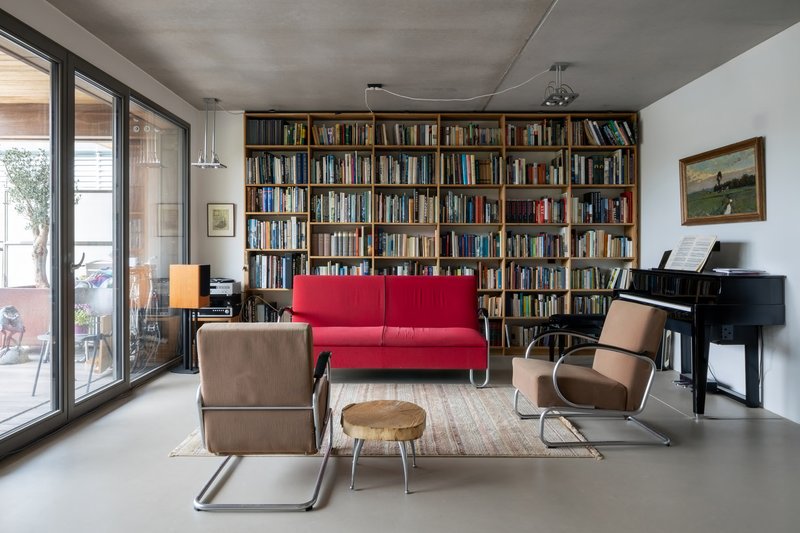
Sustainability is at the core of Houtrak Apartments. Each unit is equipped with an individual heat pump, high insulation, and triple-glazed windows in wood-aluminium or wooden frames. The wooden facade panels are sourced from reclaimed side planks of Dutch canal retaining walls, while the metal cassettes are powder-coated in grey-brown, requiring minimal maintenance. Over time, the Azobé wood develops a weathered, natural patina, enhancing both aesthetics and longevity.
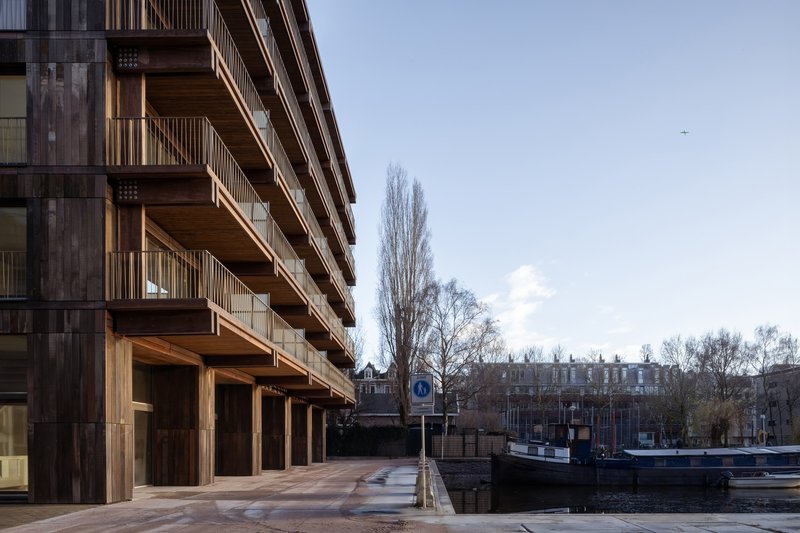
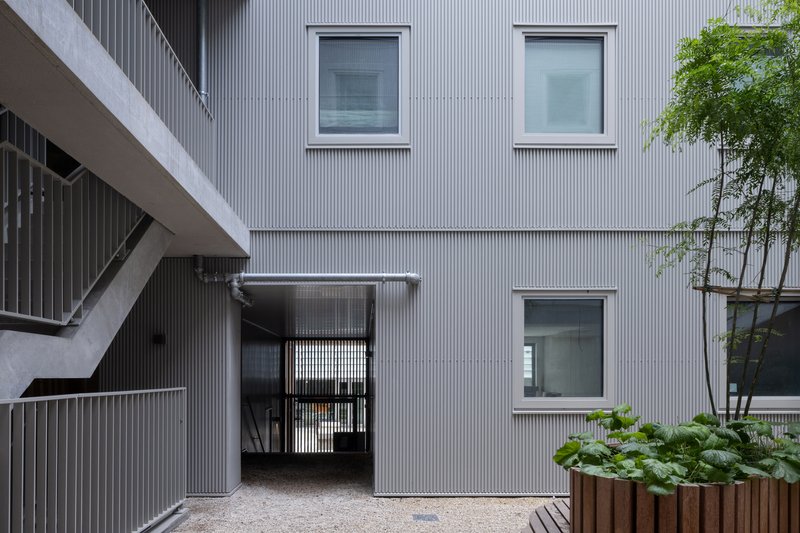
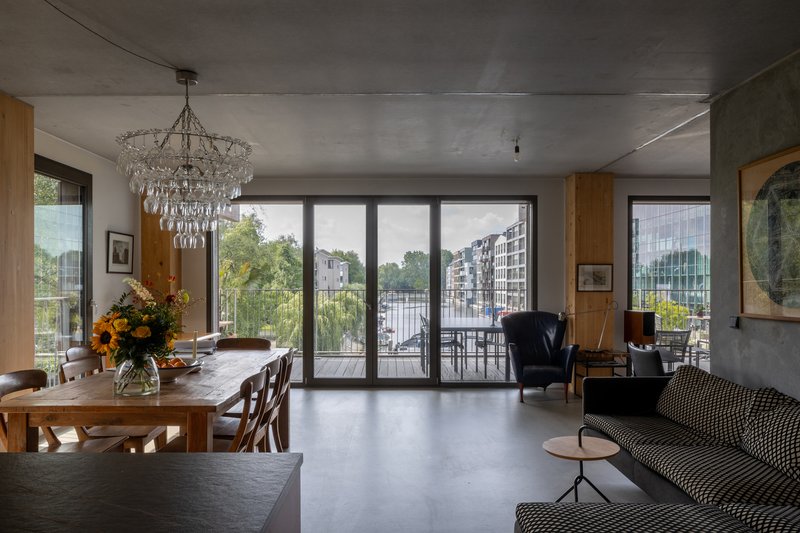
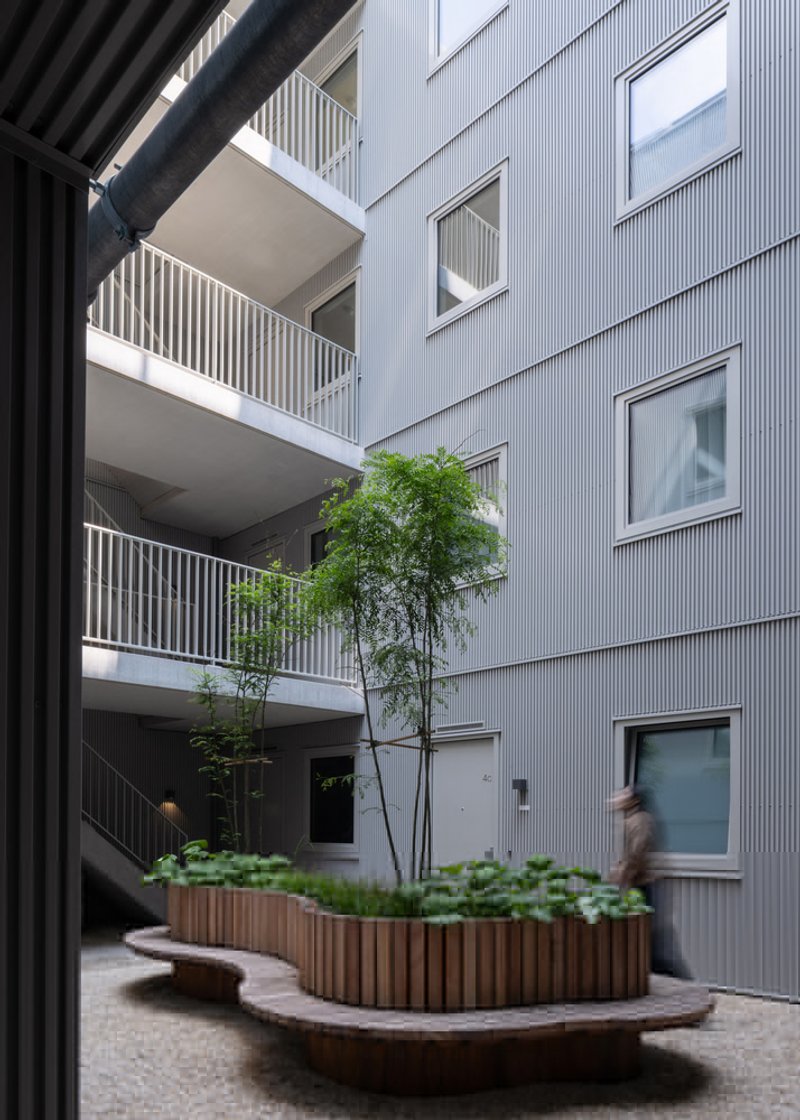
Both buildings feature entrances on Isaac Titsingkade, connected by a compact light court adjoining all front doors. Ground floors include split-level two-story houses with double-height living spaces, while upper floors offer a mix of lofts, studios, and large apartments. The wooden building’s cantilevered balconies extend over the water, while the metal building integrates semi-indoor balconies into the facade, ensuring privacy. Additionally, a collective rooftop garden, designed by Flux Landscape Architects, crowns the wooden building, providing residents with communal green space.
All photographs are works of Anna Odulinska




Popular Articles
Popular articles from the community

20 Most Popular Office Building Projects of 2025
From biophilic workspaces in India to net-positive energy offices in New Delhi, 20 office building projects that defined architecture in 2025.

1-1 Architects Builds a Nagoya House and Office from Decades of Stockpiled Timber
A 69-square-meter tower in dense residential Nagoya transforms surplus lumber into a home and workplace for a construction company.
Studio Gram Unfurls a Concrete Curve Through an Adelaide Queen Anne Villa
In Rose Park, a billowing concrete threshold stitches a century-old house to a sun-chasing pavilion organized around an existing pool.
Paco Oria Estudio Rebuilds a 1949 Valencian Town House Around Timber, Terracotta, and a New Interior Patio
In Godella, Spain, a semi-detached house from the postwar era is stripped to its party walls and rebuilt with wood and ceramics.


Similar Reads
You might also enjoy these articles
Olio Towers: A Mid-Rise for Performers That Fuses Housing, Rehearsal, and Stage
Located blocks from Houston's Theater District, this modular tower stacks living units around a central performance atrium.
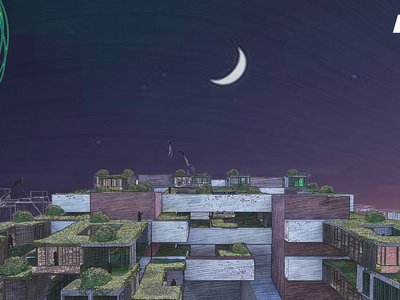
Oasis: Modular Green Housing Carved into Dhaka's Urban Fabric
A shortlisted Plugin Housing entry reclaims unauthorized settlements in Dhaka with stepped concrete volumes, green roofs, and ventilation-driven design.

Black Hole: A Floating Megastructure for the Post-Physical Era
Emiliano Mazzarotto envisions a spherical, self-scaling arena where e-sports, digital hotels, and holographic stadiums replace traditional public space.
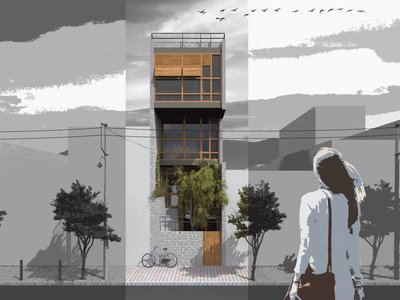
Compact & Sustainable Living in Piraeus: A Four-Level Family Home Built Around Light and Air
A narrow townhouse in one of Greece's densest port cities uses a central atrium and passive strategies to house three generations under one roof.


Explore Architecture Competitions
Discover active competitions in this discipline




The International Standard for Design Portfolios


The Global Benchmark for Architecture Dissertation Awards


The Global Benchmark for Graduation Excellence


Challenge to design mud housing for contemporary communities
Comments (0)
Please login or sign up to add comments
No comments yet. Be the first to comment!