

HPI School of Design Thinking by KMH Architects: Africa’s Premier Design Thinking Hub
HPI School of Design Thinking in Cape Town, by KMH Architects, fosters innovation with flexible, sustainable, collaborative learning spaces and 6-Star GBCSA design.


The Hasso Plattner School of Design Thinking Afrika (HPI d-school Afrika) at the University of Cape Town (UCT) stands as a landmark in design education and innovation. Designed by KMH Architects, this 5500 m² institute, completed in 2023, is the third Design Thinking school in the world and the first dedicated hub for Design Thinking in Africa. Its mission is to equip individuals with practical design thinking skills that enable innovative problem-solving in complex socio-political, economic, and cultural contexts.
Collaborative Design Thinking Process
From the outset, KMH Architects embraced the principles of Design Thinking in the project’s conceptualization. Rather than receiving a traditional brief, KMH collaborated directly with the HPI d-school Afrika team. This co-creation process ensured that the architectural design and programmatic decisions were informed by the very principles the school seeks to teach: innovation, collaboration, and iterative problem-solving.
Over a four-year design and construction journey, KMH Architects guided the integration of the school’s vision into every element of the building. This process resulted in a space that reflects learning, engagement, and collaboration, making the building itself a living example of Design Thinking in action.
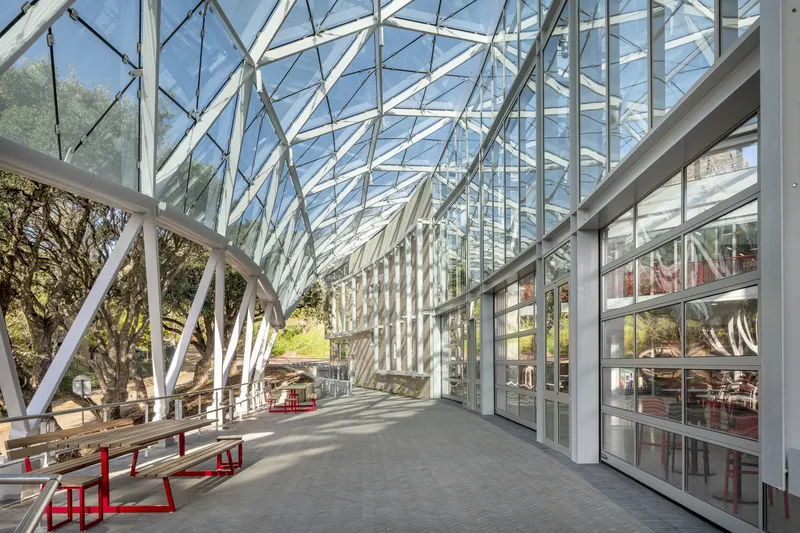
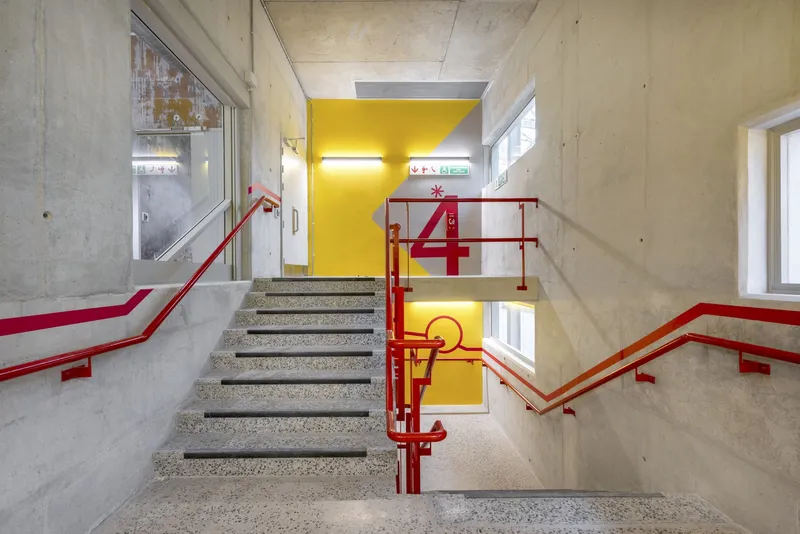
Sustainability and Contextual Integration
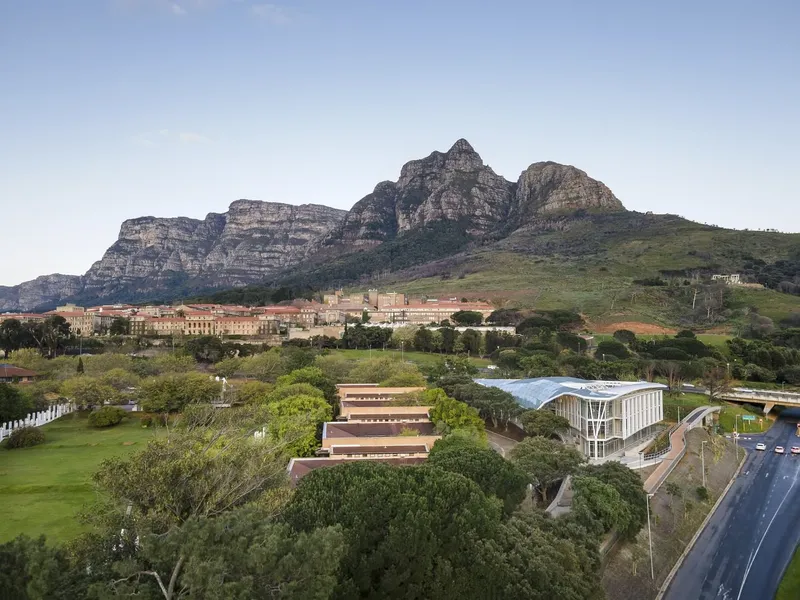
Sustainability was central to the design approach. Targeting a GBCSA 6-Star Public & Education Building certification, the project prioritizes environmental responsibility while responding to the contextual fabric of UCT.
Key sustainable strategies include:
- A flexible structural and service spine along the southern edge to maximize open, adaptable floorplates.
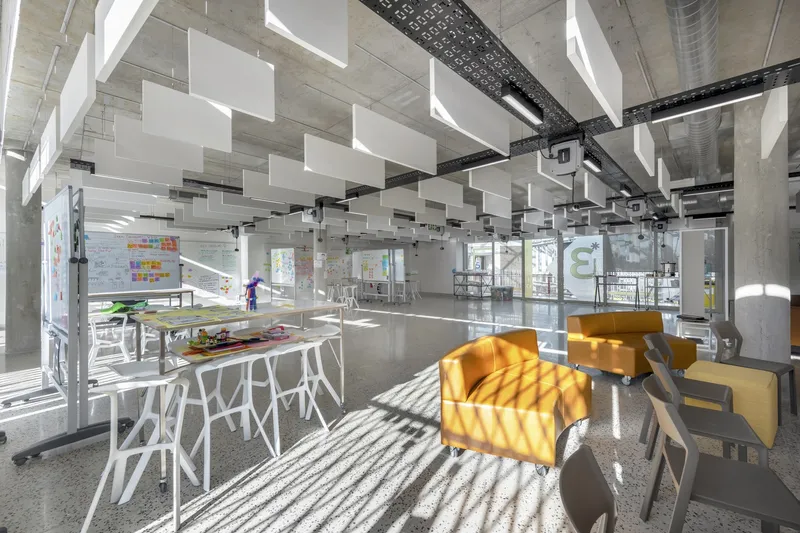
- Large, orthogonal studio spaces that can operate independently or open into the central “Us” space for collective engagement.
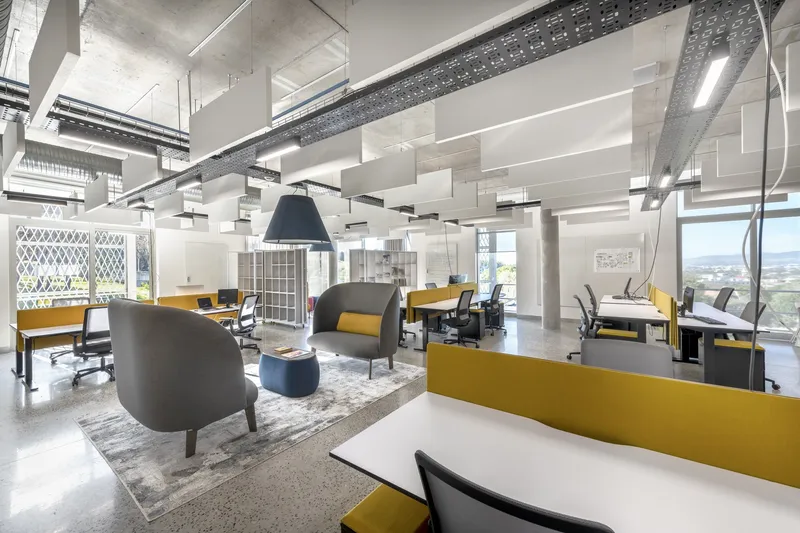
- Exposed cable trays and pull-down power cables that allow future-proof flexibility in layouts.
- Integration of “Me,” “We,” and “Us” zones to facilitate ideation, collaboration, and reflection, fostering a holistic learning environment.
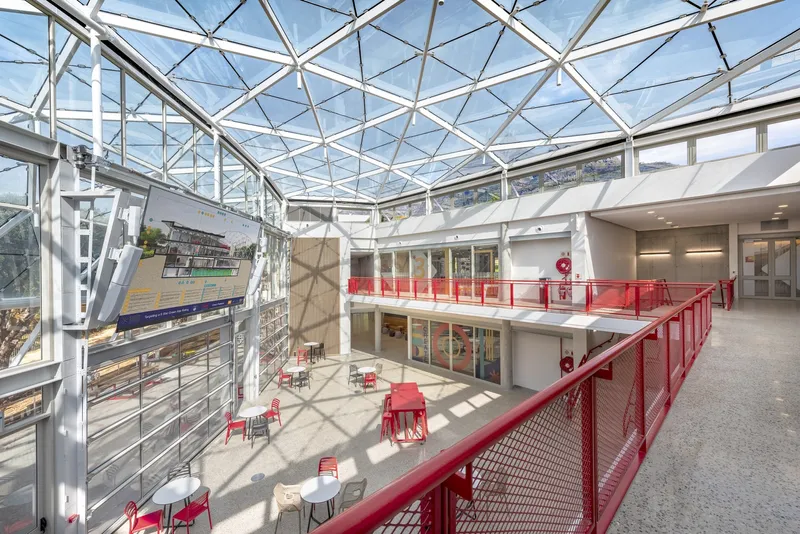
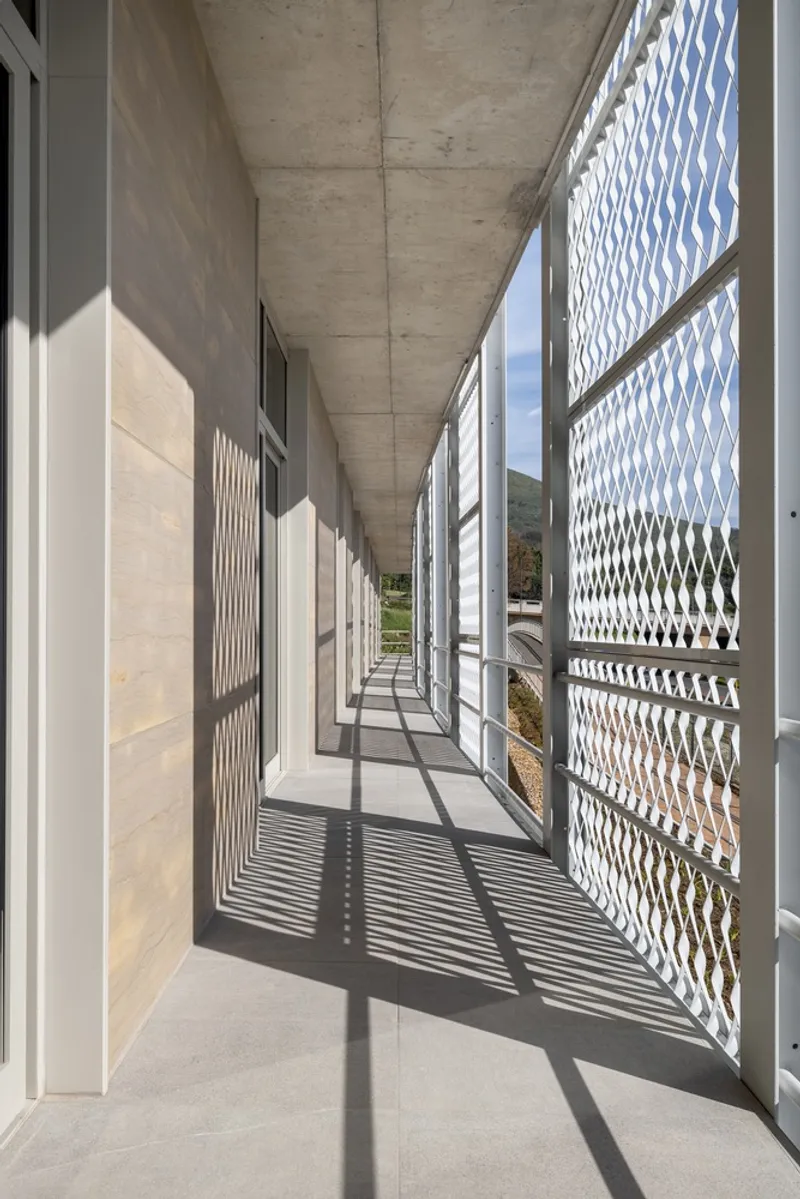
Spatial Planning and User Experience
The building’s spatial design supports a variety of learning and collaborative styles:
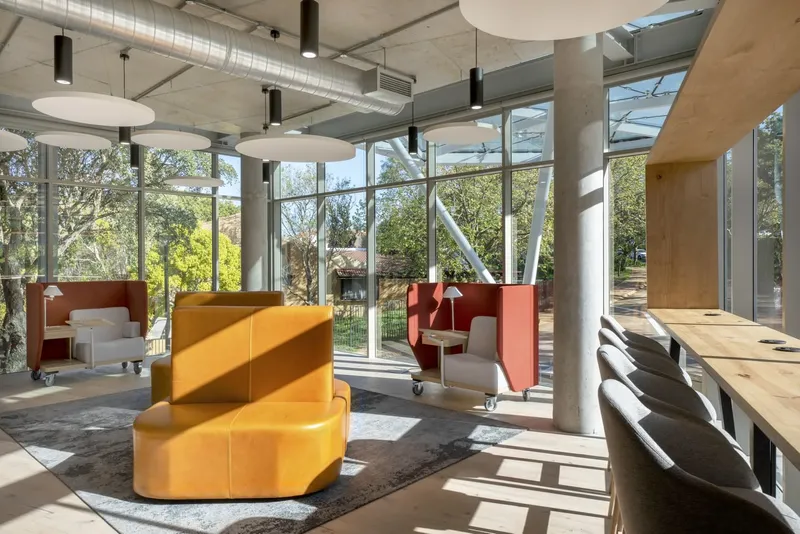
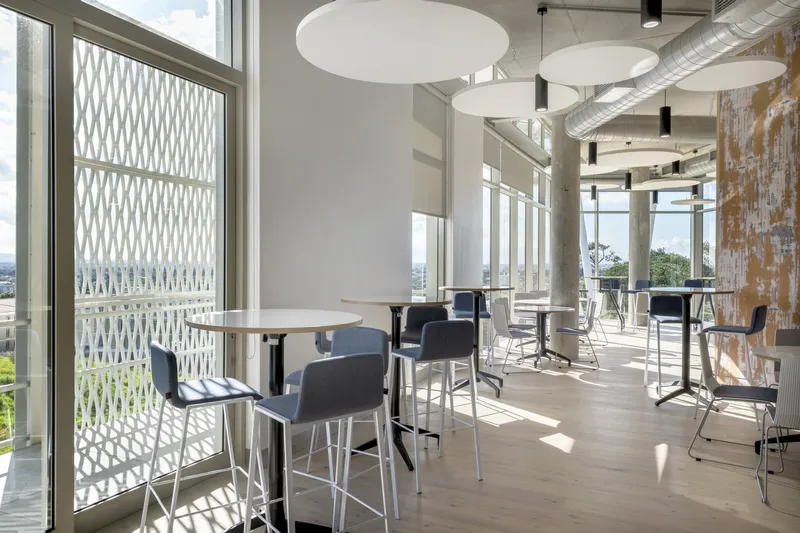
- “Me” spaces: Quiet zones at either end of the building designed for ideation, reflection, and personal recovery, with views onto landscaped surroundings.
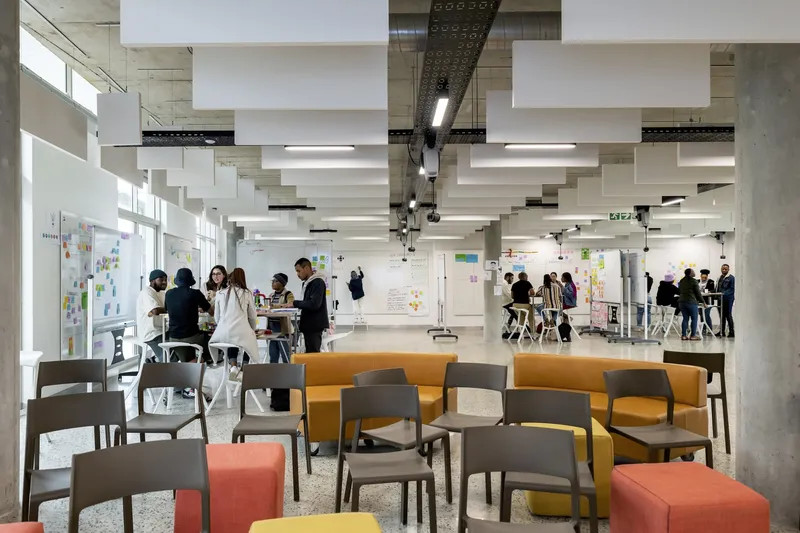
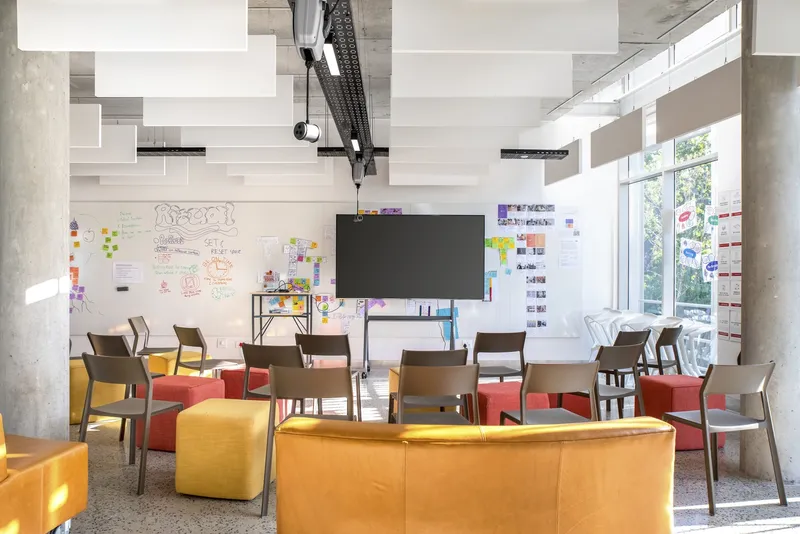
- “We” spaces: Teaching and learning studios, highly visible and interactive, encouraging real-time collaboration and engagement.
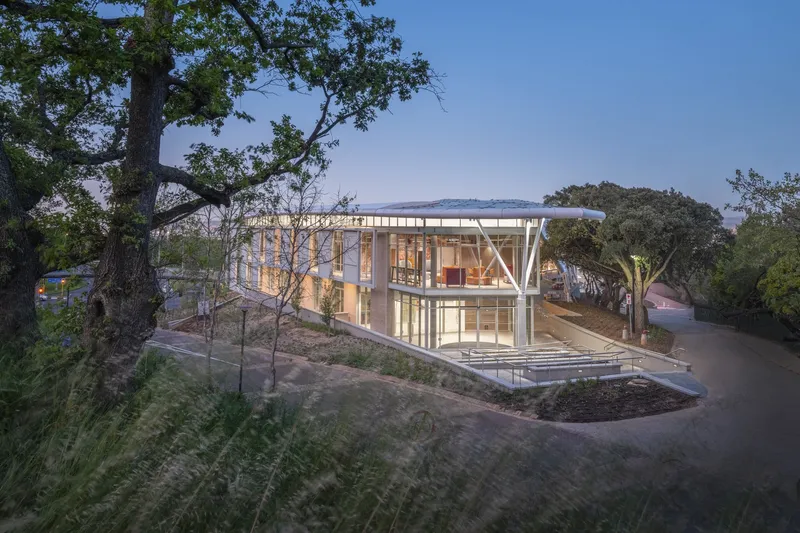
- “Us” space: A central roofed atrium and courtyard acts as a town square, connecting studios and communal areas visually and spatially.
This zoning strategy enhances the fluidity between private and shared spaces, making interaction between students, faculty, and staff seamless. Shared staff areas and breakout spaces along main circulation routes encourage informal networking and cross-disciplinary learning.
Materials, Aesthetics, and Flexibility
Material choices and finishes communicate innovation, openness, and adaptability:
- Moveable furniture in large, rectangular studio spaces ensures flexibility.
- Strategic use of glass partitions maximizes visibility and interaction.
- Landscape integration reinforces connection to UCT’s campus environment.
All design elements: from the structural cores containing circulation, services, and shear walls, to the open plan studios, promote maximum adaptability as the school evolves.
Innovation and Environmental Impact
Beyond its educational function, the HPI School of Design Thinking serves as a model for sustainable, adaptive, and collaborative architecture. Achieving a GBCSA 6-Star rating demanded innovative solutions that combine energy efficiency, environmental responsibility, and functional flexibility. The building’s design reinforces UCT’s vision of a “living laboratory”, enabling students and faculty to interact with a real-world example of collaborative, sustainable design.
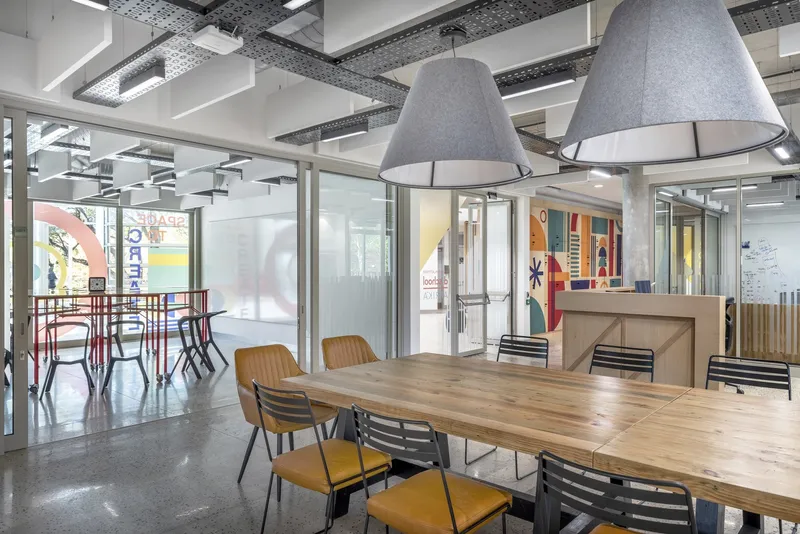
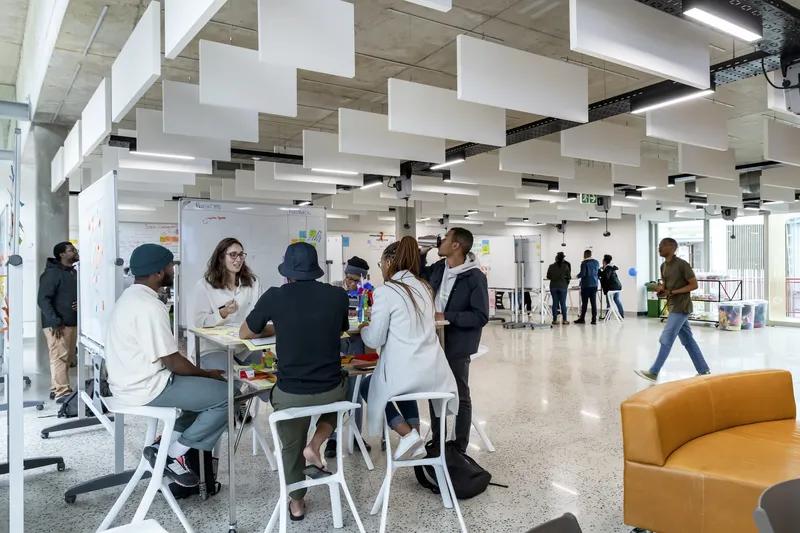
All photographs are works of Paris Brummer


Popular Articles
Popular articles from the community


Manzana Morphosis: Stretching Barcelona's Grid into a Living Landscape for 2050
A radical reworking of the Eixample manzana turns density into a tool for generous public space, vertical ecology, and environmental performance.

Cloaked Colonization: A Mobile Underwater Habitat That Moves Like a Fish
Micah Abaya's shortlisted EHC Pacific entry reimagines ocean settlement as a dispersed network of self-sustaining architectural organisms.

Singing Woman: An Opera House That Performs Before the Curtain Rises
Ovidiu Cristian Pavel's conceptual opera house translates Estonia's choral identity into a sculpted waterfront landmark facing the Baltic Sea.

The Amber Palace Opera: A Geological Fiction Surfaces on Tallinn's Baltic Waterfront
Pierre Brillard reimagines a Baltic legend as a public landscape, opera house, and waterfront promenade rooted in Tallinn's coastal identity.

Similar Reads
You might also enjoy these articles


Hodi-Mandai Geram
Project Function: Preservation and revitalization of the Intangible heritage and socio-spatial identity of the Hodi by Housing, Cultural Memory Center, Sacred Grove, landscape, local tourism economy


Olio Towers: A Mid-Rise for Performers That Fuses Housing, Rehearsal, and Stage
Located blocks from Houston's Theater District, this modular tower stacks living units around a central performance atrium.

Oasis: Modular Green Housing Carved into Dhaka's Urban Fabric
A shortlisted Plugin Housing entry reclaims unauthorized settlements in Dhaka with stepped concrete volumes, green roofs, and ventilation-driven design.

Black Hole: A Floating Megastructure for the Post-Physical Era
Emiliano Mazzarotto envisions a spherical, self-scaling arena where e-sports, digital hotels, and holographic stadiums replace traditional public space.

Explore Hse Art And Design School Competitions
Discover active competitions in this discipline

Challenge to reimagine the Iron Throne

Photograph architecture without architects

Illustrate the lost glory of Angkor Wat - Render Challenge

Design challenge to reuse E-waste
Comments (0)
Please login or sign up to add comments
No comments yet. Be the first to comment!