

Hypercube: A Server Building That Doubles as a Social Hub
Ricardo Reta reimagines the library as a cable-stayed data center wrapped in galleries, terraces, and bicycle infrastructure.


What happens to the library when books go digital? Ricardo Reta answers with the Hypercube, a building that treats server infrastructure not as something to hide in a windowless bunker but as the structural and programmatic core of an intensely social urban landmark. The outer cube hosts galleries, boardrooms, terraces, and bicycle parking; the inner cube locks away restricted server floors and a cinema. It is a provocation about the architecture of information: if data centers are the new libraries, they should be just as public.
Published as a project on uni.xyz, the Hypercube is positioned at the corner of its site to maximize urban visibility and pedestrian activation. A network of cable stays radiates from the facade, lending the building the tension and drama of a suspension bridge while reinforcing eight exoskeletal support structures that brace the central hub. The result is a form that looks engineered to move, even as it anchors an entire neighborhood's civic life.
Exoskeleton and Cables: Structure as Spectacle

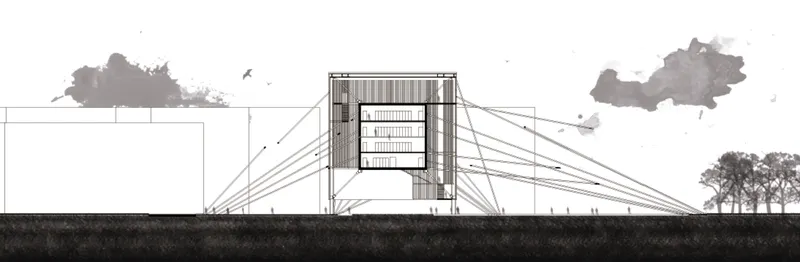
The perspective and elevation sketches reveal a building that wears its structure on the outside. Cantilevered volumes rest on angled supports while suspension cables fan out from a central tower, distributing loads across the facade in a pattern more commonly associated with bridges than buildings. Those eight exterior supports do double duty: they stiffen the overall form against lateral forces and carve out generous, column-free floor plates inside. Reta treats structural necessity as public gesture, turning the engineering diagram into an architectural identity visible from blocks away.
Two Cubes, Two Levels of Access

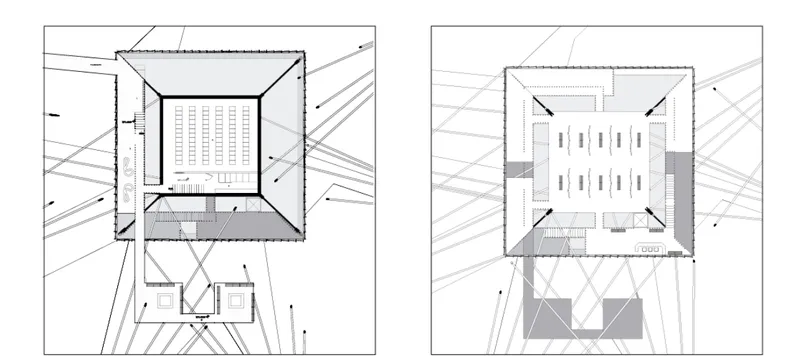
The plan drawings show a square footprint with a central courtyard crossed by diagonal cable traces, neatly illustrating the nested-cube logic. The outer ring is where public life happens: art galleries, boardrooms, flexible social spaces, and a fourth-floor terrace that connects directly to bicycle lanes running through the building. The inner ring is restricted, housing server floors whose environmental demands for cooling, security, and redundancy require separation from the open social program. A corridor sketch reinforces this duality, showing vertical timber slats that filter views and light while a spiral element overhead hints at the accelerator circulation system that shoots users between five levels without the wait of a conventional elevator.
Integrating bicycle infrastructure at the fourth floor is an unexpectedly practical move. Rather than relegating bikes to a ground-level cage, Reta threads dedicated parking and circulation through the building's social heart, ensuring that cyclists arrive directly into flexible gathering spaces and the terrace. It is urban mobility treated as architectural program rather than afterthought.
Vertical Circulation as Design Driver

The interior rendering of the central staircase captures the spatial ambition of the Hypercube's vertical core. Figures ascend beneath large glazed walls that flood the atrium with daylight, while exposed structural supports frame views upward through multiple levels. The staircase connects every floor, functioning as the slow, social counterpart to the accelerator system. That pairing is deliberate: one route encourages chance encounters and visual awareness of the building's full height, while the other prioritizes speed. The top floor, reached by either path, opens into five exhibition halls anchored by a central gallery space that visually ties the entire vertical sequence together.
A Lantern on the Corner
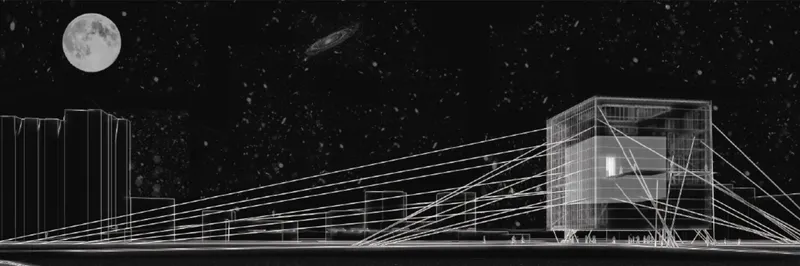
At night the Hypercube transforms into a glowing glass volume, its suspension cables catching light against a dark sky. The corner siting is critical here: the building reads as a beacon from two streets simultaneously, drawing visitors inward while signaling the presence of civic activity to passersby. Placing the mass at the property's edge also liberates the remainder of the lot for landscape and approach sequences, reinforcing the idea that data infrastructure can generate, rather than consume, public space.
Why This Project Matters
The default architectural response to digital storage is to build sealed, anonymous boxes on cheap land far from city centers. Reta rejects that premise entirely, arguing that the building type replacing the public library should inherit the library's civic ambition. By wrapping server floors in art galleries, bicycle routes, and open terraces, the Hypercube reframes data infrastructure as a reason for people to gather rather than a reason to look away.
Equally compelling is the structural proposition. The exoskeletal cables and angled supports are not decorative; they enable the column-free interiors and cantilevered volumes that make the public program possible. Structure, program, and urban strategy are locked into a single diagram. For a young designer exploring the intersection of technology and public space, that level of integration signals a sharp and disciplined design intelligence.
View the Full Project
About the Designers
Designer: Ricardo Reta
Enter a Design Competition on uni.xyz
uni.xyz runs architecture and design competitions year-round that reward proposals with spatial conviction and real site intelligence.
Project credits: Hypercube by Ricardo Reta.


Popular Articles
Popular articles from the community

Temporary Home for Dogs: A Reversed Zoo Rethinks Animal Shelter Architecture
In Bucharest, a sinuous corridor and freed landscape flip the logic of containment, designing a shelter that works to make itself unnecessary.
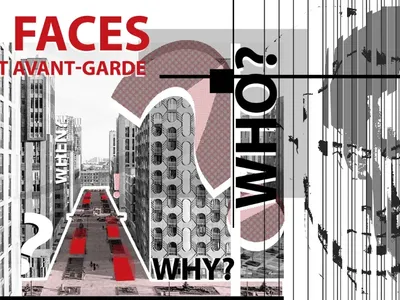
Faces of the Soviet Avant-Garde: Turning Moscow's Street Names into an Open-Air Museum
A network of sculptural installations across a Moscow residential district transforms forgotten architect names into spatial encounters with cultural memor
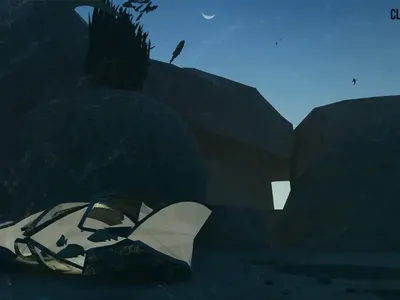
Cloaked Colonization: A Mobile Underwater Habitat That Moves Like a Fish
Micah Abaya's shortlisted EHC Pacific entry reimagines ocean settlement as a dispersed network of self-sustaining architectural organisms.

The Amber Palace Opera: A Geological Fiction Surfaces on Tallinn's Baltic Waterfront
Pierre Brillard reimagines a Baltic legend as a public landscape, opera house, and waterfront promenade rooted in Tallinn's coastal identity.

Similar Reads
You might also enjoy these articles

Day and Night Park: A Time-Based Urban Newsstand in Beijing
A temporary urban newsstand in Beijing blending travel, light, and reading through poetic colors, compact form, and community-focused design.

Modernist Patio Renovation in El Masnou, Barcelona by Oliver Segura Arquitectura + Cebrià Arquitectura
Modernist patio renovation blending tradition and innovation with a movable pool, leveled floors, and Catalan materials in El Masnou.

Alto Residencial Coop: Cooperative Housing Development in Santiago de Compostela by Carbajo Barrios Arquitectos
A linear cooperative housing complex blending white volumes and perforated metal façades, enhancing community living, natural light, privacy, and urban integration.
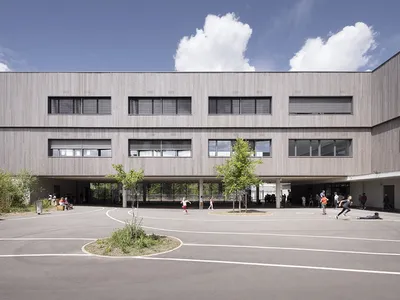
Vil Genis School by BPA ARCHITECTURE – Massy, France
Vil Genis School in Massy, France, features sustainable design, south-facing classrooms, community integration, accessible spaces, and modern educational architecture.

Explore Cubo-Futurism Competitions
Discover active competitions in this discipline

Challenge to reimagine the Iron Throne

Photograph architecture without architects

Illustrate the lost glory of Angkor Wat - Render Challenge

Design challenge to reuse E-waste
Comments (0)
Please login or sign up to add comments
No comments yet. Be the first to comment!