

Ibaté Building By Studio Arthur Casas: Seamless Integration of Residential Architecture and Urban Landscape in São Paulo
Ibaté Building by Studio Arthur Casas features luxurious São Paulo apartments with concrete façades, terraces, vertical landscaping, sustainable systems, and seamless urban integration.


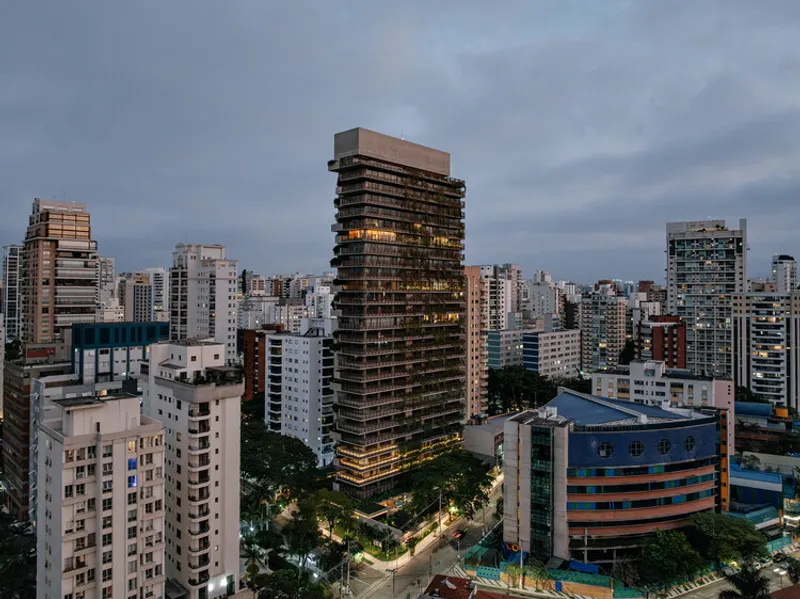
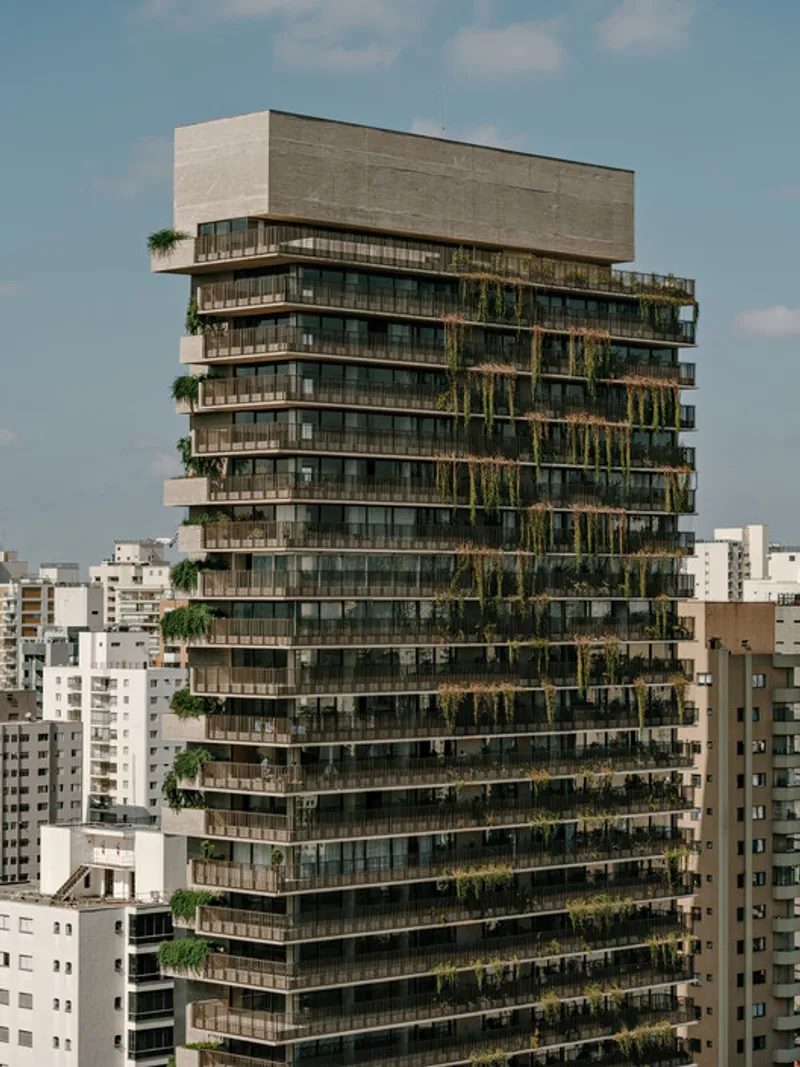
The Ibaté Building, designed by Studio Arthur Casas for the developer Cáucaso, is a contemporary residential tower located in the Vila Nova Conceição neighborhood of São Paulo, Brazil. Completed in 2025, the project spans 21,082 m² and is strategically sited on a corner lot that bridges the city’s dense metropolitan axis with a calmer residential fabric. This unique urban condition informed every design decision, creating a building that responds sensitively to its surroundings while asserting a strong architectural identity.


Urban Context and Design Approach
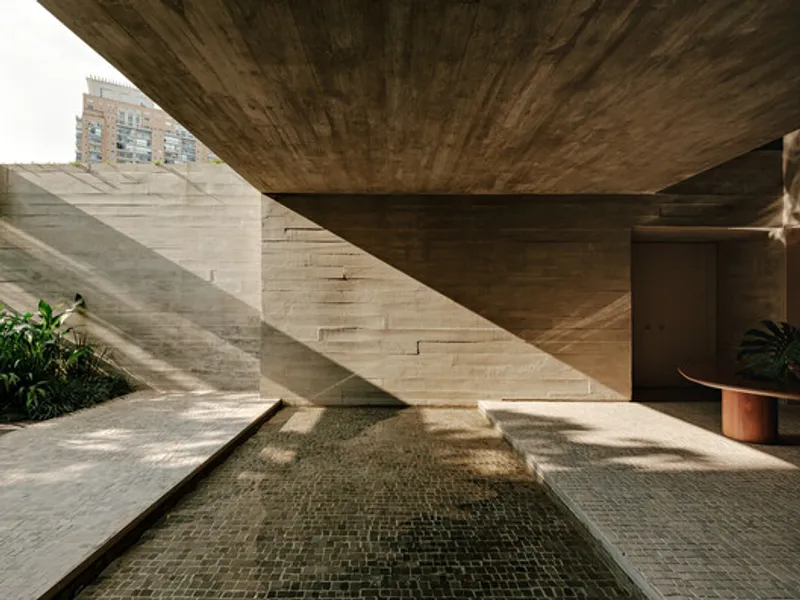
The Vila Nova Conceição neighborhood presents a transitional urban fabric where vertical towers meet low-rise residential streets. The Ibaté Building engages both scales, prioritizing spatial quality, urban integration, and constructive clarity. Its design emphasizes the conscious use of materiality, enhancement of common spaces, and the seamless relationship between private and public realms.


Materiality and Façade Design
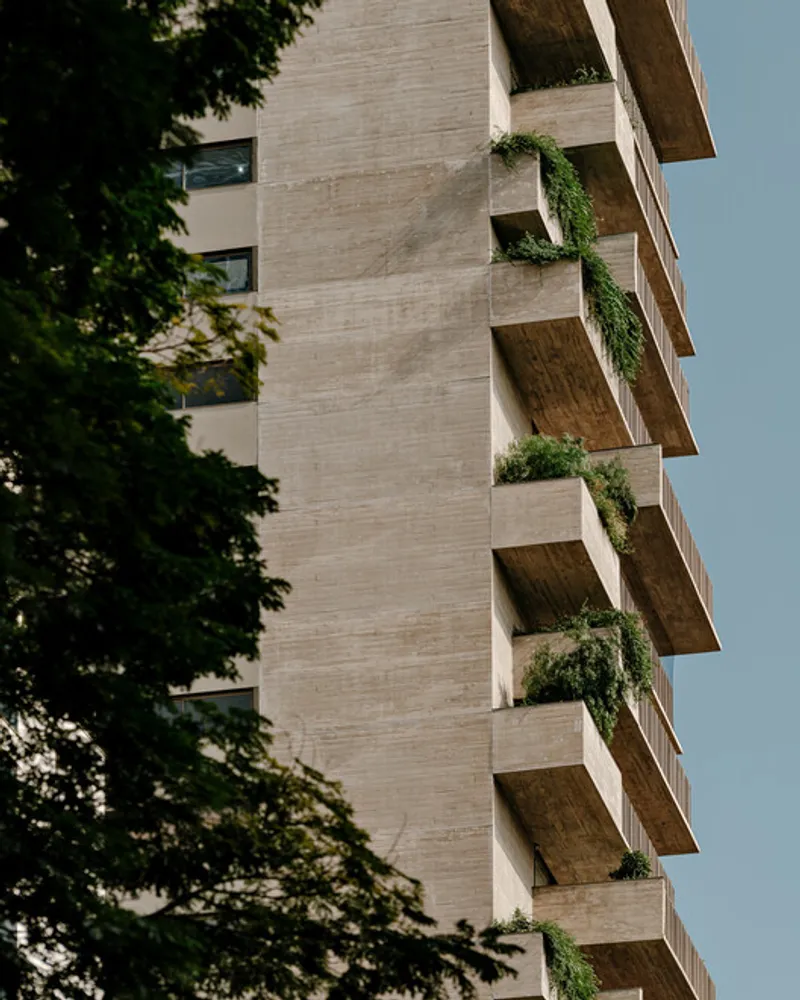
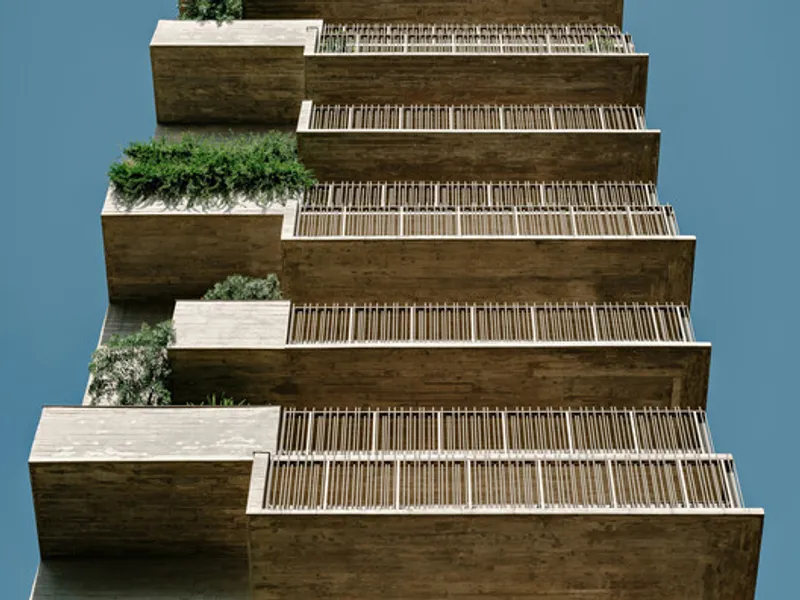
The building’s structure is fully expressed, with structural concrete forming the primary façade, eliminating the need for cladding. Its ribbed texture and warm pigmentation create a solid, continuous visual identity, while vertical landscaping is integrated organically, providing both thermal regulation and visual softness. Aluminum guardrails with brass finishes and large glass frames complete the envelope, ensuring openness and elegance.

Residential Units and Spatial Organization
The tower occupies a longitudinally proportioned lot, with each floor hosting a single residential unit of approximately 450 m². Floor plans are meticulously organized to separate social, intimate, and service cores, ensuring privacy and functional clarity. Two elevator cores facilitate circulation, while all units feature cross ventilation, large openings, and optimized solar orientation. Continuous terraces front the building, with alternating planter boxes introducing volumetric variation, natural shading, and a dynamic facade rhythm.
Ground-Level Interaction and Public Engagement
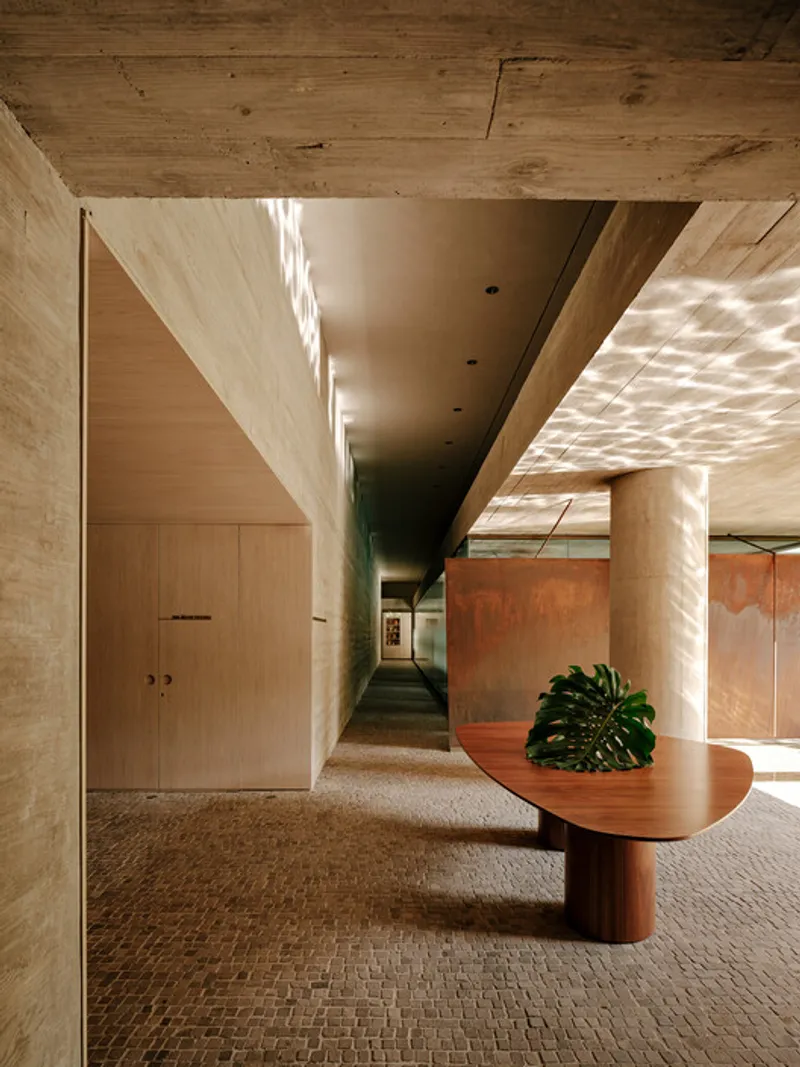
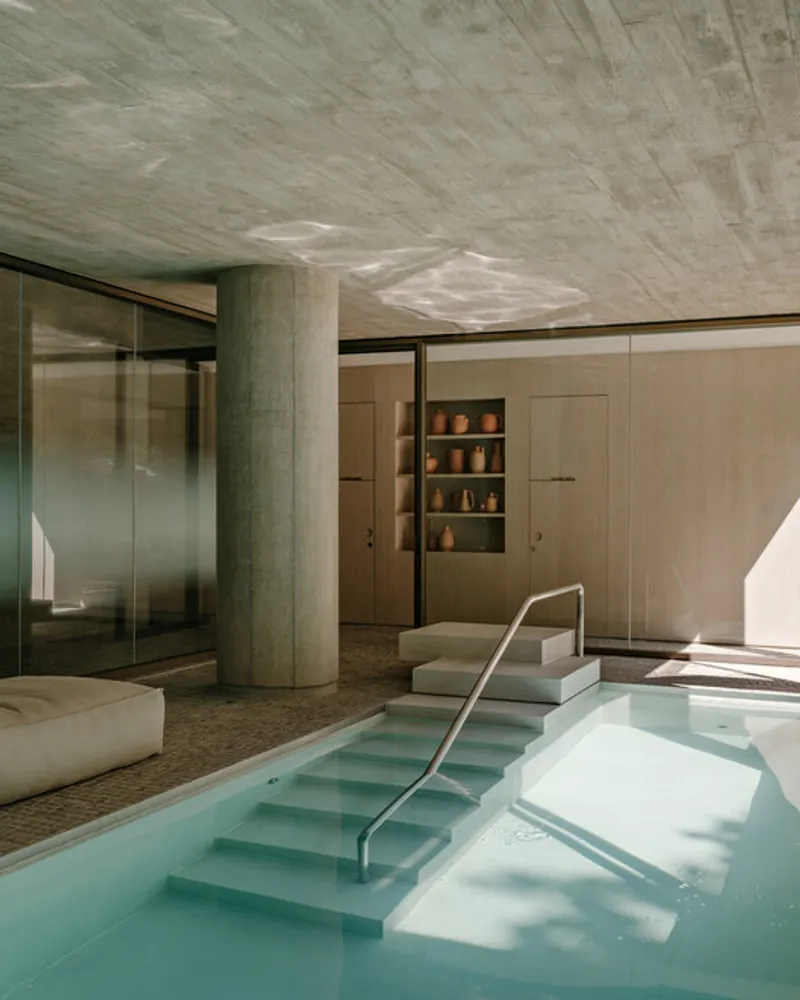
At street level, the building engages the urban environment through a generous, barrier-free area that mediates between city and residence. A glassed-in “clausura” functions as an open anteroom, enhancing transparency and the collective nature of shared spaces. Here, landscaping, the pool, elevator hall, and a corten steel sculpture by Túlio Pinto converge, creating a harmonious intersection of art, leisure, and circulation.

Interior Design and Material Continuity
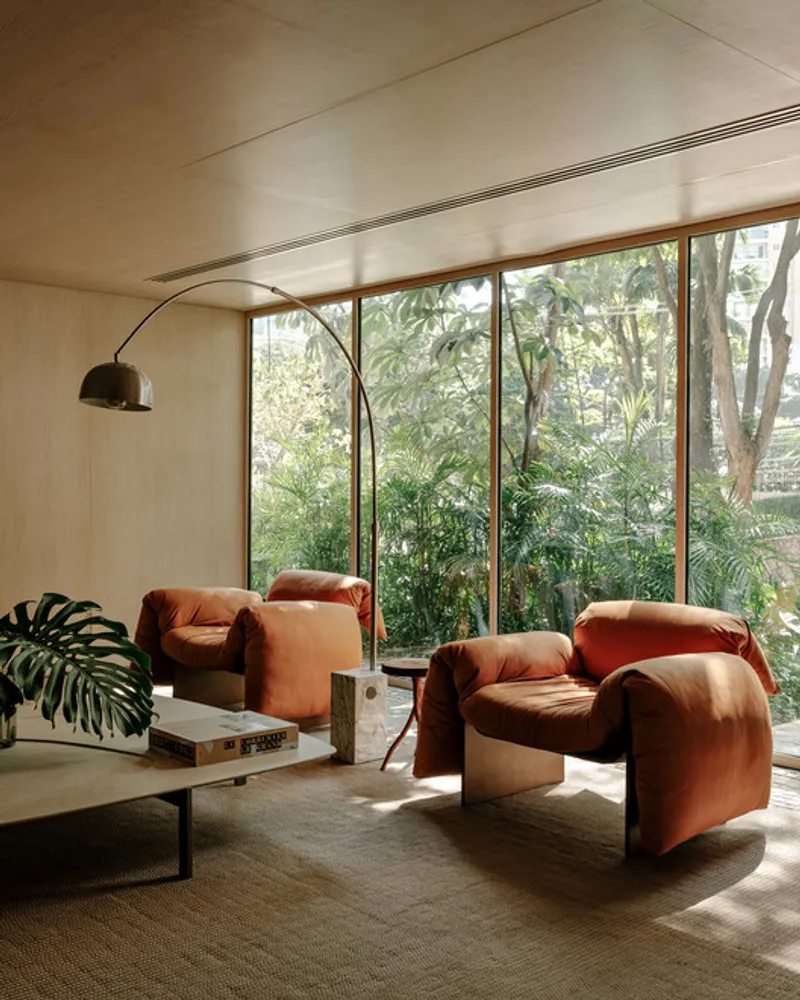
Interior spaces continue the material palette of concrete, wood, glass, and warm metals, ensuring visual continuity and spatial coherence. Wooden panels subtly conceal technical elements while organizing circulation. Furniture and interior curation feature renowned Brazilian designers, including Jorge Zalszupin, Carlos Milan, Marcelo Magalhães, Guilherme Wentz, Lattoog, and Arthur Casas, with highlights such as the Soft armchair (+55design) and the Square table (Herança Cultural) enhancing comfort and aesthetic appeal.

Sustainability and Environmental Strategies
Sustainable design is embedded throughout the project. Solar panels heat the pool, water reuse systems minimize resource consumption, and infrastructure supports electric vehicle charging. The integration of terraces and landscaping with thermal and visual systems further enhances environmental performance and resident comfort.
Architectural Significance
The Ibaté Building exemplifies how residential towers can achieve permanence, urban integration, and environmental responsibility. Its architectural strategy unifies structure, materiality, and function, creating a tower that is both a landmark in São Paulo’s skyline and a harmonious part of the local neighborhood. By combining constructive rationality, spatial generosity, and careful contextual reading, the project demonstrates a thoughtful approach to modern urban living, where architecture and landscape exist in symbiotic balance.

All the photographs are works of Fran Parente


Popular Articles
Popular articles from the community


David Macias Steps a Doorless Stone and Plaster House Down a Tropical Colombian Hillside
In the humid hills of Colombia, Threshold House replaces the front door with an open void and terraces its 850 m² down the slope instead of fighting it.

GROUP A Strips a 1969 Rotterdam Harbor Headquarters to Its Frame and Wraps It in Timber Louvers
In Rotterdam's M4H harbor district, Ferro Offices reuses a 1969 frame, adds one timber storey and reaches BREEAM-NL Outstanding.

David Ortega Stacks a Two-Story Mexico City Penthouse Around a Steel Stair and a Pergola-Shaded Roof Terrace
In Colonia Roma, a 300 m² penthouse uses oak joinery, a planted steel stair and a slatted roof pergola to make a new-build apartment feel like a house.

Cube Design Draws an Ecological Corridor Between Two Shenzhen Hills with the Nankai Building
Beside Shenzhen's container docks, the Nankai Building pairs stacked balconies with a climbing green screen to connect two hillsides across its height.

Similar Reads
You might also enjoy these articles


Hodi-Mandai Geram
Project Function: Preservation and revitalization of the Intangible heritage and socio-spatial identity of the Hodi by Housing, Cultural Memory Center, Sacred Grove, landscape, local tourism economy


Olio Towers: A Mid-Rise for Performers That Fuses Housing, Rehearsal, and Stage
Located blocks from Houston's Theater District, this modular tower stacks living units around a central performance atrium.

Oasis: Modular Green Housing Carved into Dhaka's Urban Fabric
A shortlisted Plugin Housing entry reclaims unauthorized settlements in Dhaka with stepped concrete volumes, green roofs, and ventilation-driven design.

Black Hole: A Floating Megastructure for the Post-Physical Era
Emiliano Mazzarotto envisions a spherical, self-scaling arena where e-sports, digital hotels, and holographic stadiums replace traditional public space.

Explore Residential Building Competitions
Discover active competitions in this discipline

Challenge to design mud housing for contemporary communities

Challenge to reimagine the Iron Throne

Photograph architecture without architects

Illustrate the lost glory of Angkor Wat - Render Challenge
Comments (0)
Please login or sign up to add comments
No comments yet. Be the first to comment!