
Immerse Yourself in Architectural Brilliance: H ARQUITECTES Unveils the Captivating HOUSE 905
Does H ARQUITECTES' HOUSE 905 Redefine Modern Living with Its Ingenious Design?
Unveiling HOUSE 905: A Serene Oasis Integrating Privacy, Garden, and Contemporary Design
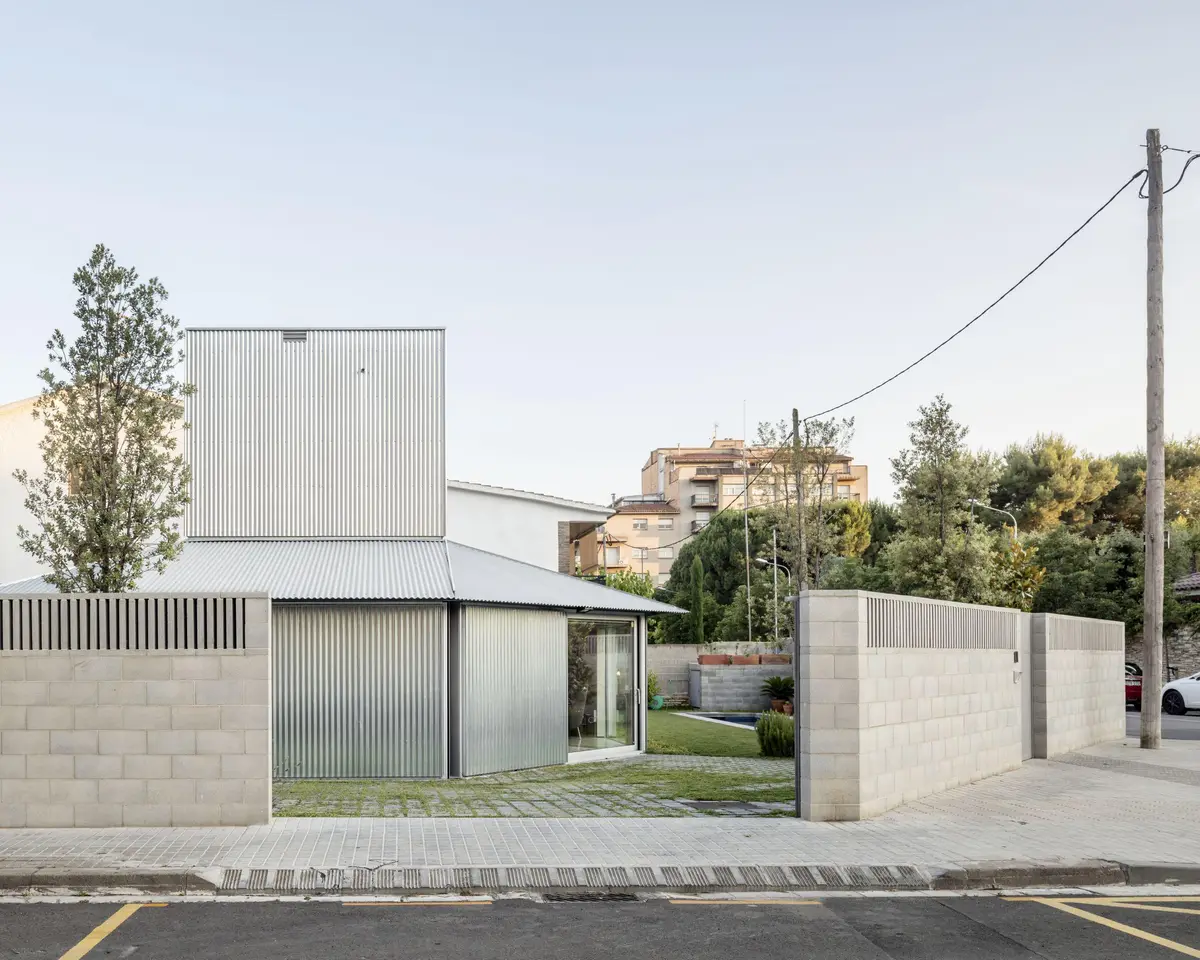
In the tranquil embrace of a garden city, nestled between a close neighbour to the south and a cluster of dated houses to the north, lies the remarkable HOUSE 905—a captivating architectural marvel designed by H ARQUITECTES. Embracing the client's desire for a low-maintenance residence, utmost privacy, and a profound connection with the surrounding garden, this modern abode effortlessly combines elements of Japanese design and contemporary aesthetics.
Situated on a near-square plot with a chamfered edge, the architects meticulously crafted a home that harmonizes with the natural environment while deftly manoeuvring around the existing site conditions. With a strategic focus on the sun's trajectory and plot geometry, H ARQUITECTES artfully redesigned the landscape to create a completely new setting, tailoring it to the specific needs and preferences of the clients—a couple with two children.
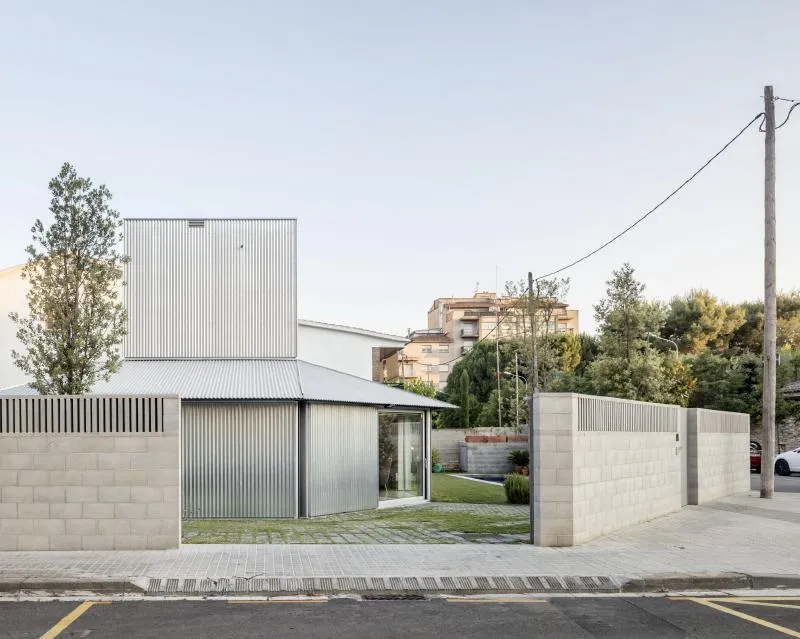
To ensure seclusion, a paramount requirement for the homeowners, a tall and opaque fence was constructed around the property's periphery. The house itself was intentionally positioned off-centred towards the east, occupying the maximum permissible area of 120m2 and effectively utilizing every available inch, except for the western side, which allows ample sunlight throughout the year. As the western boundary widens to 7.6m, the remaining sections adhere to regulatory standards, ranging between 3m and 6m, with considerations that don't always align with practicality.
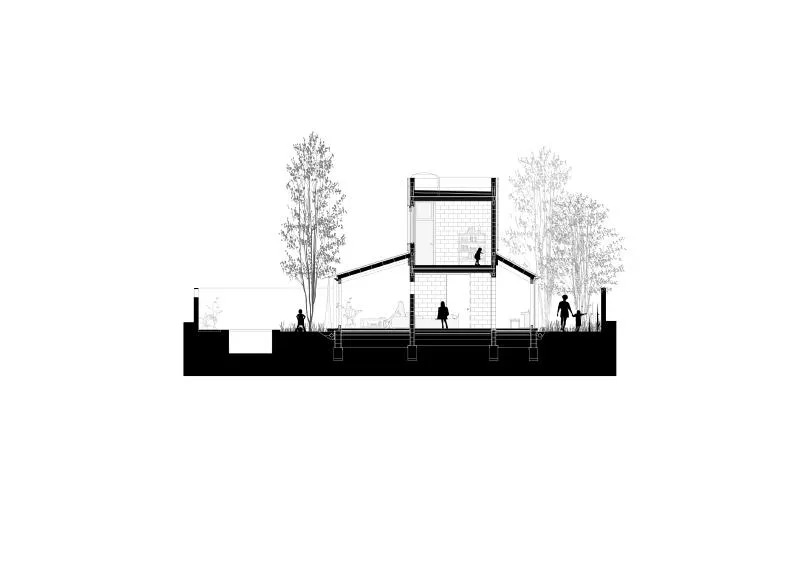
Conceptualized as a layered structure reminiscent of an onion, the new dwelling comprises four concentric rings that run parallel to the plot's boundaries. The outermost layer is the building fence, followed by the perimeter courtyard, which encloses a continuous gallery encompassing the central two-story concrete block box. Originally, during the early phases of the project, the gallery served as an intermediate climatized space with diverse functionalities, while the core of the house housed the primary living areas. However, budgetary constraints prompted adaptations, resulting in a reduced surface area and the relocation of common spaces to the gallery.
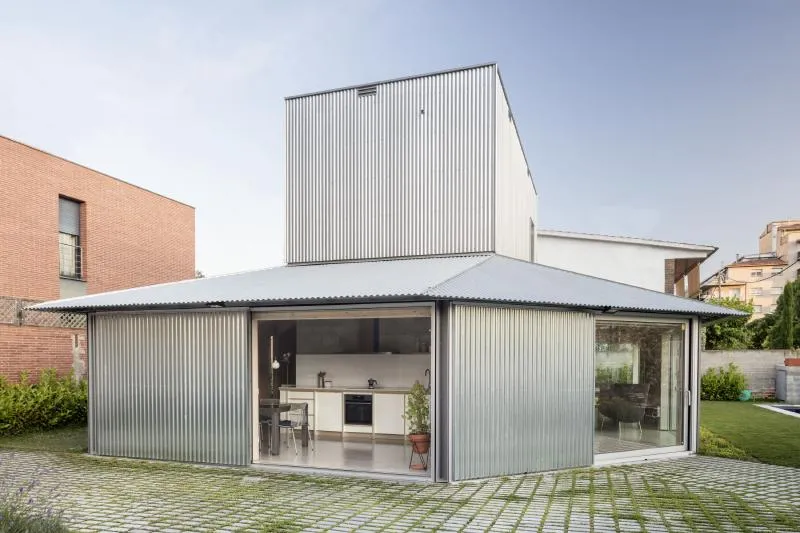
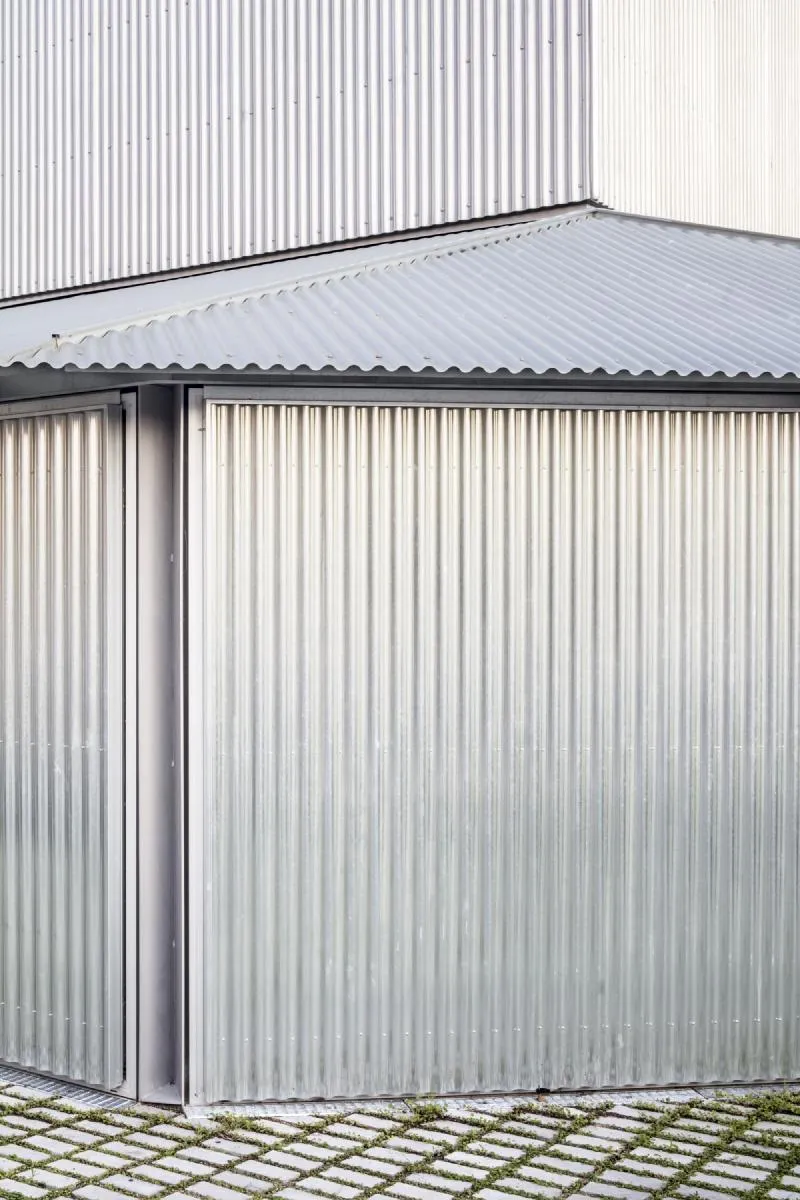
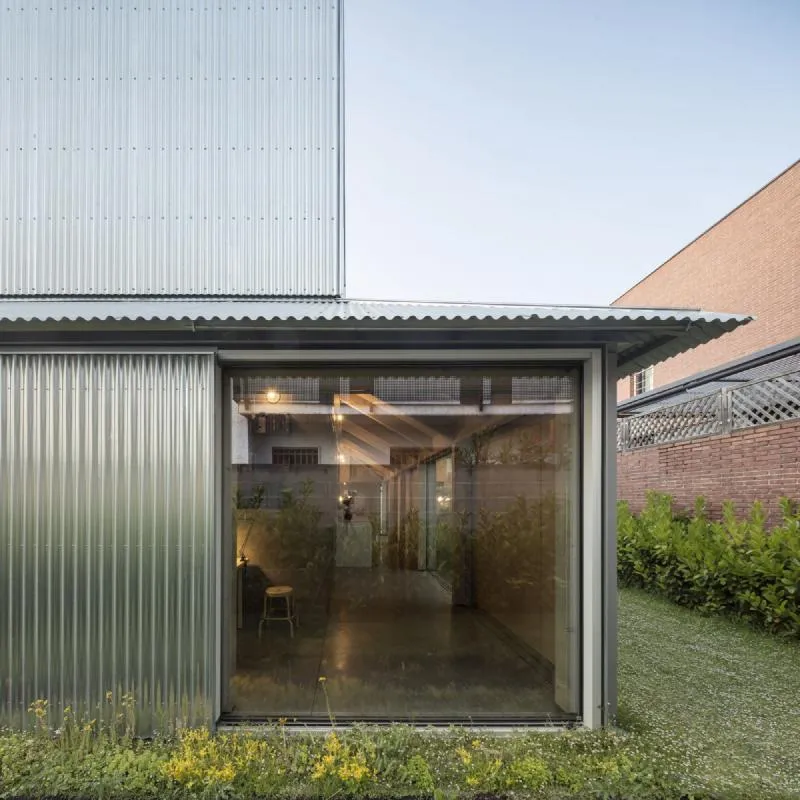
The gallery, which takes centre stage within HOUSE 905, functions as a dynamic veranda with distinct nuances reminiscent of Charles Moore's Orinda house. It fosters a close relationship with the courtyard, with its character transforming seasonally. During the summer months, large sliding walls transform the gallery into an open-air porch, seamlessly merging indoor and outdoor realms. Conversely, in winter, strategically placed corner windows frame enchanting views of the garden while capturing precious westward solar radiation. Surprisingly, in contrast to conventional design conventions, the windows remain fixed while the mobile doors are opaque, resulting in a constantly evolving facade and gallery ambience based on open or closed configurations.
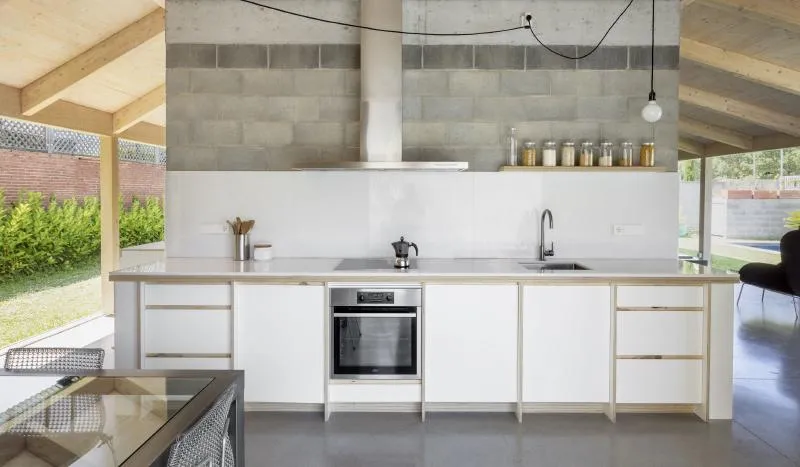
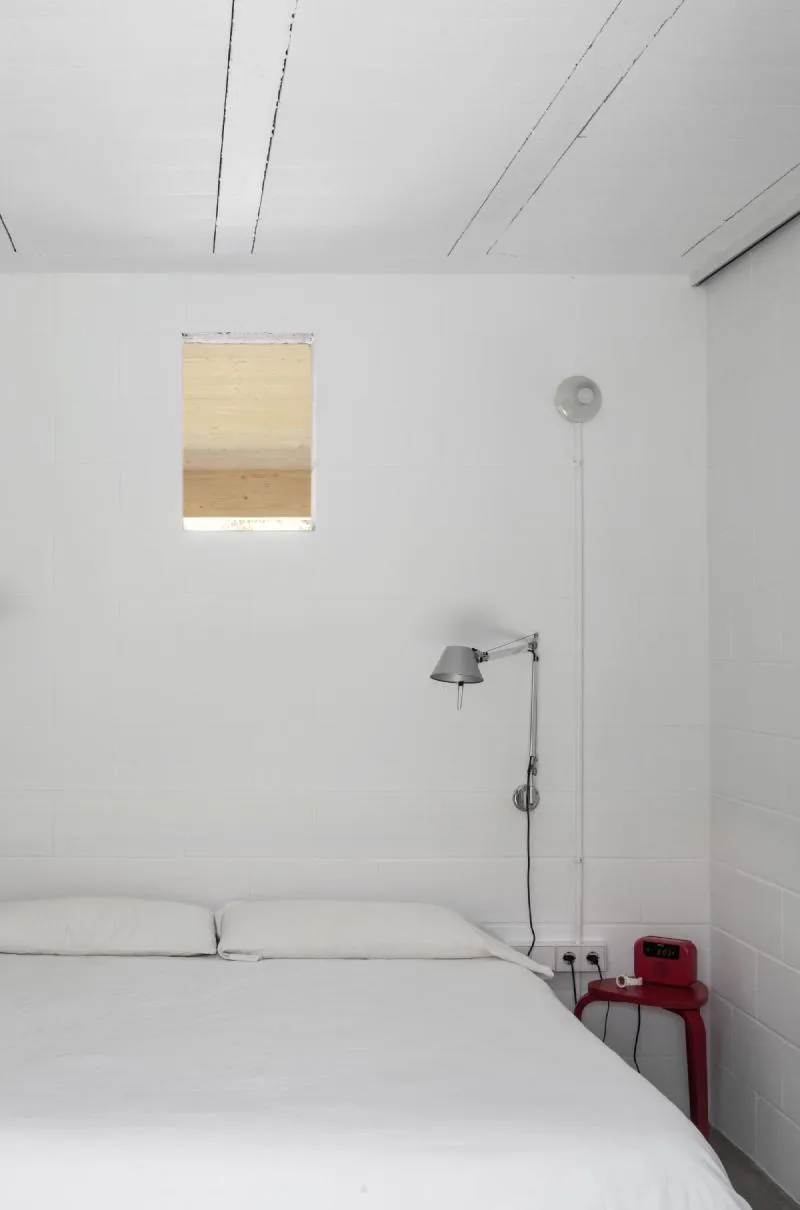
Drawing inspiration from Lina Bo Bardi's chapel of Santa María dos Anjos, the veranda, adorned with a sloping roof, was constructed using lightweight and efficient systems. A wooden structure, including pillars, beams, and a roof, seamlessly integrates with glass, aluminium, wood, and corrugated galvanized sheet enclosures. In stark contrast, the central core embodies solidity and compactness, boasting increased thermal inertia. The block walls and slabs are left exposed in the gallery, painted in pristine white within the rooms.
During the winter season, the veranda serves as a protective shelter, radiating warmth into the central body housing bathrooms and bedrooms. The absence of a dedicated climate control system within the central core (on the ground floor) is compensated by the concrete floor's exceptional thermal inertia, which receives direct solar radiation and is equipped with underfloor heating. The second-floor rooms also benefit from this arrangement, with an aerothermal heat pump generating heat.








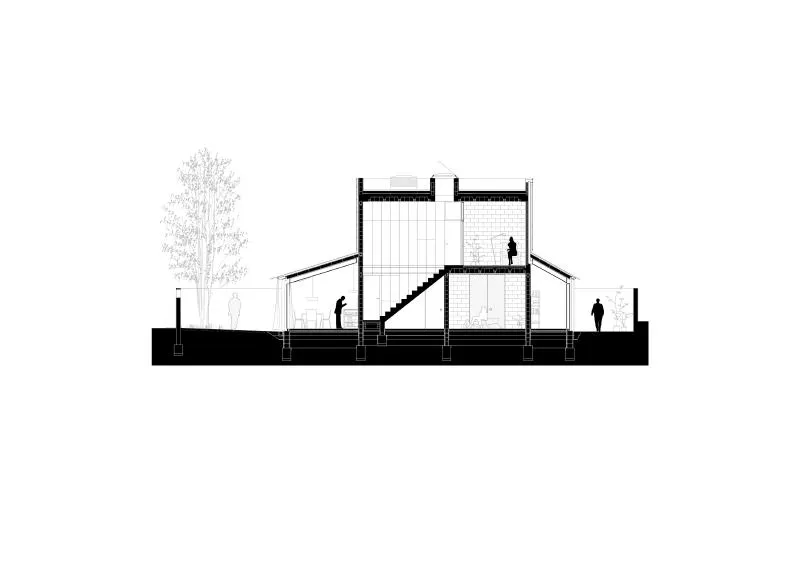


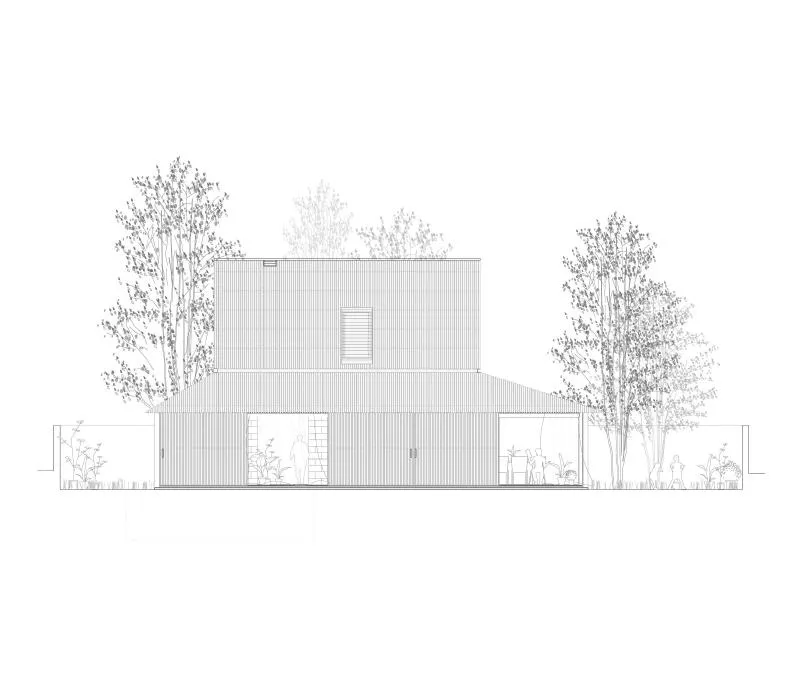


Architects: HARQUITECTES
Area: 154 m²
Year: 2020
Photographs: Adrià Goula
Lead Architects: David Lorente, Josep Ricart, Xavier Ros, Roger Tudó

Popular Articles
Popular articles from the community


Little Red Riding Hood: Architectural Design as a Journey Through Fear, Light, and Storytelling
Little Red Riding Hood reimagines the fairy tale through architectural design shaped by fear, light, scale, memory, uncertainty, and choice.

Conexión: Biophilic Design Reimagines High-Rise Living in Hong Kong
Conexión reimagines high-rise living in Hong Kong through biophilic design, green facades, shared spaces, daylight, water and nature within.

The Ocean Hive: Sustainable Architecture for a Self-Sufficient Civilization at Sea
The Ocean Hive imagines sustainable architecture at sea, where modular habitats, algae, wave power and ocean waste sustain a growing colony.

Hill & Cross Opera: Sculptural Opera House Architecture Shaped by Tallinn’s Landscape and Identity
Hill & Cross Opera reimagines opera house architecture in Tallinn through its sculptural hill, civic plaza, glass wave and a luminous cross.

Similar Reads
You might also enjoy these articles

Day and Night Park: A Time-Based Urban Newsstand in Beijing
A temporary urban newsstand in Beijing blending travel, light, and reading through poetic colors, compact form, and community-focused design.

Modernist Patio Renovation in El Masnou, Barcelona by Oliver Segura Arquitectura + Cebrià Arquitectura
Modernist patio renovation blending tradition and innovation with a movable pool, leveled floors, and Catalan materials in El Masnou.

Alto Residencial Coop: Cooperative Housing Development in Santiago de Compostela by Carbajo Barrios Arquitectos
A linear cooperative housing complex blending white volumes and perforated metal façades, enhancing community living, natural light, privacy, and urban integration.
Vil Genis School by BPA ARCHITECTURE – Massy, France
Vil Genis School in Massy, France, features sustainable design, south-facing classrooms, community integration, accessible spaces, and modern educational architecture.

Explore Architecture Competitions
Discover active competitions in this discipline


Challenge to reimagine the Iron Throne

Photograph architecture without architects

Illustrate the lost glory of Angkor Wat - Render Challenge

Design challenge to reuse E-waste
Comments (0)
Please login or sign up to add comments
No comments yet. Be the first to comment!