

Immerso Hotel by Silva Dias Arquitectos: A Seamless Harmony Between Architecture and Nature in Ericeira, Portugal
Immerso Hotel seamlessly integrates modern architecture with nature, offering ocean views, sustainable materials, and serene, sensory-rich guest experiences.


Nestled in the stunning natural setting of Ericeira, Portugal, the Immerso Hotel by Silva Dias Arquitectos stands as a compelling testament to how modern architecture can harmoniously blend with the surrounding landscape. Designed with a strong environmental focus and a deep respect for local topography, the 21,528 ft² hotel complex is a sophisticated architectural intervention that celebrates the region's natural assets—its lush valleys, ocean views, and soft hillsides.
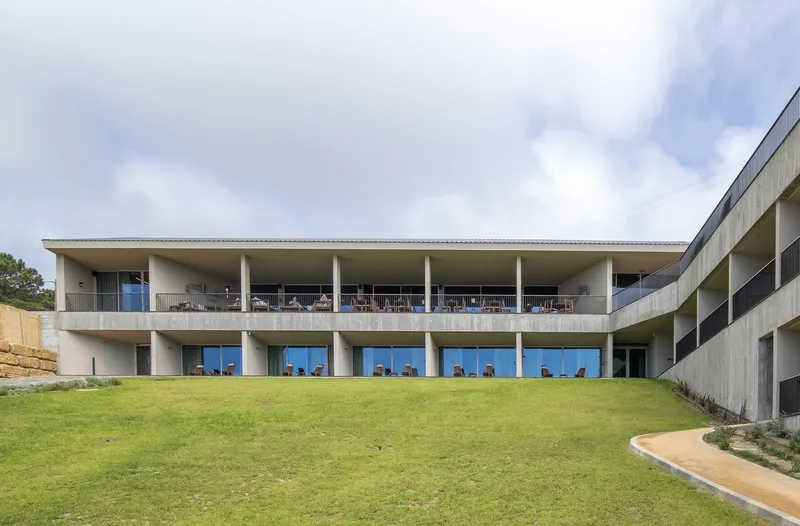
Contextual Design Rooted in Landscape and Culture
Lead architect Tiago Silva Dias envisioned a hotel that wouldn’t merely exist in its environment, but one that would belong to it. Inspired by the southern Iberian architectural vernacular, the project distributes volumes across the terrain—placing larger, more prominent buildings on the higher ground and scattering smaller structures gently across the slopes. This layout respects the natural topography, allowing the architecture to echo the land rather than impose upon it.
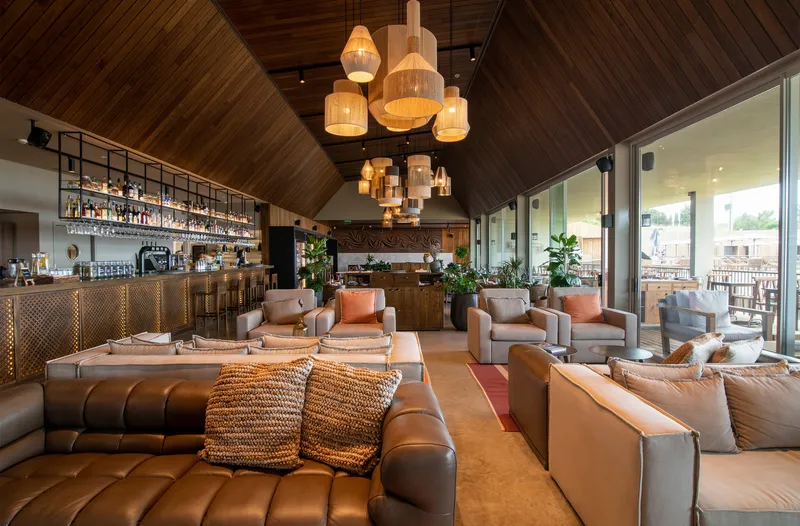
Oceanic Inspiration and Organic Forms
One of the defining features of the Immerso Hotel is its fluid architectural language. Curved lines are used throughout the design, particularly in ceilings and balconies, subtly mimicking the undulating forms of ocean waves. This design strategy not only adds a sense of movement and serenity to the space but also draws a direct line of inspiration from the ever-present Atlantic Ocean visible from various points of the hotel.
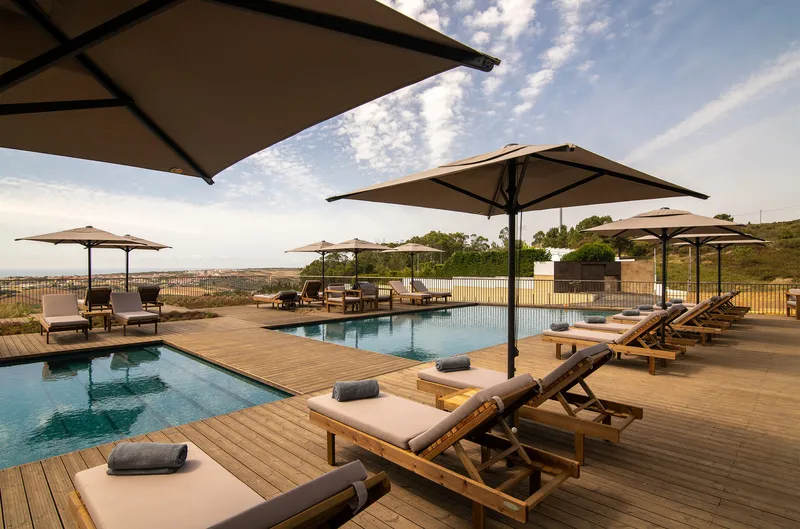
Guests are treated to captivating views of both the valley and the sea, seamlessly connecting interior and exterior environments. Whether dining on the grand restaurant balcony or resting in one of the serene guest rooms, the hotel consistently frames nature as the main character in the visitor experience.
Sustainable, Context-Aware Materials
Material selection played a vital role in reinforcing the hotel’s connection to the environment. The palette is intentionally minimal yet rich in sensory appeal. Surfaces of exposed concrete, pine wood, painted iron, and mineral-toned finishesform a visual and tactile language that is rooted in natural simplicity and modern sophistication.
By choosing local materials and colors drawn from the regional landscape, the architects ensured that the hotel feels like an organic extension of its surroundings. In doing so, they also reduced the project's ecological footprint—a key consideration in today’s sustainable building practices.
Sequential Spatial Flow and Sensory Architecture
The hotel’s internal layout is a carefully choreographed journey through interconnected spaces. Each area—whether a common lounge, private suite, or spa corridor—is designed as a distinct "moment" in a larger experiential narrative. The architecture invites guests to slow down and engage with the space, encouraging a rhythm of mindfulness and immersion.
Visual transparency, natural ventilation, and spatial fluidity play critical roles in creating a tranquil, sensuous atmosphere. The goal was not only to build a hotel, but to craft a sanctuary—a place that engages the senses and invites introspection.
A Thoughtful Fusion of Architecture and Place
More than a hotel, Immerso represents a contemporary meditation on the role of architecture within the natural world. It is a place where design responds—not reacts—to the terrain, light, wind, and views. Every curve, every material, and every spatial transition is part of a larger vision that places human comfort and environmental respect in perfect balance.
All the photographs are works of Francisco Nogueira


Popular Articles
Popular articles from the community


David Macias Steps a Doorless Stone and Plaster House Down a Tropical Colombian Hillside
In the humid hills of Colombia, Threshold House replaces the front door with an open void and terraces its 850 m² down the slope instead of fighting it.

longwave studio Reorganizes a 112 m² Tainan Apartment Around the Daily Routines of a Family and Two Cats
In Tainan, Taiwan, birch plywood, rust-red furniture and a freestanding plaster wall link arrival, storage, work and family life in one apartment.

Juan García Correa, John González and Claudia Rueda Sink a Circular Amphitheater into a Manizales Engineering Building
On the La Nubia campus in Manizales, Colombia, the S1 Building folds labs and offices into a hillside of ramped lawns that double as a campus route.

Architekt Andreas Gruber Scatters 23 Dark Timber Chalets Across a South Tyrolean Forest Edge
In Molini di Tures, Amonti Chalets breaks a resort into a hamlet of gabled timber houses, with parking, storage and services pushed into the slope.

Similar Reads
You might also enjoy these articles


Hodi-Mandai Geram
Project Function: Preservation and revitalization of the Intangible heritage and socio-spatial identity of the Hodi by Housing, Cultural Memory Center, Sacred Grove, landscape, local tourism economy


Olio Towers: A Mid-Rise for Performers That Fuses Housing, Rehearsal, and Stage
Located blocks from Houston's Theater District, this modular tower stacks living units around a central performance atrium.

Oasis: Modular Green Housing Carved into Dhaka's Urban Fabric
A shortlisted Plugin Housing entry reclaims unauthorized settlements in Dhaka with stepped concrete volumes, green roofs, and ventilation-driven design.

Black Hole: A Floating Megastructure for the Post-Physical Era
Emiliano Mazzarotto envisions a spherical, self-scaling arena where e-sports, digital hotels, and holographic stadiums replace traditional public space.

Explore Architecture Competitions
Discover active competitions in this discipline

Challenge to reimagine the Iron Throne

Photograph architecture without architects

Illustrate the lost glory of Angkor Wat - Render Challenge

Design challenge to reuse E-waste
Comments (0)
Please login or sign up to add comments
No comments yet. Be the first to comment!