
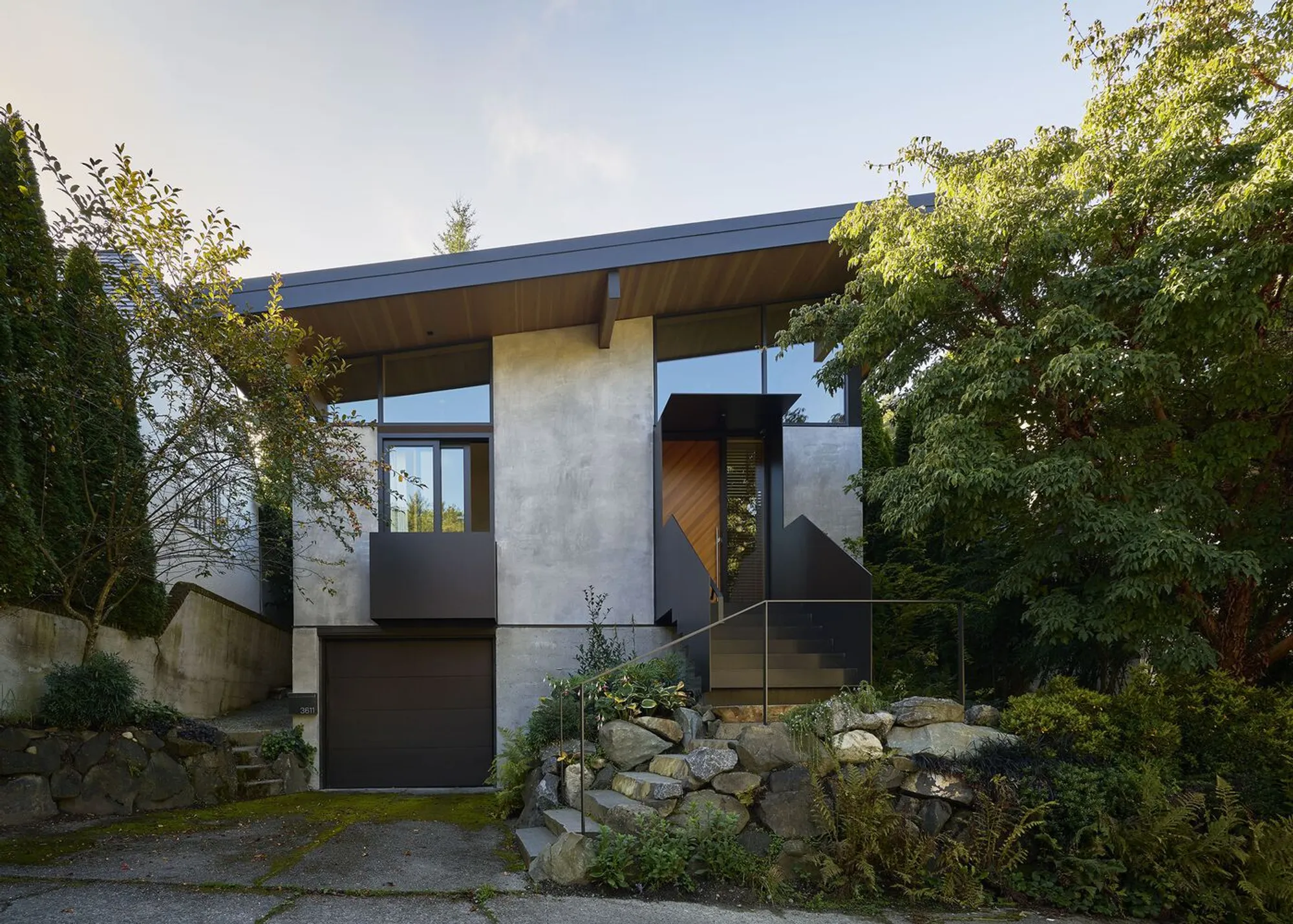
In-Kind House by GO'C: A Thoughtful Rebuild Rooted in Simplicity and Connection to Nature
A modest Seattle home by GO'C, rebuilt atop a 1950s foundation, blending natural light, wood, and garden-connected sustainable design.


Located in Seattle, this 1,900 ft² project by GO'C, completed in 2024, exemplifies contemporary residential design with careful attention to spatial flow and materiality. Constructed by Treebird Construction and engineered by J Welch Engineering, the home combines structural precision with aesthetic clarity, captured beautifully in Kevin Scott’s photography.
Reimagining a 1950s Foundation for Contemporary Living
Nestled in a quiet Seattle neighborhood, In-Kind House by GO'C redefines what it means to build anew without excess. Constructed atop the concrete foundation of a modest 1950s brick house, the project preserves the spirit of the original while creating a home that feels both grounded and light-filled.
Rather than expanding the structure or adding luxury amenities, the architects focused on designing just enough—a home that precisely meets the needs of its occupants. The result is an architectural “in-kind trade”: a modern reinterpretation of an outdated house that respects its original footprint and celebrates simplicity, efficiency, and connection to the landscape.
A Functional Reorganization Rooted in Light and Flow
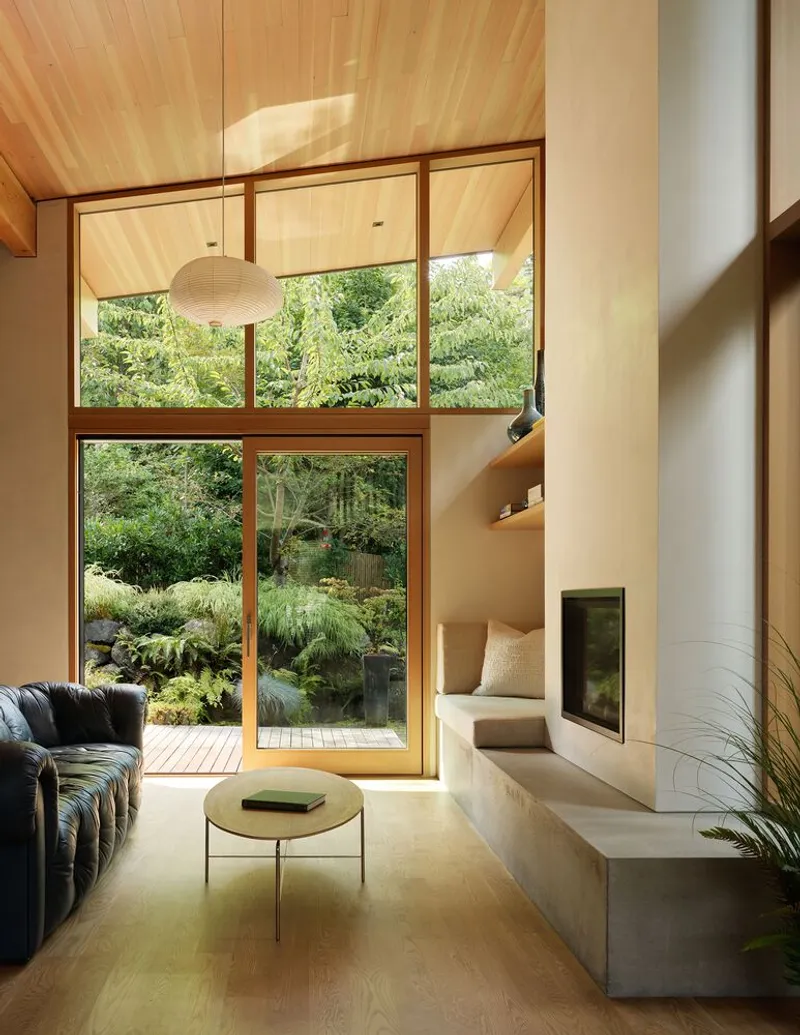
The previous house suffered from a poorly positioned staircase, fragmented spaces, and a dark basement that felt disconnected from daily life. GO'C approached the redesign by rethinking spatial relationships to maximize openness, daylight, and connection to the garden.
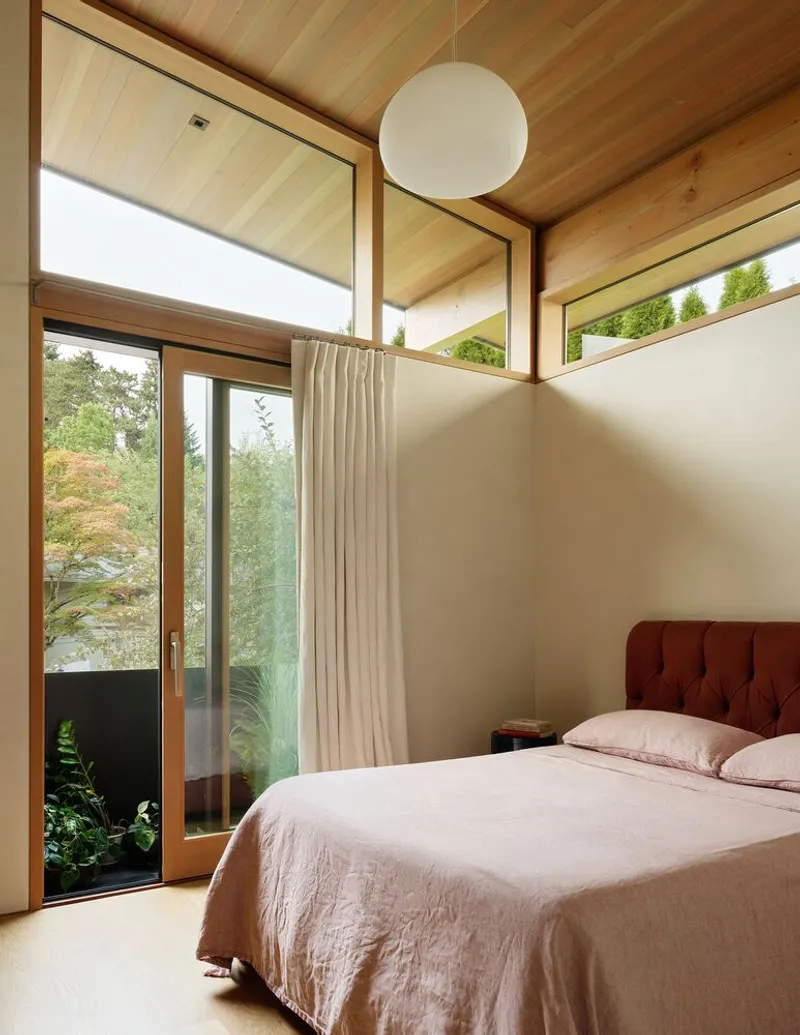
A large west-facing window, once framing a mature maple tree, has been recreated to invite cascades of natural light into the entry and stairwell. This gesture extends light deep into the basement, transforming it into a welcoming, usable space that dissolves any sense of enclosure.
Seamless Integration with a Lush South-Facing Garden
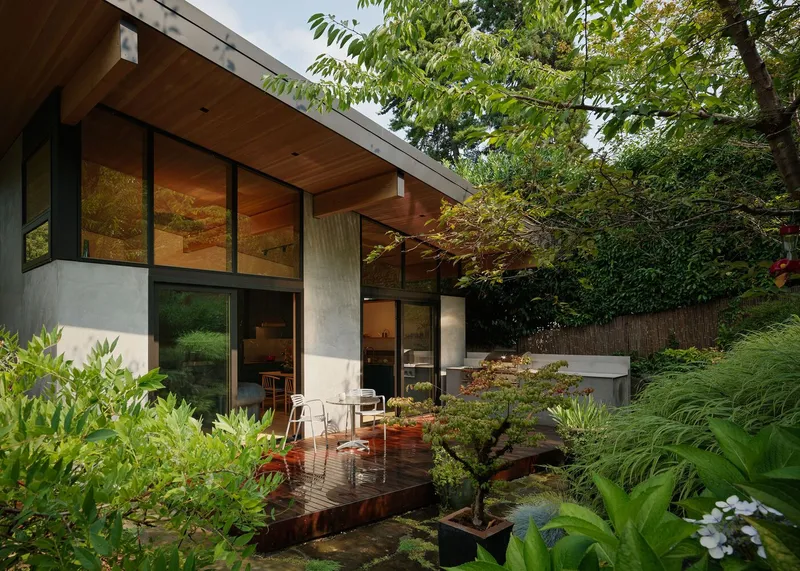
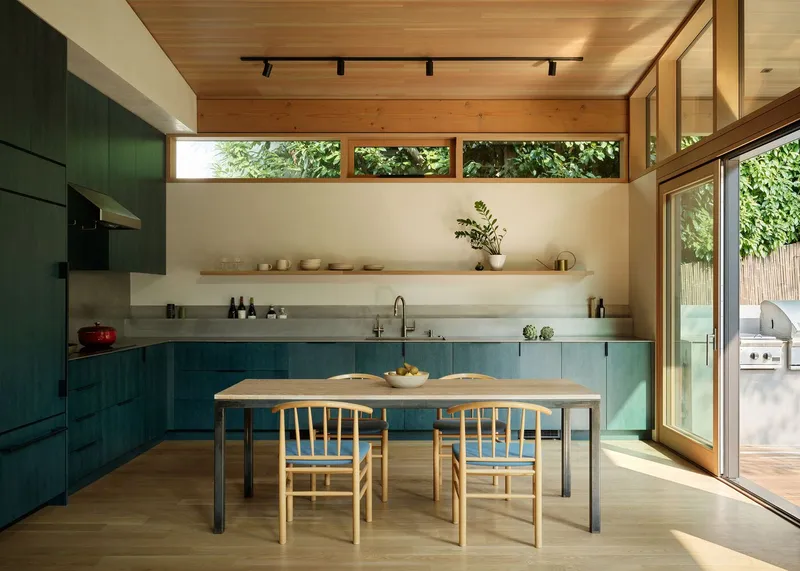
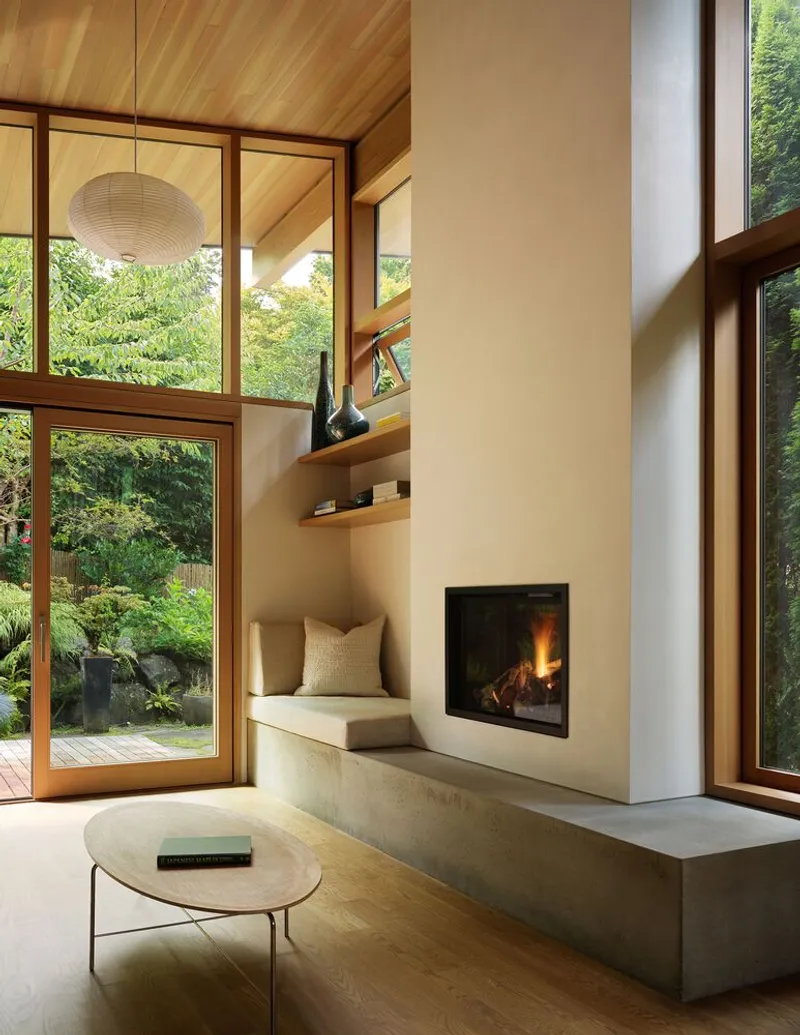
The homeowners—both avid gardeners—desired a home that blurs the threshold between inside and out. Large lift-and-slide glass doors open the living area directly onto a timber deck and outdoor kitchen, where the garden rises gently along a moss-covered rockery. The design encourages a continuous relationship with the landscape, allowing the interior to extend visually and physically into the lush, layered greenery of the Pacific Northwest.
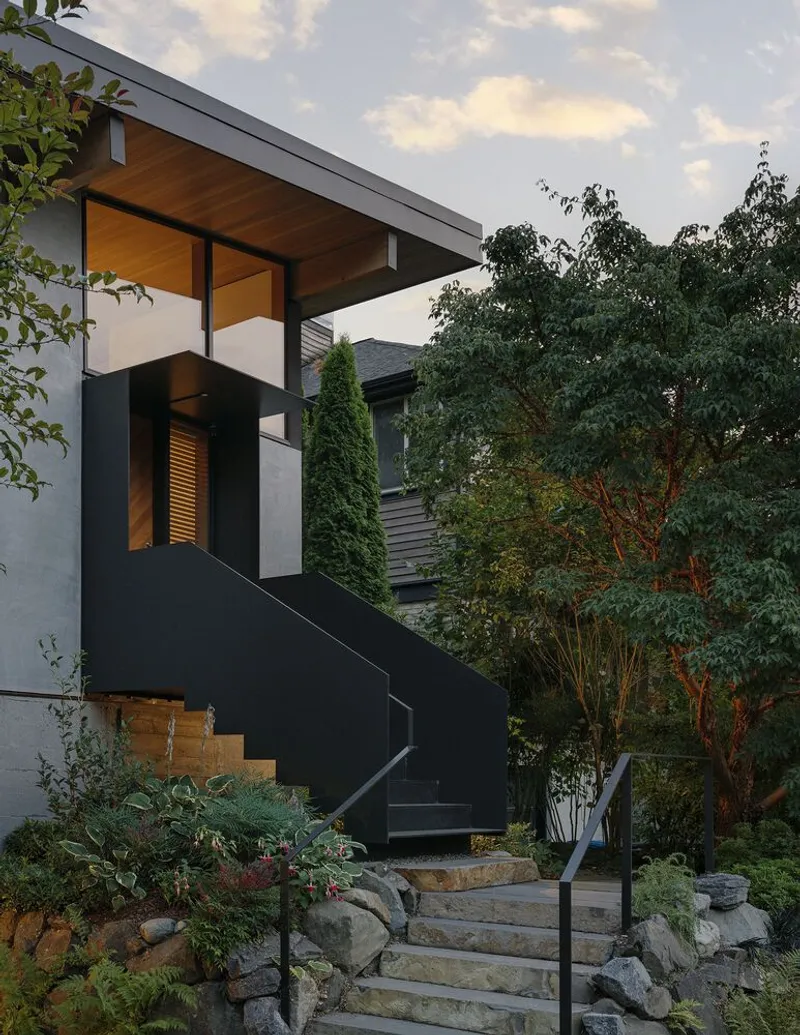
At the street level, a cantilevered entry stair seems to emerge naturally from the existing rock garden, grounding the structure within its context. Above, a high shed roof with exposed timber beams and clerestory windows floods the compact footprint with soft daylight, expanding the sense of volume and openness.
Material Warmth and Subtle Contrast
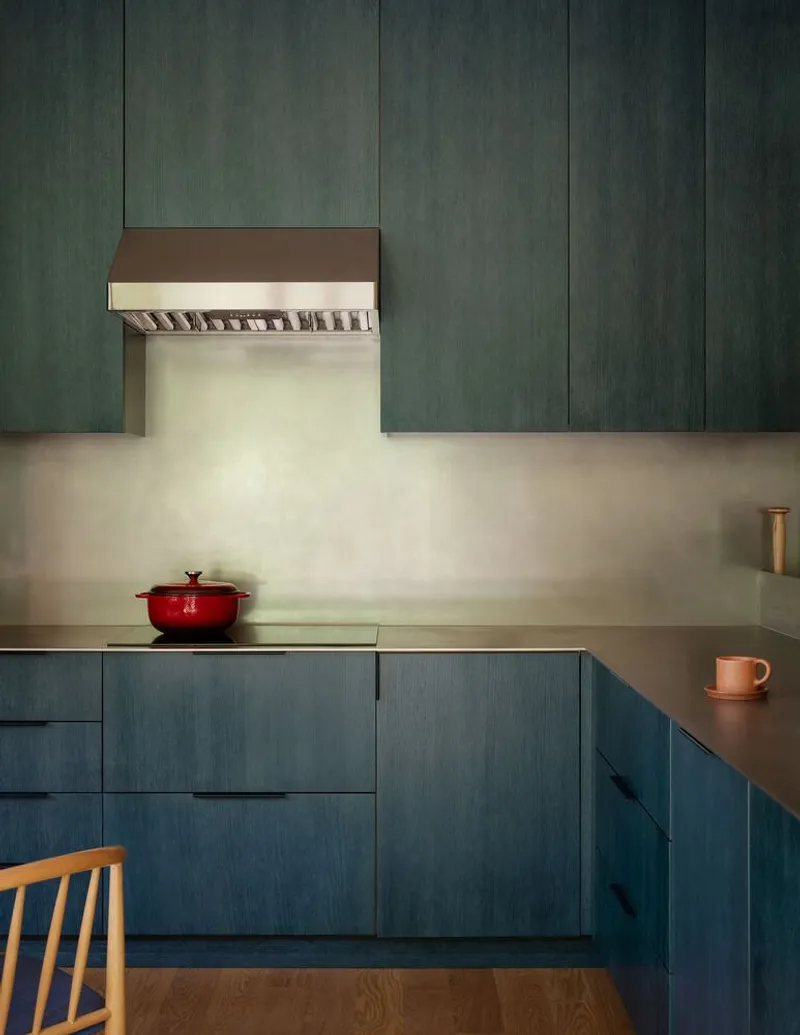
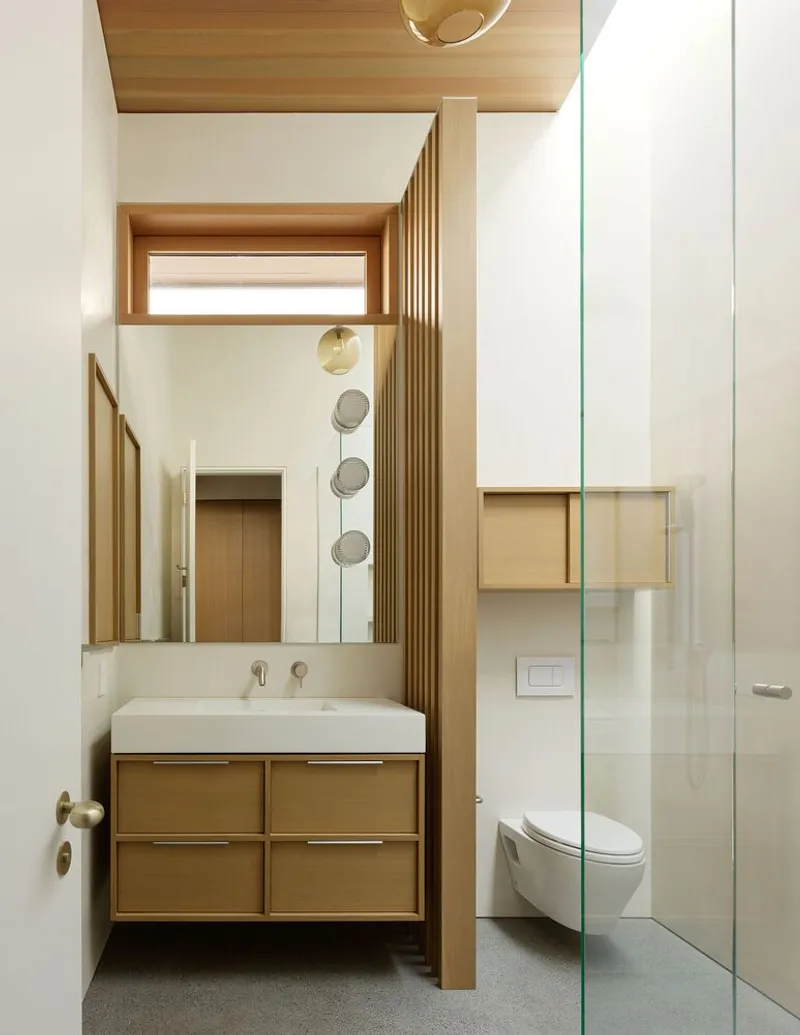
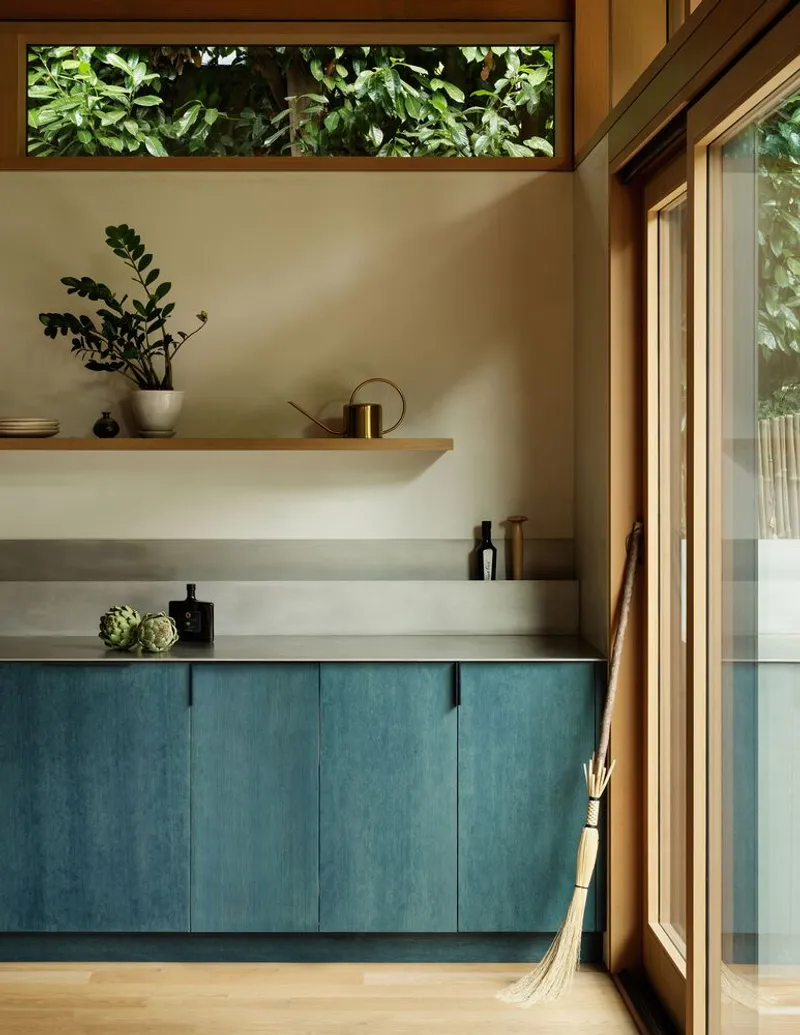
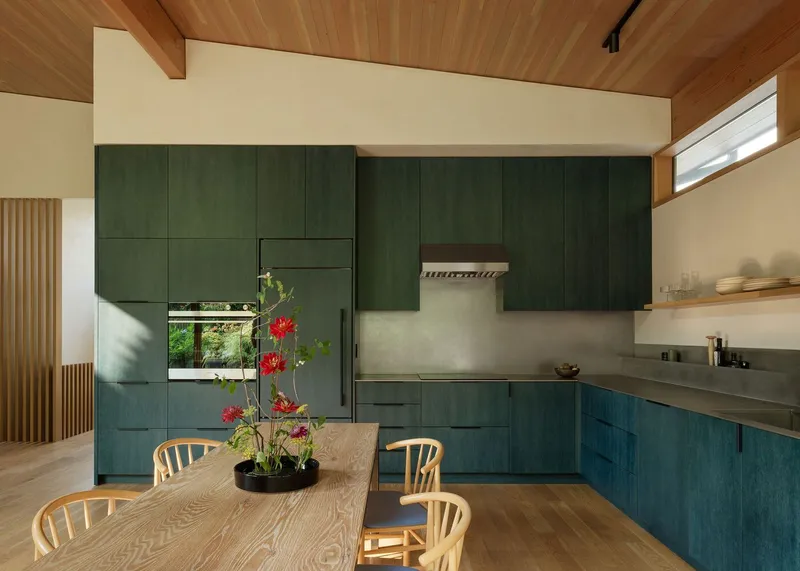
Inside, GO'C employs a refined yet understated palette of natural materials to create cohesion between levels. White oak cabinetry, plaster walls, and warm hardwood floors define the main and lower spaces, while a deep blue stain on the kitchen cabinetry distinguishes the communal heart of the home.
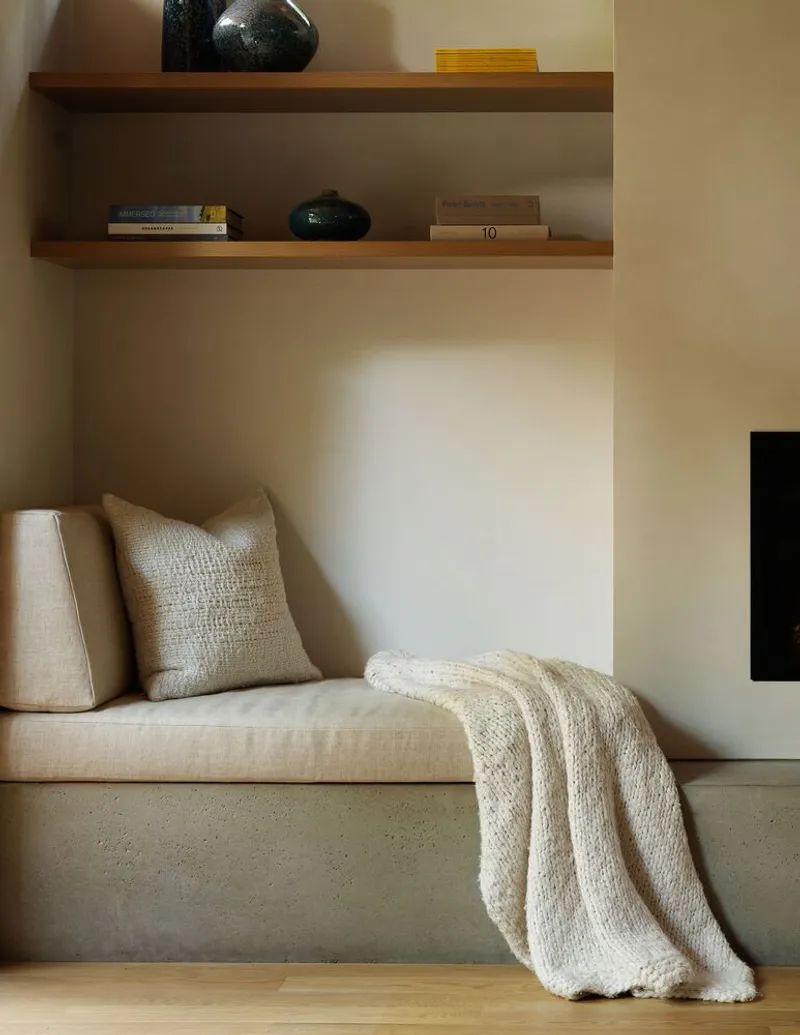
A Japanese-inspired recessed entry sets the tone—featuring a built-in oak bench and concealed storage for shoes and coats. A vertical oak screen filters light between the entry, stair, and living areas, introducing moments of visual rhythm and intimacy.
The material strategy reflects GO'C’s commitment to craft, sustainability, and the Northwest’s tactile building traditions—every joint, beam, and surface carefully designed to age gracefully.
Modesty, Restraint, and Environmental Responsibility
At just 1,900 square feet, In-Kind House proves that thoughtful architecture doesn’t require expansion. By building atop existing concrete stem walls, the project minimizes demolition waste and carbon impact while preserving the site’s mature garden. The architects demonstrate how sustainable design can emerge through adaptation and restraint rather than excess and replacement.
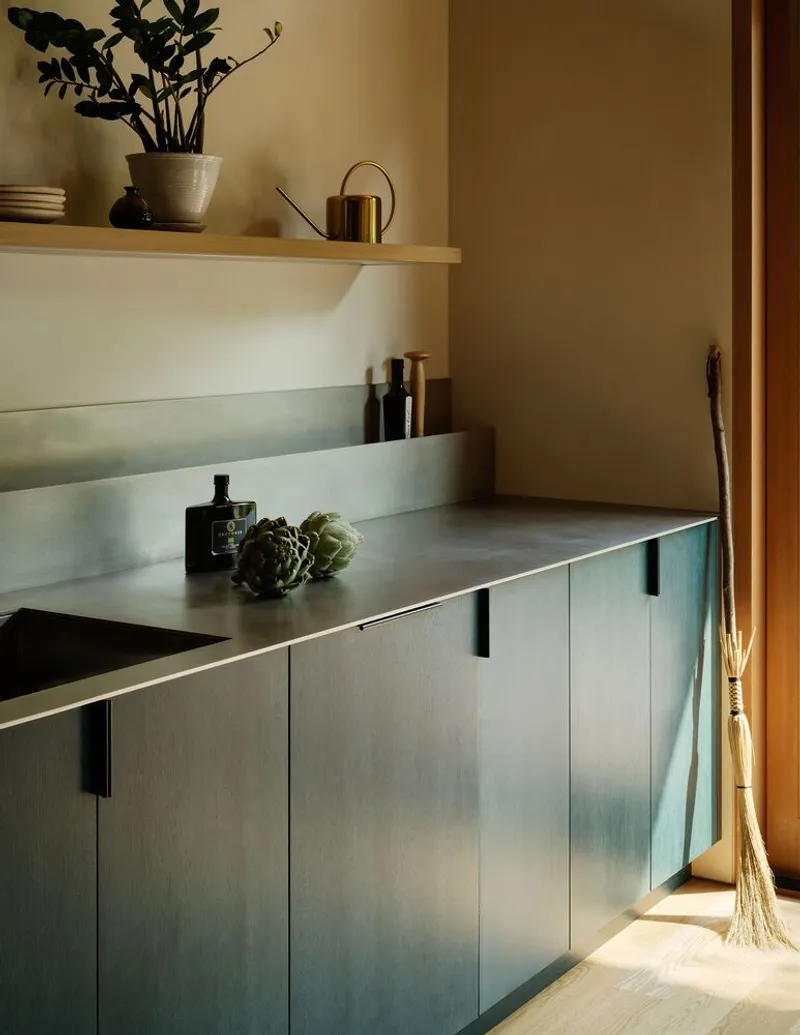
All photographs are works of Kevin Scott




Popular Articles
Popular articles from the community


Co-life: Sustainable Architecture for Age-Friendly Community Living
Co-life reimagines sustainable architecture for seniors through courtyards, rammed earth, shared gardens, and spaces designed for belonging.

The Earth Pod: 3D Printed Homes for Resilient Refugee Communities
The Earth Pod reimagines refugee housing through 3D printed homes made from clay, combining resilience, self-sufficiency, and rapid shelter.

Riyadh For All: Intergenerational Urban Design for Active Aging in Rabat
Riyadh For All reimagines urban design in Rabat with intergenerational co-living, adaptive courtyards, and Moroccan cultural exchange today.

Conexión: Biophilic Design Reimagines High-Rise Living in Hong Kong
Conexión reimagines high-rise living in Hong Kong through biophilic design, green facades, shared spaces, daylight, water and nature within.
Similar Reads
You might also enjoy these articles


Hodi-Mandai Geram
Project Function: Preservation and revitalization of the Intangible heritage and socio-spatial identity of the Hodi by Housing, Cultural Memory Center, Sacred Grove, landscape, local tourism economy


Olio Towers: A Mid-Rise for Performers That Fuses Housing, Rehearsal, and Stage
Located blocks from Houston's Theater District, this modular tower stacks living units around a central performance atrium.

Oasis: Modular Green Housing Carved into Dhaka's Urban Fabric
A shortlisted Plugin Housing entry reclaims unauthorized settlements in Dhaka with stepped concrete volumes, green roofs, and ventilation-driven design.

Black Hole: A Floating Megastructure for the Post-Physical Era
Emiliano Mazzarotto envisions a spherical, self-scaling arena where e-sports, digital hotels, and holographic stadiums replace traditional public space.


Explore Housing Competitions
Discover active competitions in this discipline



Challenge to reimagine the Iron Throne


Photograph architecture without architects


Illustrate the lost glory of Angkor Wat - Render Challenge


Design challenge to reuse E-waste
Comments (0)
Please login or sign up to add comments
No comments yet. Be the first to comment!